Tag

Slider

Browsing

Bomb threats targeting three DU colleges and 45+ schools have triggered mass evacuations and deepening fear. As students, parents, and teachers grapple with repeated hoaxes, a pressing question emerges: what does safety mean in a city where panic arrives before the school bell even rings?

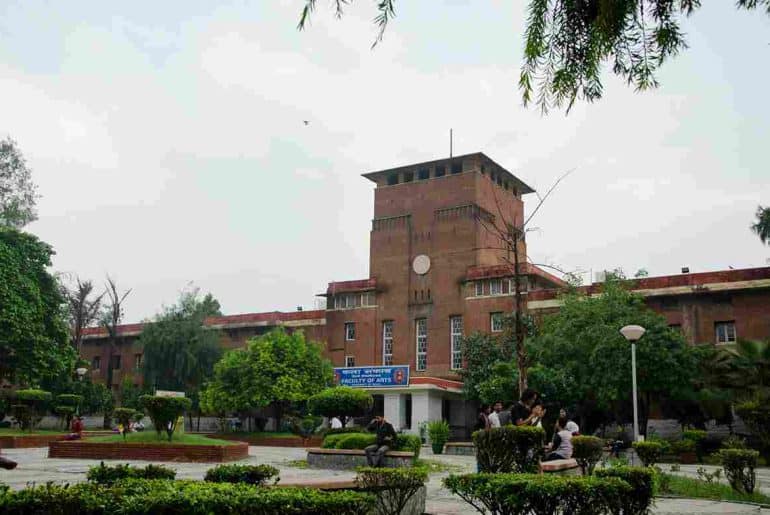
Amid a string of unsettling events, fresh panic gripped Delhi University as three more colleges, Indraprastha College for Women, Hindu College, and Shri Ram College of Commerce received bomb threats via email earlier today. North Delhi Police confirmed the threats and stated that security protocols were immediately activated, with police teams conducting thorough campus searches. This marks the fourth such incident this week, escalating anxiety across students, parents, and staff. Notably, these threats are not limited to higher education institutions. Over the past few days, more than 45 schools across Delhi have also been targeted with similar alarming emails.

Authorities have launched a full-scale investigation, with cybercrime units working to trace the origin of these messages. While all previous threats have turned out to be hoaxes, they have nonetheless triggered widespread panic, repeated evacuations, and intense law enforcement activity. The surge began on July 14, when three Delhi schools received bomb threats that led to bomb squad inspections; none of which revealed any explosive devices. On July 15, St. Stephen’s College and St. Thomas School were forced into lockdowns after receiving emails about IEDs and RDX being planted on their premises. The case was later traced to a 12-year-old student, who was detained briefly and released following counseling. The threats continued on July 16, when seven private schools received similar emails, prompting early morning evacuations and city-wide searches. No explosives were found in any of these cases, but the wave of threats has deeply unsettled educational communities across the capital.

Reacting to the developments, former Delhi Chief Minister and current Leader of Opposition in the Delhi Assembly, Atishi, took to social media to voice her concern. She condemned the government’s failure to ensure the safety of children, writing: 

More than 20 schools have received bomb threats today! Think of the trauma that children, parents, and teachers would be going through. BJP controls all 4-engines of governance in Delhi, and is yet not able to provide any safety or security to our children! Shocking.”

Cyber experts and senior officers of the Delhi Police investigating the threats add that the senders are using Virtual Private Networks (VPNs) and the dark web. According to police, all the emails received were similar, containing vague but threatening information, sent before school timings and often through international servers. The entire matter is under probe, they added. They warn that the use of VPNs and routing through the web proxies is hindering traceability like “chasing a shadow in a room full of mirrors” and as they “find a clue, it disappears behind another layer of anonymity.”

Meanwhile, in Bengaluru, a similar pattern emerged today as around 40 private schools across the city received hoax bomb threats. Chilling emails claimed TNT devices had been planted, prompting immediate evacuations and bomb squad deployments. However, no explosives were found.  While none of these incidents yielded actual devices, the recurring pattern of early-morning emails, mass panic, and the rapid dismantling by anti-sabotage teams creates a troubling continuity that heightens anxiety across these two cities and places growing strain on emergency response systems. Until those responsible are held accountable and preventive systems strengthened, Delhi’s educational spaces, in particular, remain vulnerable; not just to physical danger, but to the looming cloud of fear.

Image Source: Deccan Herald

Neeraja Unnikrishnan

[email protected]


Ashoka University students protest new security rules. The measures reinstate the surveillance measures that ignited mass protests in January 2025, highlighting the precarious state of student dissent in the country.

On July 17, 2025, the Ashoka University Student Government (AUSG) posted a public statement opposing the university’s new security rules for the upcoming semester. These rules will come into effect from September 17, 2025, and apply to all students attending the summer term. The new rule says that anything larger than a wallet or purse can only be brought through Gate No. 2. Further, the students must get their bags scanned every time they enter campus.

The Student Government has strongly opposed this move. They say students were not properly involved in the decision. Although a Standing Committee was formed last semester to discuss such policies, the student representatives were treated as “audience.” Their votes were not counted. Later, they were also left out of important meetings and were not informed about the final decisions.

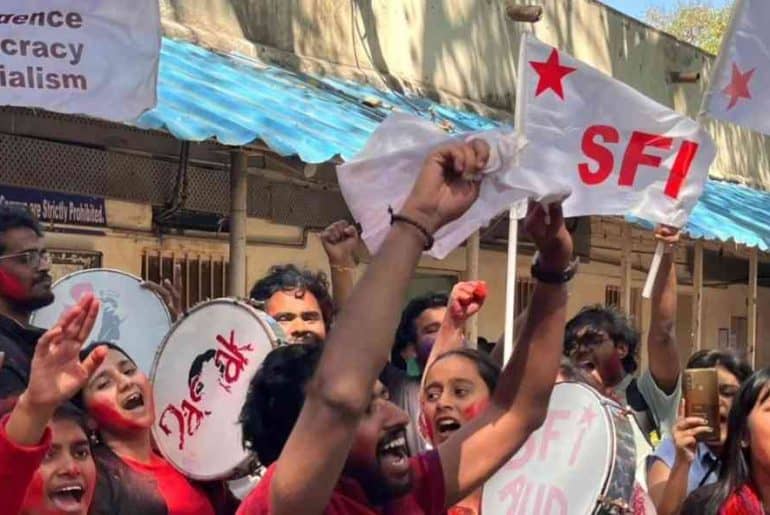
This is not the first time such rules have led to controversy. In January 2025, Ashoka students held a major protest against strict surveillance measures on campus. The administration had introduced sudden room inspections, searching of vehicles, belongings of taxi drivers and family members on move-in days, and increased monitoring under the claim of tackling substance use. Hundreds of students joined the protest. The movement eventually forced the administration to form a Standing Committee to include students in decisions that affect their everyday lives.

Now, students feel those promises have not been kept. In the latest statement, AUSG pointed out that:

The distrust between the Administration (especially the Residence Life Office) and the student body has increased exponentially in the past semester. The office has subjected students to punitive measures, including citing exceptional clauses of the Residence Life Policy to conduct invasive “inspections” in the residence halls while breathalyzing and subjecting students to urine tests before addressing their health concerns when they visit the infirmary. The reimposition of the invasive security protocol risks making the situation worse, discouraging students from accessing the campus health resources, fearing disciplinary action against them.

The Student Government said that better, non-punitive solutions were suggested by students and faculty, including the Ashoka Behavioural Insights Team. But these were ignored. They believe that the new rules could make students feel watched and unsafe, instead of supported. The statement ends with a call to action. The AUSG reminded students that similar surveillance measures had led to Ashoka’s largest-ever protest earlier this year. AUSG calls out to students, saying:

We urge you to stay vigilant and conscious, as this is not an isolated event and it certainly is not a matter of a minor inconvenience.

Read Also: Student protest in Ramjas College against the sexual harassment charges on Prof. Dhani Ram violently disrupted by ABVP

Featured Image Credits: swarajyamag.com

Juhi Bansal

juhibansal1606gmail.com

Jesus and Mary College has announced the discontinuation of their NCWEB teaching centre from the academic session 2025–2026. The current students and new admissions are being shifted to Deshbandhu College, leading to disapproval among students regarding the sudden change.

On the morning of 11th July, NCWEB students of Jesus and Mary College were sent a notice via the official WhatsApp group, informing them about the discontinuation of the NCWEB centre from the academic session 2025–2026 onwards. New admissions and current students are now being shifted to Deshbandhu College instead. The news of the discontinuation has been met with displeasure and confusion by both students and parents, which has only been further fuelled by the silence of Jesus and Mary’s faculty. Upon enquiring with the president of the Jesus and Mary College NCWEB student body, Vidhi Choudhary, several problems regarding the change came to light.

According to Vidhi, who represents the concerns of many students, the decision has been taken with no prior notice or consultation. Students who were supposed to continue their fourth year from JMC as their centre, now feel stuck. With the CUET already behind them, and the new admissions who chose JMC according to their preference feel betrayed. Parents are also unhappy with the shift to a co-ed college. Deshbandhu is far from the residences of many students, affecting the sense of security and comfort that once came with JMC.

Vidhi further explained,

 Our principal is not responding to any of our concerns; the faculty is silent too. I have been bombarded with calls from parents worried about the co-ed shift. I fear that if this change occurs, it will lead to a significant number of students dropping out. Our college, which we chose based on merit and preference—considering safety, family, and future—has suddenly been turned upside down. Our graduation degree will now be under Deshbandhu College, where we will only attend for one year. How is any of this fair? If JMC was not equipped to handle NCWEB, then why not shift us to another all-women’s college? All we ask for is consultation and consideration.”

An official meeting between the president of NCWEB and the Vice Chancellor of the University of Delhi, Yogesh Singh, has been arranged in the coming week, as suggested by both JMC and Deshbandhu’s faculty upon requests for resolution.


Read Also :  DU Fee Hike Exceeds 20% Violating the Annual Fee Hike Policy of 10%


Featured image source :  The Indian Express


Umang

[email protected]

The Supreme Court directed Hany Babu to seek bail through the requisite High Court and Trial Court, clarifying his withdrawn plea doesn’t bar relief, as he remains jailed under UAPA in the Bhima Koregaon case. 

The Supreme Court in its hearing on 16th July and its bench of Justice Pankaj Mithal and Justice PB Varale directed former DU professor Mr. Hany Babu to approach either Bombay High Court or Trial Court or renew the withdrawn Special Leave Petition to receive bail in the Shaniwarwada Elgar Parishad case under the Unlawful Activities (Prevention) Act (UAPA). 

The bench led by Justice Aniruddha Bose further clarified that his withdrawal of the Special Leave Petition last year did not prevent the High Court from hearing his bail plea. This is amidst the Bombay High Court observation on May 2nd, where Babu was asked to seek a clarification with the top court on the same. 

Professor Hany Babu was arrested on 28th July 2020 and still remains an under trial for his alleged affiliation with the outlawed Communist Party of India (Maoist) and involvement in ‘inciting violence,’ which was the aftermath of the Elgar Parishad—an event organised by activists for the rights of the marginalised communities and celebration of the 200th anniversary of the Battle of Bhima Koregaon, which is considered a pioneer event for the Dalit Community.

On comments regarding the situation, Dr. Jenny Rowena P, Assistant Professor at Miranda House and partner of Hany Babu stated that, 

It is tragic that we are living in a country where a professor in a university, that too from a marginalised background (OBC Muslim), can be put away in prison for 5 long years without even the beginning of a trial through the use of corrupt laws like UAPA. I feel like laughing when people deliberate on the legality of this case when the very existence of UAPA should be declared illegal.”

Hany Babu is a part of BK-16, a term given to a group of 16 lawyers, professors, scholars, etc., who were imprisoned without trial under the various offences of the UAPA act in relation to the Bhima Koregaon-Elgar Parishad case. The series of arrests had taken place since 2018. 

The Bombay High Court has so far granted bail to Rona Wilson and activists Sudhir Dhawale and Sudha Bharadwaj, while the Supreme Court has granted bail to P. Varavara Rao on medical grounds and Shoma Sen, Vernon Gonsalves, and Arun Ferreira on merit.


Read Also In Solidarity with Professor Hany Babu: Knowledge Deemed Crime


Image Credits- Maktoob Media

Divyanshi Dusad  

[email protected]

Student activist Gurkirat was detained by Special Cell, Delhi Police on July 16, 2025 and released a few hours later, at 10 pm. Her custody and several other missing comrades have raised serious concerns regarding the status of student dissent in India.

Comrade Gurkirat, a Bhagat Singh Chhatra Ekta Manch (bsCEM) student activist, was detained on July 16 2025, and kept in custody by Delhi Police at New Friends Colony Police Station. She was allegedly picked up by the Special Cell, without an official reason being given.

Gurkirat is a vocal member of bsCEM, a left-wing student organization that has been involved in political demonstrations on campuses throughout Delhi. She has previously spoken out against state oppression, caste violence, and students’ rights through social media.

The initial word of Gurkirat’s detention arrived via an Instagram reel on the official bsCEM Instagram account:

Comrade Gurkirat has been taken by a special branch of Delhi police and has been kept in The New Friends Colony police station, Delhi. Comrades Gaurav and Gauraang have also been missing for a while now. We request all progressive, democratic minded individuals to come to the police station and demand Comrade Gurkirat’s immediate and unconditional release.

A few hours later, another story on their Instagram account said that  Comrade Gurkirat was released by Delhi Police.

On July 17, bsCEM released a statement via Instagram claiming that several other activists are also missing and likely in illegal custody of the Delhi Police. The missing individuals include:

  1. Etmam Ul Haque (FACAM) Member
  2. Baadal (FACAM) Member
  3. Gauraang (bsCEM)
  4. Gaurav (bsCEM)
  5. Vallika Varshi (Nazariya Magazine)
  6. Samrat Singh (Social Activist and Psychologist)

The reel said

We came to know that other student Activists associated with bsCEM and FACAM members are also missing for the last one week. After knowing that comrade Samrat Singh and Gurkirat Kaur were picked up by Delhi police, now we are sure all activists are illegally arrested by Delhi police.”

News about Comrade Gaurav and Gauraang being released from the special branch police station at 7 PM and 10PM on 17th July has been shared by bsCEM.

This isn’t just about one student or one day. Over the years, student dissent in India has been increasingly treated with suspicion and hostility, no matter which government is in power. It’s part of a longer pattern where student dissent has often been met with police action. In recent years, students across India — from Jamia Millia Islamia to Jawaharlal Nehru University — have faced detentions, FIRs, and even violent crackdowns for protesting against government policies. These incidents highlight a worrying trend—where peaceful student-led actions, particularly those critical of state policies, are met with increasing surveillance, questioning, or detentions by law enforcement.


Read Also: From the Dissent Stifling Toolkit


Featured Image Credits: Maktoob Media


Juhi Bansal

juhibansal1606gmail.com

Off-Campus colleges of Delhi University might see a new break of reform as the University plans to increase seat allocations by up to 100% in courses where the seats remain largely vacant.

The DU ecosystem has been a welcoming atmosphere for students all over India aiming for the top-ranking colleges under Delhi University. With the introduction of preference lists and NRIF rankings, the process of making informed decisions based on the course structure, the infrastructure, and peer groups has become easier for students. Broadly, students aim for the top-ranking colleges, like Miranda, SRCC, St. Stephen’s, and Hindu, to expose themselves to the best of DU culture, even if it means giving up the course of their choice.

According to The Pioneer, DU has submitted its data for the 2024-2025 admission cycle. Among all colleges, SRCC has received the highest number of first preferences at 38,795, followed by Hindu College (31,901), Hansraj College (15,902), St. Stephen’s College (12,413), and Miranda House (11,403). These numbers clearly state the persistent bias of students towards North Campus and other top-tier colleges, which often comes at the expense of off-campus colleges.

Primarily, the reason underscoring this bias is the lack of infrastructure and the location of these off-campus colleges on the outskirts of Delhi, such as Aditi Mahavidyalaya. The lack of visibility of these colleges as a part of the core DU culture has significantly downgraded these colleges to the least-preferred institutions. Students have been reported saying that they would rather take admission in a private university than be a part of the excluded DU campus, thus making a significant point on how the North Campus has been a dominating place for the students to make the best of their college life, professionally and personally.

Hence, to bridge this gap, Delhi University has employed a new strategy this year. According to Professor Haneet Gandhi, Dean of Admissions, the university will implement 100% allocation to fill seats in the off-campus colleges. The same strategy will be followed in North Campus colleges, where additional allocation will be made only in the language course where the seats remain largely vacant. Specifically, an additional allocation of 80% will be made for the Unreserved (UR) category and 100% for SC/ST and OBC categories. However, the criteria will be different for mid-range colleges, where it will be 20% for the UR category and 30% for SC/ST/OBC categories.

This reform seems to leave no choice for students but to accept the seat provided to them in the consecutive rounds of CUET admission. Hence, these students either migrate in the second year or simply give up a DU degree, which is what usually happens. More than that, it is also a hint to market these colleges in the best possible light so that they get the visibility and the required attention from authorities to improve the infrastructure and the potential upgrade of these colleges in terms of societies and atmosphere, which has been the biggest reason for the fall of these colleges in being a part of the DU circle.

The reform, however, fails to address the core problems faced by the institutions, which are the development of robust infrastructure, a dedicated faculty and a severe paucity of funds. This superficial fix, thus, does not seem to be a comprehensive, long-term solution to the problem.

Read Also: CUET and the Gender Equation: Why Fewer Women are Entering Delhi University

Image Credits: facultyadda

Kinjal Sharma
[email protected]


A closer look at the decline in women’s admissions to Delhi University after CUET raises concerns over equity and accessibility.

Since the introduction of the Common University Entrance Test (CUET) in 2022, Delhi University, once a bastion of growing female undergraduate participation, has seen a steady decline in the number of women securing admission. A trend that had once tilted heavily in favour of women has now begun to falter, raising serious questions about equity, access, and the unintended consequences of a uniform entrance system.

Between 2019 and 2021, DU witnessed a strong and consistent female presence in its undergraduate admissions. In 2019, women comprised 60.16% of total admitted students; in 2020, the figure stood at 57.82%; and in 2021, it peaked at 61.44% — the highest in recent years. These gains were made under the previous system that relied heavily on board exam performance for admissions.

The landscape shifted dramatically in 2022 with CUET’s implementation. That year, the percentage of women admitted dropped to 50.97%, accompanied by a sharp decline in absolute numbers: from 54,818 in 2021 to just 34,120 in 2022. Though there was a slight recovery in 2023 and 2024 with 36,039 and 38,096 women admitted, respectively, the female share of admissions continues to hover around 54%, notably lower than the pre-CUET average.

This drop is not merely statistical; it reflects a deeper structural issue. Faculty members and educationists report that the CUET format has posed multiple challenges for female aspirants, particularly those from marginalised and rural backgrounds. One key concern is the digital divide. CUET is conducted as a computer-based test, and many students, especially girls in semi-urban or rural areas, lack access to adequate devices, internet connectivity, or test preparation platforms. Unlike the earlier system, which rewarded sustained school performance, CUET leans heavily on performance in a single national-level examination, often necessitating expensive coaching.

Moreover, DU officials believe that logistical constraints, such as the unavailability of safe and affordable hostels and increased travel costs, are deterring women from applying to or pursuing degrees at DU, especially when similar options exist closer to home. Several faculty members have pointed out that while boys may be encouraged to move across states for college, girls are often expected to stay local, unless DU offers strong institutional support.

This gender shift has wider implications for the university. With DU reportedly losing ₹21 crore over three years due to vacant undergraduate seats, the drop in female admissions is not just a social concern but a fiscal one too. The university has had to conduct multiple mop-up rounds to fill vacancies, delaying semester schedules and diminishing academic momentum.

As DU adapts to the CUET regime, the challenge ahead lies in ensuring that standardisation does not come at the cost of inclusion. Policymakers must ask—Is a uniform test truly equitable when the ground on which students stand is anything but level?

Read Also: The Illusion of Equality: The Hidden Gender Imbalance in DU’s Equal Paradigm 

Featured Image Credits: Hindustan Times 

Madhav Chaudhary 

[email protected]

Padma Shri historian Dr. Meenakshi Jain, former professor at Gargi College, nominated to Rajya Sabha by President Droupadi Murmu, for a six-year term starting July 21, 2025.


Dr. Meenakshi Jain, Former Professor of Gargi College, University of Delhi, is among the four individuals nominated to the Rajya Sabha by President Droupadi Murmu on 12th of July. She was serving as an associate professor at the Department of History, Gargi College

Her writings as a historian include, among many others, Ram and Ayodhya, The Battle of Rama, Medieval India, Sati-Evangelicals, Baptist Missionaries, the Changing Colonial Discourse, her most recent book, Vishvanath Rises and Rises in 2024, and the NCERT history textbook. Her work highlights alternating perspectives regarding medieval history, Indian culture and historiography coming from British times. She was conferred with the Padma Shri in 2020, the fourth highest civilian award in the field of literature and education.

“At a time when the nation is reclaiming its cultural confidence at the global stage, her presence in Parliament will ensure that policy debates are more informed’’, said Himanshu Kumar, a third year student at Hindu College recalling when she came to his annual department event. 

In response to a question about her future role in public life beyond the university as a Member of the Rajya Sabha, she stated,

I have not yet even joined so I think it inappropriate to comment on anything this soon.”

The other individuals nominated are public prosecutor Ujjwal Nikam, Indian politician C. Sadanandan Master, and former Foreign Secretary Harsh Vardhan Shringla. She will assume office from 21st of July, 2025 along with other members. Her tenure will  continue till July, 2031. From teaching college students to now serving the public, she has made a significant mark on history. 

Read Also: Delhi High Court Condemns Delhi University Over Treatment of Ad-Hoc Faculty; Orders Regularisation for 2 Professors

Featured Image Source: News18


Arya Chaudhary
[email protected]

In a recent order, the Delhi High Court bashed Delhi University’s appointment of ad-hoc faculty to substitute regular employment of professors, while ordering regularisation for 2 ad-hoc professors. 

In the past decade, the number of ad-hoc faculty appointments by Delhi University has skyrocketed, and along with that their treatment of such faculty has deteriorated significantly. On 11th July, the Delhi High Court in response to an appeal by two of Delhi University’s ad-hoc faculty, severely questioned the University for “consciously using ad-hoc appointments as a substitute for regular employment”. 

The ad-hoc professors from the Department of Germanic and Romance Studies, namely Namita Khare and Mehak Talwar, petitioned in 2022 against the University’s revised guidelines for the recruitment and shortlisting of Asst. Professors that covertly excluded long-serving ad-hoc teachers, despite them qualifying the eligibility norms under the UGC guidelines. 

Questioning Delhi University’s failure to recruit regular faculty while extending the petitioner’s tenure, the High Court bench of judges, Justice C.H, Shankar and Ajay Digpaul stated

The petitioners were not engaged for a finite project or stop-gap arrangement, but entrusted with core instructional and administrative responsibilities within a permanent academic framework.”

On a typical basis, Delhi University hires ad-hoc professors on quarterly contracts which are renewed with “breaks” to avoid legal obligations. However, under this system, many teachers have taught full-time for over decades without consideration for a permanent position, despite having performed the same duties as a regular employed faculty. Commenting on the same, the bench further observed

The petitioners’ continued exclusion from the zone of regularisation, despite fulfilling all eligibility conditions and having rendered long and meritorious service, is violative of Articles 14 and 16 and cannot be sustained.”

As of 2022, Delhi University has over 4200 ad-hoc appointments that makes up for 40% of its total faculty strength and in the past 2 years over 2000 ad-hoc teachers have been allegedly displaced. In an interview with the Indian Express, an ad-hoc professor at Ramjas stated that he had seen no progress in career, increments or medical benefits under DU’s system of ad-hoc appointments. Regularisation for such appointments, is thus, the need of the hour to ensure equitable treatment and fair service. 

A press release by the Democratic Teachers’ Front (DTF), Delhi University welcomed the regularisation order – 

The High Court order for regularization should be used to bring much awaited relief to serving adhoc teachers and those displaced.”

Rajib Ray, the President of DTF, recommended the regularisation of the remaining ad-hoc faculty as well as previously displaced teachers whose entire service should be counted towards all stages of promotion and retirement benefits. 

The High Court’s judgment, reflects the Supreme Court’s 2024 Jaggo Judgment, which recognised the need for regularisation measures for ad-hoc appointees who have performed indispensable services for a prolonged and uninterrupted period. 

DUTA Executive Member, Prof. Rudrashish Chakraborty further stated, 

The DU administration is guilty of exploiting the adhoc teachers during the best years of their life and then throwing them out through selection committees. This humane judgement will force the University administration to ensure the regularisation of the ad-hoc teachers in the rest of the colleges wherever interviews will be held and also to absorb those teachers who were displaced.” 

Given the current state of ad-hoc teachers at Delhi University with lack of increments, promotions or medical benefits, the HC judgement is expected to bring relief and hope for the improvement of working conditions and their shortlisting for permanent positions. Recently, the DU Vice Chancellor, Yogesh Singh has agreed to send an official representative to the University Grants Commission (UGC) as the ad-hoc faculty demands recognition of past service and provision of promotion and retirement benefits. 

Read also: DU sends UGC rep as teachers demand recognition of past service

Image Source: DNA India

Aaratrika Ghosh

[email protected]

New details have emerged about the case of the missing 19 year old student from Delhi University; investigation remains ongoing following the discovery of the student’s body.

Almost a week after a 19-year-old student, Sneha Debnath from Atma Ram Sanatan Dharma College, University of Delhi went missing, her body has been recovered following a 72-hour search by the Delhi Police under the Geeta Colony flyover in the Yamuna river on Sunday.

Debnath, originally from Sabroom in Tripura, had moved away from her family to Delhi in order to pursue higher education. She had resided in Paryavaran Complex, South Delhi, as of late and the discovery of a suicide note by her family in her college hostel points towards an alleged suicide attempt by the student. 

Sneha’s family and hostel authorities discovered a handwritten note in her room on July 13th, which seemed to indicate suicidal intent. The note, which is now under the jurisdiction of the Delhi Police for further investigation, read-

I just feel like a failure and burden, and it was getting unbearable to live like this. There is no foul play. It was my decision.” 

Eyewitness testimonies remained hazy, and Debnath’s body was eventually discovered under the Geeta Colony flyover in the Yamuna river and identified by the authorities.

The case had emerged on July 7, when Sneha had told her mother that she was going to meet a friend (Pitunia) at Sarai Rohilla Railway Station at 6:45 am to bid her goodbye for a train. Her family attempted to contact her two hours later, at 8:45 a.m., but all in vain, as her phone appeared to be switched off.

Pitunia admitted to not having met with Sneha earlier in the morning, and that Sneha had instead taken a cab to Signature Bridge, a known suicide spot where no CCTV cameras are functional – an issue that was brought up by her father in the past week, given that it hindered the search for his daughter.


“It is unacceptable that no CCTV cameras are working in a high-risk area like Signature Bridge. My sister was missing, and we have no leads because the only concrete form of evidence, video footage, is not available… We demand accountability from the Delhi Police and government, and immediate steps to fix this negligent failure.”
– Debnath’s family 


The cab driver in question confirmed dropping her near the bridge, and the National Disaster Response Force (NDRF) joined forces with the Delhi Police to conduct an extensive search across a 7-kilometre radius from Noida to Nigam Bodh Ghat. 

Sneha’s family, including her ailing father, a retired Army Subedar Major undergoing dialysis, had earlier expressed anguish over the delayed FIR, filed more than 48 hours after she was reported missing. He had taken to making emotional appeals on social media through posts that were popularised largely by students of Delhi University, eventually drawing the attention of Tripura Chief Minister Manik Saha, who instructed state police to coordinate with Delhi authorities and assist in the search. The Tripura CMO had earlier posted online:

I express my grief over her death, and my sympathy is with the bereaved family. I ask the authority of Tripura Bhavan, New Delhi, to render all possible help to the family.”

Image Credits: ANI

Aastha Singh

[email protected]