Tag

Slider

Browsing

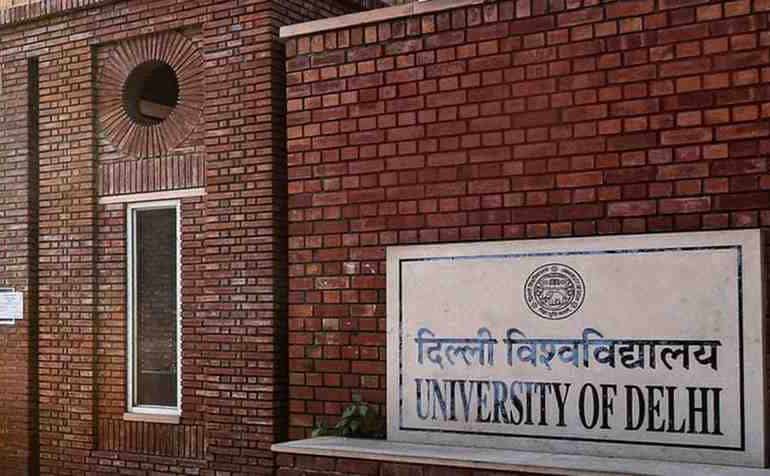
Key proposals for Delhi University’s biggest infrastructural development are currently underway with over 1900 crores dedicated to projects that include a new co-ed college, installation of solar plants and a university-wide surveillance machinery.


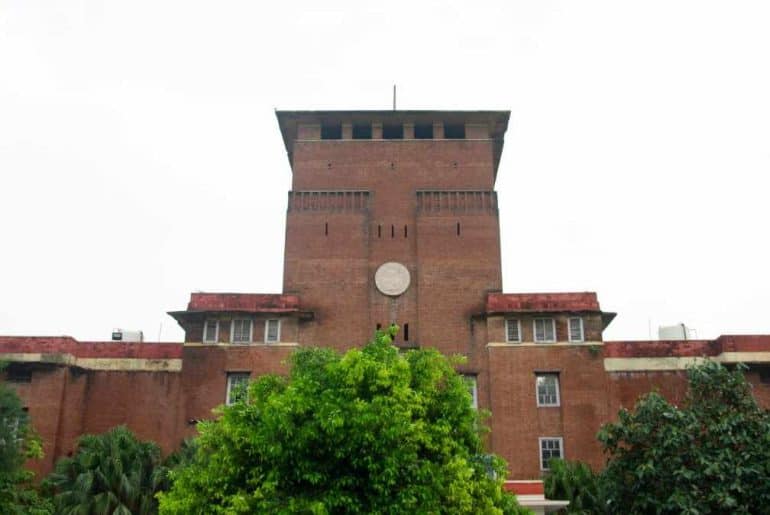
Delhi University is currently moving towards one of its biggest infrastructural pushes in many years, with an allocation of over 1900 crores for projects that are approved or already in process. The major developments are noted to be the creation of a new college at Fatehpur Behri, an IP-based system of surveillance and the installation of solar-powered panels. 

According to the Times of India, these proposals have already been cleared by the finance and building committee. However, they are yet to be finally approved by the executive council, which has slated a meeting on 12th July. 

In June, Delhi University Vice Chancellor, Yogesh Singh confirmed the creation of a new college in Fatehpur Behri with modern 21st-century courses. Delineating the University’s plans, he stated, 

We intend to open a college there by next year. Gram Panchayat has already allotted us the land. However, the college may not be exclusively for girls.


According to reports, 272 crores have been allocated as funding for the new college that is yet to be named. Further elaborating on the educational initiatives under the University, Singh added that a project titled, Veer Savarkar College is currently underway with an estimated timeline of 2026. 

Additionally, a 9.2 crore funding for an Internet Protocol-based surveillance system has been sanctioned to improve safety across Delhi University’s North and South campus colleges. In the light of defunct CCTV cameras across Delhi, this initiative is expected to tackle concerns of security in and around these college grounds. 

Infrastructurally, the University is currently in the process of installing solar-powered systems through the Renewable Energy Service Company (RESCO) alongside a 200-crore working women’s and girls’ hostel at the Dhaka Complex. Serious construction failures, such as salty water and poor concrete cover at the girls’ hostel, along with drainage upgrades at the Sports Complex and Tutorial Block, are expected to follow through. A proposal indicates the construction of a stainless-steel stormwater system to structurally stabilise Delhi University’s Rugby Sevens Sports Complex. 

Ongoing projects under the 1900-crore funding include renovations at the Faculty of Management Studies, new classrooms and faculty rooms for the Department of Commerce, refurbishment of the convocation hall and redevelopment of the vice-regal lodge. An in-principle approval has also been granted for a new cultural activity centre near Shri Shankar Lal Hall.

Under the Higher Education Financing Agency (HEFA), Delhi University has successfully secured funding of 195.6 crore for the creation of a Faculty of Technology building and 120 crores for an academic complex at Surajmal Vihar. 

Given the extent of infrastructural development planned and targeted by the University, a top-level project monitoring committee is expected to be formed under Prof. Balaram Pani, Dean of Colleges. However, the extent of development upon the already approved projects is under question, with a reported physical progress of less than 10%, as reported by the Times of India.

Read also: Delhi University Faces Backlash for Linguistic Misrepresentation in CSAS UG Admission Form

Image Credits: Devesh for DU Beat 

Aaratrika Ghosh

[email protected]

Delhi University’s 2025–26 fee hike exceeds the 10 per cent cap, with charges like the Development Fund and EWS Welfare Fund rising up to 200per cent. Students and faculty voice concerns over steep hikes and lack of infrastructural improvements or transparency.


The University of Delhi has revised its fees for the 2025-2026 academic session. Despite its annual policy on fee hikes stating that fee revisions cannot exceed 10 per cent, this year’s fee hike was more than double what was stated in the policy.

This decision has come in light of similar fee hikes that have occurred from 2022 onwards in courses provided by Delhi University.

The University Development Fund has grown by around 67 per cent, highlighting a steady upward trend in student fees. Alongside this, the University Facilities and Services Charges have surged upwards as well by an intense 200 per cent, and the EWS (Economically Weaker Section) Welfare Fund has increased by 150 per cent, a move that was approved by the vice chancellor using emergency superpowers through a notification on 3rd April.

From Rs 900 in 2022 to Rs 1,000 in 2023, Rs 1,200 in 2024, and Rs 1,500 in 2025, the University Development Fund has increased in size. From Rs 500 in 2022 to Rs 1,000 in 2023, Rs 1,250 in 2024, and Rs 1,500 this year, the facilities charges also went up. The Welfare Fund started off at Rs 100 in 2022 and has since increased to Rs 150 in 2023, Rs 200 in 2024, and Rs 250 today.

The University Development Fund increased by 25per cent this year, from Rs 1,200 to Rs 1,500. A 20 per cent increase was made to the university’s facilities and services charges, which went from Rs 1,250 to Rs 1,500. In the meantime, the EWS Welfare Fund saw a 25 per cent boost in just one year, going from Rs 200 to Rs 250.

The cost of the BEd and MEd programs is Rs 8,931 and Rs 9,046, respectively. The cost of law courses such as LLB and LLM is Rs 8,087. Technical courses like MCA and MSc Computer Science are more expensive, costing Rs 23,007 and Rs 22,887, respectively.

Students studying commerce will pay Rs 16,900, while those pursuing an MA in social work will come in at Rs 21,901.

Standard fees for students of undergraduate and postgraduate programs differ depending on the choice of stream and course, ranging from Rs. 8,000 to Rs. 20,000. PhD candidates would pay a fee of Rs. 8,087, while MBA programs vary—IB and HRD streams cost Rs. 52,279, while a full-time MBA costs Rs. 60,818.

The consistent fee hike has sparked concerns amongst students and faculty of Delhi University alike, with Prof. Pankaj Garg, chairman of the Indian National Teachers’ Congress (INTEC), stating,


Students are being charged hefty fees by the university under the guise of the University Development Fund and University Facilities and Services Charges. The university, however, does not create any infrastructural facilities for the college; in government universities, this practice should not be permitted. Colleges should be allowed to retain the funds.”

As of April 12, there has been no response from Vice Chancellor Yogesh Singh on the revision of the fee hike schedule.


Read Also: 72 Hours and Still No Trace: The Disappearance of Sneha Debnath Demands Urgent Action


Image Credits: Hindustan Times

Aastha Singh

[email protected]

19-year-old DU student Sneha Debnath has been missing since July 7 near Signature Bridge. With no leads, non-functional CCTVs, and minimal media attention, her disappearance has raised questions about public safety, surveillance, and institutional accountability in Delhi.

Sneha Debnath, a 19-year-old BSc Mathematics student at Atma Ram Sanatan Dharma College, University of Delhi, has been missing since the early hours of July 7. According to her family, Sneha left from Sarai Rohilla and was last known to have taken a cab, reportedly being dropped off near Signature Bridge at approximately 8:30 am. Her final communication was around 8:45 am, after which her phone has remained switched off. As of now, there has been no trace of her.

An FIR has been filed, and police claim that an investigation is underway, but over 72 hours later, no leads have surfaced. What is particularly alarming, family members say, is the alleged failure of basic surveillance infrastructure in the area. CCTV cameras around Signature Bridge, identified in previous reports as a location vulnerable to suicides and disappearances, were reportedly non-functional at the time. The lack of visual evidence has severely impeded the investigation, raising pressing concerns about public safety and the accountability of civic authorities.

Sneha’s family, friends, and college peers are now grappling with a mounting sense of helplessness. Her mother, in a widely circulated video, is seen breaking down, pleading for her daughter’s return. Repeated appeals for urgent intervention have, so far, failed to generate any significant response from either law enforcement or political leadership. Signature Bridge, the site of Sneha’s last known location, has been the subject of public concern before. Despite multiple incidents in the past, calls for improved surveillance, functional CCTV cameras, and regular patrolling have reportedly gone unheeded. The current case, many believe, is a direct consequence of this neglect. In a city that routinely promises technological advancement and public safety, the failure of the most basic protective measures is a sobering indictment.

What has further intensified the distress is the near-complete absence of media coverage. A student from one of India’s most reputed public universities disappearing in broad daylight, without triggering national or even city-wide concern, speaks to a larger issue of whose stories are amplified and whose are quietly erased.

The case of Sneha Debnath cannot be seen in isolation. It is part of a wider, troubling landscape in which women’s safety continues to be precarious, and institutional responses remain reactive rather than preventative. For students, parents, and citizens at large, it is a stark reminder that vulnerability persists despite promises of protection. Sneha’s friends and family continue to urge anyone with information to come forward. But beyond individual appeals, this moment demands structural accountability. For Sneha’s sake, and for the many others who never make headlines, it is time the silence is broken, not just in words, but in action.

Read Also: NEP Approves Research Supervision for NEP-UGCF Amidst Concerns on Implementation

Image Credits: Sneha Debnath Family Statement

Ritobrita Mukherjee

[email protected]

Despite the Academic Council’s approval of the policy of research and supervision in regards to NEP-UGCF’s fourth year policy in DU colleges, many concerns have been raised in regards to its implementation.

As of July 5, 2025; the policy of research supervision for the fourth year of NEP-UGCF has been approved by the Academic Council amidst dissent by several elected members. According to Rudrashish Chakraborty, who is Associate Professor at the Department of English in Kirori Mal College, as well as an executive of DUTA (Delhi University Teachers’ Association) from 2023 to 2025, the poor devising of the policy is owed to multiple reasons; the first of which include the lack of infrastructure in the form of space and laboratories in colleges to conduct quality research at the undergraduate level to research supervision not being accounted for as workload for teachers, excessively burdening teachers who are already inundated with work.

Aside from these issues, the division of workload has also been a contentious topic, with the policy deciding on a stipulation of a minimum of ten students to be allotted to a teacher for research supervision. This ratio is not only too high and would therefore jeopardize the quality of research, but also make coordination difficult as it is not possible for any teacher to do justice to the research work of so many students after engaging in their own workload.

In addition to this, no funds have been allocated for research work in the fourth year of UGCF, which leaves colleges to fend for themselves. Colleges in the Delhi University circuit are being advised to mobilise funds through the Students’ Fund, which may prove to be insufficient in the long run.In terms of research, the students are to study four courses alongside writing a dissertation, which not only takes the focus away from the conduction of research, but will also lead to a reduction of quality leading to research becoming a compulsion instead of being an original, worthwhile contribution to Indian academic spaces.

One of the guidelines for research supervision expects students pursuing the fourth year to publish in a scopus-indexed journal as research outcome. Given that even teachers would find it difficult to pursue such interests within the stipulated time while balancing full-fledged studying, this unrealistic clause will discourage students from pursuing the fourth year.

Anumeha Mishra, a member of the Academic Council, has stated,


The university must refrain from applying a one-size-fits-all size model in approving projects eligible for research funding under IoE. Discipline-specific parameters must be evolved.”

In 2019, Delhi University’s colleges saw a 25% increase in student intake due to the EWS expansion. An additional surge in admissions by 20% occurred following the implementation of the Common University Entrance Test (CUET) from 2022 onwards. This move, having been undertaken along with the fourth year, comes in light of accusations of mismanagement and lack of infrastructural accommodation for the rising number of student intake every year. The absence of laboratories, reading rooms, and teacher workspaces severely undermine the programme’s feasibility. The implementation, thus, appears rushed and in the absence of structural and financial support, risks diluting the quality of education and pushing the system toward collapse. 

Dr. Monami Sinha, also a member of the academic council, points out how undergraduate students currently studying seven courses per semester, including SEC and VAC, dilute the study of core subjects and awarding of credits per subject.

Read Also: Delhi University Faces Backlash for Linguistic Misrepresentation in CSAS UG Admission Form.

Image Credits: Hindustan Times

Aastha Singh

[email protected]

As Delhi University’s four-year undergraduate programme enters its final year for the first batch under NEP 2020, students are met with confusion, institutional silence, and uncertainty over its value.

NEP 2020 had big dreams for education. It promised, among other things, a “more multidisciplinary undergraduate education.” Flagging the “lesser emphasis on research at most universities and colleges”, the policy framed research as the hallmark of a “great civilisation.”

To fulfil this vision, the four-year undergraduate programme (FYUP) was introduced. The new curriculum offers students the option to choose between three specialisation tracks in their final year – Dissertation Writing, Academic Projects, and Entrepreneurship. The first track is designed for those pursuing academic research, the second focuses on applied research, while the third allows students to develop entrepreneurial ideas. These components, worth 12 credits collectively, are meant to usher in undergraduate research as a formal part of the academic journey.

Delhi University was among the first central universities to implement the FYUP under NEP 2020, beginning in the academic year 2022–2023. The reimagined structure was presented as a transformative space to cultivate holistic, multidisciplinary inquiry, with the four-year format being positioned as the preferred option, offering students the opportunity to pursue a major alongside minors, engage in research, and explore broader intellectual horizons.

However, it seems to be that within its inaugural batch there is a general consensus that this ambitious experiment will promptly fall short of what it envisioned. Anecdotal evidence from students across colleges suggests that a significant number are choosing not to continue into the fourth year. While Delhi University has not released official enrolment statistics yet, student testimonials across different colleges and universities show a similar pattern of hesitancy and concern.

After graduating students have a few options. They typically pursue placements, graduate studies or prepare for competitive exams. The added fourth year has only intensified these pre-existing dilemmas, introducing a new layer of uncertainty.

For students interested in research, the fourth year appears redundant. The conventional path of a three-year bachelor’s followed by a two-year master’s continues to be the preferred model. Some students argue that it won’t match the depth and rigour of a two-year masters. Others are more cautiously optimistic. Tia Pandit, a Physics (Hons) student from Kirori Mal College, sees her decision as a calculated move to improve her chances of being accepted into postgraduate programs abroad. The capstone thesis and a minor in CS will, she believes, give her the academic depth many international universities look for.

Yet even those inclined toward research worry that the year may not deliver the value it promises. Khushi Aggarwal, an Economics (Hons) student from Hindu College, remarked,

DU often promises more than it delivers. For instance, it previously mentioned that under the NEP framework, internship opportunities would be provided in place of VACs or something similar, but that didn’t materialise.”

A principal from a prominent North Campus college told The Indian Express that students are at a crossroad, stating, “From a student’s perspective, there are now two choices – either exit after the third year and prepare for CUET-PG or CAT, or continue with the fourth year.“ He failed to take into account the fact that the students might just treat the fourth year as their preparatory gap year.

Aakriti Singh, a journalism student from Kamala Nehru College, asserted that it’s better to pursue a research degree rather than staying idle alongside preparing for exams. Similarly, Sreeja from Gargi College revealed,

More than half of my class is opting for the fourth year just because they couldn’t get better institutes for masters. All of us plan to study better for entrance exams this year rather than taking a gap year to go for masters next year.” 

Sarah Nautiyal, a BA (Hons) English student from Kirori Mal College, noted that most students, including her, see this period as a “gap year with benefits”. She emphasised that her decision to stay was influenced a lot more by the faculty because of whom the year “won’t be a complete waste”. 

This batch has already endured multiple institutional changes, from the introduction of CUET to the rollout of new course components like VACs and SECs, but the fourth year stands out for its sheer lack of clarity and institutional preparedness. There is near-unanimous agreement among students that colleges failed to adequately explain this entirely new system.

Tia recalls how, in her first year, her college had organised a detailed workshop to explain the newly introduced academic structure. In contrast, now in her third year, she says there has been complete silence around what the fourth year will actually entail. There have been no sessions, no official communication, and no clarity about the structure or content of the courses being offered. Far from guiding them through the process, many faculty members appear to be in the dark themselves, uncertain even about what courses will be offered. In fact, several professors have gone so far as to advise students against opting for the fourth year.

Extending the discourse upon the lack of clarity, Shrishti Shishodia, a Political Science (Hons) student from DCAC, supplemented its far-reaching influence on the careers of the students, stating, “The 4th year remains a bizarre idea for the students. Especially when the struggle to have a job in today’s market, embellished by concentrated competition in the few domains of respected employment avenues, is considered.”

The lack of clarity is only one part of the problem. Many DU colleges do not have the infrastructure to support a meaningful fourth year. Maya John, an elected Academic Council member and faculty at Jesus and Mary College, pointed out to The Indian Express that a majority of colleges lack the resources necessary for undergraduate research. There aren’t enough laboratories, classrooms, computer systems, access to original software, or additional funding and scholarships. Without these, the quality of academic projects and research output will inevitably suffer.

The fourth year, like many NEP reforms, seems to be detached from the ground reality and instead be driven more by ambition of outcome. As a result, students are inevitably caught in the crossfire, asked to commit to an additional year without any clarity, structure or institutional support needed to adequately transform the undergraduate experience.  They are, as Sarah emphasised, “guinea pigs”, participants in a policy experiment that remains worryingly underdeveloped.

Read More: Major DU PG Syllabus Cuts on Religion, LGBTQ+ and Pakistan Spark Faculty Divide

Image Credits: Devesh for DU Beat

Yashika Jain 

[email protected]

Delhi University’s PG syllabus cuts on religion, caste, LGBTQ+ issues, and Pakistan spark faculty backlash, raising concerns over academic freedom and ideological interference.

On 25 June 2025, the Standing Committee of the University of Delhi (DU) proposed several contentious changes to the postgraduate syllabi of Geography, Sociology, and Political Science. The revisions include the removal or significant reworking of content related to religion, caste, LGBTQ+ issues, and the study of Pakistan. The changes have triggered widespread criticism from faculty members, with further discussion scheduled in the upcoming meeting on 1 July.

In the Department of Geography, three major papers were affected. In the elective paper Territorial Bases of Politics in India, the committee objected to Unit 3, titled “Internal Conflicts and Problems of Nation Building,” which addressed religious conflicts. A key reading, The Production of Hindu Muslim Violence in Contemporary India, was removed. In Social Geography, Unit 4 on “Distribution of SC Population” was eliminated. According to committee members, this decision was made to de-emphasise caste-related material. Additionally, Vulnerability and Disaster, another elective, was completely removed from the syllabus.

The Sociology syllabus also saw significant intervention. In Introduction to Sociological Theory, the committee questioned the absence of Indian thinkers and suggested their inclusion. Objections were raised regarding the inclusion of the reading Weston, K. (1997). Families We Choose: Lesbians, Gays, Kinship, as same-sex marriage is not legally recognised in India. In Sociology of Religion, Unit IV on Religious Authority and Organizations was flagged for using academic terms such as “church,” “sect,” and “cult.” Members questioned why terms like “rishi-muni” were excluded. Despite faculty clarification that these were standard sociological terms, the committee still recommended revision.

Urban Sociology also faced changes. The committee argued that Unit 2 focused excessively on violence. Key readings addressing religion and caste were removed, including The Muharram Procession of Mumbai, Animating Caste: Visceral Geographies of Pigs, Caste and Violent Nationalisms in Chennai City, and Deceptive Majority: Dalits, Hinduism, and Underground Religion.

Some faculty members have raised concerns about the committee’s role in mandating syllabus revisions.

The Standing Committee’s direction to the Departments of Geography and Sociology to change their syllabi defies academic rationale and is an act of overreach. While the Standing Committee can share inputs and feedback with the departments, it cannot direct the departments to remove papers and readings without giving academic justification.”

said Rudrashish Chakraborty, Associate Professor at Kirori Mal College and elected member of the DUTA Executive (2023–25).

The Political Science syllabus came under the most scrutiny. Faculty members were directed to ensure the content remained “India-centric” and avoided material that “glorifies Pakistan.” This instruction aligns with Vice Chancellor Yogesh Singh’s earlier stance amid recent geopolitical tensions.

Dr. Monami Sinha opposed the changes, stating,

“It is imperative to study Pakistan in detail because, pedagogically, we need to train our students and foster scholarship on Pakistan, as it remains one of India’s constant foreign policy challenges.”

Four electives relating to China, Pakistan, and Islam in international relations were removed. These included Pakistan and the World, China’s Role in the Contemporary World, Islam and International Relations, and Pakistan: State and Society. In Religious Nationalism and Political Violence, the topic “Sangha politics, civil warfare and the peace process” was removed, along with the reading by Blom Hansen on Hindu nationalism and violence.

Read Also: DU Student Murdered by her Classmate; Body Burnt at Delhi’s Sanjay Van.

Image Credit: Times of India

Yashika Jain 

[email protected]

Delhi University’s CSAS 2025 UG admission form has drawn criticism for listing “Muslim” as a mother tongue while omitting Urdu, a constitutionally recognized language. Academics condemned the move as communal, culturally reductive, and violative of constitutional linguistic rights.


Delhi University’s Common Seat Allocation System (CSAS) 2025 form for undergraduate admissions has sparked widespread criticism after it listed “Muslim” as a mother tongue. Meanwhile, Urdu, a constitutionally recognised language under the Eighth Schedule, is absent. Screenshots showed that DU’s online application form included terms like “Muslim”, “Bihari”, “Mochi”, “Kurmi”, and other caste/regional labels in the “Mother Tongue” dropdown while omitting Urdu. This negligent act has sparked outrage, as students and professors took to social media platforms to point out the underlying communal rhetoric.

This is not just a clerical error. It reflects a deep-rooted communal mindset that reduces an entire community to a religious label, stripping away linguistic, cultural and regional identities. Muslim is not a language. Muslims speak the same languages as others in their regions, be it Hindi, Punjabi, Bengali, Malayalam, Tamil, or Urdu.”

Said Professor Abha Dev Habib, Democratic Teachers’ Front general secretary 


The academicians and students argued that the choice of replacing Urdu with Muslim, apart from being factually incorrect, also implies that Muslims are incapable of having any other mother tongue than Urdu. This not only erases the linguistic diversity of Indian Muslims but also reduces an entire community’s cultural identity to a single, inaccurate label.

….this act of the DU administration is a serious threat to the Constitution of India, as it violates the Eighth Schedule of the Indian Constitution, and also it undermines the composite and the inclusive spirit of a central university! No administration of DU had been so overtly communal as the present one, and this recent assault on Urdu takes the cake!”

Stated Prof. Rudrashish Chakraborty, Associate Professor and DUTA Executive

He further stated that such a development is “a calculated act of communalism. He added that DU seems to have mistakenly assumed that Urdu is exclusive to Muslims; it does not mean only erasing a language, but it also entails erasing a shared cultural and literary legacy.

It is sad that a premier university like Delhi University is committing such mistakes. These should be rectified immediately. Diversities and multilingualism need to be acknowledged and respected,” said Dr Mithuraaj Dhusiya, Executive Council member.

This exclusive stance from prominent central universities also raises questions about the larger ethos shaping the actions of the current administration as members of academia worry about its “rabidly communal” policies.

Read Also: Delhi University Launches a New Course Titled ‘Negotiating Intimate Relationships’ for 2025-26 Academic Session


Image Credits: Devesh, DU Beat


DU Beat

Delhi University has introduced a new undergraduate elective titled “Negotiating Intimate Relationships” for the 2025–26 session. Aimed at addressing rising emotional distress and youth violence, the course explores love, intimacy, and toxicity in digital and real-life relationships.

Delhi University has introduced a first-of-its-kind undergraduate elective titled “Negotiating Intimate Relationships” for the 2025–26 academic session. The four-credit elective, offered by the Department of Psychology, is open to students across disciplines and colleges and is aimed at helping young adults understand and navigate the complex realities of romantic and platonic relationships in a digital age.

Amidst increasing overlaps between digital and physical spaces, the course seeks to equip students with the tools to understand, reflect on, and negotiate romantic and platonic relationships in the age of dating apps.

The course consists of three lectures and one tutorial each week and is structured into four major modules, including Theories of Love and Sexuality, The Psychology of Friendships and Intimacy, Recognising and Responding to Toxic Patterns and Building and Sustaining Healthy Long-term Relationships.

Designed as an interactive course, students will be asked to analyse their own social media networks, engage with everyday relational challenges, and analyse pop cultural depictions as well as real-life case studies. The course aims to use personal and digital experiences as key sites of exploration.

Pop culture will play a central role in these explorations, with films like Kabir Singh and Titanic used to critique how toxic behaviour is often romanticised in mainstream media. Students will also use Sternberg’s triangular love scale to assess one’s love towards a romantic partner.

“Films like Kabir Singh reflect how unhealthy behaviours are often glorified as passion, and we unconsciously absorb those ideas,” said Rishika Raj, a second-year student at Bharati College, DU.

The course has been introduced in the backdrop of a rising number of crimes among teenagers and young adults, many of which stem from unchecked emotional turmoil and toxic relationship dynamics. Between May and June alone, Delhi recorded at least three murders connected to possessiveness and emotional manipulation in young romantic relationships.

“I can say from personal experience that one faces a lot of hardships when it comes to navigating relationships at this age. We’ve never really been taught the do’s and don’ts of intimate relationships,” said Kumari Kajal, a first-year student at Hansraj College.

According to Naveen Kumar, a professor from DU’s Department of Psychology, young people today face unique relational challenges that earlier generations did not.

“With both parents working and ‘digital parenting’ on the rise, young people are granted a kind of freedom they aren’t always emotionally equipped to handle,” he told AajTak.


“People want freedom but don’t know where the boundaries lie. This lack of clarity leads to stress, mistrust, and often the breakdown of relationships.” He further added

Professor Kumar also pointed to the increasing transactional nature of modern relationships, which are often built more on intensity and immediate gratification than on emotional resilience. He warned that this shift can escalate to dangerous extremes, as evidenced by the recent spike in violent incidents among teenagers and young adults in Delhi.

According to reports, the university introduced this course in response to growing concerns about emotional distress and rising instances of violence rooted in toxic relationships among young people. Through structured academic engagement, the goal is to help students build emotional awareness and develop resilience.

Read Also: Exploring the state of teen love in an ever changing landscape

Image Credits: Hindu College

DU Beat

An 18-year-old student from Delhi University was allegedly lured by her classmate, Arshkrit Singh into Sanjay Van where she was stabbed, strangled and murdered by him. 

Just five days before her 19th birthday, an 18-year-old was reported missing on June 1st and was found murdered at South Delhi’s Mehrauli. The alleged murderer who was the victim’s classmate, Arshkrit Singh has reportedly been arrested. Police reports state that both the victim and the accused were students of Delhi University’s School of Open Learning. 

According to reports, the victim left her residence at Jahangirpuri for classes on Sunday morning but did not return home. 

She had last informed her mother around noon that she would be back soon. When she failed to return, her family began searching for her,

a senior police officer reported.

Later that day, the family of the victim received a call from the accused’s father who claimed that the victim had attacked Arshkrit with a knife that led to his hospitalisation in Pitampura. This prompted the victim’s parents to file a complaint with the police and register a kidnapping case. 

Based on suspicion and past altercations between the victim and Arshkrit, the complainant alleged that he may have abducted her,

a police officer told the Deccan Herald

Further investigation of CCTV footage led the police to Singh who was arrested. On further questioning, he revealed that he had lured the victim to a secluded area of Sanjay Van where he had stabbed and strangled her to death and attempted to burn her body. 

After the attack, he tried to burn the body. He sustained minor injuries during the stabbing and fled to the hospital for treatment. The body was discovered based on his information,

stated the Deputy Commission of Police (South Delhi), Ankit Chauhan.

In a conversation with Times of India, the victim’s family revealed that Singh had been harassing the victim, his daughter for months after she had cut off all ties with him. They further denied her being in a relationship with Singh and stated that they met at a party where they became friends. The victim’s father said, 

We advised both of them not to meet, yet the youth would come to my house every couple of months to start arguments. We informed his parents too. Though he apologised, the harassment continued. 

He further added that Singh had allegedly disrupted his daughter’s Korean language class by starting an argument and twisting her hand. In conversation with the Indian Express, the victim’s sister revealed, 

He met my mother near the gurdwara. When my mother confronted him about his coercive behaviour, he grabbed my mother’s hand and tried to snatch my sister’s phone from her

She further added,

He used to often threaten my sister with suicide, which would scare both her and my mother.

Shocking details regarding the case have been revealed by the police who claim that Singh used a fake social media profile of someone the victim knew to lure her to Sanjay Van. Singh was seen entering the forested area at around 8:30 in the morning and the victim was located there at around 10 AM. Leading her to an isolated spot, Singh stabbed the victim multiple times, strangled her and tried to burn her body. He was later spotted exiting the area in the afternoon. 

On Sunday, they sat and talked about their relationship for almost two hours before he killed her… she had apparently told him that she was betrothed to someone else, which was when the situation escalated,

a senior police officer revealed.

In conversation with the Indian Express, Singh’s neighbours expressed disbelief at the accusations.

Alleged statements by the accused reveal that he suspected that the girl was speaking to other boys which led to frequent arguments and ultimately led to him planning the murder. While investigations are currently underway to determine the actual motive, the murder weapon has been found and the accused has been reportedly booked under Section 103(1) for murder and Section 61(2) for criminal conspiracy.

Read also: Minor Girl Rescued After Gang Rape Near Moolchand, Alleged Police Inaction


Image Credit: Hindustan Times

Aaratrika Ghosh

[email protected]

Delhi University’s Sri Guru Gobind Singh College of Commerce reported a massive fire in the college library on Thursday morning, destroying over 3000 books and leading to the cancellation of the morning semester exams. 

In Northwest Delhi’s Pitampura, a massive fire was reported at Sri Guru Gobind Singh College of Commerce, University of Delhi in the morning hours of Thursday, May 15th, 2025. According to the Delhi Fire Service (DFS) chief Atul Garg, the fire broke out around 8:55 in the morning and 11 fire tenders were rushed to the college who managed to bring the situation under control by 9:40 A.M. In response to the ongoing cooling operations, a senior fire official added, 

Several window panes shattered due to the high flames, and the fire spread rapidly due to strong winds. Our teams responded swiftly and managed to douse the flames.”

Originating in the college library, the fire impacted the building’s first, second and third floors, extensively damaging the infrastructure and academic material. Reports state that though there were no casualties, over 3000 books have been destroyed along with the library’s online system being damaged. Although investigations are currently underway to determine the exact cause, a senior college official informed the Press Trust of India

A short circuit in the library’s server triggered the fire, extensively damaging hundreds of books in the section that housed old books. The library is still filled with smoke, and a detailed assessment of the losses will be possible only once visibility improves.”

Sri Guru Gobind Singh College’s Principal expanding on the extent of damage added

Only the top floor of the library was caught in the fire. The books on that floor were damaged due to the blaze, but we kept old editions of books and those in less circulation on the top floor. The newer editions of books were on the ground and second floors. There was no damage to our archival section as it is not on the top floor.”

Although there is widespread damage, the library’s facility system is reportedly functional with the manual issuing of books to students amid the ongoing end-semester examinations of Delhi University. Around 400 undergraduate students were scheduled to take the examination during the morning session which was cancelled in lieu of the fire breakout. However, since the library was housed in a separate building, the examinations scheduled to take place from 2:30 to 5:30 P.M. were conducted after the handover by the fire department. In conversation with the Indian Express, Principal Jatinder Bir Singh further stated, 

Since lights were to be cut off for the fire department to extinguish the fire, we postponed the exams scheduled in the morning. Afternoon examinations went on as usual. The controller of examination is yet to notify a fresh date for the exams”. 

Recently, Delhi University’s Kalindi College reported a ceiling fall falling on the head of a faculty member causing serious injury. In light of such incidents outrage has sparked amongst students who raised concerns of student-faculty safety and welfare over the deteriorating condition of the infrastructure of DU colleges. In a statement released by the National Students’ Union of India (NSUI) on 15th May, they questioned the negligence and demanded immediate safety audits in all colleges throughout Delhi University. 


Read also: Thefts and an Unaccountable Administration Raise Concerns at Kirori Mal College

Image Credits: The Telegraph

Aaratrika Ghosh

[email protected]