Tag

KMC

Browsing

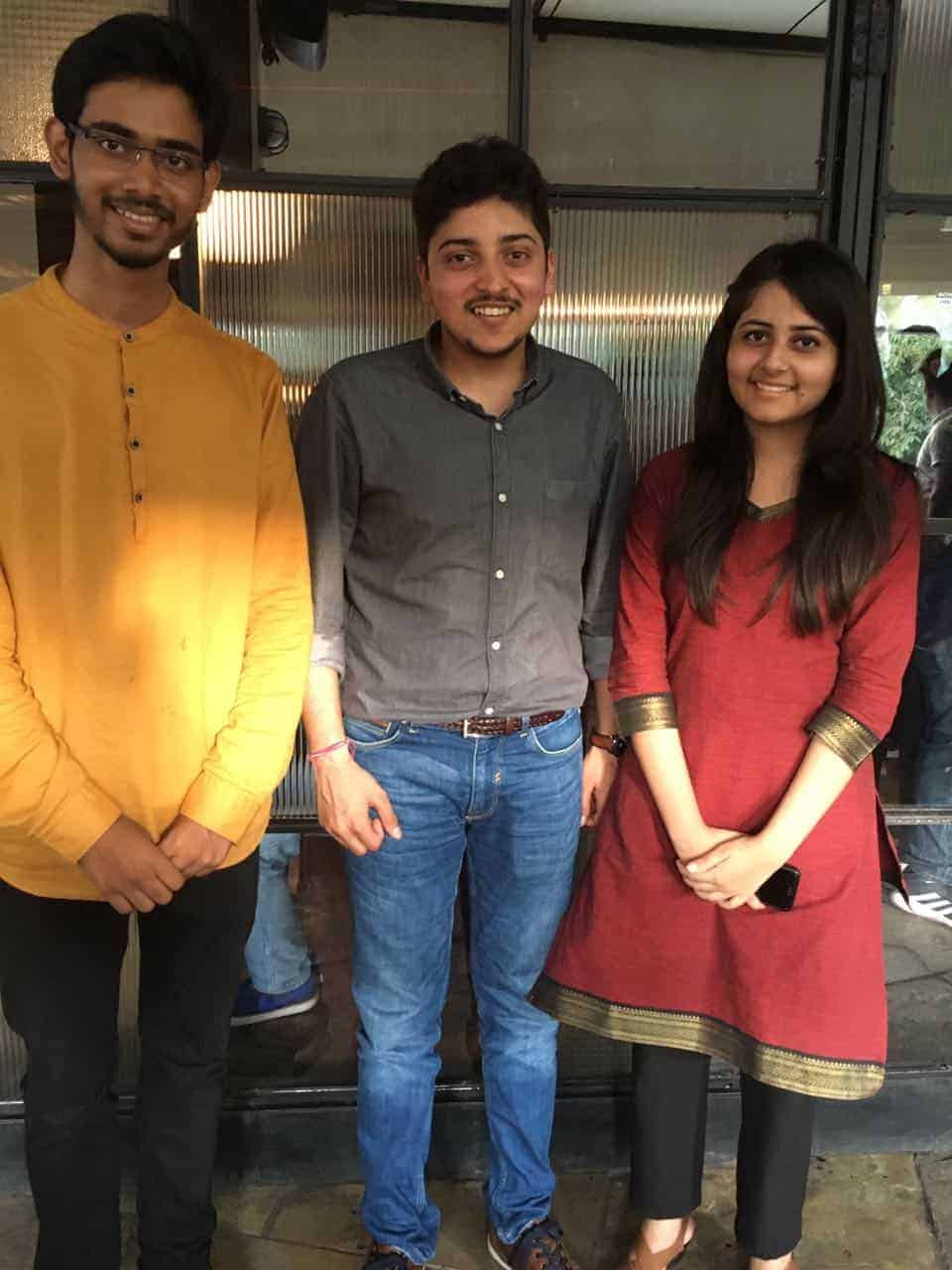
From the comfortable interiors of Jodhpur, Neerav Jain landed in the dynamic educational hub of the University of Delhi; where academics are kept at par with the extra-curricular caliber. The young entrepreneur takes us through his entrepreneurial adventure, CityFurnish, and the multi-faceted learning-opportunity the journey proffered after he graduated from Kirori Mal College back in 2013.

Starting a business is a mammoth task. Could you please delineate on the initial hurdles your start-up faced?

There were three major hurdles we faced initially. One thing was the age factor; I was starting very young and had just completed my undergraduate education. I had two years of work experience with my family and naturally it takes a little bit of time to understand things. Typically, if you see the breed of start-up coming in, they are filled by IITs and IIMs. When you are just coming up with a bachelor’s degree and scaling up, it’s challenging. It’s not just about funding, but about hiring too. When you are hiring someone who is smarter and more educated than you, you need to convince them to work for you. Secondly, having vision clarity. Furniture is nonstandard item. You can have categories in luxury, but in furniture this is a very difficult thing. We were clear that what we want to achieve as a company. We want CityFurnish to be known for furniture the way Uber is known for cab services in spite of the fact that they have started other services too.  Establishing oneself in a particular category is a challenge. In short, don’t go for small money; create your own domain no matter how tough it is.

The third difficulty faced was creating a brand with limited resources like budget. Creating a brand needs investment. I learnt about this while I was in college. I was the Placement Cell and Commerce Society head. In a society, you need to pull up an event with very few funds. I learnt how to create a network effect and create a buzz. We started targeting customers near Chanakyapuri who weren’t much price conscious. They were very generous with reviews and sharing contacts. They acted as leverage for giving us publicity. It is a mammoth task creating a brand with limited resources. We wanted people to talk about our company.

Is there any entrepreneurial story that has personally inspired you?

One of my early investor was Mr. Jitendra Gupta, founder of Citrus, the payment gateway. His story is very similar to mine. Essentially, I am from a non-tech background. Whereas, he is a finance guy, running one of the largest payment gateway companies in India. His was the only start-up which was able to give a successful exit last year. Naturally, I was very motivated and connected with him due to several reasons. He has started with lot of challenges as in hailing from a non-tech background and hiring a tech team. Building the founding team will decide the next 50 teams in the company. He inspired me to be meticulous about choosing founding members. I learnt how to drive my co-workers with motivation as we weren’t paying much being a budding company. I learnt the concept of frugality from him and how it was important to chase investors with business matrix rather than the vanity matrix.

You were the Placement Cell Head and Com Soc President. How effective do you think DU’s placement and incubation cells are in grooming one’s personality?

For me, definitely very helpful. Coming from Jodhpur, till 12th Pre-boards, my highest percentage was 69, so naturally, I was never a topper. DU itself came in as a little bit of surprise. The first thing I got to know was that a lot Delhites, typically, were doing multiple things at once; debate society, drama society, internships, article ship, and then they were good in studies also. That was something I was never doing in Jodhpur. When I came to DU, the only two things I could apply for were the Placement Cell and Commerce Society, where the requirements were management skills and aptitude. For me, the whole process was extremely intriguing. the complete grooming, the street smartness, the management of the teams; because the fundamental idea was that you’re not paying anything to the team. But still they are motivated to work, to stay till 3 in the night and then turning up next morning to again do all the work. From brining something, getting something from the canteen to managing work; and you’re not paying them anything and yet they are so motivated. Even when you’re starting your own company, though you’re not paying anything, you can still motivate your team if you have the vision theme clear. That’s an important learning I got; salary is not everything if you’re building up your company from scratch. My experience with Placement Cell and Com Soc, that frugality that spend very less, a lot of these things were imbibed from this.

It’s going to be the 2-year anniversary of CityFurnish. Looking back, what do you think could have been done differently or could have yielded better results?

That’s a very retrospective question! As an entrepreneur, there was a scope for improving each and everything. But for something which always bothers me, firstly is the hiring aspect of it. When I started up, I hired just for the role: I need a finance guy, a marketing guy, I hired just for the sake of hiring to conform to the role. That was a major point. Secondly, you need to stick to your gut feeling. Because you’ve thought this is the team structure, this is the vision, this is how we’re going to be different from the competitors, and this is how we’re going to be in the long run. We would always prefer to compete on service level, rather than the pricing level. If you’re fighting on the pricing, it’s always a downward spiral.

When did you make your first breakthrough? What was your first milestone?

The inception of CityFurnish has not been done in India. I was in Netherlands at the time and was handling an export order. During that time I got in touch with Mark, founder of the company called Just Eat which is equivalent Zomato in India but on a global scale. He was running a program called startup boot camp.  He asked me to be a part of it as I had nothing much to do after my work. We got incubated in the start-up boot camp and out of a 100 teams, our start-up was among the top 10. That was a huge validation. Then, I came back to India because Delhi-NCR, as it is itself a bigger market than Netherlands. On 20th September 2015, I got my first order, before we were officially incorporated. Receiving an order before officially launching a business is definitely something which pushes your morale.

You worked for your family business, Chandra Shekhar Exports. How did you decide to start your own venture and how supportive was your family about it?

My dad has been running his company for over 25 years now and naturally, he has his own set of rules and protocols to follow. I came from DU at that time, fresh of energy and innovation. I wanted to change everything about the business. At that time, I didn’t realize there is a thinking process working behind every protocol. My father was 58 at that time and I was 22 giving him suggestions like, “Aise nahin, aise karo.”  And he would dismiss my suggestions which did hurt my ego, but it’s an important learning process. It was difficult for me at that point to understand that behind every set process there is an experience behind it.

How has your personal life changed ever since you grew out the reigns of your business?

I don’t think that I have achieved success yet, but yes, personal life has changed a lot. In DU, you have an amazing lifestyle. But once you start getting busy, you have to start saying no to plans made by friends. A lot of relationship equations change. Social life gets restricted; and some people understand these changes and some don’t. You have to forego a lot of short term pleasures which is actually quite challenging at this age.

Being DU students we realize that our lives are full of experiences. We want you to go back in the memory lane and feel nostalgic. Can you share some of your experiences with us?

When I came to Delhi, I really didn’t like it.  Every two weeks, I used to go back to Jodhpur because of homesickness. I had made up my mind to discontinue studying in DU after a year; it was tough. But over time, it turned out to be different. It pushed me out of my comfort zone. Getting into DU was a slap in that mode. There was a cultural diversity, a vast set of people who won’t agree to your opinion just for the sake of it. The second thing that DU offered me was the human connect. I am still in touch with my placement cell juniors. I still know all the office bearers of my society. They still rope me in events they conduct, and thus, thereis a lot of connect still now.

I was involved in lot of extra-curricular activities and politics.  It gave me an experience for life time.  KMC and Ramjas are very famous for politics. Out batch was the first to churn out a President from B.Com after 35 years. That was the difference; politics has a notion of aggression around it. The violence is real. For DU, for first years, the gruesome violence is shit scary. Within college premises, hostel brawls, it is a whole issue altogether. At the exterior, it is a simple college election. Internally, a lot of things matter. Parties will come to societies and offer different services to garner votes. You obviously don’t want to get into their books but indulging in these unethical tactics is also not favourable. This is something which happens in the business world. The process of acquiring licenses and other procedures you will encounter people from influential backgrounds. If you’ve already experienced this in colleges, which DU offers, it gives you a wonderful understanding of self-confidence of your ability to handle it.

Had there been no DU, would there have been a CityFurnish?

Tough to say! I’ll quote an example from Amazon. When Amazon was started, it was an accumulation of events. The guys had to face challenges with regards to the products, social media changes. Similarly, DU has been an important part. So, I would say partly yes. Had I gone to Bombay, I would have landed in Chandra Shekhar Exports and would not have had the confidence to venture into new things with such aplomb. I would have been settled and devoid of the pressure. Everything under DU had a different role; commerce society, college politics, and so much more. A lot of insights and my actual experiences stem from my days at DU. How to run my team, how to build their morale, how to motivate them without giving them an adequate salary; it’s all there.

It’s a competitive world. How do you make sure that you stay at par with your competitors, especially with the advent of social media amongst other changing trends?

From the competitor’s perspective, we realized our strengths and weaknesses from an early stage which is very essential. Instead of having just one barrier to entry, our approach was to have multiple barriers. We divided it across spectrum. The prima facie was to build the brand. Out of our team of people dealing with customers, you will see our average response time and delivery time is 48-72 hours, versus our competitors which is 7-10 days. Wherever we could get the customer delight factor, we tried to focus on that; from the project and team level. Secondly, we realized from the technological point. My other two partners, Saurabh and Vineet, have an expansive work experience of 6-7 years, with education from IIM and DTU respectively. Earning highly, coming into a startup with no salaries for at least a year was a challenge itself. We have divided our roles, which has helped us build our own defenses. Saurabh is extremely proficient in the digital marketing field. At the end of the day, the customer knows us from the digital spectrum. Saurabh used the strategy of ensuring that CityFurnish was always amongst the top three searches. What Vineet brings on board is the financial and convenience aspect. He collaborated with important companies and adapted a payment model which suited our functioning method and was to our preference. Internally, the payment collection was happening on time and the team resources were handled. So, the customer delight, the online aspect of it, and customer convenience through the service and delivery is how we coped with the changes.

Any suggestion for the young minds ripe with the thoughts of venturing out into a business of their own?

In DU, there are lot of investors and mentors. People these days don’t share their ideas fearing plagiarism. I would say that in start-ups, idea is 2% and the rest is execution. I will suggest that talk to people, no matter how rubbish your idea sounds.  The second thing is, don’t over think your idea. Every idea has more cons than pros. How you deal with the cons and establishing a business is what that makes you stand out. There were a lot of cons while I was analysing the business plan of CityFurnish. However, we were able to deal with things tactfully. We made sure that our business is customer driven and not competitor or investor driven. Another important thing is identifying the trend. Make sure that your idea suits the trend!

What are some of your immediate goals in the pipeline?

We’ve tried to follow along the lines of Amazon’s business strategy: always think from the perspective of customers, which would allow your misses to turn into hits inevitably. Our idea is to launch wall beds; so the idea is to uplift the level of competition. It is an innovation at the product level. If in one item we are able to provide a multitude of utilities, it obviously helps us. The second target is to try to integrate the internet of things in the furniture sector. We are integrating the Bluetooth speaker, phone charger set-up into the sofa set itself. It’s not something revolutionary, however, the utilitarian aspect enhances the customer delight. These small things are now being targeted at a proto-type level. Beyond that, we are focusing on brand building. To establish CityFurnish for what it should be known for; something which will set the narrative for the company for the future years to come. There are a lot of things down the line, long-term visions which we want the company to achieve.

whatsapp-image-2017-07-31-at-13-25-09

CityFurnish is India’s third largest and a rapidly growing furniture, furnishings and appliances rental brand. Set upon the task to provide smarter lifestyle solutions, CityFurnish is revolutionizing the on-demand rental economy by making renting affordable and easy.

Neerav Jain is the founder and CEO at CityFurnish- India’s fastest growing furniture, furnishings and appliances rental brand. He holds a Bachelor’s Degree in Commerce from Delhi University, and Business & Enterprise Management from Indian Institute of Management, Ahmedabad, Neerav landed his first job as an Export Manager with Pepperfry. He later went on to attend the Lean Launchpad and Business Innovation course at Utrecht University.


Feature Image Credits: Facebook


Saumya Kalia

[email protected]

Sandeep Samal

[email protected]

From sudden infrastructural changes to administrative departments running around and looking all dazed and cold feet, whether we choose to agree or disagree, but the preparation for NAAC inspection sent almost every college in a frenzy last year. And with the NAAC Peer Team coming, preparations caught up in full swing, involving an uncanny resemblance to a household situation where an unforeseen wedding had suddenly come up. With all the white-washing, denting-painting, revamping, reckless spending of money, running around, fake smiling, boastful talks about ones college in the air during NAAC days, our belief in the aforementioned analogy only gets stronger.

With a panel touted as a meticulously chosen handful of very experienced academicians and people who understand the education system very wellcoming and assessing colleges under NAAC, the question arises, does a grading matter after all?

What is NAAC?

The National Assessment and Accreditation Council (NAAC) is an autonomous body established by the University Grants Commission (UGC) of India to assess and accredit institutions of higher education in the country. An outcome of the recommendations of the National Policy in Education (1986) which laid special emphasis on upholding the quality of higher education in India, the NAAC was established in 1994 with its headquarters at Bangalore.

Upon requests by individual colleges and universities, the primary accreditation agency of the country conducts assessments and grades institutions. The agencys cumulative gradation of institutions is based on parameters like curriculum, faculty, research, infrastructure, learning resources, organisation, governance and student services.

The process: How does it accredit colleges

Assessment and Accreditation are broadly used for understanding the Quality Statusof an institution. In the context of Higher Education, the accreditation status indicates that the particular Higher Educational Institutions (HEI) a College, a University, or any other recognised Unit therein, meets the standards of quality as set by the Accreditation Agency, in terms of its performance, related to the educational processes and outcomes, covering the curriculum, teaching-learning, evaluation, faculty, research, infrastructure, learning resources, organisation, governance, financial well-being and student services.

The top and the bottom: How did DU perform

While most colleges applied for the NAAC accreditation long back, the visits majorly took place last year and the scores were released soon after. In the initial phase, IPCW secured a CGPA of 3.33 (Grade A) and ANDC secured the second spot by getting a CGPA of 3.31 (Grade A).  These were followed by Gargi College (3.30), St. Stephens College (3.21), Jesus and Mary College (3.26), Shaheed Sukhdev College of Business Studies (3.16), Ramanujan College (3.06), Shivaji College (3.26), Sri Guru Gobind Singh College of Commerce (3.02), Keshav Mahavidyalaya (3.01), Bharati College (2.85), PGDAV (2.74), Deen Dayal Upadhyaya College (2.63), and Motilal Nehru College (2.60).

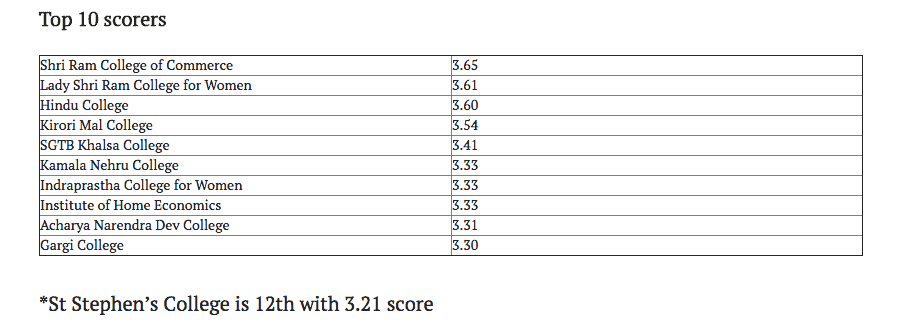
Later in the year, SRCC and LSR emerged at the top with a whooping score of 3.65 and 3.61 respectively. Take a look at the top 10 scorers in the table here.

Top 10 scorers 

Image credits: HT Media

These scores are valid for five years after which the colleges will again have to apply for accreditation. It was in 2012 that UGC made accreditation compulsory for higher educational institutions and DU executive council adopted the decision in 2014.

Does the grade even matter?

As far as we remember, such a panel as meticulously chalked out as NAAC didnt exist many years back. While grading brings in a state of competitive spirit (as if the previous branding and rep-bias that exists in the university wasnt enough already) the question arises, does the same grade then not end up shining the pride of the already well established and some popular DU colleges and create biases against some others who might actually be needing a lift from the loom of being less sought after and meagerly funded?

Whether the committee gives out grades on the hastily dip-dyed infrastructure especially revamped for their visit or the actual system in place is still a question for many to ponder upon.

The accreditation process got a thumbs up from some colleges, however, many raised objections over the assessment criteria too from time to time. Speaking to a popular national daily, Babli Saraf, principal of Indraprastha College for Women, said there shouldn’t be a one-size-fits-all” criteria for colleges. “The criteria shouldn’t be the same for a liberal arts college like ours, where we do not have the provisions for a laboratory and are not involved in research publications,” she said.

In most cases, colleges started a laborious and hasty revamp revolution, to save their grace in front of the NAAC peer team and not to raise their quality standard in general altogether. When your transformation drive is initiated to fulfil a set of stipulated  ideas by a panel that is not even remotely looking at how you provide for the students, the timely assessment of whether the students and teachers are happy with the administration of the college, whether the college has some unique traits that may not figure in its already set parameters, if the college is lacking in research, what should it do, then that grading doesnt stand much ground. The NAAC website says that they provide a qualitative part of the outcome as a Peer Team Report (PTR) which is an objective report prepared by the Team highlighting its evaluative judgements, mostly using precise keywords instead of long sentences about the college under consideration, but I doubt these objective answers bring any real on-ground changes.

Does a low grading not mar the reputation of a college that might be in dire need of those funds, facilities and attention that it rightfully deserves in order to raise itself to a better education imparting platform? What good is a grade for colleges that are already popular among students and parents and get truckloads of funds? Should a grade not help encourage a college to become a more holistic space than label it as an A, Bor Ctype college for years to come. Finally, does a grade mean anything more than a fancy wall hanging of a newspaper clipping on the college walls for many many years, or does it actually ignites change? This is for time to tell and for us to ponder.

If you are interested in reading about NAAC and the process, log on to http://www.naac.gov.in/ for detailed information.

Feature Image: DU Beat 

Riya Chhibber

[email protected]

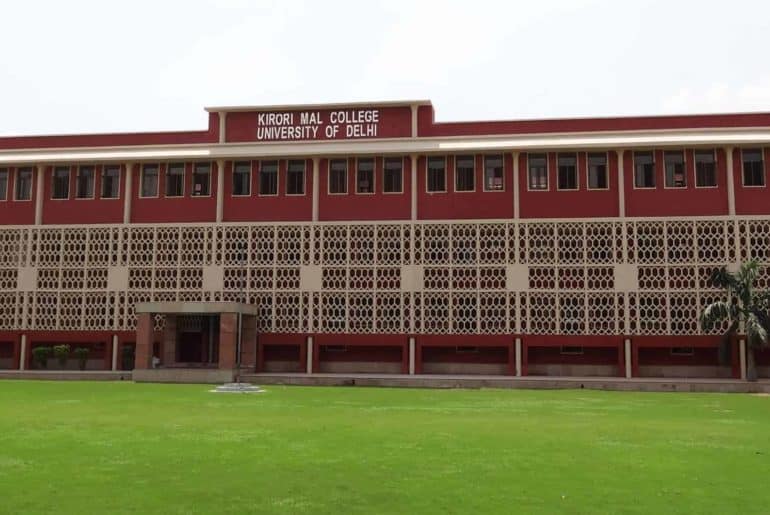
The National Assessment and Accreditation Council (NAAC) has awarded the third highest score to Kirori Mal College among multi-disciplinary colleges in Delhi University. The college was awarded a score of 3.54 and was categorized in ‘A+’ category after two rounds of grading. NAAC teams have been visiting colleges across Delhi University to assess and grade them on the basis of parameters like curriculum, faculty, infrastructure, research, learning resources, organisation, and student services. While Shri Ram College of Commerce (SRCC) was ranked 1st with a score of 3.65, Lady Shri Ram College (LSR) was ranked 2nd with a score of 3.61.

The changes in the college are being attributed to the new officiating principal, Mr. Dinesh Khattar. In the last one year the college has seen a lot of changes like becoming disabled-free by constructing ramps to make the building accessible, and making the administration student friendly. Speaking to DU Beat, Dr. Dinesh Khattar said “It’s a historic moment for the college as this is the highest grade received by a college belonging to the University of Delhi, offering multidisciplinary courses, especially those belonging to science disciplines. This has been made possible due to the exemplary contribution of teachers, students and the non-teaching colleagues. I specially acknowledge the contribution of our illustrious and hardworking students in this achievement.”

Nikhil Agrawal, a student of the KMC said “The administration has become student- friendly. Our grievances are being heard. We all are happy the way KMC in changing. And I hope KMC will reach greater heights in the coming days.” The college has seen a good teacher and student interaction in recent times. Several Innovation Projects taken up by the teachers and the activities of societies also helped in the bagging the good score.

Feature Image: Aditi Seth

Srivedant Kar

[email protected]


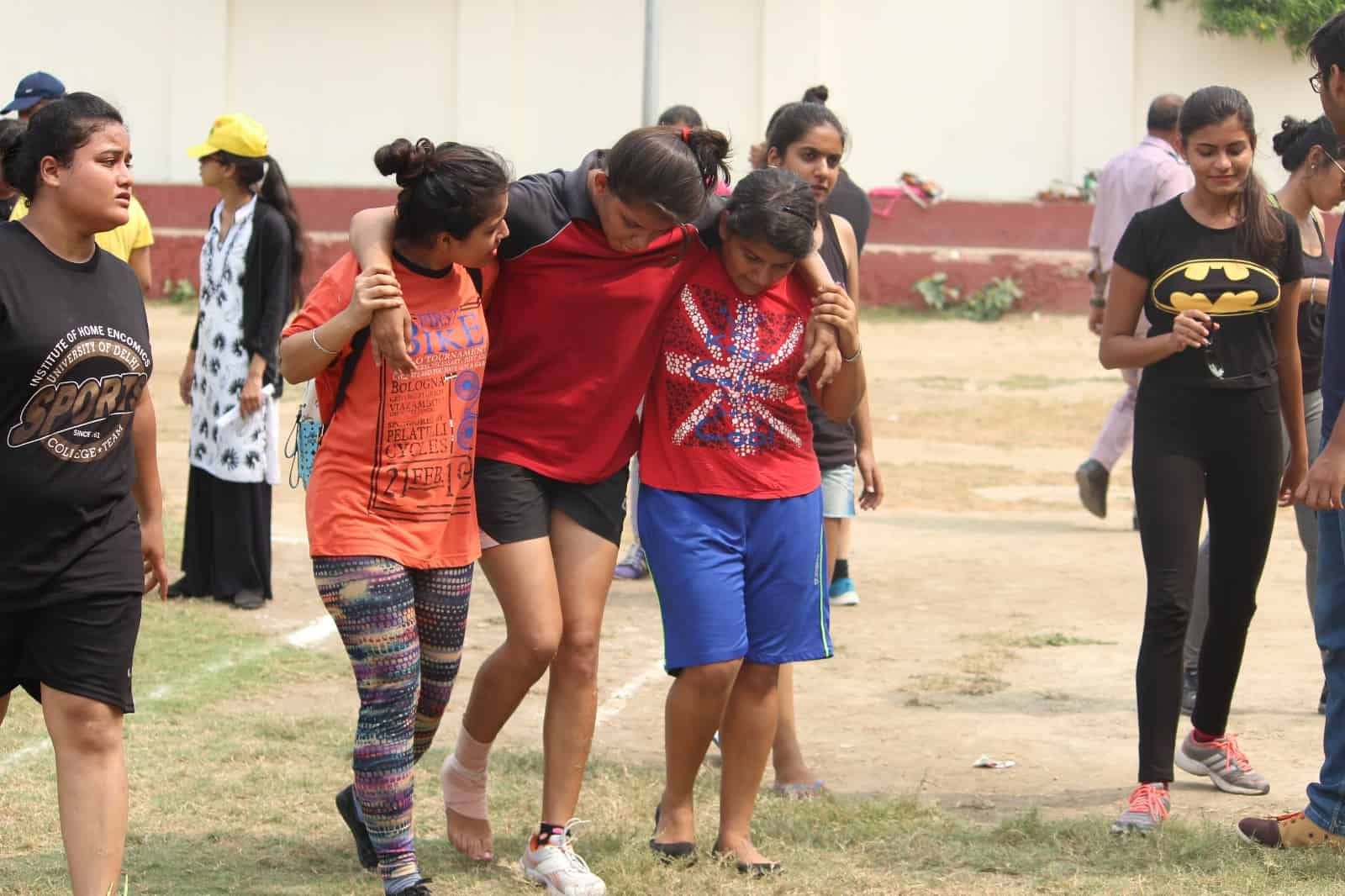
SAHAS – The women empowerment cell of Kirori Mal College, part of the National Service Scheme organised Pahal 2016, an inter college athletic meet. Registrations went on for three days on the 26th, 27th and 28th of this month. The athletic meet was organised on 29th and 30th.

Nearly 300 students from different colleges registered their names and over 220 participated on both days. On spot registrations accounted for 50 to 60 participants. Most of the students participated in more than one event.

Being the first of its kind, PAHAL began last year out of an idea to organise an athletic meet through the Women Empowerment Cell.  Although in 2015, the competition was limited to within KMC, this year they decided to make it an inter college event. Students from various colleges such as Miranda House, Daulat Ram, Satyawati, Bharati, HansRaj, Institute of Home Economics (IHE) and Ramjas college participated in PAHAL’16. Bharati college saw the maximum number of participants and bagged most of the medals.

PAHAL  DAY ONE:

Relay Race
Relay Race

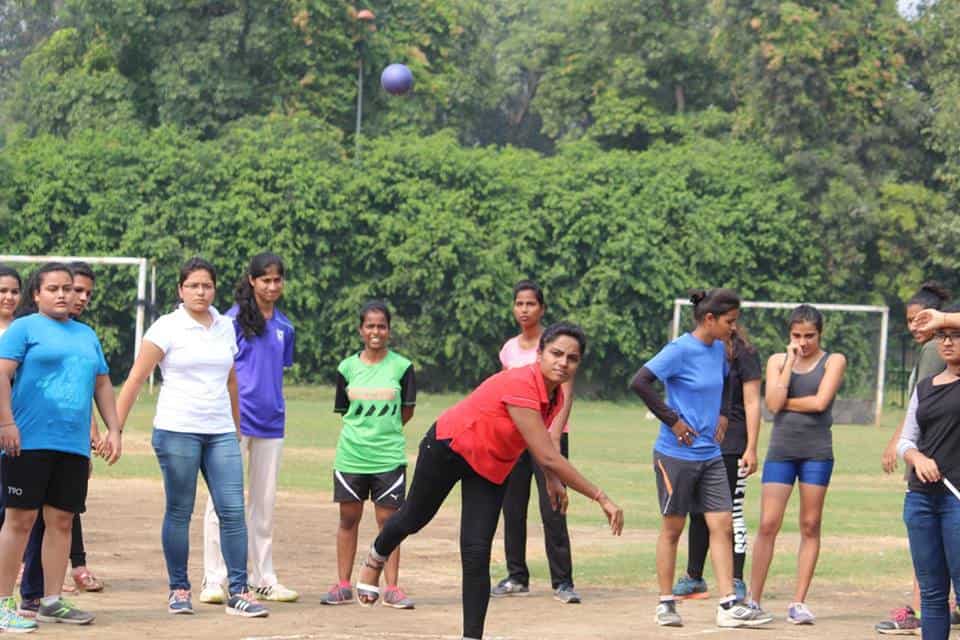
The events on the first day were 100m race, Shot-put, Lemon Spoon Race, Broad Jump and Relay Race.  Anju from Miranda House bagged the first position in relay race with Lalita and Paridhi from Bharati college in the second and third position respectively.

Shot-Put
Shot-Put

In Shot-put, Richa of IHE came first winning by 0.34m. Janvi (8.02m) and Paridhi (7.84m) of Bharati College came in the second and third position respectively.

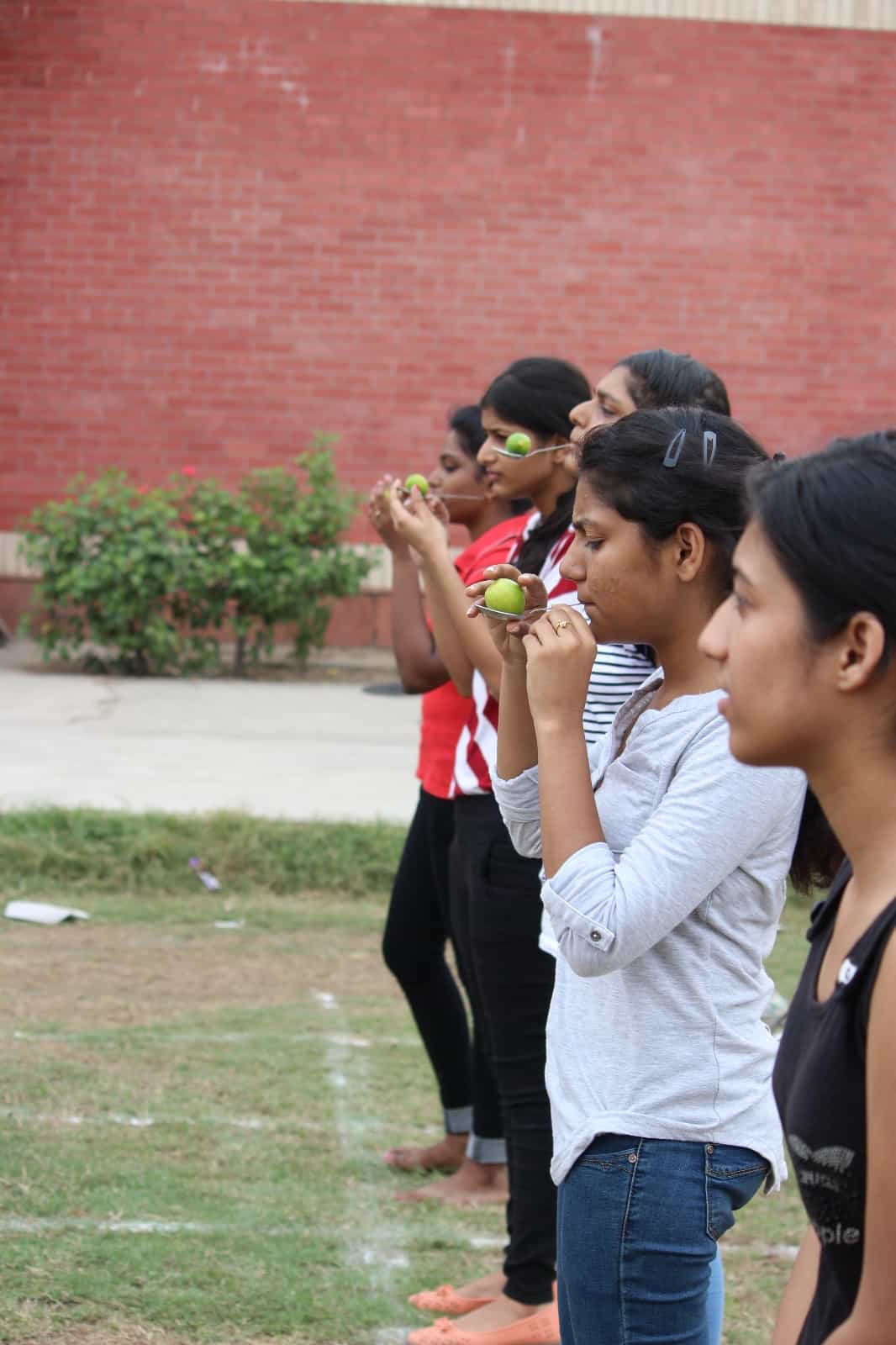
Lemon Spoon Race
Lemon Spoon Race

The Lemon Spoon race was won by the home team  with Ridhi and Shivangi of KMC in the first and second position while Shilpa of Satyawati college placing third. In the Broad Jump category, Pooja and Usha of IHE bagged the first and third position while R.V.M. Roy of Miranda House came second. Bharati college dominated the Relay Race by occupying the first and second positions while IHE placed third.

PAHAL DAY TWO:

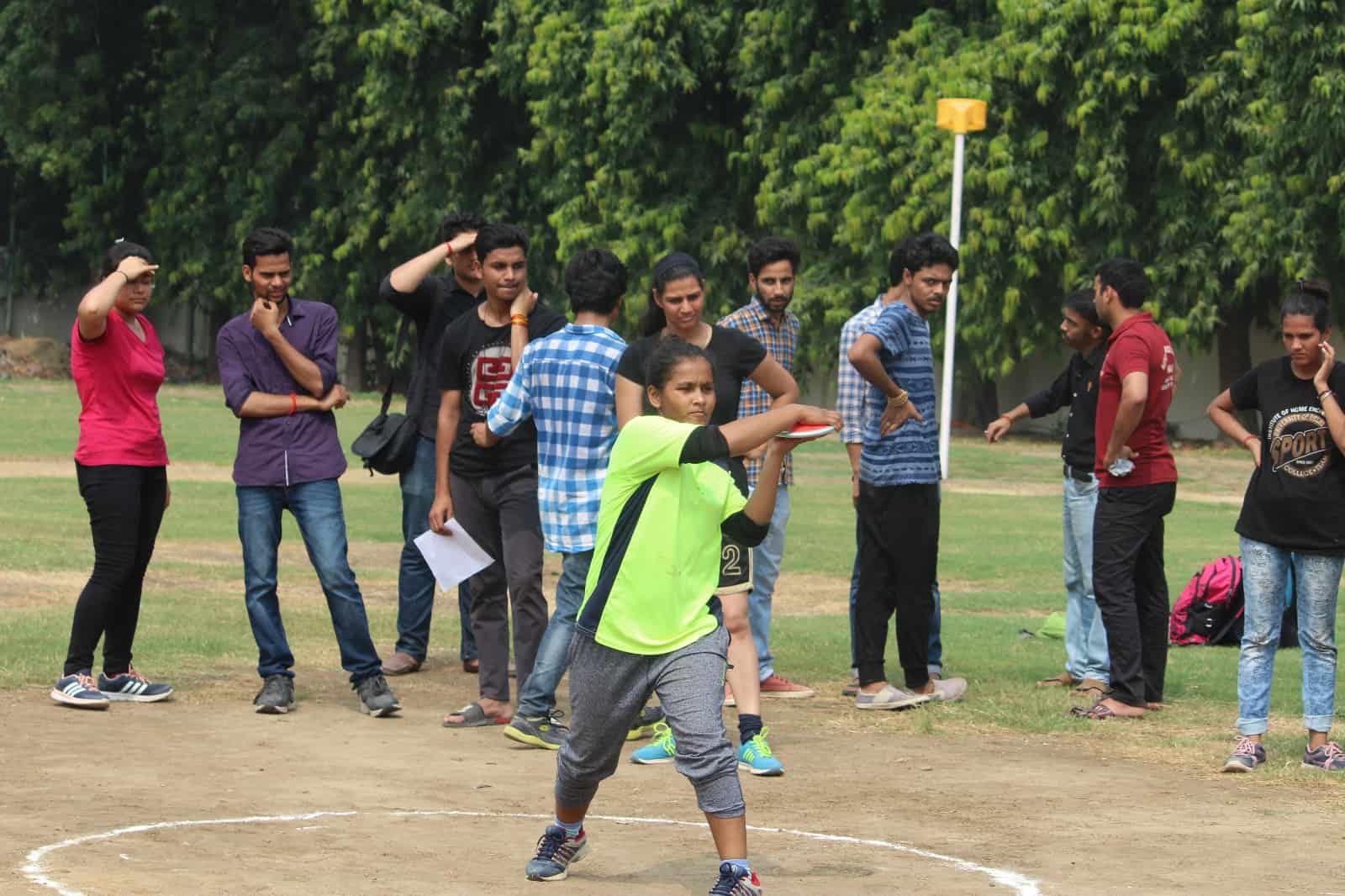
Events on the second day comprised of 200m race, Discuss Throw, Three Legged race and Tug of War. In the 200m sprint, Kritika from Bharati college won the first position. Anju from Miranda and Sapna from Ramjas college placed second and third respectively.

Discuss Throw
Discuss Throw

Winners for the Discuss Throw were Dimple from Miranda House (1st), Jyoti (2nd) and Chanchal (3rd) from Bharati college.

Three-Legged Race
Three Legged Race

Shruti and Shivangi from KMC won the first position in the Three Legged race. Pratibha and Aashinsa from Bharati college came second while Usha and Pooja from IHE placed third.

Tug Of War
Tug Of War

The Tug of War competition was also won by Bharati college. Sack race was cancelled due to lack of participation.

The Faculty member who helped supervise the event were NSS Programming officer, Mr. Arun Kumar Tripathi along with Mr. Khusro Moin from the Geography department, Mr. Samir Singh from Economics and Mr. Ramananda Mayanglambam, Proctorial Committee Convenor from the Chemistry department.

As Nikhil Kumar, Head of SAHAS put it,” Organising such an event within a short span is a feat in itself and we hope SAHAS’17 will be even better”.

Arindam Goswami

[email protected]


Every year, societies from colleges across the campus compete neck to neck and put up spectacular performances during the fest season. This year too, saw certain teams shine a little brighter than the rest. We bring you a series with college societies that put their heart and soul into their respective fields and took home the top prizes at various cultural fests.

The best college society in each category was selected by creating a tally of the top 3 positions at competitive events held during various cultural fests of this season. Whenever a society won the first prize they were awarded 3 points, for the second position they received 2 points and for the third position, 1 point was added to their tally.

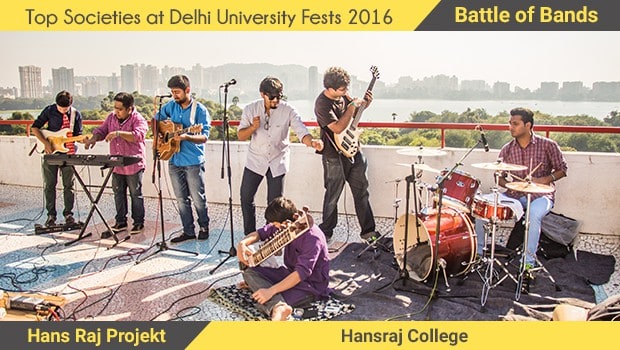
For the Battle of Bands category, Hans Raj Projekt scored the maximum points in the tally. Hans Raj Projekt’s 12 points were followed by High Time (Kirori Mal College) that scored 7 points. Playtime (Hans Raj College) bagged third spot scoring 5 points.


The Winning Society at a glance


Hans Raj Projekt, Hans Raj College

The Hans Raj Projekt is an offshoot of Swaranjali, the music society of Hans Raj College. The band performed four songs, all of which were original compositions of the band. Dilda Bhed about how problems of love can be understood only god or by the heart, Kya Kahu about the insignificance of the ego, When You about falling in love and getting back up and Madhukauns which is about determination.

The band president, Anirudh Varma reveals his secret of success. He says, “I think what has always worked for us is that we are very close friends outside the band as well which is reflected in our on stage chemistry. Our priority is to engage the audience not only at the level of the music but at the level of the sentiment as well and that is the feedback we get from the audience as well after our performance”

Band Members:

Vinayak Pant – Sitar
Shivash Chagti – Acoustic Guitar & Western vocals
Saptak Chatterjee – Hindustani Vocals
Anirudh Varma – Piano/Keyboards
Dimpal Kumar – Drums
Abhishek Mittal – Electric Guitar
Madhur Chaudhary – Bass

Winners Tally: Hans Raj Projekt

Eight college fests were referred to while evaluating the top societies tally this fest season which were: Tarang, LSR; Ullas, KNC; Tempest, Miranda House; Confluence, Hans Raj College; Montage, JMC; Mecca, Hindu College; Reverie, Gargi College and Nexus, Sri Venkateswara College.

The society emerged victorious at the following fests:

Ist position at: Reverie’16 (Gargi College), Montage’16 (Jesus and Mary College), Nexus’16 (Venkateshwara College) and Ullas’16 (Kamala Nehru College)
Apart from this the band has also won accolades at LSR, Shaheed Bhagat Singh College, St. Stephen’s College, CVS and NIFT.

(Hover on the icons below to know more about their victories)
Akshara Srivastava
[email protected]

Every year, societies from colleges across the campus compete neck to neck and put up spectacular performances during the fest season. This year too, saw certain teams shine a little brighter than the rest. We bring you a series with college societies that put their heart and soul into their respective fields and took home the top prizes at various cultural fests.

The best college society in each category was selected by creating a tally of the top 3 positions at competitive events held during various cultural fests of this season. Whenever a society won the first prize they were awarded 3 points, for the second position they received 2 points and for the third position, 1 point was added to their tally.

For the Western Music category, Western Music Society of LSR scored the maximum points in the tally. Western Music Society of LSR’s 14 points were followed by Zephyr (Kamala Nehru College) that scored 12 points. Musoc (Kirori Mal College) bagged third spot scoring 10 points.


The Winning Society at a glance


The Western Music Society of LSR

The society has been a consistent performer in the Western Music category. This year, their production was widely appreciated and applauded wherein they covered a Jazz Gospel number called ‘Come Unto Me’ by Take 6 and their own arrangement of Janelle Monae’s  ‘Electric Lady’.

Satwiki Adla, the President of WMS said, “The secret to our success is our dedication. We practice everyday diligently for 4-6 after college hours. Another strength of our society is also the understanding and love that we share for one another and the music that we make which binds us all together into a close-knit family. The ability to be able to work on our strengths while pointing out our weaknesses is something we strive to achieve at LSR WMS .”

Names of performing members:

1) Satwiki Adla – President
2) Sparsh Bajpai – Secretary

3) Sharanya S – Treasurer
4) Pallavi Pervela
5) Kim Biak Hoih
6) R. Lalthansangi
7) Hlingdeikim Changsan
8) Maulshree Kumar
9)  Roli D Yeputho
10) Thinley Chodon
11) Megha Lama
12) Sange W. Thungon
13) Imlikokla Kichu
14) Sangey Dolma
15) Lentina Longkumer
16) Tenzin Choezom
17) Ruth Lalrinawmi
18) Bhavya Kulshreshtha
19) Lucy T. Vaiphei
20) Anna Charenamei
21) Faith Kasar 

Winners Tally: Western Music

Nine college fests were referred to while evaluating the top societies tally this fest season which were: Tarang, LSR; Ullas, KNC; Tempest, Miranda House; Montage, JMC; Mecca, Hindu College; Reverie, Gargi College; Nexus, Sri Venkateswara College; Shruti, IPCW and Confluence, Hans Raj College. The society emerged victorious at the following fests:

1st Position: Ullas, KNC; Montage, JMC and Mecca, Hindu College
2nd Position: Nexus, Sri Venkateswara College and Shruti, IPCW
3rd Position: Tempest, Miranda House

(Hover on the icons below to know more about their victories)

 
Arushi Pathak
[email protected]

With only his bike and a tent, Keshav Kumar will travel approximately 6100 kilometres and visit 13 states and 174 cities in 15 days to answer questions about women’s empowerment. Keshav Kumar is a 3rd year student from Kirori Mal College, Delhi University, studying Geography (H). He is clearly not one of those who are content with reading the topography of the country in textbooks as he has been travelling alone to different parts of the country since two and a half years. He organises trips in his college as well but these are the only trips he takes with a group. He loves to travel alone and when asked why, he gleamingly said, “Because, it gives me peace.” Very recently, he has taken up a venture which is not only a means to escape the mundane routine of college life but serves a greater purpose. He’ll embark on a journey along the golden quadrilateral where he’ll cover approximately 6100 kilometres and visit 13 states and 174 cities in 15 days. His only companions will be the bike and his make-shift abode, the tent. Through this trip, he seeks to find answers to questions which are very often avoided or are left unanswered in our society. These questions are mainly about women’s safety and empowerment. Keshav will be visiting 20 different colleges ranging from the various IITs to IIMs where he’ll hold sessions with the youth and raise questions in front of them about how should a woman tackle her harasser, is blocking the oppressor the only solution to telephonic or digital harassment etc.  He says, “We often believe that the problem we are going through is limited to us and we then hesitate to share it with anyone else. This means no solution can be arrived at. This has to change. So, with these sessions, a common platform can be forged where the youth can realise that we all go through the same hell and solutions can thought of for the betterment of everyone.” He believes in the power of individual stories and is expecting a positive change to come from these sessions. Keshav also gives advice to the people who wish to travel alone but don’t know where to start. He says, “It is all about daring, about taking that first step.” He tells us that his first trip was to Rishikesh which was not at all planned and was an impulsive decision. But he knows if he wouldn’t have taken this decision, he’d never be able to do what he is doing presently.  So, if you really love travelling, go and make way for yourself. Image Credits: Keshav Kumar Nishita Agarwal [email protected]]]>

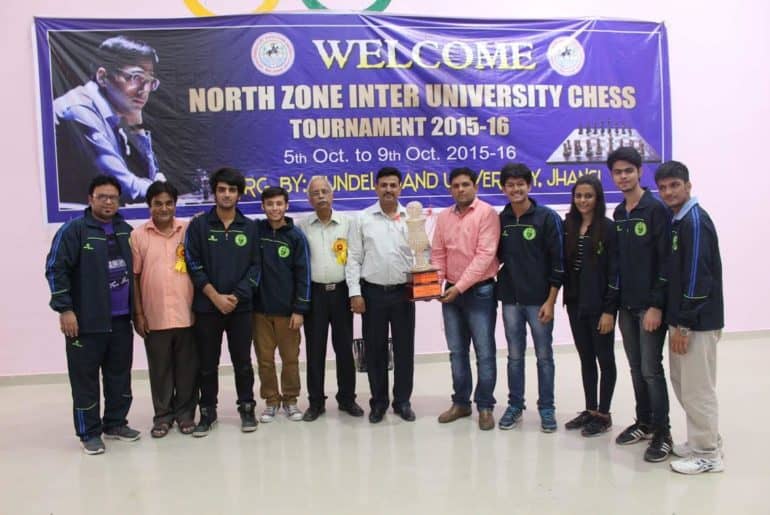
The Inter University North Zone Chess Tournament, organised by UP Chess Association, was held from 5th to 9th October at Bundelkhand University, Jhansi. 26 teams from different state universities participated in the tournament. The tournament strictly followed World Chess rules and was supervised by Mr. A.K. Raijada, Secretary of UP Chess Association.

Delhi University, yet again, won the whole lot, i.e. all the 12 matches of the tournament, and has successfully made their way to the Nationals which would be held in Tamil Nadu during the coming winter. “I have never seen such a big margin in the final result. It is the first time I have witnessed a team scoring full points in North Zone Tournament.” said Mr. A.K. Raijada.

The Delhi University team comprised of total 6 students; Yogesh Gautam, Ankit Gajwa (All India Open below 2000 champion), Prince Bajaj (Asian Games medalist), Aishwarya Sinha (Jharkhand state champion), Deep Kapoor (Delhi state champion) and Prachet Sharma (Philadelphia Open below 2000 champion), 4 being from Shri Ram College of Commerce and the remaining 2 from Hindu College and Kirori Mal College respectively. The team was captained by Yogesh Gautam from SRCC, the former champion of the 42nd World Open at Virginia and the 7th New York International.

“We were provided with Shatabdi Train tickets and were give accommodation in a 4 star hotel. The whole tournament was organised and managed remarkably. They were very strict about the rules. Losing a game to me made a chess player Aishwini Grover, with a rating of 1788, so frustrated that he smashed all the pieces to floor and left the hall without signing the score sheet. An appropriate action was taken immediately against him and he was prohibited from playing in the second round.” said Yogesh. In the closing ceremony the winners were felicitated enthusiastically with rounds of applause and cheering.

Tamanna Goel

[email protected]

Markandey Katju speaking at Kirori Mal College Markandey Katju speaking at Kirori Mal College[/caption] Katju was of the view that every nation makes a transition from feudal agricultural society to a modern industrial society, but in case of India, we are stuck somewhere in the middle of these two phases. He not only commented on the sad state of affairs of the parliament and bureaucracy by calling politicians ‘a bunch of rogues and rascals’, but he also presented the unfortunate state of the Indian media that is more interested in covering Sheena Bora Murder, Radhe Maa and Bollywood, rather than bringing forth the plight of farmers who are committing suicides. Interestingly, he pointed out the pitiable condition of Police investigations in India, stating that the ‘Darogas’ must see and learn from Sherlock Holmes. For him, India would soon face a social revolution and things will become terrible and turbulent by 2020. However, our national aim should be to make India a modern, scientific and industrial state, for which a revolution is increasingly necessary. After Mr. Katju’s words of wisdom, academician- Dr. Indira Bhardwaj spoke about her vision of India. A faculty member at Delhi School of Business, she highlighted the ever pervasive problem of employability, explaining it as the art of doing routine things in a better way. She criticised how Indians lack innovation and how we make an imagined hierarchal difference between jobs by bifurcating them into either menial or sophisticated jobs. She stressed on learning and respecting ‘dignity of labour’, by treating all job platforms with equal respect. After former Justice Katju and Dr. Indira, the final speaker that enthralled the audience was politician, Subramanian Swamy. According to the former Cabinet minister, a DNA study claims that, ‘all people of India are originally Hindus or their descendants had a Hindu identity.’ Taking his genetic research adventure forward, he stated how he got the DNA structure of Maharashtra Navnirman Sena (MNS) chief Raj Thackeray matched with a person from Uttar Pradesh, claiming that Thackeray, who mocks North Indians himself has ancestors from UP. By virtue of these anecdotes, he aimed to highlight that every person in India is an Indian first, a north or south Indian next. [caption id="attachment_34918" align="aligncenter" width="269"]Subramanian Swamy speaking at Kirori Mal College Subramanian Swamy speaking at Kirori Mal College[/caption] Sharing his teaching experience at Harvard University, he said, “ Whenever I used to ask students what kind of a job they would vouch for after the completion of their degree, 99% of Indian students in my class would say they’ll go for a secure job”, hence throwing light on the never ending search for stability by Indians. Stating about the problem of corruption and bringing back our money from ‘foreign lands’, he said, “It is not that difficult to bring black money back to our country, but for that, I should be made Finance Minister.” He mockingly argued that India is in a questionable state because of the idealism of Jawahar Lal Nehru, who didn’t listen to anybody, but listened occasionally to Lady Mountbatten, Swamy claimed. He made an effort to project a hopeful picture of India as a developed country if we get our act together. All in all, the conference, though meant to discuss about the future prospects of the Indian Subcontinent, majorly dwelled on the present, but it did establish a connect with the students and teachers as was apparent with the loud roar of applause at the end of the session. Image Credits- Chirag Sharma for DU Beat Riya Chhibber [email protected]]]>
A team of twenty undergraduates of Physics from Kirori Mal College are set to participate in a NASA sponsored international aerospace competition RASC-AL (Revolutionary Aerospace Systems and Academic Linkage). The Robo Physicist Society of Kirori Mal College, under the guidance of Dr. Sumitra Mohanty (Department of Physics), submitted one of the seven papers on Enabling Long Duration Missions through Holistic Habitat Design which were shortlisted for the further competition.

The competition RASC-AL will be held from 17th to 19th June, 2014 in Cocoa Beach, Florida, USA. Being the only Indian team among the fourteen other shortlisted teams from all over the world, they will be working on designing a transit habitat for astronauts enabling them to stay longer in the space. The project will be partially funded by Delhi University, although there is lack of funds and the college is looking for sponsors.

The Robo Physicist Society of KMC, in the past five years has participated in NASA Great MOONBuggy Race, Lunabotics, the Rover Challenge and for the first time in RASC-AL. “Being the only team to win two awards last year at Lunabotics gave us the confident to participate in RASC-AL this year for the first time.” said Dr. Sumitra Mohanty, “Our team got selected and we are really proud of that.” According to Rashi Monga, a second year student of Physics of the college, they had to study the basics of astronomy and other technical terms to get a better understanding of their project. “Once getting selected in the competition, we were given a call in which we were described what we had to do and what were the requirements from the NASA site. The language was not related to physics basically so we had to start our study from the basics.” If they win the competition, they will be given a presentation slot in the aerospace conference organized by two of the major aerospace societies including AIAA (American Institute of Aeronautics and Astronautics) enabling them to present their views to scientists and astronauts.

Apart from RASC-AL, the team will also be participating in the annual University Rover Challenge at Mars Desert Research Station in deserts of southern Utah. “This is a completely KMC based project involving no other team.” Said Rashi Monga, “Unlike previously, we have to build a robot which could not only dig but also walk on the rugged terrain of Mars along with conducting scientific data like being able to distinguish which type of bacteria is present in the soil.”

The Robo Physicist Society and the Department of Physics are proud to a part of the competition and plan to do well.
Image credits: KMC Robo Physicists Facebook page