Tag

Fourth Year

Browsing

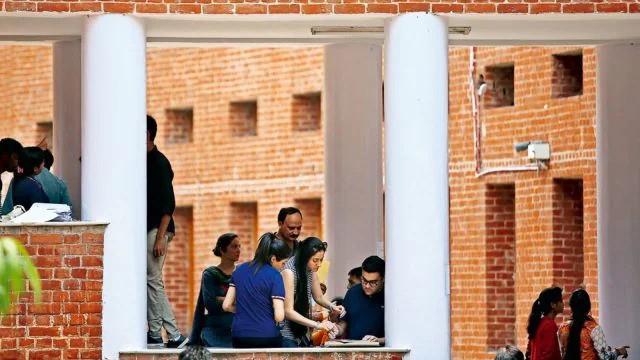
Delhi University’s bold transition to a four-year undergraduate programme (FYUP) reveals a clear trend: humanities students and those in top-ranked colleges are embracing the change most enthusiastically. In centrally located colleges such as Miranda House, Lady Shri Ram (LSR), and Hindu College, nearly 40% of students have opted to continue for the fourth year, compared to an overall university average of about 30%, according to DU officials.

The highest continuation rates have been recorded in the humanities and social sciences, especially subjects like political science, English, psychology, history, and Hindi. In contrast, students in science courses show less interest in extending their studies. A DU official explained, “Many science students prefer to move on to postgraduate programmes at premier institutions such as IITs and IISERs, where they can specialise immediately.”

This makes the FYUP’s early success a story led by liberal arts and social sciences, traditionally popular disciplines at DU’s prestigious colleges. “At Miranda House, about 30% of students are continuing; Hindu College has retained 38%, and LSR has reported close to 40% retention,” the official said. However, colleges located on the city’s outskirts have seen significantly lower participation, with continuation rates ranging between 15% and 27%.

The divide, principals say, stems from differences in infrastructure, visibility, and student profiles. Centrally located colleges tend to attract higher-performing students and provide stronger academic and research facilities, while off-campus colleges face resource constraints. Still, some administrators see a positive side. “Smaller fourth-year batches give us time to fine-tune the system before scaling up,” said the principal of a South Campus college.

The new four-year programme, introduced under the National Education Policy (NEP) 2020, aims to encourage multidisciplinary learning, flexibility, and research orientation. Launched in 2022–23, the programme offers three exit points — a certificate after one year, a diploma after two, and a degree after three, with the fourth year leading to an honours with research qualification.

Last week, DU officials held a review meeting with affiliated colleges to assess implementation. Some institutions reported very low enrolments, with fewer than 10 students in some fourth-year classes, posing academic and administrative challenges. Colleges have been advised to form clusters so students from different institutions can attend joint classes for similar courses. A DU Spokesperson says,

We expect participation to rise once students see the long-term academic and career benefits.

For many students, the decision to stay reflects career planning and academic ambition. Another final-year student from Hindu College said, 

The fourth year lets me specialise and focus on research. The ‘honours with research’ tag will strengthen my postgraduate applications and give me an edge professionally.”

As Delhi University becomes one of the first central universities to fully adopt the FYUP model, the transition marks a significant shift in India’s higher education landscape—one that places research, flexibility, and academic depth at the core of undergraduate learning.

Read Also: DUTA Demands Action After Professor is Slapped by DUSU’s Joint Secretary

Featured Image Source: The Indian Express

Richa Choudhary

[email protected]


Despite the Academic Council’s approval of the policy of research and supervision in regards to NEP-UGCF’s fourth year policy in DU colleges, many concerns have been raised in regards to its implementation.

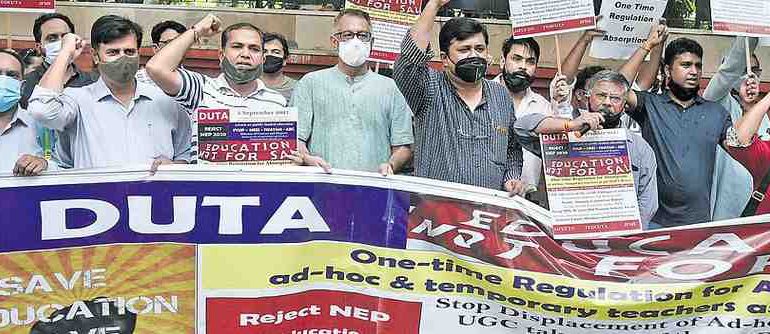
As of July 5, 2025; the policy of research supervision for the fourth year of NEP-UGCF has been approved by the Academic Council amidst dissent by several elected members. According to Rudrashish Chakraborty, who is Associate Professor at the Department of English in Kirori Mal College, as well as an executive of DUTA (Delhi University Teachers’ Association) from 2023 to 2025, the poor devising of the policy is owed to multiple reasons; the first of which include the lack of infrastructure in the form of space and laboratories in colleges to conduct quality research at the undergraduate level to research supervision not being accounted for as workload for teachers, excessively burdening teachers who are already inundated with work.

Aside from these issues, the division of workload has also been a contentious topic, with the policy deciding on a stipulation of a minimum of ten students to be allotted to a teacher for research supervision. This ratio is not only too high and would therefore jeopardize the quality of research, but also make coordination difficult as it is not possible for any teacher to do justice to the research work of so many students after engaging in their own workload.

In addition to this, no funds have been allocated for research work in the fourth year of UGCF, which leaves colleges to fend for themselves. Colleges in the Delhi University circuit are being advised to mobilise funds through the Students’ Fund, which may prove to be insufficient in the long run.In terms of research, the students are to study four courses alongside writing a dissertation, which not only takes the focus away from the conduction of research, but will also lead to a reduction of quality leading to research becoming a compulsion instead of being an original, worthwhile contribution to Indian academic spaces.

One of the guidelines for research supervision expects students pursuing the fourth year to publish in a scopus-indexed journal as research outcome. Given that even teachers would find it difficult to pursue such interests within the stipulated time while balancing full-fledged studying, this unrealistic clause will discourage students from pursuing the fourth year.

Anumeha Mishra, a member of the Academic Council, has stated,


The university must refrain from applying a one-size-fits-all size model in approving projects eligible for research funding under IoE. Discipline-specific parameters must be evolved.”

In 2019, Delhi University’s colleges saw a 25% increase in student intake due to the EWS expansion. An additional surge in admissions by 20% occurred following the implementation of the Common University Entrance Test (CUET) from 2022 onwards. This move, having been undertaken along with the fourth year, comes in light of accusations of mismanagement and lack of infrastructural accommodation for the rising number of student intake every year. The absence of laboratories, reading rooms, and teacher workspaces severely undermine the programme’s feasibility. The implementation, thus, appears rushed and in the absence of structural and financial support, risks diluting the quality of education and pushing the system toward collapse. 

Dr. Monami Sinha, also a member of the academic council, points out how undergraduate students currently studying seven courses per semester, including SEC and VAC, dilute the study of core subjects and awarding of credits per subject.

Read Also: Delhi University Faces Backlash for Linguistic Misrepresentation in CSAS UG Admission Form.

Image Credits: Hindustan Times

Aastha Singh

[email protected]