Tag

fests

Browsing

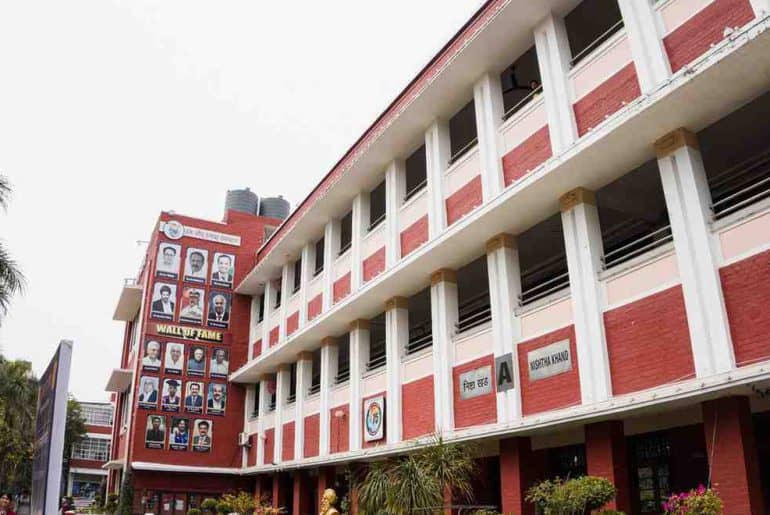
After protesting and ultimately being granted permission for an artist at their college fest, Confluence 2026, Hansraj College witnessed a fight breaking out, creating chaos right before the artist’s performance began. 

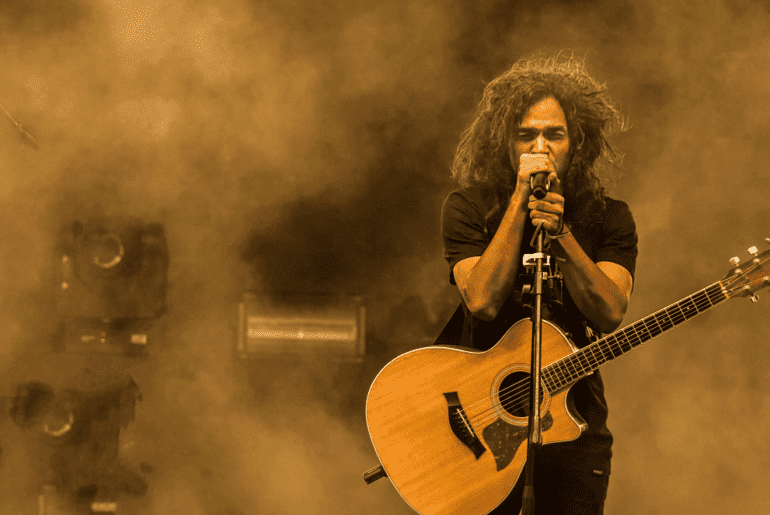
On 9th April, 2026, Hansraj College stepped into the final day of their fest, Confluence 2026, with an artist performance by singer Vilen marking the end of their 2-day celebration. However, right before the curtains drew to a close, a fight ensued, causing chaos, commotion, and the inevitable rumours of a larger catastrophe. 

Spectators reported a brutal knife stabbing incident right before the artist’s performance began, with students of Hansraj College, and even outsiders, engaging in a fight with tables and chairs being thrown around. An unofficial students’ page of Delhi University alleged that the bricks used for construction in the renovation of the Gau Shalla were thrown around by the students, and one student’s head was injured as a result. However, the alleged stabbing incident has not been confirmed yet by any official reports. 

Videos shared with the Editorial Team of DU Beat showcased individuals engaging in physical fights with one another, involving punching, kicking, and stomping on an unidentified individual near what has been identified as the C Block. Reportedly, the Art Society of Hansraj, Kalakriti, had to close down its stall as it was in the direct vicinity of the incident.  

Similar fights were recorded where individuals were seen running out of the college hostel gates with one unidentified individual’s shirt being torn apart, tables being thrown at him, and ultimately, him being dragged out by a group of individuals. 

A student from Jesus and Mary College attending the fest stated,

There was a fight but it was before Vilen came on stage. But the concert duration was only till 5 or 5:30 and they wrapped it up pretty quickly.” 

Similarly, another student from Hansraj College added,

There was an unexpectedly large crowd at the event, which became difficult to manage, especially once the artist arrived. There were instances of people climbing barricades and a lot of pushing, making it hard to even stand, particularly in the front rows. The situation was also made worse due to the hot weather. Some of the disturbance had actually started even before the artist arrived, as we noticed groups of people rushing towards the hostel gate.”

The understaffing of security and poor management due to an unprecedented crowd have been highlighted across testimonies received by the Editorial Team. 

Reports, including Instagram stories shared by members of the Hansraj Students’ Union and Students’ Council, hinted at a similar chaos unfolding on Day 1—the Secretary of Hansraj College shared an Instagram story with regard to the incidents of 8th April, captioned, “Guys kal please thoda civilised behave krlo” [Guys please behave civilised tomorrow]. 

In one video circulated on Instagram, police officers were also seen intervening amongst the fighting students. A first-year student from Hansraj College added,

The incident at the hostel gate was the most severe one. From the information that’s being circulated, the fight involved a group of students allegedly fighting over a girl, which required police being called to handle the situation.” The same student observed that most of the rights and acts of violence were initiated by non-Hansraj students who were thereafter escorted out of the campus. 

Despite the chaos that ensued, videos have been widely circulated of the singer Vilen performing with a large audience cheering, dancing, and singing along. Many students added that the fest was successful, given the protests undertaken by the Hansraj Students’ Union and the college at large, with respect to obtaining artist permission from the administration. 

In an exclusive conversation with the President of the Students’ Union of Hansraj College, Abhijit Singh, he added that the majority of chaos and fights were ensued by outsiders with the intent of lobbying. He stated,

“Throughout the whole night, me and the Union were awake securing barricades for safety arrangements, however, on the day of the fest the crowd exceeded expected capacity. We tried our best to help the students and the artist performance was thereafter conducted smoothly.”

Singh additionally criticised the failure in security management from the police and noted that budget allocations were abruptly changed and payments were held by the college administration. He further stated that the stabbing incident has not been officially reported to the Union and is likely a rumour, along with issuing a clarification regarding the fight at the hostel gate; he said,

The video showcasing the fight located at the Hostel Gate is in fact Gate No 5, which is also the entry gate to the college. No fight happened within the hostel and most of the violence and chaos was orchestrated by non-Hansraj students.”

Image Source: DU Beat

Read Also: Students Secure Artist Approval After Overnight Protest at Hansraj College


Aaratrika Ghosh

[email protected]

Explore Hindu College, Delhi University (DU), North Campus’ top DU college for Arts, Commerce & Science. Explore updated courses, fees, admissions, campus facilities, student life, and placements.

Hindu College, Delhi University

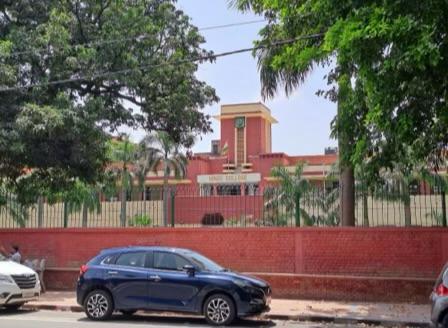
Established in 1899, Hindu College, Delhi University (DU), is one of India’s oldest and most prestigious institutions, located in the heart of North Campus, Delhi University. Known for its academic excellence, vibrant student culture, and illustrious alumni, the college consistently ranks among the top DU colleges in India.

Ranked #1 in the NIRF 2025 Colleges Category and regularly featured in India Today’s list of best colleges, Hindu College (DU) seamlessly blends tradition and modernity, nurturing future leaders in academia, business, public service, and the arts. Affiliated with Delhi University, the college holds NAAC A+ accreditation and UGC approval, offering a diverse range of undergraduate, postgraduate, and certificate courses, including foreign language and skill-based programs.

Hindu College Campus Location & Infrastructure

Located in Delhi University’s North Campus, Hindu College enjoys excellent connectivity via Vishwavidyalaya and GTB Nagar Metro Stations. The college’s central position near Miranda House, St. Stephen’s, and Kirori Mal College makes it part of the vibrant DU academic and cultural ecosystem.

Founded in the late 19th century, the Hindu College campus blends colonial architecture with modern infrastructure. Its well-maintained lawns, shaded pathways, and landscaped gardens offer a serene and conducive environment for study and recreation.

Hindu College, Delhi University, boasts modern academic facilities designed to support high-quality teaching and research. The college features spacious lecture halls and smart classrooms equipped with digital learning technology to enhance interactive teaching. Its state-of-the-art laboratories and museums in Physics, Chemistry, Zoology, Botany, and Computer Science provide hands-on experience for students in both research and experimentation.

The Hindu College Library houses over 1,20,000 books, journals, and digital e-resources, ensuring academic access for both students and faculty. Additionally, the college includes modern seminar and conference rooms for academic workshops, lectures, and research presentations, fostering an intellectually vibrant environment within one of Delhi University’s top colleges.

Hindu College, one of the most culturally active Delhi University colleges, offers exceptional spaces for artistic and creative expression. The Bharat Ram Centre for Art and Culture serves as the hub for theatre, fine arts, and music, encouraging student performances and collaborations. The Utsav Amphitheatre, an open-air performance venue, regularly hosts DU cultural festivals, debates, and student-run events.

The Sanganeria and Sushila Devi Auditoriums are equipped to host national conferences, seminars, and cultural programs, making Hindu College a dynamic hub for art, dialogue, and performance within Delhi University’s North Campus.

Hindu College (Delhi University) emphasizes holistic development through its extensive sports and recreation facilities. Students participate actively in outdoor sports such as cricket, football, volleyball, and athletics, while indoor facilities cater to badminton, table tennis, chess, and general fitness.

With students regularly representing the college in Delhi University and national-level tournaments, Hindu College has built a strong reputation for sporting excellence. The campus’s focus on wellness and teamwork reflects its commitment to being a top DU college that promotes both academic and athletic distinction.

Hindu College provides excellent student amenities and hostel facilities, ensuring a comfortable and inclusive campus life. The college offers separate hostels for boys and girls, each with Wi-Fi connectivity, study rooms, and spacious dining halls.

The campus also features clean and affordable eateries, on-site banks and ATMs, and faculty residences with secure parking. Emphasizing sustainability, Hindu College, Delhi University, maintains green lawns and gardens, implements rainwater harvesting, and ensures safety with CCTV-monitored premises, making it one of the most eco-friendly campuses in North Campus.

Courses Offered at Hindu College, Delhi University

At the undergraduate level, Hindu College provides multiple honours and programme options. The B.A. (Hons) courses include Economics, English, Hindi, History, Music, Philosophy, Political Science, Sanskrit, and Sociology. The B.A. Programme offers popular subject combinations such as English + Economics, Hindi + Philosophy, Sanskrit + Political Science, and History + Political Science. Commerce students can pursue the highly sought-after B.Com (Hons), while science aspirants can choose from B.Sc. (Hons) specializations in Botany, Chemistry, Mathematics, Physics, Statistics, and Zoology, as well as B.Sc. (APS/PS) programs in Applied Physical Sciences (Electronics) and Physical Sciences (Chemistry).

The fee structure for most B.A. (Hons) and B.Com (Hons) courses are approximately ₹28,670 per year for General/OBC/EWS categories and ₹28,485 for SC/ST students. Science programs such as B.Sc. (Hons) range between ₹29,120 and ₹31,270 annually, depending on the specialization. Foreign students pay between ₹52,628 and ₹55,228 per year for undergraduate courses.

At the postgraduate level, Hindu College offers M.A. degrees in English, Hindi, History, Philosophy, Political Science, and Sanskrit; an M.Com program; and M.Sc. degrees in Botany, Chemistry, Mathematics, Operational Research, Physics, Statistics, and Zoology. The PG fee structure stands at around ₹27,976 for General/OBC/EWS students and ₹27,755 for SC/ST students, while M.Sc. programs cost approximately ₹28,082 per year. Foreign students pay between ₹51,934 and ₹52,040 annually for postgraduate courses.

With its wide academic spectrum, reasonable fee structure, and strong placement opportunities, Hindu College, Delhi University, remains one of the most sought-after DU colleges for students across India and abroad.

Scholarships & Financial Assistance at Hindu College

Hindu College offers multiple scholarships and financial aid programs for both undergraduate and postgraduate students, managed by the Scholarship, Prize, and Fee Concession Committee.

Major Scholarships

  • Merit-Based Scholarships: For students with exceptional academic performance.
  • Merit-cum-Means Scholarships: For those demonstrating both academic merit and financial need.
  • Stream-Specific Awards: For disciplines like Hindi, Sanskrit, Science, Economics, and Commerce.

Other Financial Support

  • Fee Concessions: For deserving students based on need and merit.
  • Government Scholarships: Available for SC/ST/OBC students through state and central schemes.

Extracurricular Activities and Student Life at Hindu College, Delhi University

Hindu College offers a vibrant campus life with over 35 active student societies spanning performing arts, literature, debating, visual arts, social service, and environmental initiatives.

Hindu College is renowned for its artistic excellence, with societies such as Aarambh (Western Dance), Adhrita (Indian Dance), Srijya (Choreography), Alankar (Indian Music), Aria (Western Music), Nakshatra (Fashion), and dramatics societies like Ibtida, Masque, and Abhirang. The college also hosts SPIC MACAY, promoting Indian classical arts, and the grand cultural fest Mecca, one of DU’s most anticipated events.

For students passionate about ideas and debate, Hindu College offers the English Debating Society, वाग्मी Hindi Debating Committee, Caucus (Discussion Forum), Samhita, Scribe (Creative Writing), Manthan (Quizzing), Symposium, The Science Forum, and The Film Appreciation Society, encouraging critical thought and interdisciplinary learning.

Societies like NSS, NCC, Ankur (Enabling Unit), Friends Corner, Panchtatva (Environmental), Earthlings (Wildlife), HC Queer Collective, and the Electoral Literacy Club promote inclusivity, social responsibility, and sustainability.

To prepare students for leadership and innovation, the college hosts The Finance & Investment Cell, Hindu Consulting Group, Degrees Consulting, E-Cell Hindu, Abhyas (Internship Cell), Buniyaad (Civil Services Society), and TEDxHinduCollege, offering real-world exposure and networking opportunities.

Artistic expression thrives through Abstractions (Fine Arts) and Vivre (Film & Photography), where students showcase visual storytelling and design talent.

A flagship initiative, Enactus Hindu College combines social impact with entrepreneurship, empowering students to create sustainable solutions to real-world challenges.

The cultural calendar is highlighted by Mecca, the annual three-day cultural fest of Hindu College and one of the most anticipated events in Delhi University. Mecca brings together thousands of students from across India for competitions, stage performances, panel discussions, and star-studded concerts.

One of the most distinctive features of Hindu College is its Student Parliament. Every student and teacher is a member, making it a living model of participatory democracy within the campus. The Parliament regularly convenes debates, discussions, and mock sessions inspired by the workings of the Indian Parliament, giving students an invaluable, hands-on experience in leadership, governance, and public dialogue.

Admissions at Hindu College, Delhi University

Undergraduate Admissions (UG)

Admission to Hindu College (DU) is based on CUET scores through Delhi University’s Common Seat Allocation System (CSAS-UG). Candidates must have completed Class XII (or equivalent) from a recognized board in India or abroad.

CUET scores in Language, Domain-Specific Subjects, and General Test are considered, and applicants should ensure their chosen subjects align with Class XII. There is no minimum age bar for most programs, and gap years are accepted.

Postgraduate Admissions (PG)

Admission to PG courses at Hindu College is conducted through CUET-PG, organized by the National Testing Agency (NTA), followed by CSAS-PG counseling on the DU admission portal. Seats are allotted based on CUET-PG rank, eligibility, and course preferences, with final confirmation after document verification and fee payment.

Recognition & Rankings

Hindu College, Delhi University (DU), consistently ranks among the top colleges in India for Arts, Science, and Commerce.

  • NAAC Accreditation: A+ Grade
  • NIRF 2025 Ranking: #1 in India (Colleges Category)
  • India Today 2025 Ranking: Featured among India’s best colleges
  • Affiliation: University of Delhi (DU)
  • UGC Approval: Recognized by the University Grants Commission (UGC)

Notable Alumni of Hindu College

The alumni of Hindu College, Delhi University, have made remarkable contributions across diverse fields including politics, cinema, sports, and international diplomacy. Prominent Hindu College graduates include Gautam Gambhir, celebrated cricketer and Member of Parliament; Imtiaz Ali, acclaimed filmmaker; Harini Amarasuriya, academic and Sri Lankan parliamentarian; and Eenam Gambhir, senior Indian diplomat and former UN representative. Their accomplishments embody the college’s long-standing tradition of academic excellence, leadership, and social impact.

Internships & Placements at Hindu College

The Placement Cell, Disha, at Hindu College, Delhi University, serves as a bridge between academia and industry. It facilitates placements, internships, fellowships, and articleships while conducting workshops, mentorship programs, and skill-building sessions to enhance employability.

During the 2024–25 placement season, over 150 companies participated in recruitment drives at Hindu College, offering more than 200 placement opportunities across diverse sectors such as Finance, Consulting, Marketing, Data Analytics, and Research. Top recruiters included AB InBev, Accenture, Bain & Company, Boston Consulting Group (BCG), Axis Bank, ICICI Bank, Macquarie, DE Shaw & Co, Grant Thornton, Redseer, TopHire, TresVista, and ZS Associates.

The highest package offered reached an impressive ₹24.8 LPA, while the average package stood at ₹11.4 LPA. The median package was ₹9.5 LPA for undergraduate students and ₹9 LPA for postgraduate students. Department-wise, the placement rates were 43% for Commerce, 36% for Arts, and 21% for Science, reflecting a strong overall performance across disciplines.

Alongside full-time placements, summer internships at Hindu College saw remarkable growth, with stipends ranging from ₹55,000 to ₹1,12,500 per month, marking a 67% increase in internship offers compared to previous years.

Image Credits: Ayushmaan for DU Beat

Neeraja Unnikarishnan

[email protected]

As Aligarh Muslim University (AMU), Jawaharlal Nehru University (JNU), and Jamia Millia Islamia (JMI) set the line of protest and pave the way to resistance and agitation, how morally appropriate is it to attend fests and celebrate?

University of Delhi (DU) has been synonymous with its celebrity-laden, pompous, over the top exuberant range of cultural fests. Freshers eagerly await for the fest season like the rest of us wait for the waiter to bring food to our table. Come even semester, all Students’ Unions gear up to seek sponsorships, chase celebrities, and promote, promote, promote! The hype, experiences, and enthusiasm surely shape a DU student’s course of study and social relationships.

However, the country has been in a problematic and controversial state since the past few months. Amidst members of our own student fraternity as AMU, JNU, and JMI set the line of protest and pave the way to resistance and agitation, how morally appropriate is it to attend fests and celebrate? DU has been at the forefront of political mobilisation, dissent and protest since time immemorial. Taunts of “degree protest mein kar rahe ho kya” (Are you pursuing your degree in protests?) remains a constant as we take to the streets.

Keeping in mind DU’s legacy and staying in solidarity with India’s depreciating democracy, several colleges have voiced their concerns over not organising a fest. Tarang, annual cultural fest of Lady Shri Ram College (LSR) remained at the centre of a controversy as several General Body Meetings later, Tarang remains “deferred until further notice.” Prashansa, a member of the Students’ Union of LSR told DU Beat earlier that LSR must look beyond the factor of enjoyment and overlook their apathy, indifference and insensitivity. The Students’ Union of LSR released an official statement expressing “that they do not feel appropriate to have Tarang at this point given that it
revolves around a sense of enjoyment by having pro nights and food fests.”

Ullas, annual cultural fest of Kamala Nehru College too met with contention, voices clashed for and against the
celebrations, however, preparations for the same are in full flow. As proponents of those favouring the celebrations, the fests elevate to a platform to dissent. A platform to voice their opinions and criticise through the medium of art, culture, and music.

Gargi College’s Reverie 2020, witnessed a political art mural which was later asked to be removed by the principal claiming it to be “too political.” The mural which expressed solidarity with activists like Akhil Gogoi, and Chandrashekhar Azad, voiced the students’ stance on CAA. When authorities shun and open platforms curb the freedom of speech and expression, how morally correct is it to swing to the tunes, swipe at the tips and splurge on tastes?

However, keeping DU’s diversity and heterogeneity in mind, not all of them think alike. Avni Dhawan, a
student of Kamala Nehru College is of the opinion that there is no point in cancelling college fests. “There are
always going to be issues with the government and the country. There’s a reason for annual fests and it’s to give
students a break and make memories in college. There are a lot of ways to express your dissent and solidarity with those suffered, which involves actual help and involvement. Fests took place last year when we lost 40 soldiers in Pulwama attack, where did the “solidarity” go then? If you really want to do something good, don’t just cancel fests and sit with a pout face to show your “anger”, donate your fest funding to those in need and those who suffered from
political turmoils, otherwise, don’t come up with these publicity stunts.”
As colleges celebrated while the country was protesting, Nandini Sukhija, a student of Mumbai University encourages a small act of acknowledgement to be enough to show solidarity with a nationwide movement. “I personally do not mind the idea of fests going on at a time of political turmoil because it is almost impossible to choose a time when some form of injustice is not happening somewhere.”

The next time you lose yourself in the crowd at a fest, stop. Ponder. Introspect. Question. Where should DU draw a
line between festivities and politics?

Featured Image Credits: Vaibhav Tekchandani for DU Beat

Anandi Sen
[email protected]

If all your answers in your society interviews were related to if you would be able to get sponsorships, whether it be the dramatics society or the placement cell, then this piece is for you.

On a bright sunny day, just before fest season begins, one can witness sleep- deprived college students burdened with lack of funds, and begging for sponsorships at many conference rooms. The hustle for getting sponsorships is quite exhausting for all, and even worse for freshers.
Being a fresher is daunting enough, as right outside the comfortable womb of school, you are settling-in, and yet exploring. In all this chaos, being sent on a sponsorship trip can give you something resembling an existential crisis.

Here are a few reasons why most freshers do not sign up for the sponsorship team in their societies:

The Client-Chasing

The third-years of your society are like gods to you. Whatever they say becomes the gospel truth, and perhaps, that is why you sign up for calling random cafés, IAS institutes, and local start-ups. It is very convenient how most seniors forget that you have literally no contacts, and to approach A-list companies without contacts is like getting full marks in a mathematics paper: highly improbable. What you are left with then, is visiting these institutions and cafés with your five-minute-long prepared speech on how your society event will provide them with the best marketing platform. If you are an introvert, you are allowed to cry in a corner, due to the added pressure of awkward interactions.
Dimple, a first-year member of the debating society of her college, said, “All we did few weeks before our inter- college parliamentary debate competition was call clients, asking to meet them. It was so awkward. We genuinely felt like Vodafone call centre asking people to shift from Airtel. Much before we were actually taught how to do parliamentary debates, we were taught how to get sponsorships.”

The Dreaded Rejection

Even if you bring your price down, from INR 1,00,000 to INR 10,000, there is a good chance that you still might not seal the deal. If you felt that the biggest battle was for you to make them agree to see your proposal, bazinga, you have been lied to. Most companies will just peruse through your seniors’ Power Point presentation-cum-proposal, and never actually give you any money. After a million follow-ups and a thousand requests of “please revert soon”, you realise that this was all just a move towards a dead- end. Then comes the sudden realisation that in the next society meeting, you have nothing to show for your work. Rhea Ahuja, Marketing Cell, Sri Venkateswara College, said, “With so much anticipation we send our proposals to the clients, later to just be dejected. I genuinely don’t like asking for sponsorships as most of them have already spent their budget on colleges like Shri Ram College of Commerce and Hindu College. They just stall us, only to reject us later.”

The Jugaad

It so happens that despite the reckless marketing, you are far from your desired budget. Then comes the most resource management any college student has ever done, from the tents to the water cooler, and somehow you manage to get everything downsized. Refreshments go from delicious Domino’s pizzas that you wanted to offer, the same way Shaheed Sukhdev College of Business Studies did, to the samosa, Frooti, and Lay’s chips available in the canteen. There remains the joy of figuring out the weirdest of solutions while freaking out completely.
Whatever you must say, I would highly advice all of you to be a part of this madness, at least once. You will learn to find calm in chaos, you will meet tons of people, and you will be loaded with self- confidence. Now that is a deal that cannot be compromised upon!

Feature Image Credits: DU Beat Archives

Chhavi Bahmba

[email protected]

Music is for the soul; it is the oldest language of feeling and passion that transcends barriers like language, religion, region, etc. It unites people from all walks of life. It beguiles the senses, sets your mind free from the innate practicalities of life and creates a little space of escape where you can let the music empower, inspire and relax your mind.

For generations, people have used this medium to not only express themselves, but also to reach out to millions of other people. From the elusive folk music passed down from generations, to the emerging underground hip-hop music—it is dynamic and constantly evolving.

The recent trend of remixing old classic songs has garnered a lot of criticism for being lazy, showcasing lack of imagination, and being an easy alternative to earning quick money rather than by producing original music. However, India is not short of music or ideas. This diverse country has countless genres, instruments, and musicians with their unique music style still holding the power to enthrall the senses.

In a candid conversation, Sayani Rakshit, a member of Sangeetika, the Indian music society of Kamala Nehru College elaborates on classical music. She considers classical music to be permutations and combinations of ragas. These ragas are based on fixed set of seven notes which are combined in various ways to create countless melodies and compositions.

She further says, “Classical music is the deepest form of music that exists. There is no end to it, it has countless ragas. You have the most amount of scope here for creativity. For example, if am singing a composition, a bandish, I cannot tamper with the boundaries—but within the boundaries set by the raga, there is a lot of scope for creativity.”

Sayani mentions,“Beauty of classical music is in its routine. Ragas are sung at a particular time of the day. This is done because the notes have certain moods associated with them, which when sung at the right time are more impactful.”

She also adds, “I used to hate classical music when I first started out, but with a lot of practice and understanding, I am now an admirer of classical music. You need to understand the music in its various nuances and subtleties to appreciate it fully. This is why it is not very popular, because a person needs to understand various intricacies involved with this music to truly appreciate it.”

The underground hip-hop scene is rife with music that is politically and socially impactful. It is inspired and imaginative, hitting their audience with clean precision. Mcfreezak, a Delhi-based artist who is part of the Khirkee collective considers commercial hip-hop to be scripted. It feels artificial, highly constructed and fake, which loses the appeal of everything that real hip-hop aspires to be. Since it is not real, it is not able to connect with the real masses. Whereas their rap is grounded with the people and connects with their issues.

Mahima Dayal, famously known as Bawari Basanti, is a Hindustani classical and folk singer with a debut album “Underwater”. In a conversation with her, she shares her thoughts on folk music and considers it to be all about story telling and sharing wisdom. It’s one of the few art forms that cannot be taught, but is gained through osmosis.

She elaborates, “When I listen to manganihars, I can feel the sand falling through my fingers. Similarly, listening to bhangra and gidda music instantly puts an ecstatic smile on my face. This happens because folk music is a rustic reflection of our society and listening to it makes us feel more real. There is no pretence in the sound.”

Murshidabadi Project collaborates with musicians from all across the globe and specialises in simple yet peaceful Sufi music. He says, “Sufism talks about love and knowing the self to meet the divine. Its music is ideally raw and doesn’t require much accompaniment.”

According to him, Sufism is relevant in the present socio-political situation as it talks about love, peace and harmony. However, the mainstream audience is not in touch with it, as they do not have any choice as to the content that they choose to consume. The internet and television is so overpowered by the filmy music, that other genres do not get a platform.

As various classical genres of music struggle to gain ground in the contemporary demand trends of the music industry, a certain shift in the tastes and preferences of the audiences also can be easily observed in the subcontinent. Independent pop-rock band The Local Train or Indie artist Prateek Kuhad’s rise to fame is a testament to the previously mentioned shift in consumption. As new genres are on the rise, the idea of striking a balance between the contemporary and classical demands acknowledgement in the music industry.

Feature Image Credits: Vaibhav Tekchandani for DU Beat

Antriksha Pathania
[email protected]

Fests seem to be a significant part of the whole college experience. And these fests are incomplete without a thrilling concert on stage. From sports fields to tour buses, several independent, signed, and Bollywood artists have toured the various colleges of India for their fests.

Here we count down five significant artists who are a popular sight at many a college concert. The following musicians and singers are featured in here in no particular order, just on the basis of genres and the space they have among the college-going youth. Many college fests take place over the course of two or three nights. The usual pattern is a rock band or a DJ making people jump for the early days, while playback singers from the film industry take over the final days.

  1. Electronic Dance Music (EDM)

Gurgaon-born DJ Zaeden is a popular pick of the new age electronic music producers. Zaeden has struck a chord with the youth, having performed at many colleges of University of Delhi (DU) and other technological institutes. Zaeden’s set usually features his originals like ‘Never Let You Go’, along with dance covers of Coldplay and Maroon 5 songs.

But if you want to hear remixes of mainstream film music, then DJ Chetas and NYK to a lesser extent could be your choice. Chetas’ rise is remarkable as his work might seem pretty mediocre in the face of new-age DJs like Ritviz and Mojo Jojo. Still, Chetas knows how to market himself. His career took off with making themed mashups of Bollywood songs that were featured on the 9X TV network; soon his mashups and remixes found their way in the fest circuit increasing his brand name.

Still, the most original music producer in this scene is Nucleya. With hardly any remixes, he cuts straight to the chase whipping out his classic trance tracks like ‘Bass Rani’ and ‘Laung Gavacha’. Sometimes, if colleges have enough funds, they can even call up foreign DJs to add to the star value. For instance, Quintino in his Indian tour leg even managed to perform his sets at IIT Kanpur and BITS Goa last year. In Delhi’s Sri Ram College of Commerce (SRCC) it was rumoured that this year, the mask-wearing DJ Marshmello or Alan Walker (another DJ who likes covering his face) would headline their fest. But these were just rumours, as in the end, it was DJ Chetas who performed.

  1. Acoustic/ Rock

When it comes to light acoustic vibes, Prateek Kuhad is the top pick. Featuring a three-piece band, he smoothly sings and plays his guitar while the audiences just swoon. A critically acclaimed songwriter, his track list has both English and Hindi tunes, usually with slow instruments and themes of love and life. With most of his followers being millennials, it’s only apt for the ‘Cold Mess’ singer to be a sensation at college fests.

But when it comes to rock, there’s an even bigger force to be reckoned with—a band called The Local Train. The rock band is a recent phenomenon that started out with their first record ‘Aalas ka Ped’, an instant hit amongst a modest fanbase. Two albums old, they are touring all over the country performing in nearly every Hard Rock Café, and nearly every college fest. Churning out songs in a mix of Hindi and Urdu, their tracks like ‘Khudi’ and ‘Aaoge Tum Kabhi’ deal with various themes like following your dreams and waiting for a lover; stuff which appeals to the dreamy college kid. It’s safe to say that The Local Train is not so ‘local’ anymore!

  1. Film music

This is where the fest gets fully mainstream. Bollywood artists usually have many singles from film’s soundtracks, which make for popular music content for the fest audiences. Duos like Vishal-Shekhar and Saleem-Sulaiman are big hits in this regard.

Then there are popular Punjabi artists too in fest line-ups, like Diljit Dosanjh and Guru Randhawa. They sing originals as well as songs featured in films. While the background musicians manage the performance, and the singers’ bravado gets the crowds jumping, some do not consider them as true performers. A case in point is Diljit’s concert at Rendezvous (the annual fest of IIT Delhi), where many fans noted how the singer was lip-syncing for most of his songs.

Then there are a few other artists who manage to perform a varied set of both film and independent content. Farhan Akhtar assisted by his band Farhan Live! starts off his fest shows with songs from his popular films, Rock On and Zindagi Na Milegi Dobara; adding in ballads from albums of his own. Assamese Bollywood singer Papon (who recently performed at Hindu College on top of a Red Bull tour bus) also manages to play a few non-film tunes. Amit Trivedi has also sung his MTV Coke Studio songs for many a college fest. On a side note, Amit Trivedi’s concerts are truly a team effort. He not only introduces all his background singers and musicians to the audience but sometimes gives them the stage to perform their exclusive pieces.

Featured Image Credits: Aakarsh Gupta for DU Beat

Shaurya Singh Thapa

[email protected]


A thing that brings all the aspirants of the University of Delhi in this country to a sense of fascination is the University’s engagement with the performing arts. With a plethora of opportunities in fields like dance, music, dramatic, students are exposed to the discipline and the adventure of the arts that interest them. DU Beat brings to you the first of the six installations of its analysis of the top society in DU. The hard work was persistent, and the competition heartening. Let’s delve into who made the cut and how.

Methodology
The best college society in each category was selected by creating a tally of the top 3 positions that could be won at various events. The society that secured the 1st position was awarded 3 points, the society that secured the 2nd position was awarded 2 points, and finally, the society securing the 3rd position was awarded 1 point.

42 college fests were considered in the making of the tally. The selection of these 42 colleges was based upon an analysis done by speaking with members of numerous college societies, and tracking the fests they considered most prestigious. The considered colleges are:

1. Gargi College
2. Miranda House
3. Shri Ram College of Commerce
4. Hindu College
5. Hansraj College
6. Shaheed Sukhdev College of Business Studies
7. Zakir Hussain Delhi College (Morning)
8. Kirori Mal College
9. Jesus and Mary College
10. Sri Guru Gobind Singh College of Commerce
11. Mata Sundri College
12. Kamala Nehru College
13. Motilal Nehru College
14. Satyawati College
15. Ramanujan College
16. Indraprastha College
17. Sri Venkateswara College
18. Daulat Ram College
19. Lady Shri Ram College
20. Ramjas College
21. Dyal Singh College (Evening)
22. Shaheed Bhagat Singh College
23. Sri Guru Tegh Bahadur Khalsa College
24. Lady Irwin College
25. College of Vocational Studies
26. Sri Aurobindo College
27. Maitreyi College
28. Institute of Home Economics
29. Aryabhatta College
30. Bharati College
31. PGDAV College (Morning)
32. Shivaji College
33. Sri Guru Nanak Dev Khalsa College
34. Zakir Hussain Delhi College (Evening)
35. Sri Aurobindo College (Evening)
36. Deshbandhu College
37. Shyama Prasad Mukherji College38. Keshav Mahavidyalaya

39. Janki Devi Memorial College

40. Ram Lal Anand College

41. Shaheed Rajguru College

Top Three Positions
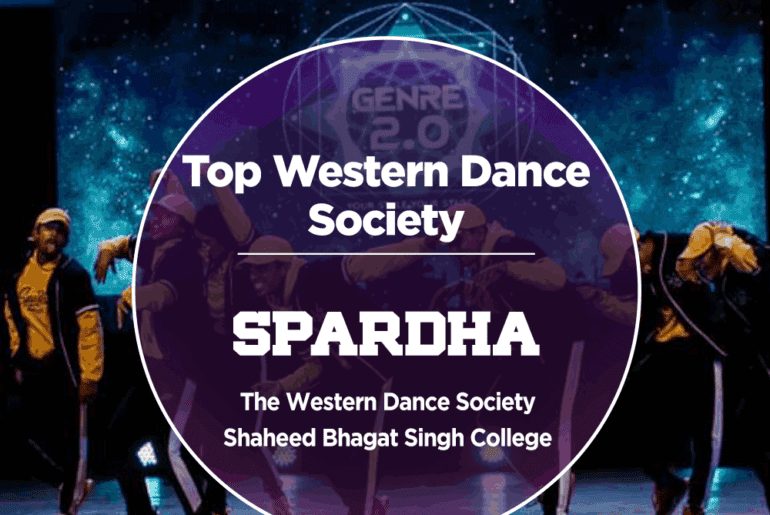
The top society in western dance, with a total of 46 points, is Spardha (Shaheed Bhagat Singh College). A close second goes to Crunk (Sri Aurobindo College) with 42 points, and the third position has been won by Enliven of Gargi College with 35 points.

Points Tally: Western Dance

The Winning Society at a glance

Mayank Rathaur, the President of Spardha, shared his thoughts on this victory with DU Beat- “This team has always focused on hard work more than anything.  We have been known for being different and fearless with the styles we perform. Here in Spardha “we practice like we never won and perform like we never lost!” Two years back, we were absolutely nothing and when I read the article of the Best Western Dance Society of 2016-17, it was a dream to see Spardha’s name in the coming years. Feels amazing that my dream has finally come true and it is only because of our choreographers and the hard work of all the team members that we managed to reach to the top.
Started from the bottom, now we’re here!”

Performing members

Mayank Rathaur (President)
Anant Sharma (Vice President)
Anushka Shukla (Secretary)
Arvind Sarawagi
Akshit Lamba
Sumit Kumar
Kapish Sirohi
Shubham Tyagi
Alisha Solanki
Reetik
Priyanshu Khandelwal
Preeti
Aseem Aggarwal
Nupur Malik
Devyani Grover
Shreeja Yadav
Tamanna Saini
Shashank Rohilla
Rahul Ashok Thakur
Abhishek Dubey
Ashi Adhikari
Himanshi Deshwal

Winners Tally 

From the colleges in our consideration, Spardha won at the following college’s competitions:
1st: Zakir Hussain College (Evening), Indraprastha College for Women, Sri Venkateswara College, Lady Shri Ram College, College of Vocational Studies, Sri Aurobindo College, Daulat Ram College, PGDAV College (Morning), Ram Lal Anand College, Shaheed Rajguru College

2nd: Maitreyi College, Ramjas College, Hansraj College, Hindu College, Miranda House, Shaheed Sukhdev College of Business Studies, Janki Devi Memorial College

3rd: Mata Sundri College, Institute of Home Economics

Data Analysis and Compilation by:

Sakshi Arora

[email protected]

Anushree Joshi

[email protected]

Feature Image Designed by:

Palak Mittal for DU Beat

[email protected]

With this semester, the first-year of college comes to an end for many students. Let’s take a look at the learnings of a first-year student.

  • Exposure and Experience

The first year of college is an eye-opener to the real world, it gives you a view of adulthood and brings along a sense of independence. It doesn’t come easy to many, makes life difficult for a few, and lonely for others. But what it does give you is exposure and experience to cure that gaping hole of leaving your home, friends, school, and your city behind. An outstation student of the University said “Yeh Delhi ne toh meri Lucknow ki saari Nawabi hi nikal di, Kahan main vaha maze mein ghoomti thi, aur yahan auto vaalon se dus-dus rupaye ke liye ladti hoon (Delhi has taken away all the Lucknow royalty from me, I used to a carefree child. Here, in Delhi, I have to fight with the auto-rickshaw drivers for INR 10)” She agrees that college life has transformed her to become a better version of herself. She is able manage her finances well.

  • Friends and Family

Himanika Agarwal from Gargi College commented, “Everybody used to tell me that you never find real friends in college, even I used to believe that. But Glass Eye, the Film Making Society of Gargi College has given me some of the best friends I have ever had, who have now become my family.” In the first-year itself, you find your close group of friends who become your family and confidants, be it your classmates or the members of your college society, college helps you to find people who you remember all throughout.

  • Fests and Euphoria

The cultural fests organised by the University of Delhi (DU) colleges is another enlightening experience for the students. Fresh out of taking the first semester examinations, students attend fests with their ‘college gang’ looking up wide eyed at the glittering lights of concerts and competitions, breathing in the chaos, and adapting to the crowds.

My first-year, personally, gave me The Local Train, another staple name associated with the DU fests. This musical band and their brand of music, their lyrics, and the performances are worth it. Another student added, “I can easily say that my checklist for a happening college life ticked off with after attending Vishal-Shekhar’s concert at Mecca, the cultural fest of Hindu College.”

  • The ability to study overnight

College is not only fun and games, academics also play an important role. This involves projects, class presentations, reviews, internals, and exams. These conclusively teach every student to study or make a presentation a night before the submission. This might be unhealthy, but it is a fact.

  • A new perspective

Above all, for me, the first-year of college worked as a stepping stone in the process of unlearning patriarchal norms and misogynistic conditioning, we as naïve little kids were subjected to, throughout our childhood. Classroom discussions with strong opinionated teachers, debates with your peers and seniors, revolutionary texts and readings, interactions about the rights of the LGBTQ community, these have changed my perspective for the better. Looking back, I can now remember instances in the past which were problematic, but I didn’t realise earlier. These realisations are my achievements of gaining new and better ideologies and of becoming a more ‘woke’ individual.

Feature Image Credits: DU Beat


Sakshi Arora

[email protected]

As the fest season concludes, the alarm of upcoming semester examinations starts beeping.

Even semesters are filled with zest and euphoria. They bring with themselves numerous events and fests which keep the students across the colleges on their toes. Unlike the odd semesters, the lectures are less, bringing in more fun. Colleges are a sight to behold during the months of February and March as they gear up to present their extravaganza of talent. For societies, this is the most crucial time as they put their yearlong hard work on the stage and compete rigorously with other colleges. From attending numerous fests, struggling for passes, witnessing celebrity performances, and meeting new people, fest season fills the students with energy and exhilaration.

With fest season and the mid-semester break coming to an end, the same monotonous life of college awaits the students. The fear of upcoming semester examinations fills all of us with gloom and tremendous amount of pressure. The farewell and entrance examinations further accentuates the sadness as the third-year students start preparing themselves to bid adieu to the institution which shaped their last three years and gave them a head start for their future. The reality that there won’t be any more events to attend, competitions to take part in and academics will take the front row is a bit hard to sink in.

If you think this semester was only fun and games, then it would be utterly disappointing to learn that continuous strikes and numerous fests have left us with only few days to cover that huge chunk of syllabus lying unattended catching dust. Coming out of the zone of fun and party isn’t an easy task too. But well, not all is bad after all. There’s still over a month left for those dreaded days of exams to begin.

With the month of March coming to an end, it’s high time we gear ourselves up for the next two months and put our heart and mind in studies for the upcoming semester examinations. We need to fix our focus back to academics which we had been conveniently ignoring for the past three months.

Fest season this year was a totally enthralling time to be in and its end is sure to bring some gloom. But, let’s look beyond the gloom, cherish the memorable moments and get into action mode for the coming two months.

Feature Image Credits: DU Beat

Shreya Agrawal

[email protected]

The fest season has begun and so have the stories of chaos, harassment, and safety issues at these prestigious cultural festivals. Let’s see what went down at Tempest 2019.

Tempest 2019, the three-day Annual Cultural Festival of Miranda House took place from 14th to 16th February 2019. Reports of chaos, security breach, rape threats, and harassment arose on Day 2 and Day 3 of the fest.

On 15th February, a message from the Women’s Development Cell (WDC) was circulated for the girls to be safe as allegedly, some members of the Delhi University Students’ Union (DUSU) had barged into the college campus, and were acting very violently and threatening people with rape threats. An anonymous source from the WDC security team shared her experience, stating that on the same day she noticed something weird going on around the entrance to the barricaded women’s area. When she went to investigate, she saw a few men who were trying to intimidate volunteers into letting them enter. When she asked them to leave, they retorted, saying, Aapko pata hai hum kaun hain? Humare saath Shakti Singh hai.” (Do you know who we are? Shakti Singh, the President, DUSU, is with us.)

When these people were blocked and not allowed to enter, they retreated but only with threats like “we’ll come back soon- just wait and watch” and “aaj 20 log laaye hai, kal 500 laayenge” (Today we have brought 20 people, tomorrow we’ll bring 500). She also added- “This kind of hooliganism has increased in the campus. There were men from Hindu College who had infiltrated the crowd, asking about the people who had taken part in the V-Tree protest the previous day.”

Anoushka Sharma, a second-year student from Delhi School of Journalism and a Copy-editor at DU Beat, also shared her horror story from Day 3 at Tempest. She stated that while entering the college on the third day of the fest, she was trying to show her media pass at the entrance to enter when a guy pushed her and said in a very rude tone- “Madam ji, kya kar rahi hain?” (Madam, what are you doing?). At first, she ignored but he was persistent and kept on insisting. When she told him about the media passes, he again said in a harsh tone- “Tameez nahi hai baat karne ki? (Don’t you have any manners?). Seconds later, the guards opened the door and at that moment people started touching and groping her. She quoted, “The lady security guard had to hold me since I almost fell on the ground, and she told me to go inside through the lawns since there was less crowd there.”

Talking about the ruckus created at the gates, the Head of Security from Miranda House’s WDC told DU Beat that due to the crowd build-up at the gate, the Principal had to open the gate when 50 to 100 unidentified individuals without passes barged inside the college. She also added that men came up to her, and to the Vice-President of the Student Union to threaten them by quoting their support from DUSU. When they were refused entry, they said, “Agli baar toh fest hi nahin hoga.(We won’t let the fest happen next time.” She added- “There was a sense of fear in the environment and the girls were uncomfortable by the presence of such people.”

When DU Beat contacted the Vice-President, she denied the story, saying that she personally didn’t hear any comments; however, due to the rush outside the gates, she talked to Shakti Singh who said that none of his people were involved in any such threats and misbehaviour. She also stated, “The passes said entry till 2 P.M. and people didn’t follow that which created more ruckus but actions were taken and things went smoothly later.”

These incidents are examples which show unsafe environment at fests. Even in a fest regulated with passes, unidentified crowd entered in mobs through the front gates and created a ruckus, not only threatening the attendees but also the organisers and volunteers. These prestigious annual cultural fests are the platform of growth and inclusivity which have now unfortunately become spaces for assault and harassment.

Feature Image Credits: Namrata Randhawa

Sakshi Arora

[email protected]