Tag

education

Browsing

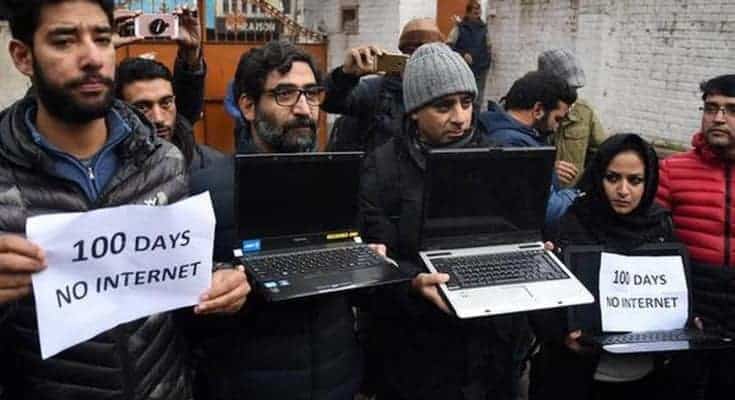
Read about the problems faced by students residing in Kashmir in accessing e-learning resources online due to low-speed internet.

The Jammu and Kashmir administration said that only 2G internet will be available to residents till April 3rd amid calls for restoration of high speed 4G internet in the wake of COVID-19 pandemic.

This poses a grave concern for students – as the world resorts to online classes for regular classes and lectures, students residing in Kashmir are troubled by frequent disruptions and delays in their educational pursuits. The learning process isn’t facilitated well, because the streaming quality is often poor due to low-speed internet. The union territory of J&K has over 15,000 schools and colleges catering to tens of thousands of students.

Bareen, a student of Jesus and Mary College, explains how difficult it is to continue and keep up the pace with everyone residing in the rest of the country when it comes to even basic tasks, “We are often not able to access video lectures, apart from this; National Eligibility-cum-Entrance Test (NEET) and Joint Entrance Examination (JEE) aspirants are facing problems in filling up forms and studying without able internet. Internet Banking has been absolutely crippled, failed transactions is the norm now due to slow net. Basic communication through mediums like WhatsApp is hard; downloading audios, videos and documents has become a huge problem. There is no question of even accessing other websites like Netflix, YouTube and social media for recreation and leisure.”

“Restore 4G internet services to help student learn from home,” an association of private schools in the valley has said in a message. The association said the ban on high speed 4G internet services has been preventing schools from offering Google classroom teaching to students in the region. “While private schools show their readiness to shift to online lesson plans, they’re running into limitations of our broadband networks,” said G N Var, president of the Kashmir Private School Association.

Feature Image Credits: Instagram / Stand with Kashmir Feature Image Caption: A letter written by a 5th grade student to address his lack of access to online classes.
Image Credits: Instagram / Stand with Kashmir
 Image Caption: A letter written by a 5th grade student to address his lack of access to online classes.

Doctors and other health care personnel have also faced significant predicaments. With concerns arising over the coronavirus pandemic, the risks to life and lungs have increased. A Kashmiri doctor recently tweeted his frustration over not being able to download the ICU guidelines for COVID-19 even after an hour of trying, due to the low-speed internet.

Feature Image Credits: The Hindu


Paridhi Puri

[email protected]

Sex Education, a comedy-drama series, came out with its second season on the 17th of January, 2020, on Netflix. The new season has shed light upon topics that parents prefer not to talk about with their children.

The show essentially revolves around the life of a teenager, Otis, who goes on to follow the footsteps of his mother, who is a sex therapist. From the partial knowledge he gained from her, Otis starts an underground sex therapy business with Maeve in school. Otis, being a teenager himself, gives ‘expert’ advice to other curious students who are on a quest to explore their sexual identities.

The series became a widely watched show in about no time because the producers have touched upon those issues that people shy away from. Along with the development in its plot, the new season went on to use humour and love to carefully bring forth these issues for the audience.

Sex Education has played a huge role in normalizing homosexuality, bisexuality, pansexuality and asexuality as well. The show may be about a boy but the girls are the ones who stand out. Also, another topic that has been addressed here is unwanted sexual contact. Aimee, a friend of Maeve, gets sexually assaulted on the bus while on her way to school. Aimee, after the incident, gets highly disturbed and refuses to board the bus until Maeve, Lily, Ola, and Olivia decide to accompany her.

The writers of the show also expressed the significance of consent through a few glimpses. By taking the example of Maeve and her mother, the show also took a turn and focused on faulty parenting. Jackson, an extraordinary swimmer, embarks on a new journey to discover where his interests truly lie, after experiencing poor mental health and indulging in self-harm.

Aditi Gutgutia, a student of Lady Shri Ram College, said, “Season 2 had fallen more towards a cliché high school drama and was highly predictable, which was somehow disappointing, but on the other hand, the added depth to some of the characters was admirable.”

The addressed issues in the show needed to be brought forth because they are often overlooked by the people. The writers have done a fairly commendable job by tackling these issues with love.

Image credits- Newsweek

Suhani Malhotra

[email protected]

DU will receive INR 100 crore grant from the government for achieving IoE status and aims to raise the equivalent amount on its own.


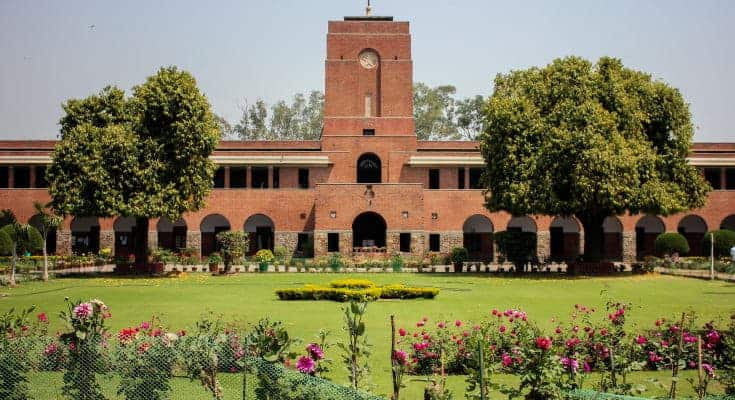
In September 2019, the University of Delhi was awarded the status of Institute of Eminence (IoE) by the Union Ministry of Human Resource Development (MHRD) on the recommendation of the University Grants Commission (UGC). In order to meet the requirements of the same, the university has launched the ‘Endowment Fund of the Delhi University’ which aims to raise INR 100 crore over a period of five years and has also encouraged alumni to invest in sectors of their choice, which may range from building to research funds. 


This tag allows the University a grant of INR 100 crore from the government over five years and aims to raise the same amount on its own as well. The varsity states that the funds will be, “100% tax exemption and has no restriction on the amount of contribution. The donor can choose the area in which his/her contribution should be utilised. The information on the utilisation of funds will be displayed on the university website and 50 per cent of the funds earmarked for girl students. There also will be a compulsory audit of the endowment by the Controller and Auditor General (CAG) of India.”


According to a circular signed by the Vice-Chancellor, Yogesh Tyagi, the University is currently in the top 500 universities globally according to QS World University Ranking and is aiming to be in top 100 over the next 10 years. However, it lacks new institutions in the field. “To help our students and faculty attain academic excellence, the University would like to provide them with the necessary support, including the best and most modern research facilities and educational infrastructure”, further states the circular.


The letter also suggests, “It will provide opportunities and facilities to enhance the quality of teaching and research and to attract talent from outside the University and make them stakeholders in our growth story. This enterprise will ultimately lead to the University’s role and contribution to the nation-building and to scale greater heights in the global rankings.”


The University is yet to sign an agreement with the Ministry, under which it will lay out the plan to achieve the status of a world-class institution. Public institutions with IoE status are eligible for a government grant of INR 1000 crores. Upon getting the IoE status, DU will have complete academic, administrative and financial autonomy to spend the resources it raises and is allocated.


Recently Indian Institute of Technology, Delhi (IITD) also launched a global endowment fund of INR 250 crore in presence of President Ram Nath Kovind by 10 founder alumni members. The University states that the fund will be utilised for “each one teach one” providing a student aid of INR 10000 to each student to facilitate their education. 


Feature Image credits: DU Beat Archives


Aditi Gutgutia
[email protected]


With the vacations upon us, here’s a piece on how you can make them more productive, not only for your own development but for enriching the lives of others!

Here is a list of activities you can do in these holidays, for a healthier and happier self!

  1. Join NGOs

NGOs are great places for development and introspection of oneself. They make you realise your privilege and the kind places you come from with the best of all facilities. NGOs make your heart melt and become a person more empathetic towards the society. So this winter break, spend some time to give back to the community. Be it any NGO right from animal rescue to taking care of senior citizens. Make this break worth the while.

  1. Volunteer!

As exciting as it sounds, volunteering for events is a very learning process. Not only it shapes a person but also helps in developing the various parts of their personality they never knew they had to themselves. Right from organisational skills to event management, volunteering is a great exercise to get in to.

  1. Teach Children

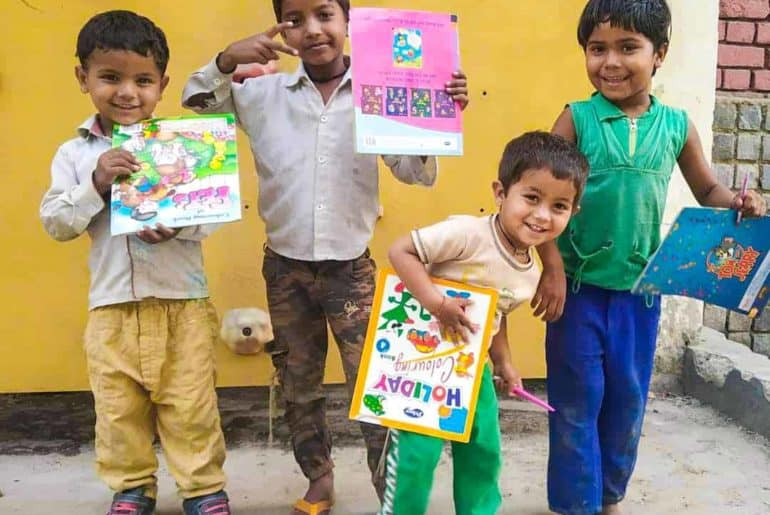
There is no greater joy than the one you receive after you see education opening up the hearts of the people around you, especially the children when you see the twinkle in their eyes. Go out, bring the season’s cheers upon the hearts of the underprivileged kids you see in your neighbourhood. You don’t have to teach them everyday, but keep teaching them something or the other frequently; that keeps them hopeful and restores their faith of kindness still existing in the world.

  1. Take Care of the Stray Animals

Tiniest actions such as feeding them biscuits in this harsh winter will give them the love they seek outside. Go a good deed by acknowledging their existence and bring warmth to your heart and of the furballs you spot in your neighbourhood!

  1. Organise Cleanliness Drives

For a cleaner, safer and healthier future, it is important that we start taking actions from today itself. Work for the mission of a cleaner India by organising small cleanliness drives in your place. Get along with your friends in a group and educate people, because at the end of the day, alone we are so little, together, we can do so much.

  1. Stay Fit!

Participate in the various marathons, and do not forget to exercise regularly (even though the idea brings the chills!) for it’s important to stay fit.

Continuing these activities will surely result in a healthy college life and personal life balance. So, aim for ending this year positively, will all the good deeds backing you up for a brighter and beautiful year ahead!


Feature Image Credits: Scopio

Amrashree Mishra

[email protected]

Meet an entrepreneur to get inspired by. Explore with Aditya Arora the insights into the entrepreneurial world.

Aditya Arora is a promising young entrepreneur, CEO of Faad Network, and an alumnus of Shaheed Sukhdev College of Business Studies (SSCBS). He started his journey at the young age of 17, and is now a well-known name in the industry. We sat down with him to know about his journey and his insights into the entrepreneurial world. 

Here are some excerpts from the interview:

Shreya: Tell us something about yourself and your journey of becoming a successful entrepreneur at this very young age. 

Aditya: I was very academically focused in school and got SSCBS, which was my dream college. In SSCBS, I pursued Bachelors in Finance and Investment Analysis. Apart from studies, I was a part of the Economics Club, and debating society as well. It was in second year when this company called Faad came into my college during an internship fair where I eventually interned during summers. It is in those two months of working with Faad that I learned what exactly entrepreneurship is, and also what are the different traits of it. The internship got converted into first, a part-time opportunity and then a full-time opportunity and by the end of the college, I was the CEO of the company. 

Shreya: Why did you choose entrepreneurship over a job or studying further?

Aditya: So it wasn’t mandatory to do internship during my second year. Thus, it was the perfect time to explore all possible options and figure out what works best for me. And it was always in my second nature to do something different from what the others were doing. My internship with Faad totally changed the game for me. I always say this about my journey that I had thousand reasons to not become an entrepreneur but my internship gave me so many reasons why I should become an entrepreneur. It has helped a great deal in shaping who I am today. 

Shreya: What are the difficulties you faced in this journey?

Aditya: The biggest difficulty I faced was that of the mindset. An entrepreneurial mindset is different from others. It is supposed to be more risk-taking, more creative and more analytical, and of course, the ability to bounce back from failures. Building this mindset was the biggest challenge. Convincing my parents and my peers that I want to be an entrepreneur as opposed to doing MBA or taking up a job was another big challenge. My parents are from non-entrepreneurial background so it was difficult convincing them. Constant travel and time-management was another difficulty which I wasn’t used to. 

Shreya: Entrepreneurship is a risky field to be in. What are the skills, according to you, one must possess to be a successful entrepreneur?

Aditya: Risk is everywhere. Thus I didn’t see entrepreneurship as very risky because I see risk in everything. The most important thing to possess is the passion and vision to become an entrepreneur, because it is not going to be an easy journey. Secondly, time management is one of the most crucial skills to possess. And finally, it is necessary to have an open mindset. Society feeds us with a script of life. But if you have an open mind, you can make things work the way you want them to work. 

Shreya: How can one bounce back from failures in life?

Aditya: I firmly believe in the quote that the best way to deal with failure is to not see it as one. Once you start looking at them as an opportunity, the spectrum changes totally because then you know that if A didn’t work, then B will. As I said before, having the mindset of bouncing back from failure is indispensable to an entrepreneur. If you have the tendency to give up after a failure, you are perhaps not cut out for entrepreneurship. 

Shreya: Tell us something about your social campaign ‘Education Yatra’.

Aditya: It was a social campaign I started wherein I just wanted to go out there and spend some time with the underprivileged kids, understand their mindset, and teach them. I used to partner with some NGOs that have been doing deep work inside the community for years. I went to these places called learning centers where students from different classes come and study together. The motive of “Education Yatra” was that a child shouldn’t be given education based on his/ her class but on the basis of their knowledge capability. A 9th standard kid can have a mindset of a 4th standard student and also vice-versa. For this campaign I got awarded by Microsoft and now I am getting an award from UN for the same. My motive is to spread this idea to as many places as possible. 

Shreya: At last, what are your future plans and how will you go about from now?

Aditya: I honestly do not have a concrete future plan to tread upon because life has changed so quickly for me in the last four to five years that I don’t really plan a lot of things. But, I do have a vision which is to support and empower young people around me. This is my mission. Currently, I want to grow Faad further and that’s what I am currently involved with. 

Feature Image Credits: Aditya Arora

Shreya Agrawal

[email protected]

There are people from all walks of life who aim of accessing education but, the elitism around it stands as an overcast shadow, giving chances to some and leaving others behind.

Each year, when the results of the 12th grade examinations are declared, the nation collectively holds its breath. It does not matter if your kid is actually in 12th, or if they are in the second grade. The results reach new heights each year, with students working hard to achieve seemingly impossible scores. It is with these scores that come the impossible cut-offs.

It is a thinly veiled fact that the University of Delhi (DU) remains to be one of the most sought after universities in India. The “DU Tag” is a golden goose to catch, since it offers both – a subsidised education, and a status symbol. Thus, every passing year becomes a blood-bath of score battles to get into the best colleges. The idea of over-achievement is now so deeply internalised that even students who are fully aware that one exam set for one day is hardly enough to judge their worth, get carried away and caught in this vicious trap.

Many feel a sense of elitist pride for having been admitted to one of the more prestigious universities of India and our conditioning tells us – “well, why shouldn’t we?” After all, we worked hard to achieve it and it is a big deal. It is at this stage in the stream of thoughts that we contribute to forgetting our privilege. In economics, the “cycle of poverty” is the “set of factors or events by which poverty, once started, is likely to continue unless there is outside intervention”. This cycle is built on gate-keeping the weaker sections of our society from accessing the resources, education being an important one of them, which they direly require to come out of their existing state of situations.

Education is freedom. It is for that reason that education became such an important tool for the British to keep their colonies “in-line” – for that is precisely why only a certain set of Indians were educated in order to create a divide, and the perfect set of subordinates. It is then, that it becomes interesting to see that even after 72 years of Independence, it is exactly what we continue to replicate in slightly different ways. This is not a secret that in India, a Government school education is inherently sub-par when compared to the private education. This divide exists not just because of more highly qualified, high-paid teachers who can be held accountable but it also exists because of every other element that a private education entails. It entails an ability to afford dedicated teachers, extra reading material, and even private tuitions – something that has become a rite of passage in possibly every Indian household that can afford to do so, and most importantly, a support system that enables this culture of education.

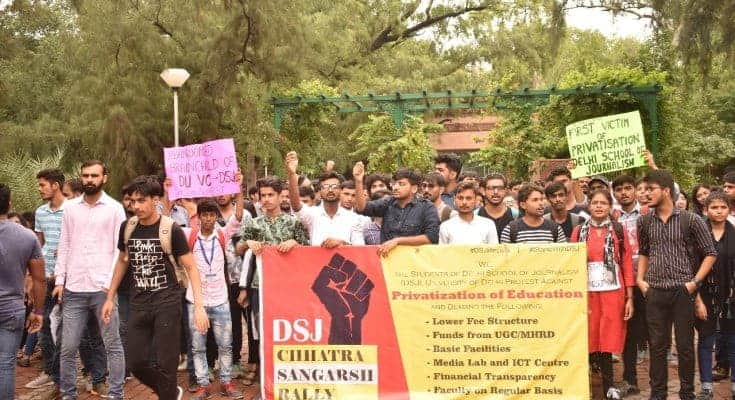
It is then that the prospect of Government colleges being revered over private institutions becomes an asset. It works towards bridging a gap of working towards the façade that it is not just money that would get you a good education, but it is your own merits, too. However, when the Government of India introduces policies like the National Education Policy of 2019, which works towards privatisation of these government institutions, this re-enforces a privilege that already has had a strong base, to begin with. When we make Government institutions autonomous and give them the liberty to set up courses with their own fee-structures, when we allow the Government to take away the job security of those who put “quality” in quality education, we allow a culture of gate-keeping.

Not every student can afford to pay lakhs to be able to go to a university. It is then that it becomes important to recognise this cycle of elite education, and to make conscious efforts to resist it.

Feature Image Credits: DU Beat Archives

Shreya Juyal

[email protected]

The year 2019 marks the 150th anniversary of the birth of Mahatma Gandhi. His words are acknowledged far and wide for their deep-rooted wisdom which he presented in the most accessible language for all. Here is an intersectional piece on his ideas of social service and the education of children.

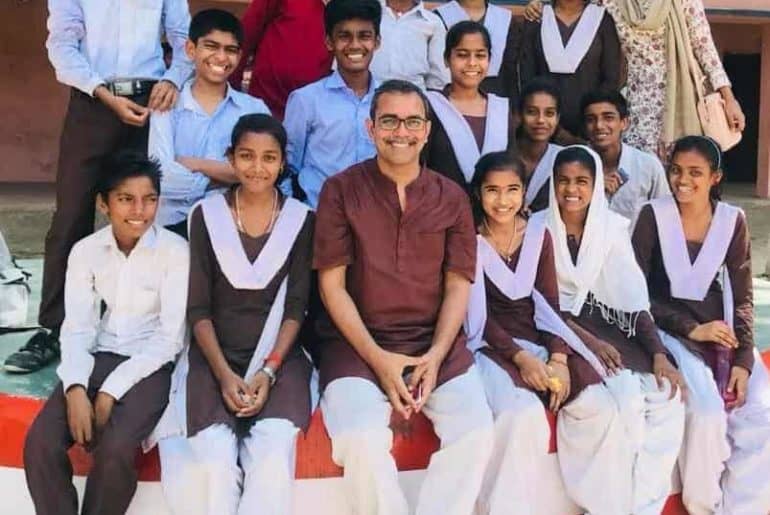
Since the past few weeks, I had the opportunity to interact with the children of the migrant labourers who were working in my college. Spending time with four of them made me realise and think deeply about a lot many things that are still happening, and are significantly pressing issues in India, which are sadly overlooked. Holding bricks in their little hands came more naturally to them than holding a book or a badminton racquet. This image, as simple as it might sound in its description, made me question the very living reality I am a part of.

In all of his seriousness, Mahatma Gandhi once said, “I would develop in the child his hands, his brains, his soul. Now the hands have almost atrophied and the soul has been ignored.” The words he spoke years ago ring a deathly cacophony in the face of modern India – an India built on hopes, dreams, and immense ambitions. Upon interacting with those children, I found how the very act of accessing good education is a dream too fancy to dream. They are a generation of unlettered Indians, much like their parents and grandparents. They will continue to be a part of the vicious labour cycle, because we have continued to sit quietly in our ignorance. In the actions on my part, I taught them to play badminton, how to read and write alphabets, and they taught me the value of privilege.

I hope that they all get an equal opportunity for a beautiful childhood because that is what every child deserves. That is a future our founding fathers longed for, and a future which they died for. It rattles me to the core, when we boast of the fact that India is developing and whatnot – is all of that true, or just a globalised facade while the local reality remains unnerving? There is a long way ahead of us with a long trail to tread. Are we mere paper tigers when it comes to implementation? It is here that Mahatma Gandhi’s words ring all the more true, in a dire need to be put into action, “The best way to find yourself is to lose yourself in the service of others.” It surely is a battle, but one to be won with pen, patience, and systematic resistance, in going out and reaching to this parallel reality of India. It is at this powerful juncture the motto, “Each one, teach one” almost screams to me in all its naked truth. It screams how one person has the power to bring changes in their immediate ecosystems. It screams how we are just one action away from building our future and giving no individual effort in this pious task.

Every person has the right to lead a life of dignity, respect, and one where they are not exploited. Even spending as less as 15 minutes a day to teach something to an illiterate child can bring watershed changes in our society; one which have been lying dormant for the longest time. Brace up and buckle up, India. Every effort of every individual counts, and it is the time to contribute substantially to the cause of the leaders whose birth and death anniversaries we celebrate with pomp and show, while ironically rolling down our car windows to buy chai from young children who deserve an education.

Feature Image Credits: Amrashree Mishra for DU Beat

Amrashree Mishra

[email protected]

DU Beat engaged in a conversation with Dr. Sanjay Kumar, India Country Director, The Lakshmi Mittal and Family South Asia Institute, Harvard University.

Priyanshu: Many students come from small towns and villages with dreams to pursue something big in life. But due to lack of exposure and good role models, they get stuck preparing for Government jobs or follow the conventional career path. As an academician and a social activist who went all the way from a small town in Bihar, Katihar, to Harvard Kennedy School, what can you suggest to these young minds?

Dr. Kumar: To begin with, it comes from parents initially. They try to condition you in a way that you should take up a particular line of action. To the students, I would like to suggest that each student is different and each human being has unique potential and, thus, they should explore that unique potential. Somehow, we believe that if the neighbour’s son is doing this, you should also be following the same. I faced this a lot. Even with my cousin brother my father used to say, “Yeh dekho CA ki padhai kar raha hai. Woh padhaai kar raha hai, usme bhi usko CA bana dete the. (Look at him, he is preparing to become a Chartered Accountant. If he is simply studying as well, then too they would make him a CA.)” It’s a wrong approach and every human being has a separate talent; and following the conventional path you do not get an opportunity to explore thing which you can explore as an individual. You don’t want to take chances in your life. At this age, I think one can definitely take chances. It is after midage that one requires security in life but early in life, one should try to discover what they are looking for. And nowadays, I am very happy to see that a few students from Delhi University are taking a break after their undergrad to explore themselves, which is a very Western concept. So, my answer to your question is: young students should explore various career paths, and career is not the end. Unfortunately, in our country everyone thinks that UPSC (Union Public Service Commission) is the goal. I am sorry to say but this is a big misconception. Being a civil servant can be a means to serve the end, but it cannot be the end. I would strongly suggest (that) the students should identify the purpose in life as early as possible. And purposes can be changed as well. It can be edited and altered. But then one can accordingly find means to serve the purpose.

Priyanshu: What opportunities does the Lakshmi Mittal and Family South Asia Institute, Harvard University, provide to young students who come from underprivileged backgrounds?

Dr. Kumar: So, since last two years, Lakshmi Mittal and Family South Asia Institute, Harvard University India office is the connector and convenor of the Harvard Programme in South Asia and it has a number of programmes but for youngsters we have a specific programme called ‘Crossroads’ where two of the Harvard faculties from Harvard Business School have come up with this idea of bringing youngsters from all over the world (it started from south Asia but now it’s all over the world) and we organise this in Dubai. It’s a fully funded programme. There are donors based out of Dubai. It’s a one-week training for students around leadership and exposing them towards the Harvard method of education and teaching. This is only for students who are first in their family to go to college. In a way, the programme is targeting underprivileged youngsters and the best thing about the programme is that all of them fly to Dubai and meet other students and teachers. (The link to apply for the programme is: https://mittalsouthasiainstitute. harvard.edu/crossroads/)

Priyanshu: You have talked about this in your book too and this concerns the nation at large as well. The decline of public education in our country is quite worrisome. Who do you blame for this? The Government or the private education ecosystem? How do you perceive this and what has your organisation, Edjustice, achieved in resolving this issue?

Dr. Kumar: It’s definitely the Government! Because the idea of privatisation comes from the Government, and the market always sees the opportunity. You cannot blame the private educators. If they see the opportunity, they will come forward. I don’t think it’s (privatisation) a good idea. For a country like India, we still need to continue with public education for 30 to 40 years, because a lot of people are still lagging behind in education and they can’t afford costly private education. The indicators are not good, and the kind of fees that the private universities charge – I am not taking about quality – not everyone can afford. What stops us to strengthen our public education system which can provide quality education? If you see, 20 years ago, all the big names were coming from public colleges. Even now, some of the big names are coming from public universities only. So, it’s just that the Government doesn’t wish to put attention on public colleges. I don’t blame the private players. I blame the Government. And, people also need to be blamed. We are not talking or protesting about it. We want the good pie in everything. For health, we want five star health-care. Our aim is to earn good money, so that we can avail good facilities and our children can go to good schools. Our aim is not to fix the system which used to exist. Take an example: when we talk about quality of air, we know that it is affecting everyone – the rich, the poor, and the middle class – everyone is harassed by air pollution. So, everyone is talking about the air pollution, but education is something which is not bothering them; no one is talking about that. So, if public education is not affecting my kid or my family, then I am not going to talk about it. But I am talking about air as it used to be very good. But then our public education also used to be very good. If we are taking about reviving or cleaning the air, why can’t we talk about reviving the public education system? So, the public is also responsible. I also wonder why students studying in DU colleges and the students’ unions do not raise the issue of high-quality teaching in colleges? Since you mentioned about my book, I would encourage students to read my book, Katihar To Kennedy: The Road Less Travelled. It depicts my life at DU and what all I gained being a DU student. It’s available on Amazon.

Priyanshu: A lot of students dream to pursue higher education from Ivy League or Russell group colleges after their graduation. The exorbitant fee and sustaining in foreign countries make scholarships a viable option. As a student who has fetched a scholarship to study in Harvard Kennedy School, can you suggest how an average student can grab one for themselves?

Dr. Kumar: For that, I think these universities look (at) leadership skills in you, how good you are at extracurricular activities, how good you are in the field you are pursuing, and what leadership role you have played. And it’s also important to let them know how your learning is going to help the humanity, at large. So, when you are writing your SOP (statement of purpose), these things matter a lot and it should come naturally. You can’t decide today that you want to apply for Harvard or Princeton, and someone suggest that you have to write an SOP and you start writing . That’s not a good thing to do. You need to start as early as possible. I don’t mean you have to start writing as early as possible, but you have to build your personality like that. You have to build your profile like that. There are a lot of scholarships available. One thing that I have observed is that if you have to go to foreign counties for higher studies and if you have the right intent, then nobody can stop you.

Priyanshu: How can a student be a part of your Edjustice People’s Campaign and contribute to the development of underprivileged children?

Dr. Kumar: So, Edjustice is a campaign to rejuvenate public education system in India. It’s an all-volunteer run campaign, so it’s quite unique. The campaign started from Bihar, but the model is quite relicable and scalable, hence we will move to other states next year. So, any student from Delhi University who wants to be a part of this education camping and believes in strengthening and rejuvenating the public education system is very much welcome to join us. For more information, one can visit www.edjustice.in and the Facebook page is @edjusticeindia and if you want to write, the e-mail ID is [email protected]. With the active volunteers, the campaign expects eight hours per week, which is mostly off-site and we have meetings every week, and that too in the evening so that it suits everyone. The volunteers also travel to field areas like Bihar once in a while, but they also support us with designing the campaign and various programmes. Volunteers can join for one year and they can always renew after that. This is a very good opportunity for young students, especially for DU students and since I come from this varsity, I feel that students are very bright in DU and they can contribute a lot. Many students from LSR (Lady Shri Ram), Hindu, and Venkateswara College are a part of this campaign.

Feature Image Credits: Mr. Sanjay Kumar

Interviewed by Priyanshu and Maumil Mehraj for DU Beat

[email protected] [email protected]

Interview transcribed by Priyanshu for DU Beat

Education is meant to liberate the educated. Read on to know what happens when there exists a polarity between the two.

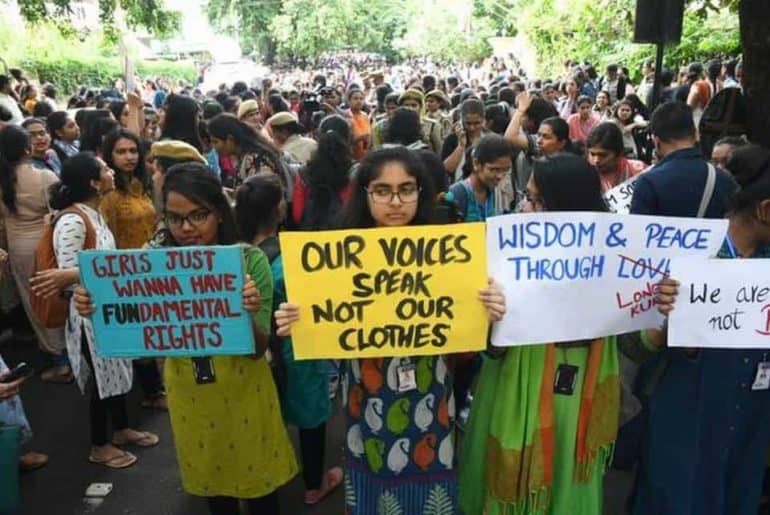
Recently, a video of St. Francis College, Hyderabad, had made rounds on the internet. The video was received with widespread outrage across different social media platforms. The protesting students alleged that a faculty member had shamed a student for wearing a sleeveless dress. “The head of my department gave the example of actors who are paid to wear ‘such clothes’. That statement affected me. I have written down this incident verbatim in my book,” an enraged student said. “Sr. Sandra announced a new dress code change in the middle of the year and her colleagues told our representatives that a long kurta would get us good marriage proposals. They told our representatives that standing up for a cause is blasphemous, raising your voice is blasphemous.

This went against the very grain of our values as millennials of the 21st Century. Things got worse, every day we were all humiliated for wearing a kurta that was just an inch or less above the knee, we were made to stand outside the college, losing out on classes and tests. Things did not stop there, the college went ahead and hired female security guards in the pretext of security, these female guards were checking the length of our kurtas, they went ahead and pulled girls by their ID (identity) cards and even pulled their kurtas,” Zanobia Tumbi, who is a student at St. Francis, posted on her Facebook profile, along with the video. Eventually, the women decided to protest and were finally allowed to wear “long tops” to college. But that does not even begin to end the discourse. The Indian education system, specifically talking about higher education, has a way of putting unnecessary obligations on students.

Be it a certain way of dressing, a mandatory minimum attendance, or a particular way of writing the papers to fetch more marks, they all contribute to cease the liberty of students. What is worrying is that the students of these institutions have internalised this behaviour, and do not really seem to have a problem with it. When I asked a few students studying in a reputed college which followed the same practice, their answers ranged from, “I have never given it a thought,” to “No, I don’t have anything to say about it.” When humans are fed a diet of entirely problematic substances, they stop dissecting the reality to find out the truth.

Something similar seems to be happening with the Indian youth, and this is a cause of concern. Education is supposed to make them distinguish between real and false virtues, but in such cases, it is robbing them of it. When there is an imposition of uncalled-for rules, it tends to hamper with the real issues plaguing the country and the world as communities. India lags behind when it comes to research, innovations, and modifications in education. Instead of sanitising the post-millenials of their ungodly ways, the system should take a long, critical look within its cracks and make amends to the damage. While the whole world is progressing to form a more holistic approach towards education, actions such as these put a big question mark on the system.

There is also a debate about what the parents’ reaction is. According to the management of St. Francis, most of the parents had received this decision of their daughters wearing a kurta in a positive light. In this situation, dissent, and not the narrative of “disobedience” that we have been fed, is necessary. Across colleges, and especially in women’s educational institutions, patriarchy or moral policing should have no space. Such places in Hyderabad, Delhi, Mumbai, or across smaller cities, have given the country women that the world is proud of. If we limit them to, and define them by what they wear, these places will stop producing the kind of talent that they have. In an educational institution of the present time, moral policing on women’s bodies and clothing should be the topic of criticism and not a notice issued by the authorities who hold power. When it comes to learning, steps like these comply with the misogyny and sexism women in our country, and from all over the world, have actively been fighting to put in the past.

Feature Image Credits: The Hindu

Maumil Mehraj

[email protected]

As the opportunities in the service sector and manufacturing sector increased for the educated youth, the demand for educational institutions grew, and hence, education is turning into a business in our country.
In India, it is not legal to run educational institutions as business organisations, since only trusts can run such institutions on a non-profit basis. However, there appears to be a systemic method by which many trusts turn these non-profit institutions into their profit-making centres.
The entrepreneurs, taking advantage of the high demand for education, generally get land allotted at a nominal cost in the name of an educational community. In the initial stages, some temporary structures are put up. Later on, as students are admitted, funds begin to flow in the form of development fee, building fee, tuition fee, cultural event fee, etc. These institutions charge cost plus pricing for the services rendered by them. Therefore, over a period of time, these institutions were able to construct huge buildings and purchase costly equipment to modernise their establishments. In this way, a large percentage of unaided private schools and colleges have converted education into a business enterprise.

Earlier, these institutions were confined to metropolitan areas and big cities, but now they are spreading even to smaller towns. “This seriously undermines the selfless nature of education, especially in a country like ours where students are supposed to consider their teachers as Gods,” opined Bhavya, a first-year student pursuing B.A. (Honours) Economics from Daulat Ram College. Of late, the issue of charging capitation fee by educational institutions has also become a sensational topic of disccussion. The Supreme Court, in its judgement on the Mohini Jain versus the Government of Karnataka case in 1992, declared that the Right to Education was a fundamental right, and that the charging of capitation fee was arbitrary, unfair, and, therefore, in violation of the fundamental Right to Equality contained in Article 14 of the Constitution. Mohini Jain, the petitioner in the case, was admitted to the medical college in Karnataka, but she could not take advantage of admission as she could not pay INR 60,000 per year as capitation fee.

A distinction has to be made between privatisation and commercialisation of education. India has a long tradition of privatisation of higher education. Tilak, Karve, Sir Syed Ahmed Khan, and many other charitable trusts started educational institutions to widen educational opportunity in the society. But modern educational entrepreneurs are not guided by philanthropic motives of the earlier reformers. They intend to invest in educational institutions to maximise profits, because the demand for professional education is very high and the risk involved in this investment is minimal.
There have also been many instances of promoters of educational institutions getting involved in tax evasion and money laundering cases. Politicians and other investors create trust funds, citing education as the motive.

Corporate Social Responsibility funds flow into the trust through legitimate banking channels. These funds are returned to the promoters in cash, and the actual expenditure on the institution is met with the illicit hoard of black money. The expenditure is then inflated, helping launder the black money. In spite of these negative aspects, there are many positive aspects as well that have been brought in by the private investments in the education sector. They have filled up the investment deficit in the education sector. They have increased the availability of seats, creative subjects, and also developed the other centres including the urban areas.

Any development without proper regulations is hazardous for the society. Hence, there should be a strong regulatory body across India for the regulation of these institutions regularly. Benjamin Franklin wisely said, “An investment in knowledge pays the best interest.” One can sincerely hope the investment is not made to run education as a business to a point of extreme capitalistic individualism and exploitation, but in order to increase knowledge for the building of a stronger and a more reformed society.

Feature Image Credits: DU Beat Archives

Abhinandan Kaul

[email protected]