Tag

education

Browsing

How many things have we learned in our school life expecting to use them in reality which, we found out were in fact, a total waste of brain space?

From a very young age, an average Indian student is fed a healthy diet of multiplication tables, and an abundant number of formulas that they tend to cram up and carry with them for a period of more than 12 years. We adhere to these concepts for so long that the very idea of education becomes restricted to the ability to score well and not flunk, doesn’t matter if we actually learn something from it or not. Hence, eventually losing the ability to question the system.

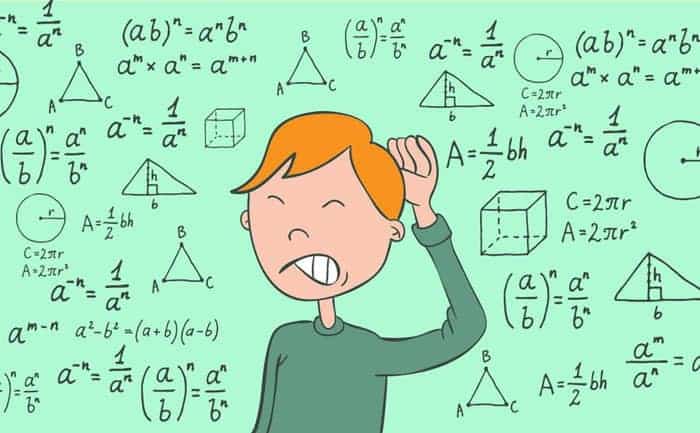
I am sure we all believed at the age of 12 that by the looks of it, we would be using geometry on a daily basis. Yet, another day has passed and how much Pythagoras Theorem have you applied in real life? At some point in high school, we all get into geometric theorems and proofs, comparing triangles to other triangles, and a few other things that the Greeks had already figured out for us. But when it comes to applying them in real life, people just don’t encounter triangles in the wild pleading to be proved identical. Let us not forget how much we struggled with long division back in fourth grade. It was added to our math curriculum in an era when people smoked for their health and calculators were rare. Basically, the only people who use long division now are fourth-grade teachers teaching it to fourth graders.

Archimedes, the famous Greek Mathematician that contributed his fair share of principles and theorems, was considered highly intellectual. Lesser-known truth about his life is the cause of his death. When his city was captured and there were rage and terror everywhere, he was killed by a soldier, who mistakenly thought, the mathematical instruments Archimedes was carrying were valuable weapons and thus, killed him with his sword in anger. Which tells us how there’s actually a quite thick line between Maths and intelligence.

Our education system judges the mental level of students by seeing how accurate they are with math. Doesn’t matter if it’s anyone’s cup of tea or not. And it’s just not mathematics. We wouldn’t have struggled with History so much if instead of Jhum cultivation, or about how different rivers were named, we were made to read chapters on the stories written by the great Sadat Hasan Manto, who did not write words, but wrote emotions, covering every detail of those dark times, how various people of the society were affected differently.

Ironically, the word “Education” comes from the Greek word “Edukos”, which means ‘To Draw Forth From Within’. How very different from the prevailing schooling system which seeks the child’s soul to conform to the demands of a consumer-driven society, leaving us hackneyed. Imagine an education system so abominable that we make extra coaching, a thriving multimillion rupee industry with enough money to buy front-page ads, billboards and bus wraps.

When it’s said that education is the solution to various catastrophes of the world, it certainly doesn’t indicate what we studied about Mitochondria being the powerhouse of the cell. Rather, it’s about educating and making the people aware about inequality, cyber crimes, taxes, poverty, homosexuality, and numerous other visions that give us the power and confidence to question the issues prevailing in the world. Seeing unhealthy patterns in the previous generations and deciding those patterns end with us is an extremely powerful decision which is, in fact, the basic expectation from this generation, something that can only be achieved from a liberal education system that doesn’t produce mules.

Now to answer the question, will you ever use Pythagoras theorem in real life? Dissentious. Unless one plans on making a career in mathematics, about which, are you sure?


Feature Image Credits: Pinterest

Avni Dhawan

[email protected]


Let’s look back at the first institution of education you were introduced to, and see how it failed to teach you ‘Real World 101’.

The Internet is a wonderful place. You have grown up listening to the incessant debates on how social media and communication are a drawback for our generation’s growth. Your parents almost always blame your wretched cell phones for everything – from your flu, to your accidents. But the greatest thing about the Internet today is not just its ability to connect; but its ability to connect meaningfully with a space for discourse, dissection, and analysis through forums like Quora, Reddit, Tumblr, etc., which never cease to amaze you with the bizarre, informative, and yet strangely comic variety of questions and answers. In the Indian school student’s world though, the questions searched for on Quora are a sadly discomforting reality.

‘How do I score 100 in English CBSE Boards class 12?’

‘Which books to study for MCQ IIT JEE preparation in class 10?’

‘What are the important pages to study in Class 10th Science book?’

The thing is- you should not be scoring 100/100 in a paper like English, or be concerned with the MCQ of a competitive exam without knowing the concepts, or be asking for pages to study from in a grade 10 textbook. But that’s what Indian schools make you think you need.

In a classroom of 50 to 60 students, majority of the school teachers bring a prescribed textbook to class, write formulae on the board, read the text as it is, make you mark the ‘important points’, give you answers for ‘expected questions in exams’, and leave without encouraging you to think beyond the text; even reference material is discouraged. Rushing through the syllabus is a common phenomenon. Honestly, most school students in India, instead of feeling robbed of precious learning methodologies, feel glad because their entire focus depends upon the coaching centers where another cycle of spoon-feeding and keyword-vomiting occurs at a much higher price. As your schooling ends and your college classes begin, you have already become systematically habitual to run away from research, opinion-making, questioning, a and most importantly, believing that learning things is worth it.

This is not to say that the higher educational institutions in India are devoid of flaws. Even the best colleges have fundamental or deep-rooted issues that need to change. But when you sit in a college classroom where people don’t know you at all, your opinions set you apart. Unfortunately, you have been taught to stay firm on your lack of opinion and graded on your keyword-clad answers.

Even the competitions held at schools tend to throw the spotlight on a few selected students who always bring either glory or loyalty through continual participation. This practice of extreme favouritism towards some and lack of initiative by most in an institution as small as a school, where you spend more than a decade of your life, kill the spark of curiosity.

Those who are good at things begin to fear rejection and failure in colleges, buzzing with talent and enthusiasm, while the ones who were left out in school develop a sense of confidence in the lack of their capabilities. To be politically correct and not offend people, schools in India have evolved towards a sad dearth of awareness.

Above everything, what makes schools in India a funeral pyre of reality is the lie- ‘Study hard to score well in twelfth and you’ll enjoy for the rest of your life.’ This statement is a scam. It is an unsettling blow to the very principles of education. Your life will not be one of growth or joy unless you constantly learn, unlearn, research, analyse, and think with all your strength about your field of interest. There is no ‘thus, this is how it works’ to find success in your life beyond school. But the best plan is to know, and know it like your favourite song, your learning ends only with your life, and college is just the first step of learning- by unlearning.


Anushree Joshi 

[email protected]

India is confronting a mental health crisis, with one out of every three individual dealing with depression. The Mental Health societies in University of Delhi (DU) aim at improving this condition at student level, in the wake of Sri Venkateswara college’s new mental health club, “Empathise”.

Mental health is an indispensable part of character, and is more than the absence of mental disorders. It refers to a broad array of activities directly or indirectly related to the mental well-being, prevention of mental illnesses, treatment and rehabilitation of people affected by mental disorders.

According to the National Mental Health Survey of India 2015-16 (quoted by a 2017 World Health Organisation report), one in 20 people in India over the age of 18 have suffered from depression, and more than 80% of sufferers have not received any treatment. The National Crime Records Bureau reports that students made up almost 7% of recorded suicides in 2015.

The viewpoint of Indian people towards mental illness isn’t very comforting. There prevails a pervasive stigma that responds to it by maintaining a safe distance from those who are mentally ill or categorise people striving for mental help, as attention seekers. But over the past few years, Indian society has witnessed some changes and the number of people who deeply care for this cause has increased.

College societies play a very substantial role in developing students. They prove to be a good forum to generate changes, create acceptance and develop a healthier environment that is more than just attending classes and scoring well.

Bhavika Mehta, founder of “Empathise”, The Mental Health Club, Sri Venkateswara College said, “College can be a wonderful experience for many, but it could be miserable to a lot as well, given the fact that people from all backgrounds and pluralities come to one place. The objective of the club that will turn into a society would be to establish a safe and comfortable space for anyone who wishes to talk, our team would be there for them with open arms and listening ears.”

A society solely concerned with Mental Health is beneficial for the college and would eventually normalise the notion of needing mental help and stimulate people to not see depression, anxiety or any other discomfort as a call for attention, rather something really sensitive and severe.

There are several other colleges of DU amassing Mental Health societies that are working even on a larger scale. Friends’ corner, Hindu College is an active society that endeavours to make the college more empathetic. They also have a page called “Humans of Hindu” that encourages the students to share their stories. The White Rose Club, Gargi College, is another society that aims at spreading awareness, curtailing hate, and encouraging students to rise above their phobias. Apart from this, the colleges that are yet to have a Mental Health Cell, have shown their support to this cause on a secondary level. The NSS unit of Kamala Nehru College organised a peer mentoring session that encouraged freshers to reach out for any mental, emotional help, the society would provide them with assistance.

Students strongly believe that the fact that there is a need for such societies is an indication of how our educational institutions lack counsellors and therapists. A student instigated organisation cannot be a substitute for proper counsellors and psychological assistance. The Indian education system needs to realise the importance of this aspect and act on it on a wider scale.

Feature Image Credits: Mentalhealth

Avni Dhawan

[email protected]


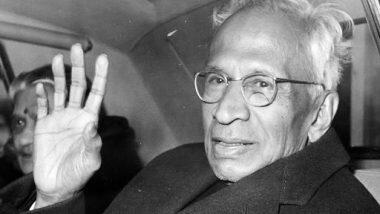
Let us explore a lesser-known tale of the
plagiarism controversy surrounding Dr.
Sarvepalli Radhakrishnan, the man whose
birthday is celebrated as Teachers’ Day.

Before being ordained as the second
President of the Republic of India, Dr.
Sarvepalli Radhakrishnan was a scholar
whose expertise on comparative religion
and philosophy was espoused with
extensive research and studies.
His academic career, which started as
an Assistant Professor at Presidency
College in 1911, allowed him to make
several disciples at various academic
stages of his life. When he eventually
became the President of India in 1962,
some of his students went to meet him
to seek permission to celebrate his
birthday on 5th September, which he
politely declined and rather asked them
to celebrate Teachers’ Day on that day.
And ever since then, 5th September is
celebrated as Teachers’ Day in India.
However, there is a controversial aspect
of his life that is not discussed very often.
It was an infamous case of literacy piracy
that blotted Radhakrishnan’s reputation
in the late 1920s.
In January 1929, Mr. Jadunath Sinha, one
of his students and a brilliant lecturer at
Meerut College, accused Radhakrishnan
of extensively plagiarising from the first
two parts of his thesis titled “Indian
Philosophy of Perception”. Mr. Sinha had
completed his master’s from Calcutta
University in 1917, and had then applied
for the prestigious Premchand Roychand
Studentship in 1922, for which he had
to submit his thesis in instalments. He
submitted the first and second parts in
1922 and 1923, respectively, and the
remaining installments by 1925. Dr.
Radhakrishnan was appointed as the
examiner for Sinha’s thesis, and had to
read the second volume, and the other
subsequent volumes of the thesis.
Professor Sinha revealed that though
Radhakrishnan’s book Indian Philosophy
Volume II was published in 1927, he
noticed the plagiarism in Radhakrishnan’s
book from his thesis only in November
1928. Two months later, Jadunath Sinha
vented out these allegations through
the magazine- Modern Review. In
the subsequent months, the matter
worsened for Radhakrishnan as another
book by him, titled The Vedanta
according to Sankara and Ramanujan was
accused to have paragraphs plagiarised
from Mr. Sinha’s thesis. Mr. Sinha wrote
three consecutive letters in the February,
March, and April editions of Modern
Review inhibiting his accusations.
In August 1929, Professor Sinha sued Dr.
Radhakrishnan in the Calcutta High Court
for the charge of copyright infringement
of his original works, claiming INR
20,000 as damages. In September,
Radhakrishnan counter-sued him for
defamation demanding INR one lakh.
Jadunath Sinha was a revered professor
and initially managed to get sympathy
as well as support from fellow Bengali
professors. They were convinced of
the plagiarism, but subsequently
refused to stand as a witness for him
in the court. On the other hand, Dr.
Sarvepalli Radhakrishnan was a relatively
powerful figure at that time, too. He
was brought to Calcutta University by
the eminent academician Professor
Ashutosh Mukherjee, whose son and
the founder of Jan Sangh, Mr. Shyama
Prashad Mukharjee was a dear friend of
Dr. Radhakrishnan. He forced Professor
Sinha to settle the matter out of court
and, owing to the pressure, he finally
succumbed.
Power and politics play an essential role
in academia. The recent English syllabus
controversy proves that academics is
not free of powerful political influences.
The story of Mr. Jadunath Sinha and Dr.
Sarvepalli Radhakrishnan is symbolic of
this power-play in academics. It makes
us wonder if the traditions we follow
need to be reviewed and analysed for the
power dynamics they bring to life, over
and over again.

Feature Image Credits: Round Table India

Priyanshu
[email protected]


In Rajasthan, a state often characterised by low sex ratio and an arid climate, the villagers of Piplantri in Rajsamand have resorted to planting 111 trees with the birth of every girl child to battle female foeticide and climate issues.

In Piplantri, whenever a girl child was born, the family pushed a hard, jagged grain into her mouth to cause infection and ensure her death. Shyam Lal Paliwal never understood this practice.He had always loved his daughter. So when Sarpanch Shyam Lal Paliwal’s 16-year old daughter Kiran died in 2006, he planted a burflower tree in her remembrance and vowed that no one would mourn the birth of a baby-girl in Piplantri anymore. Instead, it would be celebrated with the planting of trees.

Before 2005, Piplantri had been a drought-prone area. Shyam Lal recalls that once in 2005, the drought had been so bad that the government were forced to send water trains to the village. But it all ended with Kiran’s tree and Shyam Lal’s vision.

Alongside planting 111 trees, whenever a girl child is born in Piplantri, donations are collected so that INR 31,000 can be saved and put aside, so that with investment, there is a sum to match a potential dowry, allowing the families to become financially independent and in turn, be able to send their daughters to school, not marry them before they turn 18, and care for the planted trees as well. Along with this, getting inspiration from his wife, Shyam Lal also helped establish an aloe vera business in the village. After training, women can make and market aloe vera gel, juice and pickle, and some earn up to INR 6,000 a month.  The Sarpanch has also started a rainwater harvesting plant in the village.

Aloe Vera gel made by the women of Piplantri village. image Credits: Lifegate
Aloe Vera gel made by the women of Piplantri village.
image Credits: Lifegate

The government of Rajasthan, which has been shamed with a concerning sex ratio for years, decided to introduce a yojana (scheme) inspired by Paliwal’s work. Under the policy, the family receives INR 2,500 on her birth and the same amount on her first birthday. This is doubled to INR 5,000 if she finishes class five and class eight. When girls complete their senior secondary education i.e. class 12th, they get INR 35,000, making an overall total of  INR 50,000.

Piplantri has become an inspiration to various villages in rural India and holds itself up to be an important symbol of not only women empowerment, but also sustainable development in India.

Feature Image Credits: Procaffenation

Shreya Juyal

[email protected]

Schools and colleges are vastly different in many aspects, each with their own functions and purposes. Yet, could schools be better off in some way by imitating the institutions of higher education?

One of the most glaring contrasts between school and college that one experiences after stepping foot in the latter is the access to vast, almost limitless, freedom associated with it. Certain rules and regulations – hostel curfews and the like – notwithstanding, college majorly outshines school in terms of what a student can or can not do. From classes to clothing and attendance to activities and the rest, students are given numerous opportunities to experiment, explore and experience.

The mere agency that students have of visiting the stacked college libraries at their convenience or of listening to eminent speakers at some seminar is no small feat compared to the strict timetables and mechanical workings of a school. Consider how these resources can be used to develop oneself and you have a treasure trove of knowledge and learning, accessible almost entirely at will. Contrasting this with the fixed schedules, homework and mostly bookish education of school classrooms brings forth a rather grim picture.

This is not to say that schools don’t have a functional use or a practical purpose. It makes sense for a school to follow fixed daily timetables to instil qualities of punctuality in students, or to prescribe some homework so that students keep up with their studies, especially in their junior classes. But on the whole these features tend to become restrictive in nature, curbing creativity and freedom to no small extent and making students work within a closely regulated system.

Psychologist Peter Gray writes in Psychology Today, “Children hate school because in school they are not free. Joyful learning requires freedom”. In a separate article on the same platform, he further writes, “Children’s education is children’s responsibility, not ours. Only they can do it. The more we try to control it, the more we interfere”.

It’s common to watch children learn a multitude of skills and tasks simply by playing and experimenting. In many of the world’s most unique and innovative schools, like the Steve Jobs School in Amsterdam or the Green School in Bali, students are encouraged to choose what they want to learn and when in a model that stresses experiential learning.

However, the point of this article is not how teaching methods can be modernised but how schools can be made more liberal on a whole, most importantly in higher classes, say, from class ninth or tenth onwards. This would work out in three ways.

One, school students should be given greater freedom to choose how they want to attend classes. A more open timetable, which gives them the choice to experiment and alternate between classes on the one hand and library, club activities or workshops on the other will not only open up multifaceted opportunities of learning but also give the agency and responsibility of handling their own matters into the hands of the students. An argument can be made that students would become careless and stop attending classes in such a system. This comes from a highly paternalistic notion of how students should behave and the assumption that they can’t figure out what’s good for them. As long as this assumption exists, we won’t give agency and responsibility to students. Sure, not everyone would make the best use of this system. But even for that, the accountability would exist with the students – something that’s essential for an adult.

Two, more seminars, interactive sessions and discussions on academic topics or social issues by eminent speakers would not only expose students to important questions but also provide for a more holistic beyond-the-book education.

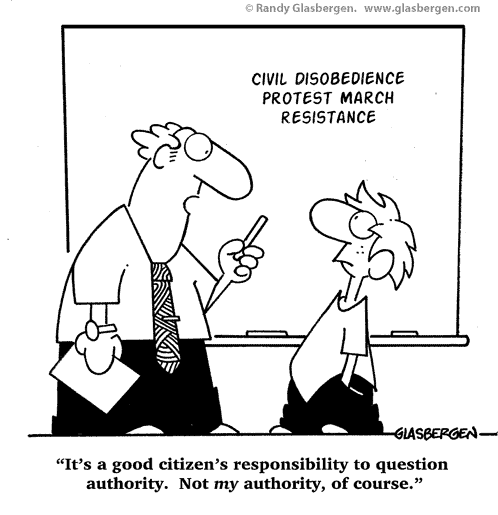
Third and perhaps most importantly, schools should be more political. This doesn’t mean that we need an ABVP or an NSUI in schools, but that a culture of democratic protests and discussions should be fostered. None of us has gone through school without facing a situation where we wanted to raise our voice, make some reasonable demands or show solidarity for a cause. Yet, what stops us is the fear of authoritative action. The threat of a suspension or a letter home is enough to deter dissent. Buttressed by feeble claims that students shouldn’t be engaged in politics and focus only on studies, schools are able to get away with unfair and sometimes frivolous rules and regulations. What is being envisioned here is not active politics per se, but the expression of dissent in a democratic manner, giving students an avenue to experience how authority, resistance and engagement work, for these are inescapable realities of life.

The preliminary step for all this is to make teacher-student hierarchies more equitable and balanced, such that students are not seen as subordinates who have to be kept under constant paternal guidance but active and equal players in the learning process, while teachers are not seen as commanding figures but coaches and team leaders who simply aid in the said process. At the core of this vision lies the freedom that Gray talks about.

“College environment is more flexible, there students are expected to take charge of their own education. Therefore they need to be mentally stable in order to make use of the flexibility and various opportunities available to them… (qualities) which they should have developed in the protective school environment”, says Ms Piya Narang, a teacher or History at Delhi’s Birla Vidya Niketan school.

Our opinion is that schools can foster better- prepared students by not keeping them sheltered but by exposing them to the one quality humans heavily desire – the state of being free.

Image credits – Glasbergen

Prateek Pankaj
[email protected]

Dr. Pratibha Jolly, the celebrated Principal of Miranda House, Delhi University, retired on 28th February, 2019. Let’s take a look at her contributions to the college in the past 14 years as the Principal.

Dr. Pratibha Jolly has been the Principal of Miranda House since 2005. She is an alumna of the college, having pursued B.Sc. Honours in Physics and M.Sc. from 1970- 1975. After gaining a Ph.D. in Chemical Physics from the University of Delhi (DU) in 1980, she went on to work in the areas of physics education research and curriculum development at the tertiary level. She was a faculty at Miranda House (1980-1988) before she moved to the Department of Physics and Astrophysics at DU as a UGC Research Scientist (1988-2002). She served as the Principal at Acharya Narendra Dev College (2002-2005) before moving back to Miranda House. Dr. Jolly, in her vibrant tenure, has brought several positive changes to the college.

One of her major contributions is making Miranda a disabled-friendly institution. Through her continuous efforts, Miranda House now has the Amba Dalmia centre within its library for the visually challenged students, and it also has computers that read out the text. There’s also an enabling unit called Lakshita. ‘Digital Vision’ is an app introduced in her tenure, installed in the phones of differently-abled students and is used at the time of admissions.  This app scans QR codes (which can be found outside every room) and gives directions/number of steps to be taken to reach a particular place. There are a number of ramps across the college. Braille books in the library and a Braille notice board are also available. There are scanners, e-book readers, voice recorders, and a Braille embosser that converts printed text to embossed Braille dots for easy reading. All these developments are feathers in Dr. Jolly’s cap for inclusive development of her college. Dr. Pratibha Jolly will surely be missed for all her good work at Miranda House.

Feature Image Credits: Mahamedha Nagar

Sakshi Arora

[email protected]

(With inputs from DU Beat and Miranda House)

As many in the country target a community in hatred, read the account of being marginalised and misunderstood in the country’s capital.

It is easy to protest when there are people to answer your slogans. While in Kashmir, I participated in some of the street protests. I protested when my friends got killed and blinded by the ‘non-lethal’ pellet guns. I knew the risks of participating in such gatherings; death, an injury, or a life full of misery. However, I had made peace with such possibilities under the belief that protesting was indispensable to a democracy. I had concluded that this equanimity was justified.

After shifting to Delhi four years ago, I found myself in a different situation. I came across people who knew little to nothing about the Kashmir conflict, and people who thought they knew everything. The latter was more difficult to deal with. Their primary source of knowledge about Kashmir was Bollywood movies and biased news media. I had two options- one, stay quiet and the other was to make them understand what the conflict is all about. I chose the latter.

As a Kashmiri studying in a premier Indian university, I have witnessed the cognitive dissonance of the supposedly intellectual lot of the country. Being a student of journalism, I cannot run away from these discussions. But it has been a daunting struggle to balance my safety and will to speak the truth. I can recall an event of my early days at college when a police officer was baffled to see Urdu on my Aadhar card. To quench his astonishing curiosity, I amicably mentioned that this is how Aadhar cards are in Kashmir. However, I had amplified his suspicion.Kashmir se hai, phir toh acche se bag check karva” is what he said. Ignorance offers complete impunity to the perpetrators of intolerance.

Repeated shutdowns and curfews forced me to migrate. Delhi was not my first choice. However, I couldn’t get my passport on time because of the ‘thorough’ and slow verification process that only Kashmiris undergo. The conflict followed me to Delhi. I realised that no matter how quiet or non-opinionated I become, I will be attacked for who I am. My survival is a protest in itself. I and various Kashmiri students like me are the educational refugees who have made a decision to leave their homes for an education. Many Kashmiri students, in the past, have been charged with sedition for unjustified reasons. As Kashmiris, our each move is scrutinised, and each action is seen as for or against the state. We brave numerous odds to get an education but then it is our comrades back home who face the worst.

The recent attack in Pulwama unleashed the bigoted ‘reactionary violence’ on our community. A wave of suspensions and xenophobic attacks against Kashmiri students followed. Kashmiris like me who live in various Indian states for a decent education are being attacked on the pretext of supporting the militants in Kashmir. There have been repeated calls for violence against Kashmiris on social media and no action has been taken against the culprits. As a student who has been bearing the brunt of this conflict and the hate that it accompanies, I want peace more than anyone else does but this ‘blood for blood’ attitude will always result in more violence. We must not let this hate consume more blood.

In the end, we are just normal students with our own dreams to achieve. But we cannot afford to let our guard down at a time when our identity and our rights are being trampled upon. A life of normalcy is a distant dream for us but hope for a better future is what keeps us going.

Hope is a weapon. Survival is victory.” –Dunkirk

Feature Image CourtesyKashmir Reader

Maknoon Wani

[email protected]


The elections are here and it’s time to vote! But the representatives we choose should be educated or not? Is it an elitist, exclusionary view to believe that our leaders should be qualified/conventionally educated?

The 2019 Lok Sabha elections are around the corner and young adults who’ve entered universities and colleges are going to vote for the first time. It’s exciting when you think about it and a little scary too. You’re now an adult who can take decisions for the country, to choose representatives that talk and discuss your ideas and interests in public spaces, who don’t make false promises, who actually work to lead the society towards the growth, upliftment and development. But time and again, debate has arisen around the issue whether the people who choose to stand for elections should possess basic minimum educational qualifications or not.

Let’s talk about why this view is incorrect. Education is a privilege in a country like India. It’s regressive to bar a bunch of people from contesting elections because they aren’t privileged enough to qualify. Educational restrictions are basically code for class, caste & gender exclusions. Women and Dalits were worst affected by it.

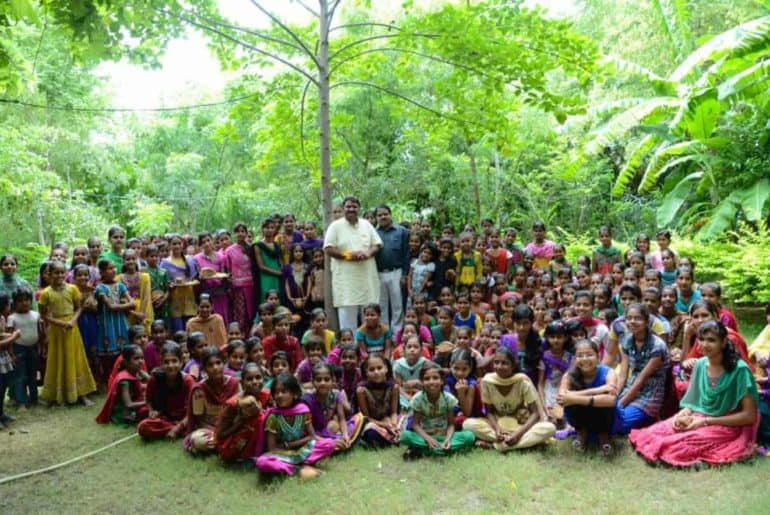
There is no evidence to demonstrate that people with a formal education can do a better job as elected representatives than those without. For example- Meena Behen, the first woman sarpanch from a village in Gujarat, in the district Vyara, heads an all-women panchayat board. In a patriarchal society, where women were never allowed outside their houses, not even allowed to talk in front of men, Meena dared to bring about change and succeeded. Gaining confidence and leadership skills while running a self-help group (helped by World Vision India), Meena worked hard to empower the women of her village while improving basic infrastructure like roads, hospitals and schools.

Formal education has no necessary connection with the qualities required for good and competent political and administrative leadership. We live in a democracy, and at the heart of our democracy is the concept of representation: voters decide who will best represent their interests, and elect them to legislative bodies accordingly. Therefore, when you say that formally uneducated should be barred from contesting elections, what you’re effectively saying is that you don’t trust the voters to decide who will best represent their interests.

Now, you may argue that there is a distinction between the right to vote and the right to stand for election, and that nobody is taking away the right to vote. However, they’re the two sides of the same coin. If you erect entry barriers to contesting, you are effectively curtailing i.e. the right to vote, by selecting the pool of people from whom the voters can decide. It is a restriction on voting, just that it’s done indirectly. Such laws are discriminatory. They discriminate on lines of gender and caste, because those who have been deprived of access/opportunities to education are inevitably the most vulnerable members of society

It’s not the peoples’ fault that they were unable to get a formal education. Deprivation is function of social discrimination, not individual character flaws. It has no tangible effect on the quality of decision-making, it is counter to the fundamental logic of democracy, and that it is discriminatory.

Do not forget that there is a long history of denying, curtailing and interfering with the democratic process because the people in power believe that other people are incapable of using the vote in a “fitting manner.” This was the logic of the British regime that imposed property qualifications on the vote, tried to impose a “wifehood” qualification, and all kinds of restrictions. When our Constitution was being framed, some of the members of the Assembly wanted to restrict the franchise, because they feared giving it to a vast number of “illiterate Indians.” Fortunately, they were overruled, and a great leap of faith was taken. This leap of faith was to transform India into a full-blooded democracy, and not a hollow shell of a democracy. This means that, at the end of the day, as a democracy we should respect the autonomy and decision-making capacity of the voter.


Image Credits: The Better India

Disha Saxena

[email protected]

(With inputs from The Better India)


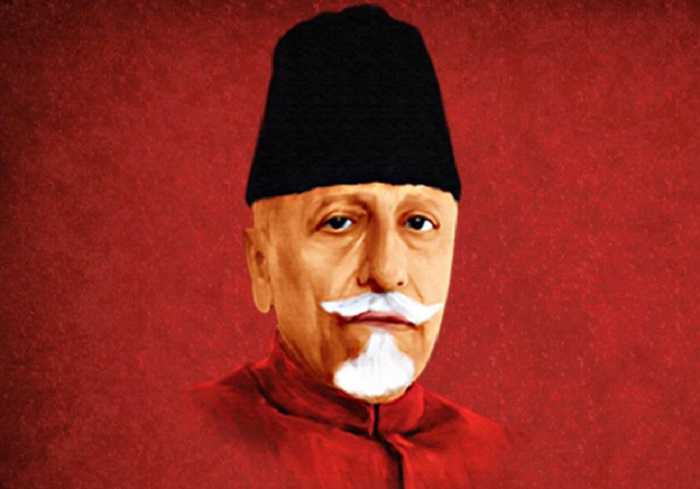
“Education imparted by heart can bring revolution in the society.”-Maulana Abdul Kalam Azad

National Education Day of India is celebrated on 11 November every year. It is an annual observance in India to commemorate the birth anniversary of Maulana Abul Kalam Azad, the first education minister of India, who served from 15 August 1947 until 2 February 1958. His real name was Abul Kalam Ghulam Muhiyuddin and was known as a brilliant orator. He firmly believed in universal primary education, free and compulsory education for all children up to the age of 14, vocational training and technical education.

The celebration of the day started in 2008 by the Ministry of Human Resource and Development. On 11 September 2008, MHRD announced, “The Ministry has decided to commemorate the birthday of this great son of India by recalling his contribution to the cause of education in India. November 11 every year, from 2008 onwards, will be celebrated as the National Education Day, without declaring it a holiday.”

Maulana Azad was a poet, philosopher, writer, educationist, politician, architect of the Indian education system and a specialist on Indian culture too. He was an accomplished scholar in Arabic, Persian, Urdu, English, Hindi, Bengali and a prolific debater. On his assuming charge of the Ministry, the very first public assertion he made was naturally about transforming the system of education as inherited from the British to suit our national requirements. In his very first official statement at the press conference held on February 18, 1947, Azad, on tone hand, criticised the then prevailing system as one shaped by non-nationals in the non-national interests, and, on the other, paid a tribute to its service to Indian people in general. In his statement of policy as the Education Minister before the Constituent Assembly on March 11, 1948, Azad defined the situation in the country that the popular Government was faced with on the eve of independence in the following words,“It entered into a heritage which was burdened with many encumbrances. There was no clear state to write with but a palimpsest on which was scrawled the marks of generations of scribes who had each his own mode and style.”

One can decipher four important objectives that Azad promoted as the new goals of education in post-independence India. Firstly, the democratisation of education with a view to liquidate mass illiteracy. Secondly, maintenance of educational standards. The next objective was broadening of educational outlook by making education compulsory till a certain age, and, lastly promotion of mutual understanding.

Union Education Ministry, under the guidance of Maulana Azad, adopted thoughtful and visionary ideas and translated those into reality. Different Committees and Commissions were committed in respect of different levels of education, for example, primary, secondary, university, etc. These bodies inspected the different wings, drew up new plans and tried to bring uniformity in national plans. University Commission, All India Council for Secondary Education, Secondary Education Commission, All India Council for Technical Education, Adult Education, Rural Higher Education, National Organisation for Basic Education, are some of the organizations that were established during his tenure. He is also responsible for establishing most of the major cultural and literary academies including the SangeetNatak Academy, Lalit Kala Academy,andSahityaAcademy.The first Indian Institute of Technology, Indian Institute of Science, School of Planning and Architecture, and the University Grants Commission were established under his tenure. Maulana Azad drew up a few projects for the advancement of Hindi and its acknowledgment as the national dialect. He propelled a few plans for physical training, improvement of the youths, social administration, education for the disabled, and so forth.

Jawaharlal Nehru described Maulana Azad as, “A very brave and gallant gentleman, a finished product of the culture that, in these days, pertains to few,”. He was posthumously conferred the Bharat Ratna in 1922.

Feature Image Credits: Cultural India

Anoushka Sharma

[email protected]