
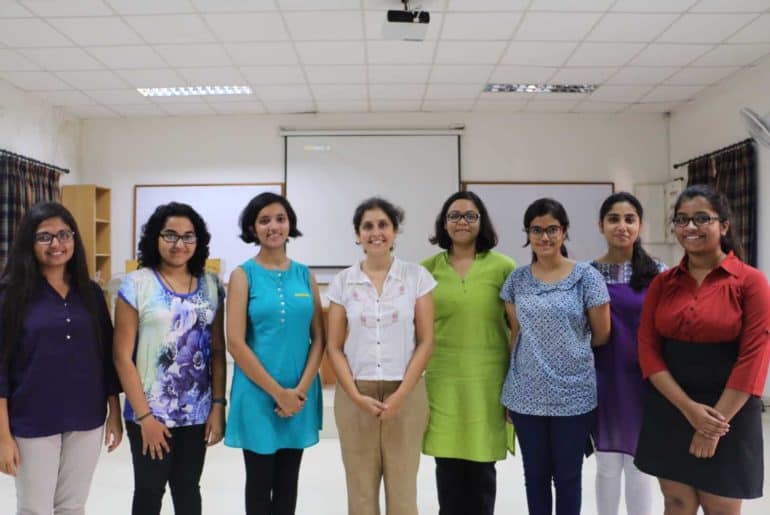
Vishleshan, the official discussion forum of Arthashastra, the Economics Society of Miranda House college hosted Dr. Reetika Khera, an eminent developmental economist and social activist, for their first seminar of the session, titled “Doles, Freebies, Handouts: A Right(s) Approach to Populism”, on 26th August.
Dr. Reetika Khera, associated with institutions like Delhi School of Economics, IIT-Delhi, Centre for Economic Development and the Planning Unit at the Indian Statistical Institute, was actively involved with the implementation of the National Rural Employment Generation Act (NREGA) scheme and champions the cause of social welfare schemes.
The Seminar was preceded by a short reading group, where students discussed Dr. Khera’s work and talked about relevant issues, like the situation of public welfare schemes in India-the benefits they provide to people on a daily basis versus the expenditure on them. At 1.30 p.m, Dr. Khera took the stage after being welcomed warmly by Ananya Goyal and Arushi Gupta, Co-Heads of Vishleshan.
During the course of the seminar, which lasted for around an hour, Dr. Khera successfully broke down the concept of social welfare schemes and put forth her stance of supporting their expansion and upkeep. She mentioned how there had been recent talks about India’s social welfare policies being too “populist” when in actuality, we are a “world champion in social underspending”. Dr. Khera broke down the stigma against social welfare schemes by tackling the often-repeated issues like how expenditure on them adds to the fiscal deficit and how India cannot afford to fund these schemes anymore. She took on another major issue against schemes like The Public Distribution System, which are thought to be riddled with corruption and hence inherently ineffective.
In reality, statistics show that there have been considerable improvements in the PDS, with states like Bihar seeing a turnaround in their effectiveness. Dr. Khera also criticised the use of obsolete data from 1997-2001 which have been cited by columnists of leading newspapers to speak out against NREGA and other such social welfare measures. She ended her lively session by stating, “It just takes political will and basic technological intervention to run welfare schemes”, which was followed by an interaction session where attendees commented on and brought forth other relevant observations.
“In our quest for stimulating discussion on matters of importance in Economics, I believe that we are on a good start with the lecture by Dr. Khera. Her passion for her work, particularly for raising standards of living across the board by constitution of Rights for Necessities was inspiring for the entire lot of young economists in the audience,” said Ananya Goyal, the Co-Head of Vishleshan.
For more updates on Vishleshan events, visit their Facebook Page here.
Image Credits: Niketa Singh, Arthashastra (The Economics Society of Miranda House)
Shubham Kaushik

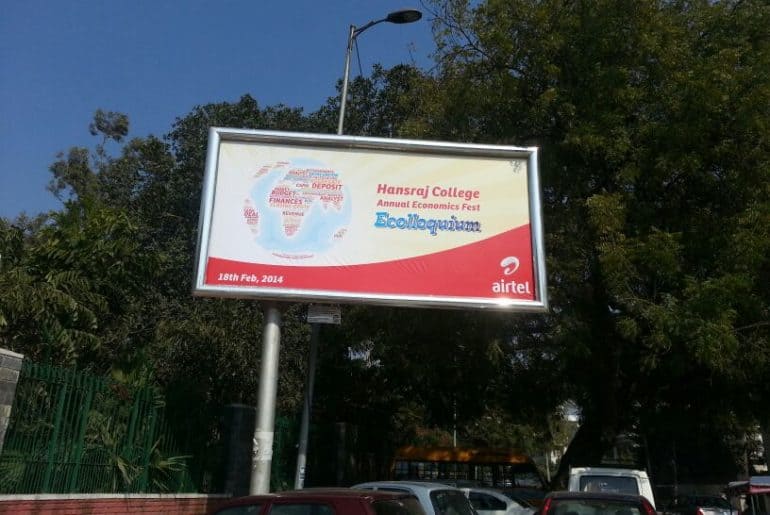
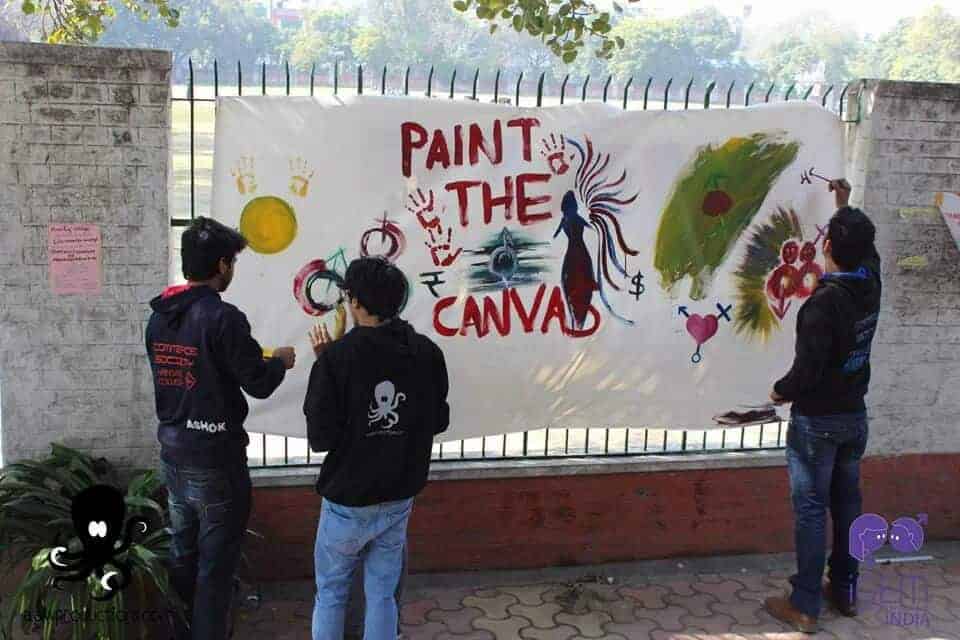
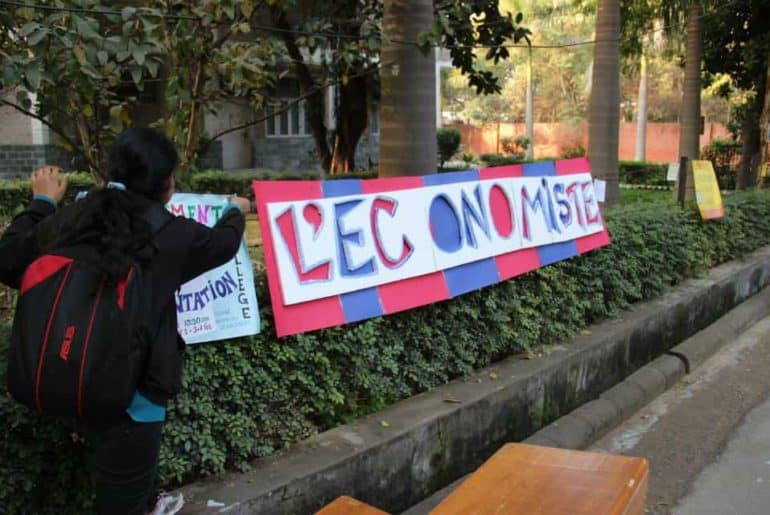
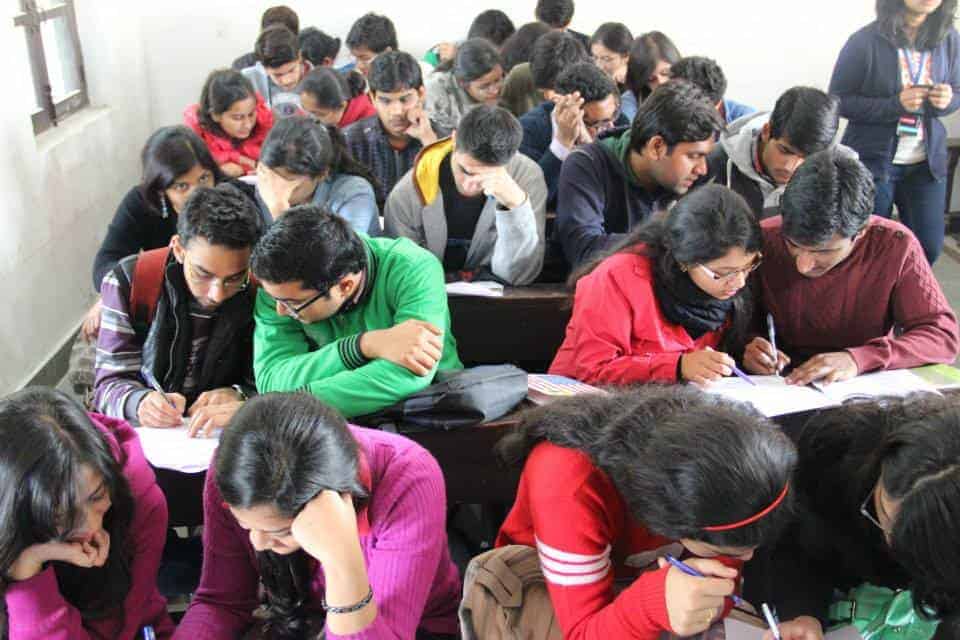
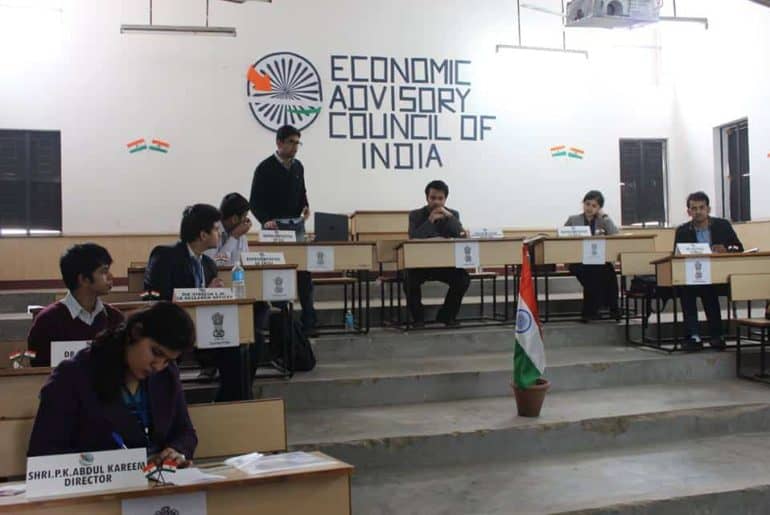
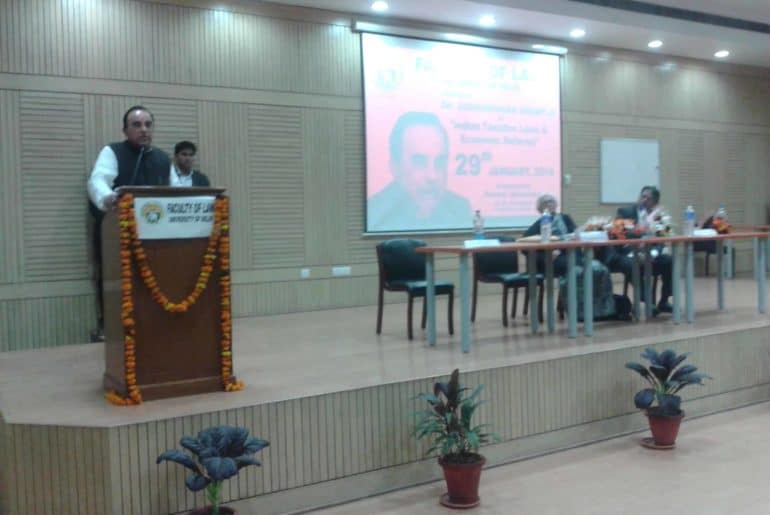

 Lady Shri Ram College is one of the first colleges in DU to hold its college elections, and this year, the elections began in a hurry as the date for the college day was declared late. The department elections began on Monday, 1st April with the candidates submitting their nomination forms. Elections for some departments were held on 2nd; whereas other departments had their election on 3rd. Strict rules for elections were laid down. According to the rules, any candidate found campaigning through internet or SMS would be immediately disqualified from the elections.
On the 2nd History Department held their elections, whereas other departments like Political Science, Statistics, Philosophy, Economics, etc. held their elections the next day. All candidates needed a third year and a second year to nominate them, and one could see frantic first years running around asking seniors to nominate them and read their agenda. According to a first year candidate running for the post of Department Treasurer, ‘contesting the elections has been a whole new experience for me altogether. I have learnt through my research about so many problems that the students are facing, especially when it comes to accounts, and I hope I can create a more transparent accounts system for my department in case I get elected.’
The following candidates were declared Presidents of their respective department Unions:
Amanjit Kaur: Sociology
Vaishnavi Singh: History
Srujana Yadav: Political Science
Prerna Kannan: Statistics
Charvi Kain: Economics
Gurman Bhatia: Journalism
Image: Sapna Mathur (
Lady Shri Ram College is one of the first colleges in DU to hold its college elections, and this year, the elections began in a hurry as the date for the college day was declared late. The department elections began on Monday, 1st April with the candidates submitting their nomination forms. Elections for some departments were held on 2nd; whereas other departments had their election on 3rd. Strict rules for elections were laid down. According to the rules, any candidate found campaigning through internet or SMS would be immediately disqualified from the elections.
On the 2nd History Department held their elections, whereas other departments like Political Science, Statistics, Philosophy, Economics, etc. held their elections the next day. All candidates needed a third year and a second year to nominate them, and one could see frantic first years running around asking seniors to nominate them and read their agenda. According to a first year candidate running for the post of Department Treasurer, ‘contesting the elections has been a whole new experience for me altogether. I have learnt through my research about so many problems that the students are facing, especially when it comes to accounts, and I hope I can create a more transparent accounts system for my department in case I get elected.’
The following candidates were declared Presidents of their respective department Unions:
Amanjit Kaur: Sociology
Vaishnavi Singh: History
Srujana Yadav: Political Science
Prerna Kannan: Statistics
Charvi Kain: Economics
Gurman Bhatia: Journalism
Image: Sapna Mathur (