
Tag

DU

Browsing

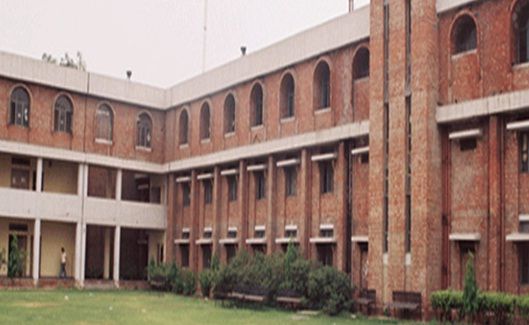
19-year-old DU student Sneha Debnath has been missing since July 7 near Signature Bridge. With no leads, non-functional CCTVs, and minimal media attention, her disappearance has raised questions about public safety, surveillance, and institutional accountability in Delhi.

Sneha Debnath, a 19-year-old BSc Mathematics student at Atma Ram Sanatan Dharma College, University of Delhi, has been missing since the early hours of July 7. According to her family, Sneha left from Sarai Rohilla and was last known to have taken a cab, reportedly being dropped off near Signature Bridge at approximately 8:30 am. Her final communication was around 8:45 am, after which her phone has remained switched off. As of now, there has been no trace of her.

An FIR has been filed, and police claim that an investigation is underway, but over 72 hours later, no leads have surfaced. What is particularly alarming, family members say, is the alleged failure of basic surveillance infrastructure in the area. CCTV cameras around Signature Bridge, identified in previous reports as a location vulnerable to suicides and disappearances, were reportedly non-functional at the time. The lack of visual evidence has severely impeded the investigation, raising pressing concerns about public safety and the accountability of civic authorities.

Sneha’s family, friends, and college peers are now grappling with a mounting sense of helplessness. Her mother, in a widely circulated video, is seen breaking down, pleading for her daughter’s return. Repeated appeals for urgent intervention have, so far, failed to generate any significant response from either law enforcement or political leadership. Signature Bridge, the site of Sneha’s last known location, has been the subject of public concern before. Despite multiple incidents in the past, calls for improved surveillance, functional CCTV cameras, and regular patrolling have reportedly gone unheeded. The current case, many believe, is a direct consequence of this neglect. In a city that routinely promises technological advancement and public safety, the failure of the most basic protective measures is a sobering indictment.

What has further intensified the distress is the near-complete absence of media coverage. A student from one of India’s most reputed public universities disappearing in broad daylight, without triggering national or even city-wide concern, speaks to a larger issue of whose stories are amplified and whose are quietly erased.

The case of Sneha Debnath cannot be seen in isolation. It is part of a wider, troubling landscape in which women’s safety continues to be precarious, and institutional responses remain reactive rather than preventative. For students, parents, and citizens at large, it is a stark reminder that vulnerability persists despite promises of protection. Sneha’s friends and family continue to urge anyone with information to come forward. But beyond individual appeals, this moment demands structural accountability. For Sneha’s sake, and for the many others who never make headlines, it is time the silence is broken, not just in words, but in action.

Read Also: NEP Approves Research Supervision for NEP-UGCF Amidst Concerns on Implementation

Image Credits: Sneha Debnath Family Statement

Ritobrita Mukherjee

[email protected]

As Delhi University’s four-year undergraduate programme enters its final year for the first batch under NEP 2020, students are met with confusion, institutional silence, and uncertainty over its value.

NEP 2020 had big dreams for education. It promised, among other things, a “more multidisciplinary undergraduate education.” Flagging the “lesser emphasis on research at most universities and colleges”, the policy framed research as the hallmark of a “great civilisation.”

To fulfil this vision, the four-year undergraduate programme (FYUP) was introduced. The new curriculum offers students the option to choose between three specialisation tracks in their final year – Dissertation Writing, Academic Projects, and Entrepreneurship. The first track is designed for those pursuing academic research, the second focuses on applied research, while the third allows students to develop entrepreneurial ideas. These components, worth 12 credits collectively, are meant to usher in undergraduate research as a formal part of the academic journey.

Delhi University was among the first central universities to implement the FYUP under NEP 2020, beginning in the academic year 2022–2023. The reimagined structure was presented as a transformative space to cultivate holistic, multidisciplinary inquiry, with the four-year format being positioned as the preferred option, offering students the opportunity to pursue a major alongside minors, engage in research, and explore broader intellectual horizons.

However, it seems to be that within its inaugural batch there is a general consensus that this ambitious experiment will promptly fall short of what it envisioned. Anecdotal evidence from students across colleges suggests that a significant number are choosing not to continue into the fourth year. While Delhi University has not released official enrolment statistics yet, student testimonials across different colleges and universities show a similar pattern of hesitancy and concern.

After graduating students have a few options. They typically pursue placements, graduate studies or prepare for competitive exams. The added fourth year has only intensified these pre-existing dilemmas, introducing a new layer of uncertainty.

For students interested in research, the fourth year appears redundant. The conventional path of a three-year bachelor’s followed by a two-year master’s continues to be the preferred model. Some students argue that it won’t match the depth and rigour of a two-year masters. Others are more cautiously optimistic. Tia Pandit, a Physics (Hons) student from Kirori Mal College, sees her decision as a calculated move to improve her chances of being accepted into postgraduate programs abroad. The capstone thesis and a minor in CS will, she believes, give her the academic depth many international universities look for.

Yet even those inclined toward research worry that the year may not deliver the value it promises. Khushi Aggarwal, an Economics (Hons) student from Hindu College, remarked,

DU often promises more than it delivers. For instance, it previously mentioned that under the NEP framework, internship opportunities would be provided in place of VACs or something similar, but that didn’t materialise.”

A principal from a prominent North Campus college told The Indian Express that students are at a crossroad, stating, “From a student’s perspective, there are now two choices – either exit after the third year and prepare for CUET-PG or CAT, or continue with the fourth year.“ He failed to take into account the fact that the students might just treat the fourth year as their preparatory gap year.

Aakriti Singh, a journalism student from Kamala Nehru College, asserted that it’s better to pursue a research degree rather than staying idle alongside preparing for exams. Similarly, Sreeja from Gargi College revealed,

More than half of my class is opting for the fourth year just because they couldn’t get better institutes for masters. All of us plan to study better for entrance exams this year rather than taking a gap year to go for masters next year.” 

Sarah Nautiyal, a BA (Hons) English student from Kirori Mal College, noted that most students, including her, see this period as a “gap year with benefits”. She emphasised that her decision to stay was influenced a lot more by the faculty because of whom the year “won’t be a complete waste”. 

This batch has already endured multiple institutional changes, from the introduction of CUET to the rollout of new course components like VACs and SECs, but the fourth year stands out for its sheer lack of clarity and institutional preparedness. There is near-unanimous agreement among students that colleges failed to adequately explain this entirely new system.

Tia recalls how, in her first year, her college had organised a detailed workshop to explain the newly introduced academic structure. In contrast, now in her third year, she says there has been complete silence around what the fourth year will actually entail. There have been no sessions, no official communication, and no clarity about the structure or content of the courses being offered. Far from guiding them through the process, many faculty members appear to be in the dark themselves, uncertain even about what courses will be offered. In fact, several professors have gone so far as to advise students against opting for the fourth year.

Extending the discourse upon the lack of clarity, Shrishti Shishodia, a Political Science (Hons) student from DCAC, supplemented its far-reaching influence on the careers of the students, stating, “The 4th year remains a bizarre idea for the students. Especially when the struggle to have a job in today’s market, embellished by concentrated competition in the few domains of respected employment avenues, is considered.”

The lack of clarity is only one part of the problem. Many DU colleges do not have the infrastructure to support a meaningful fourth year. Maya John, an elected Academic Council member and faculty at Jesus and Mary College, pointed out to The Indian Express that a majority of colleges lack the resources necessary for undergraduate research. There aren’t enough laboratories, classrooms, computer systems, access to original software, or additional funding and scholarships. Without these, the quality of academic projects and research output will inevitably suffer.

The fourth year, like many NEP reforms, seems to be detached from the ground reality and instead be driven more by ambition of outcome. As a result, students are inevitably caught in the crossfire, asked to commit to an additional year without any clarity, structure or institutional support needed to adequately transform the undergraduate experience.  They are, as Sarah emphasised, “guinea pigs”, participants in a policy experiment that remains worryingly underdeveloped.

Read More: Major DU PG Syllabus Cuts on Religion, LGBTQ+ and Pakistan Spark Faculty Divide

Image Credits: Devesh for DU Beat

Yashika Jain 

[email protected]

Delhi University’s PG syllabus cuts on religion, caste, LGBTQ+ issues, and Pakistan spark faculty backlash, raising concerns over academic freedom and ideological interference.

On 25 June 2025, the Standing Committee of the University of Delhi (DU) proposed several contentious changes to the postgraduate syllabi of Geography, Sociology, and Political Science. The revisions include the removal or significant reworking of content related to religion, caste, LGBTQ+ issues, and the study of Pakistan. The changes have triggered widespread criticism from faculty members, with further discussion scheduled in the upcoming meeting on 1 July.

In the Department of Geography, three major papers were affected. In the elective paper Territorial Bases of Politics in India, the committee objected to Unit 3, titled “Internal Conflicts and Problems of Nation Building,” which addressed religious conflicts. A key reading, The Production of Hindu Muslim Violence in Contemporary India, was removed. In Social Geography, Unit 4 on “Distribution of SC Population” was eliminated. According to committee members, this decision was made to de-emphasise caste-related material. Additionally, Vulnerability and Disaster, another elective, was completely removed from the syllabus.

The Sociology syllabus also saw significant intervention. In Introduction to Sociological Theory, the committee questioned the absence of Indian thinkers and suggested their inclusion. Objections were raised regarding the inclusion of the reading Weston, K. (1997). Families We Choose: Lesbians, Gays, Kinship, as same-sex marriage is not legally recognised in India. In Sociology of Religion, Unit IV on Religious Authority and Organizations was flagged for using academic terms such as “church,” “sect,” and “cult.” Members questioned why terms like “rishi-muni” were excluded. Despite faculty clarification that these were standard sociological terms, the committee still recommended revision.

Urban Sociology also faced changes. The committee argued that Unit 2 focused excessively on violence. Key readings addressing religion and caste were removed, including The Muharram Procession of Mumbai, Animating Caste: Visceral Geographies of Pigs, Caste and Violent Nationalisms in Chennai City, and Deceptive Majority: Dalits, Hinduism, and Underground Religion.

Some faculty members have raised concerns about the committee’s role in mandating syllabus revisions.

The Standing Committee’s direction to the Departments of Geography and Sociology to change their syllabi defies academic rationale and is an act of overreach. While the Standing Committee can share inputs and feedback with the departments, it cannot direct the departments to remove papers and readings without giving academic justification.”

said Rudrashish Chakraborty, Associate Professor at Kirori Mal College and elected member of the DUTA Executive (2023–25).

The Political Science syllabus came under the most scrutiny. Faculty members were directed to ensure the content remained “India-centric” and avoided material that “glorifies Pakistan.” This instruction aligns with Vice Chancellor Yogesh Singh’s earlier stance amid recent geopolitical tensions.

Dr. Monami Sinha opposed the changes, stating,

“It is imperative to study Pakistan in detail because, pedagogically, we need to train our students and foster scholarship on Pakistan, as it remains one of India’s constant foreign policy challenges.”

Four electives relating to China, Pakistan, and Islam in international relations were removed. These included Pakistan and the World, China’s Role in the Contemporary World, Islam and International Relations, and Pakistan: State and Society. In Religious Nationalism and Political Violence, the topic “Sangha politics, civil warfare and the peace process” was removed, along with the reading by Blom Hansen on Hindu nationalism and violence.

Read Also: DU Student Murdered by her Classmate; Body Burnt at Delhi’s Sanjay Van.

Image Credit: Times of India

Yashika Jain 

[email protected]

Delhi University has introduced a new undergraduate elective titled “Negotiating Intimate Relationships” for the 2025–26 session. Aimed at addressing rising emotional distress and youth violence, the course explores love, intimacy, and toxicity in digital and real-life relationships.

Delhi University has introduced a first-of-its-kind undergraduate elective titled “Negotiating Intimate Relationships” for the 2025–26 academic session. The four-credit elective, offered by the Department of Psychology, is open to students across disciplines and colleges and is aimed at helping young adults understand and navigate the complex realities of romantic and platonic relationships in a digital age.

Amidst increasing overlaps between digital and physical spaces, the course seeks to equip students with the tools to understand, reflect on, and negotiate romantic and platonic relationships in the age of dating apps.

The course consists of three lectures and one tutorial each week and is structured into four major modules, including Theories of Love and Sexuality, The Psychology of Friendships and Intimacy, Recognising and Responding to Toxic Patterns and Building and Sustaining Healthy Long-term Relationships.

Designed as an interactive course, students will be asked to analyse their own social media networks, engage with everyday relational challenges, and analyse pop cultural depictions as well as real-life case studies. The course aims to use personal and digital experiences as key sites of exploration.

Pop culture will play a central role in these explorations, with films like Kabir Singh and Titanic used to critique how toxic behaviour is often romanticised in mainstream media. Students will also use Sternberg’s triangular love scale to assess one’s love towards a romantic partner.

“Films like Kabir Singh reflect how unhealthy behaviours are often glorified as passion, and we unconsciously absorb those ideas,” said Rishika Raj, a second-year student at Bharati College, DU.

The course has been introduced in the backdrop of a rising number of crimes among teenagers and young adults, many of which stem from unchecked emotional turmoil and toxic relationship dynamics. Between May and June alone, Delhi recorded at least three murders connected to possessiveness and emotional manipulation in young romantic relationships.

“I can say from personal experience that one faces a lot of hardships when it comes to navigating relationships at this age. We’ve never really been taught the do’s and don’ts of intimate relationships,” said Kumari Kajal, a first-year student at Hansraj College.

According to Naveen Kumar, a professor from DU’s Department of Psychology, young people today face unique relational challenges that earlier generations did not.

“With both parents working and ‘digital parenting’ on the rise, young people are granted a kind of freedom they aren’t always emotionally equipped to handle,” he told AajTak.


“People want freedom but don’t know where the boundaries lie. This lack of clarity leads to stress, mistrust, and often the breakdown of relationships.” He further added

Professor Kumar also pointed to the increasing transactional nature of modern relationships, which are often built more on intensity and immediate gratification than on emotional resilience. He warned that this shift can escalate to dangerous extremes, as evidenced by the recent spike in violent incidents among teenagers and young adults in Delhi.

According to reports, the university introduced this course in response to growing concerns about emotional distress and rising instances of violence rooted in toxic relationships among young people. Through structured academic engagement, the goal is to help students build emotional awareness and develop resilience.

Read Also: Exploring the state of teen love in an ever changing landscape

Image Credits: Hindu College

DU Beat

Delhi University’s Sri Guru Gobind Singh College of Commerce reported a massive fire in the college library on Thursday morning, destroying over 3000 books and leading to the cancellation of the morning semester exams. 

In Northwest Delhi’s Pitampura, a massive fire was reported at Sri Guru Gobind Singh College of Commerce, University of Delhi in the morning hours of Thursday, May 15th, 2025. According to the Delhi Fire Service (DFS) chief Atul Garg, the fire broke out around 8:55 in the morning and 11 fire tenders were rushed to the college who managed to bring the situation under control by 9:40 A.M. In response to the ongoing cooling operations, a senior fire official added, 

Several window panes shattered due to the high flames, and the fire spread rapidly due to strong winds. Our teams responded swiftly and managed to douse the flames.”

Originating in the college library, the fire impacted the building’s first, second and third floors, extensively damaging the infrastructure and academic material. Reports state that though there were no casualties, over 3000 books have been destroyed along with the library’s online system being damaged. Although investigations are currently underway to determine the exact cause, a senior college official informed the Press Trust of India

A short circuit in the library’s server triggered the fire, extensively damaging hundreds of books in the section that housed old books. The library is still filled with smoke, and a detailed assessment of the losses will be possible only once visibility improves.”

Sri Guru Gobind Singh College’s Principal expanding on the extent of damage added

Only the top floor of the library was caught in the fire. The books on that floor were damaged due to the blaze, but we kept old editions of books and those in less circulation on the top floor. The newer editions of books were on the ground and second floors. There was no damage to our archival section as it is not on the top floor.”

Although there is widespread damage, the library’s facility system is reportedly functional with the manual issuing of books to students amid the ongoing end-semester examinations of Delhi University. Around 400 undergraduate students were scheduled to take the examination during the morning session which was cancelled in lieu of the fire breakout. However, since the library was housed in a separate building, the examinations scheduled to take place from 2:30 to 5:30 P.M. were conducted after the handover by the fire department. In conversation with the Indian Express, Principal Jatinder Bir Singh further stated, 

Since lights were to be cut off for the fire department to extinguish the fire, we postponed the exams scheduled in the morning. Afternoon examinations went on as usual. The controller of examination is yet to notify a fresh date for the exams”. 

Recently, Delhi University’s Kalindi College reported a ceiling fall falling on the head of a faculty member causing serious injury. In light of such incidents outrage has sparked amongst students who raised concerns of student-faculty safety and welfare over the deteriorating condition of the infrastructure of DU colleges. In a statement released by the National Students’ Union of India (NSUI) on 15th May, they questioned the negligence and demanded immediate safety audits in all colleges throughout Delhi University. 


Read also: Thefts and an Unaccountable Administration Raise Concerns at Kirori Mal College

Image Credits: The Telegraph

Aaratrika Ghosh

[email protected]

Securing admission to Delhi University feels like a dream come true for people from different Cultural, social, economic, and political backgrounds. Education thus becomes a channel to  uplift themselves. However, the reality with the landlord mafia is far stretched.

Securing admission to Delhi University feels like a dream come true for people from different Cultural, social, economic, and political backgrounds. Education thus becomes a channel to  uplift themselves. However, the reality is far stretched. Students in and around the area of North Campus have often raised concerns related to their accommodation and the high rent prices by  the landlords. There have been frequent complaints about the quality of services these PG  owners provide. Even then the landlord mafia which controls the chain of accommodation continues to have their way out. The brokers and landowners have been time and again  propagating social and regional Discrimination. In such a scenario no structure acts as a system  of checks and balances on the ethical aspect of these issues. 

At present, the University Campus has witnessed several political changes, one of them which  includes the saffronization of our academic spaces. The minority communities around the University campus are the most neglected and side-lined. Nuzra Tafzeel, a 3rd year student in  DU from Lucknow says,

It has been almost 2 years living here. When my sister and I were  looking for a flat, every broker said, “Hum Muslim ladkiyon ko flat nahi dete” (we don’t give  flats to Muslim girls).”

Nuzra recounts how so many of her other friends got flat in the area but  she couldn’t.

Landlords and brokers both equally bluntly deny any Muslim person to rent their flat.” 

Furthermore, this shows how polarized the campus has now become. People hailing from  the Northeast often face hurdles in getting a flat where the owners don’t allow them to cook non-vegetarian food. 

The landlord  didn’t spare my previous flatmate. She hails from Manipur and last year when the ethnic strife  unleashed Manipur she couldn’t contact her home and get the money. The owner was  understanding for a month but then kept bothering her a lot.” – Srijeeta who has completed her master’s from the University of Delhi. 

A week ago, I came across a broker’s WhatsApp status which said, “Haryana people nothing  is available as of now” (exact words via a prominent broker’s WhatsApp status). In terms of  geographical context, people from regions like Haryana, the Northeast, and Kerala face the brunt of such lewd stereotypes and majority of these owners refuse to rent out their flats to people hailing from these regions.  

All of this doesn’t function in itself, it also has its roots in the lack of providing infrastructure facilities. Especially in cases when Hostel accommodation hasn’t witnessed any increase in  seat allocations in the past few years. 

Of the 20 DU colleges offering hostel facilities (till 2019), six offer both male and female  hostels, while 12 colleges offer only female hostels and the rest offer only male hostels.” – Kainat Sarfaraz for Hindustan Times

The flawed administration leaves countless students stranded and helpless. Elected  representatives in Delhi University Students’ Union (DUSU) elections make false promises to  secure votes, which often remain unfulfilled. Most of the candidates who contested for DUSU Union Elections (2024-25) did not address this issue in their campaigns either. 


Another prominent issue that comes up in the University Campus area is harassment and abuse by these brokers and PG owners and their attitude toward female students. Many women have encountered brokers who have tried to ask uneasy questions and drunk texted them at odd hours like late at night. Suhani (name changed for privacy concerns) said,

Our PG owner pretended to be unmarried and lured a 1st-year girl into a relationship with him.” 

Students also spoke about scams they had encountered through these brokers who took the security amount but did not enter into any contract or agreement. Unnati Verma, a second-year student from Miranda House who hails from Gwalior, Madhya Pradesh, recounts how she was scammed by someone who pretended to be a broker.

I lost 65 thousand rupees to this. The flat was nothing like what  they had shown through the videos online. On top of this, the broker abused me and my family. Ultimately, we decided to not rent the flat from him.” 

For students like Unnati who have a limited budget for their accommodation, these instances not only deprive them financially, but also affect their mental well-being. Beneath the romanticisation of the North campus is a multi-layered reality of misogyny, social hierarchy, religion-based discrimination, and harassment. As the academic year 2024-25 approaches its halfway point, severe action against such individuals is required to ensure that no further students fall victim to such brokers. 


Read Also: Fire Break-Out and Violation of Bylaws: All in One for Mukherjee Nagar PGs

Featured Image Credits: Jyotsna Singh

Jyotsna Singh

[email protected]

NSS Hindu College hosted its annual Diwali Mela, Suruchi on 24 October, 2024, which was an event filled with engaging activities, music and vibrant stalls. 


With Diwali festivities right around the corner, National Service Scheme, Hindu College held its much awaited Diwali Mela, ‘Suruchi’ on 24 October 2024. With a footfall of over 10,000, this annual flagship event of NSS, Hindu College is renowned for its significance and reach within the Delhi University circuit. Vibrant music and decor, a bevy of fun games and, handmade goods and food stalls lined the fest. Enactus groups of various colleges, NGOs and local artisans set up stalls of bags, paintings, jewellery and stationery to raise funds. Embarking on its ethos of social service and welfare, NSS Hindu College aimed to raise funds for marginalised groups that are beneficiaries of its various community engagement programmes. 


Khushi, a student who put up stall selling her paintings shared, 

Suruchi was my first experience at selling paintings and artwork I have created. I had made paintings on small canvases and sold them at around 80 rupees so students could afford them easily. With people praising my work and creativity, I feel motivated to set up stalls in upcoming fests in colleges.”


Attendees thronged the various face painting, hand painted pottery and jewellery making stalls to get personalised goods. Ragini, an attendee at Suruchi said, 

Having heard so much about Suruchi from my seniors, I am so happy to be here today. I participated in the pottery making activity and made a small cup to take home.”


After grooving to the music played by the DJ, students made their way to stalls selling drinks and food items from different states, especially hilly areas like Uttarakhand and Himachal Pradesh (Devbhoomi). Embracing their rich cultural heritage, some students were seen wearing traditional nath and costumes of their home states. Suruchi was a true celebration of the myriad cultures and identities of India, making this year’s Diwali Mela a memorable and cherished occasion for everyone. 


Read also : Celebrating World Mental Health Day at Persona’24


Featured Image Credits: DU Beat


Chetna Rani

[email protected] 

On 15th October, 2024, a tribute was paid to Professor G.N. Saibaba at Arts Faculty Gate, University of Delhi, posthumously. A public meeting and a candlelight vigil were observed by students’ and teachers’ organizations, which were joined by civil society members, colleagues, and activists who worked alongside Saibaba. 

G. N. Saibaba, former Assistant Professor at Delhi University, passed away on October 12 at the Nizam’s Institute of Medical Sciences in Hyderabad due to postoperative complications after a surgery to remove gallbladder stones. Saibaba was arrested in 2014 under the “draconian” UAPA for charges of working alongside members of the banned CPI (Maoist) and its alleged frontal organization, the Revolutionary Democratic Front. In 2021, Delhi University terminated his employment following the UAPA case against him. However, he was not reinstated after his acquittal in March 2024. It was claimed by many that Saibaba, a 90% disabled academic and human rights activist, was “wrongfully incarcerated” for a decade and “tortured” by the state during court trials and also during the period of jail time where he was forced to live in solitary confinement, declined proper medical care, and even prohibited from meeting his mother after her passing away. Sai’s death was received as an institutional murder by fellow academics, students and others.

The solidarity and remembrance event at Arts Faculty included speakers who highlighted Sai’s resilience, his revolutionary spirit, and his long struggle against exploitation and oppression. The speakers included Professors Karen Gabriel, N Sachin, Abha Dev Habib, Vikas Gupta, Jitendra Meena, and Saroj Giri. Kamal Singh from PUCL, Jagdish from DGMF, and representatives of student groups also shared their memories and thoughts.

Addressing the people, Professor Karen Gabriel said,

The term Urban Naxal has been structured against those who have understood the logic of the system and move through it and destroy it…UAPA not only destroys individuals but also families and communities.

Professor N. Sachin urged the masses to rise in “remembrance and rage” for Saibaba “against a system of induced apathy.”

Professor Vikas Gupta held that,

It is in Saibaba that we see a commitment to social justice” and also that “it is not possible to fight against one kind of inequality; the struggle is against all violations of social justice.

In conversation with DU Beat, Professor Abha Dev Habib said,

Sai’s death is an institutional murder because his minimum needs such as medical care were not provided. The state could not prove anything against Saibaba even after 10 years. He was denied bail every time he approached the court, and even when the high court was to set him free, the state would go against it; he couldn’t get justice from the state. All those who are opinion-builders, those who can speak for a more equal society and democratic rights, are being put behind bars. Sai Baba has been taken away too early from us. The University also did not give him justice. Even before it was proved he was guilty or not guilty, the university terminated his employment. By terminating his employment, his right to livelihood was also taken away. The state, the society, and we as people have wronged him by not speaking up.

The cause of all other political prisoners facing, what the participants maintained to be, “wrongful incarceration” was put forward, and it was demanded that they be released. They foregrounded the cases of activists such as Hany Babu, Umar Khalid, Sharjeel Imam, Gulshifa Fatima, and Rona Wilson who continue “languishing” in jails, undergoing extended trial periods, and face “terror litigation”.

Further, instances of “state-structured violence” and “physiological torture” of political prisoners jailed under UAPA was recounted, where people like tribal rights activists Stan Swamy and Pandu Narote, passed away in jail after their bails were denied on several counts.

Speaking to DU Beat, Professor Jenny Rowena, wife of Hany Babu, said,

We always talk about issues when somebody dies, then it becomes a viral thing. We saw Rohith Vemula when he was alive. How much attention do we give to these people? Even now, people who are in jail because they campaigned for Saibaba, like Hany Babu, Rona Wilson, and Surendra Gadling, who was their lawyer, are still in jail. These people also have a lot of health problems, so are we waiting for the same to happen to them? We all should really protest against UAPA. All condolence meetings that we have should also be against UAPA. There should be a mass movement against it, because they [the state] are using it ruthlessly now to crush any kind of opposition and dissent.

Further, slogans against the “genocidal” Operation Kagar and Surajkund Scheme were raised. The public meeting was followed by a candlelight vigil in which all friends, comrades, and students of the revolutionary Saibaba paid a tribute to him.


Read also: Of Separation, Solidarity, and Sustenance


Featured image credit: Shahid Tantray’s Instagram


Bhavana Bhaskar

[email protected]   

Voting is seen almost as a rite of passage, especially for first-time voters, an act that makes one a political being. But how many students actually go to the booth and practice their right to vote? 


Voting is seen almost as a rite of passage, an act that makes one a political being. Casting one’s first vote is seen to transform a person from a passive resident to a citizen capable of critically understanding the country and imagining their vision for it. Voting is especially exciting for first-time voters, who are usually university students. University campuses, by their very nature, tend to be political spaces characterised by ideas, activism, and discourses. Each time during elections, political parties make a beeline for spaces dominated by younger people, like colleges, to tap into the ‘young vote bank.’ This especially holds true for India, which has one of the youngest populations in the world, with more than 43% of its population being below 24 years of age. From spirited debates to protests, the youth is at the heart of politics.


This, however, begs the question: how many students actually go to the booth and practice their right to vote? Do students transform their enthusiasm for lively political debates into the act of voting, or does apathy reign supreme? Talking to some students of Delhi University about their participation in the 2024 Lok Sabha elections reveals the shifting patterns of political participation and voting. 


To truly understand voting patterns among the country’s youth, we must go back in time and analyse these numbers historically. Statistically speaking, the share of the youth’s vote (18 to 25 years) saw a downward trend from 1996 onwards, when only 54% of people within that demographic voted, with an increase to 68% in 2014, followed by a dip to 67% in 2019. As Vibha Attri and Jyoti Mishra outline in their paper, ‘The Youth Vote in Lok Sabha Elections 2019,’ participation is lowest for young adults, peaks in middle age, and falls among the oldest.


This might be surprising to many, for in the aesthetic of Indian politics, students have always been painted as figures at the forefront—the idealised image of the student, especially one from a university like DU. In the popular imagination, they are seen as active, loud, and politically aware. However, when this image is put to a statistical test, it fails to hold up. The youth in the country are not voting in as big numbers as popularly believed. 


The reasons for this apathy are many. Some are logistical, while some are more about the disillusionment that often lurks around the idea of voting.


Stuti Prasad, a third-year student from DU who hails from Bihar, weighs in,

As someone who is from Bihar but living in Delhi for college, I was not able to vote in the 2024 elections due to mandatory attendance requirements, which forced me to stay in Delhi at the time of the elections. I felt it to be quite ironic that I wasn’t able to participate in the elections despite actively following the politics in Bihar.”


Another student from Lady Shri Ram College cast a vote for the first time in the 2024 general elections but faced difficulties due to the polling dates clashing with classes. 


The polling date for my constituency was the 26th of April, which was a working college day. I informed all of my professors that I would not be able to attend classes that day as I had to vote, but only one professor agreed to give me attendance provided I showed him the voting mark. A lot of students from my city simply opted not to vote as they would have to miss a lot of attendance.”


Missing out on attendance and logistical issues with voting while living in another city came out to be the top deterrents in casting a vote among students of Delhi University. However, there was also a general disillusionment and indifference to voting among the students as well. Many seem to believe that their vote doesn’t change anything and that taking an off or going to the booth was simply a waste of time. 


It didn’t really occur to me if people around me in college were voting or not. There was not a lot of discussion over it, and even if we did discuss it, people only asked each other if they were voting in passing,” reflects a second-year student. 


Voting is popularly coming to be seen as a rather personal act that must not warrant a lot of discussions. Many skirt around conversations regarding voting to avoid any sort of confrontation, and talking to students revealed that it is generally considered a social faux pas to prod people’s vote. While this used to be the case for avoiding asking people who they voted for, it seems to have extended to steering away from asking people if they participated in the elections altogether.


While the youth continues to play a pivotal role in electoral politics all over the world, the rates of their political participation are seeing a harrowing decline. Politicians continue to try to woo the younger voters by incorporating internet lingo and dangling promises of employment prospects; however, in the bigger executive stage, the younger population continues to be sidelined. The trend of political disenchantment and passivity among the young voters, especially the first-time voters, is very concerning and needs to be urgently addressed. The idealised image of the hot-blooded, young, active voter must not remain an archetype but must translate into voting numbers. 


Read also: Voting in Delhi Elections: Outstation Students’ Edition


Featured Image Credits: Hindustan Times


Disha Bharti

[email protected]

What unfolded as a dispute on ‘Scroll.in’ between Jakob De Roover—a professor of India Studies and Comparative Science of Cultures at Ghent University, Belgium and Professor Anil K. Aneja—Head of the Department, Department of English, University of Delhi, set in motion a series of attacks over the understanding of scholarly standards.

On 7th September 2024, Jakob De Roover published an article on Scroll.in titled, “Why a professor from Belgium was branded ‘anti-India’ after Delhi lecture on 18th-century Dutch text” which accused the Department of English at Delhi University of failing to critically engage with a text and instead “cancelling” De Roover for being “anti-India.”

Professor De Roover was invited to lead workshops under a government-funded project titled “Indian-European Entanglements.” His approach, as claimed by him, aimed to explore how European narratives about India often reflect more about European self-perception than about Indian reality. Drawing on his extensive experience and education received under the mentorship of Professor SN Balagangadhara, he sought to encourage critical engagement with historical and contemporary stereotypes about Indian culture.
During a workshop on August 24, 2024, Professor De Roover analysed a 1799 Dutch children’s magazine that presented a racially hierarchical view of humanity, positioning Europeans at the top and depicting Hindus as lesser beings. His intent was to provoke discussion around how such outdated ideas persist in modern discourse.

An excerpt from the same Dutch magazine caused confusion amongst the students, as asserted by De Roover, the alleged excerpt being:
“Everywhere human beings are divided into ranks or classes, but these classes approach and mingle with each other from time to time, and those belonging to the lowest ranks at least have some hope to improve their condition over time; but in Hindustan this hope has been cut off completely.”

De Roover put forth the idea that narratives based on little empirical evidence and research into the understanding of caste in 1799 could then prove to be substantiated facts about caste in contemporary India. He emphasised that the text exemplifies “ignorance about India and a biblical story about humankind.”
This contestation disturbed the students who began to defend the statement as a truth about their own society. These doubts were to be tackled by the professor in the following workshop, scheduled on 28th August.
The workshop never took place. The head of the department, Anil Kumar Aneja, told De Roover that the upcoming lecture was cancelled owing to “the lack of availability of venues”. It was later revealed that his cancellation was because of external pressure to censor what was claimed to be an anti-India sentiment. He was informed by his colleagues that the university administration had called for an examination of the recordings of his workshops to investigate the matter of the lectures. Professor Jakob De Roover accused members of the executive council of Delhi University’s Teachers Association (DUTA) of circulating messages that misrepresented his academic intentions as portraying India in a negative light.

According to De Roover, he was engaging with academicians who could not distinguish between quoting a text, for analysis and criticism, and endorsing a text. The claims cited by the speaker were ascribed to the speaker himself. This effectively deprived the students of learning. Further, he accused the hosts of succumbing to pressure and allowing censorship, without confronting him.

On behalf of the English Department, Professor Anil K Aneja vehemently refuted all the allegations made against the department in general and him in particular. It was asserted that the article misrepresented the events surrounding his visit and the nature of his interactions with faculty members.
In the detailed statement, the department underlined its traditions of encouraging academic debate and the assurance of quality in education. It noted its disappointment at, what it termed, a failure to meet journalistic standards on the part of Scroll.in for publishing the article without first verifying its claims.

The department specifically addressed a few points taken from Professor Roover’s article, pointing at them as fabrications and misrepresentations, as highlighted below:

Allegations of ‘Anti-India’ Sentiments: The department unequivocally denied labelling Professor Roover “anti-India” during his visit. They asserted that no faculty member, including the Head of the Department, Professor Anil Aneja, used such terminology or accorded him anything but respect.
Workshop Focus: The department refuted Roover’s assertion that the workshop centred on European representations of India. They clarified that the workshop was titled “Digital Humanities & Methodological Tools,” and that the intended academic focus on digital humanities was not adhered to in his sessions either directly or indirectly.
Students’ Reaction: Roover mentioned that students became disturbed during his lecture and began to defend their culture against the statements made by him, which the department suggested indicated an intent to provoke controversy rather than engage meaningfully with the workshop’s topic, thereby losing thread of it.
Cancellation of Subsequent Lectures: The department asserted that Professor Roover’s claims about the cancellation of following lectures owing to a lack of venue was false. Contrary to his claims, he did take a three-hour lecture on the following 28th August, the maintained attendance of which could be produced for verification. Further, the readings for the participants of the next session scheduled on August 31st, 2024, were shared on August 29th. The department clarified that if Roover was labelled “anti-India”, the readings would not have been circulated on the 29th.
Departure from the University: The department expressed shock at Roover’s abrupt departure from the university without notification, which left the workshop coordinator and attendees waiting for his appearance at a later session. They criticized Roover for not informing the coordinators of his departure, labelling it unprofessional. Further, the Coordinator, Professor Ujjawal Jana’s attempts to reach him via call/text/WhatsApp were unsuccessful.
Allegations against Professor Anil K Aneja: The article written by Professor Roover was said to be biased, deliberately ignoring facts to malign the reputation of HOD Anil K Aneja.
On “endorsing” the Text: The department stated that the text in question was endorsed by the Ghent University professor which can be inferred from his permission to allow digressions to take place in the session, actively participating in and, at times, defending these digressions, as well as getting offended when questioned on the relevance of all such digressions to the topic of the workshop “Digital Humanities and Methodological Tools”.
Misrepresentation Of Academic Integrity: The department condemned Roover’s suggestion that faculty members were silencing academic discourse. They asserted that there is a strong tradition of open discussion in their department, particularly in post-colonial studies. Further, they accused Roover of undermining the capacity of the Indian intelligentsia and disgracing India by extension.

In their response, highlighting the value of journalistic integrity and ethical reporting, the department urged Scroll.in to give them an opportunity to air their side of the narrative. It demanded a balanced representation of facts, concerned that the publication could do irreparable damage to the university and its faculty’s reputation. The department concluded its statement by requesting that its detailed response be published alongside Roover’s article to ensure readers receive a comprehensive understanding of the events in question. They once more affirmed their commitment to academic excellence and open discourse within the university and beyond.

As the situation continues to unfold, it nudges forward the question of academic integrity and accountability in academia. The commitment to academic freedom and scholarly discussion remains under threat as scholars debate the reliability of testimonies and accuse the other of mistreatment.

Featured Image credits: Scroll.in

Read also: DU Teachers’ Associations Unite to Take on RSS-backed Union in DUTA Elections

Bhavana Bhaskar
[email protected]