Tag

Delhi University

Browsing

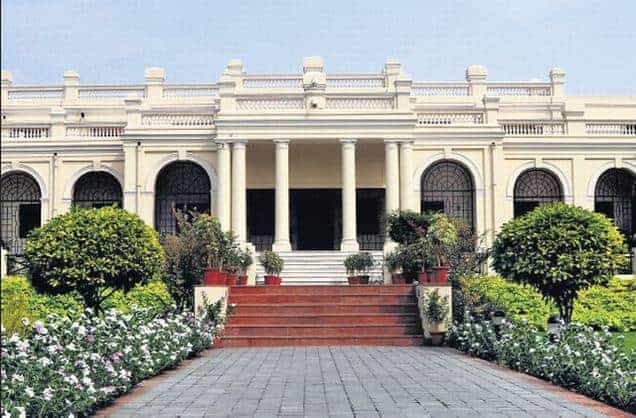
Delhi University celebrated its 95th foundation day today at the convention hall of the historical vice-regal lodge. The celebrations which marked the birth of the University 95 years from today saw Dr. Karan Singh, Member of Parliament, Dr. Swapan Dasgupta, MP- Rajya Sabha, Ambassador Shri Jayant Prasad and Mr. Rajat Sharma as distinguished guests among others.

The celebrations begun with the unfurling of the University flag at the ‘Gulab Vatika’ premises by the guests which was followed by the  lighting of the ceremonial lamp. Then the guests of the occasion were felicitated by the Vice Chancellor of the University which was followed by the addresses by guests to the gathering.  Dr. Karan Singh’s speech focused on the need of a changing education to meet the changing demands of the time. He also reiterated the long pending issue of new education policy. He ended his address by asking everyone to remember their fundamental duties when they talk of fundamental rights.

This was followed by address of Mr. Shiv Shankar Mukherjee and then followed by Mr. Jayant Prasad. Being the alumni of St. Stephens College, both of them shared their memories related to Rohtas Samosa and the Woodehouse society of the college. They also mentioned about the growing Naxal movement in the university during their period.  This was followed by address of Rajat Sharma, the editor-in-chief of India TV and the host of the popular ‘Aap ki Adalat’ show. Sharma remembered how Delhi University taught him to dream and also how to turn the dream into reality.

This was followed by the presenting of several distinguished service awards to retired teachers, non-teaching staff and teachers with exceptional achievements. After the felicitation ceremony, Prof. Yogesh Tyagi, the vice-chancellor of the University addressed the gathering asking everyone to send in their suggestions on how to make University a better place.

The program drew its curtains with vote of thanks by Prof. Pami Dua, Dean of academics which was followed by high tea. The entire ceremony was also translated into sign language by the interpreters on the stage which made the proceedings accessible to  the deaf and mute community as well.

Image Credits: Srivedant Kar for DU beat

Srivedant Kar

[email protected]

Looks like Delhi University is in the middle of updating its curriculum for several courses. It’s only been a day since the speculations of Chetan Bhagat’s bestselling book, ‘Five Point Someone’s inclusion as English Generic Elective floated that another interesting addition (proposal) has also come to light.

According to a report in the Hindustan Times, Delhi University is planning to include ‘Facebook post writing’ as part of its English literature curriculum.  This change was recommended by a core committee of the Choice Based Credit System at Delhi University’s English department. The proposed components will be part of the Skill Enhancement Courses. Alongside the Facebook posts, other generic but important and frequently used writing such as, blog posts and cover letters are also included.

The English department has sent the proposed changes to all colleges and the teachers are suppose to send in their feedback by May 1st. Since there is no particular plan on how to conduct the course, any further instructions will be given once initial feedback has been received.

Many people are critiquing the addition of Facebook post writing in English Literature on the grounds that this is juvenile and unimportant. Besides, Facebook is sort of an informal platform where people choose to express freely and therefore it is not feasible to add it in the academics.  However, in their defense the core committee resonates that social media is an important tool of communication and it will advantageous for students to learn how to use it effectively.

On being asked about how this new step is going to affect the academics Dr. Siddhart Kanoujia of Hindu College said ” Important aspect is if we are making it a part of our syllabus then isn’t there a danger of homogenization and stratification in terms of correct language, grammar and other norms which the educator deems fit. I don’t think there is any intervention required except a few lectures on net ettiquettes, but then that doesn’t remain within the purview of academic writing.” He also said the attempt would turn futile because facebook is a platform that allows freedom of expression and this exercise would be imposing set of rules on written form which would create homogeneity and would turn out to restrict the freedom of thought.

Whether or not these proposed changes will be implemented or not, we will get to know only after the new syllabus is released.


Image Credits: Vanity Fair


Niharika Dabral

[email protected]

The official websites of over 10 Educational Institutions were hacked by a group of Pro-Pakistan hackers on Tuesday, who claim to have done no harm to the data stored. As per The Hindu, one of them was also quoted, “Just here to deliver my message to Indians.”

Websites of educational institutions including University of Delhi, University of Kerala, IIT-Delhi and Aligarh Muslim University were hacked, wherein the group barred public access to them by putting up a page displaying pro- Pakistan slogans. The page also displayed videos showing alleged brutality of Indian soldiers towards Kashmiri residents.

The group, claiming to be the ‘PHC Pakistani 133t w4s h3r3’, says that the move was in response to Code-Man’s hack of railways.gov.pk and in solidarity with innocent Kashmiri people being killed by Indian Army.

The time being around the admission season in various institutions, these websites draw significant attraction from aspirants, parents alike which might be one of the reasons why the hackers chose to deface the websites. Meanwhile, the unrest in Kashmir has taken new turn with students joining the stone pelting groups in school uniforms.

Later reports from the Registrar of University of Delhi, Tarun Das, claim that the access to the website been initially barred from outside.However, responding to the urgency of the admission process of the University, that entirely takes place online, problems were detected and successfully rectified.The Director of University of Kerala’s Computer Centre made similar claims, saying that the website had not been affected by the hackers.


Priyal Mahtta

[email protected]


With officials asking colleges to issue advertisements in order to invite applicants, the University of Delhi (DU) is soon going to begin the process of filling up its vacant teaching posts. On 5th April, 2017, a letter has been issued to the colleges to begin the application process by 19th April. A link has also been sent to a website for generating a centralised application form. Since the procedure has been shifted online, no offline forms from the applicants will be accepted.

“This time, the form is so designed that a candidate needs to only change the college name and apply to all colleges where his/her subjects are taught. Earlier, the API score of a particular candidate used to differ from college to college, creating a huge amount of grievances and complaints. Now a candidate has to fill the same form and it will automatically calculate the API score of candidates,” DeveshSinha, the Dean of the colleges, told Indian Express.

Furthermore, the University has also asked the 28 colleges which do not have a Principal to advertise for the position. DU has a total of 4,000 vacant posts for teachers, which shall be allotted to ad-hoc teachers, each appointed for a period of four months at a time. The governing bodies of the colleges will be sending the details of their vacant positions and reservation rosters, and following their approval, take appropriate steps to screen applications and fix interviews. A few colleges have already begun the application process.

With inputs from the Indian Express
Deepannita Misra
[email protected]
Image credits:sarkarijobnews.com

The University of Delhi (DU), which sees students from all across the world enrol into various courses, has decided to extend the deadline for the admission of foreign applicants. Every year, hundreds of aspirants from countries such as Afghanistan, Mauritius, and Sri Lanka apply to DU for courses such as Economics (Hons.), B.Com (Hons.) etc. in the undergraduate programme. This year, the University saw their number rise to a record 3,300. Thus, a conscious measure taken to extend the application deadline was required, in order to ease up the document submission and screening process.

Ashutosh Bhardwaj, a senior official of the admission committee, verified the news to MAIL TODAY. He said that while the deadline for admission to undergraduate courses for non-Indian students has been shifted to 4th May, the deadline for Ph.D. applications has also been extended to 31st May 2017. Earlier, the deadline for online applications for the upcoming academic session was 20th April 2017 for the undergraduate students. The new deadlines, as Bhardwaj confirmed, give students more time to submit their documents for verification. This step does, indeed, create an opportunity for both the students and the University to participate in the admission process and to make it a smooth and hassle-free affair.


Feature Image Credits: CryBytes

Deepannita Misra
[email protected]

The second instalment of Percipience, the eminent alumni lecture series under the aegis of University of Delhi, North Campus, was held on the 21st of this month at the Convention Hall, Vice-Regal Lodge. The topic for the seminar was “Fundamental Duties under the Indian Constitution: Forgotten Virtues?” The guest speaker for the event was Honourable Justice Arjan K. Sikri, Judge, Supreme Court of India. The moderator for the event was Professor M.P. Singh, Honourable Chancellor, Central University of Haryana, with the august podium presence of Yogesh K. Tyagi, Vice Chancellor, University Of Delhi and Professor Sydney R. Rebeiro, Dean, Alumni Affairs.

The event began with the inaugural speech by Justice Sikri. He spoke of the modern context of the Buddhist idea of enlightenment and the role of good citizenship towards the fulfilment of the purposes behind the constitutional fundamental duties. Talking of the role of the citizen in the rule of law, he referred to the trinity of ‘reminder, warning, and inspiration’ for the materialisation of an envisaged society. In the same breath, he also stressed upon the requisite sense of respect for the national flag and anthem.

Second on the podium was Professor M.P. Singh. In his moderation speech, he spoke on the idea of ‘dharma’ in relevance to the modern perception of fundamental duties. He stressed upon the fact that religion is a secular concept as it is nothing but a way of life. He also cited Mahatma Gandhi when he said that if the fundamental duties are performed well, fundamental rights would be of little concern.

This followed the question hour as the house was opened to the audience which comprised of the alumni, professors, and students of the University. The two guests clarified the various nuances of Part IVA and Article 51 of the Indian constitution.

The all-awaited presidential address was conducted by Dr. Yogesh Tyagi. He subjectively summarised in a nutshell the essence of the two lectures prior to him. Talking of Part IVA which caters to the clause of fundamental duties, he said that this was the shortest, youngest, and arguably the least legitimate of the laws referring to the need of subtle revisions in the wake of modern times.

The event ended with the national anthem led by the choir of the University of Delhi.


Image Credits: Nikhil Kumar for DU Beat

Nikhil Kumar

[email protected]

As third years, are we saying goodbye to our years as undergraduate students in Delhi University or are we saying goodbye to the University as we knew it? 

Shubham Kaushik ([email protected])

It’s that time of the year when another batch of undergraduate students from the University of Delhi are getting ready to bid their colleges goodbye. Farewell gatherings are being prepared for with as much gusto as various entrance exams. While it’s natural for third year students to worry about their future and be nostalgic about their time in the University, it is also important in the current scenario to worry about the university we’re leaving behind.

Recent events suggest that Delhi University is no longer the space it used to be a few years ago. Whether this change was in the making for a while or was caused by a few specific events is debatable but it has manifested itself in events occurring around us for the past few months. The subtle nationwide suppression of dissent and revolt against the authoritarian regimes in educational spaces reached the University in its most recognisable form with what transpired in Ramjas College a month ago. The University, which was known for the freedom it gave to students to explore their beliefs and critically analyse the dominant rhetoric, turned into a violent space where students and teachers were targeted and assaulted for doing what shouldn’t just be acceptable but also encouraged in a university space – standing up for freedom, demanding their right to dissent and challenging what years of social conditioning made them believe. When safe spaces meant for exploration and exchanges of ideas are ravaged by forces that aim to homogenise them, it doesn’t bode well for the society at large. This world wasn’t meant for the establishment of one system followed by the majority population with the others coerced to follow suit, and past attempts to do so have always resulted in bloodshed and eventual revolutions that did what had to be done anyway – put the system in motion again and allowed conflicting stances to clash and coexist.

As we’re getting ready to say goodbye to our days as undergraduate students in Delhi University, we must make sure we aren’t also saying goodbye to the university space as we knew it. Spare a thought for seminars being disrupted even as other seminars ‘nationalising’ teaching are organised. Spare a thought for the thousands of students who still look towards DU to mould their future and their beliefs, and who will then go on to mould our society. Spare a thought for the future of Delhi University.


Image Credits: The Wire

A student spends most of his/her day in the campus, but is it really a safe place? With recent incidents of sexual harassment at college fests, the dilemma has become even more prominent in the eyes of the youth.

Meghna Singh, a student from Miranda House, got masturbated on at SRCC’s annual fest, Crossroads. But she isn’t the only one who has gone through an assault like this – many students have recounted their horrific accounts where they have been sexually harassed on campus. When Meghna told the details of what happened with her at SRCC on social media, thousands of people didn’t believe her. Soon enough, she became the topic for jokes, memes and internet trolls where people labelled her as a liar.

Meghna’s story might be the first one to surface online, but it isn’t the first time a girl on campus has been assaulted like this. Sukhwinder Singh’s gig at Hindu College’s fest Mecca also saw a molestation incident where a girl got groped twice in public. One would think that being a student friendly area, the campus would be a safe place where one could walk freely, but is that really so?

Public gatherings like fests and concerts have witnessed many incidents like this take place and most of the time the victims don’t talk about it. And not just public gatherings; horrific incidents involving middle aged men on bikes stopping in front of girls’ PGs and masturbating to the ones standing in the balcony occur on campus on a daily basis.

Roads around colleges become almost abandoned after college gets over, because of the hostel/PG deadlines, and the empty streets have become a nightmare for anyone who is walking on them post 8 pm. Theft and assaults happen regularly and the police is doing the least about it.

As a resident of the campus and a student of the University, me and my friends have faced similar situations where the length of our skirts got men on bikes to slow down next to our rickshaws and call us out. Where simply walking on the roads of Kamla Nagar have gotten old men to masturbate to us. Where being part of protests got us groped and threatened with rape.

On a campus that is clearly not safe, it is appalling that people had problems believing Meghna’s story.


Image credits: DU Express


Anagha Rakta

[email protected]

Professor G.N. Saibaba, former English professor at Ram Lal Anand College, Delhi University, has been sentenced to life imprisonment by sessions court in Gadchiroli district of Maharashtra on 7th March, 2017. The court has found him of “hatching criminal conspiracy to wage war against the Government of India and collecting people with the intention of waging war against the Government of India”.

Professor G.N. Saibaba’s activism.

Before his arrest in 2014, wheelchair-bound and 90% disabled Professor Saibaba use to be an outspoken critic of the human rights abuses by the Salwa Judum and Operation Greenhunt, launched by the government against Maoists. He also played an active role in mobilizing public intellectuals under a group named Forum Against War on People. Owing to his open activism several academics, teachers and students have described his arrest as a deliberate attempt to stifle dissent.

Abduction or arrest?

On the afternoon of May 9, 2014, he was heading back home from the university when a group of policemen in plainclothes arrested him. The next morning after his arrest from Delhi, Professor Saibaba was immediately flown to Nagpur, where the District Magistrate heard his case and sent him to prison. His family was not informed about his arrest and this prompted his wife to file a missing person’s report. The question of this abrupt, almost haphazard arrest raised questions that- why did the Maharashtra police abduct Professor Saibaba in this way when they could have arrested him formally?

The charges against him.

He has been charged under the notorious and dangerously vague Unlawful Activities (Prevention) Act for advocating unlawful activities, conspiring to commit a terrorist act and inviting support for a terrorist organization. Simply put, Prof. Saibaba was arrested for his alleged Maoist links and being a ‘Naxal ideologue’.

Another offence listed against him is that he is the joint secretary of the Revolutionary Democratic Front (RDF), an organization that is banned in Orissa and Andhra Pradesh. However, it is not banned in Delhi. So how does his association with Revolutionary Democratic Front (RDF) matter?


The validity of evidence.

The charges against him rest on of letters, pamphlets, books and videos seized during raids that were conducted in his house. During the raids, his laptop, hardisks and pendrives were taken from which the evidence was gathered. Talking to The Hindu in a 2015 interview Prof. G.N Saibaba claimed that “Police claims to have recovered a letter that I had written to some top Maoist leader. To this day, the police never showed me that letter.”

Even if Prof. G.N Saibaba is found to be a member of a banned organization, it won’t be sufficient enough to prosecute him as according to the previous judgments by the Supreme Court ( the Kedar Nath Vs State of Bihar 1962) “mere membership of a banned organization would not make a person criminally liable unless he resorts to violence or incites people to violence or creates public disorder by violence or incitement to violence”. 

Not an isolated case.

The case against Prof. Saibaba should not be seen in isolation, since the use of the Unlawful Activities (Prevention) Act id not unprecedented. Earlier cartoonist Arun Ferreira, public health specialist Binayak Sen  and many members of Kabir Kala Manch were imprisoned on similar charges. The apparent similarity in all these cases is that they all have been accused of being Naxalites since they talked about issues of lesser known state oppression. Arun Ferreira was eventually released as innocent after spending five years in prison, and Binayak Sen is out on bail since 2011 while the case against him is still pending since 2007. The acquittal rate in the Unlawful Activities (Prevention) Act is 72%, despite this the law is used very frequently.

What can we do?

With corporate driven media, there is hardly any news from remote conflict ridden territories. Those few individuals and organizations that attempt to highlight these problems are harassed in with help of laws such as Unlawful Activities (Prevention) Act. In this situation it is up to us to either live in complicity or listen carefully to what the state machinery does not want us to hear. To not ignore, but to acknowledge what the dissenters are trying to say is the least and often most what one can do.

Image Credits- Shalendra Panday/Tehelka


Niharika Dabral

[email protected]


In a new development and a major change of guard in an institution of Delhi University after the new vice chancellor took over, Prof. Harinder P. Singh has been appointed the new director of Cluster Innovation Centre (CIC). A professor at department of Physics and Astrophysics, Prof. Singh is also the dean of International Relations of the university. An eminent researcher in the field of astronomy, he has been the vice president of Astronomical society of India. He is also a member of the International Astronomical Union as well as a fellow at Royal Astronomical society, London.

Speaking to DU beat, Prof. Singh outlined various things of importance that would be taken up for development of the institute. CIC was set up as a centre to promote interdisciplinary framework as well as promote innovation in the University. “We would look towards increasing projects which can promote science along with a human face, which would in turn promote interdisciplinarity” said Prof. Singh.

Speaking about his plans for various programmes, he pointed out that the students of B.A (Hons.) Humanities and Social Sciences get a lot of freedom in choosing their course which they should use to engage themselves in various activities that could help create a social impact. He also noted, that projects also need to be more socially engaging and should include students from across programmes. “In order to promote the academic environment more seminars, lectures and discussions will be organised. We should be able to give an education that is above the marks and grades system” said Prof. Singh. He also emphasised on increasing attention towards various extracurricular activities which would help in personality development of students in the institute.

Amongst his various new initiatives planned, he wanted the institute to have its own newspaper. “We do so many things the whole year, but don’t showcase it anywhere. We must have our own newspaper.” CIC which has Design Innovation Centre, Startup Incubation Centre and Centre for Scientific Communication as various organs other than its academic programmes had organised an exhibition of various products designed by its students which drew major attention last year. This initiative if successful, would improve the impact factor the institute’s research profile.
“Every student comes with lots of hopes and dreams when he come to an institute. How much of that he is able to fulfill within his time as a student is what determines the success of the institute as whole. We should try our best to help students achieve their dreams” said Prof. Singh.


Srivedant Kar
[email protected]