Tag

Delhi University

Browsing

You all remember the good parts of DU but what happens to the unpleasant ones? Here’s to
remembering the experiences that made us grow.

As a high school student, I only dreamed about getting into Delhi University (DU). Little did I know
back then that this place would not just be another academic choice but would slowly merge with
my very existence. Walking through the gates of my college on that odd day of February 2022 to
today when I walk through them for one last time, it was not a journey about just growth and
achievements, but it had more to do with the person that I am today. The transitions and
experiences, coloured in both black and white, did leave a sweet and sour touch in my mind. And as I
write this, it makes me more grateful for the bitter notes. So, here’s to taking you through a memory
lane and if you call yourself a student journalist, hang in, for it’s worth the wait.

Journalism for me was going to be something that I study within the four walls of my college but
thanks to DU Beat, I was acquainted to the realities rather than believing in the “coloured” reality
that is taught in colleges. As a first-year student, all I really wanted to do was go on the field, do
ground reporting, and write a copy that my editors would appreciate. However, from watching the
iPhone using protestors (irrespective of their political orientation) to experiencing the horrors a
student can inflict on another student, our university’s dark side needs to see the light of the day.
In a university like DU, not everyone can feel safe or rather is safe. From students to teachers, the
cries in their voices are seemingly falling on deaf ears. When students were sexually harassed in top
North Campus colleges or the time when an annual fest turned into a massacre of women’s respect,
the authority failed us, the unaffected students failed the inflicted ones. Having no accountability
and sprawling disastrous issues have all tainted the dreams of high school students.

Even the professors are not left out of it. Be it the journalism department in Kamla Nehru College,
the philosophy department in Lady Shri Ram College, or teachers in Ramjas College, Indraprastha
College for Women or Kalindi College, the professors of various departments have been subjected to
mass displacement. If this was not enough then professors in 12 DU colleges, which are funded by
the Delhi government, faced large delays (over 3-4 months) in receiving their salaries. It is saddening
to see that the professors who have given their everything to this university are also not safe.
To top off all these situations, we have infrastructural issues and trust me when I say this- if your
college has a washroom with a door and a door latch, it is a privilege. Back in 2023, a student of
Lakshmibai College had to enter into a fight with the authorities for medical compensation. A ceiling
fan fell on the student and as a result, she was under a lot of distress from the serious injuries. Even
when clearly the authorities should have taken accountability, it is the students who have to fight for
what should have come from a place of rational conscious. Question about if our percentages
deserve such a treatment continue to loom over the university without much sign of any
improvement.

In addition to all this, we have a fierce battle in student politics between the right and the left where
one has considerable “power” and the other has a voice without that power but the main takeaway
is that none of them might have solutions to the grassroot issues faced by the students. Though this
is a topic which you and I can discuss over “chai” (as promised by these people), yet do think aboutwho hears us when we are under distress? Who will stand with us in front of the authority which
keeps on wronging us?

Nevertheless, DU has a lot of darkness but without a doubt, it showed all of us the light in its own
way that we all would now follow. These experiences do not look pleasing but because of how we
were exposed to this darker part, it shaped us as individuals. And though these situations form just
the tip of the ice that I reported through my three years but this too would not have been possible
without this platform which gave me the power to bring forth the mishaps of DU, gave me a family
which got my back, and experiences that I will cherish till the end. On that note, as you exit this
university, remember: you can leave DU but DU would not leave you.

Read Also: Why Farewells are Good ?

Featured Image Credits: Ankita Baidya for DU Beat

Ankita Baidya

[email protected]

In between writing about politics or my own personal journey at DU, I ended up with a chaotic rant for the final piece at DU Beat (DUB) to reach my last deadline. Please bear with me one last time.

I remember my first day at KMC, arriving an hour late for a two-hour calculus lecture, followed by a brief chat with my new classmates and the news of a ceiling falling on a professor. Days passed, ceilings kept falling, and I eventually found my folks, and college found a contractor, and college became fun and safe. From working in societies, interning, and holding positions of responsibility to parties and trips, and, eventually, adopting a pet with my friends, I had my dream college life. DUB was certainly the highlight of my college time.

I will never be less grateful for this place. It offered a space for my thoughts, a thought for my thoughts, obviously memories, and friends. It gave me a new identity, where people knew me by my work and not my work because of me.

While the breeze of nostalgia kept on hitting me as I was figuring out this piece, I took my phone and flicked through my DUB highlights. Gender and queer rights, saffronization, casteism, new and old laws—my writing covered a lot of angles and dimensions, but what I noticed about my own writing today is my inclination to write about college or academic spaces that are crumbling while we take shade under them for our futures.

Three years down the line, I have no hesitation in stating that DU has undergone significant changes. I am leaving this place with a heavy heart and hope not to return. DU is no longer the space it used to be. It was never ideal or close to being perfect; problems persisted even then. But today it has a completely different goal: eliminating its foundations as a public central university. Whether it’s academics, diversity, policies, or how societies function, everything is falling under the grip of constant surveillance.

It is not just DU; educational spaces and education as a whole in India are fast altering to meet the political requirements of those in power. It is being used to steer young minds in a certain political and ideological direction. From book revisions to the implementation of new education policies, everything is being modified not to improve educational quality but to strengthen ideological grip. History is being rewritten to safeguard the future of present politics.

While some of you may find all of this too much, or you may believe I am exaggerating, however, this idea in itself is proof. Your professors suddenly disappearing from college, the grip of college administration on societies, societies like North East cells struggling to stand due to a lack of students, crackdowns on academicians, fee hikes, the dominance of specific student groups that makes you think twice before organizing an event, and many other examples demonstrate that educational spaces are under scrutiny, and a lack of conversation and understanding is the reason for the silence surrounding these issues.

I would have included quotations or data, but I wanted this piece to be a record of my personal experiences (or rants?). As someone who wants to be a professor and continue in academia, the concept and aspiration are no longer the same. My constant detachment from my own subject and the state of educational spaces are constantly asking me to build a new dream. While I navigate my way through all this, planning to pick up my subjects again during my masters, and trying to reshape my dream instead of eradicating it, I hope that more people will start talking about it.

In lieu of breaking the custom of not including a picture in my print piece (as I always go over the word limit), I’m going to end my rant here to avoid succumbing to my academic crisis. I’m not sure whether this piece makes sense in the farewell issue, but I wanted to talk about academia in my last piece at DUB as a copyeditor.

Ending my post with the hope that DUB would continue to be bold and talk about politics freely. All my love.

Read Also: Farewell: Mourning our Lost Memories and Experiences

Featured Image Credits: Dhruv Bhati for DU Beat

Dhruv Bhati

[email protected]


On March 8, 2024, the ABVP – led DUSU (Delhi University Students Union) announced an initiative where 10 women would assume the role of DUSU President for one day each, commencing from the first day of Navratri, April 9.

Having begun on the first day of Navratri i.e. April 9, 2024, the ABVP-led Delhi University Students Union (DUSU) announced a commendable initiative where 10 women students will be chosen for the role of DUSU President for a day each.

The names of the 10 students were selected from a competition wherein the participants were asked to write an article on “The Role of Women in Making Viksit Bharat”. Tushar Dedha, DUSU President, took to his Instagram on April 5, sharing the official list of names of the 10 selected students which included Isha Awana (Department of Hindi), Akshita Johar (Ramjas College), Sophiya (Swami Shraddhanand College), Anshita Chauhan (Daulat Ram College), Deeksha Lingayath (Sri Venkateswara College), Ankita Anand (Centre for Hindu Studies), Zainab Nigar (Hansraj College), Shyama Arunbhai Trivedi (SPM College), Preeti Singh Nain (Kirori Mal College), and Sakshi Patel (Satyawati College), who served as the first DUSU President on April 9, as a part of the campaign. She is a third year B.A. Programme student hailing from Jabalpur, Madhya Pradesh, and aims to help financially weak students through her position.

Preeti Singh Nair, the second DUSU President under the campaign, spoke to DU Beat about her selection and how it aims to empower women while increasing their participation in politics to bring about a change not just at the University level but even at the national level in the future.

We have the incredible opportunity to learn about DUSU’s functioning and receive valuable insights into student politics. This campaign in itself sends an important message as it aims to empower women students to hold political offices at the national level, as it gave every selected student the space to put forth major problems in our colleges before the union. Personally, I felt incredibly happy, although surprised, to have received this opportunity out of more than 5000 students who had participated in the competition. Having witnessed the lack of inclusive and accessible spaces for PWD (persons with disabilities) students in most DU colleges, including mine, I wish to use this opportunity to bring about major changes and take a stand to make our campuses inclusive and accessible for all. – Preeti Singh Nair, the second DUSU President 

In conversation with the media, Tushar Dedha, added that these one-day DUSU presidents will have all the powers of the chair to take decisions and issue any notice concerning students during their term.

On each day of the Navratri, a woman will head the DUSU as its President, exhibiting Nari Shakti. We have taken this initiative to promote women’s representation in student politics. 

Read Also: After WRB, Gender-Based Representation in DU’s Student Unions Too?

Featured Image Credits: Arush for DU Beat

Gauri Garg

[email protected]

Anjali Gopalan, founder of the Naz Foundation Trust, addressed a Gender Sensitisation Programme at Delhi University. She highlighted the role of the Internal Complaint Committee in fostering inclusivity. Gopalan emphasised the need for uniform codes of conduct, backed by her experiences, urging for the unlearning of social norms and promoting equal rights for all.

The Naz Foundation (India) Trust on Friday, 22nd March, conducted a gender sensitisation seminar for members of the University of Delhi’s Internal Complaint Committee (ICC). The event took place at the Department of Botany, North Campus and also saw attendance by members of the current Delhi University Student Union.

Anjali Gopalan, the speaker of the event, established the Naz India in 1994 to develop sensitivity and address HIV/AIDS and sexuality. Naz india conducts awareness and support sessions for people living with HIV/AIDS, as well as counselling and referral for the LGBTQIA+ community.

Ms Gopalan talked about the general nature of the ICC around the country and the role that they play in making the academic environment at various levels more inclusive and accepting to the gender diversity.

The ICC throughout the Delhi University Campuses and its different colleges do not have a uniform code of conduct. Due to this, while dealing with the gender-sensitive matters of discovering their identity and HIV-related discussions. The program hosted an insightful delivery by Ms Gopalan, where she talked about various delicate issues and answered questions like what to do to make the environment of the ICC more approachable, how the training of the personnel contributes to enhanced outcomes of the help provided along with the general nature of the change that has taken place throughout the years in the direction towards making gender-neutral safe places around the country.

Ms. Gopalan’s answers were backed by years of experiences advocating for and fighting for the queer community. She covered aspects ranging from adult social circles to primary school settings and the challenges they impose, preventing people from the LGBTQ+ community from exercising their rights. Some of the topics along which the discussion that followed centred around the unlearning and re-learning of rigid social norms, language and pronouns and the resistance they put against the suppression and the existing hostilities in the current environment that others everything that does not fit the conventional norms.

In conversation with DU Beat, while talking more on the subject matter, Ms Gopalan said:

I have been working for the awareness programs since 1987. It’s been an incredible journey in many ways for me it is a matter of rights, everything is about whether for an animal or for a human. I think everyone should have access to rights. To me, I am still amazed that even now people of the community in our country don’t have the same rights. I do not understand why and how can we as people deny our own people the rights that everyone takes for granted.”

Anjali Gopalan, Naz India

Ms. Gopalan’s impassioned advocacy for equal rights resonated deeply with attendees, serving as a powerful reminder of the ongoing journey towards equality. Naz India is now aiming at promoting this initiative in individual colleges’ ICCs as well.

As the event concluded, participants were inspired to continue engaging in open dialogue and striving for greater inclusivity within their respective academic environments. Ms Gopalan’s address stands as a testament to the enduring commitment to advocating for the rights of marginalised communities and building a society where everyone is valued and respected, regardless of their gender identity or sexual orientation.

Read Also: Stories of Love, Acceptance, and Triumph

Divya Malhotra

[email protected]

From time to time, we come across talented and awe-inspiring individuals who deserve their stories to be told. So, here is to 21 such amazing individuals who have achieved great feats in their lives before even tasting the 21st year of their life.

Tarun Jindal

Hailing from Chandigarh, Tarun Jindal is a B.Com. Honours student, CA Finalist, and President of 180 Degrees Consulting Club at Hindu College, University of Delhi. Having worked with esteemed organisations such as Dhwani Rural Information Systems, UNDP Malaysia, India Accelerator, and Infolso, Tarun is a high-impact achiever and go-getter, who believes in seeing every hardship as a source of inner fortitude and every failure as a test of perseverance. Their consistent commitment to making a difference in the lives of those around them has resulted in tangible social impact, particularly in the fields of healthcare, gender justice, and education.

Kartik Chauhan

A driven start-up enthusiast, Kartik Chauhan is a student at Hindu College and founding member of Delhi Smart Protein Project (DSPP), a project under the aegis of the Good Food Institute to stimulate open-access research, entrepreneurship and climate action through food technology. Recently, he received a full-coverage scholarship to attend the Good Food Conference in San Francisco, USA in recognition of his achievements and contributions. At Hindu College, he in also the President of the Entrepreneurship Cell, leading a 50 member team, and conceptualising, and spearheading the rebranding of the Cell to encourage a ‘builder-centric’ approach to innovation. His other achievements include being a part of Ripen’s first invite-only Entrepreneur in-Residence program, and having built a ‘feedback marketplace’ that was selected in the W22 Batch of GSF Accelerator. With their passion for technology, he are looking forward to turning his own project into an actual start-up soon.

G Brinda

A third-year History Honours student at Lady Shri Ram College for Women (LSR), G Brinda has a passion for policy-making, social work, consumer behaviour, and research. They serve as the General Secretary of Youth India Foundation (YIF), leading 50+ interns at state level and guiding 250+ college chapter members, having founded the LSR, Gargi, IITM (IPU), and Hindu College Chapters of the social entrepreneurship platform. They are a compassionate and empathetic leader, who imbibes this ethos in every position of responsibility that they diligently pursue, including but not limited to State President at the Kerala Impact Consulting Council under WICCI, Content Head at the Global Youth India-Israel Forum, and Editorial Head at Prakriti LSR.

Anshu Narwal

A research-enthusiast and dedicated social volunteer, Anshu Narwal is a student of economics and mathematics at Lady Shri Ram College for Women (LSR). A district-topper and school-topper since their school years, Anshu has furthered their interest in academia by undertaking two impressive research projects in collaboration with professors from esteemed institutions such as IIM Kashipur and IIT Delhi. Their research interests lie in the critical topic of ICT Adoption and Inclusive Growth, addressing issues that are fundamental to our society’s development. Additionally, they are passionate about the fields of psychology and social work, serving as the Project Director for Project AASHA, facilitating workshops on hygiene, unsafe touch, and mental health.

Nirmanyu Chouhan

A Hindu College alum from the Batch of 2023, Nirmanyu Chouhan is a Programme Coordinator at Lokniti, Centre for Study of Developing Societies (CSDS), and former research intern at Newslaundry. Fascinated by the intricate interplay between politics and society, they are a honed researcher and journalist striving towards a more informed citizenry through their work. Beginning their journey within the staff writing rooms of the Hindu College Gazette, Nirmanyu’s experience with media houses such as DU Beat and Newslaundry have allowed them to engage with topics across politics, economy, society, and pop-culture. Their present work at Lokniti-CSDS centres the field of psephology, the study of elections and voting behaviour, which allows them to analyzing voter patterns and understand the pulse of the electorate.

Pulkit Sehgal

A 2023 Management Studies graduate from Shaheed Sukhdev College of Business Studies (SSCBS), Pulkit Sehgal is a driven consulting and finance enthusiast, who has been recognised as an ‘Emerging Leader’ by FinOak, India’s largest student-run finance community. They are the co-founder of Makes Sense, a mental health non-profit aimed at providing social and psychological support to university students. The initiative has impacted 450+  students through free therapy, and catapulted fruitful collaborations with Mindpeers, a Shark Tank-funded and Asia’s fastest growing mental-health platform. Furthermore, they are an Incoming Associate at Boston Consulting Group, and served as the President of 180 Degrees Consulting SSCBS during their college tenure.

Molina Singh

An english literature and history afficionado, Molina Singh is a 2023 alum of Gargi College and founder of Delhi Reads, a 1500+ member citywide book club that has secured successful partnerships with popular coffee chains, bookstores, and publication companies. During their college tenure, they held the position of President of the English Creative Writing Society and spearheaded the organisation of 4 varsity-level fests at Gargi College, a feat of uncprcedented calibre and visionary execution. Their staunch commitment to social-political principles and impact-led community service have made them one who is not afraid to voice their opinions, whether it be in expressing solidarity with the IPCW Fest victims or in their capacity as a student-journalist at DU Beat.

Pranjal Jain

In 2023, Pranjal Jain graduated and immediately embarked on a journey to catalyze positive change. This drive motivated them to pioneer the establishment of India’s inaugural Bridges for Enterprise (BfE) chapter at SSCBS, a milestone aimed at fostering entrepreneurial endeavors with a societal impact. Alongside, they engaged in two consulting and financial advisory projects with socially conscious startups in Nigeria and the Philippines, demonstrating the tangible real-world impact achievable through collaborative initiatives. Moreover, recognizing the pressing need for mental health support among college students, they co-founded Makes Sense, a nurturing and inclusive platform dedicated to destigmatizing mental health discussions and providing essential assistance to those in need.

Manvi Bhatt

Having graduated in 2023, Manvi Bhatt was honored to receive the distinguished Sultan Chand Memorial Scholarship Award, recognizing their exceptional academic achievements. Fueled by their entrepreneurial spirit, they actively participated in the development of Mark & Tonic, a digital marketing startup venture, where they served as a founding member. In this role, they led the integration of live projects to address strategic consulting and digital marketing needs. One of their accomplishments is winning the BrAINWARS undergraduate case study competition, a prestigious event hosted by Bain and Company.

Jayesh Rungta

A 20-year-old from Kolkata, Jayesh Rungta recently graduated with a bachelor’s degree in commerce from Hansraj College, University of Delhi. Securing a position as a Business Analyst at the prestigious management consulting firm Kearney, they stand out as the sole and first undergraduate hire for a front-desk consulting role from their college and one of only three selected across the University of Delhi. Demonstrating their commitment to social impact, they served as the Convener and Founding Member of Project Parivartan from January 2021 to March 2023, overseeing a yearly Financial Literacy Drive that reached over 10,000 individuals across three editions.

Anjana Jose

As a current psychology student at Jesus and Mary College, Anjana Jose wears multiple hats as an entrepreneur and podcast host. Since June 2023, they have served as the Founder and CEO of BooKing, a platform dedicated to promoting sustainability through the use of second-hand books. Simultaneously, they also host the OnlyGeeks Podcast, a show tailored for college students, which has garnered a listenership of over 100 individuals from diverse backgrounds since its inception in June 2023.

Gavish Lohat

Currently enrolled as a political science student at Hindu College, Gavish Lohat stands as the 1st Raj Bhargava Foundation Scholar, an honor bestowed upon them in 2022. This prestigious scholarship provides them with ₹75,000 annually throughout the duration of his undergraduate studies, along with a tablet. In addition to their academic pursuits, they are also the founder and host of ‘The Skeptical Student Show’ Podcast in collaboration with India Film Project, where they engage in thought-provoking discussions.

Punya Malhotra

As a final year Economics student at Hansraj College, Punya Malhotra stands as the lone Indian fellow selected for the fully-funded Young Leader’s Fellowship program in 2023 by MCW Global, USA. Their previous roles include working at the Federation of Indian Chamber of Commerce and Industries (FICCI). Additionally, they were featured in the Voices of the Young series by Dr. Subodh Mathur, where they shared insights on optimizing the college experience. As part of their research endeavors, they authored a quantitative paper titled ‘Urban Planning and Gender Inclusivity.’

Apoorva Rathore

Having graduated from Lady Shri Ram College with a degree in B.Com, Apoorva achieved remarkable success by emerging as the National Winner of the EY NextGen Women India competition. This accomplishment propelled them to represent both India and their university at the Global EY NextGen Women Competition held in London. Following their academic achievements, they ventured into the professional realm as a Research Analyst at the Indian Institute of Science. Here, they dedicated over a year to working within the Strategy Team, focused on developing a robust business model for an in-house eVTOL (electric air taxi) project.

Pratham Changoiwala

Pratham Changoiwala is a third-year student of Shaheed Bhagat Singh College, currently pursuing a Bachelor of Commerce. He is interning as an executive assistant at Niamh Ventures, an investment banking firm based out of Gurgaon, Haryana. Alongside that, he is the youngest speaker shareholder of HDFC Bank’s AGM and his experiences were shared as a part of Hindustan Times’ Live Mint as a part of their Gen Z interview series. He has been selected as a delegate for Harvard’s prestigious HPAIR Conference. He was also part of the Sustainable Stories Project, which involved interacting with eco-friendly brand manufacturing units and their business founders. He is also Operations head of Shaheed Bhagat Singh College’s Entrepreneurship Cell.

Bhavika Dabur

Bhavika Dabur is a third-year student at Sri Venkateswara College, pursuing a Bachelor of Commerce. They are currently working as a training manager and social media advisor at Aspirant Learning. Previously, they had experience in educational consultancy and soft skills training.

Falguni Mahajan

Falguni Mahajan was a political science student at Lady Shri Ram College. Currently, they are the founder of Mandonna Research Consultants, which focuses on the promotion of gender equity through academia and research work. Previously, they had interned as a researcher at Jawaharlal Nehru University, Policy, Politics and Government Foundation as well as with the Aam Aadmi Party. They hold C1 level certification in the French language as well.

Bhavya Sood

Bhavya Sood was a student at Shaheed Sukhdev College of Business Studies, having completed their BBA in Financial Investment Analysis. They are the co-founder of Project Bridgeway which aims to democratize access to education and guide students, through consulting, which has assisted over 10,000 students across several colleges. They have also served as the first elected deputy chair of IFSA’s Indian wing.

Anjali Batra

Anjali Batra is a political science student at IPCW, Delhi University, who is also pursuing a diploma in Psychology. She is the founder and president of Project Mehviyat, which focuses on empowering victims of abuse in South Asia. She was also recognised as a U21 Global citizen, due to her advocacy for Sustainable Development Goals and is serving as the deputy chairperson of the SDG Council, Global Youth India.

Tanusha Arora

Tanusha Arora is currently in the final year of Bachelor of Management Studies at Shaheed Sukhdev College of Business Studies. Arora has interned at Havells India, in the field of e-commerce as well as a research and market intelligence intern at EXL. She secured a placement in the capacity of an Associate at Samagra | Transforming Governance. She was selected under India Top 14 CEO for One Month Challenge by the Adecco Group. She has recently been felicitated with the coveted Linkedin Top Voice (blue badge) for her insights on marketing, communication and adulting. Moreover, she has been featured in Top 29 Leading Voices of India 2024 by BTalkz. She has a growing community of 7000+ followers and over 6 lakh+ impressions as yet.

Parv Jindal

Parv Jindal is a student of Shaheed Sukhdev College of Business Studies, completing their Bachelor of Management Studies. They founded the India chapter of Bridges for Enterprise, an international impact consulting organization. They have also interned with companies like Blinkit, MakemyTrip, Zomato etc. Jindal is acting Vice President of SSCBS’ Student Council.

Read Also: DU Beat 21 Under 21: Of Dreams and Determination (2023)

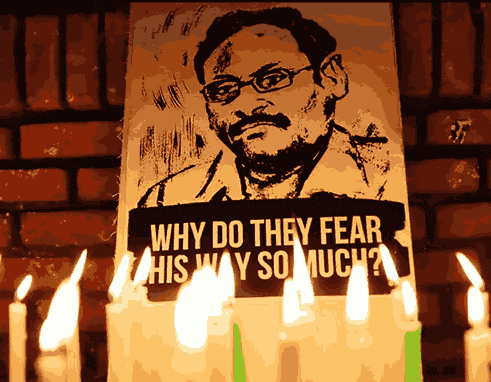
With the recent acquittal of former Delhi University Professor G.N. Saibaba after a torturous 10 years of imprisonment under the Unlawful Activities Prevention Act (UAPA), we take a look at one of the most important tools in the market of India’s barely-there-democracy: the UAPA.

In the Athenian State of 621 BCE, lived a statesman named Draco. Draco prescribed death for all criminal offences. Laws that were written in blood, not ink. Think of the word ‘draconian’ named after this infamous statesman, but in the Indian context, and perhaps what comes to mind is the notorious Unlawful Activities (Prevention) Act (UAPA) of 1967. 

Student activist Umar Khalid spent a total of three years behind bars in Tihar, with his bail pleas rejected consistently. The case moved from bench to bench. 84-year-old Stan Swamy, booked under the Bhima Koregaon case during his imprisonment, had asked for a sipper and straw in jail, citing Parkinson’s disease. It took the authorities a month to approve his request. On July 5, 2021, he passed away in jail, still awaiting trial. Journalist Siddique Kappan, on his way to cover the Hathras rape case, was arrested and detained similarly for a period of two years without trial. 

What brings these cases together is UAPA. Stringent conditions for bails (the accused will not be given bail if the first impression of the court is that they are guilty), the ability to declare an individual ‘terrorist’, and detention without producing any incriminating evidence have ensured the overturning of the precept of innocent before proven guilty. The investigating agencies are allowed to take up to 180 days even to file a chargesheet, which, in the case of Kappan, he claims to never even have received firsthand.

The process thus becomes the punishment. The asymmetrical power balance between citizen and state is clearly exploited to the citizen’s disadvantage. Dissecting the acquittal judgement of Professor G.N. Saibaba, Karen Gabriel, and PK Vijayan write for The Quint that the law comprises both the set of legislation that the state has to enact and uphold as well as the rules of procedure that the state must adhere to while doing so. They assert, “Procedure is an invaluable protective measure, not an incidental convenience.”

A Brief History

In the year 1967, the Indira Gandhi administration sought to bring out a law against the secessionist activities that the government observed in the country. The Parliament thus passed the Unlawful Activities Prevention Act. What initially emerged as legislation to counter the problem of secessionist tendencies, however, would quickly assume an altogether different colour. 

After the Prime Minister’s death and with the advent of the Punjab insurgency, the Terrorist and Disruptive Activities Prevention Act (TADA) was introduced. Criticised widely by human rights organisations for its arbitrary tendencies to centralise the onus of justice, it was later withdrawn. TADA trickled down in 2001 to POTA (the Prevention of Terrorism Act) in 2002, which met with concerns of misuse and was scrapped by the UPA government in 2004. The provisions of POTA, however, were in essence transferred onto the UAPA, which was the first introduction of anti-terrorism into the primarily anti-secessionist legislation. The central government could now overlook rules of evidence when it came to interception of communication and vested in its hands the power to declare any organisation as a terrorist organisation without trial. 

In 2008, the Act was further amended to include longer police custody, longer jail time, and harder bail provisions. The latest and most important amendment in 2019 empowered the NIA further and gave the government powers to declare individuals terrorists. 

But It Works, Right?

The hardlined stringency should then naturally warrant efficiency in curbing the “disturbances” that it claims to protect us from. The Home Ministry’s 2020 report, on the other hand, tells us that only 212 of the 24000 convicted in UAPA cases in 2016–2020 were found guilty. As Kappan puts it, “a conviction rate of less than 3%.”

Acquitting DU professor G. N. Saibaba, who has been in prison for 3600 days, the Bombay High Court noted:

No evidence has been led by the prosecution by any witness to any incident, attack, act of violence, or even evidence collected from some earlier scene of offence where a terrorist act has taken place, in order to connect the accused to such an act…

The court further stated that there had been an evident “failure in justice” in the flouting of mandatory provisions in Saibaba’s case. The appalling conditions of his imprisonment, along with those of many others, lead one to wonder whether the crushing impact that callous state persecution has on an individual’s life can ever be undone with mere acquittal. 

The persecution of intelligentsia, which asks difficult questions of institutions, is no new phenomenon. Considering, however, that as we function under that nimble concept of what is known to some of us as a democracy, the state would do well to clothe its atrocities better and be less conspicuous about them. The UAPA, with its in-your-face authoritarian tendencies, does not seem to be helping in that front. 

Read also: The Donkey Dance of UAPA: Criminalising Dissent in a Hollowing Democracy

Deevya Deo
[email protected]

As DU gears up for the fest season, the supposed fortress of security seems to crumble each year. Are women’s colleges equipped with the required security measures?

For the past few years, Delhi University (DU) has consistently witnessed incidents of unwarranted male trespassers into women’s colleges every time there is a fest or any event for that matter, with students being sexually harassed, catcalled, and their safe spaces violated. In light of such incidents, the University issued an advisory with guidelines to be followed by all colleges during events likely to be attended by outsiders. Between April 2023 and January 2024, the notifications have been updated thrice ahead of the upcoming college fest season.

Surely, such an advisory may appear to be the need of the hour and perhaps even reassuring, but is it the case that the University has finally recognized the persistence of such pressing issues, or is the advisory, just like security in most women’s colleges, merely performative? Isn’t it high time that the University’s administration, instead of issuing such performative guidelines, actually addressed the larger issue of male entitlement, beyond just ensuring their students’ safety? College spaces, be it women’s colleges or co-educational spaces, should certainly not be places where women (or anyone for that matter) live in a sense of fear, apart from obviously the external world beyond college boundaries. 

It is also important to note that some of the security measures, for instance, the installation of CCTVs, pre-registration through Google Forms, and deployment of security personnel, have already been in place in many colleges, and yet there have been repeated violations. Most instances have been when the ones who “lawfully” entered the college premises became perpetrators of assault. So, a No Objection Certificate (NOC) is completely ineffective when it comes to the “male gaze” and entitlement towards women’s spaces in a patriarchal set-up.

“Because our college restricted male entry this year, apart from the participants, it did make the fest safer than last year, where a lot of chaos had ensued with guys passing lewd remarks at female students performing during the dance competition. Although such incidents didn’t take place this year, I believe restricting male entry is just an instinctive response to a much larger problem, that is, patriarchy, which is so deeply rooted in our society. Such measures end up putting the onus on women to protect themselves, as apparently “boys will be boys.” If the administration is unable to restrict students inside the campus, their immediate response is to just stop male entry. We need some long-term solutions to such problems, and sensitization of not just students but even the faculty needs to take place to uproot the actual cause of this problem.”

-said a student from Janki Devi Memorial College.

Students believe that the advisory is just the bare minimum, and the larger problem needs to be taken into account while ensuring security in women’s spaces.

Google Form registrations certainly do not amount to character screenings; thus, the University has no appropriate solution to this issue. At the college’s annual fest last year, the administration, as a security measure, made it mandatory for every male attendee to have a pass with a particular student’s name on it to ensure that they were invited by any of the students. Also, it was ensured that no guys entered the fest in groups. It’d be great if there was security present not just at the gates but inside the college, where a large crowd usually gathers, because that’s where fights usually break out. It would have been great if the University advisory came with a preface condemning the actions that took place not just at IPCW last year but what has been happening in women’s colleges almost every year. They need to realize that such incidents mostly just take place in women’s colleges because patriarchy allows men to feel entitled to women’s spaces and men fear other men, rather than respecting women as equal human beings.”

-remarked a student from Maitreyi College when asked about safety in women’s colleges ahead of the fest season.

A student from Indraprastha College for Women (IPCW) spoke about how the college’s environment has changed significantly since the unfortunate incident at last year’s fest.

The college administration, just like the administration in almost every DU college, loves to put the entire blame on the student body, despite the Student Council being a mostly performative entity in our college now. Since the college is busy with its centennial celebrations, we are not even sure if the annual fest ‘Shruti’ will even take place this year. The advisory issued by the University just goes on to show that the onus of protection is always going to be put upon women rather than holding the perpetrators accountable. Despite there being extensive measures like Google Form registrations and screening of bags at the gate, they were certainly not enough to prevent overcrowding and its aftermath. Our college did not have enough security to handle such a large crowd, and sadly, it took the University that incident and many more past occurrences in women’s colleges to even issue an advisory, which was also the bare minimum, to say the least.”

Thus, the question is: are women’s colleges even equipped with effective security ahead of the fest season, or is just locking up women and not questioning the root cause of the problem, which is patriarchy, going to be the immediate response from the administration in most colleges? 

Read Also: Who Protects Our ‘Safe’ Spaces?

Featured Image Credits: Hindustan Times

Gauri Garg

[email protected] 


12 DU colleges are to face an inquiry after alleged misuse of government-allocated funds and may face severe repercussions.

The Education Minister of the Delhi Government, Atishi, asked for an official inquiry into the alleged misuse of government funds in 12 colleges affiliated with Delhi University (DU) on January 20, 2024. This comes after the 1,897 appointments made by the colleges in teaching and non-teaching positions without prior approval of the Delhi Government in the past few years.

Earlier, a letter had been sent by Atishi to Shri Dharmendra Pradhan, the Education Minister of India, regarding the governance of these 12 DU colleges on December 1, 2023. The letter raised the issue of “several serious irregularities and procedural lapses” by the colleges involving hundreds of crores granted by the public exchequer to the colleges. The letter claimed that these colleges, fully funded by the Government of NCT Delhi (GNCTD), had illegitimately created posts employing teaching (939) and non-teaching (958) staff, accumulating salaries to be paid worth crores. Procedures required them to seek the approval of the Administrative Department and the Finance Department of the Government of NCT Delhi, which they failed to do. Severe actions could be taken against the principals and officials involved in the illegal appointments, including recovering the salaries of the illegally appointed staff since 2015.

Other problems regarding the utilisation of funds were pointed out too. She said,

Contracts worth crores for security and sanitation work were executed without adhering to General Financial and violated accounting norms and the approved “Pattern of Assistance” by the Delhi government.

Atishi addressed the lack of accountability of the colleges to the government as well as the University of Delhi. Due to this, proper oversight couldn’t be kept on these colleges by both the varsity and the Government of NCT Delhi (GNCTD). She proposed two solutions: either the colleges de-affiliate themselves with the University of Delhi and come under the complete control of GNCTD or, if they choose to stay affiliated with the University of Delhi, they must forgo all funding by the Delhi Government.

In response to this, Delhi University Vice Chancellor Yogesh Singh affirmed that the colleges will continue to be affiliated with the varsity. He requested that she withdraw the letter written by her to the Union Education Minister and continue the funding of the 12 colleges in the best interest of the students.

Read also: Atishi Points to “Irregularities” in 12 DU Colleges in Letter to Centre

Featured Image Credits: English Jagran

Shatadru Sen
[email protected]

The University of Delhi is planning to provide up to 40 per cent of its courses through online medium. DU will place a proposal with this as an agenda item before the University’s Academic Council during its meeting scheduled for November 30, 2023. This will include discussions on the inclusion of Swayam, to supplement the current teaching-learning process in the institute.

The proposal is made in alignment with the National Education Policy (NEP) 2020; which intends to achieve 50 per cent Gross Enrolment Ratio (GER) in higher education by the year 2035 with the help of Massive Open Online Courses (MOOCs) provided by the Swayam portal; an online learning platform by University Grants Commission.

Before this, under the UGC Regulations, 2016 (Credit Framework for Online Learning Courses through SWAYAM), the institution could allow only up to 20% of the total courses being offered in a particular programme in a semester through the online learning courses provided on the platform.

These regulations were then considered and approved by the Academic Council in 2019, followed by recommending their approval to DU’s Executive Council which also approved and accepted them.

However the UGC, in its notification, later in the year 2021, revised the regulations; stating that institutions may allow up to 40% of the classes online.

The higher educational institutions may allow only up to 40% of the total courses being offered in a particular programme in a semester through the online credit course through the SWAYAM platform.” -UGC (Credit Framework for Online Learning Courses through SWAYAM) Regulations, 2021

UGC also asked the higher educational institutions to devise a framework for credit transfer and integration of these online courses with existing programmes.

All universities to adopt the courses offered through SWAYAM platform so that the students’ community is able to reap maximum benefits.”

While more deductions and detailed analysis of the notification can only be made once the Academic Council meeting takes place, DU allowing online courses as part of the semester curriculum will have wide ranging implications for the University as well as the students.

Delhi University’s Commerce Department is likely to be the first to implement MOOCs and develop its course content based on the curriculum of the university. In a Departmental Council meeting in February this year, the various details including intricacies like the title of the MOOC to be offered, its course coordinator, and credits to be assigned for the same have been decided and approved.

Read Also: Recruitment Process On the Go for DU Faculty

Featured Image Credits: The Wire

Kavya Vashisht

[email protected]

On 4 November 2023, Ramjas College students gathered to protest against the ad-hoc crisis in the college’s English department, expressing concern over the displacement of 8 out of 10 ad hoc professors. Their collective demand echoes a call for transparency, academic stability, and integrity within the educational framework.

In a resolute display of solidarity, students from Ramjas College’s English Department organised a gathering to protest against the displacement of 8/10 ad hoc professors of the department on Monday, 4 November, 2023. Gathering in the Eco Lawns of the college, the rally circled the campus, culminating in a demonstration at the Principal’s Office. The college administration responded by summoning police forces to contain the protest. The protest garnered support from students from various departments of Ramjas College and was endorsed by student organisations such as the Student Federation of India (SFI) and the All India Students Association (AISA).

In a post shared by the Instagram handle Ramjas Reading Room, the protest called upon immediate action to address the following:

  1. Halt Unjust Displacements
  2. Preserve Academic Integrity
  3. Prioritize Faculty Well-Being

Vociferous slogans and heartfelt messages were raised during the protest as student were overcome with anger and anguish amid the state of things.  A student from Ramjas’ English Department, who wishes to stay anonymous, shared,

The English Department has been one of the most active departments in Ramjas. For most of these professors, teaching, while being a passion, is also a source of sustenance. They are still processing the grief of what has happened.

The protest is being held against the backdrop of the displacement of ad hoc professors from departments across colleges at Delhi University. In Ramjas College, the first department affected by this issue was the Zoology Department last year. Many have alleged that the process of interviewing, retention, and displacement of ad hoc professors is opaque, leading to highly qualified and experienced professors losing their jobs.

Utilising platforms like WhatsApp and Instagram, students of Ramjas College effectively mobilised support by urging their peers and even past alumni who are working across the globe to join the cause. The protest featured images of these iconic figures, such as Tagore and Gandhi, and included books taught by the displaced teachers. The student political groups that had joined submitted a memorandum seeking transparency in the interview process and the retention of ad hoc professors.

According to our sources, the college has made no response to the students’ demands as of yet. Expressing their state of despair and hopelessness at the system, a final year student from the English Department, commented, 

We have lost that last sense of connection with the department. It has become a foreign space for us; the college is a necropolis. How will we ever go back to Room No. 12, the department room? The displaced professors have shared our paintings and poems on their Instagram posts and stories. But we only know what we have lost.

Read also: Faculty Displacement at IPCW: Impact on Students and Academic Integrity

Featured Image Credits:  Aaryan Marcha, student at Ramjas College

Injeella Himani
[email protected]