Tag

college

Browsing

On March 8, 2024, the ABVP – led DUSU (Delhi University Students Union) announced an initiative where 10 women would assume the role of DUSU President for one day each, commencing from the first day of Navratri, April 9.

Having begun on the first day of Navratri i.e. April 9, 2024, the ABVP-led Delhi University Students Union (DUSU) announced a commendable initiative where 10 women students will be chosen for the role of DUSU President for a day each.

The names of the 10 students were selected from a competition wherein the participants were asked to write an article on “The Role of Women in Making Viksit Bharat”. Tushar Dedha, DUSU President, took to his Instagram on April 5, sharing the official list of names of the 10 selected students which included Isha Awana (Department of Hindi), Akshita Johar (Ramjas College), Sophiya (Swami Shraddhanand College), Anshita Chauhan (Daulat Ram College), Deeksha Lingayath (Sri Venkateswara College), Ankita Anand (Centre for Hindu Studies), Zainab Nigar (Hansraj College), Shyama Arunbhai Trivedi (SPM College), Preeti Singh Nain (Kirori Mal College), and Sakshi Patel (Satyawati College), who served as the first DUSU President on April 9, as a part of the campaign. She is a third year B.A. Programme student hailing from Jabalpur, Madhya Pradesh, and aims to help financially weak students through her position.

Preeti Singh Nair, the second DUSU President under the campaign, spoke to DU Beat about her selection and how it aims to empower women while increasing their participation in politics to bring about a change not just at the University level but even at the national level in the future.

We have the incredible opportunity to learn about DUSU’s functioning and receive valuable insights into student politics. This campaign in itself sends an important message as it aims to empower women students to hold political offices at the national level, as it gave every selected student the space to put forth major problems in our colleges before the union. Personally, I felt incredibly happy, although surprised, to have received this opportunity out of more than 5000 students who had participated in the competition. Having witnessed the lack of inclusive and accessible spaces for PWD (persons with disabilities) students in most DU colleges, including mine, I wish to use this opportunity to bring about major changes and take a stand to make our campuses inclusive and accessible for all. – Preeti Singh Nair, the second DUSU President 

In conversation with the media, Tushar Dedha, added that these one-day DUSU presidents will have all the powers of the chair to take decisions and issue any notice concerning students during their term.

On each day of the Navratri, a woman will head the DUSU as its President, exhibiting Nari Shakti. We have taken this initiative to promote women’s representation in student politics. 

Read Also: After WRB, Gender-Based Representation in DU’s Student Unions Too?

Featured Image Credits: Arush for DU Beat

Gauri Garg

[email protected]

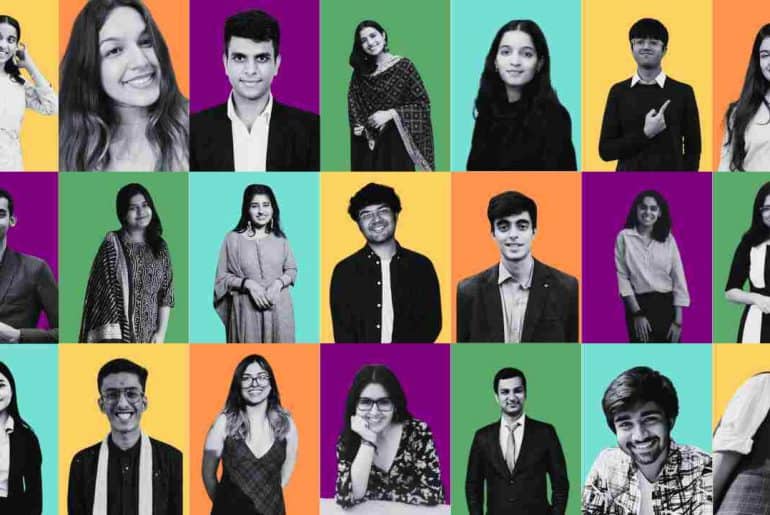
From time to time, we come across talented and awe-inspiring individuals who deserve their stories to be told. So, here is to 21 such amazing individuals who have achieved great feats in their lives before even tasting the 21st year of their life.

Tarun Jindal

Hailing from Chandigarh, Tarun Jindal is a B.Com. Honours student, CA Finalist, and President of 180 Degrees Consulting Club at Hindu College, University of Delhi. Having worked with esteemed organisations such as Dhwani Rural Information Systems, UNDP Malaysia, India Accelerator, and Infolso, Tarun is a high-impact achiever and go-getter, who believes in seeing every hardship as a source of inner fortitude and every failure as a test of perseverance. Their consistent commitment to making a difference in the lives of those around them has resulted in tangible social impact, particularly in the fields of healthcare, gender justice, and education.

Kartik Chauhan

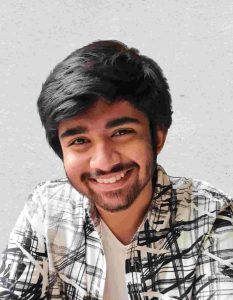
A driven start-up enthusiast, Kartik Chauhan is a student at Hindu College and founding member of Delhi Smart Protein Project (DSPP), a project under the aegis of the Good Food Institute to stimulate open-access research, entrepreneurship and climate action through food technology. Recently, he received a full-coverage scholarship to attend the Good Food Conference in San Francisco, USA in recognition of his achievements and contributions. At Hindu College, he in also the President of the Entrepreneurship Cell, leading a 50 member team, and conceptualising, and spearheading the rebranding of the Cell to encourage a ‘builder-centric’ approach to innovation. His other achievements include being a part of Ripen’s first invite-only Entrepreneur in-Residence program, and having built a ‘feedback marketplace’ that was selected in the W22 Batch of GSF Accelerator. With their passion for technology, he are looking forward to turning his own project into an actual start-up soon.
G Brinda

A third-year History Honours student at Lady Shri Ram College for Women (LSR), G Brinda has a passion for policy-making, social work, consumer behaviour, and research. They serve as the General Secretary of Youth India Foundation (YIF), leading 50+ interns at state level and guiding 250+ college chapter members, having founded the LSR, Gargi, IITM (IPU), and Hindu College Chapters of the social entrepreneurship platform. They are a compassionate and empathetic leader, who imbibes this ethos in every position of responsibility that they diligently pursue, including but not limited to State President at the Kerala Impact Consulting Council under WICCI, Content Head at the Global Youth India-Israel Forum, and Editorial Head at Prakriti LSR.

Anshu Narwal

A research-enthusiast and dedicated social volunteer, Anshu Narwal is a student of economics and mathematics at Lady Shri Ram College for Women (LSR). A district-topper and school-topper since their school years, Anshu has furthered their interest in academia by undertaking two impressive research projects in collaboration with professors from esteemed institutions such as IIM Kashipur and IIT Delhi. Their research interests lie in the critical topic of ICT Adoption and Inclusive Growth, addressing issues that are fundamental to our society’s development. Additionally, they are passionate about the fields of psychology and social work, serving as the Project Director for Project AASHA, facilitating workshops on hygiene, unsafe touch, and mental health.

Nirmanyu Chouhan

A Hindu College alum from the Batch of 2023, Nirmanyu Chouhan is a Programme Coordinator at Lokniti, Centre for Study of Developing Societies (CSDS), and former research intern at Newslaundry. Fascinated by the intricate interplay between politics and society, they are a honed researcher and journalist striving towards a more informed citizenry through their work. Beginning their journey within the staff writing rooms of the Hindu College Gazette, Nirmanyu’s experience with media houses such as DU Beat and Newslaundry have allowed them to engage with topics across politics, economy, society, and pop-culture. Their present work at Lokniti-CSDS centres the field of psephology, the study of elections and voting behaviour, which allows them to analyzing voter patterns and understand the pulse of the electorate.
Pulkit Sehgal

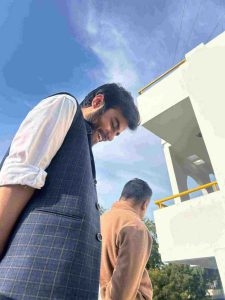
A 2023 Management Studies graduate from Shaheed Sukhdev College of Business Studies (SSCBS), Pulkit Sehgal is a driven consulting and finance enthusiast, who has been recognised as an ‘Emerging Leader’ by FinOak, India’s largest student-run finance community. They are the co-founder of Makes Sense, a mental health non-profit aimed at providing social and psychological support to university students. The initiative has impacted 450+  students through free therapy, and catapulted fruitful collaborations with Mindpeers, a Shark Tank-funded and Asia’s fastest growing mental-health platform. Furthermore, they are an Incoming Associate at Boston Consulting Group, and served as the President of 180 Degrees Consulting SSCBS during their college tenure.
Molina Singh

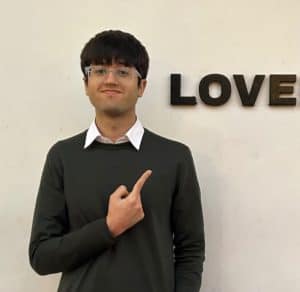
An english literature and history afficionado, Molina Singh is a 2023 alum of Gargi College and founder of Delhi Reads, a 1500+ member citywide book club that has secured successful partnerships with popular coffee chains, bookstores, and publication companies. During their college tenure, they held the position of President of the English Creative Writing Society and spearheaded the organisation of 4 varsity-level fests at Gargi College, a feat of uncprcedented calibre and visionary execution. Their staunch commitment to social-political principles and impact-led community service have made them one who is not afraid to voice their opinions, whether it be in expressing solidarity with the IPCW Fest victims or in their capacity as a student-journalist at DU Beat.
Pranjal Jain

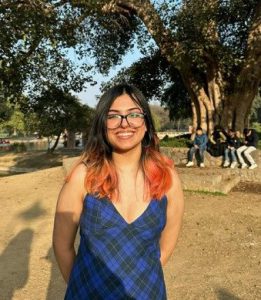
In 2023, Pranjal Jain graduated and immediately embarked on a journey to catalyze positive change. This drive motivated them to pioneer the establishment of India’s inaugural Bridges for Enterprise (BfE) chapter at SSCBS, a milestone aimed at fostering entrepreneurial endeavors with a societal impact. Alongside, they engaged in two consulting and financial advisory projects with socially conscious startups in Nigeria and the Philippines, demonstrating the tangible real-world impact achievable through collaborative initiatives. Moreover, recognizing the pressing need for mental health support among college students, they co-founded Makes Sense, a nurturing and inclusive platform dedicated to destigmatizing mental health discussions and providing essential assistance to those in need.
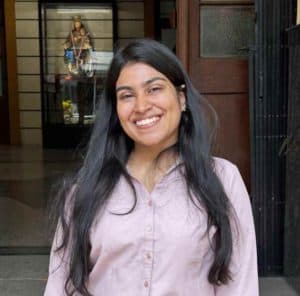
Manvi Bhatt

Having graduated in 2023, Manvi Bhatt was honored to receive the distinguished Sultan Chand Memorial Scholarship Award, recognizing their exceptional academic achievements. Fueled by their entrepreneurial spirit, they actively participated in the development of Mark & Tonic, a digital marketing startup venture, where they served as a founding member. In this role, they led the integration of live projects to address strategic consulting and digital marketing needs. One of their accomplishments is winning the BrAINWARS undergraduate case study competition, a prestigious event hosted by Bain and Company.

Jayesh Rungta

A 20-year-old from Kolkata, Jayesh Rungta recently graduated with a bachelor’s degree in commerce from Hansraj College, University of Delhi. Securing a position as a Business Analyst at the prestigious management consulting firm Kearney, they stand out as the sole and first undergraduate hire for a front-desk consulting role from their college and one of only three selected across the University of Delhi. Demonstrating their commitment to social impact, they served as the Convener and Founding Member of Project Parivartan from January 2021 to March 2023, overseeing a yearly Financial Literacy Drive that reached over 10,000 individuals across three editions.
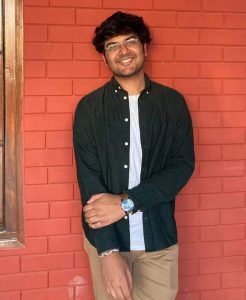
Anjana Jose

As a current psychology student at Jesus and Mary College, Anjana Jose wears multiple hats as an entrepreneur and podcast host. Since June 2023, they have served as the Founder and CEO of BooKing, a platform dedicated to promoting sustainability through the use of second-hand books. Simultaneously, they also host the OnlyGeeks Podcast, a show tailored for college students, which has garnered a listenership of over 100 individuals from diverse backgrounds since its inception in June 2023.

Gavish Lohat

Currently enrolled as a political science student at Hindu College, Gavish Lohat stands as the 1st Raj Bhargava Foundation Scholar, an honor bestowed upon them in 2022. This prestigious scholarship provides them with ₹75,000 annually throughout the duration of his undergraduate studies, along with a tablet. In addition to their academic pursuits, they are also the founder and host of ‘The Skeptical Student Show’ Podcast in collaboration with India Film Project, where they engage in thought-provoking discussions.
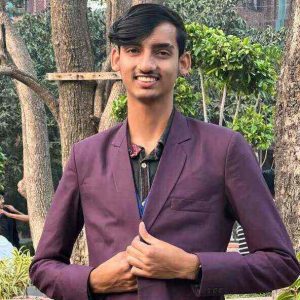
Punya Malhotra

As a final year Economics student at Hansraj College, Punya Malhotra stands as the lone Indian fellow selected for the fully-funded Young Leader’s Fellowship program in 2023 by MCW Global, USA. Their previous roles include working at the Federation of Indian Chamber of Commerce and Industries (FICCI). Additionally, they were featured in the Voices of the Young series by Dr. Subodh Mathur, where they shared insights on optimizing the college experience. As part of their research endeavors, they authored a quantitative paper titled ‘Urban Planning and Gender Inclusivity.’
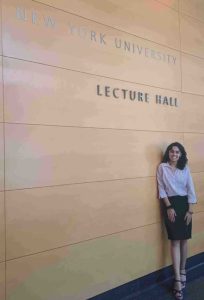
Apoorva Rathore

Having graduated from Lady Shri Ram College with a degree in B.Com, Apoorva achieved remarkable success by emerging as the National Winner of the EY NextGen Women India competition. This accomplishment propelled them to represent both India and their university at the Global EY NextGen Women Competition held in London. Following their academic achievements, they ventured into the professional realm as a Research Analyst at the Indian Institute of Science. Here, they dedicated over a year to working within the Strategy Team, focused on developing a robust business model for an in-house eVTOL (electric air taxi) project.

Pratham Changoiwala

Pratham Changoiwala is a third-year student of Shaheed Bhagat Singh College, currently pursuing a Bachelor of Commerce. He is interning as an executive assistant at Niamh Ventures, an investment banking firm based out of Gurgaon, Haryana. Alongside that, he is the youngest speaker shareholder of HDFC Bank’s AGM and his experiences were shared as a part of Hindustan Times’ Live Mint as a part of their Gen Z interview series. He has been selected as a delegate for Harvard’s prestigious HPAIR Conference. He was also part of the Sustainable Stories Project, which involved interacting with eco-friendly brand manufacturing units and their business founders. He is also Operations head of Shaheed Bhagat Singh College’s Entrepreneurship Cell.
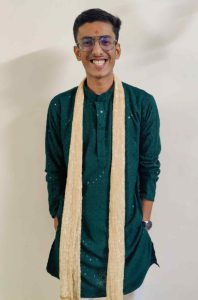
Bhavika Dabur

Bhavika Dabur is a third-year student at Sri Venkateswara College, pursuing a Bachelor of Commerce. They are currently working as a training manager and social media advisor at Aspirant Learning. Previously, they had experience in educational consultancy and soft skills training.

Falguni Mahajan

Falguni Mahajan was a political science student at Lady Shri Ram College. Currently, they are the founder of Mandonna Research Consultants, which focuses on the promotion of gender equity through academia and research work. Previously, they had interned as a researcher at Jawaharlal Nehru University, Policy, Politics and Government Foundation as well as with the Aam Aadmi Party. They hold C1 level certification in the French language as well.

Bhavya Sood

Bhavya Sood was a student at Shaheed Sukhdev College of Business Studies, having completed their BBA in Financial Investment Analysis. They are the co-founder of Project Bridgeway which aims to democratize access to education and guide students, through consulting, which has assisted over 10,000 students across several colleges. They have also served as the first elected deputy chair of IFSA’s Indian wing.
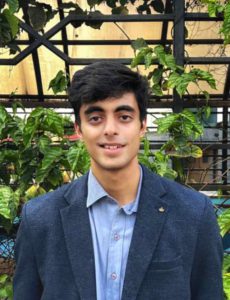
Anjali Batra

Anjali Batra is a political science student at IPCW, Delhi University, who is also pursuing a diploma in Psychology. She is the founder and president of Project Mehviyat, which focuses on empowering victims of abuse in South Asia. She was also recognised as a U21 Global citizen, due to her advocacy for Sustainable Development Goals and is serving as the deputy chairperson of the SDG Council, Global Youth India.
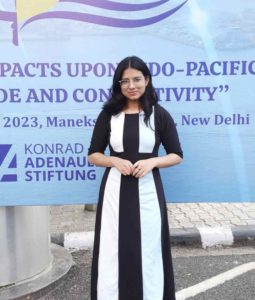
Tanusha Arora

Tanusha Arora is currently in the final year of Bachelor of Management Studies at Shaheed Sukhdev College of Business Studies. Arora has interned at Havells India, in the field of e-commerce as well as a research and market intelligence intern at EXL. She secured a placement in the capacity of an Associate at Samagra | Transforming Governance. She was selected under India Top 14 CEO for One Month Challenge by the Adecco Group. She has recently been felicitated with the coveted Linkedin Top Voice (blue badge) for her insights on marketing, communication and adulting. Moreover, she has been featured in Top 29 Leading Voices of India 2024 by BTalkz. She has a growing community of 7000+ followers and over 6 lakh+ impressions as yet.

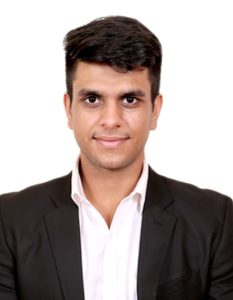
Parv Jindal

Parv Jindal is a student of Shaheed Sukhdev College of Business Studies, completing their Bachelor of Management Studies. They founded the India chapter of Bridges for Enterprise, an international impact consulting organization. They have also interned with companies like Blinkit, MakemyTrip, Zomato etc. Jindal is acting Vice President of SSCBS’ Student Council.
Read Also: DU Beat 21 Under 21: Of Dreams and Determination (2023)


As DU gears up for the fest season, the supposed fortress of security seems to crumble each year. Are women’s colleges equipped with the required security measures?

For the past few years, Delhi University (DU) has consistently witnessed incidents of unwarranted male trespassers into women’s colleges every time there is a fest or any event for that matter, with students being sexually harassed, catcalled, and their safe spaces violated. In light of such incidents, the University issued an advisory with guidelines to be followed by all colleges during events likely to be attended by outsiders. Between April 2023 and January 2024, the notifications have been updated thrice ahead of the upcoming college fest season.

Surely, such an advisory may appear to be the need of the hour and perhaps even reassuring, but is it the case that the University has finally recognized the persistence of such pressing issues, or is the advisory, just like security in most women’s colleges, merely performative? Isn’t it high time that the University’s administration, instead of issuing such performative guidelines, actually addressed the larger issue of male entitlement, beyond just ensuring their students’ safety? College spaces, be it women’s colleges or co-educational spaces, should certainly not be places where women (or anyone for that matter) live in a sense of fear, apart from obviously the external world beyond college boundaries. 

It is also important to note that some of the security measures, for instance, the installation of CCTVs, pre-registration through Google Forms, and deployment of security personnel, have already been in place in many colleges, and yet there have been repeated violations. Most instances have been when the ones who “lawfully” entered the college premises became perpetrators of assault. So, a No Objection Certificate (NOC) is completely ineffective when it comes to the “male gaze” and entitlement towards women’s spaces in a patriarchal set-up.

“Because our college restricted male entry this year, apart from the participants, it did make the fest safer than last year, where a lot of chaos had ensued with guys passing lewd remarks at female students performing during the dance competition. Although such incidents didn’t take place this year, I believe restricting male entry is just an instinctive response to a much larger problem, that is, patriarchy, which is so deeply rooted in our society. Such measures end up putting the onus on women to protect themselves, as apparently “boys will be boys.” If the administration is unable to restrict students inside the campus, their immediate response is to just stop male entry. We need some long-term solutions to such problems, and sensitization of not just students but even the faculty needs to take place to uproot the actual cause of this problem.”

-said a student from Janki Devi Memorial College.

Students believe that the advisory is just the bare minimum, and the larger problem needs to be taken into account while ensuring security in women’s spaces.

Google Form registrations certainly do not amount to character screenings; thus, the University has no appropriate solution to this issue. At the college’s annual fest last year, the administration, as a security measure, made it mandatory for every male attendee to have a pass with a particular student’s name on it to ensure that they were invited by any of the students. Also, it was ensured that no guys entered the fest in groups. It’d be great if there was security present not just at the gates but inside the college, where a large crowd usually gathers, because that’s where fights usually break out. It would have been great if the University advisory came with a preface condemning the actions that took place not just at IPCW last year but what has been happening in women’s colleges almost every year. They need to realize that such incidents mostly just take place in women’s colleges because patriarchy allows men to feel entitled to women’s spaces and men fear other men, rather than respecting women as equal human beings.”

-remarked a student from Maitreyi College when asked about safety in women’s colleges ahead of the fest season.

A student from Indraprastha College for Women (IPCW) spoke about how the college’s environment has changed significantly since the unfortunate incident at last year’s fest.

The college administration, just like the administration in almost every DU college, loves to put the entire blame on the student body, despite the Student Council being a mostly performative entity in our college now. Since the college is busy with its centennial celebrations, we are not even sure if the annual fest ‘Shruti’ will even take place this year. The advisory issued by the University just goes on to show that the onus of protection is always going to be put upon women rather than holding the perpetrators accountable. Despite there being extensive measures like Google Form registrations and screening of bags at the gate, they were certainly not enough to prevent overcrowding and its aftermath. Our college did not have enough security to handle such a large crowd, and sadly, it took the University that incident and many more past occurrences in women’s colleges to even issue an advisory, which was also the bare minimum, to say the least.”

Thus, the question is: are women’s colleges even equipped with effective security ahead of the fest season, or is just locking up women and not questioning the root cause of the problem, which is patriarchy, going to be the immediate response from the administration in most colleges? 

Read Also: Who Protects Our ‘Safe’ Spaces?

Featured Image Credits: Hindustan Times

Gauri Garg

[email protected] 


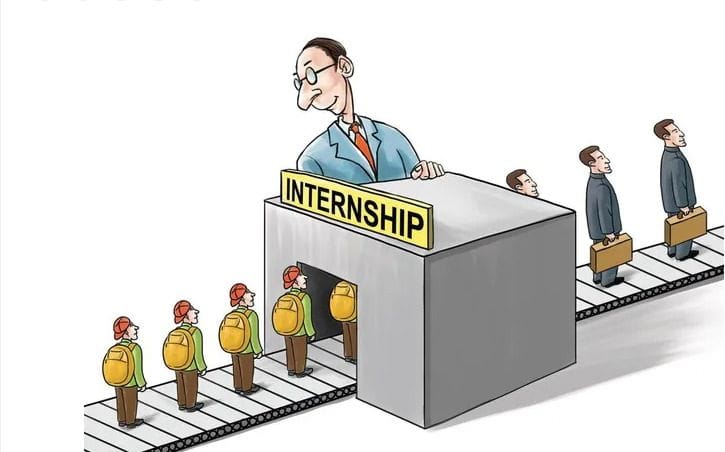
In the dynamic and competitive landscape of the professional world, internships stand as the gateway to a transformative and enlightening experience for aspiring professionals. The journey from academia to the workforce is often paved with uncertainties, and internships emerge as a crucial stepping stone that not only bridges the gap between theory and practice but also opens doors to unparalleled learning and growth.

We are about to embark on the mid-year crisis part of college life now. First-year students who have just gotten the jist of college life will now start wondering about hopping onto newer opportunities other than college societies; second-year students will go down a spiral of dread wondering how time flies and that they are so close to graduating; and third-year students will do anything in the world just to add more things to their CV. The answer to all these people’s quests will be internships. Here’s the perfect guide to deciding what might work best for you:

If we lived in a utopian world where we had endless amounts of time and people did things only for the experience and new adventures, I’d ask you to do internships for the sake of it. But let’s be real: nobody has the time to add extra things to their already busy schedule just for fun unless it benefits them in the long run. To put it simply, think about your life goals. If you are someone who will start looking for a job after graduation, an internship will surely help you. College internships don’t give you a lot of exposure, but they do make you familiar with a “work environment” and get you connections with some of the renowned names in the industry. If you wish to pursue a postgraduate degree, then, depending on what discipline you master, you can decide if you should spend time at the graduate level on internships or allocate that time to preparing for competitive exams. Most people who go for CAT consider it necessary for applicants to have internship experience. Many colleges, especially foreign ones, include a stipulated work experience requirement for applicants. It is often hard to pinpoint right now the job that you are sure to love in the future, but I have found it helpful to at least eliminate options that you are not at all inclined towards. It helps to narrow your horizons and helps to get a clear understanding of your interests.

When you are working as a full-time employee, the company needs you as much as you need it. But the paradigm shifts in the case of interns. Interns find themselves needing the company a lot more than it needs them. Interns can be easily replaced by anyone from the hundreds of others seeking that position, willing to work for free. Thus, the demand for a stipend, however meagre, is always silenced in exchange for the value the intern adds to the company. Most internships are unpaid, and while the prospect of them doesn’t seem very attractive, some of them might be worth it. Internships at startups usually offer excellent work environments, but the work may be a little overbearing at times. Since the people at startups are closer to your age, they tend to understand your situation better and offer a curated, personalised work environment for you. An internship at an NGO is one for a great cause, but it has the worst clauses. NGOs require your physical availability, and most of the work there is based on networking and social media content creation. The work undertaken by NGOs is fueled by an unwavering dedication to altruism, a selfless devotion that transcends personal ambition. The most popular unpaid internships are government internships, and the chance of anyone getting in is minute because they are open to students across all colleges for all years. However, they are known to shine the brightest on anyone’s CV. The idea here with both government internships as well as internships at big companies is that they’ll filter you out from a series of rigorous rounds and interviews, and at the end of the day, internships do not matter as much as where you intern does.

After you have figured out which type of internship suits you best based on time constraints, interest, and pay, it’s time to start looking for one! The first place for you to go is your own college’s placement cell page. Here, you are bound to find one that might work for you, plus if this is your first internship, it will be easier for you to navigate through the recruitment process with the help of the people from your college. If you have a particular company or organisation in mind, you’ll have to be on the lookout for their posts on LinkedIn as well as their other social media handles. There are some apps and websites like Internshala and LetsLearn that have a great set of opportunities for students and also assist with CV and resume building. All year long, volunteering opportunities are offered by organisations such as PETA, UNESCO, and others that provide internships in event management and outreach programs. Many YouTubers would also tell you a hack to email your resume and cover letter to any organisation and gaslight them into thinking that they did put out an internship opportunity and you’ve sent in your response. I’m not sure if that has ever worked for anyone, but what’s the harm in trying?

Internships play a pivotal role in shaping the professional journey of college students. Beyond providing a first-hand glimpse into the workings of industries and companies, internships offer invaluable opportunities for skill development, networking, and personal growth. They bridge the gap between academic knowledge and real-world application. What sets apart a “good” internship opportunity from another is how well-suited it is for the individual. The idea of an internship is to give you a chance to experiment with the real world, and if you don’t allow yourself to fail, no internship can ever be worth your time. So, breathe in, breathe through, breathe deep, and breathe out!

You got this!

Read Also: Unpaid Internships: Are they Worth it?

Image Credits: People Matters

Saanvi Manchanda

[email protected]

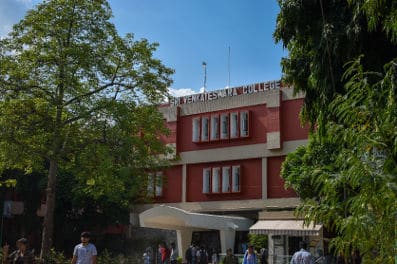
From the recurrence of several ‘misogynistic incidents’ perpetrated by society members, negligence of supervision, to ‘targeted bullying’, we uncover the dark side of Sri Venkateshwara College’s Film-making Society, ‘Effulgence Films’.

Sri Venkateshwara College’s film-making society, ‘Effulgence Films’, is one of the reputed societies within the Delhi University circuit, with several productions across the year. However, beyond the disguise of ‘galaxies of creativity’ lies the truth about the ‘toxic and horrible’ working space that society provides, as several sources allege.

Flashing back to January of the present year, a student from Sri Venkateshwara College, in conversation with DU Beat, claims that a ‘highly problematic incident’ took place within the society circle, which was reported to the Internal Complaints Committee with the signatures of several students within the society. Following this, several members of the society who were ‘traumatised’ by the event left the society. The Internal Complaints Committee of the college, after conducting a six month-long sequence of hearings, removed the perpetrators from the society in June- two of them, who were also a part of the core within the FilmSoc.

Moreover, the other societies within the college had also released a Statement of Condemnation following the ‘horrible incident’. Some parts of it read as follows:

As of today, 11 members of Effulgence, The Filmmaking society of SVC have taken the decision to leave the society post after a series of events over the course of the past few months.

There has been a culture of toxicity pervasive in Filmsoc centred around misogyny. Female directors and writers were constantly spoken over and have had projects taken over by arrogant men whose memberships weren’t removed even after being given repeated warnings as they were considered “cherished assets”. The general nature with which women who spoke up were treated, how female members of the core were called “token women” and mocked behind their backs, called trash “to be cleaned out,” and how instances of objectification were treated as dismissible, is utterly appalling.

However, despite being legally removed from the society by the college ICC, the perpetrators continued to be a part of official FilmSoc events like the recent Indian Film Project (IFP), openly participating in film shootings and so on.

“The convenor of the society was also present throughout the ICC hearings. However, no action was taken against the perpetrators re-entering society-circles despite being banned by the ICC.”

A student at SVC.

Despite legal procedures kicking in and several call-outs, the society space still remains a home ground of toxicity, with rampant groupism, the core isolating other core members, targeted bullying, and the list goes on.

 “The new core has also been formed out of the friends of the previous perpetrators, who are extremely close with each other and sideline the work and opinions of other members. The society has two Presidents and one of them was removed by the core for speaking out against their sexist behaviour. It is a horrible space to work for women, and if anybody raises their voice, they condemn it with “Zyada woke mat bano!” (Don’t be too woke).”

Sources within SVC.

Students also claim that the Filmmaking society has been a trap for this cycle of toxicity for several years, but recent events show that ‘they can do anything and everything and get away with it’. Members are not given due credit for their ideas if they are not too close with the core, and the January incident is often shoved under the carpet with “Ek hi incident tha, forget about it!” (It was just one incident,;forget about it!).

“But that one incident left so many within and without the society traumatised.”

alleges a student at SVC.

Pin-pointing at this culture of toxicity, the statement of condemnation further elaborates that:

“The focus of the society has also severely detracted from filmmaking, with the creatives constantly undermined and put second to those with logistics prowess. Apart from this, the dirty politics of keeping friends of friends in power as well as recruiting and raising many inactive members within the society just for the “vibes” were unjust and demotivating.”

Hitherto, coming to the “vibes”, the society has also been proving to be an unfair space for the freshers and new-recruits who are unaware of the ongoing-climate of the FilmSoc.

“Considering how freshers are new to the college climate, all societies in the college must strive to create a safe atmosphere for them, as freshers are unaware of the power dynamics existing within societies and are desperate to do anything in order to join the society. However, in an ice-breaking event of the FilmSoc, freshers were asked to go down on their knees and propose to seniors and dance with them, which could be uncomfortable for any newbie in college.”

– a student at SVC.

Moreover, students also pin-point several ‘triggering instances’ taking place during the recruitment process of the FilmSoc as well:

“The core members were drunk during the recruitment process and were openly consuming alcohol. Also, the interview questions were nowhere related to FilmSoc, and they were like, “Are you into drugs?”, “Do you drink?” or “Do you have a flat where we can party?”. What sort of climate is this society going to provide to the new-comers?”

The Internal Complaints Committee of the college claims that no incidents were reported after the procedures of the January incident. However, students claim that they were too ‘traumatised and triggered’ to have the courage to talk about such incidents in fear of ‘targeted bullying’.

The Statement of Condemnation concludes by saying that:

“We have time and again tried our best to endure everything and work professionally with these people. However, we were disrespected amongst their circles and within the larger society. So, at the very least, we seek to make this public now, as it is only fair that in the future, people will be aware of the culture that permeates this society and cognizant of the environment they are interacting with.”

While societies form an integral part of the ‘DU culture’ and a beneficial part of the self-development and growth during college years, unhealthy spaces can leave a lasting impression on many. It is imperative to raise your voice against unjust practices and foster safe spaces within campus.

Read Also: North-Eastern Student of Hindu College Faces Racially-Motivated Attack

Featured Image Credits: Arush Gautam for DU Beat

Priyanka Mukherjee

[email protected]

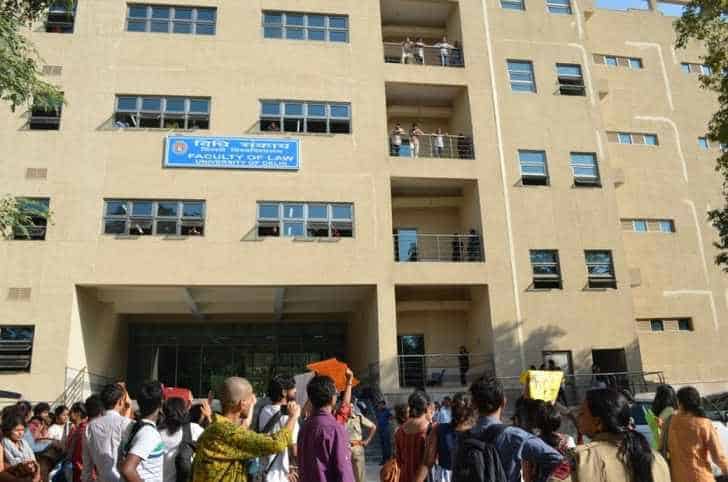
Delhi HC has rejected DU’s preference for CLAT instead of CUET for its 5-year law courses. The respondents of the PIL are DU’s Faculty of Law, Vice Chancellor of the University, UGC and Union of India through the Ministry of Education.

 On Thursday, August 17, the Delhi High Court questioned Delhi University on its decision to admit students to its new 5-year integrated law courses based on the Common Legal Admission Test (CLAT-UG) 2023 results. A petition submitted by Prince Singh, a student at DU’s Faculty of Law, challenged the University’s announcement of the 5-year integrated law courses, beginning in the academic year 2023-24. The Public Interest Litigation (PIL) filed by him sought admission to these courses through CUET UG 2023, following the directives of the Universities Grant Commission (UGC) for central universities. The Court granted Delhi University and the Centre time until the next hearing on August 25 to file their responses to the petition.

The bench, which included Chief Justice Satish Chandra Sharma and Justice Sanjeev Narula, stated that the Government of India, through the National Education Policy, had decided that admissions to all Central Universities would be done through the Common University Entrance Test (CUET) introduced by the Ministry of Education (MoE) and that Delhi University is “not special.”

You are not special. There is a national policy. If 18 other central universities are relying on the CUET scores for admissions, why is DU not doing the same?” the bench remarked.

 The court granted the University’s counsel time to file a counter-affidavit before the next hearing on August 25. The Union of India has also been given time to “file its reply” or seek “appropriate instructions in the matter.” However, the court stressed that if no counter-affidavit is submitted by the next hearing date, the matter will be heard on the question of grant of interim relief.

Delhi University’s counsel, Advocate Mohinder S Rupal, contended that the Vice-Chancellor, Prof. Yogesh Singh, formed a special committee of specialists, which delivered a detailed report to the Academic and Executive Councils of the University. During the hearing, he argued that the University only launched the 5-year integrated law degree this year and that if a stay is granted on the operation of the August 4 notification, the entire academic year will be wasted. He alleged that DU had not yet provided a schedule or timeline for admissions to its law courses.

It is not as if we are rushing the process. We haven’t started the admission process yet. The University will not issue any advertisement regarding applications for CLAT-based admissions to the 5-year law course till the next date of hearing.”- stated DU’s counsel, Mohinder Rupal.

 The PIL was filed in response to a notification issued by Delhi University on August 4 announcing the introduction of the Five-year Integrated Law Courses- B.A.LLB (Hons.) and BBA.LLB (Hons.), admissions to which would be undertaken by the CLAT scores of the aspirants.

“The Bar Council of India in its letter dated 26.07.2023 has accorded its approval of 60 seats for BA LLB (Hons) and 60 seats for BBA LLB (Hons). Admission to BA LLB (Hons) and BBA LLB (Hons) shall be based on merit in the Common Law Admission Test (CLAT) UG 2023 result. The classes for BA LLB (Hons) and BBA LLB (Hons) courses will be held at the Faculty of Law, Kanad Bhawan, North Campus, University of Delhi. The online application for admission to BA LLB (Hons) and BBA LLB (Hons) courses will be announced by the University soon,” stated the notification by Delhi University.

 The petition contended that by issuing this notification, Delhi University has placed a “wholly unreasonable condition” that violates the Right to Equality under Article 14 and the Right to Education under Article 21 of the Indian Constitution. The plea stressed that CUET is conducted in multiple languages while CLAT is held only in English, which leads to an admission advantage for a specific sub-group at DU’s Faculty of Law.

That the condition imposed for admission to the five-year integrated law courses at the Faculty of Law, University of Delhi, is wholly unreasonable and arbitrary. It lacks any intelligible differentia and has no rational nexus with the object of admission to the five-year integrated law courses at the Faculty of Law, University of Delhi,” the plea by Singh stated.


Read Also: Delhi High Court Seeks the Stand of the Centre and University in Opposing the New Admission Criteria – DU Beat – Delhi University’s Independent Student Newspaper

Featured Image Credits: Bar and Bench

 Manvi Goel

[email protected]


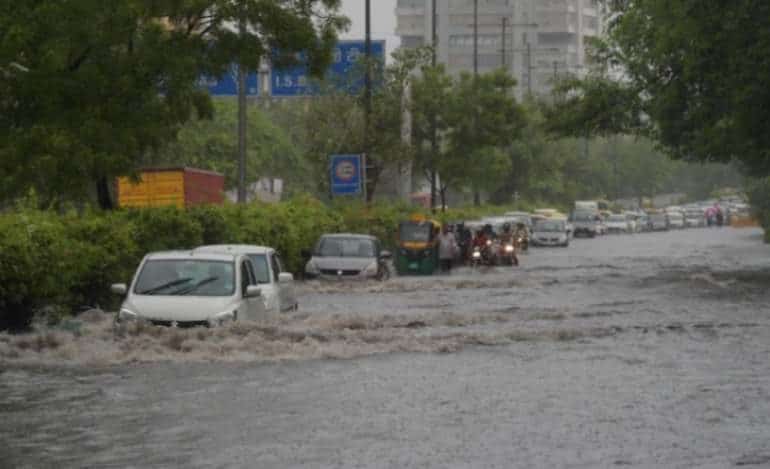
Yamuna’s water level exceeded the danger threshold and rose to an all-time high of 208.8 meters, flooding important regions and forcing the closure of schools and institutions around the city. The University of Delhi announced the postponement of exams on July 13, 2023, putting students into a tailspin of uncertainty.

On July 13, 2023, the Yamuna reached an all-time high water level of 208.8 meters, forcing floodwater to reach Civil Lines, Kashmere Gate, ITO, and numerous other places. Three to four water treatment facilities had to close as a result of the flooding, which caused an acute shortage of water in one-fourth of Delhi. The Delhi government also declared that all schools and institutions in flooded regions would be closed, leading to the theory exams scheduled on the 17th, 18th and 19th and practical exams scheduled on the 14th, 15th, and 16th being postponed.

By the decision taken by Delhi Disaster Management Authority on 13.07.2023 as communicated by the Press Release dt. 13.07.2023 of Raj Niwas, Delhi, the University shall remain closed w.e.f. 14.07.2023 to 16.07.2023. The examinations scheduled during this period stand postponed” – Read the notice released by the University

The notification was followed by numerous fake exam notices. A few of the messages included the cancellation of all exams and fake postponement dates. This created a great deal of confusion among students appearing for exams.

DU needs to reel in the problem of fake notices. It was getting out of hand especially for the exam postponement issues.” – Hiten Dalmia, a first year student  of BSc.(H) Mathematics 

There were other problems alongside the fraudulent notices. A few of the student areas also experienced flooding, locking individuals inside. A sub locality of Mukherjee Nagar named Hakikat Nagar was inundated with contaminated drain water, which caused a power outage and a subsequent water problem.

The entire place had a gutter-like odour. We had to stay in our apartment for extended power cuts and without water because we had nowhere else to go. Our parents were worried that we wouldn’t get sick from the area’s drain water. It was terrible.” -Rahul, a UPSC aspirant and a graduate

Hakikat Nagar, Mukherjee Nagar

Up until Sunday, the capital’s flooding problem, power outage, and water shortage persisted. The situation in these locations got better as the Yamuna’s level steadily dropped. But for students who will take examinations in the following weeks, this relief was quickly followed by a little shock. The new dates for the postponed exams were announced by the University of Delhi on Monday. This announcement was received with conflicting emotions. Some people enjoyed it since it gave them more time to study, others felt upset because their exam gaps shrunk, and yet others were outraged because they had to cancel their tickets and plans to return home for the holidays.

The new date sheet is worse. I have my exams on 25,26, 27, and 28. Four continuous exams. How am I supposed to study? I reach home by 2 pm and I have an exam the next day at 9 AM?” – Tisha, a first-year student of B.com. (H)

Some students said this postponement gave them extra time to study and cover-up.

As we know the momentum to study in college develops only a few days ago so for me this postponement was a blessing. I enjoyed this extra time too instead of studying but now I am back on track.” – Shreeya Ahuja, a first first-year student of Bcom. (P)

Not all of the issues stemmed from the decreasing gap. The majority of the outstation students have already purchased tickets to return to their home cities. Students were compelled to either change their plans or cancel and buy a new ticket later due to the extension of the theory exams until the second of August and the practical exams until the fifth of August. Some were forced to pay cancellation fees because they had no other choice; others were unable to purchase tickets and were left with no choice but to purchase a train ticket under the “Tatkal” category. Many students have PG and broker contracts that expire on July 31. Often, PG owners and landlords impose extra charges on students when they stay past their contracts – thus adding another expense to all students. 

The repercussions of these changes in the examination schedule have caused several students inconvenience and financial problems, emphasising the need for better planning as well as an understanding of students’ circumstances in such situations.

Image Credits: Business Today, Times of India

Read Also: Climate Change se Aazadi: The Delhi Chapter of the Global Climate Strike

Dhruv Bhati

[email protected]

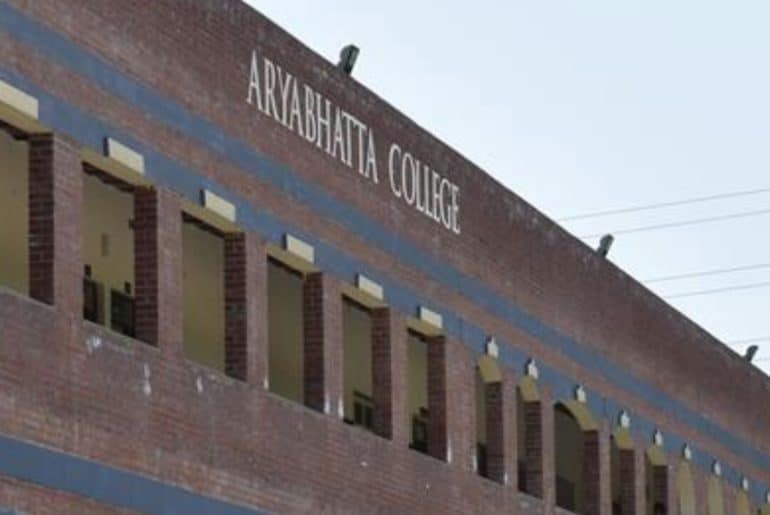
A 19-year-old student from the University of Delhi was allegedly stabbed to death outside of Aryabhatta College.


On Sunday, in front of Aryabhatta College in South Campus, a 19-year-old Delhi University student, named Nikhil Chauhan,  was allegedly stabbed to death. A week ago, one of the accused had allegedly harassed a woman friend of the victim, to which he had objected, said a senior police officer in conversation with The Hindu.

On Sunday, around 12:30 pm, the key accused and three of his accomplices met with Nikhil outside the College and stabbed him in the chest, the police stated. He was later rushed to the Charak Palika Hospital, where he was declared dead. CCTV footage has surfaced online, which, captured near the college, purportedly showed the accused escaping on scooters and a bike.

While talking to The Hindu, Nikhil’s father had this to say

We deserve justice, this is not what we send our children to school for.” He further stated, “I received a call at 12 p.m. that Nikhil has been injured, I rushed to the hospital, but by the time I reached, he passed away.”

The victim, who has been survived by his two brothers and parents who live in West Delhi’s Paschim Vihar, worked as a part-time model. His parents have said that he loved modelling and acting, taking part in many competitions in the city.

My son was also into modelling. He told me that he also wants to study political science to have vast knowledge about our country. He had a bright future. We don’t know what to do now,”

– said Mr Chauhan.

A case under IPC 302(murder) has been registered and an investigation is ongoing to apprehend the accused-who have been identified, the police have said.

“It is very unfortunate and sad that a young life has been lost and that also just outside the college where students come to learn and make career.”  said a Delhi University spokesperson in a statement to The Hindu.


Feature Image Source: DU Beat Archives

Read Also: Mismanagement and Arbitrary Decisions taken at Meghdoot Hostel

Vanshika Ahuja

[email protected]


The residents of Meghdoot Hostel have expressed dismay upon their living conditions and have alleged that various arbitrary decisions have been taken by the authorities. The accusations have mostly been levelled against the former provost of the Hostel, Dr Pratibha Mehta Luthra, who has reportedly recently retired from her Hostel duties.  

Meghdoot Hostel is one of the two University hostels for women in North Campus. It primarily admits masters and PhD students. It has been reported that after the pandemic, quite a few hostels were not well equipped to take in fresh students. In Meghdoot Hostel most students were admitted as guest residents and were asked to pay a higher fee. It has been alleged that there was complete lack of transparency in the admission process. The basis on which students were admitted into the hostel is unclear and whether university guidelines were followed is in question. Reportedly, a disproportionately high number of science students, particularly students from Dr B.R. Ambedkar Center for Biomedical Research – the institution in which the former provost is a faculty member-were given permanent seats.

Students who were not given a permanent seat were asked to vacate on a short notice. Those who were about to complete their courses requested for brief extensions so that they could be allowed to stay at the hostel until the completion of their courses. Most of these requests were denied. Asking students to vacate their rooms on a short notice caused immense disruption as many of them did not have any other place to stay.

“My dissertation submission was on the 15th of June. I simply needed a 15-day extension. My application for extension was approved by the Department Head as well. Yet, the provost denied me an extension and refused to listen to my concerns” – a former resident of the hostel who wishes to remain anonymous

The former provost had reportedly undertaken the task of establishing a Saraswati idol in the Hostel premises. While the hostel often fell short of ensuring basic necessities for the residents, it was alleged that a considerable amount of the funds was spent in the establishment and maintenance of the idol. Multiple Hindu religious events such as havans and pujas were organised and it has been alleged that the students were coerced to participant in them. However, this has been refuted by a resident who stated that although religious gatherings and events were organised, attending them was a matter of choice. After the establishment of the idol, the hostel authorities stopped non-vegetarian food from being served in the mess. When this decision was met with complaints, the provost reportedly reasoned that non-vegetarian food cannot possibly be allowed in the hostel premises as the piety of the space had to be maintained due to the presence of the idol.

“We were repeatedly asked to participate in the events organised by the hostel. We were told that non participation in these events would affect our applications for permanents seats. Women from all over the country, from diverse cultures and different faiths, reside in our hostel. They were all asked to attend havans early in the morning. The prejudice that the provost had was very evident. – a resident of Meghdoot hostel who requested to remain anonymous

DU Beat contacted the members of the managing committee and the former provost to respond to the allegations.

“Thank you for kindly communicating with me on the matter. I held a meeting with the students on 2nd June 2023 in the matter. The response from them has been communicated to the management committee. Everything has been done as per rule and based on the request from the students.”  – Dr Pratibha Mehta Luthra, Provost, Meghdoot Hostel

Reportedly a new provost has been appointed to the hostel. The students hope that their concerns are taken care of with greater sincerity in future.

Featured image credits: Joon Square

Read also – https://dubeat.com/2023/04/30/lsr-hostel-student-suffers-injuries-after-ceiling-collapse/

DU Beat

DU has launched three new B. Tech courses under the Faculty of Technology from the upcoming academic session, 2023-24, added with several benefits and incentives from supernumerary seats for single girl child to reimbursements upon purchasing laptops.

The University of Delhi besides introducing three B. Tech courses- namely, B. Tech Computer Science and Engineering, B. Tech Electronics and Communication Engineering, and B. Tech Electrical Engineering- is also offering several incentives along with the programmes. Supernumerary seats for single girl child, scholarships for underprivileged students, and laptops for all are some of those incentives, as underlined by Vice-Chancellor Yogesh Singh on Wednesday.

Addressing a press conference, the Vice-Chancellor also mentioned that the new academic session shall begin on August 16. Expanding more upon the B. Tech programmes, he went on to add that 360 students would be admitted to the engineering curriculum, with 120 seats in each course while a seat in each of these three programmes will be given to a single girl child in the form of a supernumerary seat. Moreover, every student enrolled in B. Tech will be reimbursed up to Rs. 50,000 on the purchase of a laptop.

He said that the University will also introduce a Financial Support Scheme (FSS) to extend the benefits of equity and access to quality education to economically weaker students seeking admission to BTech programmes. Under this, candidates whose parents’ income is Rs. 4 lakh or less will be given a 90 percent fee waiver at the time of admission while candidates whose parents’ income is more than Rs. 4 lahks and less than Rs. 8 lahks will get a 50 percent fee waiver at the time of admission. The University has also included a supernumerary quota for orphan students this year.

The B. Tech programmes would be designed in such a manner that there would be a minimum of 50 percent weightage given to the major subject area of study with a maximum of 65 percent weightage. The remaining weightage would be to the minor subject areas of study, the Vice-Chancellor added.

Not only that, students will have several exit options with the National Education Policy. Students who will have completed one year of study with requisite credits will be awarded a certificate, those with two years and requisite credits would be provided with a diploma, those with three years and requisite credits will be granted an advanced diploma while those completing all four years of study along with a proper number of credits will get a B. Tech degree.

Lastly, the Vice-Chancellor mentioned that the Faculty of Technology will be situated on the North Campus of DU for logistic support and proximity to other departments. Besides the B. Tech courses, the university will also be launching a five-year LLB programme along with ITEP courses from the upcoming academic year.

Featured Image Credits: DU Beat Archives

Read Also: DU to Conduct PhD Admissions via CUET from Academic Year 2023-24

Priyanka Mukherjee

[email protected]