Tag

college

Browsing

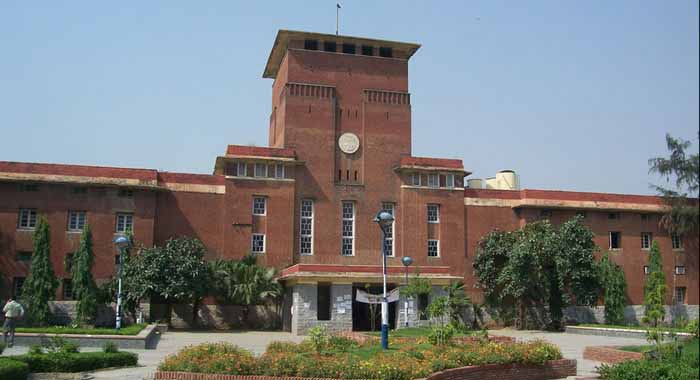
The Delhi University CSAS UG portal is now open, and the first allocation list of colleges has been released. Students can check their allotted college and course on the official website.

The CSAS portal for undergraduate programs released the 1st list for seat allocation at 5 P.M. on 19th July. Students can check their allotted college and course based on their preference list through the official website.

To view their allocation, students must enter their CUET UG application number and password. Thereafter, they must enter the login information to see the allocated college after carefully verifying the information. The candidates can further download information regarding their allotted college and course.

Along with the option of accepting the assigned college and course, students can also avail the option of upgrading. The second round of allocation with upgraded and fresh lists is expected to be out by 28th July. 

The schedule for the upcoming admission process is as follows,  

Event  Date
Declaration of FIRST CSAS Allocation List  5:00 pm Saturday, July 19, 2025
Candidates to ACCEPT the Allocated Seat 5:00 pm Saturday, July 19
till 4:59 pm Tuesday, July 22, 2025
College to VERIFY and APPROVE the online applications 5:00 pm Saturday, July 19
till 4:59 pm Tuesday, July 22, 2025
Last date of ONLINE PAYMENT of FEES by Candidates 5:00 pm Saturday, July 19
till 4:59 pm Tuesday, July 22, 2025
Display of vacant Seats on the dashboard of the candidates 5:00 pm Thursday, July 24, 2025
Window to Re-order Higher Preferences 5:00 pm Thursday, July 24
till 4:59 pm Friday, July 25, 2025
Declaration of SECOND CSAS Allocation 5:00 pm Monday, July 28, 2025
Candidates to ACCEPT the Allocated seat 5:00 pm Monday, July 28
till 4:59 pm Wednesday, July 30, 2025
College to VERIFY and APPROVE the online applications 5:00 pm Monday, July 28
till 4:59 pm Wednesday, July 31, 2025
Last date of ONLINE PAYMENT of FEES by Candidates 5:00 pm Monday, July 28
till 4:59 pm Friday, August 1, 2025

For more information you can refer to Delhi University’s official notice: https://admission.uod.ac.in/userfiles/downloads/18062025_CSAS-UG_compressed.pdf

Students are requested to stay updated and read the Bulletin of Information on the official website of the admission portal. Stay tuned for more information regarding Colleges and Courses.


Read Also: Jesus and Mary College Discontinues NCWEB Teaching Centre; Current Students Shifted to Deshbandhu College Centre

Image Source: India Today

Arya Chaudhary
[email protected]


In a recent order, the Delhi High Court bashed Delhi University’s appointment of ad-hoc faculty to substitute regular employment of professors, while ordering regularisation for 2 ad-hoc professors. 

In the past decade, the number of ad-hoc faculty appointments by Delhi University has skyrocketed, and along with that their treatment of such faculty has deteriorated significantly. On 11th July, the Delhi High Court in response to an appeal by two of Delhi University’s ad-hoc faculty, severely questioned the University for “consciously using ad-hoc appointments as a substitute for regular employment”. 

The ad-hoc professors from the Department of Germanic and Romance Studies, namely Namita Khare and Mehak Talwar, petitioned in 2022 against the University’s revised guidelines for the recruitment and shortlisting of Asst. Professors that covertly excluded long-serving ad-hoc teachers, despite them qualifying the eligibility norms under the UGC guidelines. 

Questioning Delhi University’s failure to recruit regular faculty while extending the petitioner’s tenure, the High Court bench of judges, Justice C.H, Shankar and Ajay Digpaul stated

The petitioners were not engaged for a finite project or stop-gap arrangement, but entrusted with core instructional and administrative responsibilities within a permanent academic framework.”

On a typical basis, Delhi University hires ad-hoc professors on quarterly contracts which are renewed with “breaks” to avoid legal obligations. However, under this system, many teachers have taught full-time for over decades without consideration for a permanent position, despite having performed the same duties as a regular employed faculty. Commenting on the same, the bench further observed

The petitioners’ continued exclusion from the zone of regularisation, despite fulfilling all eligibility conditions and having rendered long and meritorious service, is violative of Articles 14 and 16 and cannot be sustained.”

As of 2022, Delhi University has over 4200 ad-hoc appointments that makes up for 40% of its total faculty strength and in the past 2 years over 2000 ad-hoc teachers have been allegedly displaced. In an interview with the Indian Express, an ad-hoc professor at Ramjas stated that he had seen no progress in career, increments or medical benefits under DU’s system of ad-hoc appointments. Regularisation for such appointments, is thus, the need of the hour to ensure equitable treatment and fair service. 

A press release by the Democratic Teachers’ Front (DTF), Delhi University welcomed the regularisation order – 

The High Court order for regularization should be used to bring much awaited relief to serving adhoc teachers and those displaced.”

Rajib Ray, the President of DTF, recommended the regularisation of the remaining ad-hoc faculty as well as previously displaced teachers whose entire service should be counted towards all stages of promotion and retirement benefits. 

The High Court’s judgment, reflects the Supreme Court’s 2024 Jaggo Judgment, which recognised the need for regularisation measures for ad-hoc appointees who have performed indispensable services for a prolonged and uninterrupted period. 

DUTA Executive Member, Prof. Rudrashish Chakraborty further stated, 

The DU administration is guilty of exploiting the adhoc teachers during the best years of their life and then throwing them out through selection committees. This humane judgement will force the University administration to ensure the regularisation of the ad-hoc teachers in the rest of the colleges wherever interviews will be held and also to absorb those teachers who were displaced.” 

Given the current state of ad-hoc teachers at Delhi University with lack of increments, promotions or medical benefits, the HC judgement is expected to bring relief and hope for the improvement of working conditions and their shortlisting for permanent positions. Recently, the DU Vice Chancellor, Yogesh Singh has agreed to send an official representative to the University Grants Commission (UGC) as the ad-hoc faculty demands recognition of past service and provision of promotion and retirement benefits. 

Read also: DU sends UGC rep as teachers demand recognition of past service

Image Source: DNA India

Aaratrika Ghosh

[email protected]

Despite the Academic Council’s approval of the policy of research and supervision in regards to NEP-UGCF’s fourth year policy in DU colleges, many concerns have been raised in regards to its implementation.

As of July 5, 2025; the policy of research supervision for the fourth year of NEP-UGCF has been approved by the Academic Council amidst dissent by several elected members. According to Rudrashish Chakraborty, who is Associate Professor at the Department of English in Kirori Mal College, as well as an executive of DUTA (Delhi University Teachers’ Association) from 2023 to 2025, the poor devising of the policy is owed to multiple reasons; the first of which include the lack of infrastructure in the form of space and laboratories in colleges to conduct quality research at the undergraduate level to research supervision not being accounted for as workload for teachers, excessively burdening teachers who are already inundated with work.

Aside from these issues, the division of workload has also been a contentious topic, with the policy deciding on a stipulation of a minimum of ten students to be allotted to a teacher for research supervision. This ratio is not only too high and would therefore jeopardize the quality of research, but also make coordination difficult as it is not possible for any teacher to do justice to the research work of so many students after engaging in their own workload.

In addition to this, no funds have been allocated for research work in the fourth year of UGCF, which leaves colleges to fend for themselves. Colleges in the Delhi University circuit are being advised to mobilise funds through the Students’ Fund, which may prove to be insufficient in the long run.In terms of research, the students are to study four courses alongside writing a dissertation, which not only takes the focus away from the conduction of research, but will also lead to a reduction of quality leading to research becoming a compulsion instead of being an original, worthwhile contribution to Indian academic spaces.

One of the guidelines for research supervision expects students pursuing the fourth year to publish in a scopus-indexed journal as research outcome. Given that even teachers would find it difficult to pursue such interests within the stipulated time while balancing full-fledged studying, this unrealistic clause will discourage students from pursuing the fourth year.

Anumeha Mishra, a member of the Academic Council, has stated,


The university must refrain from applying a one-size-fits-all size model in approving projects eligible for research funding under IoE. Discipline-specific parameters must be evolved.”

In 2019, Delhi University’s colleges saw a 25% increase in student intake due to the EWS expansion. An additional surge in admissions by 20% occurred following the implementation of the Common University Entrance Test (CUET) from 2022 onwards. This move, having been undertaken along with the fourth year, comes in light of accusations of mismanagement and lack of infrastructural accommodation for the rising number of student intake every year. The absence of laboratories, reading rooms, and teacher workspaces severely undermine the programme’s feasibility. The implementation, thus, appears rushed and in the absence of structural and financial support, risks diluting the quality of education and pushing the system toward collapse. 

Dr. Monami Sinha, also a member of the academic council, points out how undergraduate students currently studying seven courses per semester, including SEC and VAC, dilute the study of core subjects and awarding of credits per subject.

Read Also: Delhi University Faces Backlash for Linguistic Misrepresentation in CSAS UG Admission Form.

Image Credits: Hindustan Times

Aastha Singh

[email protected]

‘The College Experience,’ as it were, does not assume the shape of a romanticised campus and campus romances for most. For some, within the thousands of searing red bricks that make the buildings, lie dreams—scores and scores of dreams. Do they drop into our hands, or do we catch them? 


In a universe that is suddenly deprived of illusions and of light, man feels a stranger. His is an irremediable exile…This divorce between man and his life, the actor and the setting, truly constitutes the feeling of absurdity.” – Albert Camus, The Myth of Sisyphus.


Entering through my college gates as a freshman, I had no hopes from the campus. I did not hope to fall in love, I did not hope to reminisce when I graduated, and I did not hope to forge long-lasting friendships. I might have had some of these in high school, or I think I did. It did not matter then. It does not matter now. To tell the truth, I did not know what to expect. I had thought too far ahead, and planned my life out rather prematurely. My first year was largely spent manacled to the bed, counting in torturous wakefulness, the hours as they pooled on the wall and melted away. 


In the second year, the exertion feels Sisyphian. The same routine repeats, and the first chunk of hours are eaten out of my plate by useless classes in college. I want to read, I tell myself. I want to write; I shake myself. Languor weighs my eyelids down as I ponder in inaction. I wake up the next day, and the cycle repeats. Time outruns me horribly. I remember having asked one of my professors back in the second semester, referring to the few enthusiastic students in our batch, “If we were students in your class, sir, would we be among the good ones?” “You would be decent,” he said. It broke my heart. 


He also said that the days were indeed longer then.


The days were longer then. When summer afternoons were spacious, and the clock ticked slowly in the winter evenings.” 


Eliot would agree. He would return from college and ask himself, “What now?” When his floor echoed no answer in response, he would read. He would think. We have forgotten how to think. We have not even begun to think. 


From the second our eyelids are estranged from each other to the moment they are reunited, we forget that we had been breathing the entire time and that if we hadn’t, we wouldn’t have another sun to wake up to. All days escape notice. Therefore, we are ceaselessly working through ourselves in a pendent acceptance of livelihood. It is a morbid revelation. Nothing is enough. What meaning lies in prolonging a life signed away to an inhumane consumerist trap hole that ceaselessly and effortlessly renews itself? We are entrusted to think that we are a race that is dying.


The current generation wails at the thought of reading beyond a page. Our jaws start to rot past the second syllable in the word, and therefore we must shorten them. We have trained our brains to consume audio-visual media without restraint, and we remain content in a vacuous state of being.  Our generation does not question, simply processes and moves on. We do not criticise, for we like to tell ourselves that we have not the time for it. It is the pedantic’s errand. Could a worldwide pandemic have so immoderately flipped our lifestyles? One is left grappling with unsubstantial prospects. The resolution too seems elusive.


I’m uncertain what to call this disease, but what I am certain of is that this will make possible the emergence of a world that is capricious, unambitious, and uncritical. The death most hazardous is the death of our passions. When we stand astride the line between meaning and meaningless, an absurdist world is conjured where our discernible identities no longer matter. Perhaps the medicine for the restitution of sensibility lies in the denial of sensibility itself; we might never know. The question itself remains unclear; whether we should attempt a recognition of ourselves in the first place. Now, we might seek solace in this idea, for when our identities no longer amount to concrete vision, a lifeless body and a passionless body are no different.


What of success? Our dreams? What of ourselves? Slow down, I say. Herein lies the paradox of success and the paradox of failure as well. The more successful one becomes, the more set up for failure they are. The more one fails, the more they may rule out what not to do, and therein, climb a step closer to success.


The words ‘probable’ and ‘improbable’ are essentially the same, and not antonyms, as we present them, for both the words contain a certain degree of probability; the flavour of the nuance lies in the degree of the probability. Otherwise, that which is probable has a degree of improbability. They are both parts of one whole; that is ‘possible’. Similarly, the words ‘success’ and ‘failure’ are a part of one whole; ‘progress’. In success, we make progress towards the next failure, and in failure, we make progress towards the next success. Slow down, I repeat. Breathe. Think. You shall get there. Where you want to be.


Slow down you crazy child

You’re so ambitious for a juvenile…


Slow down you’re doing fine

You can’t be everything you want to be before your time…” – Billy Joel.


Read Also : High Heels: Dreams, Taunts and What nots


Featured Image Credits : Pinterest 


Aayudh Pramanik

[email protected]

Recent heavy rainfall in the capital on June 28 has exposed severe infrastructural issues, particularly at the Arts Faculty, where the reading room experienced significant water leakages and short circuits. Additionally, other esteemed educational institutes like IIT Delhi and AIIMS Delhi are also witnessing an equally miserable fate.

As Delhi University continues its yearly ritual of exorbitant fee hikes—110% in PhD courses and 40% in annual postgraduate courses—it is important to note that the condition in which DU students have to study remains deplorable. These problems clearly reflect the university’s incompetence and disregard for student safety.

The Students’ Federation of India (SFI) DU’s Instagram page, @sfiduspeaks, posted a reel highlighting the miserable state of one of India’s premier institutions. Captioned “Save Public Education! Save Delhi University! Fee Must Fall!”, the post called for immediate action from the university to address these infrastructural issues. SFI Vijay Nagar has also demanded urgent measures to fix these problems and ensure student safety, noting that the lack of basic amenities like air conditioning in classrooms becomes unbearable when temperatures in Delhi soar to 48 degrees Celsius. The third building, made with makeshift materials like tin roofs and asbestos-lined walls, exacerbates the heat issue, creating an uninhabitable learning environment.

Simran, from SFI DU, in a conversation with DU Beat, said, “Since there is no maintenance in these reading rooms at Arts Faculty, due to heavy rain, the ceiling started to leak and then a short circuit happened, and soon fire also occurred out of nowhere. The main problem is that despite increasing fees they are not improving infrastructure and maintenance at all.”

Additionally, a press release by SFI Delhi University, dated June 27, 2024, highlighted student protests against the fee hikes in postgraduate courses. Students criticized the apathetic Delhi University administration and the ABVP-led Delhi University Students’ Union (DUSU) for their silence on the rising education costs. It showcased how fee hikes place a heavy financial burden on students, undermining the principles of publicly funded education and limiting opportunities. Despite the fee hikes in previous academic years, there has been no corresponding improvement in infrastructure. Students of the well-known Law Faculty often find their campus without even a single functioning water cooler, all while bearing Delhi’s scorching heat.

In addition to Delhi University, other premier institutes in Delhi have also been severely affected by the heavy rainfall. AIIMS Delhi experienced similar issues with severe water leakage on June 28, highlighting the widespread infrastructural problems across top educational institutions in the city.

At IIT Delhi, a viral video showed a pillar collapsing in the placement cell building following the heavy rainfall. This incident led to the disconnection of electricity in some areas for safety reasons. An official email from the Institute Engineer detailed the flooding on campus and stated that maintenance teams are working to restore services. The email requested cooperation from the campus community and apologized for the inconvenience.

These incidents at Delhi University, AIIMS Delhi, and IIT Delhi highlight the urgent need for infrastructural changes and better maintenance protocols, it’s indeed high time that these educational institutes make upgrades to ensure the safety and well-being of their student body, who have come from faraway places in the country to study in “premier institutes” in the capital. Despite significant fee hikes, these institutions have failed to invest adequately in their infrastructure, leading to dangerous and unacceptable learning conditions. As students and stakeholders wonder, “Where is our money going?”, they are now demanding accountability and immediate improvements to their educational environments.

Featured image credits: Devesh for DU Beat

Read Also: TISS Dismisses and Reinstates Staff Following Funding Assurance from TATA Education Trust

Kavya Vashisht

[email protected]

In a swift response, Delhi University takes action against a staff member accused of sexual harassment, reflecting a commitment to student welfare. As students rally for justice at the Central Institute of Education, officials ensure a thorough investigation by the Internal Complaints Committee, prioritizing safety and transparency.

The University of Delhi’s Establishment Branch has terminated the employment of a non-teaching staff member who was allegedly involved in the sexual harassment of a student at the Central Institute of Education (CIE) earlier this month. The incident occurred in the Department of Education’s new building, per the student’s official complaint with the Head and Dean of CIE. The defendant is alleged to have engaged in several inappropriate behaviors, such as unwanted approaches, invasive personal inquiries, and acts that created a great deal of discomfort and fear for the student’s safety.

The student has asked for her peers’ support, expressing how the encounter violated and deeply distressed her. She also expressed fear for her safety because the harasser was walking around the department unhindered. Students came together to plan a demonstration at CIE on Wednesday to support the student’s right to justice.

The Indian Express was notified by Pankaj Arora, Head and Dean of CIE, that the Internal Complaints Committee was notified of the student’s complaint as soon as it was received on Monday. The accused, who worked for the company under a contract, was let go early on Wednesday.

We have engaged in extensive discussions with the students and have assured them that the university’s ICC will handle the matter with care.” Arora said in response to the protest.

While the ICC investigates the case, questions remain about the student’s ongoing safety and the support system available. Did the University offer counselling services or connect her with external support groups specializing in trauma recovery? Transparency regarding the ICC process would also be beneficial. What are the expected timelines for the investigation? Are there resources readily available to explain the process to students involved in such cases?

The case is presently under review by the ICC, and until the process concludes, it would be challenging to disclose specific details of the proceedings.” said DU Proctor Rajni Abbi.

The Students’ Union or other student committees at CIE likely played a crucial role in supporting the student and organizing the protest. Including a statement from a student representative would amplify the students’ voice and highlight the collective stand against harassment. The incident serves as a stark reminder of the prevalence of sexual harassment in educational settings. By creating a culture of support, ensuring a fair and transparent investigation process, and implementing robust prevention programs, universities can foster safe learning environments where every student feels empowered and respected.

Read Also: Where are you ICC: Looking at DU’s History of Sexual Harassment 

Featured Image Credits: India TV News

Divya Malhotra

[email protected]

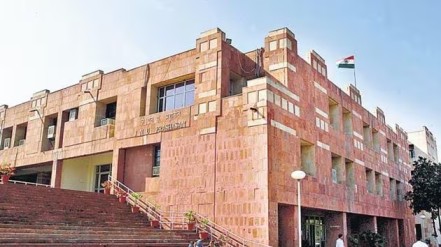
JNU VC Santishree Dhulipudi Pandit emphasized that JNU was never anti-national, and the institution is not subjected to saffronization, following the University’s 20th ranking in QS World Rankings for development studies.

In a recent meeting with the editors of the Press Trust of India (PTI), Santishree Dhulipudi Pandit, the first female Vice-Chancellor of Jawaharlal Nehru University (JNU), addressed various aspects concerning the university’s current state and its past challenges. Ms. Pandit emphasized that despite speculations, JNU is not subjected to saffronisation or undue pressure from the Central Government in its daily operations. She asserted, “As a university, we should be above all this. JNU is for the nation, not for any particular identity.”

Acknowledging the presence of divisions on campus during her tenure, Ms. Pandit termed that period “unfortunate”. She attributed errors to both the administration and the students, acknowledging the mishandling of the situation by the leadership. 

I think that phase was bad, and there were mistakes on both sides, and because of polarization and the leadership not understanding… You have to understand that people will differ and argue. The university was never anti-national. When I studied (at JNU) it was the height of the Left’s dominance, even then nobody was anti-national.” – Ms. Pandit remarked.

Furthermore, she openly declared her affiliation with the Rashtriya Swayamsevak Sangh (RSS), stating that she neither conceals nor regrets it. 

Ms. Pandit reaffirmed JNU’s commitment to fostering dissent, discussion, and democracy, asserting that the university has never been “anti-national” or associated with the “tukde-tukde” gang. She stressed the university’s dedication to inclusivity and development, encapsulated in the seven principles of Development, Democracy, Dissent, Diversity, Debate and Discussion, Difference, and Deliberation.

Reflecting on her journey, Ms. Pandit shared details from her birth in St. Petersburg, Russia, to her upbringing in a middle-class South Indian family in Chennai. When she assumed the position of Vice-Chancellor in 2022, the University was grappling with student unrest, compounded by the aftermath of the 2016 incident involving purportedly anti-national slogans being raised on campus. 

I believe there was a phase of unfortunate ignorance on the part of the administration regarding JNU.”- she commented. 

Regarding this tumultuous phase, Ms. Pandit acknowledged mistakes on both sides and criticized the leadership’s attempt to control the situation, emphasizing the inevitability of disagreements and the importance of handling extreme viewpoints with understanding.

You have to accept that disagreements and arguments will arise. The college never held anti-national views. Even at the height of Left dominance, when I studied (at JNU), nobody was anti-national.” – Ms. Pandit reflected. 

The meeting concluded with Ms. Pandit’s reaffirmation of JNU’s commitment to its core principles and her dedication to steering the university towards inclusive growth and academic excellence.

Read Also: ABVP and Left Front Clash Ahead of JNUSU 2024 Elections

Featured Image Credits: Hindustan Times 

Divya Malhotra

[email protected]


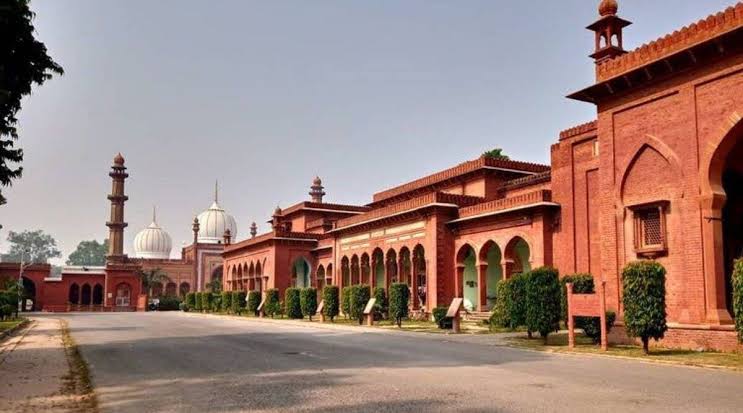
Naima Khatoon Gulrez, recently appointed as Aligarh Muslim University’s first female Vice Chancellor, faces controversy over her appointment amid allegations of nepotism. 

Naima Khatoon Gulrez, the principal of Aligarh Muslim University’s Women’s College since 2014, has been designated as the University’s inaugural female vice chancellor. She reportedly assumed office as the new VC on the evening of April 22. However, her appointment has been accompanied by complexities, controversies, and overarching implications, including the nuanced interplay of institutional governance and familial ties.

Naima Khatoon’s elevation to the esteemed position of Aligarh Muslim University’s (AMU) first woman Vice-Chancellor marks a pivotal moment in the institution’s storied history as she becomes the first woman to hold the position in the University’s 123-year history. Emerging from a modest family background in Jajpur district, Odisha, she is the only other woman to have held a top post at AMU since Begum Sultan Jahan, who was appointed as the Chancellor of AMU in 1920. Her professional journey includes serving as Professor and Chairperson of the Department of Psychology before assuming the role of Principal at Women’s College in July 2014. She has a diverse background, having taught at the National University of Rwanda, Central Africa, and fulfilling various administrative roles at AMU. She has authored, co-authored, or edited six books and published numerous papers in national and international journals. Additionally, she has supervised fifteen Ph.D. theses and a considerable number of dissertations, specializing in clinical, health, applied social, and spiritual psychology.

However, her journey to this ground-breaking appointment unfolds against a backdrop of intricate institutional dynamics and heightened scrutiny. 

Central to the discourse is the prominent role played by Professor Mohammad Gulrez, the outgoing acting AMU VC and Khatoon’s husband, as he chaired the meeting that included her on the list. The involvement of Gulrez in the selection process sparked contentious debates regarding potential conflicts of interest and allegations of nepotism, casting a shadow over the transparency and fairness of the proceedings. These challenges were mounted in the Allahabad High Court, alleging procedural irregularities, with petitioners questioning the integrity of the process. However, the petition was ultimately dismissed, allowing Khatoon’s appointment to proceed.

The AMU Court shortlisted three candidates for the position and forwarded their names to President Droupadi Murmu for final selection in November last year. Professor Muzaffar Uruj Rabbani, former Dean, Faculty of Medicine, AMU, and Professor Faizan Mustafa, V-C, Chanakya National Law University, Patna, were the other contenders for the position.

This intersection of academia and politics lends an additional layer of complexity to Khatoon’s inauguration. Against the backdrop of the looming Lok Sabha election, the timing of Khatoon’s appointment assumes added significance, with observers interpreting it within the broader context of political maneuvering and outreach efforts to Muslim women by the BJP government. The significance of her role extends beyond the University campus, resonating with the broader Muslim community in India and abroad. In this light, Gulrez’s appointment was reportedly ratified by the Election Commission (EC) with the stipulation that it would not be publicised, and no political advantage would be derived from it. The EC’s approval was conveyed to the Education Ministry on April 9. Khatoon’s appointment is for a period of five years or until she reaches the age of 75, whichever comes first, according to an official notification from AMU. 

Founded in 1875, Muhammadan Anglo-Oriental College was renamed AMU in 1920, becoming one of the oldest universities in India. Despite its long history, AMU has never had a woman vice-chancellor until Naima Khatoon’s appointment. As she embarks on her tenure, Khatoon’s appointment holds profound implications for the future trajectory of AMU, with the AMU community eagerly anticipating her vision. In navigating the complexities of her new role, Khatoon faces the challenge of upholding fairness, transparency, and impartiality, as acknowledged by the Aligarh Muslim Teachers’ Association (AMUTA).

Despite the controversy surrounding the selection process, including challenges raised in the Allahabad High Court, Khatoon’s appointment reflects a step forward in breaking traditional barriers within AMU’s leadership structure. 

Read Also: Kerala’s SIO Protests Against PM Modi’s Anti-Muslim Comments 

Featured Image credits: Indian Express

Kavya Vashisht

[email protected]

I know we were taught to “never look back” or to just “keep moving forward.”  I believe that sometimes it’s healthy to look back. Look back at those who stood still when you went out to be your own person—those people you left so far behind because life moved too fast.

“Well, here at last, dear friends, on the shores of the sea comes the end of our fellowship in Middle-earth. Go in peace! I will not say: do not weep; for not all tears are an evil.” ― J.R.R. Tolkien, The Return of the King

Do you remember the day you learned how to ride a bike? Or when you were dropped off for your first day of school? It was confusing, and more than that, it was daunting beyond comparison. But after we finally let go and had our first taste of independence, it felt awfully good, so much so that we forgot to look back—back at the person who held onto us until we were ready to be on our own. The moment they took their hands off the back of our bikes or handed us our school bags, we left filled with excitement and fear of what came next while they stood still, watching us move ahead in life. That parent, sibling, friend, or whoever else who guided us through those initial steps is the reason behind our great adventures. And at the end of the day, when we look back at them, we thank our lucky stars for having the guts to leave when, in fact, the real strength came from those who were left behind.

For every young adult leaving for college, for every soldier leaving to defend their country, and for every death in the world, there is a parent, a spouse, and a loved one who had to let go. And while letting go is something that goes both ways, being left behind is often harder than leaving.

The worst part of it all is usually the memories you’re forced to live with while you go about your regular life. My boyfriend encountered this great work opportunity that prompted his move to London. It’s easy to feel jealous or neglected, while the other person enjoys the thrill of their new life. And then you start to hate yourself for feeling the way you do. There are too many mixed emotions, and it’s hard to deal with that, but at the end of the day, you keep trying to make it work anyway.”  – said Sara, a 24-year-old, while discussing her long-distance relationship.

A separation like this usually leaves a person feeling helpless and stuck.

For surrogates, the separation from the children they give birth to can be emotionally challenging. While they may understand the arrangement intellectually, the emotional bond formed during pregnancy and childbirth can still be strong. And after providing the ultimate gift of making someone a parent, they go home alone, feeling like a mother but not actually being one. Similarly, when a soldier leaves, the spouse left behind must carry the burden of managing the household and family responsibilities alone while also dealing with the constant worry and uncertainty about their partner’s safety. This is often overlooked in discussions about military life.

Death is perhaps the most permanent form of separation, leaving loved ones grappling with grief and loss. The pain of losing someone dear can be overwhelming, and those left behind may struggle to find meaning and purpose in their lives without their loved one. For foster children, watching their friends get adopted and leaving them behind can be heartbreaking. They may struggle with feelings of rejection and abandonment, wondering why they weren’t chosen, or feeling like they are not worthy of love. These are a few of the experiences that are often neglected in real life, in literature, or in advice. As one person aptly put it, “Sometimes the hardest part isn’t letting go but learning to start over.”

“Jealous, sad and stuck” said Aryan, are some of the feelings he feels when asked about his friends leaving the city after college while he remained here struggling to find a job. He talked about how, even though he felt happy for his friends, he hated the idea of being left alone which is something that great authors like Hemingway and Didion explored in their works too.

I know we were taught to “never look back” or to just “keep moving forward.”  I believe that sometimes it’s healthy to look back. Look back at those who stood still when you went out to be your own person—those people you left so far behind because life moved too fast. Those are your people because they’ll remind you just how far you’ve come in life, and that’s a good reminder to have.

Featured image credits: SoJourners

Read Also: Is it Even a Goodbye Without Looking Back

Lakshita Arora 

[email protected]

Bidding farewell to college is like bidding farewell to a sense of stillness amidst the chaos in your life. What’s even more difficult is sometimes bidding farewell to the societies within these spaces, which is perhaps way more difficult for the juniors left behind.

Disclaimer: Readers might be left with a bittersweet feeling in their heart and might shed a tear or two, so proceed with caution.

Dear Reader,

As we close a chapter on the batch of 2024, turning the page on perhaps the most personal part of our college lives – our societies – might be even more painful. As an anxious, scared, and confused college student, the author found comfort and solace in one such society, and as a second-year student, she finds it even harder to say goodbye to the senior who made college feel like home. Friends’ Corner, the Mental Health and Counselling Cell of Hindu College, became a warm cup of chai during the rain for this author, and its president, Suangouding Guite, became the rainbow after the rain. Some might say his infectious smile, quirky one-liners, and him saying “period” after every sentence just helped them feel comfortable and safe in an otherwise overwhelming college space.

You know when you’re anticipating that your drink might be too hot or too cold, but when you take a sip, it’s the perfect temperature. This happiness, satiety, and comfort were what I got when I first interacted with Gouding. He, along with our seniors Soham and Varnika, made an amateur at society work like me, feel appreciated, and feel at home, and this society soon became my comfort space.” – says Vidita Verma, a second-year English Literature student at Hindu College.

In conversation with DU Beat, Gouding, a third-year sociology student and the president of Friends’ Corner, shared his experience at FC and how bidding farewell to this space feels personal.

For me, bidding farewell to Friends’ Corner is more like closing a chapter on my life, to the important and beautiful people and memories that make FC, as it became a part of me in these past three years, which I don’t want to let go of. I want FC to be known for its safe space, open conversations, and belongingness, which allow others to be vulnerable, and I hope I was able to create that legacy. This space became synonymous with Hindu for me, and this goodbye just feels personal. It was a society I joined for its safe space and open conversations about mental health, as it won’t really fetch you any CV points, and I stayed because it allowed me to be whatever I wanted to be and to feel whatever I wanted to feel, as it exists for others to grow and for them to learn from.” – Suangouding, president of Friends’ Corner, reflected. 

We’ve all had our fair share of uplifting and disappointing moments, intertwined with promises that sometimes fall short but are cloaked in sweetness. College societies have brought us together in unexpected ways, fostering beautiful connections for some and challenging experiences for others. The author did find herself in a pickle while writing this piece as she has been a part of the healthier and less emotionally daunting side of college societies, or rather has been quite lucky with the people, particularly the seniors she met, but a student from South Campus College who wished to remain anonymous remarked about its dramatics society.

I happened to have worked with seniors who would rather throw you under the bus for the sake of asserting their dominance. Favouritism, selective targeting, and insensitive manipulative behaviour, are some of the qualities they’d be passing onto their juniors. My seniors honestly sucked, and I’m more than happy to be bidding them farewell.” – they reflected. 

Performing Arts societies in DU might be known for their (valuable) experience, hectic schedules, overwhelming work, and hierarchies, but despite their generalised perception, they do end up becoming free and homely spaces for students, and we might meet seniors who make it just that.

In conversation with DU Beat, Manya Mallika, a third-year Physics student from Hindu College, opened up about her fruitful tenure at Masque, the English Theatre Society, not just as its co-director but as a first-year student who joined the society through online inductions during the lockdown.

After coming to Delhi after an online semester, the only people aware of my presence were in Masque, which initially seemed like just another college club. Despite finding other ways to engage in theatre, Masque somehow provided me with an identity in college, where I could be myself, through its lack of hierarchy and uniting people through their love for theatre rather than fear. I stayed because I felt a sense of belonging, and some friendships just stayed. My biggest realisation here is that human beings are prone to making mistakes; we are all flawed in some way. College should be a time of exploration, learning, and growth, and being patient and kind to others and ourselves. Remind ourselves to take a deep breath, as we’re all going to die anyway.” – Manya discussed. 

An anonymous first-year student from Hindu College, in conversation with DU Beat, bid a heartwarming farewell to their senior at Aria, the Western Music Society.

Priyansha (Yuhu) is a special person, not just for me but for the entire Acapella team of Aria. While being a great leader with her management and communication skills, she is a softie who cracks quirky jokes with her nasal voice, lighting up the mood of the entire team whenever we lose a competition (and that’s every time, lol). She built a family within a society, and while I wish her well for her dazzling future, bidding her farewell feels bittersweet as it’ll be very difficult to fill the void left behind by our very own Yuhu.” – they remarked. 

Anvesha Tripathi, a second-year Economics student at IPCW, shares how La Cadenza, the Western Music Society, ended up being the biggest and most exciting part of her college life, mostly owing to the seniors that she found there.

My seniors at Cadenza were nothing short of supportive, understanding, kind, and so unabashedly funny that every doubt vanished the second I walked into the practice room and helped us navigate this crazy circuit. One senior in particular stands out though: Ashna Dongre, who is a vision to look at and an absolute honour to be around. Every second I spend with her is enriching and leaves me either smiling or laughing my guts out. She is an absolute breath of fresh air on dreary days. I have sought in her love, support, and a simple shoulder to share my burdens with, and practice without her will feel incomplete, and so will the rest of my time at college.” – Anvesha said. 

It is said that first-year students enter DU with dreams in their eyes and passion in their hearts. Amidst the pool of batchmates, unspoken bonds, and sometimes fragile friendships, a lot of us struggle to strike a bond with any of our seniors in our respective departments. But lucky are the ones who end up discovering that friendship, solace, and guidance in that one senior in a society. An anonymous first-year student found such comfort in a senior at Vivre, the Film and Photography Society of Hindu College.

I learned a lot from them, and it’s definitely hitting me now that I have to bid farewell to them. It’s going to get hard for me because I don’t have a lot of friends or people I hold close to my heart in the second year. There’s one senior in particular, who I’m perhaps the closest to in the entire college. This is my person, and I hold them very close to my heart. Saying goodbye to them is going to break my heart, and I don’t want to think about it. What makes it sadder is that they are also leaving Delhi, so I might not see them ever.” – the student commented. 

S. Bangshing Panja, a third-year philosophy student at Hindu College, shares how bidding farewell to his college and his society might be hard, but it’s time for him to make space for others.

Although societies haven’t become synonymous with Hindu, there’s definitely a bittersweet feeling in my heart while waving goodbye to the safe spaces I found in the North East Cell and Aria, as they have been a huge part of me. The kind of legacy I’d like to leave my juniors, especially in the North East Cell, is that we should not be ashamed or scared to take up space. We are here in such a competitive institution, and we are here for a reason, and that makes us equal to everyone else. We just have to prove ourselves visible to the world, the people around us, and back at home. It’s sad that I have to say goodbye to them, but it’s about time. I’ve been here for three years, and I feel I have to leave in order to make space for others to come and feel the same things I felt and share the same friendships I’ve shared.” – they shared. 

Dear reader, while navigating the whirlpool of emotions college life at DU sometimes (certainly) pushes you in, some of us manage to find that one society and that one senior who just becomes your lifeboat. Bidding farewell to these small spaces within college that have become synonymous with home is difficult, to say the least, for the third years and the juniors left behind with a void in their hearts. How does one even journal such complex emotions and bittersweet memories in mere words? But I sincerely hope our words did justice to those feelings. Here’s a toast to the batch of 2024. We are forever grateful for your warmth, resilience, and comfort.

Read Also- Natural Selection: Unpacking Diversity in DU Societies 

Featured Image Credits: Sukriti for DU Beat 

Gauri Garg

[email protected]