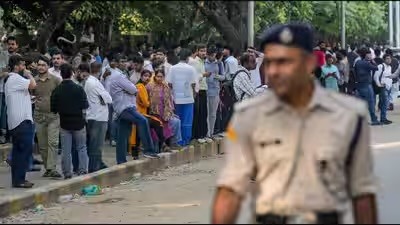
Motilal Nehru College (Evening) faculty are on indefinite strike after an alleged assault on a teacher during DUSU campaigning, with senior DU academics warning of a pattern of unchecked violence against faculty.
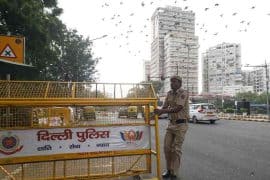
Classes have come to a halt at Motilal Nehru College (Evening), where faculty walked out indefinitely on September 23 to protest what they call institutional inaction over an assault of a faculty member. The Staff Association’s grievances extend beyond the assault itself to hooliganism, trespassing, and property damage they say marked campaigning for this year’s DUSU elections. Teachers from other DU colleges, along with DUTA representatives, have since shown up in solidarity.
The protest follows another alleged incident of assault on a teacher, who was grievously injured by a student campaigner on September 16 when DUSU campaigning had concluded.
A faculty member said the administration and police have shown no real interest in acting on the incident, and that the strike would continue until it is addressed. The teacher added that all faculty at the college have joined the strike and suspended academic activities from their end until further notice. Teachers have said they intend to file an FIR and boycott further election duty.
Mithuraaj Dhusiya, an elected member of DU’s executive council, linked the incident to a broader pattern, naming Bhim Rao Ambedkar College and the Faculty of Law as earlier sites of similar violence against teachers, and called on the university administration to stop delaying and take firm action against those responsible.
DTF Secretary Abha Dev Habib said the college principal reported repeated attempts to get an FIR registered, without success from police, despite CCTV footage of the incident reportedly being available. He called this, if true, another instance of perpetrators facing no consequences.
Former DU academic council member Rudrashish Chakraborty went further, describing the incident as part of a series of assaults by students affiliated with political organisations against teachers on duty, and he also claimed that no action has been taken even after any of these cases because the perpetrators are being shielded by both the university administration and the party in power at the Centre.
The claims made by Dhusiya and Chakraborty are in reference to incidents at DU in recent years: at Bhim Rao Ambedkar College in October 2025, DUSU Joint Secretary Deepika Jha reportedly entered the campus with around 50 students and slapped a faculty member, an incident for which DU later formed a probe committee. Teachers at Motilal Nehru College are now invoking that precedent as part of a recurring, unaddressed problem tied to DUSU election season.
As of now, classes at Motilal Nehru College (Evening) remain suspended indefinitely.
Image Source: Times of India
Read Also: DU Women’s Colleges Call for Solidarity March to Reclaim the Streets; Hundreds of Women Take Part
Aamna Rehman