Author

Aastha Singh

Browsing

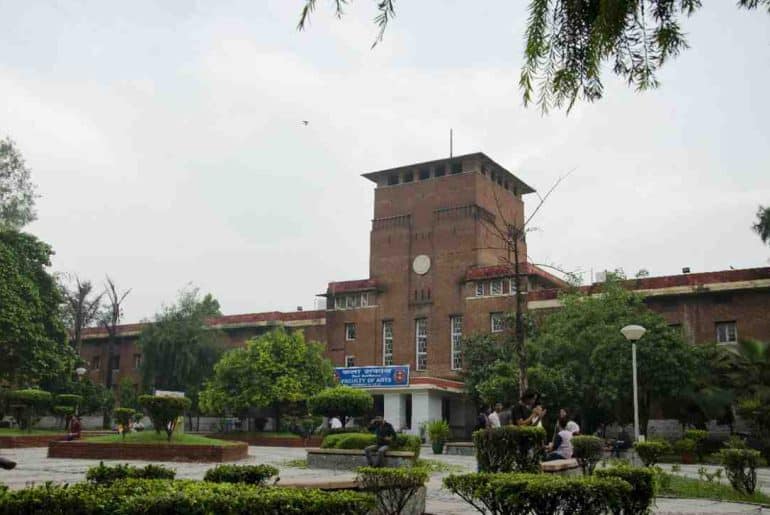
Five years after the National Education Policy declared an increase of 6% of the country’s GDP to be spent on education, higher education has seen multiple funding cuts across universities in India.


An increase from 2% of the previous years, the move to increase annual spending on public education was met with widespread approval from scholars and educators across India, and the incumbent ruling party posited the development as evidence of the government’s increased focus on increasing literacy rates, with an emphasis on ‘native education’ or the learning of indigenous Indian languages over English. 


However, despite public education in schools seeing a gradual boost in funding, the same cannot be said for higher education in the public sphere. Five years after the pandemic, the ground reality of funding for public education seems to have changed for the worse, when in 2024-2025, in the interim budget announcement, the University Grants Commission (UGC)—the statutory body that recognises colleges and universities and allocates financial assistance to them—saw their budget slashed by over 60 per cent. From ₹6,409 crore in the previous years to approximately ₹2,500 crore, the cut is part of a larger overhaul of higher education funding that came with little explanation. Although the budget for school education has been increased by over Rs 500 crore, the grant for higher education has been reduced by over Rs 9600 crore from the previous fiscal year’s Revised Estimate (RE), according to the Press Trust of India.


The worst-affected seem to be some of India’s most prestigious universities: JNU’s funding seems to have increased—from ₹249 crore in 2014-15 to ₹309 crore in 2023-24. However, when viewed in the context of inflation, it has failed to keep up with rising costs. Between 2014 and 2024, inflation rose by 53.4%, yet JNU’s funding increased by only 24.48%, leading to an effective decline in available resources per student.


“I agree with some of NEP’s ideas on paper,” stated a lecturer from Delhi University, adding, “However, higher education bodies across the country were blindsided by the decision that education at the elementary level would come at the cost of other forms. A country cannot grow without its college students, and it’s high time the government realises that.”

Read Also: NEP’s Three-Language Formula for Schools
Image Credits: Devesh for DU Beat

Aastha Singh

[email protected]


First introduced in the 1960s, the Three-Language Formula was introduced as a part of India’s national education policy to promote national integration and multilingual competence. 

Aiming to foster linguistic harmony and facilitate easy communication across state borders, the Three-Language-Formula and its execution did not match the rule’s implementation. It asked students to learn three languages—their native tongue, English and offered the choice between Hindi and Sanskrit. Many critiqued it for being another example of the disguised imposition of languages like Hindi and Sanskrit.

In 2020, the formula was revitalised with the aim of providing multilingual instruction in primary schools. In the National Education Policy (NEP) of 2020, the student’s mother tongue was stated to be kept as the medium of instruction up until Grade 5, although the recommendation for it extended to Grade 8 and beyond. Despite stating that no language will be imposed on the student body, a ‘three-language formula,’ with a combination of English and two native Indian tongues is to be taught.

“Research clearly shows that children pick up languages extremely quickly between the ages of 2 and 8, and multilingualism has great benefit to young students with a focus on learning their mother tongue in early years…and with skills developed for reading and writing in other languages in Grade 3 and beyond,” the policy document explained. Despite the lack of obvious issues on the surface, many believe that NEP 2020 lays down the groundwork for the imposition of languages like Hindi and Sanskrit in ways that are difficult to detect but easier to find once one looks deeper into the mechanism of enforcement.

By stating that implementation is entirely a matter of subjectivity dependent on states, schools and institutions, NEP 2020’s policy on language bypasses the possible situations in languages like Hindi, and Sanskrit can take priority for educators as they see fit. In addition to this, the failure to acknowledge that learning to read and write requires deliberate effort from not just the children but the adults teaching those children as well, puts undue pressure on school teachers who are stretched thin working in schools that are short-staffed.

The official policy document made informal comparisons to other languages in an effort to assert, as it stated, “the importance, relevance, and beauty of the classical languages and literature of India [which] also cannot be overlooked.”

It added, “Sanskrit, while also an important modern language mentioned in the Eighth Schedule of the Constitution of India, possesses a classical literature that is greater in volume than that of Latin and Greek put together.” It went on to highlight the, “vast treasures of mathematics, philosophy, grammar, music, politics, medicine, architecture, metallurgy, drama, poetry, storytelling, and more (known as ‘Sanskrit Knowledge Systems’).” 

The policy document was critiqued by many for emphasising Sanskrit over other languages in the Eighth Schedule of the Constitution, while simultaneously emphasising the language’s ‘classical literature’ over everyday usability and the number of speakers.

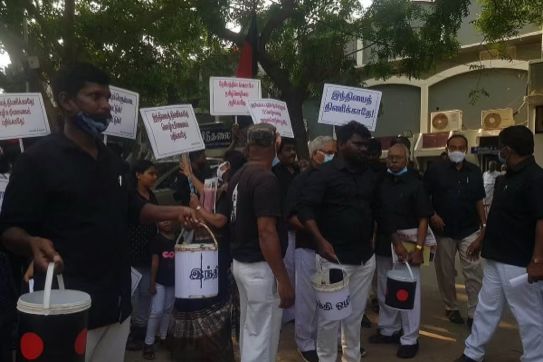
This formula was met with widespread criticism by many who believe that Sanskrit is being allotted undue institutional support, despite being spoken by only about twenty-five thousand individuals in the country. The central government spent more than ₹2532.59 crore on the promotion of Sanskrit between 2014-15 and 2024-25, seventeen times the combined spending of ₹147.56 crore on the other five classical Indian languages: Tamil, Telugu, Kannada, Malayalam and Odia. This information was obtained by Hindustan Times through a Right to Information (RTI) application and from public records.

The policy’s vision is “to instil among the learners a deep-rooted pride in being Indian, not only in thought, but also in spirit, intellect and deeds, as well as to develop knowledge, skill, and values, and dispositions that support responsible commitment to human rights, sustainable development and living, and global wellbeing, thereby truly a global citizen.” It does not account for enriching students with the knowledge of languages that are most relevant to the globalised chain of command, instead relying heavily on the nostalgic reproduction of a forgotten past, and righting the wrongs of an inexistent history.

Read Also: The Epistemic Project of the Nation: Decolonisation, Hindutva, and the Question of Knowledge

Image Credits: The News Minute

Aastha Singh
[email protected]


From its establishment in 1949 to first elections in 1954, the Delhi University Students’ Union has had a long run, one that preceded India’s Independence and saw the rise and fall of multiple governments in its lifetime. 


It has become difficult to discern the notion of student politics at any level in India without mentioning the inception of the country’s biggest Student’s Union, DUSU. Seven lakh students, ninety-one colleges and a run of over seventy years: the Delhi University Students’ Union has had a legacy that continues to define and re-define student elections and politics in India.


Late historian and professor, Aparna Basu, in her book, University of Delhi (1922-1997) details the formation of the body politic of the university at a time when quiet rebellion against British Raj was brewing, alongside a surge of student-led activities. It becomes imperative to note that the opposition to colonial rule worked in tandem with student demands for a space where they could air out concerns in relation to administration, education and other issues in relation to DU on democratic terms. It all began in the same year India got Independence—1947.


Students across colleges under the University had been raising demands for a Union that catered specifically to the needs of DU students, a task into which discussion was initiated by the–then Head of DU’s Economics Department, VKRV Rao. A provisional committee consisting of presidents of all unions across colleges was set, following the undertaking of a general meeting with an advisory board. Two years after, in 1949, the Delhi University Students’ Union was inaugurated by the–then Prime Minister, Pandit Jawaharlal Nehru and was inculcated into the University. 


DUSU’s origin story can be traced back to a few years prior, when in 1942, during the Quit India Movement, students from colleges of North Campus like Hindu, St. Stephen’s and Indraprastha went from college-to-college encouraging students to participate in protests for liberating Congress leaders who had been jailed previously.


The students then went down the road adjacent to Chandni Chowk, shouting slogans and organizing protests the records of which can only be found in resources like Basu’s book. The Union was the product of a multitude of college students across the DU circuit coming together to champion the quest for a platform that was for the students, by the students and of the students. 


As the years passed by, DUSU had made contributions to some of India’s biggest political movements, demonstrating participation in the Jayaprakash Narayan Movement that originated in Bihar in 1974, as well as the imposition of the Emergency under Prime Minister Indira Gandhi in 1975.


The Union has four office bearers officially: President, Vice President, Secretary and Joint-Secretary, all of which can be contested for by student organizations across the college circuit. Positions are elected individually, which means that members that make up the Union need not be from the same political affiliation. It can be said that DUSU exist as a microcosm of majoritarian politics in India, given that some of the biggest names in the game, Akhil Bharatiya Vishwa Parishad (ABVP) and National Students’ Union of India (NSUI) are affiliated with political parties (the Bharatiya Janta Party and the Indian National Congress respectively) that have held office at different times and have defined the political landscape of India we see  today. In all of DUSU’s recorded history, with the exception of one candidate (Manoj Choudhary, who held the seat from 2009-2010 and contested as an independent candidate), all student-elected Presidents belonged to either of the two organizations. ABVP candidates have been elected President nine times more than NSUI candidates, a testament to the party’s legacy as the largest student organization in the world, having over a fifty-five lakh membership count.


This is not to say that student parties are partial to majoritarian politics. Left-leaning parties like All India Students’ Association (AISA), which works in association with the Communist Party of India (Marxist-Leninist) have made waves in the landscape of student activism in India. Though their popularity amongst students of the University has been largely clipped, and cannot rival the widespread acclaim they have gathered in similar institutions like Jawaharlal Nehru University, left parties have played an integral role in taking up issues that have drowned under the flashy displays of money and muscle power.


While student leadership in India did not begin with DUSU alone, it continues to remain one of the most longstanding and successful examples of it. As Delhi University’s official website puts it, “In the past, several of the official bearers of Delhi University Students’ Union have gone on to hold public offices in State and Central Governments.” Some of the biggest names in DUSU have gone on spearheading a similar route in Indian politics, including the late Arun Jaitley, who served as India’s Minister of Finance and Corporate Affairs from 2014 to 2019.


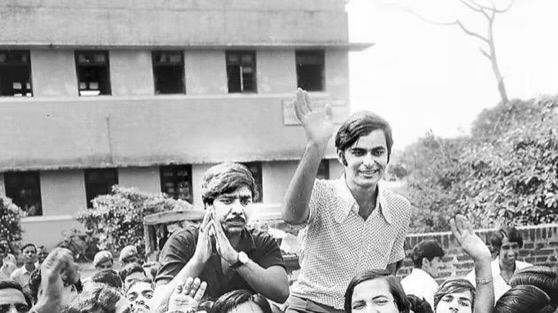
While pursuing his bachelor’s in Commerce at SRCC, Jaitley was elected President of the Delhi University Students’ Union (1974–75) and it was under his informal leadership that DUSU made the shift from indirect to direct elections through an agitation that lasted almost fifty days. Between 1972 and 1973; the University was shut down without a formal day of re-opening, and administration settled on allowing all students from colleges affiliated with DU to participate in voting directly for their leaders. Jaitley, the-then President of his college’s Students’ Union was pivoted into stardom after being one of the few familiar faces who led the crowd, and ABVP made a clean sweep across all contesting positions in the elections held in the following year. Jaitley was elected DUSU President.


The Delhi University Students’ Union has had a legacy that stretches far beyond the divisions of the multi-party system that it took from the country’s election system. It is not merely a topic of discussion for students enrolled in one of DU’s colleges, but a multi-tier apparatus that exists as a larger reflection of the timelessness of student activism, student politics and student leadership in India. 


Image Credit: Hindustan Times

Image Caption: Former DUSU President Arun Jaitley, as seen post-1974 win

Aastha Singh
[email protected]