When controversy surrounds the SIR and vote theft makes headlines, how can we trust the Election Commission? And if we cannot, what does this mean for the vulnerable voter?
Last Wednesday, Mamata Banerjee made headlines as she appeared at the Supreme Court to win “justice for the people of West Bengal”. This statement comes in the wake of the recently conducted Special Intensive Revision (SIR) by the Election Commission in Bengal. The CM’s claims of the officials being “BJP Officers” were based on the alleged unjustified deletion of names from the voter roll. Banerjee cited cases of simple name changes flagged as “discrepancies” in the system, severely reducing voter turnout.
These concerns form part of a broader set of questions being raised about the functioning of the Election Commission itself; for instance, Rahul Gandhi’s recent call-out of duplicate EPIC entries, odd constituency-wise surges, and data that is not machine-readable.
Under Article 324, the Election Commission of India (ECI) holds a public trust: to ensure that elections are free, fair, and seen to be so. Article 324(2) states that the Election Commission shall consist of the Chief Election Commissioner and such number of other Election Commissioners as the President may determine, and that their appointments shall be made by the President, subject to any law enacted by Parliament. It is therefore unsurprising that in the seven decades since the Constitution’s adoption, Parliament failed to enact such a law, leaving appointments by default in the hands of the executive.
It was in this context that Anoop Baranwal v. Union of India came before the Supreme Court. For decades, the ECI’s structure rested on convention, with appointments effectively controlled by the government of the day. This meant that the referee of the electoral process was chosen by one of the teams playing the game—a system fundamentally at odds with the idea of free and fair elections that the Commission is meant to safeguard.
In Anoop Baranwal (2023), a Constitution Bench led by Justice K.M. Joseph held that, until Parliament legislates, appointments to the ECI must be made by a committee comprising the Prime Minister, the Leader of the Opposition, and the Chief Justice of India.
A swift response followed the judgment. The Chief Election Commissioner and Other Election Commissioners Act, 2023, replaced the Chief Justice with a Union Cabinet Minister nominated by the Prime Minister, diluting the entire purpose and reconstituting appointment power in the executive.
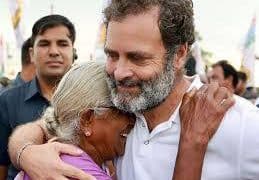
This brings us to Rahul Gandhi’s 7 August 2025 presentation, which raises critical questions, not about the factuality of the claims but instead about the response of the ECI to file for an affidavit as its first action.
When such allegations are verifiable, the Commission’s constitutional instinct should be to open a suo motu inquiry, invite particulars, publish methods, and report back. By demanding an affidavit before engaging, the ECI inadvertently communicated that it polices critics more readily than it audits itself.
Another response by the ECI was the adoption of a 45-day retention policy for CCTV/webcast footage. The stated reasons, privacy, the risk of maliciously edited clips, and resource constraints may not be frivolous. But the constitutional effect is stark: the evidentiary trail for retrospective audit is shortened to the point of near uselessness.
In instances like Uttar Pradesh (May 2024), Faridabad (2019), and Manipur (April 2024), video materials and on-ground visuals were key triggers. What survives in the archive determines what survives in law, which is exactly why a 45-day deletion cycle is a constitutional misfit.
This worry is not about one election cycle, one constituency, or one political party. It is about patterns: appointments that appear executive-tilted, opaque data practices around electoral rolls, truncated retention of polling-day evidence, and a defensive institutional reflex when faced with falsifiable allegations.
Another of legitimacy’s visible dents is the SIR, an exercise in which every eligible voter is required to provide documentation in order to update voter rolls, carried out in Bihar prior to state elections. The process held within a span of two months reduced the number of eligible voters from 78.9 million to 72.4 million, raising serious questions as to the reliability of the data. The Commission told the Supreme Court it would not delete any eligible voter without notice, a hearing, and a reasoned order, and that appeals exist. But when petitioners asked for a public list of those proposed to be deleted (with stated reasons) to enable an independent audit, the Commission said the law does not require such publication.
In Bengal, concerns have been raised that the process may disproportionately affect migrant residents since their documentation is often fragmented or reliant on legacy linkage with older voter rolls, a reality that has led to questions being raised about the political implications of the ECI’s actions.
The SIR last conducted in 2002 did not face this backlash. What has changed is not simply the sharpness of opposition rhetoric, but the credibility with which the ECI has now responded to such allegations, which together give rise to the paradox of democracy that becomes evident when the state, which is a creation of the people, acquires the power to decide who truly belongs to ‘the people.’
Modern constitutional democracies operate on the principle that the people create the state, yet the state retains legal and administrative mechanisms to determine citizenship through statutes such as the Citizenship Act and rules governing registration and further deciding whether a name is retained or struck off the voter list.
This tension becomes sharper in contexts where citizenship is complex; India lacks a single conclusive citizenship document. Passports, voter IDs, and Aadhaar function as identity proofs but not proofs of nationality. This makes citizenship dependent on a chain of documents that may be fragile, lost, or difficult to verify.
This paradox is most pronounced with migrants, rural populations, or disaster-affected communities, where administrative absence or documentation gaps are often interpreted as individual failure, shifting the burden of proof entirely onto citizens, like Assam’s NRC process, where nearly 19 lakh residents were excluded in the draft NRC because legacy documents failed to meet stringent administrative standards. This then results in wrongful exclusion from electoral rolls and affects an individual’s political existence.
Moving forward, India requires a clear, citizen-friendly documentation framework and stronger grievance redressal mechanisms, ensuring that governance does not dilute the principle that the people constitute the state, and not the other way around.
Read Also: Who owns the land? A history of migration in India
Image Credits: Aaj Tak
Arshia
[email protected]
Anjali P
[email protected]