
Voting is a right, but only if the system can recognise you. History, fragility and everyday loss of our most fundamental rights lead us to ask: why does a government which is “by the people” still decide who counts?
We like to believe that democracy is loud, participatory, and forgiving. That once a right is granted, it stays granted. That voting, at the very least, is something the state does not ask you to earn again and again. But this belief rests on a fragile and transitory assumption that all citizens are equally visible, equally legible, and equally easy to recognise– they are not.
Every democratic system, no matter how expansive, carries within it an unspoken imagination of the “ideal voter”. From its earliest articulations, the idea of the voter has been shaped less by equality than by eligibility. In ancient democracies, participation was a privilege. Some people were political by default. Others were never meant to be.
In ancient Athens, this imagination was not subtle. Only free men could participate in political life. Women, slaves, and foreigners were excluded not because they were invisible, but because they were never meant to count. Even Aristotle, often invoked as a foundation thinker of democracy, was clear that political participation belonged to those capable of reasoned speech and leisure. To vote was not to express oneself, but to signal that one already belonged to the correct moral and social category.
Rome refined this logic. Early modern societies tethered the right to vote to the right to own property—the voter must have a “stake” in society. Even under British rule, voting was a way to manage, not empower–rationed through educational qualifications, income and property. “Prove that you are responsible”. The logic is paternalistic, yet familiar.
We like to tell ourselves that we no longer ask who deserves to vote. That question sounds crude now, embarrassing even. Instead, we ask something softer. Something administrative: “Can you be verified?”
This shift matters because verification always asks for proof, and proof assumes stability. It sounds clean until you remember how easily lives fall apart. Even privilege does not guarantee permanence. Documents are lost. Names change. Paper yellows, tears, burns. Files slip out of folders during relocations that were never meant to be temporary. In bastis and slums, papers are damaged by rain, by fire, by evictions that arrive without warning. None of this is malicious. None of it is fraud. It is simply what living does to paperwork.
And yet, when participation hinges on uninterrupted proof, the burden quietly shifts. The right to vote stops feeling like something you possess and starts feeling like something you must maintain. The system does not say you do not belong. It only asks you, again and again, to show that you do.
This is where the idea of the “ideal voter” returns, not as a moral figure, but as a logistical one. The ideal voter is someone whose life does not interrupt the system. Someone whose citizenship does not require explanation.
History helps us recognise this pattern because it has repeated itself in different disguises. Once, voting was tied to property, education, lineage, and gender. Later, to literacy and rationality. Each time a barrier was dismantled, another took its place. More defensible and easily justifiable. Times changed, but the instinct did not.
India’s decision to adopt universal adult suffrage was radical precisely because it resisted this instinct. It trusted people before they were orderly. It did not demand coherence. At a time when many democracies hesitated, India chose inclusion as a starting point, not a reward. That choice feels under strain today.
Processes like the Special Intensive Revision (SIR) of electoral rolls are presented as technical necessities. Accuracy. Clean lists. Integrity. On paper, this is very difficult to argue against. Who doesn’t want correctness? Who would defend error? But correctness is not the same as justice. Systems that prioritise order inevitably privilege lives that are already ordered. Exclusion, hence, rolls in like a fog of delay, confusion, missed deadlines and unclear notices. A fog you cannot cross without a level of attentiveness and stability that, simply put, most lives cannot afford. Disenfranchisement here does not announce itself. It accumulates.
What should trouble us is not that systems require maintenance, but that those who bear the cost are rarely brought to light. We choose to reassure ourselves with perfectly rational explanations that function in an inherently flawed system. These explanations are not wrong, but they are incomplete. They allow us to avoid the discomfort of admitting that democracy, when made too tidy, begins to shrink.
We imagine political progress as linear: more rights, fewer exclusions. But as history would suggest, another undeniable truth exists–as rights expand, the conditions attached to them mutate. Participation becomes conditional not in law, but in practice. The definition of the voter remains unchanged on paper, even as the experience of voting grows more fragile.
So, we return to the question that refuses to stay buried: who is the voter the state designed its systems to recognise? And perhaps, more importantly, who is the voter who must constantly keep proving that they belong?
If old age, poverty, displacement, or simple misfortune can interrupt political visibility, then democracy is no longer about voice. It becomes about endurance. About whose lives are resilient enough to survive bureaucracy.
There is no quick fix for this tension. Democracy is not tidy. People move. Records fail. Lives refuse to align neatly with databases. A political system that prioritises order over access risks mistaking control for legitimacy. If democracy is to mean more than ritual, it must tolerate messiness. It must accept that inclusion requires patience and that trust cannot be fully replaced by proof.
A democracy that treats participation as conditional will always shrink itself, quietly and efficiently. The danger is not that it will collapse overnight, but that it will continue to function smoothly and procedurally. Leaving more and more people standing outside its frame. Narrowing the circle of those who remain visible within it, and narrowing, as history tells us, is never neutral.
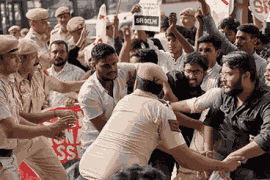
Image caption: Unlike many other democracies, India chose inclusion as a starting point, not a reward. That choice feels under strain today.
Read Also: Elections, Voters and Vote Chori
Image credits: Paytm Blog
Suansh Dembla