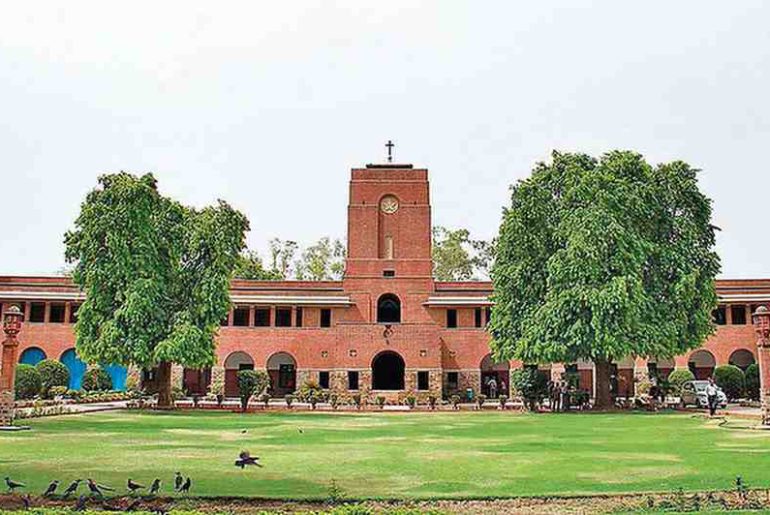
Delhi University’s revised May-June 2026 exam datesheet has scheduled papers on Sundays, clashing with several national postgraduate entrance examinations, affecting thousands of final-year students.
Delhi University recently revised its undergraduate examination schedule for May-June 2026. The exams begin on May 16 and will now end by June 14, instead of June 19 as originally planned. To fit everything into this shorter window, the university has scheduled some papers on Sundays as well. For thousands of final-year students, such a decision could take a serious toll on their future.
The Controller of Examinations, Gurpreet Singh Tuteja, explained that the schedule was changed because Semester 6 and Semester 8 students may need to appear for other exams, interviews, or job opportunities. Ironically, this statement refutes its own claims as the revised schedule clashes directly with some of the most important entrance examinations in the country.
The GCET Round 2 of the Gokhale Institute of Politics and Economics (GIPE), Pune, for admission to eight distinct MSc and MA programmes in Economics; the entrance exam of the Madras School of Economics for five postgraduate programmes in economics and finance; the Wildlife Institute of India’s entrance for its MSc in Freshwater Ecology and Conservation; and the UP B.Ed. JEE 2026, are all scheduled to take place on Sunday, May 31, 2026, one of the dates on which DU has also scheduled its end-sem exams. The dates for all of these exams were announced weeks in advance and are widely available in the public domain.
It is a well-known fact that entrance exams across India are almost universally scheduled on Sundays and it’s a deliberate, longstanding practice to avoid clashing with the weekday commitments of the candidates. Such an overlap has raised serious questions about administrative coordination, with students and teachers calling for an immediate and effective review of the datesheet.
Delhi University has, for decades, carried with itself, the legacy of producing undergrad students who go on to pursue their careers in the country’s most premier postgraduate colleges, but this time, the same students have been brought to a standpoint, forced to choose between their degree and their future at these institutions.
The university’s concern for the welfare of its Semester 6 and Semester 8 students, if genuine, must extend beyond how fast the examinations can be wrapped up and must most definitely take into account the bigger goals and aspirations of the students after these exams get over. Additionally, the fix is neither complicated nor costly. The original schedule which ran until June 19 provided adequate space. Reinstating that window, or redistributing the affected papers across available weekdays, would help resolve the conflict.
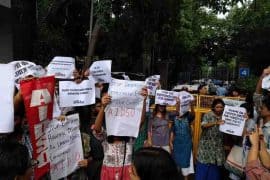
Students and teachers have already registered their objections to the revised datesheet. The university administration has both the information and the authority needed to address these concerns and one would hope they act on them before the students are forced to bear the consequences.
The issue, ultimately, is not just about revising a schedule, but also about the administration’s apparent unwillingness to recognise what students stand to lose because of it.
Read Also: Delhi University Revises UG Exam Timetable, Sunday Papers Added for NEP Students
Image Source: Telegraph India
Arshia Sharma




Trending