
The apex court on Friday issued pan-India guidelines to combat the ‘systemic failure’ caused by Educational Institutions in effectively coping with Suicide deaths across College campuses. What followed is a 15-rule guidebook for Educational Institutions to provide aid to students far away from home without academic or institutional support.
In light of the recent suicides on the college campuses, a bench comprising Justice Vikram Nath and Sadeep Mehta issued directives aimed at solving this crisis through fifteen binding guidelines for educational institutions in India, including colleges, universities, schools, and private coaching centers.
The judgement emerged during proceedings in a case involving the suicide of a 17-year-old NEET Aspirant from Andhra Pradesh who was staying at a hostel while preparing for a coaching in Visakhapatnam. After a plea in Andhra Pradesh’s High Court, the student’s kin appealed to the apex court, and as an extension, a CBI probe has been ordered to manage the crisis.
The directives issued are given below –
- All educational institutions shall adopt and implement a uniform mental health policy inspired by the MANODARPAN initiative and the National Suicide Prevention strategy. This will be a year-long exercise that will be updated regularly.
- Institutions with more than 100 students enrolled shall appoint one counsellor, psychologist, or social worker who is trained in adolescent mental health training.
- An appropriate student-to-counsellor ratio should be maintained so that a smooth procedure can be available in stressful times, such as Examinations.
- Institutions should refrain from any activity that will create a visible segregation of students based on their academic performance.
- All educational institutions should place immediate referrals, such as mental health service helplines or suicide prevention helplines.
- All teaching and non-teaching staff shall undergo mandatory training at least twice a year, conducted by certified mental health professionals, on psychological first aid, identification of warning signs, response to self-harm, and referral mechanisms.
- All educational institutions should be equipped to engage with students from vulnerable communities. This includes, but is not limited to students belonging to the SC-ST community and the LGBTQ+ community,
- All coaching hubs and big cities hosting aspirants such as Delhi, Jaipur, Kota, and Sikar, should involve higher authorities in developing a framework for monitoring the mental well-being of students.
- All residential-based institutions shall install tamper-proof ceiling fans or equivalent safety devices and shall restrict access to rooftops, balconies, and other high-risk areas to deter impulsive acts of self-harm.
- All educational Centres should provide career counselling services for students and parents alike, creating an awareness of unrealistic academic pressure and professional pathways.
This marks a sweeping opening gambit reflecting the immediate measures to curb the severe accidents of suicidal death occurring on college campuses. This move is inclusive of the right to life under Article 21 of the Constitution. The court ordered the setting up of a district-level committee under the chair-person of the District Management. The court clarified that:
We believe that these guidelines shall be read as complementary to the ongoing work of the National Task Force and would inform and assist the National Task Force in the development of a more comprehensive and inclusive framework.”
The Court also pointed out that despite constitutional and international obligations, there remains a legislative and regulatory vacuum in the country concerning a unified, enforceable framework for suicide prevention of students in educational institutions, coaching centres, and student-centric environments.
This initiative highlights the Judiciary’s outreach in serving the needs of students to effectively overcome the mental extremes they face, along with involving parents and educational institutions in a historic decision.
What comes additional to this decision is an upper-hand provided by the judiciary in focusing on student-centric development, where more emphasis should be given on personality development and prioritizing extracurricular activities, expanding the horizon of students to explore themselves more, and actualizing the gravity of mental health issues, especially in adolescents, where the suicidal death is reported to be over 10,730 in 2021 according to the National Crime Records Bureau.
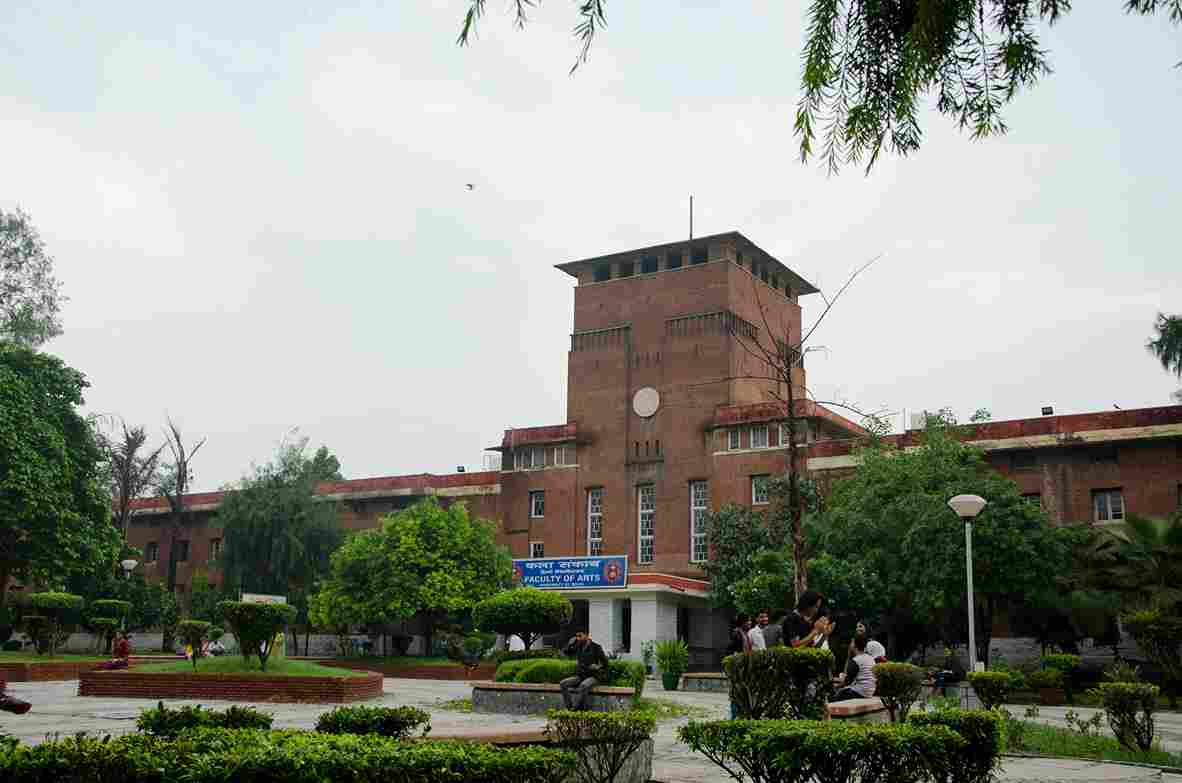
Image Credits – Devesh for DU Beat
Kinjal Sharma
[email protected]
Read Also: Delhi University Issues Final Notice for CW Category Admissions for 2025-26.


Comments are closed.