Author

DU Beat

Browsing

DU and I4C have signed an MoU to tackle cyberbullying and cybercrime against young women, promoting cyber awareness and safer digital spaces. 

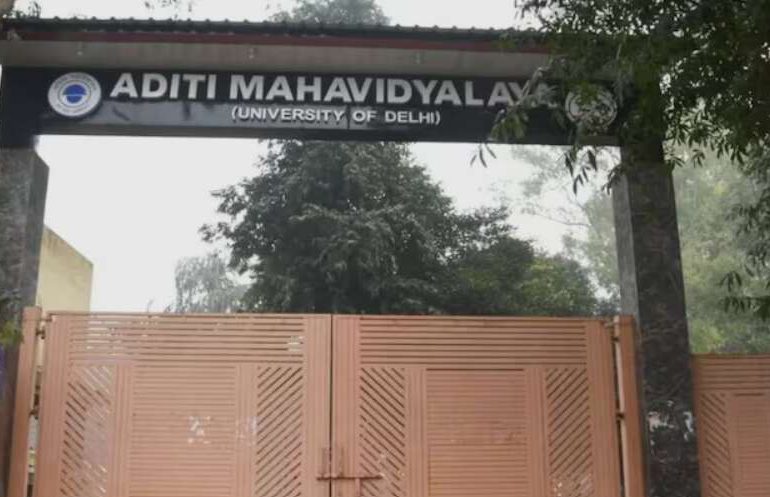
The University of Delhi has signed a Memorandum of Understanding (MoU) with the Indian Cyber Crime Coordination Centre (I4C) to strengthen cyber awareness and safety across its colleges, with a special focus on protecting women students from digital harassment and online fraud.

The MoU was signed on Monday, 13 July, by DU Registrar Dr Vikas Gupta and I4C Director Nishant Kumar, formalising a partnership between the university and the country’s nodal agency for combating cybercrime.

The collaboration comes amid growing concerns over cyberbullying, online fraud, and digital exploitation among students, with women students from economically weaker backgrounds often facing greater vulnerability. University and I4C officials said the partnership aims to build a cyber-aware campus ecosystem by combining institutional support with practical learning.

Under the MoU, DU and I4C will jointly organise awareness programmes, seminars, and hackathons to help students identify, prevent, and report cyber threats. The partnership will also promote knowledge sharing between academia and government to make cybersecurity awareness and digital resilience integral parts of campus life.

Established by the Ministry of Home Affairs, I4C serves as India’s central agency for coordinating efforts against cybercrime, working with state and city police forces to prevent, investigate, and respond to online offences. Alongside enforcement, it also leads public awareness initiatives, including the national cybercrime helpline (1930) and the CyberDost campaign, which promotes safe digital practices.

By Aamna Rehman 

[email protected]

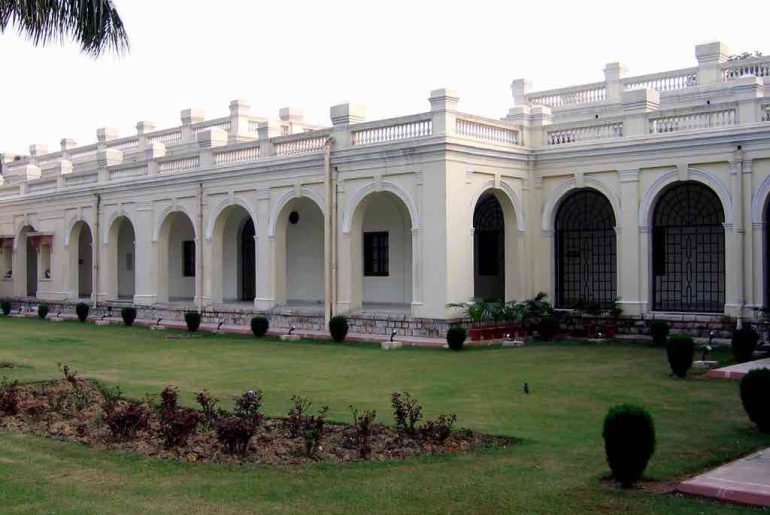
Image Source: www.du.ac.in

Read Also: DU’s One-Year PG Promise Hits a Seat Ceiling 

A resignation changes who holds office – but who answers for the damage already done? Exploring the gap between political resignation and genuine accountability, the limits of symbolic responsibility, and why democracies owe citizens transparency, justice, and institutional reform after a leader steps down. 

News breaks of a devastating train crash. Hundreds have lost their lives. Television screens are filled with horrifying scenes from the accident, social media is boiling with anger against the system, and the opposition is demanding accountability.

“The minister must step down. The minister must resign.”

The calls begin echoing almost immediately. This is what we often hear after every major tragedy in the country. Whenever institutions fail, public attention turns to the person at the top. The minister, the official, the leader – the one responsible must leave the chair.

Yet beneath those familiar demands lies a more important question. Is resignation truly justice? Why do we instinctively believe that once someone vacates office, accountability has been served?

Justice, in public life, is more than replacing one person with another. It is about discovering what went wrong, assigning responsibility, repairing institutional failures wherever possible, and ensuring that similar tragedies do not happen again. Resignation may form part of justice, but it can never be justice in itself.

Resignation, in simple terms, is the act of leaving office. It signals political responsibility and accepts the scrutiny that follows public failure. Accountability, however, demands much more. It requires those in power to explain the decisions they made, cooperate with investigations, face legal consequences where laws have been broken, and implement reforms that prevent history from repeating itself. A resignation changes who occupies the chair; accountability demands answers for what happened while they occupied it.

Perhaps this is precisely why resignation often becomes the more favourable outcome for those under scrutiny. It is easier to leave office than to remain under continuous public, legal, and institutional scrutiny. Stepping down may satisfy the immediate political moment, but it rarely satisfies the larger public interest. Unfortunately, the debate often ends there.

Once a resignation is announced, public attention shifts elsewhere. Rarely do we continue to ask whether an independent inquiry was conducted, whether Parliament examined the failures, whether regulatory bodies were held responsible, whether administrative reforms followed, or whether anyone was prosecuted if laws were violated. A resignation answers only one question: who will no longer lead? It does not answer who will account for what went wrong, who allowed it to happen, or how it will be prevented from happening again.


The Grenfell Tower still burning at 04:43 on 14 June, four hours after it started. 

Wikipedia.com

What genuine accountability looks like can be seen beyond our nation. Following the Grenfell Tower fire in London in 2017, which claimed 72 lives, public attention did not end with political fallout. A years-long public inquiry examined not only the actions of individuals but also the failures of government departments, local authorities, regulators, manufacturers, and private contractors. Its findings exposed systemic negligence, gave recommendations for sweeping reforms, and paved the way for further legal and regulatory action. The focus was not simply on who should leave office, but on understanding why the disaster occurred and how such a tragedy could never be repeated. That is the difference between symbolic responsibility and substantive accountability. One satisfies the immediate political moment; the other seeks truth, reform, and justice.

The distinction becomes even more significant because accountability is never the same for everyone.

A cashier’s mistake may affect one customer. A doctor’s error may transform the life of a patient and their family. A CEO’s failure can affect an entire company and hundreds of employees. But when a public institution fails, the consequences extend to millions. A minister shapes an entire sector. A head of government shapes an entire nation. The greater the office, the greater its power, and therefore, the greater its responsibility to answer for its failures.

Yet public life often works in reverse: as power increases, accountability appears to diminish.

The consequences of these failures are also fundamentally different because many of them cannot simply be reversed. Lives lost in disasters cannot be restored. Students continue to suffer because of systemic failures in education. Policy mistakes continue affecting citizens long after the governments that introduced them have changed. Financial scandals still drain public money that belongs to taxpayers.

Memorial and murals in memory of the victims (Grosby)

www.infobae.com

The survivors of the Bhopal Gas Tragedy continue to live with the consequences of the night of 2 and 3 December 1984. No resignation could erase those losses. No change in leadership could restore the lives that were taken or undo decades of suffering. The damage had already been done. What people sought – and continue to seek – was not merely symbolic responsibility, but justice through accountability.

Behind every major institutional failure lies a chain of negligence: bureaucrats who overlooked warning signs, regulatory bodies that failed to enforce guidelines, departments that ignored repeated complaints, officials who never acted when action was required, and political leaders who failed to intervene despite possessing the authority to do so.

Reducing such failures to the resignation of a single individual oversimplifies what are fundamentally systemic problems. One person may become the face of the crisis, but they are rarely its only cause.

None of this suggests that resignations are unimportant. They remain important in any healthy democracy. They preserve constitutional morality, acknowledge political responsibility, prevent conflicts of interest during investigations, and help restore a measure of public confidence. A public official who has lost the confidence of the people cannot simply continue as though nothing happened. But resignation cannot replace accountability; it must accompany it.

The Speaker’s chair is seen before the House of Commons session begins on Parliament Hill in Ottawa, Monday, Sept. 15, 2025. THE CANADIAN PRESS

Democracies cannot afford to mistake resignation for justice. A resignation may satisfy the politics of the moment, but accountability protects the future. Justice begins when those in power accept responsibility – but it is fulfilled only when institutions answer for their failures, reforms are implemented, and the public is assured that the same tragedy will not happen again.

Rahul Kumar

[email protected]

Image Credits: thearchitectsdiary.com

Read Also: The rise of à la carte travelling: A look into the travel practices of Gen Z. 

DU released simulated UG ranks for 2.06 lakh CSAS candidates on July 12. The preference list editing closes July 13, with first allocation list due July 16.

The University of Delhi published simulated rankings for undergraduate admissions 2026–2027 on the Common Seat Allocation System (CSAS) portal at 5 PM on July 12.

According to the university officials, 2,73,751 candidates registered on the CSAS portal this year, the highest number since 2022. During the second phase of the admissions process, which took place from July 3 to July 11, 2,06,835 candidates submitted their course and college preferences, while 2,18,284 candidates finished their registrations. Additionally, the female applicants outnumbered the male applicants among those who completed their registrations, with 1,20,509 women and 97,775 men, as stated by the officials.

During Phase 2, the candidates were required to map their CUET-UG 2026 subjects against those studied in Class 12 and submit ranked programme-college combinations. The simulated ranks were then calculated using the candidate’s normalised CUET-UG score, Class 12 subject mapping, and the preference order submitted in Phase 2. These ranks indicate a candidate’s likely position for each chosen programme-college combination relative to other applicants competing for the same seats. 

The university officials clarified that the simulated ranks do not mean a final seat allocation or an admission offer. Candidates can revise or reorder their programme and college preferences until 4:59 PM on July 13, after which the preference list will be frozen ahead of the first round of seat allocation.

The first CSAS allocation list is scheduled to be released on July 16. Candidates who receive seat offers will be required to accept allotments and complete document verification between July 16 and July 20, with fee payment due by July 21. A second allocation round, allowing candidates to freeze seats or seek upgrades, is scheduled to begin on July 25.

Admissions to 73 undergraduate programmes and over 100 BA programme combinations across 67 colleges are being conducted on the basis of CUET-UG 2026 scores. According to the seat matrix published on the admission portal, DU is offering more than 71,000 undergraduate seats this year. Some of the most sought-after courses include BCom (Hons), BA (Hons) English, BA (Hons) Political Science, and BSc (Hons) Zoology and Mathematics.


Read Also: Over 41,473 register for DU UG admissions on the first day of CSAS Phase 1

Image Credits: Careers 360

Mayank Scripts
[email protected]

Delhi University’s first One-Year PG Programme offers just around 1,068 seats across 45 programmes, despite thousands of students completing the fourth year under the NEP. An examination of the seat matrix, admission policy, and student experiences reveals a widening gap between institutional promises and reality.

For Delhi University’s first NEP batch, students were persuaded to stay for an additional year on a straightforward promise: complete the fourth year, earn an Honours with Research degree, and fast-track into a one-year master’s instead of the conventional two. The seat matrix, released just a week before this year’s application deadline, tells a very different story: roughly 1,068 seats across 45 programmes for tens of thousands of students who completed the fourth year.

The Bulletin of Information (BOI) for the One-Year Postgraduate Programme 2026–27, published on July 4, 2026, lists 45 programmes across seven faculties. Adding the category-wise seats (UR, SC, ST, OBC-NCL and EWS) gives an approximate university-wide intake of 1,068 seats. M.A. Urdu tops the list with 50 seats, while M.A. English, Hindi, Sanskrit, Philosophy, History, Political Science, M.Sc. Chemistry, Physics, Mathematics and M.Com. appear capped at 45 seats each. At the other end, M.Sc. Biochemistry and Microbiology offer just three seats each.

Another important point is that the one-year PG programme is not spread across multiple colleges, unlike the conventional two-year route. M.A. English alone offers more than 500 seats through the two-year programme when the allocations across colleges are combined. The one-year route compresses that entire intake into a single university department for each subject, explaining much of the apparent seat shortage.

The University also released its official guidelines in December 2025, stating that each department’s one-year PG intake would be a minimum of 20% of its existing pre-NEP-sanctioned two-year intake, capped at 45 seats. Smaller humanities departments could increase intake to 40%, while laboratory-based science departments remained capped at 20%. Crucially, the intake formula is based on a department’s pre-existing sanctioned strength – not on the number of students who actually completed the fourth year.

On August 1, 2025, Delhi University’s Vice-Chancellor told PTI that roughly 55% of the 71,000 eligible students – around 40,000 – had opted for the fourth year. DU’s own figures have since varied, with a later report citing a 30% retention rate for the same cohort. Humanities and language departments nevertheless reported the highest participation, with colleges such as Lady Shri Ram College recording 70–80% fourth-year retention in subjects including English and Psychology. Ironically, many of these are the very subjects capped at 45 seats, suggesting that the seat ceiling and the size of the applicant pool move in opposite directions.

The one-year PG intake formula was finalised only in December 2025, months after most students had already committed to the fourth year. The actual seat matrix was published on July 4, 2026, after students had already completed that additional year.

This is what Aanchal, a fourth-year B.A. (Hons.) English student at Hansraj College had this to say about the programme’s implementation:

I enrolled in the fourth year because DU promised it would lead to a smooth one-year M.A. pathway. Instead, the entire year was poorly planned. We weren’t even properly introduced to our syllabus; professors themselves were often confused, and we were buried under assignments, dissertations, presentations and exams. Despite all this, DU never officially informed us about the one-year M.A. admission process; we had to learn about it through a podcast. The biggest betrayal came after we’d already finished the year. The Bulletin came out on July 4 with shockingly few seats. We invested an extra year, our hard work and our trust, only to discover that a two-year master’s will now effectively take us four.

Another student from Kirori Mal College described fourth-year students as experimental props, pointing to delayed syllabi, faculty shortages and assessment rules that changed midway through the academic year. Teachers’ associations have also separately objected that the one-year PG resolution was passed without adequate consultation with faculty.

The bottom line is this: as of July 11, 2026, when registrations closed, Delhi University had still not released the number of applications received for the one-year PG programme – either overall or subject-wise. Without those figures, it is difficult to calculate the applicants-to-seats ratio for any programme.

Whether this amounts to negligence or simply the turbulence of launching a new programme is open to debate. What is harder to dispute is the mismatch between student numbers and available seats, and the University’s failure to communicate that reality in time to students who based an entire year’s academic decision on a promise that Delhi University could not fulfil.


Name-: Arshia Sharma

Email- [email protected] 

Image credits: DuBeat

Read Also: The Search for a Third Place

The University of Delhi has revised the credit structure for fourth-year undergraduate students under UGCF 2022, increasing the weight of academic tracks from six to ten credits per semester with effect from 2026-27.

The University of Delhi released a notification, dated 10th July 2026, restructuring the distribution of credits in Semesters VII and VIII for students enrolled under the Undergraduate Curriculum Framework (UGCF) 2022. The changes will come into effect from the academic session 2026-27. 

The most significant change concerns the credit weight assigned to academic tracks. Previously, tracks such as the Dissertation, Academic Project and Entrepreneurship carried six credits per semester. Under the revised structure, four credits previously assigned to Discipline Specific Core (DSC) courses in Semesters VII and VIII will be transferred to these tracks, raising each track’s credit value from six to ten. Academic tracks will now carry a total of twenty credits: ten in Semester VII and ten in Semester VIII.

Alongside this, DSC courses in the two final semesters will no longer be listed as core requirements. They will instead be moved to the Discipline Specific Elective (DSE) pool for the respective semesters. Students will be required to choose three courses from this broader pool each semester, with the following combinations permitted: three DSEs, two DSEs and one Generic Elective (GE), or one DSE and two GEs.

This is not the first revision to the fourth-year credit structure under UGCF 2022. In January 2026, the university had permitted students in Semester VIII to take up to eight additional credits, thus raising the per-semester cap from 22 to 30 to enable students who had not yet completed core discipline requirements to qualify for a major. That change applied to students enrolled in the 2025-26 session. The July notification, by contrast, applies from 2026-27 onwards and addresses the internal distribution of credits rather than the overall cap.

Rishika Jain

[email protected]

Read Also: NCWEB applications open for B.A. (Prog) and B.Com

Image Caption: Official Notification, dated 10th July 2026 

Image Source: University of Delhi


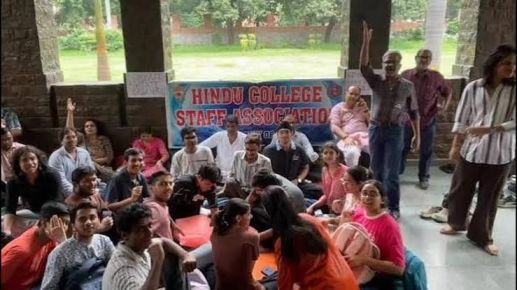
The students of Delhi School of Journalism have raised their concerns regarding the functioning of the institution via a student-run Instagram account (@concernsofdsj) Students have raised concerns relating to academic practices, infrastructure, and faculty appointments. 

Students of Delhi School of Journalism, University of Delhi, appear to have raised several concerns regarding the functioning of the institution via an Instagram account (@concernsofdsj) created by the student community. The page features allegations relating to academic practices, infrastructure, and faculty appointments. 

One of the primary concerns highlighted involves the transparency of the Internal Assessment (IA) and Tutorial (TU) evaluation process. According to the allegations, students are not provided with an opportunity to verify their internal assessment marks before they are uploaded as final on the Samarth Portal. Several students have also claimed that grievances regarding discrepancies in marks are not adequately addressed by the concerned authorities. These allegations stand in contrast to the University of Delhi’s provisions, which allow students to approach teachers regarding concerns related to internal assessment and seek clarification. 

Another issue raised on the platform concerns the utilisation of student fees. Students claim that fees collected, including those for library resources, studio facilities, and equipment, have not translated into visible improvements in infrastructure. According to the allegations, despite regular fee collection, there has been little noticeable addition of new equipment or development of academic resources within the department. 

Students have also expressed concerns regarding faculty appointments. They allege that the number of vacancies for permanent faculty has declined over time, while dependence on guest faculty has increased. According to the students, this has affected academic continuity and the overall learning experience. However, the college administration had not issued an official response to these allegations at the time of publication. 

Speaking to DU Beat, a student from Delhi School of Journalism said, “We believe the main issues are the frequent change of Heads of Department and the lack of permanent faculty. We have had three Heads in the last one and a half years, which has affected stability. Since most teachers are guest faculty, they leave after the session ends, making it difficult for students to reach them later. I also feel the concerns about the library and ICT lab are valid, as our college library has limited resources despite the fees we pay.” 

The Instagram page has emerged as a platform for students to share their experiences and raise issues that they believe require institutional attention. 

Another student at DSJ claims, “Students are tired of complaining but no response from the authority and they don’t even reply, no transparency in internal marks even those students who submitted all the assignments and tests got less marks as well. Everything started when they updated the internal marks on Samarth portal.

The main demands of the students include greater transparency and accountability in the functioning of the Delhi School of Journalism. Their demands include clear marking criteria and transparency in the Internal Assessment (IA) and Tutorial (TU) evaluation process. 

In addition, students have called for transparency in the utilisation of fees collected for academic resources and seek information on improvements and fund utilisation. According to the posts, the students state that their objective is not to seek inflated marks or concessions, but to ensure a fair academic and administrative system. 

Tarunima 

[email protected]

Read Also: Myanmar Refugee Challenges DU Passport Requirement in Delhi High Court 

Image Credits: DU Beat


The single-most important factor when it came to travel opportunities used to be money. Now, a growing number of Gen Z travellers are proving that meaningful journeys are shaped less by how much they spend and more by the choices they make along the way.

Budget travelling is no longer just about spending less. For Gen Z, it is about spending smartly. Instead of choosing luxury at every step, young travellers are becoming selective about where they want to indulge. What travel looked like a few years ago has changed. Today, luxury is less about a five-star hotel and more about having an experience that feels worth the money.

This shift is often called à la carte travelling. Simply put, it means building your own trip. Instead of buying a pre-planned holiday or café dining package, you decide where to save and where to spend.

You do not have to look very far to see this. It starts right here in college. Café hopping is almost a part of student life. A day before the plan, the research begins. Which café should we go to? Is the food worth it? Does the place have a nice ambience? How far is it? Then comes the budget. Instead of booking a cab, everyone squeezes into an auto, splits the fare, reaches the café, splits the bill again, clicks pictures for Instagram and spends the evening there. They save on the commute so they can spend on the experience.

The same approach follows them when they travel. Instead of spending on every part of a trip, they spend only on the parts that make the journey memorable. They might stay in a hostel instead of a hotel, take an affordable bus instead of a flight, or use public transport or rent a scooty to explore a city, so that they can spend more on experiences that actually matter to them.

Vrushank Kupsad, a student at Sri Venkateswara College, University of Delhi, prefers staying in hostels because they bring people together. “Hotels have no life in them. In hostels, you meet people, share stories and make connections with strangers,” he said.

He also recalled taking an ₹800 bus from Bengaluru to Hubballi. “I ended up sharing life stories with a fellow passenger. It became one of my best travel memories,” he added.

Aaratrika Ghosh, a student at Lady Shri Ram College for Women, University of Delhi, said,

“I feel inherently as a student who funds her trips with her own money through freelance and internships, budget travelling becomes a plus point to optimise travel and actually travel and not just vacation. Recently, I went on a trip to Yulla Kanda in Kinnaur, Himachal Pradesh, and I completed it under ₹4,500 (Delhi to Delhi) while travel agencies were charging a minimum of ₹7,999. I saved money by travelling local, eating local, and supporting local homestays and hostels.”

Ananya Maurya, a student at Kamala Nehru College, University of Delhi, said travelling to McLeod Ganj, Himachal Pradesh by bus and staying in a hostel made the trip both affordable and memorable.

“I still remember lying on our bunk beds in the hostel after the bus journey, talking about the reels we would make. It felt surreal that a trip which had only existed in our group chat had finally become a reality. In between, I felt like I was living in the fantasy world of Yeh Jawaani Hai Deewani,” she said.

Harshit Singh, a student at Deen Dayal Upadhyaya College, University of Delhi, said renting a scooty allowed him and his friends to explore Dharamshala freely.

“It cost us ₹600 for two days, was budget-friendly, was less expensive than a cab, and gave us the freedom to explore the city on our own,” he said.

This is equally evident at international student conferences as well. Every year, the Harvard Project for Asian and International Relations (HPAIR) brings together around 700–800 student delegates from across the world in an Asian city to discuss global issues, leadership and policy. Yet, the conference is only one part of the journey. The planning around it shows how Gen-Z travels and manages the budget today.

Once delegates are added to their cohort and city groups, conversations quickly shift to budgets. Students coordinate with one another to book the same hostel or hotel, share rooms to reduce accommodation costs, compare flight fares before prices increase, and plan extra days in the host city to explore it beyond the conference. H-PAIR also shares local recommendations and places to visit, encouraging delegates to experience the city outside the conference venue.

Taken together, these choices are changing the travel economy. Instead of relying on travel agencies and fixed itineraries, many Gen Z travellers prefer planning their own journeys. Recommendations often come from fellow travellers in a hostel, a local restaurant owner, an elderly co-passenger on a bus explaining the history of a town, or even a chance conversation with a resident, rather than from a tour operator. These interactions give travellers the flexibility to change plans, stay longer at places they enjoy and discover cafés, neighbourhoods, local markets and hidden spots that are often left out of packaged tours.

As a result, money that was once spent on hefty, all-inclusive holiday packages is now finding its way to hostels, cafés, local transport providers, scooter rentals, walking tours and other local businesses, many of which are MSMEs (Micro, Small and Medium Enterprises). Rather than making one large travel purchase, Gen Z is distributing its budget across different parts of the journey.

À la carte travelling is doing more than changing where young people spend their money. It is also encouraging community building. Hostels have become more than just affordable accommodation; they are spaces where travellers connect, exchange recommendations, share stories and build friendships with people from different backgrounds. These interactions often continue beyond the trip, turning chance encounters into lasting connections.

For Gen Z, the value of a journey is no longer measured by how much they spend, but by the memories they create, the people they meet and the stories they bring back. As more young people travel this way, they are not only re-framing the travel economy but also creating a travel culture where experiences, human connections and shared stories matter as much as the destination itself.

Photo Credits: Mahi Mishra, Vrushank Kupsad, Ananya Maurya and Aaratrika Ghosh

Read also:- The Housewife Who Answered for the Government

Mahi Mishra

[email protected]

Delhi’s third spaces haven’t disappeared, but they’ve been priced out of reach. A DU student traces how commercialisation of shared space reshapes belonging, class, and democracy itself.

Last August witnessed a day of relentless rain. It was cold and gloomy, yet warm and fuzzy. I held on tightly to my umbrella and made my way to college, drenched in water. Turns out, I was not the only one stupid enough to show up. My friends and I made a day out of it, running in the lawns in the pouring rain. 

What drew us to running in the lawns was not a moment of intellect. It was the fact that four girls, who we later learnt were fourth year Maths honours students, appeared to be having the time of their lives doing it. What I was experiencing had a name given to it all the way back in 1989. 

Ray Oldenburg, in his book ‘The Great Good Place’, described the ‘third place’ —  a place that is neither home (first place) nor work (second place). A third place is simply a space to be, without the obligations and demands of modern society. It is a place you go as and when you deem fit. A place you irrevocably love. A place unfettered by the pull to be someone you’re not. A place to stop pretending and just be. A place of unfiltered and unique experiences. A place of human experiences. 

Karen Christensen explains how third places are the key to solving loneliness, political polarization and climate resilience; problems manufactured by a capitalistic and consumerist society. Hence, it does not come as a surprise that the same society is gradually eroding the solution to these problems. It does, however, come with a wave of sadness when you begin to see it happening. 

Christensen’s version of an ideal third place is this: a third place is neutral ground, meaning you don’t need an invite and nobody looks at you funny for walking in. It’s convenient enough that you could show up on a random day without planning it. It has regulars — people who’ll notice if you stop coming. It’s unstructured, so there’s no schedule to follow and no clock you’re watching. It’s free, or close enough to free that money never becomes the reason you didn’t go. Conversation is the whole point and there’s actual genuine laughter. And somehow, walking out of it, you feel lighter than when you walked in. That’s the real test: whether you leave it feeling better than you arrived.

When I think about third places in Delhi, the first thing that comes to mind is college. And after that, it is a vast, deserted abyss. 

The problem is not necessarily that third places have ceased to exist, but they have definitely been transformed. Driven by profit, third places have become highly curated “aesthetic” spots, and their essence has been diluted by us. Cafés and co-working spaces profit from selling the feeling of community back to us at a markup. Real estate developers profit from rebranding a commercial project as a public good. Urban planners, especially in newer, tightly zoned sectors of the city, design out the informal and unplanned in favour of the neat and monetisable. 

And we, the ones who now default to the aesthetic café over the beloved chai tapri because it photographs better, are complicit too — chasing curation over the unpredictability that used to be the entire point. What it costs is simple: a third place that once asked nothing of you now asks for a minimum spend before you’re allowed to stay.

That day in the rain in my college wasn’t unique. Walk through any DU campus on an ordinary day and you’ll see it; in scenes so regular they fail to stand out as extraordinary; in a shop on wheels outside the gate where someone’s always owed twenty rupees and nobody’s keeping count; in the canteen chai that costs less than a metro ticket and buys you an hour of sitting there, uninterrupted and unbothered. DU, for a lot of us, is one enormous, sprawling third place before it’s anything else.

But then summer break arrives and takes the entire architecture with it. So I went looking. 

Sadly, I rarely found another free third space. Pierre Bourdieu wrote about social capital, which is the idea that one’s ease in different social settings and ability to walk into a room and belong, is, in itself, a kind of inherited wealth. Some people grow up with it and others don’t. Third places, historically, were one of the few places you could build social capital regardl fess of where you come from, because it allows you to exist in the here and now. Ideally, a third place doesn’t make decisions for you, nor does it determine your worth based on factors like gender, class or race. 

But swap that canteen for a café with a Rs. 500 minimum order, or that library for a members-only space with a community vibe, and the entry fee creates a barrier, excluding those who do not have the means. Third places, rather than being the means to an end, become an end in themselves. An end that is neither achievable nor presented to a segment of society. This process, the commercialisation of third places is eroding a community which we will grieve sooner or later. Perhaps we already are. 

Collaterally, we end up hanging out only with people who can afford to hang out the same way we can. This isn’t new. 

Delhi makes this especially visible. A thesis on Dwarka’s Sector 23 makes a version of this same point from an urban design lens: when a sector is planned too tightly, with no room for the unplanned, informal gathering spaces that make a neighbourhood feel lived-in, you get vitality failure. The neighbourhood has streets with nowhere to loiter and parks that are green yet empty, while the city builds infrastructure without creating the conditions for people to actually use it together.

You can see the same failure everywhere in the city. The chai stall becomes a trendy café. The maidan gets fenced off and rebranded as a recreational zone with entry timings. The third places that survive start to feel curated and merely dressed in the aesthetic of community without much of the actual unpredictability that makes a third place work. Christensen makes a similar distinction: a public space and a third place aren’t automatically the same thing. It is entirely possible to have the space but lose the function.

Rush hour on the blue line

One living example is the metro. If you want to see what’s left of shared space in this city, get on the Blue Line at rush hour. Oldenburg would probably disqualify it outright because there’s rarely ever a conversation between strangers. There’s mostly earphones and silence, and no regulars in the sense of people who’d notice if you stopped showing up. It’s not a place most people linger in by choice. But for the length of one ride, a flat ₹30 buys you the same space as everyone else — everyone standing in identical conditions, none of them curated into that space by an app or a membership. 

The question to be asked is what happens to a city, and by extension, a democracy, when the places where you’d bump into someone unlike yourself start demanding something before you’ve even had the chance to explore them. 

Third places have always been an agent of political work, in that they force proximity across differences. The randomness of who’s sitting next to you is the entire point because you didn’t choose them, an algorithm didn’t curate them for you, and yet you end up talking anyway. 

Karen Christensen’s update to Oldenburg’s work makes the case that this kind of unchosen encounter is now doing real work against polarisation and loneliness — two things we don’t usually think of as connected to a chai stall, but probably should. When those spaces disappear, we just start socialising exclusively with people who already agree with us, already look like us, already spend the way we do. The bubble doesn’t feel like a bubble from the inside. 

I don’t have a tidy policy fix for this, and I’m a little suspicious of pieces that pretend they do. But I think the least we can do is stop taking “revitalisation” and “placemaking” at face value every time a developer or a municipal body reaches for those words. What’s actually being revitalised, and for whom? 

Rishika Jain

[email protected] 

Read Also: Beyond the Binary of Pink and Blue 

Image Credit: Rishika Jain for DU Beat

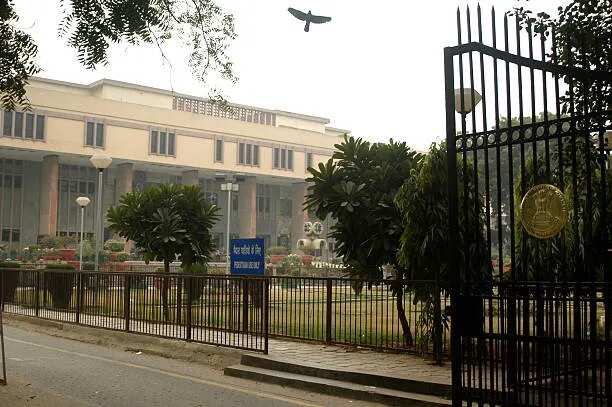
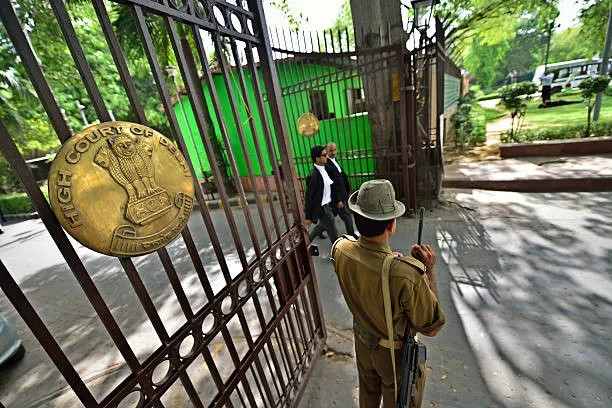
A Myanmar refugee has approached the Delhi High Court challenging Delhi University’s passport requirement for foreign admissions, arguing that the rule excludes UNHCR-recognised refugees from accessing higher education.

Delhi University’s admission policy for foreign students is under judicial scrutiny after a Myanmar refugee approached the Delhi High Court, challenging the requirement that applicants possess a non-Indian passport to seek admission under the Foreign Students Registry (FSR). The petition argues that the rule unfairly excludes refugees who have fled their home countries and are therefore unable to obtain travel documents from the countries they were forced to flee.

Petitioner Henry Htoo Aung Lin and his family fled Myanmar due to the political instability, which created aggravated fear in the hearts of many in Myanmar. These refugees have been living in India under protection from the UN High Commissioner for Refugees (UNHCR) since 2022. Since then, he has completed his schooling in India, and now hopes to secure admission to an undergraduate programme at Delhi University under the foreign students category.

At the heart of the plea is Delhi University’s FSR admission bulletin, which mandates a valid non-Indian passport as a prerequisite for admission. The petitioner requests that his UNHCR documents be accepted in their place and asks the High Court to strike down this requirement.

There exists a contradiction in the FSR framework. While Tibetan nationals without passports are permitted to rely on alternative documents such as Registration Certificates, no similar provision exists for UNHCR-recognised refugees from Myanmar. This creates an inconsistency which amounts to unequal treatment. 

The petition argues that the passport requirement overlooks the petitioner’s academic eligibility, as he has produced certificates proving his completion of Class X from the Mizoram Board of School Education and Class XII from the Meghalaya Board of School Education, establishing that he has fulfilled the academic requirements for admission. It further states that any discrepancies in his name or date of birth are merely clerical errors and do not affect his identity.

Invoking Articles 14 and 21 of the Constitution, the petition argues that the passport requirement is discriminatory and deprives recognised refugees of equal access to higher education and the dignity that comes with it. It also invokes the legal maxim lex non cogit ad impossibilia, which is understood as “the law does not compel a person to perform an impossible act,” contending that refugees cannot be required to produce documents they simply cannot obtain.

The matter is currently pending before the Court, which has sought responses from Delhi University and the concerned authorities before taking up the petition for further consideration.

Read Also: DU UG Admissions 2026: More than 82,900 students register for 73 courses in first phase of CSAS

Image Source: Foreign Students’ Registry

Ahana Dey

[email protected]


Delhi University aspirants all across India have been receiving scam calls from individuals posing as DU representatives, offering seats in their desired colleges for a ransom.


Due to its impeccable literary heritage, surmounting cultural importance and a great network of alumni, Delhi University stands out as one of the most aspirational and promising institutions for UG (undergraduate) studies. With CSAS phase 2 underway, where the college allotment process is decided by the preference list, students are navigating a mix of excitement, anticipation and nervousness. 

Despite the step-by-step process clearly outlined by the official website for admission to DU, a lot of students have reported getting scam calls from individuals claiming to be ‘admission counsellors’. They promise to prepare a personalised preference sheet for the students, helping them secure a guaranteed seat in their favourite college, all for a hefty amount of money. What makes the fraud particularly convincing is the callers’ apparent familiarity with the admission processes, quotas and college placements, lending credibility to their false claims.

Several students spoke to Hindustan Times regarding such frauds and one such student Tanya Rathi, from Ghaziabad reported:

My father received a call from someone saying, “I’m from DU.”‘ They said they help students with counselling and assured us that they would fill my preference sheet in a way that would ensure I get the college I wanted. In return, they quoted him ₹50,000.’’

Another student Rehan Chandra, from Jaipur stated:

The desperation to get into one’s dream college is such that once you hear the person take the name of a top college saying they can help get you admission there, one easily falls for it in that instance… When I received the phone, the caller asked me which college I wanted. 

Then the person on the other end of the phone claimed management quota seats were available and demanded ₹1 lakh to guarantee that I could get one.”

Multiple such incidents have been reported, suggesting that these are not isolated cases but a  part of a larger scam racket, taking place across all the cities, targeting the innocence and aspirations of the hard-working students and exploiting their lives for some amount of money. Such cases have occurred in the past as well. Last year a major fraud racket was caught by Delhi Police and Rs 1.34 crore was recovered in cash in Ghaziabad from two such scamsters who had been targeting the same group and sentiments. 

Similar instances of such frauds have also been reported and raised by users on Reddit of the r/delhiuniversity community who claim that they have been repeatedly contacted by individuals claiming to be the representatives of DU Admission Counselling offering direct admission. 

Addressing the concerns of such unsolicited calls, the Dean of Admissions of DU, Haneet Gandhi, informed:  

The university has repeatedly maintained that admissions are conducted only and only through the official CSAS portal. Any student receiving any such calls should not even think twice and report it to the concerned authorities immediately.”

Such calls are not meant to be taken seriously, and for any guidelines or doubts related to admission and the counselling process, parents and students are advised to refer to the official DU Admissions. 

If you get such a suspecting call, you could report it at www.sancharsaathi.gov.in / www.cybercrime.gov.in

Or call: Cybercrime Helpline Numbers: 1930, 011-20892633, 9319301930


Rajarshi Ghosh 

[email protected] 


Read Also: NCWEB applications open for B.A. (Prog) and B.Com; last date to register: July 24

Image Source: Adda 247