Author

DU Beat

Browsing

 An examination of the notion entrenched in our patriarchal society to place the onus of safety on the victims instead of curbing crimes or changing the patriarchal mindset.

According to the most recent government data for the year 2017, more than 32,500 cases of rape were registered in India, which comes out to around 90 a day. A lot of cases might not have been reported. In a lot of these cases, not to mention the harassment that countless women have to face on a daily basis, the one factor that is common are the instances of victim blaming that are offered by the patriarchal society as justifications. The idea of victim blaming in crimes against women is deeply entrenched in the Indian society, with the clothes the victim was wearing or the time she was out on the street being a topic of conversation instead of the lack of gender sensitisation, morality, or the brutality of the perpetrators.

From the countless instances during this year’s cultural fests across Universities, traditional safe spaces cannot even be seen as space. Even in these safe spaces such as colleges, hostels, and even homes, it is seen that the blame is shifted on women instead of addressing the root issue. A student from Indraprashtha College For Women (IPCW) and a resident from IP Hostel who wishes to remain anonymous narrates an incident from a hostel General Body Meeting (GBM). She says, “Along with our curfews and restrictions, we face this pressure to change and compromise our lifestyle to stay safe. In the GBM, a girl complained that the male workers stare at girls when we don’t wear a bra. Our Principal told us that its a hostel and we should dress properly and not wear shorts and wear a bra. So instead of making our hostel a safe space for us and checking the male workers, the blame was shifted on us.”

The idea is also engrained into what should be the first safe space, our homes. Varshini, an M.A student from Chennai says “My mom slut-shames me when my bra shows through my top. If I don’t want to get raped, I have to wear three layers of clothes in the Chennai sun. Comfort or safety is the choice I have to make.” This onus on women is something that women have been made to follow through fear instilled by the condition of women’s safety in our country and what they have seen growing up.

Recently, the nature of police in India and their brutality has come to light, with those who are supposed to protect massively failing to do so. This is also something that women have had to face even before it came into light for most of us, as Sakshi Singh, a student in Pune recounts a disturbing tale “This happened last May, I was in the car with my maternal uncle and we were going home, around 11 o’clock. These two girls on a scooty were riding beside us and looked panicked. They asked us to pull the window down. Then they explained how they just left left a party and two drunk guys are following them on a bike. My uncle was very concerned, so he drove alongside them, but the bike continued to follow, and they were shouting. They were even threatening the girls. We reached a junction soon, where there were two police officers. We stopped the car and told them the entire thing. The police just looked at the girls and said, “aise kapde pehen ke itni raat tak ghumengi toh hoga hi na” (if you wear such clothes and roam around at night then this is bound to happen), I was very shocked and irritated. Uncle took their names and complained to higher authorities later.” 

Without gender sensitisation, effective laws, lack of support, and an incompetent police force, women are left with nowhere to turn to. Women are forced to compromise their lifestyles and identity for basic safety. It is high time that the culture of victim blaming is fought back against and more emphasis is put on curbing these crimes through gender sensitization and teaching the concept of consent to men from a young age along with the government actively working to curb these crimes instead of putting the onus on women and telling them how to dress or when to leave their homes and come back.


Feature Image Credits: FreePressJournal

Prabhanu Kumar Das
[email protected]


Issues concerning women have been raised time and again. But still it’s mere man who dictates over ‘Devi’. It’s high time to realise the importance of a woman’s voice.

“I have been wronged”, she hollers. Everyone applauds her valour, says her voice is cared for. But none comes forward to stand with her, and now the wrong just becomes a blur.

We have come a long way since the beacon for equal rights, opportunities, and dignity for women was first kindled. It’s truly remarkable how feminism, the women’s suffragette movement, etc. have had such incredible impact on the male dominated construct of our society. The woman of today, empowered and enlightened, stands at a far better position than any time in history.With the turn of the century, as women were jostling with the unjust norms and discriminatory prejudices of the past, they also had to combat some ‘state of the art’ issues, concerning access to amenities and representation at the ‘table’. But so wondrous is the taste of liberty and appreciation of self, that women push on with greater vigor and zeal, determined never to turn back. Movements like #MeToo and Time’sUp, and the raising of issues like equal pay, sexism, reproductive rights etc. showcase a growing awareness for an egalitarian society. Because of the internet and social media, they garnered huge attention and tried to topple the patriarchy-ridden aspects of a woman’s existence.

Yet, they also showed that the voice of women is rarely ‘heard’. Often, when a woman speaks out about any kind of abuse or unequal treatment; she is silenced at first and if this does not work, she is ridiculed and publically shamed. Her distress is termed as mood swings, tantrums, and ‘Aurat ho, ye toh hota hi hai (You are a woman, this happens)’. No wonder hundreds of cases of rapes, violence, and sexual misconduct go unreported all over the world. Even when the angst expressed is taken note of, no serious action against it is taken. For instance, out of numerous cases of sexual harassment that disclosed because of the #MeToo movement, only a few perpetrators have been hauled to the court. There are many committees, NGO’s, government departments that work for women related issues. But as a man’s ‘roar’ often overpowers a woman’s ‘squeal’, they either have a man at the helm or it is the men who are the policymakers; which robs the destined objective of ‘welfare of women’ of having the much required opinion of the women themselves.

In an article by Cecilie Hestbaek for the United Nations High Commissioner for Refugees, she quotes “…while women’s voices don’t need ‘strengthening’ as it is sometimes referred to—they need to be listenedto better.” Issues concerning women are being raised vociferously but what we need is hearing them out and directing concerted actions towards them.We, as women have struggled hard to discover our voices and now it is time to make them paid due heed to. Our insecurities, mistrust in our strengths, and fear of society weigh us down in this flight towards justice. Only with a passionate collective effort, inclusive of all from men, women, young girls to queer women, trans people, and by embracing and strengthening ourfeminine qualities, do we have a strong chance of building upon a future promised to us under the grace of the universe.The institutionalised patriarchy in the Indian society and the belief of women being the inferior gender enables male superiority and deteriorates the condition of women in the country, rendering their voices unheard and unbelievably subdued. It is high time that women and their opinions are given centre stage and their voices are given equal importance.

Image Credits: SabrangIndia 

Ipshika Ghosh

[email protected]

After years of lamented echoes for equal rights, certain women still haven’t received acknowledgement, let alone echelon in their fields of work, where they are included only to be left excluded.

Little did we know that the omission of a woman’s efforts would be carried on post her existent life.  This is extended to the point where she would be kept away from being posthumously recorded in the National Crime Records Bureau (NCRB) data of farmer’s suicide. P. Sainath, a veteran Journalist and founder of PARI, People’s Archive of Rural India, at a National Conference of Indian Association for Women’s Studies (IAWS) took a jab at this agency by calling it, “a paradise for women,” where zero accounts of female farmer suicide is reported. He called Punjab and Haryana the “seventh heaven” where logistics seem to have flunk. These states have large numbers of female farmers but no documentation of their Harakiri. He goes on to voice a spine chilling question,”Where do they hide the corpse?” 

In decoding the primary reasons behind the aforementioned exclusion, it’s imperative to understand the methodology which is incorporated in computing the numbers. It’s fraudulent since it houses eight exclusions. Three of the largest amongst them are women, Dalits and Adivasis, with women being the single largest exclusion.

In economic jargon the terminology of ‘imputed cost is used to categorise or rather limit the labour provided by women since they are pushed in the bracket of ‘housewives.’ Although this concept acknowledges the work done by them, it fails to provide for a calculative mechanism to approximate the same. Consequently their contribution doesn’t make it to the calculation of national income. Sainath said, “Post 2014, the sins of omission have been joined by the sins of commission.”

According to the Oxfam Annual Equality Report, 12.5 billion hours of unpaid work is contributed by women and girls every day of each year across the world. This math equates to USD 10.8 trillion annually, which is five times India’s GDP and more than three times the size of global tech giants like Amazon, Apple and Microsoft.

The problematic aspect of the prohibition lies in answering that how are we to solve to the problem of farmer’s suicide as a whole when we are busy ostracising another group from the records? The problematic aspect charges more when women themselves are made to realise that their labour devotion is secondary or relatively unimportant or doesn’t qualify as being worthy enough to get paid. This is a classic example of Italian philosopher Gramsci’s hegemony model, where the subordinate class would concur, willingly to oppression of the upper class with a little negotiation. 

It’s a dissappoinment that the NRCB is the best possible record data to show the menace of farmer’s suicide. Its bereftness when it comes to registering women- speaks volumes about the societal prejudices affecting economy and society. The cause is not inked therefore, it reinforces the perpetuated state of exclusion which therefore demands a dire need to be changed. This starts by eradication of the association of unpaid work with what we classify as a homemaker’s job. Acknowledging the imputed cost and ending of hegemony would in turn put an ending to the discrimination that happens in the agrarian economy and elsewhere in the socioeconomic forum.

References taken from P Sainath’s speech at his valedictorian address at the XVI National Conference of IAWS published by India Today: https://www.indiatoday.in/india/story/women-are-the-single-largest-exclusion-in-india-s-farmer-suicides-data-p-sainath-1642141-2020-01-31


Image Credits: PARI Network

Umaima Khanam

[email protected]


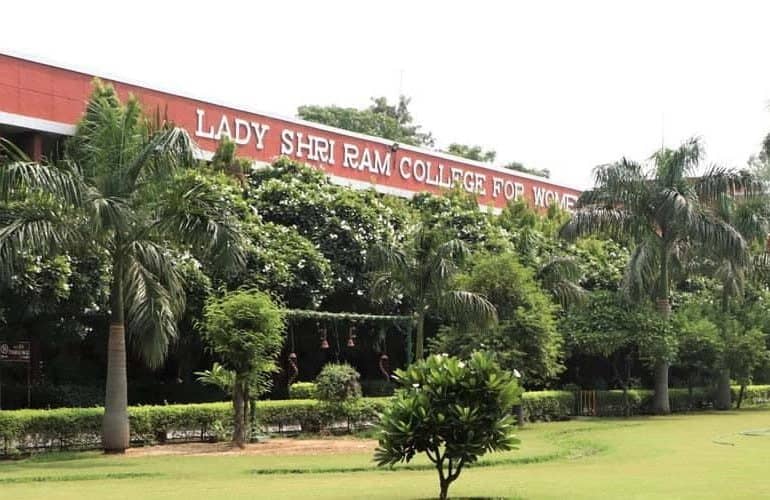
The English department of Lady Shri Ram College for Women called for a series of General Body Meetings in light of the increasing state of communal violence faced by the city and its people. 

On 2nd March 2020, the English department called for a General Body Meeting at the Peace Centre. The GBM was centered around the issue of increasing state of communal violence faced by the city and its people, and was called in order to decide the extension of help to those affected by the violent environment. Following message was circulated by the English Department Union: “Minutes of Today’s Meeting and Call for GBM. In today’s meeting, we discussed the current political climate and what the department can do to play its part. 2A’s decision to boycott classes indefinitely was discussed, along with similar boycott by the department collectively, as well as collection drives, fundraising efforts, and volunteering at protest sites.

Students suggested the following ideas:

-Freeze attendance in case of classes undertaking boycotts or students unable to attend classes.

-Have one event a week wherein professors can discuss the larger situation creating space for discussion

-Publish a collective narrative of real experiences, use blogs and social media to raise awareness

-Restructure class lectures making classrooms flexible spaces for open ended discussions, if people really want to attend them

-A schedule of extra classes by teachers, or study sessions with seniors, once the boycott is over.

Some students also expressed their reluctance to boycott as they felt it could be a tokenistic gesture. The union has expressed these views to their staff advisors and administration and will be addressing the department about possible ways forward tomorrow at 10:45 in the peace centre before the protest gathering. If you are able to come to college, please attend this GBM. 

English Department Union” 

The action of boycott was first initiated by a section of second year students pursuing English honours. The section decided to go on indefinite boycott of classes in order to join protests and shake the illusion of normalcy on campus. However, differing views did arise. “I feel that it’s a very elitist stance. To go on an indefinite boycott could just hamper the education of the marginalized sections. Some can afford to pay to repeat the semester but can everybody do it? Also, what are we even doing while carrying out a boycott? Do we have a charter of demands? Are we taking any substantial step to improve the situation and actually utilize the time we have because of the boycott? If it’s only about being able to join protests then even a partial boycott on days of protests can fulfill that need. And if it’s only about showing that normalcy does not exist then it can be done while also attending classes. For instance, people could organise protests on campus after classes or wear symbols of dissent like t-shirts or any other such thing that says stuff like no NRC, CAA, NPR.”, said a student from 2A who wished to remain anonymous. On 3rd March 2020 the Union discussed their conversation with staff advisors and possible ways forward with the department. One of the resolutions was conducting online anonymous polls. Two possible outcomes came into perspective. Firstly, total indefinite boycott wherein the “entire department will call for a total boycott irrespective of internals and attendance, in solidarity with students from affected areas”. Secondly, partial boycott in which “the department will call for a boycott of classes post 11am (or suitable time), irrespective of attendance and internals, in days in which protest marches and gatherings are scheduled”. On the same day, the department announced the following: “After repeated GBMs and a vote, the department has reached a tally of 115 votes for a total boycott and 68 votes for a partial boycott. However, after the count was over, 23 students have approached us asking for a revote with a “No boycott” category. Since the option was not expressed by these people or their representatives at the GBMs, and since there is an overwhelming majority for a total boycott, this is the stance that we will be following. Since mid-sem break is right around the corner and questions arise about the situation concerning the same, we will be re-evaluating once college reopens post break.” 

IMG-20200303-WA0040~2

Many students complained about the inability to express their views freely. “I also don’t feel absolutely free to be able to share an opinion that the majority does not support because if someone is speaking of wanting to attend classes, all of them are trying to educate her on how the boycott is important and how they are being insensitive by thinking of classes so they’re trying to just reinforce their opinion all the time when they should try to accommodate everyone’s voices.”, said a second year student from Lady Shri Ram College for Women. Another GBM was called on 5th March 2020 at 11am, to discuss the matter with the department. The following message was circulated by the Union: “Based on the GBM today, the department will be following a partial boycott stance as a collective, wherein the entire department will only boycott all classes on days of protest marches and youth gatherings. However, individual sections are free to follow a total boycott stance provided the entire class agrees to this motion. This decision comes as a result of groups of students feeling bullied and targeted for picking a stance or for attending classes, as well as the confusion in communication between students and their CRs. Note: 

  1. Classes will take place for those who wish to attend.
  2. For students unable to attend college due to safety concerns, the union will be making attempts to ensure that attendance is granted to you all and extra classes can be arranged as well.
  3. For students or classes who wish to boycott indefinitely, some teachers are willing to take extra classes in order to ensure that you do not miss out on syllabus.
  4. If a section comes to a consensus about total boycott, their CRs must communicate that to their teachers and ensure that no student is attending classes on the days of total boycott. 

Further discussions are awaited after the mid-semester break. The department also has its annual conference- Litmus 2020 scheduled on 20th and 21st March 2020. 

Feature Image Credits: DU Beat Archives 

Image Credits: Department of English, LSR


Priyanshi Banerjee

[email protected]

Language is being altered to bring change, create conversations among people, and include certain communities. The effectiveness of the same, however, doesn’t enjoy consensus.

For centuries, women have been on the receiving end of objectification, racism, and sexism. Waves of the feminist movement have attempted to minimise the gap between genders across the world. Amid these efforts, some activists and linguists realised the role of language in perpetuating the existence of harmful sociological patterns. A tool as basic as language, they believe, has the power to bring about change by breaking the normalcy in the lives of people.

The term ‘womxn’ is an alternative term for the English language word ‘women’ which have been used occasionally to explicitly include transgender women. Scholars of English have used terms like “wimmin” and womyn”, as an alternative to rejecting the folk etymology of ‘woman’ allegedly being ‘of man’. While the cause behind the usage of this word is noble, the very idea of altering the language to bring change has failed to invite consensus from people.

In October 2018, a programme of events at the Welcome Collection, a museum in London, ‘Daylighting’ used the term ‘womxn’ and triggered a national controversy in the United Kingdom. While some supported theidea, many others outrightly rejected it, with a belief that the word is ratherexclusive, and portrays transgenderwomen as being different. The intersectionality that the word seeks to achieve fails to achieve unanimity. A few days later, Welcome Collectionapologised publicly, owing to thebacklash received by it on Twitter and elsewhere.

There are multiple views regarding the same. A Twitter user, Sam Baxter, asked, “Who exactly is this meant to include? Trans women call themselves women, non-binary people don’t call themselves women at all. The only thing that comes to mind is that this could be to include both ‘woman’and ‘women’, which implies there are women who identify as plurals.”

Priyanshi Banerjee, a student of Lady Shri Ram College for Women said, “Languages and linguistics are not isolated from psychology and society, these are overlapping concepts. The introduction of ‘womxn’ as a term would be fruitful. Even if one person bats an eyelid over the term and googles about the word, one would come across the word- ‘woman’ and realise its etymology- ‘of man’, that would mean the realisation of deep- seated patriarchy which exists without realisation. That realisation is a victory.”

While there are harder conflicts regarding the inclusion of different genders, most people are on a consensus regarding the patriarchal nature of the word ‘woman’. Women, the most importantstakeholders of this issue, are not at one with each other, when it comes to doing away with it. Some of them believe that altering language isn’t fruitful, and the conversations that it might bring about are restricted to the privileged class, who are not victims of the same kind of oppression. The inclusion that this word aims to achieve, they think, is both tokenistic and unnecessary.

But there are others who believe that language, as a tool is effective to bring about change. Terms like “wimmin” and “womyn” were introduced to normalise the pronunciation of words employed by certain communities. They think that something as basic as language can create powerful conversations around the norms of patriarchy, and the exclusionary nature of certain words.

In the end, certain questions linger. Is language effective enough to bringchange? If it is, should it be used at all? Are we, in order to create conversations, willing to appropriate the lives of certain genders, who might or might not agree with the usage of such words?

Feature Image Credits: Rukshana Kapali, Transgender Activist

Kuber Bathla

[email protected]


Locke and keys, the latest web series is another addition to the thriller and mystery category by Netflix. The American supernatural horror drama is based on the comic book series Locke and Keys written by Gabriel Rodriguez and Joe Hill.

Spoiler Alert!

The story revolves around a mysterious and spooky house, the key house which is filled with magical keys and their key holes. The series begins with a misshaping when a person after receiving a phone call of a women commits suicide by stabbing himself, not with a dagger but with a magical key, which burns the interior of his body. The entire mystery behind the dreaded incident is disclosed gradually with the progression of the plot.

The intriguing beginning proves successful in filling the audience with curiosity and makes it unable for them to leave their watching seats. Two teenagers, Kinsy and Tyler along with their six year old brother, Bodey come out as the three central characters in the show. The intellect and the extraordinary problem solving efficiency of the six year old boy is questionable with respect to his age. In an age where an ordinary kid is unaware of the realities of the world, Bodey comes out as a co-life saviour of his family.

The story is a perfect plot for the people taking pleasure in watching magical, fantasy and supernatural related stuff. The three central characters along with their mother, Nina move to the key house after Nina’s husband (Rendel) gets murdered in their previous home. The ten episode long series in its every episode, like every other suspense filled Netflix series discloses one mystery while creating another for the next episode.

One thing which remains consistent in almost every episode is the discovery of a new key. Starting from the miraculous ‘anywhere key’ which if put in a door and opened leads you to the place you thought about in your head, to the ‘identity key’, revealed in the last episode which changes the identity of a person, irrespective of their gender.

Overall the first season of this new venture by Netflix is a good combination of mystery and thrill, which sees success in even touching the emotional corners of the heart. The family bonding and mutual support for each other in the times of distress, along with Bodey’s childish innocence moves the audience and leaves them with a deep excitement for the next season.

Feature Image credits: IMDb

Kriti Gupta

[email protected]

Debates and discussions on climate change have been going since centuries, but it is seldom that the role of gender is recognized in sustainable planning and implementation. 

The year began with horrific bushfires ravaging the heart of Australia and spurring the grave issue of climate change that has been haunting us since many decades. Even after much scientific evidence and climatic emergencies, many of our world leaders blatantly deny its existence and waver it off as ‘bulls**t or just a change in human habits’. But, not only is there a need to address it on a huge scale but also ponder over some of the more important aspects of climate change; such as ‘gender’. 

Changing climate is one of the most daunting global challenges of our time. The degree to which people are affected by climate change impacts is partly a function of their social status, gender, poverty, power and access to and control over resources. Over the next decades, billions of people, particularly those in developing countries, are expected to face shortages of water and food and risks to health and life as a result of climate change. Accounting for 70% of the world’s poor, women are the most vulnerable among them. 

It is quite astonishing that climate change is not ‘gender-neutral’. It impacts men and women differently due to a variety of reasons that can be attributed to ‘gender differentiated’ powers, roles and responsibilities. Ecofeminism is a branch of feminism that specifically observes “the connection between the exploitation and degradation of the natural world and the subordination and oppression of women.” High dependence on local natural resources for livelihood, limited mobility, and unequal access to resources, policy and decision – making processes are some of the reasons for natural disasters affecting the lives of women more abundantly. Moreover, socio-cultural norms limit women from acquiring the information and skills necessary to escape or avoid hazards (e.g. swimming and climbing trees to escape rising water levels). For instance, during the Asian tsunami of 2004, 70% of the victims were women as many women and children were trapped inside their homes. A lack of sex disaggregated data in all sectors (e.g. livelihoods, environment protection, health and well-being) often leads to an underestimation of women’s roles and contributions. This situation then results in gender-blind climate change policy and programming, which are inaccessible to many and thus turn out to be ineffective. 

But why should we include ‘gender’ in the climate effort? As men and women face their social, economic and environmental reality in different ways; how they participate is also different and is closely related to age, socio-economic class and culture. So, the gender approach helps tackle issues on a much inclusive and wider scale. Women can contribute to livelihood strategies adapted to changing environmental realities as play a pivotal role in natural resources management and in other productive and reproductive activities at the household and community levels. They tend to share information related to community well-being more extensively, choose less polluting energy sources and adapt more easily to environmental changes when their family’s survival is at stake. Women’s greater participation also enhances the effectiveness and sustainability of climate change projects and policies. Research has also revealed the importance of gender equality and women’s empowerment to environmental sustainability and thus gender equality has been recognized as one of the Sustainable Development Goals. 

The climate protests in Nigeria exemplify the powerful role of women as agents of change. In 1999, Nigerian women headed a world movement to stop flaring natural gas by a transnational oil company. They organized simultaneous protests and awareness workshops in Nigeria and the United Kingdom that resulted in the company’s London headquarters being closed, and the temporary closing of the wells. Finally, in January 2006, the Nigerian courts cancelled the gas company’s licence.  This unprecedented international action demonstrates women’s ability to act as important agents for change who can help to mitigate climate change. Also, climate activists like Sunita Narain, Greta Thunberg, Christiana Figueres, Hindou Oumarou Ibrahim and so on are bringing in diverse views and working for a sustainable future. 

United Nations climate change negotiations, void of gender-related texts and discussions until 2008, have more recently reflected an increased understanding of the links between gender equality and responding to climate change. But more concerted efforts need to be made all over the world.  Promoting education of girls is vital as it would provide financial security, agency at home and society, and give the capacity to navigate climate change. Access to high – quality, voluntary reproductive health care and advancing equity and well – being must be the aims of family planning, which would in  turn reduce demands for food, infrastructure etc. 

Gender-sensitive structures, guidelines, projects and tools need to be developed for all climate change financing mechanisms supporting adaptation and mitigation actions, at all levels by conducting an in-depth and evidence-based analysis that takes gender as one of the criteria. 

Katharine Wilkinson in her TED talk on ‘How empowering women and girls can help stop global warming’ quoted – “Some segments of human family cause exponentially greater harm, while others suffer outsized injustice.” The gender – climate connection extends beyond negative impacts and powerful solutions. Women are vital voices and agents for change on this planet and yet we are missing or barred from the ‘table’. All of this does not mean that only women have the onus of fighting climate change; it is just that we need to acknowledge the role of gender as a requisite for our climate effort’s success. The dynamics are not only unjust but leading humanity to failure. We need to bring diverse voices, including those that are typically excluded, into decision making to identify the best solutions for adapting to climate change. This is the only way we can build families, communities and societies that are resilient to the impacts of climate change. For this to be effective, we need to start from the premise that everyone matters—rich or poor, farmer or civil servant, woman or man.

Image Credits: Pinterest

Ipshika Ghosh 

[email protected] 


Dear Amma,

I believe I am not made for monogamy as I have a tendency to always look for companionship outside of my relationship. Is there something wrong with me? What do I do? 

Oh, dear Idli

Relationships, loyalty and boundaries are always better when well-established. Exactly how there is no perfect recipe to the exotic Sambhar, there is no one perfect recipe to relationships. My Uttapam, who said monogamy is the sole gold standard of relationships? 

Amma doesn’t approve of breaking someone’s heart or infidelity. If monogamy is not who you are, why not talk to your partner? Like the idli batter has to be of the right proportion, you too must establish the appropriate base. Communicate with them and express your dilemma, if polyamory or open relationship seems like an ideal dish to them, why not try it out? Historically, like masala dosa being a total favourite, monogamy has never been one. 

Macchi, like every well-made dosa-sambhar, every relationship should establish their boundaries. If your partner approves of your new dish of open relationship, devour it together. If not, re-think your choices, either learn to control the urge or establish a consensual common ground. Amma believes that all acts of love should be consensual. Ensure that your partner doesn’t lose trust and belongingness towards you. 

Unlike science, no one law fits all love. It takes years of understanding, compatibility and love to bring a new change, to make a new start. Amma would be disappointed if my little idli broke someone’s heart.

However, do not self-question yourself, you might feel that you are wrong, insufficient or morally incorrect. Believe when Amma says, you are not. Monogamy or Polyamory, it should always be consensual and pre-established.

(Write to Sex Amma at [email protected] to get all your queries about sex answered.)

Sex Amma
[email protected]


Read the analysis of a powerful dystopian web series, The Handmaid’s Tale, to compare the contemporary authoritarian times with ones highlighted in the web series. 

The Handmaid’s Tale is an American dystopian web series based on Margaret Atwood’s novel. It revolves around the theocratic government of Gilead, where women have no purpose other than bearing off-springs, and men are the ones with all the authority. 

The makers of the show have released three seasons as of now, and these revolve around the lives of the ruling elite of Gilead. The authoritarian government of Gilead views fertile women as mere natal slaves who are allowed to play limited roles. These women, called the Handmaids, are assigned to the homes of the ruling elite and are subjected to ritualized rape which is called ‘the ceremony.’

The ritual is a monthly practice that continues until the handmaid conceives. After conceiving, the handmaid is treated fairly nicely by everyone to make sure that the handmaid does not escape with the child. If they fail to submit to their masters, handmaids are severely punished. The punishment for reading for women is a chopped-off finger.

The civil war in the United States resulted in the establishment of Gilead. Homosexuals, old, and handicapped women are sent away to work at sites with high nuclear radiations, which slowly kills them. The Marthas are cooks and housekeepers, just with one duty, and that is caring for the homes of the elite. Girls are forced to marry older men at a very young age. There are heavy restrictions on what the people of Gilead can wear.

The plot of the show is extremely compelling, and consists of a cliffhanger at the end of each episode. The protagonist of the show, June Osborn, is captured while trying to escape to Canadaand is assigned to the Waterford family as a handmaid.

The entirety of the show thrives on the emotions of gloominess, suffering, and faint hope. For most offenses, the punishment is death by hanging in public. The government is extreme in every action it takes.

Tejasvi, a student of Lady Shri Ram College says, “The show is so engaging, it almost feels like we are living this reality. The plot is unique and keeps you at the edge of your seat the entire time.”

Feature image credits- Glamour

Suhani Malhotra

[email protected]

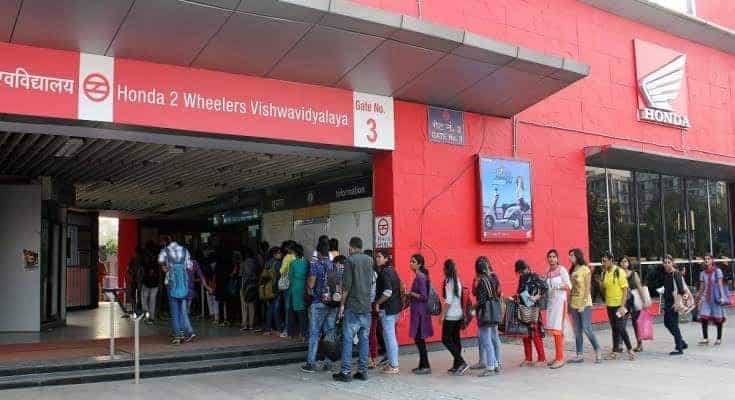
The National Green Tribunal (NGT) has suspended environmental clearance for the 37-floor high-rise that was to be constructed near the Vishwavidyalaya metro station, claiming that the approval for the building was given “without application of mind” and that the project is “simply not viable”. 

The National Green Tribunal suspended the environmental clearance given for the thirty-seven storey high-rise that was to be constructed near the Vishwavidyalaya metro station, claiming that the approval regarding the building was given, “without application of mind”. 

The Tribunal noted that the carrying capacity of the university area wasn’t kept in mind and that it cannot sustain such a building. The NGT claimed that the air and noise levels of the area are already over permissible levels and that the location of the building is extremely close to important forest reserves, the Yamuna river, as well as notable educational institutions- the University of Delhi’s North Campus- and hospitals, with a high traffic density and therefore such a project is, “simply not viable”.

The project area which was originally 3.05 hectares of land in Civil Lines was acquired by the Delhi Metro Rail Corporation from the Defence Ministry in 2001. The Vishwavidyalaya Metro Station was built on 1 hectare of land, while the rest was sold to Young Builders Ltd. 

Various protests by student and environmental organisations and parties were held protesting against the building of the high-rise, owing largely to the environmental and health risks and hazards that it posed. The protests gained a lot of traction and support from students and environmentalists. As a response, the NGT has requested a separate evaluation of the project via a team comprising of those from the Environment Ministry, Central Pollution Control Board, and others, and has sought a report regarding the issue from the same within two months. The developer has been restrained from all further developments and building activity until 9th July 2020. 

Feature Image Credits: DU Beat Archives

Shreya Juyal

[email protected]