
Author

DU Beat

Browsing

I am the beloved of every human irrespective of their gender, irrespective of their age. The ultimate present of every occasion which never fails in retaining a laughter on an incident when one can bet of never smiling again. The richness of the cocoa, the sweetness of my bitterness lifts your spirits and serves as an eye opener on the nights meant for assignment completion. Yes, you guessed it right, I am your personal ambrosia, your life saviour, your CHOCOLATE, here I am today to take you on my journey from a bean to bar so are you ready?

My journey just like you my eater buddy is not that easy. I take birth in the tropical and humid climate which observes a short dry season and a regular rainfall of 1000-2500 mm per year, beginning my life as a cocoa bean amidst the greens of the cocoa trees I fill the surroundings with my rich aroma. The quality of the cocoa and the climatic conditions play a very important role in deciding my characteristics and flavour, and as quoted by sophocles, “If one begins all deeds well, it is likely that they will end well too.” holding the same relevant a good quality been is necessary for the production of a delicious chocolate.

After harvesting, the pods are opened and the seeds are removed which makes me ready for the next step which is fermentation. Just like a human baby after birth is given intensive care to increase its immunity for handling the exterior environment, similarly for intensifying my bitter flavour the beans are fermented for around five days. This process produces heat and demands a periodically regular stir. The perfectly fermented cocoa is then dried for around 15 days removing all the moisture attracting mould, when this process is over only the dried beans are selected and the remaining are discarded from further processing.

Drying marks a transition in my journey. A switch from the hands of my birth giver farmer to the hands of a professional chocolate maker. After drying, the chocolate maker roasts the beans at 210°F for around 10-15 minutes. Roasting, apart from sterilizing the beans also enhances its flavours and makes the next step much easier. This is followed by winnowing, the most important part of my journey which exposes the very best part of my initial bean stage. During this process the chocolate maker removes the outer shells revealing the nib of the cocoa beans – the most desirable part of the initial me.

The nibs are then ground either by machinery or in between heavy stones which result in the production of a heavenly elixir in which addition of sugar produces what is called as cocoa liquor. Changing my state from solid to liquid, grinding is the step producing the primitive version of molten chocolate. Sometimes, many makers instead of grinding go for the technique conching, which involves a continuous mix of the cocoa mass on a certain temperature. This technique does a combination of things such as drying (in case bits of moisture still remain), developing flavour and crushing the large pieces (if any).

Now, after all this to make me regain my original solid state the next step, which is known as tempering is done. During, tempering the chocolate produced in the previous step is heated and is allowed to cool slowly at its own, this enables the cocoa mass to stabilize and solidify properly. It is the most essential part in my entire production as in its absence my solid state does not harden well. And, finally after all these steps of intensive skill and hard work you have your favourite chocolate bar to scintillate your senses.

So, now my eater friends you know my entire journey, would love to know yours as well, you can share your journeys and your life stories on the below mentioned email Id. Till then farewell eaters and, keeping chewing your chocolate.

Feature Image Credits : Scopio

Kriti  Gupta
[email protected]

A 22-year-old student was attacked with a stone in Maurice Nagar, North Delhi. Police suspect a victim’s male friend behind the incident. 

On 22nd February 2020, Delhi Police received a call around 11:30 AM about a woman lying unconscious near Bonta Park. The woman had sustained serious head injuries and was taken to Bara Hindu Rao Hospital, where she was unconscious, but the doctors were hopeful for her survival, according to a senior police official. 

The official says “Her mobile phone was also found lying at the spot. Angles of robbery or sexual assault have been ruled out in this case.” A case under section 307 of the Indian Penal Code (attempt to murder) was registered and an investigation was taken up. The 22-year-old student was a graduate from University of Delhi (DU), and was currently studying at an institute in Ghaziabad. She was a resident from East Delhi’s Kabir Nagar.

The police suspect a male friend of the victim after analysing her call logs, with whom she had an argument. The official is quoted as saying “Call detail records of the victim were analysed and it is suspected that she had a fallout with a man who attacked her. We are waiting for her statement for further probe”

The victim’s family was informed after the incident, after which they reached the hospital.


With excerpts from The Hindu

Prabhanu Kumar Das

[email protected]


Executive Council, and University of Delhi (DU) Court urged the administration for the urgent release of pensions of retired DU teachers.

Members of Delhi University’s Executive Council, and the Delhi University Court, wrote to Vice-Chancellor Yogesh Tyagi demanding the urgent release of pensions to retired teachers.  

“We have been approached by many retired teachers whose files for the pension have been stuck in the administrative logjam for many months, despite being cleared for the audit. We have come to know that hundreds of such files are gathering dust in the office”, the petitioners, J.L. Gupta, Rajesh Jha of the council, and Rajpal Singh of the DU Court wrote in the petition.

Emphasizing the case of Novy Kapadia, who reportedly retired from STGB College in 2018 and served as Deputy Proctor at the University for seven years, Academic Council member Saikat Ghosh said that despite being diagnosed with a rare disease early this year, the university had “…not deemed it urgent to disburse a single penny of his hard-earned pension.” Mr. Kapadia’s case was not an isolated one, but in fact illustrative of problems faced by all retired teachers of the University, especially those whose pensions have been held up on “some flimsy pretext or the other”, he added.

The issue is a grave concern as these suffering teachers have dedicated their lives to the University, and is now on the receiving end of a raw treatment from the administration. The petitioners urged the administration to resolve the logjam on an urgent basis, to end the misery of their senior colleagues awaiting their due pension.

Feature Image Credits: DU Beat Archives

Paridhi Puri

[email protected]


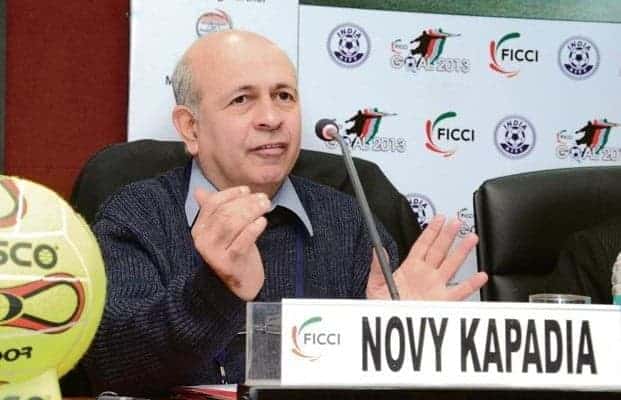
Retired DU Professor, Novy Kapadia, who battles a rare Auto Immune Disorder, is one amongst the hundreds who still haven’t received their pensions from the University, after retirement. 

Novy Kapadia is a retired professor of English who taught in SGTB Khalsa College, University of Delhi (DU) for more than three decades. He is also a renowned sports commentator and author of a book on Indian Football, Barefoot to Boots. A member of several DU Boards and Committees during his career, he retired from office about two years ago.

Since then, he’s been diagnosed with a rare Auto Immune Disorder that has caused irreversible damage to his nervous system and has crippled him.

The problem? He still hasn’t started receiving his pension.

His critical medical condition owing to Auto Immune Disorder has rendered him partially disabled and confined him to the four walls of his house. He bears the huge cost of treatment alone, without a source of income, solely relying on the help of former colleagues and students.

In conversation with DU Beat, professor Kapadia said, “It has been around two years since I have retired. I served in many committees throughout my 40 year career and was a very active member of the DU teaching fraternity. After I retired, I got diagnosed with this incurable disease. My disease isn’t one that can be cured with a surgery or like a virus which goes away with time. I don’t have any relatives to rely on either, it is only my ex-colleagues and former students who are there. I have a full time attendant, who charges INR 100 an hour. All this while, I haven’t received a single penny of my pension. No money comes in, money is only going out. That is very scary for me.”

However, he is only one, amongst the hundreds who haven’t received their pensions either.

“My file is one amongst the many. This issue has been going on for such a long time and there has not been any conclusive results yet. while my friends and colleagues in these councils and committees have tried to raise the issue, no one from DU has officially said anything regarding the pension,” adds professor Kapadia.

The problem finds its root in a 2014 University Grants Commission (UGC) decision, where the UGC decided to stop the payment of pensions, as the scheme was launched in 1987 without its permission. What followed was a court case that lasted till 2017, where the Delhi High Court finally ordered for pensions to be released for all employees.

Despite the High Court order, as can be seen in Professor Kapadia’s case, there hasn’t been any progress regarding the pensions.

Delhi University is sitting over a bunch files relating to pensionary benefits of superannuated teachers. Novy Kapadia is one such victims of apathy and indifference of a cruel administration, who has been denied regular pension since he retired almost two years ago. How dare a system treat us like this after superannuation and force us to be left in the lurch?,” says a statement in support of the ex-professor.

Saikat Ghosh, member, Academic Council DU, adds, “In his ailing state, Mr. Kapadia’s troubles have been compounded by the Delhi University’s refusal to fix his pension and help him meet his treatment expenses. Due to no fault on his part, the DU administration has not deemed it urgent to disburse a single penny of his hard-earned pension. Mr. Kapadia’s case is not isolated; in fact it is illustrative of the problems that all retired teachers are facing, especially those whose pensions have been held up by the DU administration on some flimsy pretext or the other, in recent years. Many are ailing and in need of urgent care and assistance. This is a brazen violation of the legally-guaranteed right to pension and full retirement benefits for DU teachers.”

According to Professor Saikat Ghosh, repeated pleas to the current VC, Prof. Yogesh K. Tyagi, have gone unheeded and the union government has also refused to withdraw its ill-advised SLPs against sections of teachers who have been due for pension.

Image Credits: Livemint

Satviki Sanjay 

[email protected]  


The infrastructure and development that smiles across the grand old city of Delhi, has received a new face of direction, but the previous grace has an angle that must not be forgotten.

The Delhi Legislative Assembly Polls of 2020 saw a ‘big broom sweep’ across constituencies with the people’s mandate affirming the development model put forth by the Aam Aadmi Party (AAP), and it’s Supremo, Arvind Kejriwal. but is this the first time in Indian or Delhi politics at all?

The country broke with a ‘new wave’ of politics when incumbent Delhi Chief Minister (CM), Arvind Kejriwal and his AAP were declared as the unanimous voice of Delhi’s electoral population, inclining them for a third consecutive term after a complete term and an incomplete term, previously. Standing against the Bharatiya Janata Party (BJP) and Indian National Congress (INC), Kejriwal defied anti-incumbency which has been sought to be the irrefutable force in elections.

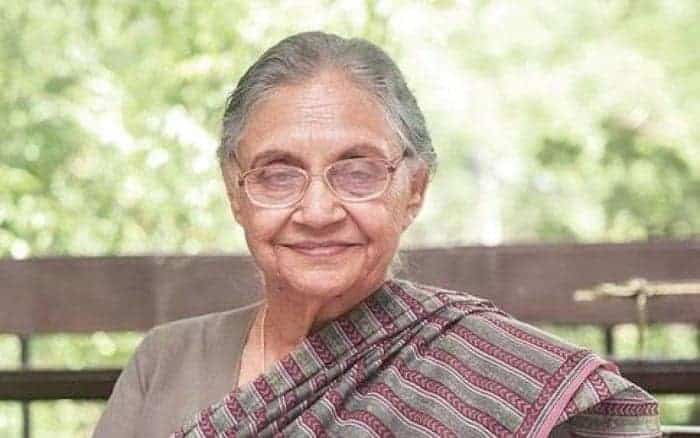
With faces like Home Minister, Amit Shah, and other national leaders of BJP standing against AAP with the ‘reputation’ they hold, winning the elections should be considered a feather in AAP’s hat; their previous term and campaign was called ‘unique’ by many for the welfare schemes and development it brought in the state, particularly in education and health care sectors. But, as to these changes taking place for the first time, Delhi itself shunned out this claim, Congress Stalwart and former Delhi (CM), Sheila Dikshit served the state for three consecutive full terms, and in many regards changed its course for the better. Akin to Kejriwal, she was elected as Delhi’s Chief Minister at a time when an opposition party was in power at the center and Atal Bihari Vajpayee was as popular a leader as Narendra Modi is.

Rising amongst contestants like Shushma Swaraj, Madan Lal Khurana, and Sahib Singh Verma, Dikshit was elected as Delhi’s CM first in 1998 and again in 2003, and 2008 with full majority, her work towards Delhi’s development is well appreciated by everyone, despite of party affiliations and ideologies.

The champion of Delhi’s development and planning held a positive approach in almost every aspect of governance, from empowering Delhi’s power supply which was in a fix before 1998, to solving the problem of lack of public transport – our beloved Delhi Metro saw its existence during Dikshit’s term and is lauded all over for the revolution it brought in the lives of commuters.

The DTC bus also lends its current stature and fleet numbers to Dikshit and so does the adoption of CNG; her vision for the promotion of alternative gases to combat pollution was done at a time when the notion couldn’t cross the periphery of textbooks. The flyovers and roads that have been built across Delhi-NCR are the testimonies of her path-breaking work and perception.

The beautification and aesthetic addendums in Delhi are also a part of her vision which were laid open to welcome the world during the Commonwealth Games that Delhi hosted in 2010, amidst controversies and charges, the smooth conduct and success of the games is endowed with enormous contributions from the then Delhi CM.

Many new schools were added and Delhi continued to be the educational aspiration for many across the nation. The accommodation of everyone was a plan that she adopted in order to improve the education and infrastructure of our country.

Every year, millions also head the capital in hope of employment that was well taken care of by the adoption of Special Economic Zones (SEZs) and setup of specified areas, further, healthcare was an important parameter where she did manage to make some significant changes by extending hospitals and employment of doctors and medical practitioners.

Thriving amidst the misogynistic political ambience Dikshit didn’t falter to lose even at the age of eighty, contesting elections and standing firm to her popular reputation. This inspiring political figure passed away on 20th July 2019 but stands out unforgettable in Indian political history.

Feature Image Credits: Deccan Herald

Faizan Salik

[email protected]

Denim finds its way practically into every wardrobe and is versatile enough to go with all kinds of clothes, prints and fabrics. Here’s how you can style four very basic denim pieces for the fests.

Skirts:

An oversized sweater paired up with a denim skirt, along with boots, is the go-to look for girls. A solid coloured top tucked in a denim skirt can be paired well, with junk jewelry or simple hoops. Janpath or Sarojini Nagar market, must have them for as low as Rs 200. Experiment with printed and knotted shirts. Wear sneakers and go all comfortable while dancing around in concerts.

Shirts:

Black jeans compliment any gradient of denim shirts. Tuck or no tuck, just add a belt and shoes. The shirt doesn’t necessarily have to be buttoned up. Wear it over a tank top or crop top, and t-shirt for a casual look. Half tucked shirt worn over a crop top and black jeggings are very comfortable. Play with accessories but don’t go too overboard.

Jackets:

Denim jacket is a literal savior for all, and is always in trend. Wear a denim jacket, over a dress, to perfectly execute your answer. Girls can always pair palazzo pants with a tucked top and wear the jacket as a cape. A white t-shirt and jeans worn with a denim jacket, if it gets too monotonous, simply, wear loose t-shirts with distressed jeans. If you’re planning to pair denim with denim, experiment with two different shades, say lighter and a darker wash or colours like black or white.

Jeans:

Kurta and jeans are almost synonymous with University students. Paired with kolhapuri flats and a tote bag, this combination is worn by both, boys and girls on a daily basis. When it comes to fests, bling up these looks by accessorizing. Junk neckpieces, and sunglasses. Drop the jholas and opt for backpacks for fests – much more comfortable and easy to carry. Jeans for guys go best with V neck t-shirts, sweaters, and hooded sweatshirts. Distressed jeans with kurti, paired with jhumkas can transcend a regular day look to a fest outfit.

Priyanshi, a second-year student at Indraprastha College for Women, says, “I usually attend fests after class and a sweatshirt and jeans is what I wear to college but not on a fest. I’d rather put an acid-washed denim jacket as a cape over the same outfit and be ready in no time. Of course, I always have a pair of big hoops and bandana in my bag to accessorise”.

Denim can be styled in multiple ways. It is the versatility and comfort of the material that makes it all the more popular amongst college students.

Feature Image Source: Hitesh Kalra for DU Beat

Aishwaryaa Kunwar

[email protected]

All of us, at some point, have had an opinion about a controversial issue but refrained to express that opinion. This may be due to a host of reasons, be it fear of backlash or societal pressure, but is it right to refrain? Read on to find an answer.

Spiral of silence, is a term extensively used to describe many political and social situations. This term defines the circumstances under which a person refrains from expressing their views on a certain topic, due to the fear of social backlash and societal pressure. This backlash leads to either a forced change of views or silence altogether.If we look around, one will find several instances of this practice take place pretty regularly.

Be it the National Register of Citizens (NRC) – Citizenship Amendment Act (CAA) protests, or the Ayodhaya verdict, there was one thing common among all these, a large scale of dissent and assent. Both these factions were pretty rigid in their views and utterly disregarded the other side.

A student of Delhi University (DU), who does not wish to be named, says, “My dramsoc members were adamant to give the society’s official stand on CAA- NRC. When they asked me about my views on the same, I stated that I don’t want to express it, however, I condemn the violence during the protests. This led them to moral school me on the issue, even though they were pretty biased. How is this rational?” On the other hand, Pyare Shyam, a student of Hindu College, says, “Just a week before the elections, my parents wanted me to vote for BJP. But I just won’t. Hence, a series of taunts like “you don’t know anything about politics”, was shot at me.”

The moment we enter DU, one can see the restlessness of many students to find a political identity. In this dilemma, most of us, somehow, find such an identity and defend the same on all grounds, however fallacious we may be. In this process, we also, knowingly and unknowingly, shame others for having a different point of view.

Talking to students, I got to know about the effects of such a backlash. Students pointed out that this exclusion leads to major self-doubt and the adoption of silence as a defence mechanism. Some mentioned that whenever someone doesn’t agree with them, they just tell themselves that, “I know that I am right and that the person isn’t wise enough.” While others were adamant about the fact that, “People have forgotten to find a middle ground and understand that both the view points can be correct in a certain way. Everyone thinks that they are right about everything.”

According to some students, their friends have changed their views to get more social acceptance. “People who don’t even know everything about certain political and social issues, post various IG stories just to get social acceptance. It’s like people have forgotten to differentiate between hate and criticism”, says, Shinata Chauhan, a student of Maharaja Agrasen College.

Due to such extremes, neutrality gets lost and silence prevails. Trisha, a journalism student, says, “I don’t want to express my views anymore, as people won’t change themselves anyway and they are mature enough to understand issues themselves.”

Though the spiral of silence flourishes in the political sphere, it also blooms in common culture. Be it patriarchy, LGBTQ rights, sexism, casteism, etc., a wide generational gap makes the spiral go deeper and deeper.

Umaima, a student from Kamala Nehru College, comments, “I once told my mother that I don’t believe in God and the caste system. She was furious. And she had no facts to counter my arguments; in the end, she just told me that these are beliefs and you have to follow them.”

Martin Luther King Jr. once said, “Nothing in the world is more dangerous than sincere ignorance and conscientious stupidity.” It is important for one to realise as individuals, and as students, that despite many external stimuli and agents affecting our decision-making and thinking-both politically and ideologically, we must invest our time and efforts to make balanced and well-informed opinions. Be it the internet or others’ personal experiences, there is only so much that you can adopt from these sources. Beyond this, the judgement of either remaining silent or vocalising one’s views, rests in the individual’s own hands.

Feature Image Credits: DevianArt

Aniket Singh Chauhan

[email protected]

Since the dawn of the 21st century, technology has shaped our lives. Not only has it brought us closer but also has made it nearly impossible to imagine a life without it. But, is being over-dependent on technology misguiding us from the truth?

The Brexit, the 2016 US Presidential elections and your recent Flipkart order have one thing in common. That commonality is the practice of ‘Astroturfing’ or the deceptive practise of presenting an orchestrated marketing or public relations campaign in the guise of unsolicited comments from members of the public. Many corporate companies and political parties use fake comments or reactions to create a positive brand image (shout-out to BJP IT cell).

Be it politics, advertising or corporate campaigning, this practice is so common that we often ignore it altogether. Those earphones that you purchased from Amazon had some amazingly positive views but in reality, weren’t that good after all. Or that YouTube video for a mobile phone which proved that it was the best in its segment but in reality that wasn’t the case. According to Bing Liu, a data mining expert, as many as 1/3rd of all the reviews online are fake.

Even big companies like Oppo, Xiaomi, etc. are accused of practising astroturfing. Countries like Russia and China are the stalwarts of Astroturfing. They use fake comments and posts to support the ruling party’s propaganda, inside and outside their nation. Be it meddling with the US elections or Brexit, astroturfing played a major role.

Digital marketing companies use methods like fake IP addresses and Persona Management Software (PMS) to make fake accounts and use them for this purpose. The other method is using actual people to do so. And in this sphere, I have done this numerous times without even knowing the gravity of the same.

Just after my boards, I joined a digital marketing internship. My senior told me that I’d have to write comments on YouTube videos, post (fake) reviews on Google and stories on Instagram. Mind you that I only had to write ‘positive’ comments and reviews. Mostly the content of the comments was sent by them. The videos on YouTube included music videos of hugely popular pop stars also. Unknowingly I was doing something which is not only unethical but also illegal.

The greater problem is that nearly every student who would have done such an internship can tell you the numerous times he or she may have done an activity like this. The one time that you commented something rational on a Twitter post and then suddenly several users started trolling you without any rational argument, that is the work of such astroturfers. With a few computers and a handful of operatives, whole legions of supporters can be created out of the blue, and that too at a nominal cost. How widespread these practices are is anyone’s guess, but as the size and influence of online debate increases, the demand for such astroturf services will only increase, too.

Even if we leave aside the business part aside, the political sphere of astroturfing is even more disturbing. When suddenly a hashtag gets popular on Twitter out of thin air, regular users also take part in it. New forms of software enable any organisation with the funds and the know-how to conduct astroturfing on a far bigger scale than even the Kremlin could hope for. As reported by the Guardian, some big companies now use sophisticated “persona management software” to create armies of virtual astroturfers, complete with fake IP addresses, non-political interests and online histories. Authentic-looking profiles are generated automatically and developed for months or years before being brought into use for a political or corporate campaign. As the software improves, these astroturf armies will become increasingly difficult to spot, and the future of open debate online could become increasingly perilous.

The IPC articles 499 and 500, The Consumer Protection Act, 1986 and IT Act article 66A prohibit this practice. But these laws are so seldom enforced that people have nearly forgotten them.


The end goal of astroturfing is always to create a fallacious opinion about a topic among people. So the next time you search for a product or a video, remember to be sane about astroturfing and not follow whatever looks to be popular.

Feature Image Credits: Andrii Yalanskyi

Aniket Singh Chauhan

[email protected]

Addictions and obsessions are often associated with drugs and alcohol, however, there are a number of activities or substances in our daily life to which we are deeply addicted, but remain ignorant about.

1. Mobile Phones and Social Media:
In today’s world, a talk about obsession without a mention of the handy telephone is impossible. We, on a daily basis without even our notice spend around 3 to 4 hours in vain, on our mobile phones. Scrolling through social media to have a glimpse of what all is going on in the lives of others, we often end up ignoring what is going on in our own. Mobile gaming is another villain that keeps calling us, to pick up the device. Lost in a world of PubG, Call of Duty and Counter Strike, we fail to realise the shortcomings we are causing to our own world. Using electronic gadgets occasionally as a break from work or for a positive purpose is harmless, but feeling a continous and surfeit urge to scroll or play is what can make a person phonophobic.

2. Chai/Coffee Fuelled Survival:
With the common and trending slang quotes and memes, a dependency on coffee or tea is assumed to be hip and cool. But, trust me, it’s not. A person’s inability to meet the daily grind in the absence of a cup of chai or coffee, or facing difficulty in even getting up from sleep without the daily dose of caffeine is not something healthy. Dependency on anything or anyone never gets counted in the positives. It is only the strength and ability to manage every condition, every circumstance, that makes one rise above mediocrity. So, all those who attach a tag of coffee-holic and tea-lovers to themselves, need to understand that having your cup of coffee or kadakchai thrice a day due to the immense love you have for its flavour is no bad but, having it because without it, your routine will not be able to function, is a serious issue which needs to be worked upon.

3. Fitness Freaks:
Gym and exercising are good only until they benefit the body and enhance your health, but once they starts to have an opposite effect of over-straining and begin giving excessive fatigue to your body, they become a hazard. Especially when despite of physical pain, you find yourself unable to avoid straining physical exercise, you become an addict. People, who even after a serious injury or breakdown, cannot resist going to the gym or resting their daily work-out regime, become at risk to causing extreme trouble to themselves and their bodies. So, all the gym-freaks out there, it is fine to relax for a day. Even John Cena and The Undertaker probably have their cheat days.

4. Porn Addiction:
Sexual needs and a want for their satisfaction is something that every person desires for and therefore taking support of pornographic material available online is not something viscous. But, again facing a depravity of sleep or a sense of discomfort in its absence is harmful. Over doing can have serious health implications for both males and females. Self-control is not something only necessary for the well-being of your body but is also beneficial to your mental health.

5. Shopping: A Guilty Pleasure
An excessive urge to shop is a medically recognized addiction known as, Oniomania. Making yourself fall in debt just to buy shiny branded articles makes you an Omnomaniac. It usually arises with a feeling of depression or a constant thinking of perceiving oneself inferior from others. One can understand its serious implications on their bank balance from our very favourite Rebecca Bloomwood in Confessions of a Shopaholic.

Image Credits: Headspace

Kriti Gupta

[email protected]

In order to embrace the Kashmiri culture, University of Delhi (DU), announces award of 1 lakh to students writing papers on the said topic.

Yogesh Tyagi, The Vice Chancellor of University of Delhi, announced on Tuesday, 18th February,  an award of 1 lakh to any student who researches and publishes a paper on the Kashmiri culture. This followed, the first event organised by the Varsity showcasing Kashmiri folk-music namely “Meeras-e-Kashmir”, under the banner of “Cultural Flavours of India”. Karan Singh, Rajya Sabha Veteran, and Amitabh Mattoo, Jawaharlal Nehru University (JNU) Professor, were guests at this event.

The Congress veteran discussed the essence of Kashmiri culture, heritage and the rich pursuit of traditional knowledge by various prominent saints from the valley. “Never give up faith in your culture. We may be surrounded by corruption and violence everywhere, but we have to maintain ourselves. It is only then we will fulfil our potential,” the former MP said.

Singh shared several anecdotes from Kashmir, further adding “It is important for us to emphasise the diversity and inclusiveness of Indian culture and never get into exclusivism mode”. He also talked of the time when Sufis came to Kashmir. “There were places in Srinagar where people would pray namaz on the first floor and do aarti on the ground floor. That was the synoptic philosophy particular to Kashmir, which is now shattered,” he said.

The Vice Chancellor of DU too talked about India being the hub of cultural diversity across the world. He suggested, “being the premier institution of India, the onus is on us in academia to appreciate the importance of geographical location, natural beauty, culture, cuisine, tradition, literature of Kashmir”.

Mattoo, JNU Professor,  talked of ways to strengthen our ideas of coexistence. “The first is the history and idea of Kashmiri Shaivism, the second Sufi tradition and finally Kashmiriyat. The recovery of the tradition of Meeras-e-Kashmir is the recovery of pluralism, co-existence and diversity, which will form the bedrock of the idea of India,” he further added.

Feature Image Credits: Easymetrip

Aditi Gutgutia

[email protected]