
Author

DU Beat

Browsing

Reminding one eerily of the swine flu pandemic ten years ago, coronavirus has brought the world to a screeching halt. We take a brief look at the two.

Infecting an estimated one billion, and causing the deaths of around half a million, the 2009 H1N1 virus, or the swine flu pandemic, disrupted the world for over a year, striking fear across continents and cities, and is considered among the deadliest pandemics in human history. Recently originating from a different part of the world, but only ten years apart from the preceding pandemic, COVID-19, or the coronavirus pandemic, has been spreading across countries at a devastating speed, with the death toll rising almost exponentially in several regions.

Lockdown of cities, shutting down of corporates and companies, suspension of all sports events, closing down of universities and schools, disruption of air and road travel  – the worldwide call for social distancing to prevent the spread of the disease has brought the world to a standstill. “We are facing a global health crisis unlike any in the 75-year history of the UN – one that is killing people, spreading human suffering and upending people’s lives”, said the United Nations in a public report. The current pandemic seems to be on its way to upstage the damage done by the one before it.

The swine flu emerged among pigs, reportedly in Mexico – though some experts dispute that the place of origin was in Asia –  and was carried by them for some period of time before it finally transferred to humans, hence the name. The first reported case came from Veracruz, a small town in Mexico. Experts are yet to ascertain the specific cause that led to the spread of coronavirus, though there is a good probability that it passed onto humans from a different species. The first reported outbreak was in Wuhan, China. 

The total number of people infected with swine flu was estimated to be 700 million – 1.4 billion, from March 2009 to August 2010, while for coronavirus, the number has almost reached 900,000 (reported cases) in a matter of three months, and with the absence of a vaccine or a cure, the number is expected to rise at an even swifter rate in the coming weeks. An extremely stark difference between the two is seen in terms of the mortality rate. While the swine flu did infect a high number of people and did cause a large number of deaths, the mortality rate was not as menacing as compared to what had been expected. Compared to swine flu’s rate of 0.02%, coronavirus had a mortality rate of 3.4% as of March 27, and the difference, when seen in terms of thousands of human beings, is enormous. Though with the increase in number of cases, the rate is expected to fall.

Due to the high mortality rate and high contagiousness, the measures for social distancing are far more severe under coronavirus as compared to swine flu. The extra caution undertaken can also be attributed to the fact that governments and medical institutions are a bit more equipped, mentally and physically, and a tad more aware as regards to handling such a large scale pandemic, having already experienced it a few years back. “When swine flu came out in 2009, there were some shutdowns, some precautionary measures implemented, some schools closed, and daily life was not as disrupted, but during this coronavirus outbreak, there has been a total shutdown of almost every activity, that too at a global level”, said a city doctor, on the condition of anonymity. Indeed, the widespread suspension of almost every public activity, from road vehicles to international flights, local shops to multinational retailers, restaurants to tourist attractions, football leagues to the Olympics, public parks to national stadiums, along with several countries under precautionary quarantine, is unprecedented. 

Both coronavirus and swine flu have largely similar symptoms, and a similar mode of transmission, infected respiratory droplets. Yet both were caused by vastly different virus families. A vaccine for swine flu was developed a few months after it was declared a pandemic, and though many deaths had been caused by that time, it helped curtail any further damage. No such vaccine or cure has been developed for coronavirus, though efforts are underway across the world. According to a report by Centres For Disease Control and Prevention (CDC), children and young adults accounted for 75% deaths under swine flu. As for deaths under coronavirus, a large proportion of the deaths have been of old citizens. 

A definite and conclusive analysis can only be done after the pandemic has subsided. While the logical and quick decision made by several governments to introduce social distancing measures is laudable, the magnitude of the shutdown, as well as the damage that has already been done, is a proof of the potential damage that the disease can inflict in the coming few weeks. Though looking at the doctors and scientists working day and night towards a cure or a vaccine, the rising number of recovered patients and the fact that the case toll has slowed down in some countries, especially in the disease’s place of origin, China, the possibility of coronavirus being brought under control by the end of 2020 cannot totally be ruled out.

Featured Image Credits – Business Insider

Araba Kongbam
[email protected]


COVID-19 pandemic forces cancellation of sporting events across the world, leaving umpteen ongoing and scheduled tournaments in the lurch.

ICC World Cup 2011 highlights. Vivo Indian Premiere League (IPL) Final 2016 highlights. French Open 2017 highlights. English Premier League 2014-15 highlights. As I shift to and sift through the sports channels on the idiot box looking for some respite from the gloomy COVID-19 coverage, the pandemic still doesn’t fail to make its presence felt. With the postponement of all ongoing sports events, sports broadcasters have nothing to broadcast “live”, and have instead been forced to delve deep into their archives, repeatedly broadcasting recordings and highlights of past tournaments and matches on their channels.

Disseminating rapidly across countries and continents at breakneck speed, and causing thousands of deaths, the 2019 coronavirus pandemic, also known as COVID-19, has brought the globe to a standstill. To limit further damage, there has been a worldwide call for social distancing measures. With sporting events attracting thousands of spectators, and also involving repeated physical contact between participants, their postponement was imminent and necessary.

This coronavirus-induced sports ban claimed its most high-profile “casualty” when the International Olympic Committee announced the postponement of the much-awaited 2020 Tokyo Olympics until 2021. The magnitude of this decision can be gauged by the fact that the Olympics have never once been postponed in history since its modern inception in 1896, though the Games were cancelled in 1916, 1940 and 1944 owing to World War I and II. The postponement shall undoubtedly lead to multifarious organisational, logistical and financial hurdles for the organisers while also complicating the situation for athletes who’d been training hard for months for their events. Though before the decision, in an online poll conducted by The Athletics Association labour group, involving over 4000 track and field athletes, 78 percent voted in favour of postponement of the Games.

Football has been badly affected, with all national leagues like the English Premier League and Bundesliga, regional tournaments like the UEFA Champions League and AFC Champions League, and international tournaments like the Euro 2020 and Copa America 2020 being postponed. Until a few weeks ago, matches were still being held, albeit in empty stadiums, but as the disease began to spread swiftly, total postponement turned unavoidable. “I miss live football so much that now I have started watching simulation games on FIFA 20”, laments Akshat Jha, a football fan and a law student, referring to the FIFA 20 video game.

Apart from the agony faced by fans, the football ban has been a cause of great financial concern for clubs and players, since a large chunk of the clubs’ revenue is earned through stadium tickets and television broadcasts of their matches. Several clubs have announced pay cuts. Even rich clubs like Barcelona and Juventus have been forced to announce reductions in salary for their players and staff. FIFA reportedly plans to create an emergency fund for clubs facing a monetary crisis.

The Association of Tennis Professionals (ATP), the global governing body for tennis has suspended the men’s and women’s tennis calendars until June 7, thus leading to the cancelling or postponing of several ATP and WTA tournaments. The historic French Open scheduled to be held in May has been postponed to September while the Grand Slam which comes after it, the Wimbledon, also faces an extremely high probability of being cancelled.

While cricket didn’t have any major international tournaments in the next few months, many bilateral series scheduled to be held in the next two months had to be postponed. The last two remaining ODI matches of the series between India and South Africa, which were earlier planned to be held behind closed doors were ultimately postponed indefinitely. The 2020 edition of the Indian Premier League (IPL) which was scheduled to start in March was postponed until April 15, with a high chance of it being postponed further, or even cancelled.

Motor racing events have also been affected, with all Formula 1, IndyCar, NASCAR and MotoGP races being postponed. The Formula 1 calendar was scheduled to start with the Australian Grand Prix, but the race had to be cancelled only a few days before its commencement after a member of the Mclaren racing team tested positive for the disease. Subsequently, 5 Grand Prix races have been postponed while the Monaco Grand Prix was cancelled. The Formula 1 calendar is scheduled to commence in July while MotoGP has set the date as early as May 3.

Four of the biggest sporting leagues in the United States of America, involving four different sports, the National Football League (NFL), Major League Baseball (MLB), National Basketball Association (NBA) and the National Hockey League (NHL), all having a global fan base, have been suspended. The NBA suspended its matches from March 12 after two Utah Jazz players, Donovan Mitchell and Rudy Gobert tested positive for the disease. Celebrity NBA player Kevin Durant also tested positive for the disease. “Everyone is careful, take care of yourself and quarantine, we are going to get through this.”, Durant said in a public statement. The NBA was criticised for having waited too long to suspend their calendar, which has resulted in it having the most number of coronavirus positive players out of the four leagues.

Other major events which faced the brunt of the pandemic and had to be postponed include the Thomas and Uber Cup finals for badminton, the World Snooker Championships, the iconic London and Boston marathons, the World Table Tennis Championships, the Arctic Winter Games and the ISSF Shooting World Cup amongst others. Such a widespread curtailment of global sports has never occurred in the last few decades since World War II.

“The ramifications of cancelling or postponing play are wide-ranging, from mundane considerations about the competition to potentially serious financial consequences for athletes, teams, leagues and organizations, and the tens of thousands of people who work at sporting events,” wrote New York Times.

With the pandemic still going strong in many parts of the world, it is not yet possible to specifically ascertain the day that sporting events shall commence. Even if the pandemic is put under control, it might take several months before sporting events are given the green signal. Nevertheless, the world has come together to combat the disease, especially doctors and nurses, and the show shall certainly commence someday.

Featured Image Credits: Al Jazeera


Araba Kongbam

[email protected]


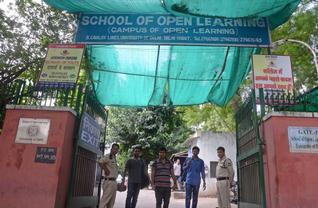
Delhi University’s School of Open Learning (DU SOL) has postponed the annual mode examinations for the students of B.Com and B.A. (Prog) courses due to the Coronavirus Pandemic.

An official notice on the DU SOL website, uploaded on 25th March declares a postpone in the annual examinations of B.Com and B.A.(Prog) courses. As per the previous date sheet the examinations for B.Com and B.A (Prog) courses, were respectively scheduled from 4th and 5th April which now stands withdrawn till any further notice. The students are advised to regularly check the official website for the upload of the revised date sheet.

The official notice on the website reads, “In accordance with the office order No. F.No. Estab.II(i)/330/COVID-19/M/2020 dated 19th March, 2020, the examination of B .Com. (Annual Mode) scheduled to be held from 4th April, 2020 and B.A. (Prog.) (Annual Mode) scheduled to be held from 5th April, 2020 stands withdrawn. The date-sheet for both the above examination will be notified later. All concerned are requested to please stay connected through website for latest updates.”

Riyansh Gupta, a first-year student of B.Com (Prog) course, “We already have to cope with the first and second semester simultaneously and further delays are just increasing the burden. But, in this current situation delay was obvious and much needed so we can’t do anything except for just waiting for the situation to get better.”

He further informed of DU SOL of not being very responsible for passing important information. He said, “One other thing is that DU SOL does not know how to communicate with its students, every time anything happens, DU SOL is the last to respond plus the official site is also not that good.”

Feature Image credits : DU Beat Archives

Kriti  Gupta

[email protected]


In times of a pandemic with a majority of economies being capitalistic in nature, is it time to rethink the existing economic structure, thus affecting both socially and politically?


Ravi, a vegetable seller on the streets of Delhi panics, fears that his family of four would starve to death, well-aware that essential services are available, the real question for him is, can he afford it? In a similar case of the namesake, Ravi, an employee of an international MNC overlooks the silence in his city from his 18th-floor balcony, the real question for him is, how to spend his free time.

A global recession seems inevitable owing to the large-scale nationwide shutdowns all over the globe. The economies are experiencing serious shocks and close-downs. As Angel Gurría, Organisation for Economic Co-operation and Development Secretary-General, says, “Even if you don’t get a worldwide recession, you’re going to get either no growth or negative growth in many of the economies of the world, including some of the larger ones, and therefore you’re going to get not only low growth this year, but also it’s going to take longer to pick up in the future.” With a majority of economies being capitalistic in nature, is it time to rethink the existing economic structure, thus affecting both socially and politically?

The announcement of a nationwide lockdown brought about massive hysteria and panic thus exaggerating the existing lockdown situation. Panic buying or buying large amounts of commodities in advance expecting a shortage or crisis in the near future. A 20% upsurge is estimated in buying domestic items and food items. It is sad that it takes a global pandemic to question the public healthcare system.

The pandemic has given some people the leverage and privilege of working from home, with hot-shot MNC jobs with several benefits. While the poor of India walk miles and miles without any public transport in the aspiration of reaching their homes, safely. Migrant workers, daily-wage earners and businesses have been severely affected with individuals left in the dark about their coming future. Shruti Gupta, daughter of a businessman says, “My dad seems pretty worried about the crisis that’s going to have its repercussions on us. Even though it’s going to affect us as much as many others, we do have our daily needs but we are not getting money out of anywhere for now.”

The stark division in class is apparent, more so, due to the pandemic. The inflation rate of necessary items like sanitiser and masks are sky-rocketing. Apparently, single Dettol hand sanitiser would easily cost over INR 160! However, it should also be pointed out that the government (both centre and state) have put a cap on the price of essential items like sanitizers and masks.

In times of crisis, surely the laws of economics remain an exception, however, it is crucial to understand and introspect the ingrained capitalism in profiting and pandering to the rich while the poor suffer, drastically. COVID-19 is a gross reminder of the dark inequality plaguing the world.

Prabhanu Kumar Das, a critique of capitalism and a politics student, says, “With the spread of coronavirus as a global pandemic, we can clearly see the difference in how capitalist and socialist countries are handling the situation, with countries such as Italy, UK, or the USA facing the brunt. The harm of capitalisation and privatisation of basic human needs such as medicine and healthcare has been shown during this pandemic. While the approaches of communist and socialist governments such as Kerala in India, or Cuba sending doctors to Italy even after Italy supported the American embargo on Cuba shows the difference between capitalist and communist/socialist nations.”

As the elite receive the first tests, the first results, get to do repeated tests, where does the remaining world go? Why such disparity in basic healthcare and a pandemic which affects everyone? Remember, the rich are tired of sitting at home, while the poor walk miles and miles without any respite!


Feature Image Credits: The Week


Anandi Sen

[email protected]

Where to find a recluse when a physical world is at bay? Perhaps, the crevices of the books might provide a substantial answer to our skepticism and nervosity.

It was beyond human comprehension to imagine a state where the fast paced connectivity and communication in this universe, cosmopolitan encapsulation would be limited to the four walls of our homes. The global COVID-19 outbreak has certainly compelled the entire human race to rethink about its place and destination. While almost everything in this world is under a halt, to ensure the prevention of transmission of virus, governments all over the world have adopted lockdowns as a measure to tackle this pandemic. Markets, offices, public places everything has been shut down and so are the schools, universities, and institutions.

With the closure of many workplaces people have been asked to work from home and try to keep the chain in continuation; many educational institutions have also turned to online mode of teaching, with its effectiveness at such scale under the question radar, what needs to be reiterated here is that our studies and learning that must be identified as one of the most important things can be put in a better status than the quo.

In an unrestricted environment, studies can not only get more utilitarian but can even garner the interest and passion it deserves. When a major portion of our learning approaches tend to be towards the qualification of examination and other parameters, the actual purpose of understanding often gets killed to rote learning and mechanical trends as designed notes and selective study.

Without any doubt, our normal lives are intensely packed under the clock with tight schedules and deadlines, where a passionate study gets extremely difficult, but in a situation where we are struggling to keep ourselves busy- a completely dedicated study doesn’t seem like a bad option at all.

Utilize these times for in-depth study and subscribe to ideas and questions that matter the most, prepare notes and write papers, try a different way to do things, focus on areas where you are underperforming – not to perform better but introspect the fallacies and development of interest, read suggested texts refer to additional texts as well, learn all that you possibly can and put the quarantine to best use.

While many students are preparing for their entrances, one can utilize this to cover the most of it. Srajit Kumar, a final year history student of Jamia Millia Islamia feels that, “this is the best time to study. Being in the last year of graduation, a lot of people like myself are facing an uncertain future in every sense of the word. So, this is the best time to buckle up and study as much as we can. There are no external distractions, the climate is suitable, and this is the best time to strategize and get to the books.” Kumar even feels that because of the uncertainty of the world around us and the scramble for finding our own selves, it’s very essential that we find some semblance of sense in these crazy times and studying is just a part of a routine, which is the first principle of survivalism.

Although, there are various ways to achieve this mode of studying one can opt for techniques like – Pomodoro Studying, where one can engage in other activities at fixed intervals to continue the study for a long time those who aim to memorise multiple things can resort to ways like Spaced Repetiton as well, the idea is to use flash cards to highlight the key points and could be a good option for medical and history students.

Education has no boundaries and caters to an open methodology but in these constricted circumstances, studying can certainly provide us the necessary. So, pick your books, sit on your desks and fall in love with learning.


Feature Image Credits: Mayank Gulati for DU Beat

Faizan Salik

[email protected]

Owing to the threat posed by the spread of COVID-19, DUSU has requested the Dean of Students’ Welfare to take necessary steps for the safety of students living in hostels.

In order to ensure the safety of students living in Hostels of various colleges and departments, Ashish Lamba, Secretary of the Union, sent a letter to the Dean of Students’ Welfare (DSW) on Thursday. He requested the Dean to take necessary steps in order to ensure the well-being of these students, as the threat of infection looms large over everyone.

Through the letter, the Secretary informed the Dean about the complaints he received from students living in hostels. Such students might have complained about inadequate facilities to counter the dissemination of the disease. He requested the authorities to look after the living spaces, meals, sanitation, and availability of medical equipment for the safety of all students. The NSUI leader also requested the authorities to prepare themselves for a health emergency of any kind.

Chetna Tyagi, Leader, NSUI said, “NSUI did send a letter to the Dean of students welfare regarding the students who are stuck in PGs and hostels for proper food facilities and sanitation, and to provide them with travelling facilities to reach their hometown after the lockdown since the situation is getting serious these days. So there is a need to help the students urgently”.

NSUI also issued a public statement regarding the same, which demanded the authorities to ensure proper arrangements for students residing in hostels. It also demanded the DSW to ask the Government of Delhi for special permission for the students who wish to go home.

Dev Narayan, a student of Ramjas College, said, “I am a hosteller. My train got cancelled amid COVID-19. Circumstances compelled me to stay in the hostel. Firstly we were not allowed to stay by college authorities despite the risk that if we step outside the hostel, we might expose ourselves to the virus. The notice from MHRD saved us according to which we were allowed to stay. Still, we are facing issues of sanitation and mess  facilities.”

Another student, in the condition of anonymity, said, “We completely agree with the statement made by NSUI. Students should be provided with all the basic necessities during this lockdown period.”

NSUI National Secretary Nikhil Kamble states, “We know this is tough time for all but we are trying our level best to resolve it. We have demanded universities to provide proper meals and sanitiser for the students who have been stucked in hostels and PG’s. soon we will start to raise volunteering students relief fund from NSUI office bearers to provide help for socially and economically backward class students who have been affected during this corona virus lockdown.”

Numerous students are stuck in Hostels as there is a complete lockdown in the capital. Restrictions on public transport have disabled these students from going back home. A video made by residents of the hostel of Ramjas College surfaced online about a week ago, through which the students complained that they were being forcefully evicted, despite the unavailability of public transport.

Several hostels were shut and students were asked to leave before the lockdown itself. This includes hostels of Hansraj, IPCW, Venkateswara and LSR, among others. The letter sent by the secretary requests the relevant authorities to look after the students who are still living in these hostels, as the nation is under a blanket lockdown now.

Image Credits: DU Beat Archives

Kuber Bathla

[email protected]m


When a 17 year old is convicted in one of the most horrifying gang rape cases or when a 19 year old goes on a shooting spree, killing 17 people in his school after getting expelled; we must ponder over how and why these youngsters have homicidal tendencies.

Jaques in Shakespeare’s ‘As You Like It’ beautifully explained the different stages of life, from infancy to death in the form of monologue. He associates the stage of youth with peart, passion and an innate push to build one’s reputation. That’s the beauty of being young – untouched by world’s pessimism and on the way to discover new horizons with ‘Carpe diem (seize the day)’ as the battle cry.

The foundation and progress of every state lies in the hands of its vigorous, vivacious youngsters, who are the torch bearers of the present and trustees of the future. They are crucial for national development as it is their toil and dynamic vision that runs the nation. It is observed that India has the relative advantage at present over other countries in terms of distribution of youth population. According to ‘World Population Prospects: The 2015 revision’ Population Database of United Nations Population Division, India has the world’s highest number of 10 to 24-year-olds, with 242 million—despite having a smaller population than China. As per predictions in 2017 by Ministry of Statistics and Programme Implementation, Government of India; India is expected to have 34.33% share of youth in total population by 2020. Thus, it is evident that India has been blessed with the most valuable human resource for fostering economic, cultural and political development, quite magnanimously. But with such a huge youth population, there comes the onus of making them constructive parts of society. And, the whopping rise in juvenile crimes brings out a dark side of our ‘developing and flourishing’ society.

In recent years, juvenile delinquency has emerged as a disturbing trend world over. Petty crimes like pickpocketing, shoplifting etc. as well as heinous crimes like murder, rape, scams, etc. are being committed by juveniles increasingly. As per National Crime Record Bureau, a total of 41,385 juveniles were apprehended during 2015 out of which 40,468 were boys and 917 were girls. More worrisome is the fact of age- crime relationship, which states that these jostle between youngsters and the law and order peaks in adolescence. Subsequently, the National Crime Records Bureau (NCRB) recorded that in 2013 of the 43,506 crimes registeredagainst minors; 28,830 had been committed by those between the ages of 16 to 18, which is more than 60%. Also, most of these crimes were categorized into heinous criminal acts. Owing to increasing brutality of juvenile crimes; in 2015, the Juvenile Justice Act was passed by the Parliament which allows for juveniles between the ages of 16 to 18 years to be tried in adult courts, if they are found to commit any heinous crimes.

It is true that adolescence is an age of thinking abstractly, developing our own views and yearning for identity and independence. Peer influence, acceptance and sexual curiosity get the better of their natural reasoning. But these physical and mental changes are not the only determinants that push them into the dark world of crime; rather it is largely the social and psychological factors that work behind the curtains. Sociologists Richard Clowardand Lloyd Ohlin expounded that juveniles develop different delinquent tendencies depending upon what opportunities areavailable in their surroundings. Consequently, some of the most common causes which are associated with juvenile crimes are – poverty, drug abuse, anti-social peer group, abusive or negligent parents, family violence, and child sexual abuse. These negatively affect the persona and psyche of the individual during the most vital years of his/her growth. Herbert Hoover quoted, “Older men declare war. But it is the youth that must fight and die.” Due to the limitation of opportunities, many youngsters fall prey to fascist and wicked ideologies of a few and act as their foot soldiers. Our education system and traditional family values also seem to be not making much difference when it comes to juvenile delinquency as according to the report of National Crime Records Bureau (NCRB) on ‘Crime in India’ released in 2017, juveniles who went to school committed crimes more than those who did not. Media especially, social media also has given impetus, among the youth to the feeling of being noticed and recognized through any means.

All these facts and figures should alarm us as citizens of society as they highlight how we are failing to build a secure future for the youngsters. Intervention at an early stage is essential to make a significant difference. Governments as well as local citizens must initiate educational programmes that educate, enable and empower the youth to become productive elements of the society. A healthy family environment must be made a fundamental right of every child. Dogma regarding mental health issues must be completely removed. Sexual education as a part of health education; awareness about risks in substance abuse and the exposure to inappropriate explicit content must be imparted to every adolescent.

‘Nobody is a born criminal. Circumstances make him so.’

The family, society and the state must work together to provide a nurturing and healthy socio-cultural environment. Every youth is entitled to care and protection with an atmos of equality and social justice. The sooner we realize this truth, the stronger and more virtuous a society we will build and thrive in.

Image credit: Press Trust of India 

Ipshika Ghosh

[email protected]


A look at one of Amazon Prime’s latest offering, Hunters, a show which is fictional in nature but is based on reality.


The story of this web series takes into account many historical factors, such as the holocaust, Operation Paperclip, which was a post World War 2 american operation in which around 1600 Nazi scientists were brought to the U.S.A, wih the legacy of nazi hunters such as the Mossad and Simon Wiesenthal. The show features many familiar faces such as Al Pacino, who needs no introduction, Logan Lerman, who played Percy jackson, and Josh Radnor of How I Met Your Mother. The show revolves around how Jonah (played by Logan Lerman) sets out to seek revenge for the death of his Grandmother and encounters Meyer Offerman (Al Pacino) and his crew of nazi hunters, and the story revolves around the uncovering and foiling of a nazi plot to establish a fourth reich.


Before getting into specifics about the show, it would be remiss not to point out the major controversy around the show. In the first episode, Meyer describes an incident to young Jonah of human chess in Auschwitz. The gruesome and dark incident had been made up by the director, perhaps to elicit an emotional response from the audience. The Auschwitz memorial called out the show on twitter stating “Auschwitz was full of horrible pain and suffering documented in the accounts of survivors. Inventing a fake game of human chess for Amazon Prime’s Hunter is not only dangerous foolishness and caricature. It also welcomes future deniers. We honor the victims by preserving factual accuracy.” This certainly brings into question ideas of responsibility even in the realms of fiction, especially if borrowing factors from history, even more so when these are based on the pain and suffering of real survivors.


Coming to the show itself, it follows most tropes that you would associate with a show like this, a young protagonist being led by an older mentor/ father figure, a group of rag tag individuals fighting a great menace, the antagonists and their henchmen being completely one dimensional. Where the show does differ is that there is a sense of self awareness about it, not in terms of over the top violence or gore, even with several torture scenes, the gore is not excessive. Where the show is self aware is in little skits placed around every episode which divert completely from the show while explaining a plot point or social commentary, an example of such is the use of a game show in the episode to look at the reasons for anti semitism in America.

The plot line of the show was interesting and well written, and It is definitely a good and easy watch to waste away the hours in quarantine, but prepare to be left with a cliffhanger which is an glaring indicator of a season 2.

Feature Image Credits: Techradar


Prabhanu Kumar Das

[email protected]

A look at one of Amazon Prime’s latest offering, Hunters, a show which is fictional in nature but is based on reality.   The story of this web series takes into account many historical factors, such as the holocaust, Operation Paperclip, which was a post World War 2 american operation in which around 1600 Nazi scientists were brought to the U.S.A, wih the legacy of nazi hunters such as the Mossad and Simon Wiesenthal. The show features many familiar faces such as Al Pacino, who needs no introduction, Logan Lerman, who played Percy jackson, and Josh Radnor of How I Met Your Mother. The show revolves around how Jonah (played by Logan Lerman) sets out to seek revenge for the death of his Grandmother and encounters Meyer Offerman (Al Pacino) and his crew of nazi hunters, and the story revolves around the uncovering and foiling of a nazi plot to establish a fourth reich.   Before getting into specifics about the show, it would be remiss not to point out the major controversy around the show. In the first episode, Meyer describes an incident to young Jonah of human chess in Auschwitz. The gruesome and dark incident had been made up by the director, perhaps to elicit an emotional response from the audience. The Auschwitz memorial called out the show on twitter stating “Auschwitz was full of horrible pain and suffering documented in the accounts of survivors. Inventing a fake game of human chess for Amazon Prime’s Hunter is not only dangerous foolishness and caricature. It also welcomes future deniers. We honor the victims by preserving factual accuracy.” This certainly brings into question ideas of responsibility even in the realms of fiction, especially if borrowing factors from history, even more so when these are based on the pain and suffering of real survivors.   Coming to the show itself, it follows most tropes that you would associate with a show like this, a young protagonist being led by an older mentor/ father figure, a group of rag tag individuals fighting a great menace, the antagonists and their henchmen being completely one dimensional. Where the show does differ is that there is a sense of self awareness about it, not in terms of over the top violence or gore, even with several torture scenes, the gore is not excessive. Where the show is self aware is in little skits placed around every episode which divert completely from the show while explaining a plot point or social commentary, an example of such is the use of a game show in the episode to look at the reasons for anti semitism in America. The plot line of the show was interesting and well written, and It is definitely a good and easy watch to waste away the hours in quarantine, but prepare to be left with a cliffhanger which is an glaring indicator of a season 2. Feature Image Credits: Techradar   Prabhanu Kumar Das [email protected]]]>

With the danger of an outbreak looming upon us, the news we share on social media becomes even more important. 

A study by Microsoft found that over 64 percent of Indians have encountered fake news online, the highest among the 22 countries surveyed. A public health crisis can shoot up the dissemination of irrelevant and fake news, which may include hoaxes to prevent or cure the virus. Famous Chinese messaging app, TikTok and WhatsApp have frequently been victims of videos and messages that claim to provide solutions to stop the virus.

The problem is not limited to facts. A large proportion of messages shared by people have little to do with verifiable facts and peddle prejudiced opinions. This includes influential people as well. Union Minister of State for Health, Ashwini Choubey, claimed that sunlight can improve immunity and kill coronavirus. There have been instances of people claiming that cow urine can cure people of the disease, which has been denied by scientists and the World Health Organisation (WHO). This vividly reflects that people choose to ignore facts owing to a repetition of certain messages within their circles.

Most of such messages reach the least informed people. They are prone to believe the things that they come across. Research published in 2018 has shown that during the Zika Virus outbreak, most popular messages contained fake headlines and content. Rumours obtained three times more shared than verified stories. Interestingly, rumours (20% of them) also portrayed Zika as a conspiracy against the public. This largely captures the behaviour of people when faced with a disease outbreak.

However, stories like these only worsen the situation. People fail to understand government policies and credible news, which do not reach people owing to an overwhelming number of irrelevant news in their inboxes. In a huge pile of messages and articles, the relevant ones are either ignored or are discredited.

By curbing down on such stories, right and requisite information can reach the people. With a dense population, India can get fatally affected by an outbreak, if it ever happens. One form of prevention lies in our hands, by selectively sharing information from verified sources. This boosts our self-interest as well

This obligates media houses as well. As the world of news has become faster due to the internet, media houses rush to get their hands on anything that can pacify their readers. They are notorious for capitalising on unverified stories using captivating headlines and vocabulary. As a need for legitimate news grows, media houses should act as India’s first line of defence to counter fake and irrelevant news.

The Press Information Bureau, along with other fact-checking organisation should work towards curbing the circulation of news and messages that claim unverified prevention measures. People should share correct preventive measures which are verified by organisations like the WHO or the Indian Council of Medical Research.

A truly reliable source of information these days is the WhatsApp contact of the WHO. It is a chat-bot that answers all queries pertaining to the novel coronavirus. Government websites are also equally effective.

The need to change our behaviour is immediate and intense.


Featured Image Credits: The Guardian


Kuber Bathla

[email protected]