Author

DU Beat

Browsing

Several female students at the Delhi School of Journalism and Miranda House had faced repeated instances of sexual harassment, as men deliberately exposed their genitalia, proceeding to perform vulgar and obscene acts in front of the first-year students.


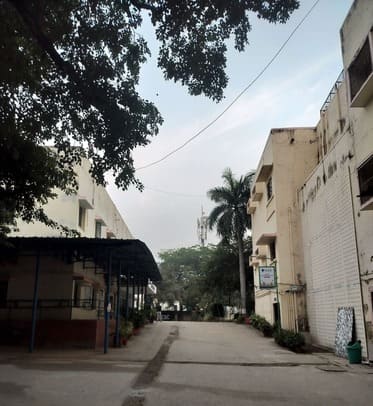
Female students at the Delhi School of Journalism and Miranda House have reported multiple instances of sexual harassment. The first such incident was reported to have occurred to two first-year students of the Delhi School of Journalism on the 31st of December 2025, on Cavalry Lane. The students were on route to the Vishwavidyalaya metro station at around 12:30 pm when an unidentified man indecently exposed his genitalia to the students as he proceeded to masturbate in front of them. The students found the incident “alarming and deeply traumatising,” and fled the scene, fearing for their safety.


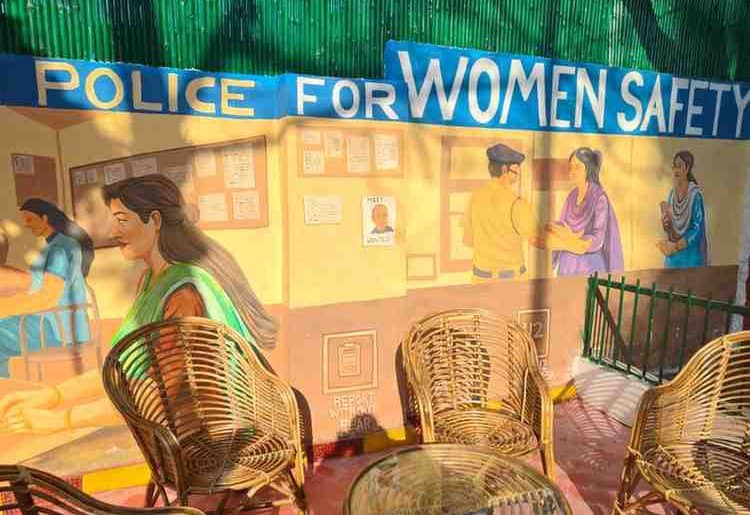
A similar incident was also reported outside Miranda House. On 15th January, four first-year students, while exiting the college campus, encountered a man in his late thirties masturbating in broad daylight near the bus stand, outside the third gate of the college. The students approached the nearby pink booth, where they were informed by the female officer that a male personnel would be called to handle the situation.

One of the students later stated, “The man continued the act and looked at us while doing it. It was extremely disturbing and distressing.” It’s also crucial to note that this occurred in the presence of a female officer. The students also contacted the women’s helpline. Subsequently, the male police officer also arrived at the spot and detained the individual. According to the police, the man was drunk and not in a stable state of mind.


The students stated that they did not formally inform anyone else in the college, except that one of them contacted a senior from the college ICC, who provided contact details of a lawyer for legal guidance, however, no FIR was filed. 

For our own sanity and well-being, we chose not to escalate the matter further. However, it’s really scary to walk that same path every day, and to think about what if he recognised us, stalked us, or came after us someday.”

Apart from the students involved, another girl was present who also noted the events. They also reported that a similar incident had previously occurred to a first-year student on a DTC bus, suggesting that such incidents could be recurring.


What is particularly concerning is that the incident took place in proximity to a women’s college, and near a bus stand, with frequent movement of women, children, and students from nearby colleges. The fact that such an act occurred in a public, highly populated space highlights serious concerns regarding safety and monitoring in the area.


 Yet again, on January 16th, 2026, just a day after the incident outside Miranda House had taken place, the same two students from DSJ would be subjected to a repeated event of sexual misconduct as an event identical to the first reoccurred, at the same location, once again in broad daylight.

One of the victims said,

The man made eye contact with us as he did obscene gestures in public. We are devastated and extremely disheartened because it feels as if our right to freely walk on the streets has been curtailed.” “It still disturbs me that he felt free to do this in public with no fear of consequences. How that man remembered to cover his face but not his genitalia is unbeknownst to me,” said the other.


The experience was far from isolated. Upon hearing about the events of December 31st and January 16th, several other students at DSJ reported having had similar experiences. First-year student Aastha Upadhyay stated,

Ever since I’ve known about these incidents, I’ve dreaded walking down that path or even coming to college for that matter, which is a shame because I quite like what I’m studying. I haven’t had a good night’s sleep because I keep waking up with the fear of a man’s presence in my room. It pains me to think about what more could have happened to them, to any of us. Of course, there are bad elements in society, against which we can try to be cautious on a personal level, but their normalisation should be intolerable.”


A complaint regarding student safety was brought to the college administration’s attention. However, as the reported incidents had all occurred a few feet outside the college campus, the authorities concerned had voiced that they had no agency to involve themselves in the situation. This led to the student body questioning the accountability of their institution. Students had approached the Pink Booth outside Miranda House seeking protection and justice. Unfortunately, personnel informed them that the booth only dealt with cases of theft or snatching. They were directed to the local police station to report any instance of harassment. The Pink Booth is supposedly meant to act as a safe space for women. First-year DSJ student Ananya Chaturvedi says that the Pink Booth succeeded in branding safety, but not in providing it. “A pink-painted booth alone does not empower women. It serves no purpose if its commitment to safety ends at aesthetics,” she says.


Parents are left worrying for the security of their children as such instances continue to occur time after time. The father of one of the victims stated, “Very concerned about the safety of my daughter as well as other female students travelling to DU North Campus for their regular classes…When parents entrust these prestigious and reputed universities with their children, they do so in good faith. They deserve reassurance that this trust will be upheld.”

Read Also: A Soaring Fire Hazard: The Alarming State of Fire Safety in Delhi University

Image Credits: Apoorva

Written by: Anonymous
Delhi University has announced another hike in institution-level fees for the 2026–27 session, raising concerns among colleges over repeated increases, affordability for students, and the growing financial burden at a public university.


Delhi University has announced an increase in institution-level fees from the 2026–27 academic session, marking the second hike in the past six months and continuing a steady upward trend in the university’s share of the consolidated student fee. The move has sparked concern among college administrations, which warn that repeated revisions could burden students from diverse socio-economic backgrounds.

With the latest revision, DU’s total share in the combined fee has risen to Rs 4,100, up from Rs 3,500 fixed in July 2025 — an increase of over 17% in just six months. This rise exceeds the university’s stated policy of limiting annual fee increases to around 10% to offset inflation and rising operational costs.

According to a revised fee structure notification dated January 2 and circulated internally to colleges, the University Development Fund (UDF) has been fixed at Rs 1,750, while university facilities and services charges have also been set at Rs 1,750. In addition, students will pay Rs 300 towards the Economically Weaker Section (EWS) Support University Fund and another Rs 300 towards the University Students’ Welfare Fund.

While the absolute amount may appear modest, college officials argue that the pace and regularity of these hikes are a cause for concern

“For a public university like DU, which caters to students from a wide range of economic backgrounds, repeated fee increases over successive years signal a worrying long-term trend,” a senior college official said.

Last July, DU had already raised its share to Rs 3,500. At that time, the UDF was increased from Rs 1,200 in 2024 to Rs 1,500 in 2025 — a 25% jump — while facilities and services charges rose from Rs 1,250 to Rs 1,500, a 20% increase. The EWS Welfare Fund was also raised from Rs 200 to Rs 250, reflecting a 25% hike in a single year.

Data over the past four academic sessions show that DU’s share has more than doubled. The UDF has risen steadily from Rs 900 in 2022 to Rs 1,000 in 2023, Rs 1,200 in 2024, Rs 1,500 in 2025, and now Rs 1,750. Similarly, facilities and services charges have climbed sharply from Rs 500 in 2022 to Rs 1,750 this year. The EWS Welfare Fund, which began at Rs 100 in 2022, has now touched Rs 300.

DU has previously defended fee revisions by citing inflation and rising operational costs, maintaining that an annual increase of around 10% is necessary to sustain university-level services and infrastructure. However, no immediate response was available on the latest hike.

College principals have warned that cumulative increases are pushing undergraduate fees in top-tier colleges to Rs 30,000-40,000 per semester. “Even if DU still appears affordable compared to private or foreign universities, the consistent upward revision for a public institution is a troubling signal,” one principal said.

Read Also: A Soaring Fire Hazard: The Alarming State of Fire Safety in Delhi University

Featured Image Source: TOI

Richa Choudhary

[email protected]

A recent RTI revealed serious gaps in Delhi University’s fire safety infrastructure, with a lack of information regarding the safety equipment deployed across DU campuses. The recent incidents of fire breakouts across the University raise serious questions about preparedness in the event of a mishap. 


Delhi University, once regarded as a pinnacle of academic and architecture, now finds itself embroiled in a fresh controversy. The institution has come under fire for the deteriorating state of fire safety infrastructure across its colleges. Replying to an RTI (Right to Information) filed by Rahul Jhansla, Vice President of the Delhi University Students Union, the University stated that –


They do not have any such inventory available. Nor do they have any record available in the engineering department”


When DU Beat reached out to Rahul Jhansla regarding these lapses, he responded by stating that- 


RTII recently visited LC-2 for an inspection concerning its budget and expenditure. However, the administration failed to provide any records detailing expenditure, and the yearly budget presented was factually incorrect. Additionally, with regard to fire safety, my team filed several RTIs seeking information on the inventory of fire-safety equipment and the expiry dates of fire extinguishers. The responses revealed that the University does not maintain any ledger or systematic record of these critical safety assets”.


The lack of any comprehensive information regarding the safety equipment deployed across Delhi University campuses raises serious and urgent questions about the preparedness of the fire safety infrastructure in the event of any mishap. 

An incident of fire breakout was reported on 10 June 2025 at the Department of Zoology, Delhi University. The fire originated in the computer room of a laboratory located on the fifth floor of the department. Fire brigade teams were rushed to the spot, initiating a prompt response to bring the situation under control. Timely intervention by the authorities averted what could have otherwise escalated into a major disaster.

A similar incident was reported at Ram Lal Anand College, located in the South Campus, on 12 April 2022. The fire broke out in the college auditorium, immediately alerting the authorities. Fire brigade teams were rushed to the scene and successfully doused the flames. No casualties were reported at the time. However, this was not an isolated incident. On 9 June 2020, a fire had earlier broken out in the computer lab of the same college, as confirmed by a Delhi Fire Service official. In both instances, prompt responses prevented major damage. The recurrence of such incidents raises serious questions about the adequacy of fire safety infrastructure, particularly in the peripheral colleges of Delhi University.

Additionally, several videos of similar fire incidents have been circulating on the internet, allegedly involving Zakir Husain College and Ramjas College. However, no verified sources could be found to substantiate these claims.

Fire safety is not the only concern. Delhi University appears to be lagging on multiple fronts, with calls for urgent reforms. While prompt responses have prevented disasters in certain fire-related incidents, the same cannot be said in many other cases. Incidents such as ceiling fans falling and injuring a faculty member at Kalindi College, or broken tables and chairs being given during semester examinations, point towards a broader pattern of infrastructural neglect.

Ignoring these issues is not merely a violation of UGC guidelines; it represents a serious breach of the trust that students place in the institution as a safe and secure space. Delhi University must prepare more robustly to tackle such challenges. 

Read Also: Fire Breaks Out at DU’s Guru Gobind Singh College: Over 3000 Books Destroyed, No Casualties Reported

Feature Image Credits – Devesh for DU Beat


Rahul Kumar 


[email protected]


Fourth-year undergraduates can now take up to eight additional credits in their final semester, making it easier to complete the core credits and secure a major. This move particularly helps those aiming for postgraduate studies, giving them the flexibility they were long promised under the UGCF 2022.

Recently, the University of Delhi announced a relaxation of the credit limit for fourth-year undergraduate students under the Undergraduate Curriculum Framework (UGCF) 2022, resolving long-standing academic concerns. According to the revised provision, students in their eighth semester are now allowed to take up to eight credits beyond the existing ceiling, enabling them to meet the requirements for being awarded a major. This move will be effective for students enrolled in the 2025-26 academic year.

Initially, seventh-semester students were restricted to apply for a maximum of 22 credits, the same ceiling that applies to all other semesters. However, this proved to be a limitation for many, particularly those who had not been able to complete the mandatory number of core discipline credits by the end of their seventh semesters. With insufficient time in the final semester to compensate for the shortfall, several students reached the end of the semester without fulfilling the criteria necessary for a formally declared major.

According to the updated notification, the upper credit limit in the final semester has now been increased to 30. Additional credits can be used to complete pending core discipline requirements, enabling students to fulfil the eligibility criteria for a major.

Under the UGCF, a major denotes the principal field of study in which a student completes the highest number of core courses and credits, which is reflected as the main subject on the degree. A minor,on the other hand,is a secondary area of study that requires a small credit load.

This relaxation is expected to particularly benefit students planning to pursue postgraduate studies,where it is often a prerequisite to have a formally declared major. For many students, it is also important when applying for degree programs abroad, scholarships, and various entrance examinations. By allowing additional credits in the final semester, the university now ensures that students have sufficient opportunities to complete their core discipline requirements in the final semester. Furthermore, this move aligns with the UGCF objectives of providing ‘Flexibility to the students to determine their learning trajectories and pursuance of programmes of study.’


Read Also: DU UG Admissions 2026–27: CUET UG Mandatory, No Change in Subject Eligibility Rules

Image Credits: ThePrint


Ipshita Grover

[email protected]

Delhi University teachers oppose the mandatory Aadhaar-based biometric attendance system, calling it coercive and undignified, and warn that linking attendance with salaries undermines academic autonomy and professional dignity.

Teachers of the University of Delhi have strongly objected to the mandatory implementation of an Aadhaar-Based Biometric Attendance System (AEBAS), describing it as coercive, arbitrary, and detrimental to academic autonomy. The opposition follows a recent university communication warning that salaries could be withheld from January 2026 onwards if employees fail to comply with the Aadhaar-linked attendance requirement.

In a detailed letter addressed to the Vice-Chancellor, members of the Academic for Action and Development Teachers’ Association (AADTA), along with representatives from statutory bodies, criticised the move as an attempt to discipline faculty through intimidation rather than dialogue. The letter comes after the university directed all teaching and non-teaching staff to mark attendance through the biometric system, with deans, heads of departments, and officers instructed to ensure compliance to avoid disciplinary action.

Calling the directive “arbitrary” and “intimidating,” the teachers argued that linking attendance to salary undermines the dignity of the teaching profession. “Salary is a legitimate right earned through service and cannot be withheld as a punitive measure,” the letter stated, adding that the warning has generated widespread anxiety and unrest among faculty members.

The association also pointed out that mechanisms for faculty accountability already exist under University Grants Commission (UGC) regulations, university ordinances, and long-established academic norms. Teaching, they argued, involves a wide range of responsibilities that extend beyond classroom hours. “Teaching, research, examinations, fieldwork, extension activities and academic responsibilities cannot be reduced to biometric marking,” the letter emphasised.

AADTA further highlighted what it termed a contradiction in the university’s position. According to the teachers, they had earlier been informed that the proposal to impose biometric attendance had been dropped. “The continued enforcement of administrative instructions clearly contradicts that claim,” the letter noted.

Another major objection raised was the university’s reference to colleges as “units” in official communications. The association argued that colleges are statutory academic institutions and should not be administratively reduced to generic units, calling this terminology an erosion of institutional autonomy.

The teachers also criticised the manner in which the decision was implemented, describing it as “governance by diktat rather than democratic deliberation.” They maintained that any proposal affecting service conditions must be discussed through statutory bodies and arrived at through meaningful consultation with stakeholders.

AADTA has demanded the immediate withdrawal of the Aadhaar-based biometric attendance requirement, a clear assurance that no salary will be withheld on this basis, and the initiation of constructive dialogue between the university administration and the teaching community.

Read Also: DCAC Students Left Waiting as the New Semester Begins without Timetables

Featured Image Source: Times of India

Richa Choudhary

[email protected]

Previously suspended for slapping a professor in Dr BR Ambedkar College, the DUSU Joint Secretary has returned to office after the university revoked her two-month suspension early.

DUSU Joint Secretary Deepika Jha’s (ABVP) two-month suspension following her assault on Professor Sujit Kumar in October has been revoked as of January 7th. The suspension had come into force on November 14, nearly a month after the assault took place at Dr BR Ambedkar College. The delayed response from the University had earlier drawn condemnation from several teachers’ associations, including the Delhi University Teachers’ Association (DUTA), Delhi Teachers’ Front (DTF), and BRACSA, back in October.

Jha filed a request for revocation of the suspension on January 5, before the completion of the stipulated two-month period. Following a review of her conduct, the university-appointed committee revoked the order with effect from January 7, 2026.

Reacting to the development, Professor Sujit Kumar expressed his disbelief in an official statement to DU.today. He said, “Deepika Jha was suspended from the union during the examination and vacation period, in complete violation of Ordinance 15(B). Then, her suspension period was preponed without the fulfilment of the terms and conditions of the suspension order.”

Initially, the enquiry panel had recommended a three-month suspension period. However, the final order reduced the duration to two months. During the period, Jha was allowed to attend her classes and appear for the semester examinations held in December. The suspension was limited to her role as an office-bearer and barred her from entering any Delhi University campus in that capacity.

Criticising the decision, Rudrashish Chakraborty, Associate Professor at Kirori Mal College, described the order as a ‘travesty of justice.’ The former DUTA executive added that “The University administration has abandoned everyone to protect the goons of the ruling party,”. Others echoed similar sentiments, questioning both the delay in initiating action and the nature of the disciplinary measures imposed. 

The incident in question took place on October 16, 2025. Professor Sujit Kumar was acting as discipline convener, looking into a separate assault case at Dr BR Ambedkar College, when Jha and other members of the ABVP arrived at the college. During the meeting inside the principal’s office, Jha slapped Professor Kumar, later alleging that he had “smirked” at her. She later apologised for the act.


Read Also: DUSU Joint Secretary Deepika Jha Suspended After Assault on Professor 

Image Source: Instagram Handle @deepika.jhaa

Anjali Paruvu

[email protected]

A controversy erupted at Delhi University after a viral video showed students being stopped from pasting posters on the ‘Walls of Democracy.’ Student groups alleged curbs on free expression, while the university denied removing the walls, calling it a temporary restriction for maintenance.


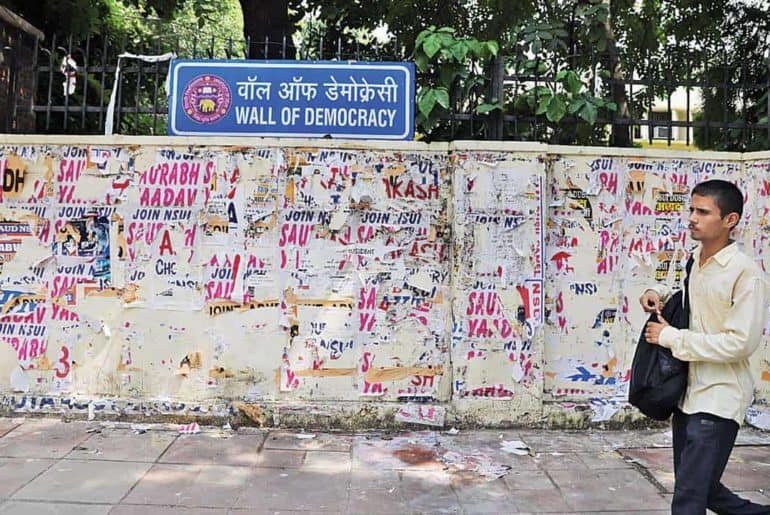
At Delhi University, the ‘Walls of Democracy’ are designated physical spaces on campus where students have traditionally pasted posters, notices, and political messages. They can be located around the North and South campuses, clearly marked with the sign of ‘Wall Of Democracy.’ These function as important democratic forums for student expression—covering protests, social issues, academic campaigns, and political debates. These spaces are specially used during the DUSU elections but also outside them for free speech and political discourse. 


Recently, a video surfaced on the internet, which was then circulated by student organisations, showing university security personnel stopping members of the Students’ Federation of India (SFI) from pasting posters near the St Stephen’s campus wall and declaring that ‘Walls of Democracy’ have been removed. This particular incident sparked widespread criticism and concern that the university was shrinking democratic spaces on campus. 


The lack of clarity over whether any official order had been issued further added to confusion, leading to uneven enforcement on the ground. This ambiguity intensified tensions between student groups and the administration, turning what began as a localised confrontation into a university-wide debate on the regulation of student expression.


Many allegations surfaced, such as boards identifying these walls being removed without prior notice or without any consultations with the student bodies. The decision is being claimed as a move to undermine political dialogue within the university. SFI and other student unions further submitted a formal complaint to the proctorial office demanding their reinstatement. 


The University replied to this uproar today in a statement reported by The Indian Express—denying the removal of the walls. The Registrar said, 


“The wall of democracy is going to stay intact. It is not being removed under any circumstances. We’ve only stopped students from pasting posters for the time being as the wall was getting full and we wanted to clean it.”


He also mentioned in the statement that the university is planning on adding more such walls ahead of the student elections to expand democratic spaces and prevent defacement on campuses. The university acknowledged the confusion around the incident and said it would investigate the conduct of security personnel seen in the video. 


Read Also: Foreign Ties: a Conversation with an Exchange Student in DU


Image Credits: DU Beat


Shreya Bhushan 

[email protected]

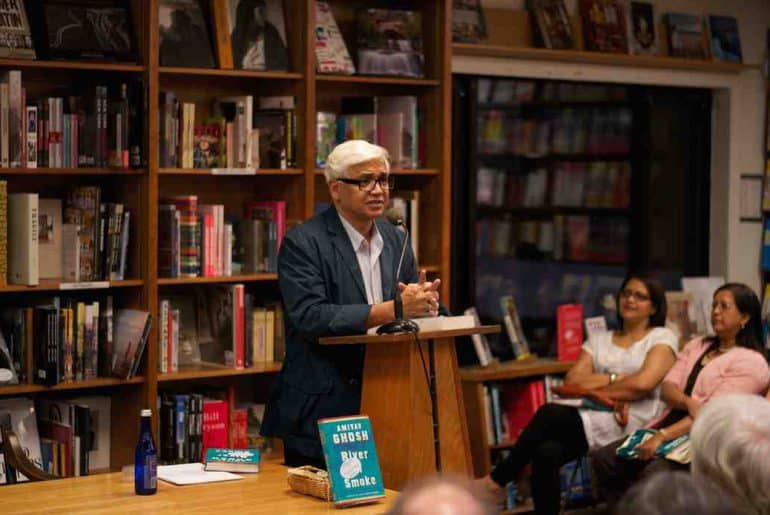
Amitav Ghosh recalled Delhi University’s rich intellectual life in the 1970s–80s, lamented its current decline, and discussed his new book Ghost-Eye, reflecting on climate change and Calcutta’s uniquely contrarian identity.

The revered author, Amitav Ghosh, recently remarked that

“Delhi University in the 1970s and 1980s… was as good as any university in the world. I went from Delhi University to Oxford in 1978, and while I loved Oxford — it was a wonderful place — intellectually speaking, Delhi University was far more exciting. We had read more and engaged much more deeply with our subjects. 

He further added, “To see the university now being literally destroyed in this way feels like a tragedy. What we see in the US and elsewhere is that institutions take a very long time to build, but they can be destroyed almost overnight — and that is exactly what we are witnessing.” 

He made the statement at an event in conversation with writer Keshava Guha at the Ambassador hotel, discussing his recently launched, 11th book “Ghost-Eye”. The book includes a poignant perspective on the repercussions of climate change. 

The book also pays homage to the city of Calcutta in which he grew up, “Calcutta continues to go in the opposite direction from the rest of the world. It’s a very unique kind of identity: whatever everyone else is doing, Calcutta is exactly the opposite,” he said on Monday at his book’s official launch. 

He further stated the omnipresence of the Bengali voice in him wherever he goes “If I open my study window in Brooklyn, I hear Bengali, coming up from the streets. It’s a strange thing. But still in the minds of Bengalis, Bengali continues to be a language of intimacy rather than a language, an international language as such. So there are always these strange sorts of experiences,” he said.


Read Also: This Time Holding The Grip Tighter Than Ever: Du Gets Ready For 2026


Image Credits- The Wire 


Divyanshi Dusad

[email protected]

Delhi University has released its UG admissions prospectus for 2026–27, making it clear that CUET UG remains mandatory and subject eligibility rules remain unchanged.


Delhi University has released its undergraduate prospectus for the academic year 2026–27, reaffirming that admissions to all regular undergraduate programmes will be conducted solely through CUET UG 2026 scores. Along with the prospectus, the university has uploaded a detailed information bulletin on its official admission portal. According to the university, there are no major changes in admission rules this year, and the subject eligibility criteria remain the same as the previous cycle.


The university has made it clear that CUET UG 2026 will be the only gateway for admission to its regular undergraduate courses across all colleges. This process, however, does not apply to admissions through the School of Open Learning (SOL), the Non-Collegiate Women’s Education Board (NCWEB), or to foreign national applicants, who will continue to follow separate admission procedures.


Delhi University has reiterated its long-standing policy that candidates must appear for CUET UG subjects that correspond to the subjects they studied at the Class 12 level. Students will not be eligible for admission to a subject they did not study in their qualifying examination. While the CUET UG framework allows candidates to take subjects outside their Class 12 syllabus, the university has clarified that this flexibility will not extend to DU admissions. If a subject was not studied in Class 12, admission to that subject will not be granted, regardless of CUET performance.


The prospectus also emphasises that Delhi University’s admission rules will prevail over general CUET UG provisions. As participating institutions are allowed to set their own eligibility norms, DU’s criteria will be final and binding for its undergraduate programmes.

In cases where a Class 12 subject is not directly available in the CUET UG 2026 subject list, candidates are required to choose a closely related subject or language paper. For example, students who studied Biochemistry in Class 12 must appear for Biology in CUET UG 2026. To establish subject equivalence, the university will assess whether there is at least a 50 per cent overlap between the Class 12 syllabus and the CUET UG paper. The authority to determine such equivalence rests solely with Delhi University, and its decision will be final.


The university has also confirmed that the subject combinations listed under List A and List B remain unchanged from the previous admission cycle. Applicants have been advised to carefully review these lists before finalising their CUET UG subject choices.


With the release of the prospectus, Delhi University has once again underlined that CUET UG 2026 is mandatory for undergraduate admissions and that no significant policy shifts have been introduced this year. Candidates are encouraged to thoroughly consult the official prospectus and information bulletin on the university’s admission website to avoid errors related to subject selection and eligibility.


Read Also: Over 700 DU Applicants Yet to Receive Refund Months After Cancellation


Image Credit: Devesh for DU Beat


Anjali Kumari Jha

[email protected]

Timetable delays at DCAC have left students unsure about classes, turning the start of the new semester into yet another waiting period.

After a disrupted examination season at the University of Delhi, students at the Delhi College of Arts and Commerce hoped for a smoother semester. Instead, the term has begun with confusion, as the official timetable is yet to be uploaded, leaving students unsure of their class schedules.

Students said that timetables were not entirely missing. In several DCAC departments, schedules were prepared by the Teachers-in-Charge and shared informally with students who contacted their professors directly. In the Journalism department, for instance, the faculty circulated the timetable internally and on time. 

A member of the Students’ Council, DCAC, said that the delay was largely administrative, with classes clashing in some departments, especially Commerce, slowing down finalisation. Despite informal updates, no official communication has been issued by the college authorities confirming the timeline for the release.

Currently, the impact on classes has been limited, as many faculty members have not yet begun regular lectures. A student from Sri Venkateswara College, facing a similar situation, said, “Our professors are understanding since exams have just ended, and many students are still in their hometowns.” 

However, students noted that the lack of an official timetable could be a serious issue. “If regular classes were running, it would be difficult”, said a Venky student. “I travel nearly two hours, and without a timetable, going to college would be a waste of the day.”

For many, this delay has dulled their expectations of a smooth academic restart.

Read More: This Time Holding The Grip Tighter Than Ever: Du Gets Ready For 2026

Image Credits: DU Beat
Anonymous