Author

DU Beat

Browsing

Caste survives by making oppression feel deserved and superiority feel accessible. In such a system, everyone is both oppressed and oppressor.


How does one preserve a system of oppression? You convince them that their place in society isn’t imposed, it’s deserved and therefore personal. Capitalism tells you that your lack of hard work brought you here. Caste tells you that your karma brought you here. But here’s where it goes a step further—it tells you that you are still better off.

“The oppressed tend themselves to become oppressors”, says Paulo Freire. However, in this system, we do not have a single oppressor or a single oppressed. While we use loose binaries of upper-caste and lower-caste, Ambedkar identifies a defining feature as “graded inequality”. Nearly every caste has a sub-caste, and every sub-caste has another beneath it. Each layer is granted the psychosocial right to superiority over another. Everyone gets a chance to oppress and to be oppressed.

This isn’t just symptomatic of a system; it’s structurally inbuilt. And this makes caste particularly enduring.

We see graded inequality in the shunning of marriage across sub-castes, in tensions between land-owning OBC communities and landless Dalits, and in the contempt sometimes directed toward sewer workers and sanitation labourers even within marginalised groups.  The system offers just enough social power to prevent the question, “Why am I oppressed?” It consoles you with the maxim that “at least I am not them”. 

A system is born where oppression feels like power, serving as nicotine to its dignity-starved victims. Marxist thinkers locate “false consciousness” as a feature of capitalism, the misrecognition of one’s position within capitalism. Caste does something more relational. Violence and discrimination towards the rung below you don’t feel like a replication of your oppression. It feels like a distance from it. It feels like upward immobility. 

Some have pointed to this dynamic in examining domestic violence in Dalit households. Persistent humiliation and economic frustration can cause emasculation and frustration, which is sometimes displaced onto women in the household. Dalit women thus become the “oppressed of the oppressed”. Systematically refusing respect and opportunity often reproduces microcosms of the hierarchies. Caste functions neatly, offering another layer to produce internally engineered exclusion.

Sub-oppression also operates through aspiration. M.N. Srinivas’ concept of Sanskritisation describes how marginalised castes imitate upper-caste rituals, food practices, and cultural codes to pursue social mobility. But imitation often means the preproduction of exclusion. Distancing oneself from those deemed “impure”—through altered food patterns, marriage boundaries, or discriminatory practices—becomes a performance of respectability. In seeking validation from a savarna order, one internalises its hierarchies. 

To Ambedkar, fraternity was the moral foundation of democracy, a recognition of shared humanity and shared humiliation. Graded inequality makes such recognition impossible. It does not just institutionalise inequality—it actually incentivises complicity. When society is arranged in a descending order of worthiness, it prevents horizontal solidarity from forming. Each group negotiates its oppression by asserting dominance over another, fragmenting anger and replacing it with competitive hierarchy.

How do you revolt when you are both victim and perpetrator?

Read Also: The Sensationalisation of “Authenticity”: Reading Sivakami Today

Image Credits: newsclick.in

Anjali P

[email protected] 

Universities are full of courses. But when I looked around the University of Delhi, I realised something surprising: there was no structured self-defence course for students. Instead of accepting that gap, I decided to try something ambitious—build one.

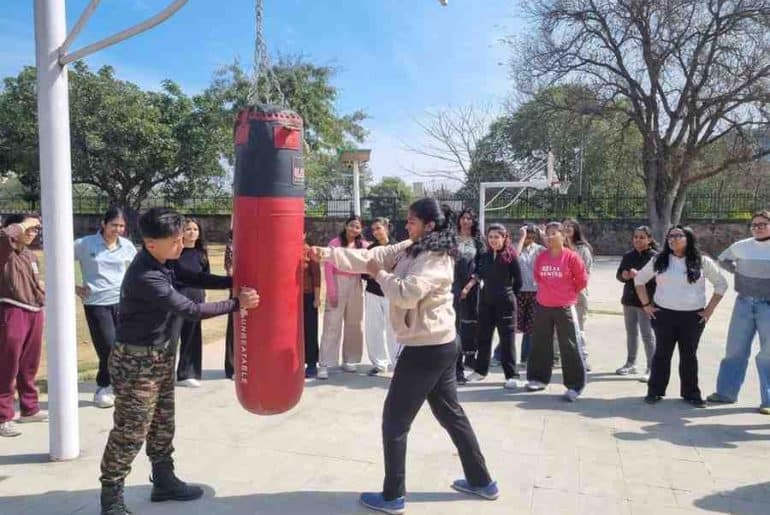
On 4 February 2026, a group of students gathered at Jesus and Mary College for a self-defence training session. The session marked the launch of a university-approved self-defence certificate course I had spent more than a year conceptualising and developing. At first glance, it looked like any other skill-based class on campus. But what most people in that moment did not realise was that the course they were participating in had not existed anywhere within the framework of the University of Delhi just a year earlier.

The idea began with a simple question I could not ignore: what does Delhi University not yet have?

DU offers countless opportunities for students to lead, organise, and participate. There are societies dedicated to music, theatre, debating, entrepreneurship, consulting and almost every imaginable interest. Yet while exploring the ecosystem of student activities across different colleges, one gap stood out. There was no structured, skill-based self-defence training functioning as a formal course within the university system.

In a city where conversations about safety are constant, that absence felt striking.

More than a year ago, I began working on what I initially imagined was a self-defence society. But the idea quickly grew into something larger. Instead of creating another student organisation, I began developing what would eventually become a university-approved certificate course in self-defence, designed with a defined syllabus, duration, and institutional structure.

Turning that possibility into reality meant translating the idea into a structured and institutionally viable course. I developed the concept, designed its structure and syllabus, prepared the documentation required for institutional approval, and worked on several other aspects of building and sustaining the initiative that continue even today.

Before pursuing approvals, however, one question mattered more than anything else: would students actually want this? To find out, I circulated a student interest form more than a year ago. The response was immediate: over 100 students signed up. When registrations later opened for the official course, the number once again crossed 100.

Notably, this response came primarily from outreach among women students at Jesus and Mary College alone, suggesting how strong the demand could become as the course expands further across DU. The course runs for approximately two to three months, allowing students to engage with the training in a structured and sustained way.

The proposal then moved through multiple stages of review and coordination. It received approval from the principal of Jesus and Mary College, where the course is currently being conducted, and was subsequently approved by the University of Delhi under the Skill Development Cell. With these approvals, the self-defence certificate course I had developed finally moved from proposal to reality.

Transforming the concept into an operational course required sustained work, revisions, and coordination across different levels of the institution. To the best of my knowledge, this stands among the first instances of a student independently conceptualising and launching a university-approved certificate course within Delhi University.

In a university as large and layered as the University of Delhi, where most institutional courses are typically introduced through administrative channels, the possibility of a student initiating and building one from the ground up is relatively rare.

The course began with a pilot batch at Jesus and Mary College, with the long-term goal of expanding it across multiple colleges within DU so that more students can access structured self-defence training.

It integrates both practical and theoretical learning. Students undergo hands-on self-defence and martial arts training designed for real-life situations, while the theoretical component introduces legal awareness, protective laws, and psychological insights related to recognising vulnerability and potential threats. The aim of the training is not aggression but preparedness, which is equipping students with awareness, confidence, and the ability to respond when necessary.

The sessions are currently being conducted in collaboration with the Indian Army, whose involvement has brought discipline and technical expertise to the training. At the same time, the initiative remains open to collaborations with other institutions, organisations, and experts who share the goal of strengthening practical safety awareness among students.

The response from students has been overwhelmingly encouraging, with many participants even asking for longer sessions.

Watching students train in something that once existed only as an idea was a moment I still find difficult to fully describe. Standing there and seeing the sessions actually taking place felt almost unreal. For a brief moment, I genuinely could not believe what I was seeing, that something which had existed only as months of drafts, meetings, revisions, and persistent work had finally come to life in a real classroom.

It was also a reminder that universities are not only places where students participate in systems that already exist. They are also places where those systems can be created. I never set out simply to hold a title. I wanted to build something that would remain even after I graduate. Something different and not the usual. What began as a question has now become a functioning, university-recognised certificate course impacting more than a hundred students. Sometimes change in large institutions does not begin with policy or reform. Sometimes it begins with a student who simply refuses to believe that “this doesn’t exist yet” is a good enough reason for it to stay that way.


Tvisha Talwar

(3rd year B.A. (Hons) Sociology student at Jesus and Mary College, University of Delhi)

It’s 2026, and the regimes load weapons not just for resources, but to harness strength from women’s reproductive capacities, turning bodies into battlegrounds of control.

On Katie Couric’s podcast, Gloria Steinem, feminist luminary and a political activist, was posed the provocative query: “What if men bore the burden of pregnancy?” With a spark of irreverent genius, she invoked the legendary civil rights lawyer Flo Kennedy: “If men could get pregnant, abortion would be enshrined as a sacrament.”

Today’s reality continuously reminds us how categorical gendered discrimination is forged through the tools of regime control. A very evident string of this reality is shown in the overturning of Roe v Wade in 2022. Imagine residing in a nation where 45% of pregnancies are unintended, only to learn from a conservative Supreme Court that your choice to abort rests at the mercy of your state. University of Colorado reports confirm the fallacy: since the judgment, 14 states have banned abortion outright, 11 more enforce prior illegal gestational limits, and one in three women of childbearing age now lives under such restrictions.


Regimes intensify their choreography of control over women’s bodily autonomy through calculated legislative manoeuvres, as exemplified by Russia’s draft bill—slated for State Duma review in March 2026—proposing a total abortion ban. What renders this story profoundly disturbing is the absolute prohibition, lacking any exceptions, already enshrined in countries like El Salvador, Vatican City, Malta, the Philippines, Madagascar, and numerous African nations, where even miscarriages or rape cases can incur imprisonment. Regimes’ political immaturity assumes restrictive anti-abortion laws erect protective boundaries around life. Instead, they unleash catastrophe: unsafe, unskilled, unregulated back-alley procedures.


Reproductive politics persistently shape regimes’ status quo and the legislation they craft to cling to power.  Bodily autonomy directly threatens entrenched power structures, rendering the enforcement of laws on an already marginalised half of the population a convenient pretext for those in authority. The death of Mahsa Amini in 2022 remains a deadly reminder of how power corrupts and is prosecuted at a woman who refuses to comply with the theocratic assumptions of how a woman is supposed to be. 


Disciplining women’s bodies and choices has long served as a potent tool for suppressing dissent, instilling internalised weakness by surrendering bodily agency to the state. Yet this sparks a profound debate: the fetus’s right to life, precariously suspended between ethical ambiguity and legal contention, making it hard to have a broad-based consensus over it. India navigates this adeptly under Article 21’s right to life and liberty, permitting abortions up to 20 weeks—and 24 weeks in exceptional cases—prioritising the severity of the cases, such as deformity of the foetus; however, this has to be approved by the Medical Board. 


Simone Debauvoir poses this existentialist crisis perfectly: “Is my body a site of freedom or a tool of oppression?” Patriarchal structure, time and again reinforce the agenda of collective surveillance over personal freedom. Maya Angelou’s ‘Still I Rise’ powerfully embodies the resilience of women of colour, rising against oppression with unapologetic strength. 


The conception of power and the body intertwine inextricably, with history revealing women’s reproductive capacities as instruments of domination. From China’s one-child policy enforcing quotas through forced abortions and sterilisations, to Nazi Germany’s Lebensborn program coercing Aryan women into multiple pregnancies for racial expansion, regimes have wielded demographics as weapons. Forced sterilisations—from Peru’s targeting of Indigenous women to India’s emergency-era campaigns—sustain graphs of control, reducing half the population to vessels for sadistic agendas of supremacy and subjugation.

Read Also: Understanding Ambedkar: lessons from an elective course

Image credits-Pinterest

Kinjal Sharma

[email protected]


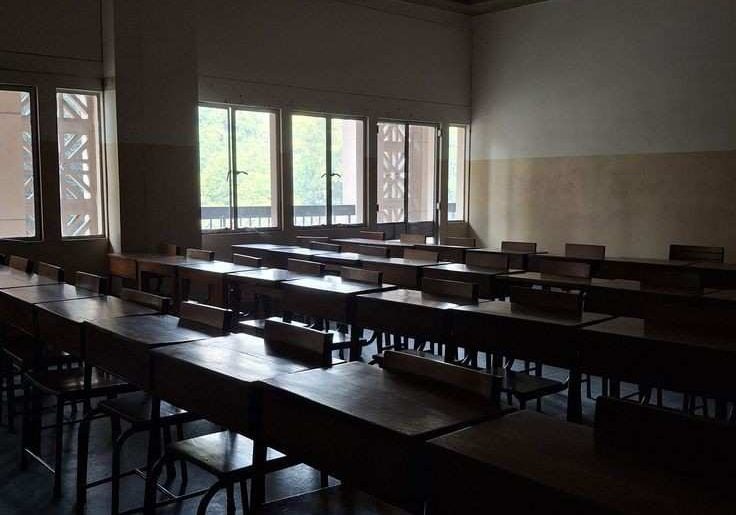
Students of Jesus and Mary College boycott classes after the abrupt cancellation of Montage ‘26, demanding transparency, accountability, and clearer communication from the administration over security-related concerns.

Students of Jesus and Mary College (JMC) boycotted classes on Monday, February 23, in protest against the sudden cancellation of their annual cultural fest, Montage ‘26. The action followed a sequence of rescheduling announcements and what students have described as inadequate communication from the college administration.

Visuals from the empty classrooms at JMC on Feb 23rd. 

Montage ‘26 was originally scheduled for February 20-21. On February 14, the Student Council informed students that the fest had been rescheduled to February 23-24 after a meeting with the Station House Officer (SHO). According to the Council’s message, the upcoming AI Summit, scheduled to happen from 16th February to 20th February, and being of national importance, would lead to tighter security arrangements and restrictions on vehicle movement in the Chanakyapuri area, necessitating compliance with police directives.

While acknowledging that bookings had been finalised and all preparations were being done, the Council requested cooperation, emphasising that the decision to postpone was beyond its control.

However, on February 19, students were informed that the fest had been cancelled altogether. In subsequent communications, the Council stated that despite repeated queries, no detailed or official clarification had been issued by the college administration. The only explanation cited informally was “security concerns” and alleged incidents at another college.

In an emotional message, the Council clarified that preparations had been completed from its end. “The bookings were made, the MoUs were signed, the artist was confirmed, and every arrangement had been taken care of. The event has been cancelled solely because of security issues, not because of any lapse from our side,” the statement read. The Heads of the Council described the past two months as “a roller coaster,” adding, “We have fought, we have cried, we have argued and we have begged,” revealing the emotional strain following the decision.

The cancellation triggered dissatisfaction among students, particularly as other colleges under the University of Delhi continued to host or reschedule their fests. One student remarked, “I believe we as students have the right to know the exact reason behind the cancellation of the fest. It’s hurtful to see that other colleges like Sri Venkateswara College and Miranda House, which had their fests scheduled for this week, are having their fests, and other colleges have postponed their fests rather than directly cancelling them.”

Another student emphasised the broader significance of such events: “Fests form an integral part of college life where students invest months of effort, creativity and emotion into building this fest. For the freshers and those who were to attend their last fest, it’s very disappointing, especially when the administration has cited just security reasons without any clarity and transparent dialogue.”

Despite their frustration, students maintained that the boycott was not an act of hostility. “As students, we understand that security is a serious concern, and we respect the administration’s intent to ensure everyone’s safety. However, this boycott is a peaceful and democratic way for students to express their emotions and seek acknowledgement. We hope that our voices are not seen as opposition, but rather as participation in shaping a more transparent, inclusive, and student-responsive college environment,” a participant said.

Amid the ongoing developments, a controversy briefly surfaced on social media. An anonymous Instagram user with the ID “unicorn.7841926” commented under the boycott announcement post, alleging that the President of the Student Council, members of the Sponsorship Team, and the faculty had misappropriated approximately ₹5 lakhs from sponsorship funds. The comment was removed a few minutes later by the same anonymous account. No evidence supporting the allegation was publicly presented, and neither the administration nor the Student Council issued any official statement addressing the claim.

Messages circulated across departments urging students to remain absent from classes on Monday as a symbolic demonstration of unity. Attendance across several departments was significantly lower than usual, indicating substantial participation.

As of Monday evening, the administration had not released a comprehensive public statement addressing the concerns. For many at JMC, February 23 represents more than a missed fest—it marks a collective assertion of the student body’s demand for transparency, accountability, and meaningful dialogue in decisions affecting campus life.

Read Also: DU Proctor Issues Month-Long Ban on Protests and Public Gatherings Across Campus

Featured Image Source- Anonymous

Richa Choudhary

[email protected]

From Sufi melodies to crazy mashups, Nexus’26 was three days of pure energy, talent and a star night to remember.

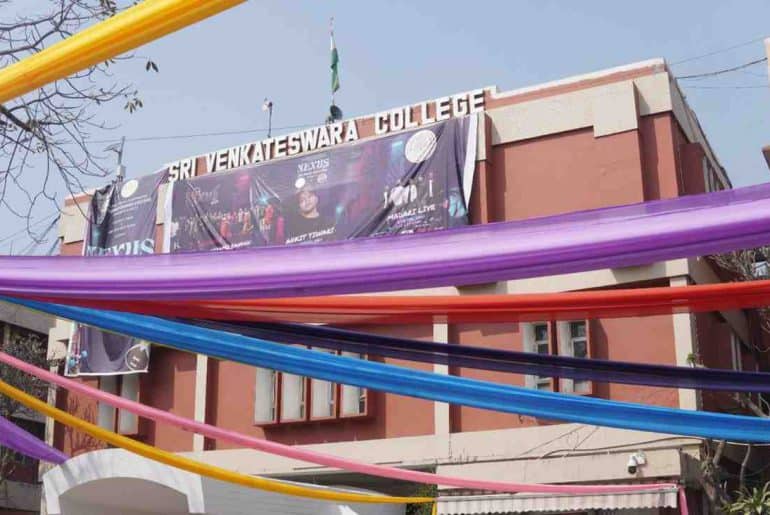
Nexus’26, the Annual Cultural Fest of Sri Venkateswara College, unfolded over the 18th, 19th and 20th of February 2026, transforming the campus into a vibrant hub of art, music and collective celebration. Over the three electric days, students from across the University of Delhi poured in, making the fest a true confluence of cultures, talent and youthful energy.

Day 1 of the fest began with the classical dance event, setting a graceful yet powerful tone. This was followed by Madari, the street play (Nukkad Natak) competition, and then the classical singing event. Battle of Bands was also scheduled, but unfortunately could not take place because of the rains. For the guest night, the artists were Nizami Bandhu and Anirudh Varma Collective. While the former specializes in Sufi music, the latter is known for Indian classical fusion. This lineup truly reflected the spirit of Nexus, a convergence of two different yet beautifully parallel musical cultures.

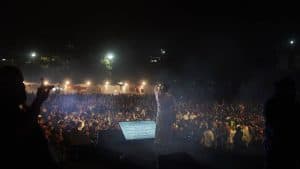
The performance began with Anirudh Varma Collective, followed by Nizami Bandhu, who brought a deeply soulful energy to the stage. The highlight of the night was when both artists came together to perform Kun Faya Kun and Aaj Rang Hai. Kun Faya Kun, in all its glory, had the crowd singing at the top of their lungs; the energy was unmatched and truly electrifying. 

Ayushmaan for DU Beat

Day 2 of Nexus was filled with even more performances from several talented students across the University of Delhi. Dinuendo, where the music societies from several colleges showcased their rhythm and harmony through beautifully composed acapella mixes. Even soundchecks were hypnotic. Colleges, including Hansraj, Jesus and Mary College, and Miranda House, to name a few, all exhibited compositions in which the singers’ voices fused divinely. Solo performances also allowed students to shine and showcase their vocal abilities. Mehfil gave students a platform to exhibit their proficiency in classical music and instruments. Power-packed dance performances also hyped up the crowd.

Artistry exhibited the painting, sketches, handicrafts, and other spectacles which were pure manifestations of aesthetic sense and creativity. The day concluded with a DJ night by the artists Madari Live, flashing lights and an energetic crowd.

Ayushmaan for DU Beat

Day 3 was one of the most anticipated days, for it was the star night, and Ankit Tiwari performed that night. Initially the entry was only limited to Venkateswara College students, with the gates opening around 10am. However, by evening, the entry was opened to everyone, and the energy on campus noticeably shifted. Though there wasn’t much happening during daytime, the food stalls were constantly buzzing.

The artist arrived around 7pm and what followed after that was exuberant and wild to say the least. Ankit Tiwari really lit up the stage and the whole crowd with his performance. He was passionately dancing, performing and engaging with the crowd all while singing with full energy. One of the sweetest moments of the night was when he invited three students on stage who had won a YouTube contest organised before the fest.

Mahin for DU Beat

He also took a brief but touching moment to remember KK, paying tribute through a soulful rendition that had the audience swaying with phone flashlights in the air. It was deeply emotional and nostalgic. Alongside his popular tracks, Ankit Tiwari also played some unexpected and high-energy mashups that completely shifted the vibe, turning the venue into a massive singalong.

Mahin for DU Beat

All in all, Nexus’26 was a massive hit among the students, and it truly ended with a banger.


Thumbnail Image Credits: Ayushmaan for DU Beat

Souparnika Rajkumar

[email protected]

Ipshita Grover

[email protected]

DU Beat 21Under21 Longlist 2025 is now live! 21Under21 is our annual initiative spotlighting 21 exceptional individuals under the age of 21 who are redefining achievement across the University of Delhi. 


1. ACADEMICS

Abhay Pratap Singh

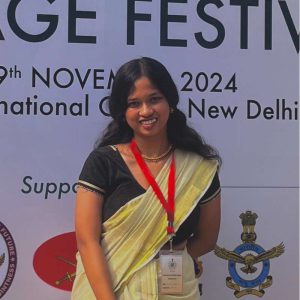
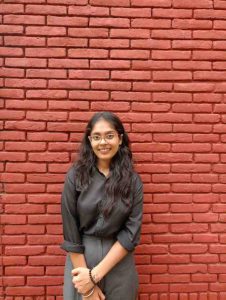
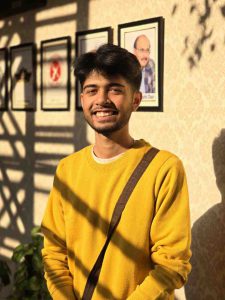
Abhay Pratap Singh is a final-year Bachelor of Management Studies student at Ramanujan College, University of Delhi, graduating in 2026 with a CGPA of 8.33/10 and perfect scores in major business subjects. He has interned with the Ministry of Panchayati Raj, Government of India; Tata Consumer Products; Federation of Indian Chambers of Commerce and Industry; and Bajaj Capital. As Founding Vice President of the Global Scholars’ Society, he led global initiatives. A published researcher on sustainability, he applies Python, R, SQL, and Power Business Intelligence to solve business problems.

Arpita Felix


Raised in a military background, Arpita Felix embodies confidence, resilience, and discipline. An extroverted communicator, she excels in public speaking, debating, leadership, and content creation. Passionate about cinema and writing, she combines storytelling with philosophical reflection, often engaging in ethical debates. Known among peers for her academic strength, she balances intellectual depth with creativity and ambition, thriving in leadership spaces that demand authenticity and command.

Dhruv Gupta


Dhruv Gupta is a second-year Economics student at Shri Ram College of Commerce. He cleared Chartered Financial Analyst Level One with a score of 1860 out of 1900 and secured Rank One in the commerce stream in the Central Board of Secondary Education examinations with 99.2 percent.  He secured AIR 7 (Mathematics Hons.), AIR 13 (BBA-FIA), and AIR 18 (Economics Hons.) in CUET 2024; AIR 414 and state rank 27 in CLAT 2024; AIR 874 in AILET 2024; and National Rank 1 in the National Finance Olympiad 2023. He researches heat-related risks in Bombay Stock Exchange 500 companies with an Indian Institute of Management Bangalore professor, runs Delhi University’s first running community, and actively debates. He is visually impaired.

Lalnundika Darlong

Lalnundika Darlong is a 2025 alumnus of Shri Ram College of Commerce. As Chief Secretary of The Placement Cell, he led 80+ members overseeing recruitment for more than 2,000+ students. He received the Hora Gold Medal from the Delhi Chief Minister and the College Principal for highest merit in leadership and organising ability. A National Winner of EY CAFTA and the Muthoot Case Quest, he interned at EY-Parthenon, International Business Machines, and Federation of Indian Chambers of Commerce and Industry. He also authored research on Artificial Intelligence and Corporate Governance and served as a United Nations Millennium Fellow leading projects on Sustainable Development Goals 3, 13, and 14.

Parv Agrawal

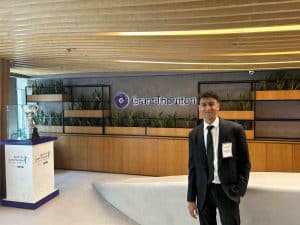
Parv Agrawal is a final-year Bachelor of Management Studies student at Shaheed Sukhdev College of Business Studies, University of Delhi, and a REX Karamveer Global Youth Fellowship Awardee. He secured Global Rank Four at the Emerging Markets Institute Corning Case Competition at Cornell University and achieved National Rank Three at Grant Thornton CaseQuest and the Institute of Management Accountants Student Case Competition. He worked at Takshashila Consulting and as Senior Associate at Impact Project, and is a Reliance Foundation Scholar.

Rucha Shah


Rucha Shah is an Economics undergraduate at Lady Shri Ram College for Women, University of Delhi, and a state topper in the Central Board of Secondary Education Class Twelve examinations. As President of Enactus Lady Shri Ram College, she leads social enterprises in sustainability, agri-technology, waste-to-value, and artisan livelihoods. She was selected as a DESIS FinSpire Fellow at D. E. Shaw and interned at Boston Consulting Group, emerging as a National Winner and receiving a Pre-Placement Offer from Delhi University’s inaugural cohort.

Sreya S Motti


Sreya S Motti is a fourth-year Humanities and Social Sciences student at the Cluster Innovation Centre, University of Delhi. Her interests include gender studies, human rights, and public policy. She has worked with government agencies, non-governmental organisations, startups, and cultural festivals, and researched gender vulnerability, walkability, and Self Help Groups. She guides students through an internship-focused social media platform and manages a community of over 1,300 students, while using storytelling and media for advocacy.

Srishti Chalana


Srishti Chalana has explored social media, operations, and digital marketing through internships at Cannibals Media Private Limited and The Aarambh Organization, affiliated with NITI Aayog. She completed job simulations with Deloitte, EY, JP Morgan Chase, and Tata. Actively mentoring peers on LinkedIn, she combines experimentation, ambition, and determination while guiding students navigating early career pathways.

Virat Vaibhav

Virat Vaibhav is a Bachelor of Management Studies student at Shaheed Sukhdev College of Business Studies and founder of Sawaari H2H, pre-incubated within a Government of India-backed ecosystem. He represented India at the Emerging Markets Institute at Cornell University, securing the highest position achieved by an Indian undergraduate college. He earned National Rank Two at Ernst and Young’s CAFTA and Rank Three at Grant Thornton. His experience includes Ernst and Young, Invest India under the Ministry of AYUSH, Frost and Sullivan, Grant Thornton, Kroll, and startup projects.


2. Arts and Culture

Abhinav Dubey


Abhinav Dubey is a multidisciplinary creator blending art, performance, leadership, and digital storytelling. Through cultural societies, anchoring, fine arts, and public engagement, he combines creativity with leadership. His digital storytelling has reached over 1.4 million accounts, and he has collaborated with brands such as Philips, Rapido, and Cashify. As a Common University Entrance Test mentor and educational content creator on YouTube, he supports students navigating academic journeys with purpose-driven impact.

Ananya Arora


Ananya Arora is an Economics student at Lady Shri Ram College for Women and a Bharatanatyam dancer trained under Padma Shri Guru Kanaka Srinivasan. A recipient of the Centre for Cultural Resources and Training Scholarship from the Ministry of Culture, she has performed at Kalidasa Samaroh, Brahmotsavam in Tirupati, and presented her Arangetram at India Habitat Centre. In 2024, she represented India at the Indian Council for Cultural Relations Festival of Dance in the United Kingdom. She is Project Director at Enactus and founded Project Milan under the United Nations Millennium Fellowship. She has interned at Carnegie India and Nation with Namo and was a Top Fifteen finalist at Ernst and Young NextGen Women 2025.

Borishan Ghosh


Borishan Ghosh is a fourth-year Physics student at Hansraj College who bridges arts and sciences. He co-founded Delhizine, a student-run zine collective that has sold over 2,000 copies, raising Rs. 38,000 for free library projects and relief funds, with 1,600 active users across 26 countries. As illustrator and art director, he shaped over 50 zines and designed the website. A member of the Sky Watchers’ Association of North Bengal, he led telescope outreach and served as a weekly demonstrator under a National Aeronautics and Space Administration after-school initiative.

Navyasha


Navyasha is a Psychology undergraduate at Mata Sundri College for Women, University of Delhi, and a school topper with consistent academic excellence. She has trained in Hindustani classical vocal music for over seven years and has appeared for the Visharad Poorna examination from Gandharva Mahavidyalaya, the final level of the course, and is awaiting results. Her engagement with classical music reflects a deep commitment to understanding India’s musical traditions and cultural heritage.

Rinchan Lyall Robert


Rinchan Lyall Robert is a third-year English student at Jesus and Mary College, preparing for Journalism school. She co-founded Delhizine, overseeing editorial and production of over 2,000 zines that raised Rs. 38,000 for library projects and relief funds. Passionate about social work, she teaches underprivileged children and adults, serves as Vice President of Curiosus, the college Quiz Society, and actively engages in reading, sewing, and crochet.

Sohini Natta


Sohini Natta is an undergraduate at the University of Delhi trained in Indian Classical and Semi-Classical music. She later learned Korean Traditional Percussion Music and became the youngest member of India’s first official Samulnori team at seventeen. She has performed at national and international platforms, including a presidential-level event during India’s G20 Presidency. She has also worked with the Embassies of the Republic of Korea and France in India.

3. SCIENCE AND TECHNOLOGY

Deepika


Deepika is a Bachelor of Science (Honours) Electronics student at Sri Venkateswara College, University of Delhi, with a strong interest in cybersecurity, technology, and leadership. She served as a Gurugram Police Cyber Security Summer Intern 2025, contributing to cybercrime awareness and digital safety initiatives. As President of the Electronics Department, she leads student activities and operations. She also serves as a Google Campus Ambassador, promoting student programs and strengthening campus engagement.

Sanjay Singh


Sanjay Singh is a Cybersecurity Evangelist based in Noida, specialising in vulnerability research and artificial intelligence-driven defence strategies. He has identified multiple Common Vulnerabilities and Exposures and actively contributes to information security awareness and education initiatives. With a strong leadership mindset, he works at the intersection of technology, risk, and innovation to build resilient and future-ready cyber ecosystems.

4.LITERATURE

Anya Rao


Anya Rao is an English Literature student at Lady Shri Ram College for Women who has grown an online community of over 90,000 across LinkedIn, Instagram, and YouTube through writing and storytelling. Alongside creative and socially conscious content, she works as a ghostwriter and personal branding strategist, helping Indian and international founders build influence through writing. She has collaborated with Shark Tank India companies such as Akanksha Vishnoi and YesMadam, as well as international founders including Mackenzie Thompson and Gradjobs Australia.

Avni Jain


Avni Jain is a writer, poet, and performance artist pursuing Bachelor of Science (Honours) Mathematics at Jesus and Mary College, University of Delhi. For over five years, she has blended literature, performance, and social impact, foregrounding unheard narratives. She has collaborated with professors affiliated with Harvard Business School, Imperial College London, and Northwestern University to advance women’s workforce participation. Avni has conducted spoken word workshops at Indian Institute of Technology Delhi and Birla Institute of Technology and Science Pilani, performed widely across Delhi, served as Vice President of her college Poetry Society, and runs a literary newsletter reviewing over 90+ books.

Md Salman Raquib


Md Salman Raquib is a Delhi University student and visual storyteller from Bihar, currently studying Spanish Literature at the Department of Germanic and Romance Studies. His photography documents everyday life, cultural memory, and social realities with sensitivity. His award-winning photo essay, magazine publications, and cover feature highlight both artistic skill and social awareness. Working across street photography and environmental themes, he uses images to explore identity, lived experience, and community connection.

Sayan Das


Sayan Das is a student at the Delhi School of Journalism, University of Delhi, and a literary thinker from Tripura who approaches literature as both art and responsibility. His work spans philosophy, research, poetry, and narrative prose, addressing overlooked social realities. He has been honoured by the Government of Tripura for research-based literary work on consumer protection and digital ethics, and has received multiple state and national poetry awards, including the Best Poet title at Yuva Utsav.

5.SPORTS

Bhavya Tripathi

Bhavya is a professional shotgun shooter representing the Indian shooting team, with multiple medals at both
international and national levels.

OM Kharola

OM Kharola is a nationally and internationally accomplished chess player who has combined elite sport with academic and professional excellence. He has won multiple State Chess Championship titles across Delhi and Maharashtra, represented India at the Asian Youth Chess Championship, securing team gold and individual bronze medals, and competed at the World Youth Chess Championship. A 2025 Bachelor of Management Studies graduate from Shaheed Sukhdev College of Business Studies, University of Delhi, he is currently an Analyst at L.E.K. Consulting, applying strategic and data-driven problem-solving skills shaped by competitive chess.

6.SOCIAL IMPACT AND ACTIVISM

Ananya Singhal


Ananya Singhal is a driven undergraduate with a strong record in leadership, entrepreneurship, and social impact. She has founded and scaled student- and community-led initiatives across India and internationally, mobilising teams, securing funding, and delivering measurable outcomes. As a founding member and Chief Operating Officer of an education technology startup, she led stakeholder engagement and fundraising. Through roles in consulting and media organisations and leadership positions in college societies and non-governmental organisations, she has managed cross-functional teams while maintaining consistent academic excellence and national-level achievements.

Anjali Batra


Anjali Batra is a postgraduate Political Science student at the University of Delhi working at the intersection of policy and lived experience. Within the United Nations Foundation’s Girl Up network, she designed campaigns on menstrual equity, mental health, and gender justice engaging over 500 participants. She founded Project Mehviyat, a trauma-informed community for survivors from South Asian households, and serves as Chief Impact Officer at The Human Empowerment Organisation. A United Nations Millennium Fellow and Global Youth Ambassador with Theirworld, she advances people-centered change.

Badal Chaudhary


Badal Chaudhary is a third-year student at Ramjas College, University of Delhi, recognised for innovative student leadership. Elected Joint Secretary of the Bachelor of Arts Programme Department in his first year, he later became the elected student representative to the Internal Complaints Committee. He founded Ramjas Kranti Setu, Delhi University’s first student grievance and helpdesk web portal with real-time issue tracking. His campaigns introduced eco-friendly seed cards, personalised fresher envelopes, guidebook-style pamphlets, and digital storytelling initiatives, redefining campus activism.

Ishpreet Kakkar


Ishpreet Kakkar is a fourth-year Political Science student with a minor in English at Lady Shri Ram College for Women. Guided by the value of selfless service, she began social outreach during the COVID-19 pandemic by distributing masks, sanitizers, and food. She later founded the Sachi Seva Foundation, providing free meals to those in need. Selected to represent India at the National University of Singapore, she won 5000 Singapore Dollars for her social entrepreneurship pitch focused on improving employability for orphaned youth under eighteen.

Jaya Paul


Jaya Paul is a final-year History student at Lady Shri Ram College for Women who bridges archival research with grassroots action. Guided by the college’s ethos of leadership and social responsibility, she works through platforms such as the National Service Scheme to foster inclusion and accessibility. Her writing connects historical structures to present policy and lived realities, aiming to influence discourse beyond classrooms. Calm yet bold, she combines academic rigour with empathy to advocate meaningful social transformation.

Niyamat Kochhar


Niyamat Kochhar works at the intersection of gender equity, sustainability, and education. She founded Menstra, addressing menstrual health, period poverty, and waste reduction, and HerCode, a United Nations-funded initiative equipping girls with coding and digital skills. She serves with United Nations Women on the Youth Steering Committee for the Commission on the Status of Women in New York and is one of ten global Girl Up Teen Advisors. Her work integrates grassroots action, policy engagement, and youth leadership.

Pari Malla


At nineteen, Pari Malla has channelled personal struggles into purpose-driven organisations rooted in community building. Her work focuses on forging connections through social networking to create ecosystems of safety and hopeful identity. Often described as a bridge in social spaces, she strives to make environments feel inclusive and supportive. Guided by a belief that hope combined with action makes change inevitable, Pari consistently ideates and executes initiatives grounded in collective empowerment.

Rucha Shah


Rucha Shah is an Economics undergraduate at Lady Shri Ram College for Women, University of Delhi, and a state topper in the Central Board of Secondary Education Class Twelve examinations. As President of Enactus Lady Shri Ram College, she leads social enterprises in sustainability, agri-technology, waste-to-value, and artisan livelihoods. She was selected as a DESIS FinSpire Fellow at D. E. Shaw and interned at Boston Consulting Group, emerging as a National Winner and receiving a Pre-Placement Offer from Delhi University’s inaugural cohort.

Saloni Sharma


Saloni Sharma is a fourth-year Political Science student at Lady Shri Ram College for Women and founder of AICommons. A United Nations Millennium Fellow and former President of the English Debating Society, she approaches leadership through empathy and democratization. Through AICommons, she works to centre human dignity within technological futures, translating critical theory into actionable advocacy. Her work bridges technical systems and social justice, striving to build an inclusive digital future that serves all.

7.ENTREPRENEURSHIP AND INNOVATION

Akshat Kumar


Akshat Kumar is an 18-year-old second-year Bachelor of Technology student known for leadership and technical depth. A founding member of Geek Room, one of India’s largest student-led technology networks connecting over 150,000 developers, he has organised 30+ hackathons, including Code Kshetra 2.0, collaborating with Microsoft, Groq, and Mastercard. He has interned at Trae, OmniDimension (United States), and Misty Interactive (Canada). A national-level swimmer, he has represented Delhi at multiple championships.

Avishi Gupta


Avishi Gupta is a Commerce graduate from the University of Delhi and an Assurance and Audit Associate at Ernst and Young Global Delivery Services. Founder of Project Riayat, an adaptive clothing initiative for persons with disabilities, she led it from research to pilot within a year, building 12+ institutional collaborations and earning recognition in 25+ national competitions. As President of Enactus Deen Dayal Upadhyaya College, she led 150+ members. Her work has been featured by The Better India and Social Story.

Dhani Gupta


Dhani Gupta is a young entrepreneur and Founder and Chief Executive Officer of SkilltheHub India Limited Liability Partnership, training over 10,000 learners nationwide in entrepreneurship, business strategy, and leadership. She also leads The NAMAH Group, including NAMAH Model United Nations, engaging 400+ delegates across 20+ institutions. Her ventures include “Nani ki Chaupal.” With experience across startups, branding, programming, and classical dance, she has been recognised at national and international startup expos and youth leadership forums.

Nargis Parbin Barbhuiya


Nargis Parbin Barbhuiya is an Economics student at the University of Delhi with a strong interest in business and entrepreneurship. Originally from Assam, she founded and manages a handmade business on Instagram, overseeing branding, operations, and customer engagement. Her professional experiences have strengthened her skills in team coordination, client interaction, and people management. She thrives in fast-paced environments focused on innovation and aims to contribute to sustainable, impact-driven business ecosystems.

Shivalee Duara


Shivalee Duara is a final-year Economics student at Daulat Ram College and Founder of YIOS Consulting, a student-run consulting organisation that has worked with four startups. Passionate about entrepreneurship and trade economics, she has interned at the Indian Council for Research on International Economic Relations and the Federation of Indian Chambers of Commerce and Industry, and assisted on a project funded by the Indian Council of Social Science Research. She also serves as Chairperson of Global Alliance for Environment and Education India under the United Nations Sustainable Development Solutions Network.

Swonshutaa Dash


Swonshutaa Dash is a second-year English Honours student at Lady Shri Ram College, ranking third in her department. She has scaled a social enterprise built around elephant dung and developed nutraceutical solutions addressing anaemia. A national winner, including the Boston Consulting Group Bruce Henderson Ideathon and competitions at Shri Ram College of Commerce and Indian Institute of Management Indore, she generated ₹70,000+ revenue through Project Saarthi. Her campaigns reached 120,000+ accounts, including work for Blue Tokai Coffee Roasters, and have been featured in ThePrint and Youth Ki Awaaz.

Tamanna Gupta


Tamanna Gupta is an emerging consulting leader from Miranda House, where she founded and led the college’s first Consulting Forum. She built a 12+ project pipeline, launched a Consulting Festival, initiated a cross-campus mixer, and formalised collaborations with Indian Institute of Management Indore and Indian Institute of Technology Delhi. She led the creation of a 200-page Casebook used across 20+ institutions and competed in 150+ national case competitions. She is placed at Barclays as a Fraud Analyst.

Vinayak Sharma


Vinayak Sharma is a student entrepreneur working at the intersection of brands and students. After beginning college with limited technical exposure, he gained experience with Adidas, Lenskart, and Ogilvy, receiving Letters of Recommendation from each. He founded Zoffers, a student-first startup bridging brand and student needs. Recognised as a LinkedIn Top Voice in Business Strategy, he has been invited to speak at Punjab University and University of Delhi events on marketing and personal branding.

With 21 Under 21 we bring forth the young leaders, scholars, artists, athletes, activists, and entrepreneurs under 21 who are redefining excellence at the University of Delhi through innovation, impact, and ambition. More Details Coming Soon, Stay Tuned!

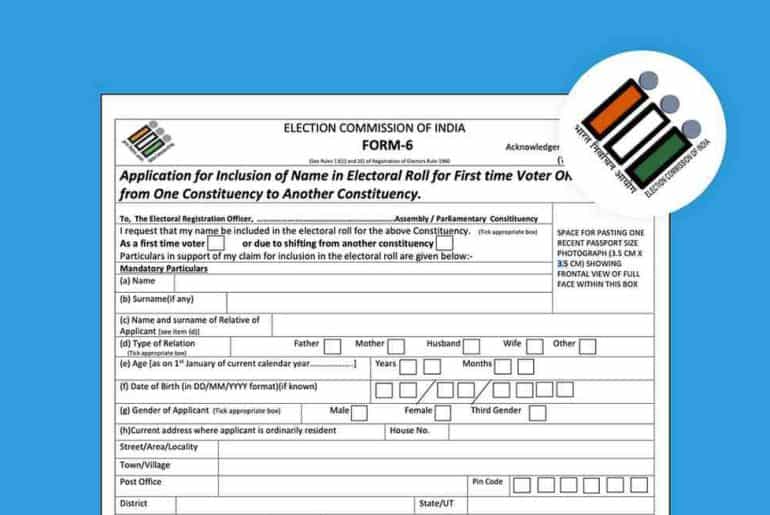
Voting is a right, but only if the system can recognise you. History, fragility and everyday loss of our most fundamental rights lead us to ask:  why does a government which is “by the people” still decide who counts?


We like to believe that democracy is loud, participatory, and forgiving. That once a right is granted, it stays granted. That voting, at the very least, is something the state does not ask you to earn again and again. But this belief rests on a fragile and transitory assumption that all citizens are equally visible, equally legible, and equally easy to recognise– they are not. 


Every democratic system, no matter how expansive, carries within it an unspoken imagination of the “ideal voter”. From its earliest articulations, the idea of the voter has been shaped less by equality than by eligibility. In ancient democracies, participation was a privilege. Some people were political by default. Others were never meant to be.


In ancient Athens, this imagination was not subtle. Only free men could participate in political life. Women, slaves, and foreigners were excluded not because they were invisible, but because they were never meant to count. Even Aristotle, often invoked as a foundation thinker of democracy, was clear that political participation belonged to those capable of reasoned speech and leisure. To vote was not to express oneself, but to signal that one already belonged to the correct moral and social category.


Rome refined this logic. Early modern societies tethered the right to vote to the right to own property—the voter must have a “stake” in society. Even under British rule, voting was a way to manage, not empower–rationed through educational qualifications, income and property. “Prove that you are responsible”. The logic is paternalistic, yet familiar.


We like to tell ourselves that we no longer ask who deserves to vote. That question sounds crude now, embarrassing even. Instead, we ask something softer. Something administrative: “Can you be verified?”


This shift matters because verification always asks for proof, and proof assumes stability. It sounds clean until you remember how easily lives fall apart. Even privilege does not guarantee permanence. Documents are lost. Names change. Paper yellows, tears, burns. Files slip out of folders during relocations that were never meant to be temporary. In bastis and slums, papers are damaged by rain, by fire, by evictions that arrive without warning. None of this is malicious. None of it is fraud. It is simply what living does to paperwork. 


And yet, when participation hinges on uninterrupted proof, the burden quietly shifts. The right to vote stops feeling like something you possess and starts feeling like something you must maintain. The system does not say you do not belong. It only asks you, again and again, to show that you do.


This is where the idea of the “ideal voter” returns, not as a moral figure, but as a logistical one. The ideal voter is someone whose life does not interrupt the system. Someone whose citizenship does not require explanation. 


History helps us recognise this pattern because it has repeated itself in different disguises. Once, voting was tied to property, education, lineage, and gender. Later, to literacy and rationality. Each time a barrier was dismantled, another took its place. More defensible and easily justifiable. Times changed, but the instinct did not. 


India’s decision to adopt universal adult suffrage was radical precisely because it resisted this instinct. It trusted people before they were orderly. It did not demand coherence. At a time when many democracies hesitated, India chose inclusion as a starting point, not a reward. That choice feels under strain today.


Processes like the Special Intensive Revision (SIR) of electoral rolls are presented as technical necessities. Accuracy. Clean lists. Integrity. On paper, this is very difficult to argue against. Who doesn’t want correctness? Who would defend error? But correctness is not the same as justice. Systems that prioritise order inevitably privilege lives that are already ordered. Exclusion, hence, rolls in like a fog of delay, confusion, missed deadlines and unclear notices. A fog you cannot cross without a level of attentiveness and stability that, simply put, most lives cannot afford. Disenfranchisement here does not announce itself. It accumulates.


What should trouble us is not that systems require maintenance, but that those who bear the cost are rarely brought to light. We choose to reassure ourselves with perfectly rational explanations that function in an inherently flawed system. These explanations are not wrong, but they are incomplete. They allow us to avoid the discomfort of admitting that democracy, when made too tidy, begins to shrink.


We imagine political progress as linear: more rights, fewer exclusions. But as history would suggest, another undeniable truth exists–as rights expand, the conditions attached to them mutate. Participation becomes conditional not in law, but in practice. The definition of the voter remains unchanged on paper, even as the experience of voting grows more fragile.


So, we return to the question that refuses to stay buried: who is the voter the state designed its systems to recognise? And perhaps, more importantly, who is the voter who must constantly keep proving that they belong?


If old age, poverty, displacement, or simple misfortune can interrupt political visibility, then democracy is no longer about voice. It becomes about endurance. About whose lives are resilient enough to survive bureaucracy. 


There is no quick fix for this tension. Democracy is not tidy. People move. Records fail. Lives refuse to align neatly with databases. A political system that prioritises order over access risks mistaking control for legitimacy. If democracy is to mean more than ritual, it must tolerate messiness. It must accept that inclusion requires patience and that trust cannot be fully replaced by proof.


A democracy that treats participation as conditional will always shrink itself, quietly and efficiently. The danger is not that it will collapse overnight, but that it will continue to function smoothly and procedurally. Leaving more and more people standing outside its frame. Narrowing the circle of those who remain visible within it, and narrowing, as history tells us, is never neutral.


Image caption: Unlike many other democracies, India chose inclusion as a starting point, not a reward. That choice feels under strain today.


Read Also: Elections, Voters and Vote Chori


Image credits: Paytm Blog


Suansh Dembla

[email protected]

1. Introduction – Why Part‑Time Jobs are a Game‑Changer for DU Students

Imagine you are at Patel’s Chest, sipping chai, or having a quick Maggie break with your friends at Hudson Lane, or rehearsing until late for the annual fest of your society, and then you find out that your wallet is almost empty.

This is the reality for many students at the University of Delhi. Life in DU is a lively one with numerous opportunities and a very social scene, but Delhi life can be expensive. With rent, food, travel, and the odd party here and there, that pocket money runs out quicker than you might think.

That is why students are now taking on part-time jobs. These roles not only provide you with a source of income while studying, but they also give you a taste of financial independence and develop life skills such as budgeting, time management, and professional communication. In addition, they provide an excellent experience for your resume and give you a leg up on the competition once you graduate.

The best part? Most of these Delhi University side hustles are also quite flexible, student-friendly, and can be easily done in parallel with your lecture schedules/extracurricular commitments. We explore the simple, valuable, and high-earning ways to maximize your DU life, without breaking the bank in the process.

2. What to Look for in a Student‑Friendly Job

When choosing a part‑time job as a DU student, money isn’t the only factor; your work should fit seamlessly into your academic and social life. Here’s what to prioritise:

  • Flexible Timings: Your classes, society rehearsals, and festivals take priority. Seek out and apply for part-time jobs in Delhi that are flexible and allow you to choose your own shifts or work hours that fit into your schedule.
  • Low Travel Time: A job within strolling distance of campus or WFH listings saves time and money on the daily grind. This means more time for studying, sleeping, or making friends.
  • Minimal Stress, Maximum Learning: Choose roles that are educative while not leaving you high and dry right before the exams.
  • Skill Relevance: Consider taking on a part-time job at DU that is relevant to your degree or teaches you a skill with relevance, such as communication, teamwork, or digital skills.
  • Fair Pay: Avoid gigs that demand long hours for very low wages. Your time and effort are valuable.

The best job not only provides you with an opportunity to earn extra cash and experience, but also allows you to do so without taking anything from your studying time; that way, you can easily balance between working and studying, which helps you excel positively in both paths!

3. On‑Campus & Near‑Campus Opportunities

One of the best things about studying at Delhi University is that you don’t have to go far to find student‑friendly jobs. Campus and nearby roles are numerous, and many fit well with the rigours of academia, offering a happy medium.

  1. Library Assistant: Ideal for those who prefer a quiet atmosphere and want to study at their own pace. Tasks typically involve shelving books, checking in/out library materials, and assisting students in locating resources.

Pay Range: ₹5,000–₹8,000/month.

  1. Campus Event Helper: Like any other university, DU also hosts its own cultural fests and events, such as Crossroads, Mecca, and Mood Indigo, to name a few. Stage management, ticketing, and all things logistics can be a great way to earn some money while still having fun at the same time.

Pay Range: ₹500–₹1,000/day during events.

  1. Tutoring Juniors or School Students: If you excel in your studies, then this job can be highly profitable. Usually, Everybody wants to learn English, Maths, and Science.

Pay Range: ₹300–₹800/hour.

  1. Bookstore/Cafe Jobs around DU: Kamla Nagar and Hudson Lane are filled with bookstores, cafes, and eateries that consistently hire DU students for part-time roles.

Pay Range: ₹7,000–₹10,000/month.

  1. Lab Assistant: If you are doing science and are keen on doing some research, working as a lab assistant can give you insight into academic research so that you can be prepared for what to expect later on.

Pay Range: ₹5,000–₹8,000/month.

  1. College Administrative Helper: Colleges frequently hire people during admissions or exam periods to enter data, handle student queries, and manage documents.

Pay Range: ₹400–₹800/day.

These DU campus jobs and jobs near DU campus are great because they are close, have flexible hours, and pay pretty well without affecting your GPA.

4. Online & Remote Jobs for DU Students

Online Jobs Available for DU Students. If you like to work from your hostel room, PG, or even from the library of DU. Not only do they save you on commute time, but they also give you the flexibility to carry them out in parallel with your classes.

  1. Freelance writing/blogging: Many websites and blogs need fresh, well‑researched articles. If you have good writing skills, you can earn by creating blog posts, product descriptions, or social media content.

Payscale: ₹300–₹1,000Per Article (Varies as per word count & Difficulty)

  1. Social Media Management: Young creative minds are in demand for companies, especially small businesses, that rely on someone to take over their Instagram, Facebook, and YouTube. It might be for you if trends and engagement are your thing.

Pay Range: ₹ 8,000 — ₹15,000/mo

  1. Graphic Design & Video Editing: You can pick up freelance creative projects for brands or YouTubers, etc., if you’re skilled in tools like Canva, Photoshop, and Premiere Pro.

Pay Range: ₹500–₹2,000 per project.

  1. Online Tutoring: You can teach school subjects, languages, or even prepare students for college entrance exams online. If you don’t have a setting, consider Chegg, Vedantu, and UrbanPro.

Pay Range: ₹300–₹800/hour.

  1. Transcription/Data Entry: Very Basic and flexible jobs requiring accuracy. The tasks included transcribing audio to text or performing data entry for businesses.

Pay Range: ₹150–₹300/hour.

  1. Virtual Assistant: With the same responsibilities, only usually with more time being allocated to emails, scheduling meetings, and conducting light research on behalf of a professional or entrepreneur.

Pay Range: ₹5,000–₹12,000/month.

You can work on your own terms, add to your portfolio, and get paid better than conventional part‑time jobs without having to leave the gates of DU with these freelance work for students and remote student jobs in India.

5. Creative & Gig‑Based Jobs

If you have a creative side and are also a DU student, your abilities can be a quick source of income in gig work. They are of a flexible nature, in a form that is fun to participate in, and tend to concentrate more on offering project-based or event-based payment as opposed to full-time employment, making them perfect for you (especially for students looking to supplement their studies).

  1. Event Photography/Videography: DU always has something happening (from college fests to society events to small neighborhood weddings). So you can easily integrate into that market as an event photographer. You can earn a good income if you have a decent camera and some basic editing skills.

Pay Range: ₹1,000–₹5,000 per event depending on scale

  1. Music/Dance Instructor: If you can play the guitar, sing, or dance in hip-hop or classical style, then consider teaching at local studios and community centers.

Pay Range: ₹500–₹1,000/hour.

  1. Handmade Crafts or Art Sales: From jewellery to customised artwork, DU fests and Instagram are perfect marketplaces for your creations.

Pay Range: ₹200–₹2,000 per product ( based on the complexity of the product)

  1. YouTube/Instagram Content Creation: Vlogging on campus life, study tips, and lifestyle content, among other topics, will eventually lead to brand collaborations.

Pay Range: Initially low, but can scale to ₹5,000–₹50,000/month with growth

  1. MC/Anchor for College Events: If you are good at public speaking, hosting cultural nights or contests can be a very entertaining and fulfilling experience.

Pay Range: ₹1,000–₹3,000 per show.

They may be creative jobs for students, but it is not all about the cash: they are also a way to create your own personal brand, develop yourself, broaden your network, and actually make money doing what you love as a side hustle at DU!

6. Internships That Pay (and Count as Experience)

For DU students, paid internships are a golden egg; you get to earn well while building your CV. Most of these internships are flexible enough to work with your class schedule, and some even let you work from home.

  1. Marketing Intern: Help brands with promotions, influencer outreach, or social media content writing. One of the best online jobs for creative and social students.

Pay Range: ₹3,000–₹10,000/month.

  1. Research Assistant: Work on academic projects, surveys, and data analysis in cooperation with the DU faculty or research organisations. Best for students planning to pursue higher studies.

Pay Range: ₹5,000–₹12,000/month.

  1. NGO Volunteer: Support social impact initiatives with a small stipend. May involve teaching, fundraising, or event organising

Pay Range: ₹2,000–₹8,000/month.

  1. Work as a Campus Ambassador: Promote brands like Red Bull, Zomato, Amazon, or Paytm on campus, organize events, and educate students about these brands.

Pay Range: ₹2,000–₹8,000/month + perks.

  1. Intern for Event Management: Help organize and conduct college fests, weddings, or corporate events.

Pay Range: ₹4,000–₹10,000/month.

Best places to find these opportunities?

 Internshala, LinkedIn, and the DU placement cells continually update new internship opportunities for DU students and on-campus ambassador jobs. These work roles are not only the best way to earn an income but also provide an experience through which your networking expands and will always be remembered in the future.

7. How to Find & Apply for These Jobs

Getting part-time jobs in Delhi for a DU student may seem like a difficult task, but it is not as challenging as you might think. These are the most successful media to use:

  1. College Notice Boards: Ads during festivals, admissions, and exam seasons. Some cafes, shops, and events near campus tend to post here.
  2. DU WhatsApp & Facebook Groups: Every college has groups where students share DU jobs and freelance gigs daily.

.3. Placement Cells: Placement or Internship Cells that post legitimate openings for full-time internships and part-time jobs are present in every DU college.

  1. Online Portals: Internshala, LinkedIn, Indeed, and Naukri. Com is the largest honey pot for student job searches in Delhi.
  2. Networking: Speak with upper-level students, alums, and explore campus activism groups. A large percentage of jobs are even filled through people that someone knows, before they are posted on job boards.

Top Tip: Keep a concise and up-to-date CV on hand, ready for you to apply immediately when a suitable role becomes available. Having a slim resume also goes a long way for casual or gig jobs, as it demonstrates your seriousness about the job and increases your chances of being hired.

Creating a career for yourself is all about taking initiative; the longer you wait to look, the longer it will take for you to land in a space that suits your DU lifestyle.

8. Balancing Work & Studies in DU

Managing a part‑time job while studying in DU can be rewarding, but only if you keep the right balance.

  1. Time Blocking: Assign a Time for Classes, Study Sessions, Work Shifts, and Break Time. This prevents one from intruding on the other.
  2. Do Not Overcommit: Understand the number of hours you can work without influencing your grades or well-being.
  3. Use Weekends Wisely: Weekdays will become lighter if you work longer shifts on Saturdays and Sundays.
  4. Prioritise Exams: Ask employers if you can cut back on hours or take some time off during the weeks of the most important exams.
  5. Take Breaks: Even with a busy schedule, short breaks help you avoid burnout and maintain productivity.

Working requires more of your time and energy, but that might also put you in a better position to manage your time in the first place. Balancing job & studies at DU is not about putting more time or even things on your day as much as it is about semantically managing your energies efficiently. That way, you could make some money, learn a lot in the field you are most passionate about, and still have time to actually enjoy your university experience without feeling totally drained all the time.

9. Pay Ranges & Income Potential for DU Part‑Time Jobs

The income potential for DU students varies widely depending on the type of work, skill level, and consistency.

  1. On-Campus Jobs: The salary ranges from ₹ 5,000- ₹ 12,000/month for roles such as library assistant, lab helper, or assisting with campus events in general.
  2. Freelance & Remote Work: You can earn anywhere between ₹200 and ₹1,000/hour for doing content writing, graphic design, tutoring, and social media management, depending on the demand for your skills.
  3. Creative Gigs: Event photography, anchoring, or performing arts can bring in ₹500–₹3,000 per event
  4. Internships: Marketing, research assistance, or campus ambassador roles usually offer ₹3,000–₹10,000/month plus perks.

Your student earnings in Delhi University will depend on:

  • Skill Level: If you have a specialized skill, you can earn even more money.
  • Consistency: Regular clients and steady projects boost income stability.
  • Networking: Most high-paying opportunities are often found through word of mouth, such as from seniors, professors, or alums.

With the right approach, part‑time job salaries in DU can easily cover personal expenses and even help you save without heavily depending on your family for money.

10. Legal & Safety Tips for Student Jobs in Delhi

Although landing part–time jobs for DU students is an exciting and rewarding experience, you do have to be careful not to fall for scams and unsafe situations.

  1. Do Not Fall for Scams: No real employer should ever ask you to send money so they can hire you. If they do, it’s a red flag.
  2. Obtain Payment Terms in Writing: Ensure you have concrete payment information before undertaking any work, whether via email, a recorded confirmation, or a formal contract.
  3. Research The Company or Client: If you have the company name, website, or link, read some reviews of other freelancers who worked for them and ask around to see if they are actually legitimate.
  4. Safety first: If you are working a late‑evening or night shift, please make sure to travel safely on return, only work for people that you trust, and let your friends/family know where you are.

These student work safety tips help you earn money in Delhi while also keeping safe from fraud and working in a legal and secure environment.

11. Final Thoughts – Start Small, Earn Smart

Apart from the place of study, DU is a world full of opportunities to earn while studying at Delhi University. No matter if you work on campus, freelance, or have a creative side hustle in place, the important thing is that you get your feet wet and learn along the way.

Start with simple, low‑obligation tasks to test how it fits into your schedule and areas of interest. In the long run, you might even secure higher‑paying opportunities or transform your side hustle into a career.

Use your earnings not just to save up pocket money, but also to gain financial independence, learn important lessons, and open doors for networking. Easy jobs for DU students are also considered, with the aim of not letting work overshadow academics.

With the right mindset and balance, you can earn smart, gain experience, and enjoy the vibrant DU life to the fullest.


Read Also: The Broke Student’s Guide to Surviving the Last Week of the Month (Without Asking Parents!)


Delhi University has announced a month-long ban on protests and public gatherings across campus, citing concerns over safety and public order.

The University of Delhi has imposed a temporary prohibition on protests, demonstrations, and public gatherings across its campuses for a period of one month, according to an official order issued by the Office of the Proctor on February 17, 2026.

The circular, addressed to students, faculty members, and staff, states that all forms of public meetings, processions, rallies, dharnas, and demonstrations are “strictly prohibited” within university premises with immediate effect. The restriction will remain in force until March 17, 2026, unless withdrawn earlier.

According to the order, the decision was taken following inputs suggesting that unrestricted gatherings on campus could lead to traffic obstruction, threats to human life, and disturbances to public peace. The Proctor’s Office noted that in previous instances, protest organizers had allegedly failed to manage crowds effectively, leading to escalation and deterioration of law and order within university spaces.

The directive also references an order issued by the Assistant Commissioner of Police (ACP), Civil Lines subdivision, under provisions linked to notifications by the Ministry of Home Affairs. These regulations extend the scope of restrictions to several specific activities.

Under the order, the assembly of five or more persons for protest-related purposes has been prohibited. The use or carrying of potentially hazardous materials, including mashals, beacons, or torches, has also been banned. Additionally, slogan shouting, public speeches, rallies, and any activity that could disrupt public tranquillity or impede the smooth flow of traffic are not permitted during the enforcement period.

University authorities justified the move as a preventive measure aimed at maintaining safety and ensuring normal academic functioning across campuses. The order emphasizes concerns over crowd management and the potential spread of unrest during large gatherings.

The circular has come into immediate effect from February 17, 2026, following approval from the competent authority, marking a significant temporary restriction on collective demonstrations within Delhi University campuses.

Read Also: Understanding Ambedkar: lessons from an elective course 


Image Credit: Devesh for DU Beat


Anjali Kumari Jha

[email protected]

When controversy surrounds the SIR and vote theft makes headlines, how can we trust the Election Commission? And if we cannot, what does this mean for the vulnerable voter? 

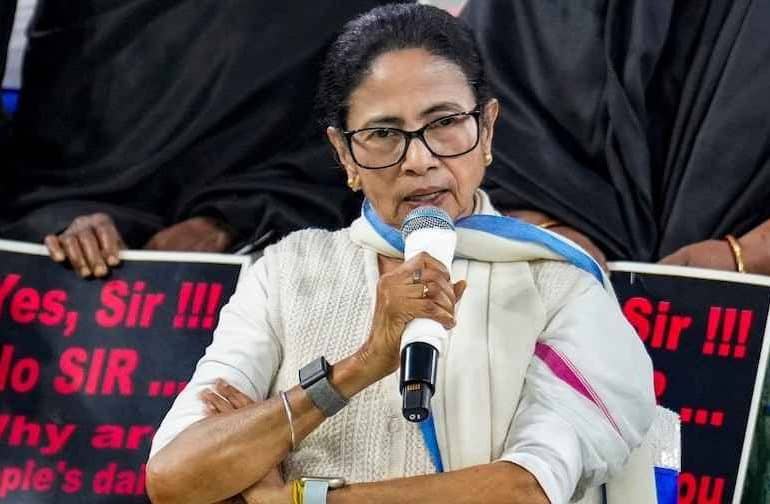
Last Wednesday, Mamata Banerjee made headlines as she appeared at the Supreme Court to win “justice for the people of West Bengal”. This statement comes in the wake of the recently conducted Special Intensive Revision (SIR) by the Election Commission in Bengal. The CM’s claims of the officials being “BJP Officers” were based on the alleged unjustified deletion of names from the voter roll. Banerjee cited cases of simple name changes flagged as “discrepancies” in the system, severely reducing voter turnout.

These concerns form part of a broader set of questions being raised about the functioning of the Election Commission itself; for instance, Rahul Gandhi’s recent call-out of duplicate EPIC entries, odd constituency-wise surges, and data that is not machine-readable.

Under Article 324, the Election Commission of India (ECI) holds a public trust: to ensure that elections are free, fair, and seen to be so. Article 324(2) states that the Election Commission shall consist of the Chief Election Commissioner and such number of other Election Commissioners as the President may determine, and that their appointments shall be made by the President, subject to any law enacted by Parliament. It is therefore unsurprising that in the seven decades since the Constitution’s adoption, Parliament failed to enact such a law, leaving appointments by default in the hands of the executive.

It was in this context that Anoop Baranwal v. Union of India came before the Supreme Court. For decades, the ECI’s structure rested on convention, with appointments effectively controlled by the government of the day. This meant that the referee of the electoral process was chosen by one of the teams playing the game—a system fundamentally at odds with the idea of free and fair elections that the Commission is meant to safeguard.

In Anoop Baranwal (2023), a Constitution Bench led by Justice K.M. Joseph held that, until Parliament legislates, appointments to the ECI must be made by a committee comprising the Prime Minister, the Leader of the Opposition, and the Chief Justice of India.

A swift response followed the judgment. The Chief Election Commissioner and Other Election Commissioners Act, 2023, replaced the Chief Justice with a Union Cabinet Minister nominated by the Prime Minister, diluting the entire purpose and reconstituting appointment power in the executive.

This brings us to Rahul Gandhi’s 7 August 2025 presentation, which raises critical questions, not about the factuality of the claims but instead about the response of the ECI to file for an affidavit as its first action. 

When such allegations are verifiable, the Commission’s constitutional instinct should be to open a suo motu inquiry, invite particulars, publish methods, and report back. By demanding an affidavit before engaging, the ECI inadvertently communicated that it polices critics more readily than it audits itself.

Another response by the ECI was the adoption of a 45-day retention policy for CCTV/webcast footage. The stated reasons, privacy, the risk of maliciously edited clips, and resource constraints may not be frivolous. But the constitutional effect is stark: the evidentiary trail for retrospective audit is shortened to the point of near uselessness.

In instances like Uttar Pradesh (May 2024), Faridabad (2019), and Manipur (April 2024), video materials and on-ground visuals were key triggers. What survives in the archive determines what survives in law, which is exactly why a 45-day deletion cycle is a constitutional misfit.

This worry is not about one election cycle, one constituency, or one political party. It is about patterns: appointments that appear executive-tilted, opaque data practices around electoral rolls, truncated retention of polling-day evidence, and a defensive institutional reflex when faced with falsifiable allegations.

Another of legitimacy’s visible dents is the SIR, an exercise in which every eligible voter is required to provide documentation in order to update voter rolls, carried out in Bihar prior to state elections. The process held within a span of two months reduced the number of eligible voters from 78.9 million to 72.4 million, raising serious questions as to the reliability of the data. The Commission told the Supreme Court it would not delete any eligible voter without notice, a hearing, and a reasoned order, and that appeals exist. But when petitioners asked for a public list of those proposed to be deleted (with stated reasons) to enable an independent audit, the Commission said the law does not require such publication.

In Bengal, concerns have been raised that the process may disproportionately affect migrant residents since their documentation is often fragmented or reliant on legacy linkage with older voter rolls, a reality that has led to questions being raised about the political implications of the ECI’s actions.

The SIR last conducted in 2002 did not face this backlash. What has changed is not simply the sharpness of opposition rhetoric, but the credibility with which the ECI has now responded to such allegations, which together give rise to the paradox of democracy that becomes evident when the state, which is a creation of the people, acquires the power to decide who truly belongs to ‘the people.’ 

Modern constitutional democracies operate on the principle that the people create the state, yet the state retains legal and administrative mechanisms to determine citizenship through statutes such as the Citizenship Act and rules governing registration and further deciding whether a name is retained or struck off the voter list.

This tension becomes sharper in contexts where citizenship is complex; India lacks a single conclusive citizenship document. Passports, voter IDs, and Aadhaar function as identity proofs but not proofs of nationality. This makes citizenship dependent on a chain of documents that may be fragile, lost, or difficult to verify.

This paradox is most pronounced with migrants, rural populations, or disaster-affected communities, where administrative absence or documentation gaps are often interpreted as individual failure, shifting the burden of proof entirely onto citizens, like Assam’s NRC process, where nearly 19 lakh residents were excluded in the draft NRC because legacy documents failed to meet stringent administrative standards. This then results in wrongful exclusion from electoral rolls and affects an individual’s political existence.

Moving forward, India requires a clear, citizen-friendly documentation framework and stronger grievance redressal mechanisms, ensuring that governance does not dilute the principle that the people constitute the state, and not the other way around.


Read Also: Who owns the land? A history of migration in India

Image Credits: Aaj Tak

Arshia
[email protected] 

Anjali P
[email protected]