
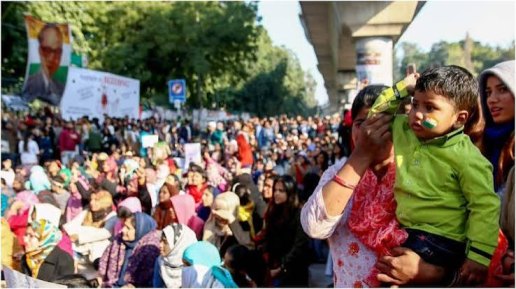
Tensions continue to rise at Jamia Millia Islamia (JMI) in New Delhi as student protests demanding the restoration of the Jamia Millia Islamia Students’ Union (JMISU), discontinued since 2006, enter their second week.
Tensions have escalated at Jamia Millia Islamia (JMI) in Delhi as students have intensified campus demonstrations demanding the immediate restoration of the Jamia Millia Islamia Students’ Union (JMISU). Multiple students have been staging a hunger strike since October 12, demanding the restoration of students’ union elections that were last held in 2006. To press for campus democracy and democratic representation, students organised a General Body Meeting (GBM) on campus.
In response to the growing unrest and gathering crowds, the JMI university administration implemented strict security measures to control student movement and limit campus access. Administrative officials sealed an emergency gate with bricks that is situated near the Ibn-e-Sina Block following heightened tensions on campus as the movement progressed. This decision received a large amount of backlash, raising concerns about student safety and movement, because the gate was traditionally used as an emergency passage during monsoons in times when there was severe waterlogging. Additionally, main entry points such as Gate No. 7 were locked, and heavy security personnel were deployed alongside local police officers.
Severe disciplinary action has also been taken. Ebin Basil, the NSUI unit general secretary at JMI, claimed that he received a one-year rustication period and Jasim Ali, a postgraduate student, received a six-month campus ban order. A Jamia unit of the NSUI said, “Approximately 60 security guards, accompanied by the chief proctor and security advisor, arrived at the protest site and forcibly dragged away the students.”
The movement also gained momentum across multiple academic departments. In a show of solidarity, law students from JMI took out a peaceful “black coat” march across campus wearing their official legal attire on Thursday, 22 October.
On the 12th day of the hunger strike, the Rampur MP Maulana Mohibullah Nadvi, a prominent member of the Samajwadi Party, visited the university to extend his solidarity to Jamia students and was detained by the police on 23 October.
In the past week, multiple MPs have written to the Vice Chancellor, Mazhar Asif, demanding restoration of the students’ union and withdrawal of all actions against the students on hunger strike. The situation of the protests within the campus continued on Friday, and a large number of students gathered at Gulistan-e-Ghalib to offer Juma prayers.
Amidst the ongoing protests and hunger strikes, the JMI administration formed a seven-member committee on 17 October to confer with and understand the demands of the student protesters. Further, a committee, chaired by Prof. Zubair Meenai, was created on 21 October. The committee has been tasked with drafting a constitution for the JMISU by 20 December 2026.
Image Source: ABP Live English
Read Also: Hunger Strike at Jamia Millia Islamia: What Unfolded at the Campus?
Akshita Gossain

Comments are closed.