

The order stated that deserving ad-hoc professors should be given “the relief of regularisation” and that this experience and commitment to the University should be considered in the appointment of permanent faculty. Mehak Talwar and Namita Khare have been working to bring this issue to light since 2022.
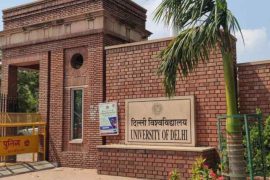
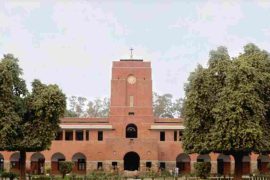
Delhi University has now moved to the Supreme Court, after filing a Special Leave Order in September that sought a stay on the Delhi High Court’s July 2025 order. The HC had reprimanded the University for “consciously using ad-hoc appointments as a substitute for regular employment” in an order dated July 11, after two ad-hoc faculty members took the issue of non-regularisation to the Court in 2022. This development has occurred after the two faculty members were reportedly met with silence from the University regarding this matter, even after this order was passed in the HC.
According to the Indian Express, Delhi University has previously stated that the impugned judgment has set a wrong precedent by permitting ad-hoc teachers to claim regularisation of their services, which is impermissible under law. DU said the court had “erred” in holding the expectation of regularisation from an ad-hoc teaching and that such orders “interferes with the University’s autonomy”.
The teachers reportedly contacted the Delhi University Vice-Chancellor, Yogesh Singh, both in July and August, asking him to adhere to the High Court order, but were met with no response from either the Vice-Chancellor or the Registrar.
DU hires ad-hoc faculty on the basis of quarterly contracts. However, under this system, ad-hoc professors who have taught full-time for years and meet the eligibility criteria for being employed as regular faculty are often ignored or not considered for permanent positions. The High Court bench comprising Justice C.H., Shankar and Ajay Digpaul had stated,
The petitioners’ continued exclusion from the zone of regularisation, despite fulfilling all eligibility conditions and having rendered long and meritorious service, is violative of Articles 14 and 16 and cannot be sustained.”
Mehak Talwar and Namita Khare, who have both been working as ad-hoc professors in the Department of Germanic and Romance Studies since 2017, are among the handful of people who have challenged this system. They filed the initial plea with the Delhi HC back in 2022. The order was perceived as a ray of hope for ad-hoc faculty across the University, many of whom have been employed on an ad-hoc basis for more than a decade despite performing the same duties as their permanent colleagues.
An ad-hoc professor teaching at an off-campus college told The Federal,
There are many people like me who have worked for 10 years and are still ad-hocs. So, many of my colleagues have even lost their jobs. We do all the grunt work, the administrative work for our department that our permanent colleagues don’t want to do, and we have none of the perks.”
Ad-hoc professors are at a disadvantage compared to permanent faculty with regard to ineligibility to receive wage increments, promotions, medical benefits, study leaves or academic leaves, and Leave Travel Concessions (LTC). They were not eligible for maternity leave either, until the High Court ruled otherwise in 2022. However, the biggest concern with sustained ad-hocism is that an increasing number of teachers in Delhi University have very little job security, despite being qualified to hold permanent positions. It is possible that their contracts are terminated on very short notice, often within one day. In the past 2 years alone, 2000 ad-hoc teachers in DU have had their employment terminated.
Image source: India Today
Manya Marwah

Comments are closed.