Tag

Delhi HC

Browsing

The order stated that deserving ad-hoc professors should be given “the relief of regularisation” and that this experience and commitment to the University should be considered in the appointment of permanent faculty. Mehak Talwar and Namita Khare have been working to bring this issue to light since 2022.

Delhi University has now moved to the Supreme Court, after filing a Special Leave Order in September that sought a stay on the Delhi High Court’s July 2025 order. The HC had reprimanded the University for “consciously using ad-hoc appointments as a substitute for regular employment” in an order dated July 11, after two ad-hoc faculty members took the issue of non-regularisation to the Court in 2022. This development has occurred after the two faculty members were reportedly met with silence from the University regarding this matter, even after this order was passed in the HC.

According to the Indian Express, Delhi University has previously stated that the impugned judgment has set a wrong precedent by permitting ad-hoc teachers to claim regularisation of their services, which is impermissible under law. DU said the court had “erred” in holding the expectation of regularisation from an ad-hoc teaching and that such orders “interferes with the University’s autonomy”.

The teachers reportedly contacted the Delhi University Vice-Chancellor, Yogesh Singh, both in July and August, asking him to adhere to the High Court order, but were met with no response from either the Vice-Chancellor or the Registrar.

DU hires ad-hoc faculty on the basis of quarterly contracts. However, under this system, ad-hoc professors who have taught full-time for years and meet the eligibility criteria for being employed as regular faculty are often ignored or not considered for permanent positions. The High Court bench comprising Justice C.H., Shankar and Ajay Digpaul had stated,

The petitioners’ continued exclusion from the zone of regularisation, despite fulfilling all eligibility conditions and having rendered long and meritorious service, is violative of Articles 14 and 16 and cannot be sustained.”

Mehak Talwar and Namita Khare, who have both been working as ad-hoc professors in the Department of Germanic and Romance Studies since 2017, are among the handful of people who have challenged this system. They filed the initial plea with the Delhi HC back in 2022. The order was perceived as a ray of hope for ad-hoc faculty across the University, many of whom have been employed on an ad-hoc basis for more than a decade despite performing the same duties as their permanent colleagues.
An ad-hoc professor teaching at an off-campus college told The Federal,

There are many people like me who have worked for 10 years and are still ad-hocs. So, many of my colleagues have even lost their jobs. We do all the grunt work, the administrative work for our department that our permanent colleagues don’t want to do, and we have none of the perks.”

Ad-hoc professors are at a disadvantage compared to permanent faculty with regard to ineligibility to receive wage increments, promotions, medical benefits, study leaves or academic leaves, and Leave Travel Concessions (LTC). They were not eligible for maternity leave either, until the High Court ruled otherwise in 2022. However, the biggest concern with sustained ad-hocism is that an increasing number of teachers in Delhi University have very little job security, despite being qualified to hold permanent positions. It is possible that their contracts are terminated on very short notice, often within one day. In the past 2 years alone, 2000 ad-hoc teachers in DU have had their employment terminated.

Read also: Delhi High Court Condemns Delhi University Over Treatment of Ad-Hoc Faculty; Orders Regularisation for 2 Professors

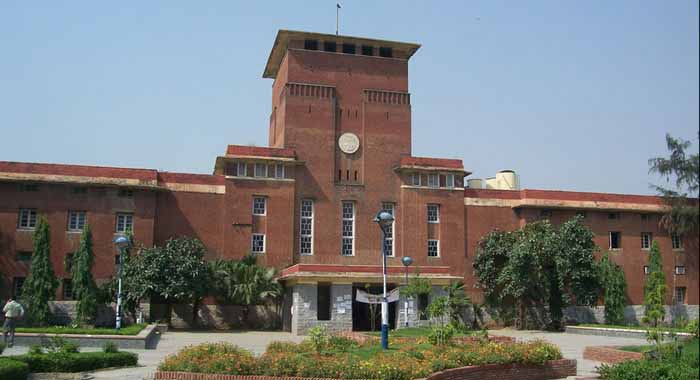
Image source: India Today

Manya Marwah
[email protected]


The court upholds compulsory retirement of the assistant professor in 2018 sexual harassment case, affirming ICC’s findings.

The Delhi High Court has upheld the compulsory retirement of an Assistant Professor at Delhi University’s Bharati College, following multiple allegations of sexual harassment by students. In a strongly worded judgment, Justice Subramonium Prasad dismissed the professor’s plea challenging the findings of the Internal Complaints Committee (ICC) and the disciplinary action taken by the college’s Governing Body. The Court described the professor’s conduct as “so profane” that it declined to reproduce the objectionable Facebook and WhatsApp messages in its order. 

The court observed- 

Teachers shape the career of young aspiring students for a better future. The act of sexual harassment done by these very teachers, who are considered as our guides and mentors, against young female students who have just attained majority, has a deleterious effect on the psyche of such students.”

Four complaints-three from current students and one from an alumna were filed in February 2018, alleging sexually explicit messages and inappropriate conduct by the professor via social media. The situation came to public attention when a video of students confronting the professor about his behaviour went viral, sparking protests and demands for action from the student body. In response, the professor was barred from entering the college campus and placed on leave. The matter was formally referred to the ICC in accordance with the Sexual Harassment of Women at Workplace (Prevention, Prohibition and Redressal) Act, 2013 (POSH Act) and relevant UGC regulations.

The ICC, after examining the documentary evidence, digital records, and oral testimonies, submitted its report on August 28, 2018. The Committee found all four charges of sexual harassment to be substantiated and concluded unanimously that the professor was guilty of misconduct. The evidence and testimony of the complainants, the Court observed, “remained unimpeached.” The inquiry process concluded in July 2018. The Court noted that the delay in finalizing the report after May 2018 was due solely to the conduct of the professor himself. Following the ICC’s recommendation, the college’s Governing Body issued a show-cause notice to the professor in October 2018, asking why the penalty of compulsory retirement should not be imposed. After granting him an opportunity for oral submissions, the Governing Body accepted the ICC’s findings and resolved to compulsorily retire him with immediate effect. This decision was subsequently approved by the Vice Chancellor. 

Before the High Court, the professor challenged the constitution of the ICC, the procedure followed during the inquiry, and the conclusions drawn by both the ICC and the Governing Body. He claimed that the authorities failed to uphold the principles of natural justice and that he had not been given a fair hearing. However, the Court found no merit in these claims. Justice Prasad held that the ICC and Enquiry Committee had been duly constituted under Rule 7(7) of the POSH Rules. The procedure adopted, the Court said, was not arbitrary or unreasonable but rather aligned with legal guidelines and regulations.

The Court also noted that the professor had been granted ample opportunity to present his defence and that the Executive Authority’s failure to issue a detailed speaking order did not amount to procedural prejudice. The principle of audi alteram partem that no one should be condemned unheard was not violated. With all issues decided against the petitioner, the Court dismissed the writ petition, upholding the disciplinary action taken by Delhi University and affirming the credibility of the ICC process.


Read also: Bharati College Student Harassed by a Professor

Feature image credits- DU Beat

Madhav Choudhary 

[email protected]

The Delhi High Court has directed a lawyer, assigned to aid in a case, to visit the Campus Law Centre (CLC) at Delhi University, ensuring accessibility for individuals with disabilities, and submit a thorough report on the premises.

In response to a plea by Jayant Singh Raghav, a visually impaired student at Delhi University (DU), the Delhi High Court (HC) has instructed the University to submit a comprehensive affidavit detailing the physical infrastructure and accessibility provisions for persons with disabilities at the Campus Law Centre (CLC). The plea raised concerns about the provision of assistive devices for disabled students during examinations.

Justice Purushaindra Kumar Kaurav emphasised that the affidavit should address the implementation of the Rights of Persons with Disabilities Act, 2016, and consider suggestions from amicus curiae Advocate Kamal Gupta. The court granted a last indulgence, allowing seven days for the university to file the affidavit.

The amicus curiae had previously submitted a report recommending improvements in physical infrastructure and accessibility at CLC. The report urged the immediate implementation of the Accessibility Guidelines and Standards for Higher Education Institutions and Universities, 2022, set by the University Grants Commission (UGC).

Among the recommendations, the report called for an access audit of the CLC and the installation of at least 10 ramps with tactile features at various locations. It also highlighted the absence of a mandatory lift in the current CLC building, emphasising the need for disabled-accessible washrooms on each floor.

The University’s counsel claimed that repairs and facility provision, according to the amicus curiae’s report, are complete. However, the court pointed out that the university must adhere to various other requirements outlined by the Disability Act and the amicus curiae’s recommendations.

The case is scheduled to be heard again on December 7, when the court expects the University to provide a comprehensive overview of its compliance with accessibility measures for differently-abled students at CLC.

Read also: UGC Urges Universities and Colleges to Set Up Selfie Points in Campus

Featured Image Credits: DU Beat Photo Archive

Injeella Himani
[email protected]