Tag

student politics

Browsing


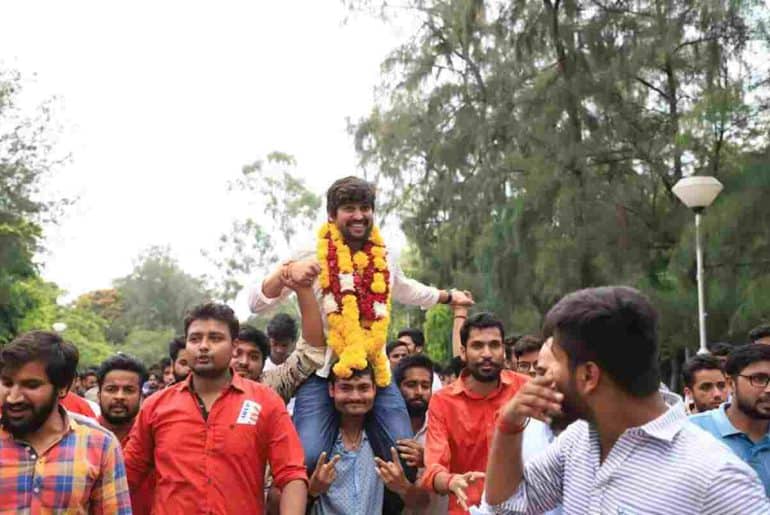
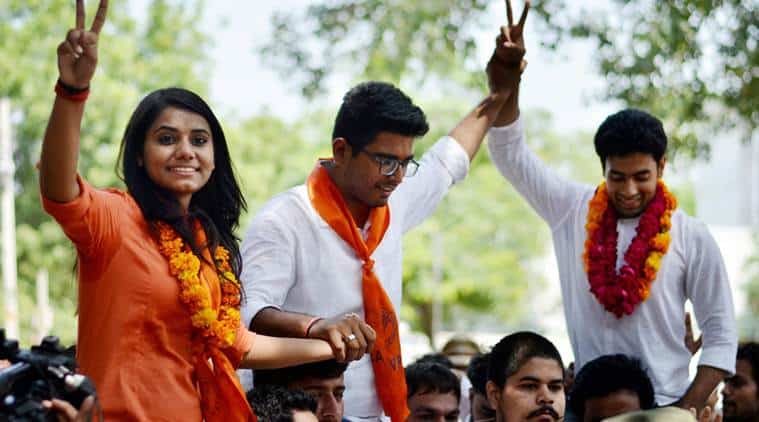
Every year DUSU elections are greeted by much pomp and circumstance. From the beginning of the new academic year to the day of results, it is impossible to escape the crowds, the white paper slips, and the sounds of the world’s largest student body electing its representatives. However, in India’s major state universities, this exercise in democracy is nowhere to be seen.


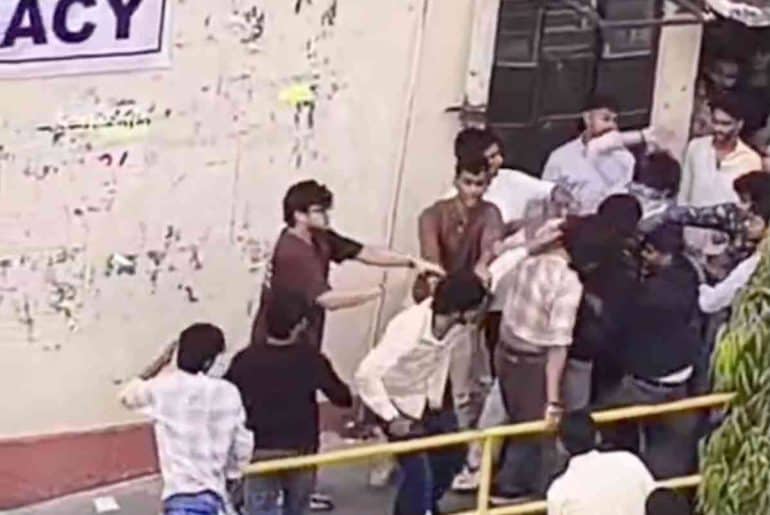
In 2006, Lucknow University – one of the oldest state universities of Uttar Pradesh – suspended student elections citing incidents of violence, and the recommendations of the Lyngdoh Committee, which was created to ensure transparent and systematic student elections. Since then, no elections to the students’ union have taken place, despite demands and demonstrations by students. 


This is not a unique case as students of colleges and universities, both at the state and central level, report fresh cases of suspensions and delays of student union elections coming in every day.


Earlier this year in West Bengal’s Jadavpur and Presidency University campuses, student groups staged protests demanding elections to the students’ union, which have not been conducted since 2017. Similar problems of student representation persist in Tamil Nadu politics. 


Without official status as representatives, student groups still stage protests and raise student demands but the effectiveness of such efforts remains questionable. Without elected representatives, it becomes easier for Universities to dismiss even the valid and justifiable grievances and concerns of students as acts of provocation or aggression. Any dialogue between students and the administration becomes challenging. The lack of accountability has left students feeling disempowered.


In many cases, the elected student union has been replaced by an appointed or indirectly elected council, in a process  alleged to be full of biases and corrupt practices.


Not just University authorities, but state governments have not been very supportive of students’ unions. In 2023, Ashok Gehlot-led Congress government of Rajasthan was criticised for not holding student union elections in that academic session, due to concerns of ‘money and muscle power’, in a move which was protested by student groups including the Congress student wing NSUI. 


The Gujarat government has also been criticised for the ‘Gujarat Common Universities Act’, which allegedly seeks to end student politics on campus by concentrating the powers of administration of universities in the hands of the state government.


In the face of the diminishing state of student politics in India, the emphasis on DUSU elections is very significant, yet the prevalent freebie culture, funneling of resources by respective political parties and lack of productive political discourse on campus paints a distressing picture for the future of student politics.


For better or for worse, the union elections at Delhi University are more about visibility; the competition between the four major student organisations and by extension, their parent organisations. From the colourful banners, to the sloganeering, to the displays of financial and political power and influence in the form of pizza parties and Lamborghinis parked outside colleges, student elections have been reduced to a spectacle. Students today often vote along ideological lines, but in the noise of student elections, campaign manifestos and promises are buried beneath mountains of ballot slips. Voting becomes less about what candidates represent and more about simply remembering who they are.


Universities often tend to express worries over student protests being taken over by ‘outside elements’ and have cited that as a reason to dismiss student unions, but the issues of policies which are purely decorative and leaders nowhere to be seen post-elections already inundate the most prominent unions. Others are still fighting for their share of democracy.


Image Credits: Divyanshi for DU Beat


Mangalya Singh

[email protected]

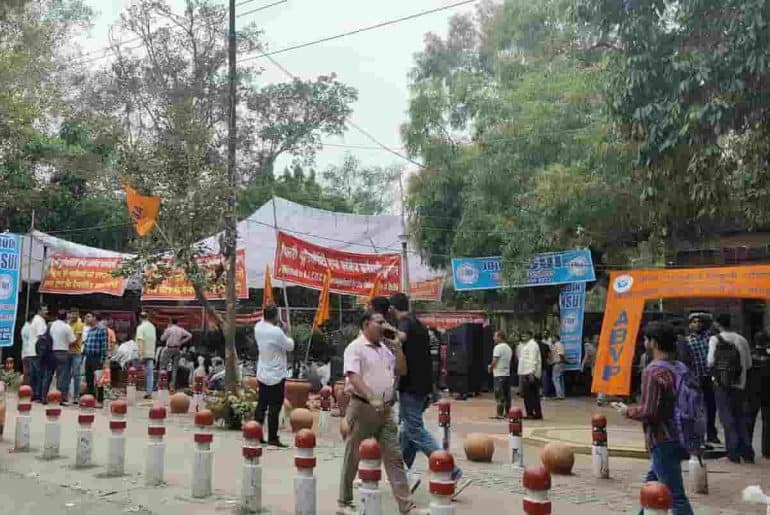
At DU’s North Campus, student political parties ABVP and NSUI launch welcome campaigns for incoming freshers. Amidst flags, enthusiasm, congestion, and concerns over ethical campaigning, another year of student politics begins. 

At around 10:30 on Monday morning, the roads of Delhi University’s North Campus were flooded with saffron and white flags as the Akhil Bhartiya Vidyarthi Parishad (ABVP) and National Students’ Union of India (NSUI) parties welcomed freshers to a brand-new academic year. An ABVP procession made its way through the streets as NSUI representatives attempted to attract a new following amongst the fresh faces that had emerged across campuses.

The signature saffron flag associated with the ABVP party was spotted outside several north campus colleges, including Shri Ram College of Commerce (SRCC), Daulat Ram College, and Miranda House, bearing slogans welcoming the incoming first-year students to Delhi University. The flags were accompanied by helpdesks to guide students through the process of joining the party as a volunteer. Representatives handed out brochures and flyers to passersby, as well as ABVP-branded bookmarks to interested students in addition to addressing any queries they had. A procession of ABVP members waved their flags through the Patel Chest and surrounding areas. ABVP members such as Aryan Maan, Bhoomika and Prabal Pratap Singh have been posting pictures and reels on Instagram over the last few days for the purpose of welcoming the new batch. 

NSUI was not far behind in their efforts to celebrate the arrival of new students on campus. Guidance desks were organised outside various colleges, and blue and white banners waved in and around the Faculty of Law campus. Tokens such as pens and booklets highlighting NSUI’s agenda were distributed to students who expressed interest in joining the party. When asked about the intentions behind putting up such kiosks, NSUI party representatives operating the Miranda House helpdesk conveyed that they enjoyed helping students and spreading cheer about the good work that they believe their party does. Their duties as helpdesk representatives ranged from signing up new members to the party, helping them through the registration process, and adding them to the respective communication channels thereafter. 

A student who asked to remain anonymous expressed frustration at the sudden congestion and traffic that took over the streets of North Campus in the morning, especially at a time when most students and faculty had to reach their respective colleges for classes and meetings, blaming it on both parties’ incessant campaigning.
A spectator to the ABVP procession praised Delhi University’s active and engaging political ambience, calling it impressive and an ode to the inclusive democracy that India stands for. “A true enjoyment of life,” they said. However, they pointed out the excessive wastage of paper and resources that goes into such campaigning, ultimately littering the campus and ruining its aesthetic. They also highlighted the importance of ethical campaigning, and condemned involuntary interceptions and forced registrations, which sometimes become the case. As long as all practices remain fair, they call such demonstrations a celebration of student rights. 

All in all, it is evident that both parties are gearing up for another round of relentless student activism and campaigning. As for the widespread malpractices and defacement of property observed during last year’s Delhi University Students’ Union (DUSU) elections, Delhi University Vice-Chancellor Yogesh Singh clarified that more limitations will be enforced during the next DUSU elections.”Nobody should deface walls. What happened during elections in the past: huge amounts of money and muscle power, is not expected. We don’t want to repeat these things, and next time, we will see a change,” the Vice-Chancellor told PTI. 

In addition to this, Delhi University’s official website released an advisory to prevent defacement of institutional property on 31st July. It mentions that practices condradictory to this advisory can lead to suspension, expulsion, or even debarrment from contesting elections.

Read also: Rise in Threats Amid DUSU Elections – AISA Activist Abducted and Attacked

Image credits: Manya Marwah

Manya Marwah

[email protected]

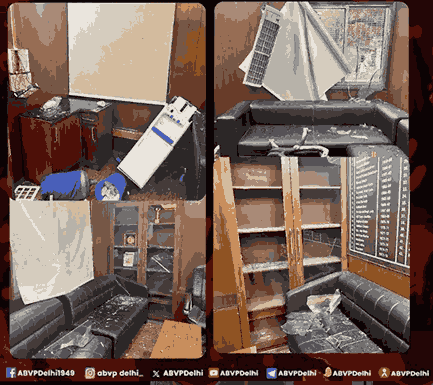
Video and audio clips of a vandalised DUSU office surfaced on the 14th of July. ABVP members claimed NSUI involvement and took to social media to condemn the alleged heinous act. The University of Delhi has set up a 4-member board to investigate the vandalism at DUSU office and an FIR has been registered.  

As political tensions further burgeon between the incumbent DUSU President, Tushar Dedha from Akhil Bharatiya Vidyarthi Parishad (ABVP) and Abhi Dahiya, DUSU Vice President, representative of NSUI, a case of ruthless vandalism at the DUSU office has left the DUSU members smarting and has invited a grim prognosis for the suspected vandals. The office of the President, Tushar Dedha; Secretary, Aparajita; Joint Secretary, Sachin Baisla and the visitor’s room have been ransacked by whom ABVP members alleged were NSUI goons, possibly led by Mr. Abhi Dahiya. 

DU Proctor Rajni Abbi has revealed in conversation with Indian Express on Sunday that ongoing investigations have discovered several liquor bottles in Mr. Dahiya’s office. The ABVP has also alleged that the violent act had been carried out under the influence of alcohol, at around 3AM the same morning. The ABVP has taken to social media to expose the extent of damage caused to the public eye, wherein claims of NSUI goons having urinated on the “Roll of Honour” Nameplate, thrown out statues of religious icon Ram and the framed portrait of leader Swami Vivekananda have been documented. RSS-affiliated ABVP in a statement floated on Sunday condemned the Congress’s student wing –

“Between 3-4 AM this morning, NSUI goons broke into the Delhi University Students’ Union office, causing chaos. They broke the doors of the offices of President Tushar Dedha and Secretary Aparajita, vandalised the office, and threw out statues of Lord Ram and pictures of great leaders like Swami Vivekananda.” 

In an interview with Press Trust of India (PTI), secretary Aparajita confessed

“As the only female student representative working at this level, I feel unsafe in my own office.”

DUSU Vice-President Abhi Dahiya has released a statement on his Instagram on Monday, following the allegations, accusing ABVP goons to have likewise vandalised his office “first” in retaliation for his attempt last week to uncover the “fraudulent means” used by the Mr. Dedha to gain admission in DU, and the “false affidavit” submitted by him in order to contest elections. He claimed that the incident was orchestrated as an act of diversion from the critical issue of the fabricated documents, urging that there be a thorough investigation into the matter and entreating students to not get carried away by the propaganda fuelled by ABVP. “This act of vandalism and fear mongering not only damages DUSU property but also threatens the safety and integrity of our student community” he wrote on social media. 

An official intimation conveyed the decision of the varsity’s administration to set up a 4-member panel comprising Delhi University Proctor Rajni Abbi, Dean of Students’ Welfare Ranjan Kumar Tripathi, Delhi University Students Union (DUSU) staff advisor Surender Kumar, and Joint Proctor Geeta Sahare, to probe into the matter. The panel endeavours to submit its report within seven days. 

Read also : Controversy Erupts Over Tushar Dedha’s Presidential Candidature as DUSU VP Files Complaint

Featured Image Credits : ABVP Delhi Instagram Page      

Aayudh Pramanik

[email protected]

A Dalit PhD scholar, Ramadas, received a 2-year suspension notice from all TISS campuses after attending a protest march in Delhi, citing them as anti-national activities.

A PhD student has been suspended for two years by the Tata Institute of Social Sciences (TISS) in Mumbai for engaging in actions that the institution deemed “not in the interest of the nation.” The student’s participation in a protest in Delhi under the PSF-TISS banner is one example of the alleged misconduct. Additionally, Ramadas Prini Sivanandan, 30, pursuing a doctorate in development studies, is not allowed to enter the TISS campuses in Hyderabad, Guwahati, Mumbai, or Tuljapur.

Ramadas had received a notice in March advising him against his activities in the name of the college, following which he received a suspension notice in April. The notice dated March 7 stated that Ramadas misused the institute name by participating in the protest under the banner of PSF-TISS. As per the notice, since PSF is not a recognized student body of the institute, Ramadas using the name created a wrongful impression of the institute, which is funded under the Ministry of Education.

The suspension order refers to a show-cause notice sent to Ramadas on March 7 and states that a committee constituted following the notice submitted its recommendations on April 17. “The Committee recommended your suspension for two years, and your entry shall be debarred across all campuses of TISS,” states the suspension order addressed to Ramadas, adding that the competent authority has accepted the recommendations.

In addition to criticizing Ramadas’ January social media posts, the institute opposed students attending the January 26 screening of the documentary “Raam Ke Naam” because it was “a mark of dishonor and protest against the Ram Mandir inauguration in Ayodhya” in its March 7 show-cause notice. Anand Patwardhan’s documentary “Ram ke Naam” has won a national prize previously.

In an interview with The Week, Ramdas, when questioned about using the institutions for his political activities, gave the following reply:

……Secondly, whether we have “misused” the name of TISS or not. The institute asked me to explain it on March 7. I duly replied. I can confirm that I have attended a Parliament march. I was one of the speakers. There is nothing to hide about that. But what is the capacity in which I attended it? Yes, I am a student of TISS. But that is not the only identity that I am holding. I am a citizen of this country. I do have equal constitutional rights as everyone else in this country. Not only me, but all other students who have joined the march. So, all of them belong to some other university. Everyone has the right to attend there. And this was a programme conducted at a place allotted by the Delhi Police—a law enforcing agency of the land. So, if the Delhi Police has no problem, if they are allotting it time, there is nothing unusual taking place. A peaceful gathering and a public meeting taking place, what is wrong with it?

And whether we have used TISS’s name there or not, or pretended that we are officially representing TISS or not. No, we didn’t represent TISS. In every campus in the country, student organisations use the name of the university along with their name to communicate the constituency in which they are working in. So, when PSF works in TISS, it will be PSF-TISS. Not only PSF, there are seven other organisations also doing the same. So, it should not be a problem when one organisation or one individual within an organisation is using it. One of the organisations which is using TISS’s name along with their name is DSSF, which is an ABVP-affiliated organisation. If they can be use it, there shouldn’t be a problem when PSF uses them.

The allegation is we have “misused” it in the Parliament march. There is an official pamphlet jointly undersigned and released by all organisations in which there is no mention of TISS. It was only PSF.”

The Progressive Student Forum, a left-leaning student body Prini Sivanandan is associated with, said the march referred to by the TISS was related to “anti-student policies in the form of the National Education Policy.”.

Read Also: Dalit Student Faces Online Harassment and Threats Over WhatsApp Status

Featured Image Credits: Onmanorama

Saanvi Manchanda

[email protected]

A law student from DU has initiated a demand for 50% seat reservations for female candidates in the Delhi University Students Union (DUSU) and other representative bodies, garnering diverse reactions across the student body.

Following the recent passage of the Women’s Reservation Bill in Parliament, which seeks to allocate 33% of seats for women in the legislature, the University of Delhi (DU) is also witnessing a push for a similar change. There has been a recent rise in demands to reserve seats for gender minorities in Delhi University’s student elections and other college-level elections. Students and social activists have submitted a memorandum to the University highlighting their concerns and demands, which include various ways to enhance representation in University student politics and also increase seats for better participation.

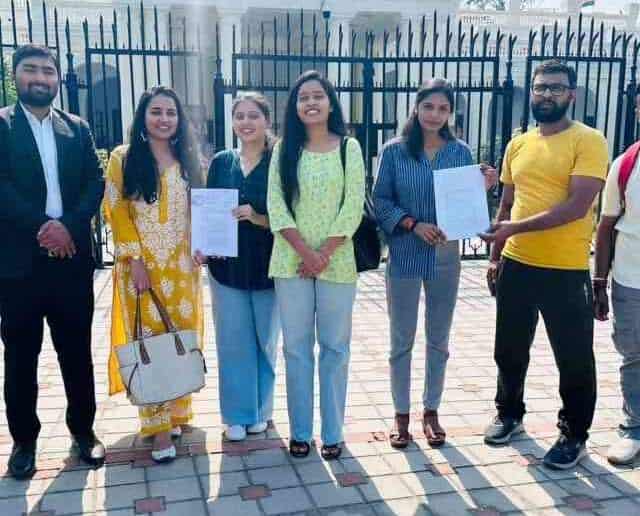
This movement was initiated by a law student from the DU Faculty of Law, Shabana Hussain, along with advocates Ashu Bidhuri, Kuldeep Kumar, and Ajit Kumar, and other students of Delhi University. They met with the Dean of Delhi University to present their demands for gender reservation in University politics.

Here is an excerpt from the memorandum submitted by them, mentioning the aforementioned students’ and advocates’ demands:

      • The reservation of 50% of female student seats in the four office-bearer positions in the DUSU elections, starting from the next session (2024–25). These seats should be exclusively contested by female students on a rotational basis each year.
      • Beginning from the next session (2024–25), for the college union elections, which consist of six seats (President, Vice President, Secretary, Joint Secretary, and two Central Councillor posts), it is proposed that four office-bearer seats be allocated on a rotational basis as described in Demand No. 1. Additionally, one of the two Central Councillor seats should be reserved for a female student.
      • Currently, in the DUSU Executive Council elections, there are two seats reserved for women. The demand is to increase this reservation to five seats for female students, effective from the current session (2023-2024).
      • In the DUTA (Delhi University Teachers’ Association) elections, 50% of the seats should be reserved for women.
      • All colleges within Delhi University should be affiliated with the DUSU elections, starting from the upcoming session.

In conversation with DU Beat, Shabana emphasised her inspiration for starting this initiative, which stemmed from the groundbreaking Women’s Reservation Bill passed in Parliament. She firmly believes in the importance of empowering women at the grassroots level, and she sees women’s representation at the University level as playing a pivotal role in achieving this goal.

While female representation is on the rise, it often translates to tokenism, where women are being given roles for the sake of inclusivity. I want to change this mindset. I believe there are many capable and aspiring female candidates at the University who could take up leadership roles. Female students suffer from a lack of confidence due to the absence of role models in this sphere. We need visible women in politics and decision-making to illustrate that women hold valuable positions in these spheres. I believe that reservation can bring these faces to the forefront, ultimately leading to a transformation in leadership roles. It’s about moving away from tokenism, thereby inspiring the next generation of girls.

– Shabana, a law student advocating for the gender-based reservation of seats.

However, there are still many students who believe and argue that representation ought to come, but based on merit rather than reservations. Tackling this concern, Shabana adds,

I’m not advocating for permanent reservations. Rather, it is an opportunity to cultivate leadership skills in young girls, assisting them in their journey towards becoming future politicians. Today, politics is often dominated by money and muscle power. Reservation is necessary to bring women to an equal footing, enabling them to compete for positions on par with their male counterparts. Reservations can be removed once these goals are met.

Through discussions with other students across the University, it became evident that these concerns are mutual. Particularly, gender-minority students overwhelmingly support these demands, emphasising a collective resonance with the need for change and inclusivity in the University’s political landscape.

It is imperative that we have reservations for women in DUSU. The first reason is that, over the years, we have hardly seen female representation within DUSU. The last woman president of DUSU was in 2008, which is nearly 15 years ago. Female students hardly stand up for top positions. Until and unless we have proper and equal representation in a student body that speaks for the concerns of all the students at DU, how do we expect all problems to be equally highlighted?

– A journalism student at Delhi University

In a political landscape often dominated by muscle and power, several gender-minority students believe that a gender-minority leader in DUSU could understand their problems more sensitively and work towards resolving them more efficiently than any other candidate. In a scenario where several crucial issues, such as the safety of women on campus, remain pressing concerns, a strong gender-minority leader may be our next best hope.

When women representatives take the seats, women as a collective gender have faith in their own opinions. They have a voice. Not to forget that many of the colleges in the university are women colleges.

– A second-year student from the Delhi College of Arts and Commerce (DCAC)

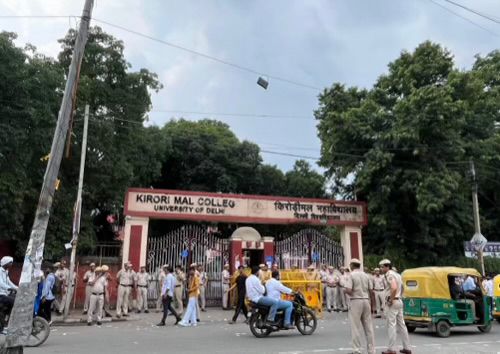
However, there are other key concerns about the implementation of such an act. A final-year student at Kirori Mal College highlights,

Reserving 50% seats for female candidates is a challenge since representation in University-level politics, particularly at DU, is a complex issue that goes beyond a simple gender divide. It includes an interplay of caste, class, and gender dynamics. It’s not uncommon for various political parties to seek votes along these lines, and as a result, women often end up as symbolic heads rather than actively engaging in impactful decision-making.

Emphasising intersectionality and the essentialism of sex-based reservation, they further added,

I believe all aspects and concerns for equality go hand in hand. When we talk about reservation and representation for gender minorities, there has to be greater inclusion and acceptance for students from the LGBTQ community as well.

Shabana is urging other students to join her in the campaign for gender-based representation in the University system, as she relentlessly advocates for quicker changes at the level of student unions and politics. Seat reservations in DU’s University-level elections might be a historic development that sets the foundation for other colleges around the country to adopt similar policies. However, it is crucial to make sure that the objectives put forth by students like Shabana are accomplished effectively in order to do away with tokenism and make marginalised communities, whether gender-based or otherwise, the ones with equal footing and power.

Read also: Under the Shadow of DUSU Elections: A Stage for Sexual Harassment and Caste-Based Politics

Featured Image Credits: Shabana Hussain

Priya Agrawal
[email protected]

Student Politics is believed to be a product of the present times. Yet, there are historical pieces of evidence that suggest otherwise. Read ahead to find out more.


When the students of Jawaharlal Nehru University (JNU) protested against the punishment given in the case of the 2001 Parliament attack, students including Kanhaiya Kumar and Umar Khalid got arrested. When the Literary Society of the Ramjas College, University of Delhi decided to invite Umar Khalid to speak in a seminar on ‘Cultures of Protest’ in 2017, a fight broke out. What was supposed to be a peculiar argument turned out to be a massive protest, involving everyone from students to renowned political faces. Students have been a part of the political sphere for quite some time now but should students be a part of this political arena? When the involvement of political parties in student politics has increased for their benefit of expanding the core strength of the party, should students step into it? It is believed that Student Politics is a product of the current decade. However, student politics is not just ABVP or NSUI, it has a history that accounts for its greater place in the democracy.

Pre-Independence

There is no starting point but the late 19th century and early 20th century saw the students getting involved in political matters. The swadeshi movement that was led as part of the anti-partition movement saw active participation of school and college students. Because of this situation, the students who were found guilty were stripped of their scholarships, expelled, or fined. What followed this movement was a consciousness to protest against the unjust that was being served. The students like Khudiram Bose and Prafulla Chaki actively participated in politics. As the movements developed with time, people realized that violence could make the Britishers leave the country. The non-cooperation movement too saw a wide participation of students. They boycotted their schools and colleges that were government-affiliated to show their solidarity with the movement.

An indelible name in Indian history is that of Bhagat Singh, a student of National College, Lahore who had his roots running deep into politics. His commitment to ‘inquilab’  (revolution) inspired a wave of students across the country. His political ideologies did differ but the goal remained the same, to sleep in a free country. The students continued to march for freedom. They were fierce and focused. They did not cease until they achieved swaraj. This political involvement of the students gave rise to a certain culture of student politics that this country was about to experience.

Post-Independence

India was deeply engrossed in realizing its new dreams that were to shape the country which was reeling from the state of shambles. The nation was disintegrated on the grounds of various socio-economic factors. Yet, the political breeze was always prevailing. Even during the demand for linguistic states, protests broke out across the country which again saw active participation of the students. Further, the Naxalite movement that started in 1967 saw enormous support from the students. With the onset of the recession, India was about to fall into the grips of an economic crisis. Students saw this as a threat to their future prospects of employment and this directed them to join the Naxalite movement. Political involvement of the students was well active in this period and continued to remain the same in the coming years.

The Navnirman Andolan in 1974 was a movement led by the students in Gujarat against a hike in hostel food fees. Clashes between students and police provoked an indefinite strike across the educational institutions in Gujarat. This led to the resignation of Chimanbhai Patel. Nav Nirman Yuvak Samiti was formed during the movement. They demanded the dissolution of the state assembly and for holding fresh elections. Further, Morarji Desai went on a hunger strike, and then Prime Minister, Indira Gandhi had to give in. The day the election results were declared was the same day when the verdict on the latter’s electoral malpractices came. In the same year, the Bihar movement was initiated by the students which were led by Jayaprakash Narayan. The political movement was against the anarchy in the state government. This movement led to the formation of Bihar Chhatra Sangharsh. However, the movement later turned against former Prime Minister Indira Gandhi (Sampoorna Kranti). As a result of all these, a national emergency was imposed by Indira Gandhi.

Emergency saw the suspension of all the democratic practices. This was resisted by all the sections of society, especially students. The government used repressive actions against the involvement of students in politics. This led to brutal consequences like the Rajan Case. P.Rajan was an engineering student who died as a result of torture in police custody during the Emergency in Kerala. Jailing and torturing the students because of their political support is a ‘trend’ of 1975 which found its place even in today’s times.

Present

Student politics has its roots through the pages of Indian history. As the times change, people learn more. The knowledge of a twelve-year-old child would be merely numbers and letters for the same-age child ten years into the future. This enhancement helps in a better understanding of the world and leads to demand for a better place to live. The students’ participation has always been there but has increased with the increase in their capacity to comprehend. Nevertheless, student politics will always be present and never cease to grow for better democratic functioning.

Read Also: ‘Bhakts vs Liberals’: Who Wins in Divisive Politics?

Featured Image Source: Youth Ki Awaaz

Ankita Baidya

[email protected]

India has had an illustrious history of protests. Be it the pre-independence times or the post. But nearly every time, these protests are accused of being mere activities of political agendas and activities.

Whenever we see something going wrong in the social or political sphere in the nation, we take to the streets. Be it the recent Citizenship (Amendment) Act (CAA) and National Register of Citizens (NRC) agitations or The Bihar Movementof 1974, the students along with political leaders wanted the nation to change. But both these agitations till some extent had a political flavour within them. The Leftist parties for the latter and Jana Sangh(Later Bhartiya Janata Party) for the post, and it is these political ideologies that have made many of these protests a victim of political rivalries, thereby weakening their credibility. Though politics in protests has helped protests to become effective but this effectiveness always comes with a price.

Nick Srnicek and Alex Williams, writers of the book Inventing the Future: Post capitalism and a World without Work, question the power of marches, protests, and other acts of what they call folk politics.

They said, “These methods are more habit than solution. Protest is too fleeting. It ignores the structural nature of problems in a modern world. The folk-political injunction is to reduce complexity down to a human scale.”

This impulse promotes authenticity-mongering, reasoning through individual stories (also a journalistic tic), and a general inability to think systemically about change.

Take the example of the DTC bus burning near Jamia Millia Islamia. Every time the protestors want to raise a valid critical point over the CAA and NRC legislation, they are shut out by the pro-legislation groups on this violent act. Though the protestors claim that they weren’t a part of the act which was later proved to be true but their credibility was compromised using fake news and propaganda.

Violence has always been part of the political process. Politics does not merely encompass the actions of Legislative assemblies, political parties, electoral contests and other formal trappings of a modern Government. Protest activities of one form or another, efforts to dramatize grievances in a fashion that will attract attention, and ultimately the destruction or threatened destruction of life and property appear as expressions of political grievances even in stable consensual societies like India.

In one sense, to speak of violence in the political process to speak of the political process itself; the two are inseparable. The ultima ratio of political action is force. Political activity below threshold of force is normally carried on with the knowledge that an issue maybe escalated into overt violence if a party feels sufficiently aggrieved. So be it Hindutva for the Bhartiya Janata Party, the dynastic politics for the Congress or the worker and trade union politics for the Left parties.

Medha Patkar, an environmental activist, who was a leading figure in Narmada Bachao Andolan, was able to stall the Narmada Dam project. She was successful as her lobbying made the World Bank withdraw its funding from the project. Still the project was completed with the help of public funding and the dam stands tall on the Narmada River. This tells us that protesting is a right of citizens of a democratic nation but protesting responsibly is also a duty.

We protestors have to be rational in our demands or otherwise protests get intermixed with politics. Like the students’ union protested against the change of names of Aligarh Muslim University and Banaras Hindu University into Aligarh University and Banaras University in the 1970s. Just think about the level of communal harmony this simple name change could have done.

If we look at the protests today as an exercise in public awareness, they appear to have had mixed success at best. Their messages are mangled by an unsympathetic media smitten by images of property destruction—assuming that the media even acknowledges a form of contention that has become increasingly repetitive and boring. Therefore we should always protest whenever we want to see change but always be responsible and rock hard on our goals.

As in recent times many student politicians have started protesting, not for student problems but for popularity, which is not only catastrophic now but also in the future.

One of my close friends told me that hearing about JNU students protesting has become so common that now people don’t even care. Though I have my own interpretations but still I can’t help but agree with him on a great extent.


Feature Image Credits:The New Yorker


Aniket Singh Chauhan

[email protected]


Months ahead of assembly polls in the National Capital, young students associated with various student organisations of Delhi University South Campus colleges joined Aam Aadmi Party (AAP)’s Student wing Chhatra Yuva Sangharsh Samiti (CYSS) on Saturday, 28 September. 

Youth and politics go hand in hand at the University. Students from South Campus colleges including Atma Ram Sanatan Dharma and Motilal Nehru College have joined CYSS. They did so in the presence AAP Delhi Convenor and Cabinet Minister, Gopal Rai and Minister of Parliament, Sanjay Singh at the party headquarters.

The students were whole heartedly welcomed in the party by being offered caps, symbolising the party’s signature look. The students also witnessed the presence of the Chief Minister of Delhi, Arwind Kejriwal.

Chief Minister Arvind Kejriwal addressed several student leaders, who won elections to various posts in DU Colleges as independent candidates, during their induction into the Aam Aadmi Party (AAP) on Saturday.

The National Convener was told by student leaders that money and nepotism were dominating student politics at the university. Mr. Kejriwal in response to that, said “AAP is the only party where anyone can contest and win elections.”

On being asked about the level of politics in the University and its similarity to the national one, “Politics in the country will change only when there is politics without means. If politicians contest elections with someone’s money, then their accountability will also be limited to them. We changed this type of politics in Delhi. I still have nothing, that is why I am able to think of, and for, the public,” Mr. Kejriwal further added.

Happy Club, a Students’ Union, which focuses exclusively on student centric problems while contesting elections was rumoured to be part of CYSS in the past few months.

Cabinet Minister Gopal Rai said “All these students will lead the pathway of the ideology of AAPs student organisation to their colleges and work towards strengthening the roots of the organisation in their respective colleges.”

“An organisation of students, Happy Club, which has been fighting for the students’ body elections for the past many years in the Delhi University South Campus have joined the party”, added Mr Rai.

All the students and people attached to the Happy Club have joined AAP under the leadership of the director of the club Vinay Udara.

Shivani Singh, State office Bearer, Media Head, CYSS told DU Beat, “We have welcomed all students with open hearts. We believe as AAP works education policies, it has motivated these students to join the party. This also gives us inspiration, in future to raise our movement against privatisation and saffronisation of education, which currently AAP is doing.”

The Chief Minister urged the student leaders to think about the rights and the colleges they represent. He also said that his doors were open if they needed anything including, funds for the development of their respective institutions.

Feature image credits: Stephen Matthew for DU Beat

Chhavi Bahmba 

[email protected]

Politics has played a major role in the Indian frame for a long time, and we explore its obsession branching out in the student arena as well.

Election season is over but the hype, controversy and the obsession with student politics brims over hot brews of coffee debating and general angst.

The past few years have noticed a consistent increase in the role the student bodies play in the circuit of Delhi University. Delhi University’s Students Union [DUSU] is the representative body for most of the faculties and colleges. The hierarchy also includes the internal students union in every college, with elections being held every year for office-bearing positions. Ever since 1954, the Delhi University’s Students Union [DUSU] has peaked prominence in the university. One of the key factors being is the expanse of the varsity. Being one of India’s largest universities, it serves as a great plethora for younger generations to express their viewpoints in a different light. These bodies are backed by different political parties.

Campus activism in the words of T.K. Oomen in his book Asian Survey, “is one of the pet areas in the research in contemporary social science. However, the nature of student politics and government is rarely studied”. The DU campus is blessed with serenity until the election season hits in. there is chaos and loyalty battles wrung out, with roads synonymous with lying pamphlets and college walls echoing with slogans. The case of Indian students’ union politics or student parliaments is quite different compared to its western contemporaries.

While the major touch-point for being actively involved in a student’s union means the adequacy for a good and experienced political career in the future, a lot of the nuisance created here is not prevalent there. While student bodies have a variety of tasks enrolled within, there is a big difference in the varsity student unions abroad and here. For starters, the students union elected has representative halls, like the George Sherman Union in Boston University or the up and coming promising members of the Yale College Council. Compared to the American and Western counterpart, our student unions are still emerging but are we convalescing in the shackles of unclear domains when it comes to politics? Are our student unions a reflection of the un-impressive struggle Indian politics has faced coming into the purview of the world?

The obsession of student politics can be traced to the source of power and authority, a pre-requisite to self-sufficiency in a now emerging Indian youth. While politics still stands as an attractive career option in the Indian domain, there are certain criticisms attached to the political situation and the trend of familial politics which has been extending an arm ever since the British Raj.  In a recent article in the Sydney Morning Herald, an interesting view-point of Indian politics was given notice stating, “In India politics is not a vocation, but a family business.” Continuing with his argument, Amrit Dhillon also comments that Whichever party you look at, in every part of India, nepotism is rampant. Merit, a record in public life, knowledge, skills, character, are all irrelevant. If you have the right surname, you will get a ticket.”

While just politics in a global scenario is still long miles away, it is safe to say that there are pros and cons both attached to the increasing importance to the student bodies in India. While it still is ushering up in other universities, the Delhi University scenario places a good observation and argument as to where we stand when it comes to student parliament bodies, and their role in the overall national hierarchy of democracy.

Sources cited:

https://www.smh.com.au/opinion/nepotism-the-way-they-do-politics-in-india-20140327-zqnpg.html

https://www.jstor.org/stable/2642743?seq=1#page_scan_tab_contents

Feature Image Credits:  DU Beat 

Avnika Chhikara

[email protected]

 AISA President Kawalpreet Kaur was attacked by goons yesterday. With frequent attacks on students, the safety of North Campus students raises a serious concern.

On Saturday, 18th August 2018, the University of Delhi President of All India Student’s Association(AISA) Kawalpreet Kaur and her four friends were attacked by goons around 12:05 a.m. in Vijay Nagar Double Storey area of North Delhi.

Kawalpreet Kaur was with four of her friends, Ankit Pandey, Jatin Verma, Rishabh Mishra and, Aman Nawaz when the incident took place outside Dinesh General Store in Vijaynagar. Three to four goons tried to harass Kawalpreet and passed lewd comments. When one of her friends tried to stop the goons, they attacked them. After few minutes, four more people joined the goons. Some of them appeared heavily drunk. One of them carried a pistol along with him and pointed it towards Kawalpreet telling her that he would kill all of them. Kawalpreet moved inside a building and locked herself up to protect herself from the goons, But, her friends were brutally attacked by beer and glass bottles. Ankit Pandey and Jatin Verma have sustained some serious internal injuries and fractures along with bruises on face and head. The CCTV footage of Dinesh General Store clearly shows the horrifying incident.

Complaint Copy 1
Credits – Kawalpreet Kaur’s Facebook Profile

A FIR has been filed by Kawalpreet Kaur regarding the incident in Model Town Police Station. The sections of the Indian Penal Code applied are Section 308- Attempt to commit culpable homicide, Section 323-Punishmentof voluntarily causing hurt, Section 341-Punishment for wrongful restraint ,Section 509- Word,gesture or act intended to hurt the modesty of a woman, Section 506(ii)- Punishment for criminal intimidation, and, Section 34-Acts done by several persons in furtherance of a common intention.

Kawalpreet Kaur along with some students took out a march from Vijay Nagar to Model Town Police Station on 19th August 2018 against the hooliganism taking place in the area, the attacks on the students and, for the police to take swift action. Delhi Police has identified and arrested four people named Ayush, Rahul, Shubham and Monu regarding the same. One of these owns an ironing shop in Vijay Nagar. The person with the pistol has been identified as Pawan, from Sangam Vihar and is yet to be arrested by the Delhi Police.

DU Beat spoke to Kawalpreet Kaur on the issue. She said, “With such crimes rising day by day, a question arises on the safety and security of the students living in the campus area.” Kawalpreet also informed that the Delhi Police inspector of Model Town, Satish Kumar questioned her as to why she was outside her room around 12:15 a.m. instead she should have stayed inside.

Here is the link of Kawlpreet’s Facebook post: https://m.facebook.com/story.php?story_fbid=1623379317766221&id=100002825066775

Feature Image Credits: News Nation 

Anoushka Sharma 

[email protected]