Tag

Slider

Browsing

Trigger Warning – Sensitive content with mentions of Rape and Abuse

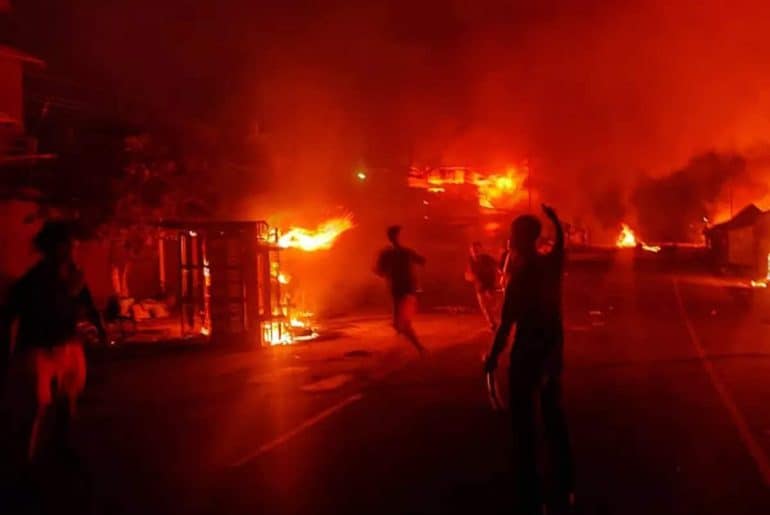
On 3 May 2023, an ethnic clash erupted in India’s north-eastern state of Manipur between the Meitei people, the majority of whom live in the Imphal Valley, and the tribal group hill areas, which includes the Kuki and Zo peoples. Many houses and vehicles were burned while many people are forced to leave their homes with their livelihoods destroyed.

 As the ethnic hostilities in Manipur enter their second month, the situation is far from normal. The state is still experiencing violence and terror, with over 50,000 people driven out and 100 people dead. The state, which was once known as the ‘jewel of India’ because of its stunning beauty and beautiful environment, is now making headlines due to the Hill-Valley Divide. Crimes against humanity are on the rise, with people getting targeted purely on the basis of their identity, with no fault of their own.

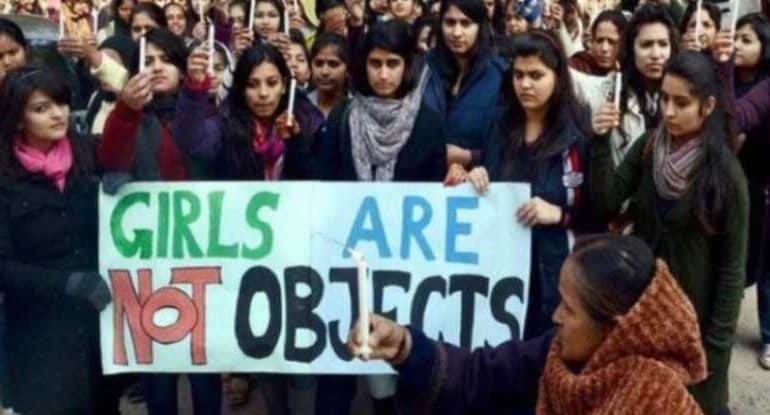
In times of turmoil, there is also a spark in protests, candle marches, and awareness campaigns about the issue. Such efforts are particularly undertaken by the youth and student community, who are consistently attempting to raise knowledge about the issue.

Thousands of such students from the north eastern states attend Delhi University, and the city itself is home to many others who travel in pursuit of a better life and possibilities. With rising atrocities back at the home state, people here in Delhi are also at a greater risk of attack.

One such instance happened in May 2023.

A group of Kuki students were followed and attacked by a group of 30 other students who identified themselves as belonging to Meitei community.

–according to source

Students from both communities have expressed similar safety worries, leading to a number of peaceful protests in Delhi. These gatherings are intended to provide a safe setting for students to discuss their traumas and experiences, as well as connect with the entire Delhi University circle in order to obtain additional support and aid as needed.

As a result, it’s vital that we give safe platform to these students so that they can share their voices and also raise awareness. While one might search up political data, lookup the main cause of the entire issue on the internet, but this is Manipur Violence from the perspective of those who have experienced the horror firsthand.

This is about their journey and individual experiences.

I’ve been preparing for UPSC for the last two years; I was set to give the paper this time. When the clashes happened, I came to Delhi as it was my center for exams. But I was constantly worried about my family and people who were back at home. I couldn’t sleep the night before my exam. Just hours later, I received the message from our villagers, that they failed to defend our village.  When we left our village we did not even take a blanket, our cattle was still there, we had hopes of returning some day! But I missed my UPSC paper while my home was burned down in Manipur

– A former student of Delhi University and a native of Manipur.

We were able to identify numerous issues through our talks with Manipuri students. It also gives rise to many questions in our mind regarding the whole situation. We tackled these curiosities during our conversation.

To begin, know that the entire northeast India is not a demographically and ethnically homogenous region, it has its own fair share of differences and diversity.

Just like north India has Bihar, Uttar Pradesh, Delhi, is it possible to club them to one? The answer is no. In the same way north east cannot be clubbed together as one. The culture, the food, the language and art of every state differs greatly in the north eastern region too. People since years have been making the mistake of generalizing all the states making assumptions on how we look

– A post graduate Manipuri student from DU.

It was also revealed that ethnic discrimination, scams and derogatory name-calling are also rampant in Delhi.

Rickshwalas used to quote a higher price than the common pricing when I was new to the city. They think I’m a foreigner who doesn’t speak the language because of my appearance, so they can simply cheat me. I learned to ignore it over time, but such treatment makes us feel different in our own nation.

– A fresher from the state of Manipur.

 People are always surprised with my fluency in Hindi, and because I don’t have typical features that usually north-east Indians have, people again find it hard to believe that I come from North-east region.

– A student from Assam.

Hearing such incidents reveals how deeply rooted this mistreatment is in our ideas and behaviour. Furthermore, these students suggested to their friends that removing assumptions and bias and just asking questions about their state and culture is an excellent way to help people feel at ease rather than striking up dialogues that are full of assumptions.

Secondly, it is crucial to understand and know how the various communities interacted in the state of Manipur. What, for example, triggered this abrupt violence and the divide between two populations that had previously coexisted peacefully? Or is this simply the culmination of the separation and discrimination that existed between the two tribes?

We got conflicting answers for this – It can be observed that some people reminisce about the peace and harmony they shared in their daily lives while others locate us to the issues simmering on the back burner.

We mingle together but there was always some kind of divide that I felt while growing up, this was specially in the case of language for me.

– A first year Manipuri student from DU.

The source emphasized in this conversation how language was a big issue because kids in Manipur had to learn many languages including their mother tongue, Hindi, English, and in certain cases Manipuri if that was not spoken by their tribe. The students describe it as a “pressure that they had to deal with their entire primary school life.”

We were always proud of the unity shared between the two communities, in school we would dress up in our traditional attires and celebrate each other’s festivals, It was something we cherished. After the violence started, it created gaps in our personal bonds as well. My friend from the other community, we don’t even talk these days. It is definitely different now. I don’t know if it will ever be like old days.

– A research student from DU.

This discourse, on the other hand, provides a viewpoint of ‘unity in variety,’ in which some people cherished their shared culture and customs by not letting their differences infiltrate. However, the fallout of the ethnic confrontations has disrupted the formerly shared unity. At this point, one could ask if life will ever return to normal in either of these communities, or if the conflict will leave its terrible imprint.

When it comes to the clash, ever since the ethnic riots began, there have been new concerns among both populations and the students we questioned discussed how the word used to describe them is not only offensive but rather an “attack on their identity,” as one source put it.

For instance, Kuki students expressed their displeasure with the harsh labels being used to describe them – including ‘illegal immigrants’ and ‘armed terrorists’.

My grandfather and father served in the Indian army; they are very much Indian and love their country, but they are now being targeted as foreigners and asked to leave the state.

 – a former student of DU.

Such anecdotes make one wonder if terms like ‘Illegal immigrants’, ‘terrorists’ and ‘outsiders’ should be used loosely in extremely sensitive situations like this one or if questions of citizenship supersede considerations of humanity and respect towards communities?

Not only students, but intellectuals all around the country, have been arguing against the injustice of using such labels against a group. There has been recent news of illegal migration into the states of Manipur and Assam from neighbouring countries such as Bangladesh and Myanmar, but students believe that this issue should be handled cautiously rather than aggressively. Meanwhile, the government can create preparations to protect its national interests and borders, but we must all be mindful of the language we use to communicate with one another.

While people are being target solely on the basis of their identity, crimes against Women and children are also rising, and thousands are being driven from their homes. There is no bitterness between Kuki and Meitei students in any of our talks with them. Everyone wants solutions to their problems and for this mayhem to end. Nevertheless, what we noticed was that they cared most for the lives of innocent people.

I don’t know if I’ll ever be able to go back to the place where so many were murdered. I don’t know if I’ll be able to forgive.

– A student from Manipur

The education of the children is at risk and even those who are unaffected and safe are under emotional stress as a result of what they see on the news every day. I have no harsh thoughts towards my friends from the other community, but I’m concerned about what will happen if the situation does not change.

– A student from the north-eastern community.

This section of our discussions gets us to a place where we all reflect on how the differences have taken a nasty turn, and there is now a larger concern about implications of these fights. The once insignificant division has now penetrated people’s lives, hurting not just their livelihoods including safety and education, but also their mental health. Trauma and fear are significant obstacles that many people are still unable to overcome.

Previously, seeing someone from my state gave me a sense of familiarity and comfort, but now I’m not sure if the stranger I’m gazing at is from my community or not. I’m worried about my safety. Now, there’s a sense of fear.

– a fresher from DU.

While Manipur continues to seek hope and peace, Manipuri students are dissatisfied with how the mainstream media has failed to report the situation fairly and how many people have remained silent on the subject. They are concerned that the false narratives disseminated by the media channels will worsen the situation. Not only this, but also sharing information which is not based on facts is harmful to both the communities. Anyone on the internet searching and reading on this subject has to use the sources very wisely. ‘Misinformation is our biggest enemy in such times’, as stated by one of the students.

We have been organizing peace talks and discussions in the campus regarding the issue and I also frequently post on social media which I feel is very important to do in order to educate people who don’t know what is going on in Manipur. For all outsiders – We don’t want you to be ignorant about the issue. What we need the most right now is to support us and listen to us. Simply reaching out to and making an effort to understand the situation will help us a lot.

– a post-graduate Manipuri student from DU.

Land, demography, the fight for ST status, development inequity, and the complexity of who is truly on the receiving end are all issues that have multiple answers. There’s a Kuki and a Meitei version!

We don’t know what will happen next, but there’s a lot more at stake than just land: personal relationships, lives, scenic beauty, resources, the economy, and, most importantly, humanity.  Regardless of differences, what everyone shares is a sense of hope and the need for peace. History has shown that in times of crisis, kindness has always helped people endure the storm. Whether it’s the Covid-19 pandemic, or one of the world’s great conflicts, a natural disaster – there are always episodes of kindness and humanity that have made a difference. This is similar to the efforts of students who exemplify the optimism that Manipur requires right now!

This was Manipur’s chapter through the eyes of students, as they simply wish to raise more awareness and have hopes to end this chaos and heal from this harsh experience.

Video Suggestions – Survival story of Agnes Neikhohat, one of the instances of Crime against Women.

Read Also – Protest in Delhi School of Economics against the attack on tribal students in the campus.

List of additional sources on the issue :

https://youtu.be/WH7Sk9KOD84

https://www.indiatoday.in/india/story/manipur-violence-clashes-nrc-meitei-kuki-naga-imphal-valley-illegal-immigration-myanmar-reserve-forests-biren-singh-2368476-2023-05-04

https://www.news18.com/opinion/opinion-ethnic-violence-in-manipur-hill-valley-divide-remains-a-challenge-to-indias-act-east-policy-7794619.html

Image credits : Economic Times

Priya Agrawal

A 19-year-old student from the University of Delhi was allegedly stabbed to death outside of Aryabhatta College.


On Sunday, in front of Aryabhatta College in South Campus, a 19-year-old Delhi University student, named Nikhil Chauhan,  was allegedly stabbed to death. A week ago, one of the accused had allegedly harassed a woman friend of the victim, to which he had objected, said a senior police officer in conversation with The Hindu.

On Sunday, around 12:30 pm, the key accused and three of his accomplices met with Nikhil outside the College and stabbed him in the chest, the police stated. He was later rushed to the Charak Palika Hospital, where he was declared dead. CCTV footage has surfaced online, which, captured near the college, purportedly showed the accused escaping on scooters and a bike.

While talking to The Hindu, Nikhil’s father had this to say

We deserve justice, this is not what we send our children to school for.” He further stated, “I received a call at 12 p.m. that Nikhil has been injured, I rushed to the hospital, but by the time I reached, he passed away.”

The victim, who has been survived by his two brothers and parents who live in West Delhi’s Paschim Vihar, worked as a part-time model. His parents have said that he loved modelling and acting, taking part in many competitions in the city.

My son was also into modelling. He told me that he also wants to study political science to have vast knowledge about our country. He had a bright future. We don’t know what to do now,”

– said Mr Chauhan.

A case under IPC 302(murder) has been registered and an investigation is ongoing to apprehend the accused-who have been identified, the police have said.

“It is very unfortunate and sad that a young life has been lost and that also just outside the college where students come to learn and make career.”  said a Delhi University spokesperson in a statement to The Hindu.


Feature Image Source: DU Beat Archives

Read Also: Mismanagement and Arbitrary Decisions taken at Meghdoot Hostel

Vanshika Ahuja

vanshikaahuja2002@gmail.com


Delhi University’s East Campus to be ready by 2026 in Surajmal Vihar, to aid better administration, create more opportunities for higher education and introducing more law programmes. The construction work would begin within the next eight months, said VC, Delhi University. 

The Vice Chancellor of Delhi University, Yogesh Singh, on Friday revealed the commencement of construction
work of the East Campus of Delhi University, adding that the work would begin next year with an aim to have the new East Campus ready in Surajmal Vihar by 2026. He says that the Delhi University plans to spend Rs 1718 crore on revamping the entire infrastructure of the university over the next few years.

The University of Delhi currently has two college campuses under it’s aegis–the North and the South Campus. The proposal for expansion were first brought up in December, 2020, when the then pro-vice-chancellor PC Joshi informed about prospects of development of a campus in East Delhi in a bid to reduce the administrative burden on the existing two campuses and also to give way to more opportunities for higher education.

This news elicited a positive response, especially from DU colleges located in East Delhi.

“We have to send someone to the North campus for some administrative work almost daily. Our students also have to travel all the way to the North campus for any grievance. It becomes even more difficult for us to coordinate during examination or admissions. Things will become really easier for us if we get a campus in Surajmal Vihar.”said Payal Mago, principal of Shaheed Rajguru College in Vasundhara Enclave.”

The Delhi University had also planned the establishment of a West Campus in Roshanpura, near Najafgarh, to cater to student coming from rural Delhi and Haryana. However, the VC responded that at present, there are no plans for the construction of a West Campus. With regards to the construction of the East Campus, Mr Singh, in conversation with the Press Trust of India, stated that,

“The construction of the East Campus will be begin in the next eight months. The process is underway. We have
applied for funding with the Government of India”

The Vice Chancellor also relays the pertinence of having constructed a new campus by highlighting how it would help manage administrative work, introduce new courses and expand across the city. He laid heavy focus on their aim of launching law programmes in the new campus and incentivizing entrepreneurship.

“There are over 100 unicorns in the country today. We need to provide space to help students, faculty and alumni to come up with ideas,” said Mr. Singh (The Hindu).

Image Credits: Hindustan Times

Read Also: Mismanagement and Arbitrary Decisions taken at Meghdoot Hostel.

Rubani Sandhu
rubanisandhu24@gmail.com


The residents of Meghdoot Hostel have expressed dismay upon their living conditions and have alleged that various arbitrary decisions have been taken by the authorities. The accusations have mostly been levelled against the former provost of the Hostel, Dr Pratibha Mehta Luthra, who has reportedly recently retired from her Hostel duties.  

Meghdoot Hostel is one of the two University hostels for women in North Campus. It primarily admits masters and PhD students. It has been reported that after the pandemic, quite a few hostels were not well equipped to take in fresh students. In Meghdoot Hostel most students were admitted as guest residents and were asked to pay a higher fee. It has been alleged that there was complete lack of transparency in the admission process. The basis on which students were admitted into the hostel is unclear and whether university guidelines were followed is in question. Reportedly, a disproportionately high number of science students, particularly students from Dr B.R. Ambedkar Center for Biomedical Research – the institution in which the former provost is a faculty member-were given permanent seats.

Students who were not given a permanent seat were asked to vacate on a short notice. Those who were about to complete their courses requested for brief extensions so that they could be allowed to stay at the hostel until the completion of their courses. Most of these requests were denied. Asking students to vacate their rooms on a short notice caused immense disruption as many of them did not have any other place to stay.

“My dissertation submission was on the 15th of June. I simply needed a 15-day extension. My application for extension was approved by the Department Head as well. Yet, the provost denied me an extension and refused to listen to my concerns” – a former resident of the hostel who wishes to remain anonymous

The former provost had reportedly undertaken the task of establishing a Saraswati idol in the Hostel premises. While the hostel often fell short of ensuring basic necessities for the residents, it was alleged that a considerable amount of the funds was spent in the establishment and maintenance of the idol. Multiple Hindu religious events such as havans and pujas were organised and it has been alleged that the students were coerced to participant in them. However, this has been refuted by a resident who stated that although religious gatherings and events were organised, attending them was a matter of choice. After the establishment of the idol, the hostel authorities stopped non-vegetarian food from being served in the mess. When this decision was met with complaints, the provost reportedly reasoned that non-vegetarian food cannot possibly be allowed in the hostel premises as the piety of the space had to be maintained due to the presence of the idol.

“We were repeatedly asked to participate in the events organised by the hostel. We were told that non participation in these events would affect our applications for permanents seats. Women from all over the country, from diverse cultures and different faiths, reside in our hostel. They were all asked to attend havans early in the morning. The prejudice that the provost had was very evident. – a resident of Meghdoot hostel who requested to remain anonymous

DU Beat contacted the members of the managing committee and the former provost to respond to the allegations.

“Thank you for kindly communicating with me on the matter. I held a meeting with the students on 2nd June 2023 in the matter. The response from them has been communicated to the management committee. Everything has been done as per rule and based on the request from the students.”  – Dr Pratibha Mehta Luthra, Provost, Meghdoot Hostel

Reportedly a new provost has been appointed to the hostel. The students hope that their concerns are taken care of with greater sincerity in future.

Featured image credits: Joon Square

Read also – https://dubeat.com/2023/04/30/lsr-hostel-student-suffers-injuries-after-ceiling-collapse/

DU Beat

DU has launched three new B. Tech courses under the Faculty of Technology from the upcoming academic session, 2023-24, added with several benefits and incentives from supernumerary seats for single girl child to reimbursements upon purchasing laptops.

The University of Delhi besides introducing three B. Tech courses- namely, B. Tech Computer Science and Engineering, B. Tech Electronics and Communication Engineering, and B. Tech Electrical Engineering- is also offering several incentives along with the programmes. Supernumerary seats for single girl child, scholarships for underprivileged students, and laptops for all are some of those incentives, as underlined by Vice-Chancellor Yogesh Singh on Wednesday.

Addressing a press conference, the Vice-Chancellor also mentioned that the new academic session shall begin on August 16. Expanding more upon the B. Tech programmes, he went on to add that 360 students would be admitted to the engineering curriculum, with 120 seats in each course while a seat in each of these three programmes will be given to a single girl child in the form of a supernumerary seat. Moreover, every student enrolled in B. Tech will be reimbursed up to Rs. 50,000 on the purchase of a laptop.

He said that the University will also introduce a Financial Support Scheme (FSS) to extend the benefits of equity and access to quality education to economically weaker students seeking admission to BTech programmes. Under this, candidates whose parents’ income is Rs. 4 lakh or less will be given a 90 percent fee waiver at the time of admission while candidates whose parents’ income is more than Rs. 4 lahks and less than Rs. 8 lahks will get a 50 percent fee waiver at the time of admission. The University has also included a supernumerary quota for orphan students this year.

The B. Tech programmes would be designed in such a manner that there would be a minimum of 50 percent weightage given to the major subject area of study with a maximum of 65 percent weightage. The remaining weightage would be to the minor subject areas of study, the Vice-Chancellor added.

Not only that, students will have several exit options with the National Education Policy. Students who will have completed one year of study with requisite credits will be awarded a certificate, those with two years and requisite credits would be provided with a diploma, those with three years and requisite credits will be granted an advanced diploma while those completing all four years of study along with a proper number of credits will get a B. Tech degree.

Lastly, the Vice-Chancellor mentioned that the Faculty of Technology will be situated on the North Campus of DU for logistic support and proximity to other departments. Besides the B. Tech courses, the university will also be launching a five-year LLB programme along with ITEP courses from the upcoming academic year.

Featured Image Credits: DU Beat Archives

Read Also: DU to Conduct PhD Admissions via CUET from Academic Year 2023-24

Priyanka Mukherjee

priyanka200303@gmail.com

“Parade of Power, Pride and Resistance- March for Progressive and Inclusive Campuses” read the poster of the pride parade organised by Students’ Federation of India (SFI). However, the march was met with strong opposition from members of the queer community, who accused SFI of queer baiting and alleged that the parade was nothing more than tokenism.

On June 1, 2023, the North Campus of Delhi University was engulfed in the colours of the pride flag. Hundreds of marching feet echoed across campus as the Student Federation of India (SFI) organised a pride parade to celebrate and support the LGBTQIAP+ community. Horizontal reservations for transgender students, GSCASH implementation, gender-neutral washrooms, queer-inclusive mental health cells, and anti-ragging cells were among some of the top demands of this year’s pride parade.

However, the parade drew strong criticism not only from queerphobes but also from members of the community who accused SFI of queer baiting. Many queer student activists and members of queer collectives and gender cells across Delhi alleged that the pride march is nothing more than SFI’s tokenistic attitude. The SFI’s ignorance or inaction on queer matters throughout the year created a solid foundation for these allegations. Many queer activists and students chose not to participate in the parade. This caused a heated debate within the community.

If not SFI then who? The majority of student unions have historically neglected queer issues, and this continues to be the case today. Whether it is NSUI, ABVP, or AISA. SFI is the only student organisation that talks about queer rights and organises pride parades on campus that are attended by hundreds of people and stands out for queer rights. It’s still better than doing nothing even if they are only doing it for political reasons.

-Prakhar Gangwar (He/They)

Some people in the community, however, believe that building a new room is better than making concessions or attempting to fit into a certain space.

Most political parties or student unions don’t care about queer issues. They talk about rights when doing so serves their political objectives. Abolishing such places sends a loud and clear message that queer lives are not a commodity to be exchanged for votes. Resisting tokenistic behaviours will likely lead to a successful organisation that cares about queer rights.

-Astha Bansal (She/Her)

But in a country like India, where everything revolves around politics, Is this really a good option?

You can’t abolish such spaces. Majority of the country is still unaware about the queer community. It is only cities like Delhi, Mumbai or other metropolitan cities which give you freedom and a chance to organise and attend queer events like pride parades where you get to meet people from the community and freely express yourself.

-Pravishti (She/ Her)

The conversation on whether the pride parade was just a bait or not became pertinent after a few people who attended the parade posted about their experiences on social media.

It appeared to be an SFI political rally. The number of SFI flags heavily outnumbered the number of pride flags.

-Anonymous (She/They)

It was not an apolitical pride parade. A political party organised a political pride parade. So, of course, we’ll have our flags. I identify as queer. I would not have stayed here if SFI uses pride parade as a queerbaiting tool. As a queer student, I say that SFI supports us, and I say this as the president of Indradhanush: The queer affirmative of ZHDC (Morning), not as a representative of SFI. If SFI stops to be the support system, the QC won’t last a single day.

-Arnab Adhikari (He/Him), SFI Member & President of Indradhanush

According to Arnab, the absence of effective social media management has resulted in this debate.

We aren’t handling social media properly. We don’t talk much about the work we do on social media. We all realised that we must communicate, we must post more to avoid such misunderstandings.

-Arnab Adhikari (He/Him)

Pride month always brings discussions around queer baiting into the limelight. Pride month, when it comes to queerbaiting gets reduced to nothing more than a celebration of the unfair privilege enjoyed by the dominant segment of the queer community. The privileged section of the community, largely cis-gay men who dominate most queer spaces, is at the top, while the transgender community is at the bottom. To fully understand this, we must first acknowledge that hierarchy and dominance are inevitable, and, consequently, this cycle of dominance also exists within the queer community. Cis-gay men dominate most queer spaces, tokenistic behaviour by political parties or corporations has little influence on them, and they continue to feed corporate tokenism and empty politics and benefit from it at the same time.


Read Also: Pride and Privilege: An unequal scale

Featured Image Credits: Instagram Page- DU Beat and SFI Delhi


Dhruv Bhati

bhatidhruve@gmail.com

While the idea of fluidity in gender might seem new to people, it is not a modern phenomenon. Examples of bending identities from history and myth can pave the way for deeper perspectives on this long-established concept.

When I was first introduced to the concept of gender fluidity, the notion felt familiar instead of strange. As a devoted explorer of mythology and folklore, I had long been reading about Gods and mortals who transcended the confines of the gender binary. On the contrary, a well-received opinion today is that fluidity is a contemporary phenomenon. A 21st-century ‘invention’, even. Doesn’t this claim conveniently erase the rich history of fluid identities throughout cultures of the world?

For a brief overview, gender fluidity means flexibility in one’s gender identity or expression, or both. It’s about not feeling tied to a single gender label, allowing it to shift and change with time. It plays a significant role in understanding diverse gender identities. For centuries, if not millennia, traditions across the world have recognized and honoured gender nonconformity. As we celebrate Pride this month, it’s imperative to show appreciation and learn from them the vast ways gender can be perceived.

A recurring theme in Hindu mythology that I grew up fascinated with, is that of Gods and Goddesses often blurring the lines between masculine and feminine. The ‘Puranas’ recite various tales of this including one where Shiv merges with Shakti to become Ardhanarishwara, (Sanskrit: Lord who is half-woman) who is seen in many Southeast Asian sculptures. Another story is that of Shikhandi, who was born into a female body but always knew was a man and later entered the battlefield of Kurukshetra as one. It was also ordinary for Gods to turn into Goddesses to enchant ‘Asuras’! In Norse mythology, Loki is a famous gender-bending entity. In Greek myth, the prophet Teiresias spent seven years as a woman, and in Mesopotamian lore, the Goddess of fertility and love is depicted with both masculine and feminine elements.

Ardhanarishwara sculpture in Mumbai, Source: Elephanta Caves Web,

While such beliefs provide significant insight into the perception of gender thousands of years ago and still remain a part of cultures worldwide, people may find it hard to see some sense of reality in it as it is lore, after all. This is why it’s essential to also discuss credible historical accounts of gender fluidity that go a little less far back into history.

Flourishing cultures have not only accepted but also revered the dynamic nature of gender. One of the more prominent instances is that of the Native Americans. In their societies, the existence of feminine men, masculine women, and transgendered people was ubiquitous. They were called “two-spirit” people and were considered strikingly knowledgeable. There were no rules regarding expression of identity and cross-dressing was routine. With the advent of the Europeans, this flexibility was no longer tolerated. The Mahus of Hawaii and Tahiti, who never put restrictions on gender identity, met with a similar fate after colonization. Certain ethnic groups in Madagascar would raise their boys with long hair and multiple piercings if they tended to show feminine traits and this practice is still prevalent. These are only scattered examples from a myriad of customs from all over the world.

While in some historical contexts, queerness might have had a negative connotation, it’s refreshing to realize that more often than not it was nothing out of the ordinary. Its acceptance sure did gradually plummet after the Euro-Western dominance, but its existence could simply never be questioned.

We’wha, a famous two-spirit, Source: Human Rights Campaign Web

For a modern interpretation, legends and lore about the fluidity of gender can be viewed through a lens of acceptance and inclusivity. These stories serve as a powerful reminder that gender has always existed along a diverse spectrum, and they should encourage us to pursue social structures that protect the dignity of all individuals, irrespective of expression or identity.

There will always be diversity in the human experience, let’s honour it. Today, as the modern world wrestles with the idea of accepting anything that is beyond the binary, remind yourself of this perpetual truth- Gender fluidity is as old as time itself.


Read also: How Ancient Mythologies Defy the Gender Binary

                   Gender Fluidity Around the World   

Featured Image Source: Medium


Arshiya Pathania

arshiyapathania2@gmail.com

The University of Delhi announced the launch of its Common Seat Allocation System (CSAS) portal for undergraduate admissions for the academic session of 2023-2024. Along with the launch of the portal, announcements regarding the launch of new B.Tech. courses, the Financial Support Scheme, etc. were also made.

On Wednesday, June 14, 2023, the Delhi University admissions season commenced for undergraduate courses. During a press conference on Wednesday, the Vice Chancellor, Prof. Yogesh Singh, launched the CSAS portal for UG admissions for the session 2023-2024. The School of Open Learning (SOL) and Non-Collegiate Women’s Education Board (NCWEB) admissions portals were launched as well.

The next session for the upcoming batch will begin on August 16. Students who want to apply to Delhi University’s regular programmes must login to the portal with their CUET application number and upload the necessary documents, which include their high school marksheet (12th and 10th grade), valid government ID, and caste certificate or PwD/EWS/CW/KM/Minority certificate, as applicable. Following the release of the CUET results, the next round of admissions will begin. Students will be asked to mention their preferred colleges and courses. Following this, their scores will be used to determine which college and course they will be assigned to.

The candidate must “accept” the seat before the deadline for that round of allocation after a seat has been allocated, according to DU authorities; inactivity or inaction would be considered non-acceptance. Following the completion of each allocation cycle, DU will publish information regarding vacant seats in each course across all colleges. After being accepted, candidates can choose to either upgrade or freeze their allotted seat.

SOL and NCWEB’s admissions procedures, however, differ. Class 12th results are required for admission to UG programmes at SOL and NCWEB. Candidates interested in enrolling in these programmes must first register on the CSAS site before uploading their necessary documents. The forms for the same are available on the websites of these institutes.

Vice Chancellor Prof. Yogesh Singh also announced the launch of three new B.Tech. programmes: computer science and engineering, electronics and communication engineering, and electrical engineering, along with the launch of the UG admissions portal.

DU is also introducing a financial support scheme (FSS) to extend the benefits of equity and access to quality education to students from economically weaker sections (EWS) for the B.Tech. programmes.

– Prof. Yogesh Singh, DU Vice Chancellor

A B.Tech. student at DU can get a reimbursement of 50,000 for new laptops, he added. Additionally, he mentioned including a new quota for orphan students. The Vice Chancellor further stated,

Candidates whose parents’ income is ₹4 lakh or less will be given a 90% fee waiver and between ₹4 lakh to ₹8 lakh will be given a 50% waiver. The university has also included a supernumerary quota for orphan students this year and all DU affiliated colleges will admit two candidates (one male and one female) under this quota at both UG and postgraduate (PG) levels.

In the final week of June, the portal for postgraduate (PG) course admissions will go live. The registration process for PG admissions will also be on similar grounds.

Read Also: DU to Conduct PhD Admissions via CUET from Academic Session 2023-2024

Featured Image Credits: Careers 360

Dhruv Bhati
bhatidhruve@gmail.com

The Executive Council of the University of Delhi passed a resolution on 9th June, 2023 to conduct PhD admissions into the university via CUET from the upcoming academic year, 2023-24. Alongside this major decision, several other resolutions were adopted in the meeting, including those pertaining to the initiation of the five-year LLB programme.

This is the first time the university will be inducting students into its PhD programmes through a common test instead of conducting written tests and interviews.

“PhD admission will be done on the basis of CUET (PhD)-2023 based on the recommendation of the Standing Committee of the Academic Council, after deliberations on various matters related to admission and attendance of Undergraduate, Postgraduate and PhD programmes for the academic session 2023-24, the same were also accepted by the Executive Council (EC),” read the university statement. 

The University had started conducting undergraduate and postgraduate admission via CUET-UG and CUET-PG since last year. The PhD entrance test will be through the national-based CUET-PhD (2023), conducted by National Testing Agency (NTA). However, teaching and non-teaching  candidates serving in the university can directly appear for interviews. The University also added that the teaching and non-teaching staff must be permitted to attend classes and take examinations without affecting the duties assigned during office hours. Such rules for PhD will be applicable from the academic session 2023-24.

Apart from this, several other resolutions were passed at the Executive Council meeting. The eligibility condition and seat matrix recommendations of the Medical Science Course Admissions Committee (MCAC) for admission to undergraduate MBBS/BDS courses for the admission session 2023-24 were also approved. It was also decided that MSc admission to the Respiratory Therapy programme will also be under CUET-PG 2023.

The resolution to set up the Centre for Independence and Partition Studies, passed in the 1014th Academic Council meeting of the university was also approved on Friday. The centre will focus on researching about unsung heroes and freedom movements that have not found a place in mainstream history textbooks along with the tragedies and horrors of the partition.

The Council has also given approval for the formation of Tribal Studies Centre that shall be a multi-disciplinary centre focusing on various tribes of India. Additionally, establishment of Hindu Studies Centre was also passed by the EC. A Master of Arts Programme in Hindu Studies will be started under this Centre. The Council also approved to run the Integrated Teacher Education Programme (ITEP) from the academic session 2023-24 which will be a four-year long course.

DU’s Shyama Prasad Mukherjee Mahila College, Mata Sundari Mahavidyalaya and Jesus and Mary College have been granted approval for ITEP by National Council for Teacher Education (NCTE) from the session 2023-24. The education department of DU and eight colleges running B El Ed course will
apply for ITEP course for the academic year 2024-2025.

With major changes occurring in the admission process as well as university programmes, the students can only hope for a smooth and unhampered experience.

Read Also: Delhi University to Introduce B.Tech Courses Starting August.

Featured Image Credits: Hindustan Times

Priyanka Mukherjee
priyanka200303@gmail.com


The implementation of ITEP and the elimination of other teacher training courses such as B.El.Ed courses by Delhi University without consultation is being contested by students and academics who think the program is unique in its own way and that introducing ITEP doesn’t require the elimination of other programs.

The All India Forum for Right to Education ( AIFRTE ) conducted a webinar on’ Introduction of ITEP and against the cancellation of B.El.Ed.’ on May 30, 2023 (Tuesday) at 7 pm. The discussion took place live on Zoom platform and was also broadcasted on Facebook and YouTube page of AIFRTE. The list of speakers included – Prof Krishna Kumar (Renowned educationist & Former Director, NCERT) , Prof Poonam Batra (Expert in Elementary Education & Co-creator of the framework of B.El.Ed, Prof Latika Gupta (Prof in Dept of Education, Delhi University) and Prachi Gupta (Student of B.El.Ed., DU). More than a hundred people participated in the live debate, with many actively sharing their opinions through the comments, including several B.El.Ed students and professors.

The backdrop of the discussion was the adoption of ITEP ( (Integrated Teacher Education Program) by the Delhi University Academic Council on 26th May, 2023 overruling objections raised by many elected teacher representatives, protesting students, and expert opinions.

ITEP was launched by NCTE ( National Council for Teacher Education ) under NEP 2020 scarping all the existing teacher training courses and to be adopted as the single course in the entire country. Experts have highlighted how it can weaker in terms of pedagogic training and how it is a threat to courses like  B.Ed. and B.El.Ed.

The conversation centred on the future of B.El.Ed programmes and how a systematic dismantling of prior structures and efforts to reform the education system is detrimental in many ways. It also emphasised the program’s values and how it helped the learning process.

Mr Jagmohan, the webinar’s host, began by introducing everyone. He also briefly stated how, from the commencement of NEP 2020, the main attack has been on how teachers will be prepared for it. Furthermore, it has now come down to teacher training for the same.

Prof Krishna Kumar, an experienced educationist and one of the oldest professionals to share his knowledge on the matter, opened the discussion.

At this point it is important to remember that B.El.Ed was born in struggle and has faced various struggles all along its short history of three decades. Some hurdles like the concept of elementary that was not easily digested at the time the program began. I remember how Prof Upendra Baxi steered the discussion with his great legal skills and was able to convince the council of what will the program do. Over time, it has faced various hurdles, but today we are facing a new kind of uncertainty.

– Prof Krishna Kumar

He mentions there are apprehensions on ITEP replacing courses like B.El.Ed but on the other hand there is a constant difficulty of faculty shortage. Prof Krishna Kumar states an important point the nowhere in the NEP policy it is mentioned that the ITEP will replace all the teaching courses, rather the general tone suggests that there will be multiple roots for teachers to be trained and prepared for jobs. This is not a threat to courses like B.El.Ed as it is well established and is widely accepted.

The university has underestimated the achievements and values of the program which has benefited both teachers and students. Delhi university has no dearth of colleges to start with its ITEP program, there is no point in killing one innovation to start with the other.

– Prof Krishna Kumar

Later on, He highlights the importance of the course by saying that nobody else in teacher education have the kind of theoretical command and the insights in pedagogy like the B.El.Ed graduates.

Prof Latika Gupta then recounts her own experience with how the Course presented so many new concepts and how, despite the fact that the country has changed so much, the programme has maintained its true spirit and enthusiasm throughout its duration.

This course is an existence in itself, which drives all of us together. The recent graduates and students must overcome this round of crisis. Maybe this is an opportunity to re organize and start fresh.

– Prof Latika Gupta

Several additional B.El.Ed students joined the discussion and highlighted how the degree empowered them and helped them to choose the finest ideas to share with the students. The programme serves as a model for not only imparting theoretical knowledge and training, but also building confidence and motivation to ask tough questions.

B.El.Ed has taught me how to make education more engaging and not boring, art and theatre has helped me in incorporating expression inside the classroom so that I could help my learners be more expressive and creative.

– A student who shared her experience during the webinar.

Prof Poonam Batra joined the conversation and expressed her concern about the teacher training course’s existential crises and how the elimination of such programmes might compromise children’s learning. She claims that teacher education is an easy target, and that if other higher education systems take the area, we are likely to lost the battle for our students. She recalls how well-crafted the curriculum was and how well developed its integration was, allowing for both interdisciplinary learning as well as theoretical and practical approaches of study.

The core subjects of B.El.Ed have significant contributions as it allows young students to revisit what they learnt in school and this time understand it from an epistemological viewpoint, It is about Knowledge generation and engagement.

– Prof Poonam Batra.

Another AIFRTE team member expressed his concerns about how the disintegration of the education system without consultation is an assault on the learning process, academicians, and students. He emphasises the importance of coming together to fight such acts. There is an increasing need to convey to individuals the consequences of such activities.

Mr. Jagmohan concluded the discussion by encouraging everyone to be optimistic and to participate in the struggle.

Link for full Discussion – https://www.facebook.com/watch/?v=1221617085188263

Read also – https://dubeat.com/?s=B.El.Ed+

Image credits – News click, Google images

Priya Agrawal

Priya.agr1609@gmail.com