Tag

Slider

Browsing

This report aims to highlight the recent resignation of over 40 members, including office bearers, District Committee members, and general members of the All India Student’s Association (AISA), affiliated with the Communist Party of India (Marxist-Leninist) Liberation. It is important to note that the resignation letter was posted on the Instagram account of AISA Bangalore Resignation, while subsequent information was sourced from DU Beat’s conversation with the resigned comrades.

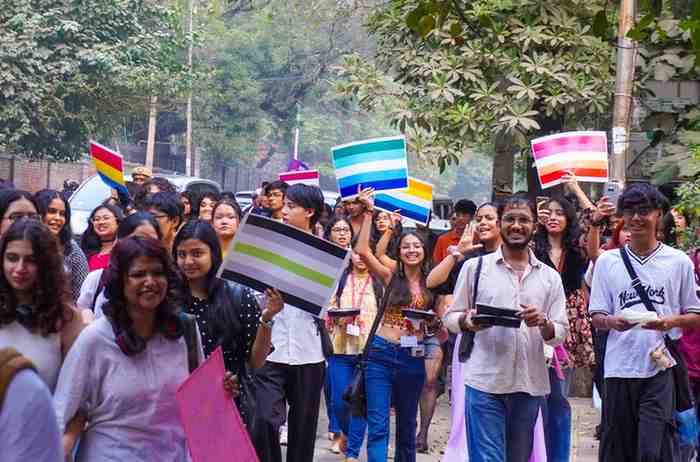
On February 15, 2024, over 40 members, including office bearers, District Committee members, and general members of the All India Student’s Association (AISA), Karnataka affiliated with the Communist Party of India (Marxist-Leninist) Liberation, announced their resignation. This announcement was made through an Instagram post and on an official resignation website they created. The resignation letter claimed problematic practices such as rampant misogyny, transphobia, patriarchy, glorification of hyperactivity, anti-intellectual attitude of the leadership, and trivialization of mental health, among many others. These issues were described as being perpetuated under the guise of progressive, proletarian ideology, which the mass organisation purported to embody.

The resignation letter also claimed that their approach to combating fascism in India neglects alternative strategies and prioritises electoral alliances over genuine resistance efforts. It was argued that the parliamentary opportunism, combined with the control exerted by AISA National and the Party over local units, stifles the political will and independent initiatives of young cadres, leaving them feeling disheartened and lacking confidence in their own abilities.

In an interview with DU Beat, Atika, Ex-member, AISA Bangalore; A, Ex-Joint Secretary, AISA Bangalore (CPI (ML) Liberation Party Member); and S, Ex-District Committee member, AISA Bangalore (CPI (ML) Liberation Party Member), discussed issues of abandonment, trivialization of mental health, and transphobia, among many other issues brought to notice.

Speaking to DU Beat, S highlighted the toxic culture within AISA Bangalore that devalues personal struggles and dismisses mental health issues. He shared that while a mental health resolution along with a gender resolution was passed in the first district conference of AISA Bangalore, despite that, no meaningful actions have been taken to address the issue.

The first edition of Spark Magazine had an issue written on mental health by me, but no actual structural change took place in the organisation, perpetuating a dismissive attitude towards mental health concerns.

Moreover, many members of AISA Bangalore have faced challenges balancing their revolutionary activism with personal responsibilities such as education, work, and mental health. Instead of recognising these challenges, the constrained structure within AISA trivialises and simply dismisses them.

Highlighting the cisheteronormativity and how neurodivergent issues were not taken seriously in AISA. A shared,

During a party cell meeting where issues related to transphobia were addressed and comrades apologised to me for questioning my queer identity, misgendering resumed as soon as they learned it was my birthday. After the meeting ended, they intentionally called me out and said, “Oh, it’s ‘his’ birthday.” Additionally, despite the positive reception of the Gender Line Forum by everyone, the leadership labelled it “Khak Panchayat.”

Such patriarchal, misogynistic, and cisheteronormative practices within the organisation, leading to a lack of inclusivity and representation for marginalised cadres, including women and trans people, worsened the state of an already endangered democratic platform. Highlighting how patriarchal attitudes were upheld within AISA Bangalore, S said,

The union members projected workers as having ‘issues’ working with women cadres.

Grievances raised by female members were dismissed, and attempts to address sequel harassment were met with slander and intimidation. In conversation with DU Beat, one such incident was revealed where the grievance was taken to AISA GSCASH, an institution convened by AISA, for ensuring gender equality. But a chain of events, ranging from slandering and isolation from all sides to receiving an unsolicited intimate image with no accountability from leadership, led the cadre to ultimately leave AISA. S added,

The leadership was heavily criticised for their inability to take adequate action, but they brushed the need to address structural changes by pointing fingers at the committee and appointed a new one instead.

Furthermore, a bureaucratic system characterised by a top-down approach exists, hindering organisational democracy, grassroots empowerment, and the ability to effectively address the needs and concerns of all members. S said,

There was bureaucratic functioning, wherein executives would simply delegate work to cadres, and disagreements, opinions, and criticisms would all be kept at bay.

This led to a lack of transparency, accountability, and democratic functioning within the organisation, with members feeling disempowered and disconnected from the decision-making processes. S also expressed the guilt stemming from such undermined effectiveness and legitimacy, stating,

While we were a part of this organisation, we were also leading others to an organisation that was not going anywhere, giving us a sense of guilt.” The executives’ meetings led nowhere, and the organisational structure was greatly constrained, with no accountability and shrinking spaces for democracy. The organisation seemed more concerned with projecting itself as a local party in leadership, prioritising national vision over the principles of what the organisation originally represents.


Abandonment of Cadres-1

During an interview with DU Beat, Atika expressed feeling abandoned by the leaders amid an incident she encountered while studying at Jain University. This incident involved her being asked to distribute Spark magazine on Jain’s campus and at another university, where she lost her phone. Concerned, her parents reached out to the authorities to locate her. However, instead of receiving assistance, she was slut-shamed, verbally abused, and intimidated by members of the management, including her Head of Department (HOD) and some faculty members.

Despite reaching out to senior members and leaders for guidance on how to handle the situation (considering the fact that I was new to the organisation and unaccustomed to such a hostile political environment), I received no support. I tried seeking guidance from senior members and leaders within the organisation on how to navigate through the targeted harassment, facing the HOD, and other concerns, but I found myself utterly abandoned. Faced with constant threats and intimidation, I had to drop out and restart my degree elsewhere. Given my financial constraints, the situation became even more challenging.

Abandonment of Cadres-2

S continued to elaborate, sharing another instance of facing similar abandonment in another issue, where last year, some members of the Christ University unit of AISA took a stand against strict attendance policies and money-laundering practices by the university.

We created posters to highlight issues and student demands, placing them in nearby student-populated areas like hostels and eateries, avoiding the campus. Later, we were summoned by the police, citing CCTV footage showing us and four others posting the posters. Despite seeking clarification with AISA leaders, the police harassment continued, leading to anxiety within the unit. Eventually, the university took action; I was detained and had to abandon my degree, despite being in the final year, while my comrade was barred from exams.

When asked about how the AISA leadership handled this incident, S continued and replied that initially, a few members of the leadership did accompany them to the police station and attempted to mediate, but, following the university’s punitive actions against them, the leadership’s presence became almost non-existent.

When my father reached out to a leader seeking legal assistance to address the matter, none was provided. Despite the leader being an experienced lawyer himself, he distanced himself from the situation by claiming that nobody in the organisation had expertise in educational law.

Furthermore, he noted that after several weeks of deliberations, a District Committee (DC) meeting was convened. Subsequently, a joint meeting was held where various proposals, including protests, legal action, and others, were discussed.

It’s crucial to note that throughout this period, the leaders failed to inform the rest of the members, and even the majority of the District Committee members were unaware of the incidents that had been unfolding. Despite us being willing to accept the potential risks of legally challenging the detention, we were discouraged from pursuing this avenue.

The leadership agreed to these proposals, expressing readiness to take action; no tangible steps were taken afterward. Given all of these circumstances, along with the educational pressures I was facing, I made the decision to step down from the district committee.

Political Façade or Genuine Commitment?

When questioned about whether the claimed ideologies are genuinely upheld within the organisation, S emphasised how some of the joining cadres were truly committed to fighting against the issues.

It’s notable that the cadres who join are the ones truly committed to fighting against the issues. They demonstrate sincere efforts and hold positive aspirations to address these concerns in their own capacities. However, the series of events highlighted a clear neglect of queer and women’s issues, alongside other concerns mentioned within the organization. Some individuals have worked tirelessly to uphold democratic and progressive ideals.

On remarking about the leadership’s inconsistency and failure to address important matters, S shared that while they understand no organization is perfect, their departure was preceded by a long chain of progressive efforts undertaken and meaningful initiatives before they decided to part ways with the organization. S expressed that while these issues remain prevalent in society at large, it was their deep-rooted presence within the organization, accompanied by the leadership’s inability to take action and recognize the issues, that acted as a trigger and intensified their long-felt feelings of dissatisfaction and dejection with the organization.

We understand that every organisation faces challenges, and it’s natural to encounter such issues. However, before any action can be taken to address them, acknowledgment is crucial. The first step is acknowledging that these issues exist. The leadership’s inconsistency in addressing these matters and failure to promote collective decision-making have been evident.

When asked about how things have been post-resignation, especially with the matter being discussed on social media, A replied, “There are cheap slanders and memes being circulated post our resignation.

Expanding on this, S continued, expressing concern over false claims suggesting that they hadn’t contributed anything to the organisation.

This is nonsensical considering the significant designations we held. How could we have reached such positions if we hadn’t actively worked for the organization? Moreover, the president resigned alongside us. If we supposedly didn’t work, how did we attain positions like that? All of this happening clearly hints at a lack of accountability and denialism on their behalf.

S also added that out of 4 college campus units, 3 have resigned, leaving the organisation half as strong. Addressing these concerns requires open dialogue, active listening, and a commitment to collective action.

DU Beat also attempted to contact members of AISA Karnataka for their perspective on the concerns raised by exiting comrades, but has not received any response as of yet.

Read Also: ABVP and Left Front Clash Ahead of JNUSU 2024 Elections

Featured Image Credits: AISA Karnataka X Account (previously twitter) 

DU Beat


Teachers and non-teaching staff of SSCBS continue to protest, as they have still not received their salaries and it has disrupted their personal lives.

The last time I paid my home’s E.M.I. was in November because that’s the last time I was paid my salary,

– said Dr. Narander Kumar Nigam, who is a professor at Shaheed Sukhdev College of Business Studies (SSCBS).

Professors, along with the non-teaching staff, have not been paid their salaries for the past three months. Due to this, everyone, including the students, is facing issues at the college. SSCBS is one of the 12 Delhi University (DU) colleges that finds itself amidst the ongoing row between the Delhi government and DU.

Due to the non-payment of salaries, teachers are under massive financial stress. Dr. Nigam enumerated how it has become difficult to go about their everyday lives. Professors are unable to pay their children’s fees, loans, or medical bills. Dr. Nigam stated that he had to borrow money from his relatives, even though both he and his wife are employed.

When I am doing everything that I am expected to do, from taking classes to evaluating papers, then why am I not paid for that work?

– Dr. Narander Kumar Nigam, professor, SSCBS

Ayush, a student of SSCBS, also explained that it is very taxing for the professors to take classes under such circumstances. He further noted that this is not the first time such a thing has happened. Dr. Nigam, too, noted that this is a consistent thing that they have been experiencing since the pandemic.

People have to take loans just to meet their daily needs or clear medical bills.

– Ayush, a student of SSCBS

Further, as per Dr. Nigam, the faculty strength at the moment is 22, but the sanctioned strength is 44. Moreover, he explained that, as per University Grants Commission (UGC) guidelines, the strength should have been around 70. SSCBS has around 50 societies and 20 committees, and it is becoming difficult to manage all of them.

Sirf 22 faculty members ke saath, ek teacher kitna sambhal sakta hai? (There are only 22 faculty members; how much can one teacher handle?)

-Dr. Narander Kumar Nigam, professor, SSCBS

Professors at SSCBS have been protesting against the situation. However, they have collectively made sure that the students should not suffer, and till now no class has been suspended, though they claimed that the emotional stress of it all continues to be present among both the students and the teachers. Given the fact that the final semester students will be appearing for their final exams in less than three months, professors continue to take all the classes.

The students of SSCBS have shown their solidarity with the teachers. According to Ayush, on February 12, the student council of the college urged everyone to wear black as a “symbolic gesture” to show their solidarity.

Teachers have been protesting every day at the college. Dr. Nigam claimed that the teachers protest only during their free time so that students are not affected. As per the students, this may be one of the reasons that people outside the college are under the impression that the “protest” may not be serious.

Students of the college also feel that significant steps towards making the problem known have not been taken due to its location. Ujjwal, a student at SSCBS, has expressed that, though SSCBS is an off-campus college, it has charted good ranks for itself. But, due to its location, the ongoing situation at the college has not yet come to light.

If it were a college on North Campus, the situation would have garnered attention.

–  Ujjwal, student of SSCBS

Furthermore, as per a statement by the Delhi government in January, it will release the funds to the 12 DU colleges only when they are de-affiliated to become a part of Delhi’s state universities. However, the students at SSCBS feel very differently about this.

The mindset of the students at SSCBS is different. Apart from wanting to get the “DU degree,” we want the college to stay under DU because a college like SSCBS should be associated with a name that can justify its stature. All the students and the professors here have worked hard to build up the institution’s name. We cannot accept going under the Delhi government

-Expressed Vasu, a student of SSCBS.

Nevertheless, as per the students, the emotional turmoil that the professors are undergoing has led to irregularities in how and what is being taught in classes. Ujjwal expressed:

Though the teachers are doing their best, sometimes they come to class, share their experience, and leave.

Dr. Nigam further shared that when they take classes, it is very difficult for a teacher to keep their emotions or things that are going around in their minds outside the class. Though the principal of the college is sympathetic towards the issues and has allegedly asked the teachers to continue their classes, both the students and the teachers are under immense emotional duress. Students and teachers at SSCBS have a lot of concern for the reputation and the educational quality that their college commands. However, things look dull as teachers and non-teaching staff continue the protest for their salaries.

Read Also: DU’s Voice on Fest Advisory: Critical Concerns Raised

Featured Image Credits: Student Council of SSCBS

DUTA Demands Release of Salaries and Other Dues

Ankita Baidya

[email protected]

The Land of the Gods, a term endearingly given to the state that I call my hometown, has been increasingly building its sanctity by driving away its Muslim population. The culmination of this is finally seen in the burning of Haldwani. This piece questions this ‘sanctity’, a familiar rhetoric of casteism and now islamophobia. 

As we speak, the Haldwani region finds itself engulfed in the searing flames of communal violence, a firestorm that had been kindled long ago that is consuming its Muslim citizens, leaving behind only ashes of division and hatred. Around 300 Muslims in Bhanbhoolpoora, the epicentre of Haldwani violence, had to leave behind their homes and flee for their lives. Internet service in the areas has been revoked, curfews have been imposed, and cases of police brutality are coming out. The official death toll has been recorded at 6, but as usually happens with unreported deaths in communal violence, the locals fear the count is much higher. Due to the internet bans and curfews, it is hard to get the true picture on the ground. The state of Uttarakhand is burning; the alarms of doomsday are going off. The demolition of Maryam Masjid and Abdul Razzaq Zakariya Madrasa has led to large-scale violence breaking out in Haldwani. Civil rights groups, residents, and news outlets have pointed out how the demolition had been rushed, despite the matter being subjudice, and how legal measures had been violated. The disputed structure had been sealed on February 4th by the administration, and the demolition was to be halted until the final verdict of the court. Abdul Malik, the owner of the land, moved to court on February 6. The matter was taken up on February 8th and scheduled for a hearing on February 14th; however, the administration went ahead with the demolition on February 8th itself. It has also emerged that the administration and the police failed to act on the intelligence report recommendations that could have prevented this violence escalation. Meanwhile, CM Pushkar Singh Dhami has announced that a police station will be built on the ‘freed’ land. 

It must be noted that the land of Bhanbhoolpoora has been disputed for a few months, where eviction of the residents and demolition of construction were ordered by the High Court for ‘encroaching’ on railway land. The Supreme Court had heard the petitions of distressed residents who presented their documents and then stayed the order of the High Court, asserting the need to look at the human angle of the problem and that, ‘”There needs to be clarity on whether complete land vests in railways or what land belongs to the state… 50,000 people cannot be evicted overnight.”

Saira Shah Alim, an activist, had pointed out how it is only the Muslim areas that are being targeted and had written,

When it comes to evictions, especially the ones that would make people homeless, an absence of legal title does not mean that a resident is without any rights and can simply be turfed off the land. I firmly believe that no human is illegal, so how can any building or structure be more important than human lives? Have we even given thought to where these families will go? Have we, as a nation, started taking pride in the number of people that we get to disenfranchise and render homeless each year? There has to be a method to the madness.”

As the fact-finding team report led by the Association for Protection of Civil Rights and Karawan-e-Mohabbat has pointed out, the Haldwani riots are not an isolated incident spurning out of nowhere but a culmination of the divisive rhetoric and calls for public boycotts of Muslims by the state government that have been fuelled in recent years. This includes the unsupported discourse, propagated by the CM, that Muslims are devising a series of ‘jihads’ against the Hindu population, including land jihad, love jihad, vyapar jihad, mazaar jihad, etc., aided by another rhetoric that the Muslim population has sharply risen, threatening to change the demographic of the state. With open calls for establishing a ‘hindu rashtra’ starting from Uttarakhand by ministers and sants alike, it is clear that we are moving towards ethnic cleansing, targeting, and suppression of the Muslim population in this politicised ‘Devbhoomi’. Uttarakhand was carved to make space for the indigenous people and tribes of the hills, but this newly popularised and politicised version of ‘Devbhoomi’ is built on the idea that the land of Uttrakhand, home to one of the char-dhams of India, Badrinath, the other char-dhams of Uttarakhand, and many more places of Hindu religious significance, is a land sacred to Hindus, and Muslims are polluting this sanctity. The Muslims are once again branded as the ‘other’ and the ‘outsiders’. Even the district president of the minority cell of the BJP, Mohammad Zahid, had to flee for his safety. It makes us wonder: if not the land where their families have lived across generations, then where do the Muslims belong?

What is more regrettable is that ordinary Hindu citizens have started giving into this large-scale mobilisation and buying the narrative that their religion, women, livelihood, and land are all threatened by this ‘rise’ in the Muslim population. This post, along with many such targeted posts that started widely circulating amidst the Haldwani violence, is just a testament to how the Hindu citizens feel ‘threatened’ by the sudden Muslim population rise. The post has been refuted as yet another fake news story. According to news reports, Census 2021 has been postponed to 2024–25. As of now, the recent official demographic figures of Haldwani are unknown, and yet leaders are quick to make up their own demographics. Even the Purola town news of ‘‘love jihad’ was later found to be sensationalised, and the communal angle was inserted forcefully in an abduction by a duo, one of whom was a Muslim and the other a Hindu. Yet the damage was done. This sensationalised love-jihad ploy was widely popularised by Hindutva organisations and media houses; the Muslim residents, the ‘love jihadis’, had to flee, and their livelihoods were snatched. Moreover, isn’t ‘love jihad’ a reinforcement of Brahminical purity that denies all agency and privacy to their women and places the sanctity of their religious honour in the sexuality of the woman? 

I wonder, what more would it take for the people to see the clear vilification and extermination of the Muslims of Uttarakhand? Does Devbhoomi leave no space for its Muslim children to be buried? Do our benevolent gods and holy rivers actually require cleansing from Muslim blood? As someone whose roots lie in Uttarakhand, I watch my state burn more every day, thinking that perhaps a downpour of redemption can quell the flames of strife.

Read Also: The Fear of Being Identified

Featured Image Credits: PTI

Sarah Nautiyal

[email protected]


As you read this in your flagged shelters, a heart in Ayodhya prays for a land they lost in ‘Ram ke Naam.’

In November 2022, TV screens flood with thankful statements for the residents of Ayodhya’s cooperation with the city’s ‘vikaas’. The eight-lane development is now being launched. But it came with a sacrifice, a sacrifice of their own ‘bhoomi’ to welcome ‘Ram’ in the ‘Janmabhoomi’. This piece highlights how the reconstructed Ram Mandir affected hundreds of homes and employment while shedding light on the government’s commitment and action towards the displaced. 

The establishment of the Ram Mandir on the historically disputed site brought in a significant surge in investments from both the central and state governments. The proposed redevelopment towards Janmabhoomi is reportedly said to be completed over ten years with an estimated budget of almost 85,000 crores. As per the Economic Times report, the tourist footfall in the district had already increased from 0.6 crore (2021–22) to 2.3 crore (2022–2023), generating revenue for local businesses and ‘creating’ employment opportunities.

While the city shines with its claims of employment, the roads have a completely different story to tell. According to BBC reports, the expansion of three key roads—Rampath (spanning thirteen kilometres), Bhaktipath (eight hundred metres), and Janmabhoomi Path (eight hundred metres)—resulted in the demolition of numerous homes and shops, impacting nearly 1,400 families. In November 2022, TV screens were flooded, acknowledging the demolition but also the promises of rehabilitation and compensation—koi unka shoshan nahi kar paayega (nobody would be able to exploit the displaced).  While the government commits to shielding over the exploitation, the streets of Ayodhya cry for help, almost losing the hopes they were once given. Some claim that the demolitions were undertaken without a clear compensation policy, while others claim not even receiving one. 

The Wire mentions Neelam Maurya, a resident of Ayodhya, as she reflects on her partially demolished home.

“In January of this year, the partial demolition of my house meant that I lost my beauty parlour, and my husband lost the general store he used to run. My husband is now operating the store in a small space in front of the house. I received Rs 1,60,000 as compensation for the building, but it would cost me around Rs 10 lakh to make it liveable after the demolition.” Her beauty parlour is now closed. 

The BBC reports Kamala Devi, who runs her small business in a rented shop on Rampath, as she says, “Hum kahaan ko jaaye? Ek laakh rupaye mei kya hota hai? Humein paisa nahi, dukaan chahiye”. Where shall we go? What happens with a compensation of Rs. 1 lakh? We want a shop, not money.) expressing her anguish over the compensation received by the government. Bhagvat Prasad Pahadi, another shop owner at Rampath, mentions receiving a compensation of three lakhs for his three shops, estimated to be thirty-five lakhs. 

A report released by the Hindustan Times in 2022 also mentioned how the shop owners are in favour of the demolition drive while tenants are opposing it. Nand Lal Gupta, the trader leader, claimed that shop owners are not permitting their tenants to reconstruct demolished shops. Gupta also accused the local administration of being almost ignorant about this. The Ayodhya District Magistrate (ADM) highlighted the complexity of establishing settlements for shopkeepers, citing ongoing disputes with some of the shop owners. Nevertheless, the government claims its commitment to assisting the affected shopkeepers through its various schemes, as well as providing help through loans. Harilal Gupta,a shopkeeper working in a rented shop, mentions (BBC) that the agreement letter was signed by him and now stands on who would actually get the compensation of one lakh. The ADM then said that some shopkeepers, including Harilal, had the shops on government-owned land and had therefore been demolished. It claims that almost 212 shopkeepers have been relocated to new shops and that they have been given compensation based on the base price and not on the market value. In a statement to the BBC, Nitish Kumar, District Magistrate at Ayodhya, highlights how the government is providing the necessary documents and fair compensation for the demolition of shops. Contrary to this, Ramji, another shop owner, alleges that he never received an agreement letter, and his shop was demolished without his consent. In contrast, Misri Lal asserts that he personally dismantled his shop as soon as he received compensation from the government.

Street expansion not only demolished shops but also fueled land displacement through Ayodhya’s various projects. As reported by The Quint, 41-year-old Maniram Yadav’s house in Ayodhya’s Ramkot was demolished in 2021 by the authorities to construct a police station. Yadav, like many others, approached the authorities and was informed about living on encroached land. Residents question the payment of house tax and electricity bills if they’ve been living on an encroachment. They argue that much of the Ayodhya city is built on government land (nazul land or patta), also claiming that the authorities took away the land they had actually bought from the government. It’s been 1.5 years since the demolition, and Yadav and many others still knock on the doors of authorities, hoping for that one ray of light and a fulfilled promise. 

Ayodhya still undergoes a series of demolitions for its widening and developmental projects, but some chose to surrender in the name of their faith, while others lost hope in the government’s assistance.

Read Also: The Green Curtains of G20: Solution to All of Bharat’s Woes

Featured Image Source- BBC

Dhairya Chhabra

[email protected]

Beyond the heteronormative confines, let’s celebrate love that is real, joyful, innocent, and proud!

A student from Delhi University shares their love story—something that started off as a childhood crush, a relationship ended on unfinished terms, and a friendship that’s mature and understanding.

“So, as a kid, our family moved around a lot, so I was always the new kid that could never really make good friends as I wasn’t a conventional “girl.” I used to cut out pictures of Deepika Padukone from magazines, but obviously I was straight! The first boyfriend I ever had also turned out to be queer, so that was great. When I was in the 8th grade, our family moved to Orissa, and we lived in a corporate township. There was this girl with curly hair who soon became my benchmate. Since we lived pretty close to each other, bicycle rides, study sessions, and long conversations soon became the norm and blossomed into friendship. I started penning poems for her in my diary: “Her hair glistened in the sun,”  reminding myself of the fact that “I’m definitely straight.”.

Soon I realised that “kuch toh hai.” I don’t want to be just friends with her. I started justifying my identity too. The pandemic sort of gave me a sense of stability as well. I assured myself that “being a lesbian is valid.” After the lockdown, we started hanging out again. I used to call her up at night, asking her “homework samjhado.” She knew I had done the homework, yet she explained everything. One day I just called her (it was the 14th of July), and a cyclone was about to hit, so I knew I wouldn’t be able to meet up with her for some time. We met up, and I told her, “Oh, I think I’m gay,” and she said, “I think I’m gay too,” and we just cycled back to our homes. We met up again on the day of our SST exam. She said, “I’m not into girls,” and again, we cycled away. A couple of days later, she tells me, “I like you,” and again, we just cycle together. There is just a lot of delusion going on. Time passed by, and she was about to move out to go for JEE coaching. I knew I couldn’t beat around the bush anymore. So I just told her, “I like their pronouns.” We just cycled together again. We were having a 6th standard type of love story in the 11th standard. She finally moved away.”

(Trigger warning: s**cide.)

 “We started flirting over Whatsapp. She came back from the hostel, and we held hands and walked around; she was stable. My mom thinks, “She’s a very good friend.” Yes, a friend, with whom I used to spend hours in my room studying (making out). Thanks to my sister for always being there for me. Letting me “hang out” with my “friend” in my bedroom. My sister has always been my biggest support system. She used to always ask the barber to cut my hair just a little more. She bought me binders and fought for me to have even the little bit of freedom I could in my house. When I came out to her, she said, “I knew since the time you were simping over Deepika Padukone.” ! The second standard made me extremely s**cidal. Our parents started to question our sexuality. Her parents thought I was a bad influence on her. We were constantly pitted against each other. Family and academic pressure were extremely high. We broke up without even speaking to each other. I didn’t want to see her anymore. And we left on unfinished terms.”

“During our CUET exams, she came back. I saw her on the day of my first slot. Our eyes just locked together across the exam centre. My mom asked me to go say hi to her. I was extremely shocked, and I just stared at her. And I ran away; it seems like we were just always running away. On the second day of CUET, we met again. This time, we hugged each other and just bawled our eyes out. Then, we left things on unfinished terms again. After our CUET results, we were both getting into the same college, but her parents didn’t want her to go near me. They didn’t allow her to come to DU. We then called each other up. I guess we were much more mature then. We spoke to each other for hours and decided to end our relationship. She said how I should have always known she liked me back in school. “You were giving me gay panic back when we were bench-mates, and you used to run your fingers through my hair’, she said. We are still extremely good friends. I did love her first, and I guess I’ll always love her, but this is not a love story. We left things on unfinished terms so many times that we didn’t realise when our relationship became toxic. I guess I was always the red flag. But I just want to say that I’m much more confident, mature, and just a better human being now. We just grew up. We still sometimes flirt with each other. By the way, she’s in a relationship with someone now, and she constantly reminds me to stop flirting with her, but I guess old habits die young. She sends me origami swans, and I like to bind books, and I always do it for her. I once gifted her a hand-bound copy of “The Blue Umbrella,”  her favourite book, and that’s just our love language. I still love her. I always will. We sometimes joke about how, when we’re 50 and neither of us have wives, we will just marry each other. But again, just to reiterate, this is not a love story. I think it’s a story of friendship and support. Her, my sister, my friends in college now, my people—they are all my love.”

A student from Hindu College shares their journey of self-love, self-acceptance, and being loved.

 “I went through a lot of internal strife before even considering sharing this. You’ll realise why when I tell you who I am—a gray-romantic bisexual AFAB (she/they) dating a straight cis man.

Throughout my life, when I was aware of things like my romantic and sexual orientation, I’ve always been at odds with my feelings. It took me so much effort to come to terms with who I am—the constant question of, Am I straight? Am I gay? Or am I just seeking attention? coupled with the feeling that something’s wrong because, as much as I find men and women and envy people hot, I did not cry desperately like my friends did for love. I had no clue why I had to be bi when I didn’t feel the need for love only?! I sought validation in queer media and online queer spaces, where again I could relate to the struggles of being bi, the biphobia, etc., but my other half of the struggle was left unseen.

Then I met a friend who suggested the term “aromantic.” She identified me as Aro-ace, and yet again, I was torn—it seemed like I was an anomaly. My two halves would never be reconciled. I dehumanized myself and saw myself as some heartless monster who could never enjoy the beauty within people. I had come to terms with the fact that I would just not be able to relate to love; everybody is hot, and it is okay. I would get myself a cat, and I would be the single crazy cat lady forever.

That was until I met my partner. I am that extroverted person who can talk people’s ears off and yet not open up a single thing about herself. I had trauma growing up, and it created giant walls around myself, and because of my nature, very few people notice it and try to get past the walls.

It is safe to say that the people I let in just created more trauma for me. They saw me, but I never felt seen. And here comes this shy but playful boy, who saw me at one of my worst times, holding my hand and telling me, “It’s okay. You’re not a monster. You’re just another human who was let down by people who should’ve never done that in the first place. I promise that I’ll try my best not to join them.” For the first time in my life, I felt seen. I had not known what it’s like to feel love, but for me, that was it—to  be seen. To be understood. To be supported.

Now I smile whenever his text pops up on my screen. I love him with all my heart; he’s been nothing short of wonderful, caring, and supportive. I am happy and content with everything I have in my life. Then what’s the strife? Again, I’m a gray-ro-bi AFAB dating a straight cis man. Every word of that sentence is a plot twist. There aren’t days when I don’t feel like maybe I’ve just been lying to myself and everyone all along—that maybe I’m just a straight woman who might not have “found the right guy yet.” I thought I had defeated my internalised aro-phobia and biphobia long ago, but now I realise it’s never as simple as that. Queerness is never a static thing; it flows and does so in beautiful ways. I might feel like I’m a walking and talking contradiction and that I’m not queer enough to be in queer spaces. But those are just that—just feelings. I’m still gray-romantic, still bi. Still queer, and a loved one at that too.”

Dear reader, let’s not let “love” be restricted to an idea, romance, or mainstream holiday. I believe it’s a celebration, something we experience every day, and there’s love in our joys, our sorrows, our laughter, and our tears. Your love story is valid; it’s real, and it’s yours. Let there be love, and let there be light!

 Read Also: https://dubeat.com/2024/02/11/feminism-a-belief-or-a-tagline/

Featured Image Credits: Sukriti for DU Beat

Gauri Garg

[email protected]

St. Stephen’s College had allegedly suspended around 100 first-year students last week “for not attending the morning assembly” and debarred them from sitting in the upcoming examinations. On Tuesday, the college withdrew its order, citing miscommunication on the part of the administration. 

More than 100 students of St. Stephen’s College had been suspended for not attending the morning assembly after they failed to bring their parents and guardians with them to meet the college principal. The students had also been notified that they would not be allowed to sit for the upcoming semester-end examinations. However, the principal informed the students on Tuesday that this was all a clerical error and that the email was “wrongly worded” as per The Hindu. 

Students of St. Stephen’s College received an email on February 4 asking them to set up an appointment along with their parents and guardians with the college principal to discuss the matter of low attendance. As many students failed to comply with this request on short notice, they were sent another email on February 17, informing them that they had been suspended. 

The email from Principal John Varghese stated, “This is to bring to your kind notice that there was a prior request for you to meet with the principal regarding low attendance in the morning assembly. Unfortunately, we noted that you were unable to report to the principal’s office as requested. Regrettably, due to non-compliance with this request, I inform you that the students will not be permitted to sit for the upcoming examinations as a consequence of suspension.” 

Many teachers from the college had raised concerns about the unexpected suspension and had come forth in saying that the grounds for suspension are not legitimate as the morning assembly is a convention specific to St. Stephen’s College and is not recognised by the university (not to talk of it being a requirement for appearing in the examinations).

The notices had also caused distress among students as many of them do not belong to the Delhi-NCR region and live alone without a guardian; hence, their families couldn’t travel all the way to Delhi “at short notice due to prior commitments, scheduling issues, and financial issues. 

The order by the principal was met with a lot of discontent, and as students sat in protest, the college was informed on Tuesday through an email from Principal John Varghese that “it was a miscommunication, incorrectly worded, and my sincere apologies for that. I was also not copied on that email.

“The morning assembly is an old tradition of the college. It is not a religious event, even though small portions of several religious texts are read out. The college encourages all junior members to participate in the morning assembly,” it added.

Read Also: Delhi University’s SOL Launches Center for Innovative Skill-based Courses

Image Credits: Hindustan Times

Saanvi Manchanda 

[email protected]

Delhi University’s School of Open Learning (SOL) launches 30 short-term courses catering to various fields under the Open Learning Development Centre. 

The School of Open Learning has launched the registration process for its Centre for Innovative Skill-Based Courses (CISBC). This initiative offers thirty short-term skill-based certificate courses ranging from 25 to 30 hours with a maximum duration of 6 months. These courses are designed to accommodate learners’ diverse schedules and preferences, with options available in offline, online, and hybrid formats.

Registration for the courses officially began on February 15th and will remain open until March 15th, 2024. The courses are set to commence on April 2nd, 2024, providing ample time for interested individuals to enroll. These courses welcome registrations from all, including University of Delhi students, with admission being granted on a first-come, first-served basis, depending on seat availability. As per the official website, for courses with fees exceeding Rs. 1000/-, upon reaching a batch size of 40–50 students, 10% of the supernumerary seats will be reserved for Economically Weaker Section candidates at subsidised rates, subject to screening.

Among the thirty courses available under the CISBC are English Proficiency, GST Executive, Cyber Security, Tax Assessment, Motor Driving, Medical Transcription, Wealth Management Programme, Medical Transcription, Radio Jockeying, Bakery and Confectionery, A/C and Refrigerator Repair, and Beauty and Hair Makeup, among others. 

As per the reports from India Today, Professor Payal Mago, the Director of SOL, highlighted that these valuable skill-based certificate courses would offer students a chance to improve their opportunities for employment.

She emphasised that these courses are highly effective in preparing students for job opportunities by imparting practical skills aligned with current industry demands. The accessible programmes will provide a joint certification from Delhi University and esteemed national and international organisations, enhancing students’ credentials.

The portal was launched on January 31 under the chairmanship of the Vice-Chancellor of Delhi University, Professor Yogesh Singh. He saw this centre as a ‘life changer’, opening doors for students to access skill-based courses. A brochure detailing all the courses was also distributed on the same day. 

For any queries, applicants can email [email protected] or call 9318354363, 9318354636.

Read Also: Inquiry to be Launched Against 12 DU Colleges Funded by the Delhi Government

Featured Image Source- India Today

Dhairya Chhabra

[email protected]

The interim FY25 budget shows decreased spending on higher education while school education allocation increases, reflecting governmental priorities amidst India’s class divisions. Highlighted by “12th Fail,” it underscores systemic challenges like corruption and caste barriers hindering equal access to quality education and exacerbating socioeconomic disparities.

“If the citizens were educated, it could be a real problem for the leaders.”

-(12th Fail)

In the interim budget proposed for FY25, the government has decreased spending on higher education. From 1.27% of its budget to FY24, the allocated amount is 1% for FY25. Contrary to this, the allocation for the School Education Department increased from 68,804.85 crore to 72,473.80 crore. What does this tell us about the priorities of the government emerging on the grounds of the existing class division prevalent in India?

12th Fail, built upon the sentimental-driven idea of success in India, showcases the perpetual state of the caste system, the prevalent corruption, and attaining success by meritocratic means amidst disparities. Manoj Kumar Sharma, the protagonist of the story hailing from the infamous region of Chambal, is the middle child from a poverty-stricken household whose only earning member lost his job because of the existing corruption. Portraying the reality of the lowest-income class, the family struggles to arrange two square meals to feed the children and elderly.

The layers of stifling segregation in our society make it impossible for people of the lowest strata, in comparison with the elite and the middle class, to acquire the highly competitive job positions in the country. This population pyramid outlines the division of resources, where the top 10% holds 77 percent of the total national wealth. According to the available data, it would take 941 years for a minimum-wage worker in rural India to earn what the top-paid executive at a leading Indian company makes in a year. It is necessary to provide equal access to education for all to tackle the existing inequality. Even after the Right to Education Act of 2009, the increasing enrollments in the school are inversely related to the decrease in the quality of education. In government schools, absenteeism of teachers, unfair means of conducting exams, lack of basic study materials like proper pen and paper, and the motivation among students and authorities to improve are some of the challenges. According to a report by UNESCO’s International Institute of Education Planning, high rates of absenteeism (at 25%) show evident corruption and its negative influence on the vulnerable years of a student. The aspirations of the lower-income students are wiped out under these circumstances, forming a mass majority of the students in these public schools who cannot recite correct answers to basic questions. Painted through the movie ‘12th Fail’, Manoj exhibits to the interviewers the meek reality of his background when he says, “Our teachers helped us to cheat.”.

When compared with other South Asian developing countries, India is performing exceptionally well in terms of collective economic growth, whereas the human welfare indicators are struggling to meet the average measure. Turning into a melting pot and dealing with problems on multiple fronts, the government juggles to prioritise the spending of the limited available resources. In this year’s budget, we saw a sharp decline in funding for the Ministry of Education, which conflicts with the New Education Policy 2020, which seeks to spend 6 percent of the GDP on education. The allocation to education for FY 24–25 is 7 percent lower than the revised estimates for the current fiscal year. The University Grants Commission has received a cut as the centre reduced its grant by 60 percent. The funding to the IITs and IIMs faced a reduction of Rs 60 crore and Rs 119 crore. These narrowed avenues at the top-tier colleges increase the cutthroat competition to secure a seat. The budget for school education has received an increased amount of Rs 73,008 crore from Revised Estimates (RE), which is almost Rs 3,250 crore more than last year’s allocation and is the highest of all time. The government aims to use them to deliver quality teaching in a developed holistic environment for nurturing a future generation for the country’s future.

Vidhu Vinod Chopra’s ‘12th Fail’, a biopic, very accurately showcases the ground reality of our education system. Manoj gives up on cheating, but the environment he belonged to remains the same, where the Mafia is protected by political patronage, not only putting the lives of the young students at stake for the sake of personal monetary gains and regional control but also breaking the spirit of the man residing in these regions, the rural areas that comprise 70 percent of the Indian population.

India ranks 93 in the corruption index: ‘Ye jo fine ke naam par tu maang raha hai na…yeh ghoos hai’. This ailment is so severe and ingrained in our society in the form of privately owned, corrupt education institutions making extraordinary money with their skyrocketing fee structures to help students crack highly competitive examinations like JEE, NEET, and our very own UPSC. Contributing to the misery as demonstrated in the movie “2 lakh Hindi medium vidhyarthiyo mein kewal 25-30 hi ban pate hain IAS IPS,”  highlights the prevailing discrimination on the grounds of linguistic chauvinism, where the sophisticated Anglican tongue spoken by the elite draws a line that the people belonging to lower ethnic groups find difficult to cross to get to the respectable jobs.

This embedded segregation and socioeconomic inequalities are only widening due to the failure and lack of incentive to take up the righteous implementation of the policies. The drastic difference in access to education is a mole on the flags bearing the’socialist’, ‘justice’, and ‘equal’ society whose ecosystem aims to provide uniform opportunities to all. At this crucial phase, when the government wants us to aim high, it is also creating these loopholes that are only going to leave the nation-building roots hollow. Our Manoj made it to the top ‘without oxygen’ support, celebrating the UPSC struggle of an aspirate. The dehumanising reality of our times and the plight remain shrouded under ‘Ye hum sab ki ladai hai, ek ka jeet hoga toh karodon bhed-bakriyon ka jeet hoga.’, developing an ‘Indian Dream’ of millions of people aspiring to climb the social ladder.

Read Also: Just Looking Like a “How?”: Questioning SC’s Stand on Regulating Coaching Institutes

Image Credits: The Week

Divya Malhotra

[email protected]

On Friday, February 9, 2024, ABVP members and left-wing student groups, including AISA, SFI, and DSF, got into a clash during the University General Body Meeting (UGBM). Videos of the clashes show both groups engaging in sloganeering and clashing at night. Both sides have claimed that their students have been injured and targeted by the other party. Videos of the incident show ABVP members obstructing the meeting by encroaching upon the dias and getting into a confrontation with the council members. The SFI has alleged that JNUSU President Aishe Ghosh has been attacked by ABVP members with water thrown at her. ABVP JNU has also alleged that Vikas Patel, the ABVP-JNU secretary, disabled student Divyaprakash, and other supporters of ABVP have been targeted by the United Left groups.

The JNUSU stated that they had earlier on the day established the necessary quorum, but the ABVP argues that the rule for quorum of one-tenth of the university strength was defied. ABVP alleged in a comment,

Disparaging casteist slurs were made against a worker handling a mic and speaker. We had agreed to initiate the UGBM even without the mic, but it wasn’t agreeable to the communists who silence others with loud noises of dafli.

They further claimed that:

The dafli, made from hard steel, was used by the anti-Democratic left to batter JNU students in order to stop UGBM.

The incident lies ahead of the JNUSU elections, which will take place after four years in the month of March. Currently, the office-bearers elected in 2019 are holding the office as agreed upon in an earlier UGBM held in September 2023. Anagha Pradeep, a JNU Councillor, has called out the administration and ABVP for together supporting the agenda that the JNUSU is illegal since, according to them, it is not a recognised body. The JNU administration had halted the elections in lieu of the pandemic and stated that they would follow the Lyngdoh Committee recommendations and must wait for PhD admissions to be completed. Representatives of all fronts had staged protests demanding a free and fair election for the Student Union at the earliest. The students had pointed out that if elections in other universities like DU have been running in parallel, then perhaps the administration is purposely dodging the election question. The JNUSU and the administration have been at loggerheads with each other since last year. Aishe Ghosh commented,

Recently, in interviews given to several media outlets, the JNU vice chancellor claimed that JNUSU elections cannot be held until the entire admission process, including that of Ph.D. admissions, has not been completed. These are patent lies and tactics at dilly-dallying, as the same vice chancellor and administration refused to hold elections in April 2023 even after the completion of the entire admission process.

She also added,

It is a deliberate strategy of the JNU Administration to curb the growth of the students’ social and political consciousness, which leads to the growth of the students as critical citizens capable of asking tough questions to those in power. The RSS-controlled administration, hell-bent on turning the campus into the breeding ground of the saffronization of education, is perennially afraid of students who are aware of and capable of seeing through their agenda.

On Febrary 10th, the ABVP staged a march owing to the incident and demanded “free and fair elections.” In response, the Left Front has also formed a human chain “of solidarity and resilience against the ABVP.” Aishe Ghosh has also raised the slogan, “Reject hooliganism!”

Read Also: “Allowed At Designated Places”- JNU Bans Protests Within 100m Of Any Academic Building; Violators May Face Rs. 20k Fine Or Expulsion

Featured Image Source: Shiksha

Sarah Nautiyal
[email protected]

A dissection of Animal, a movie that is Reddy’s toxic alpha ideology wrapped in daddy issues with an honorary bow of feminism.

If your highly stereotypical ‘Men will be Men’ ads were made into a movie, this would be it. Big gun toys (with a pinch of Aatmanirbhar Bharat), one man killing 500 other men while his friends (aka bhai) sing in the background, socially-approved infidelity that gets justified in the end, and crass humour that crosses all lines of decency in the name of being funny are just the tip of the iceberg with Sandeep Reddy Vanga’s Animal.

After the commentary and critique faced by Kabir Singh—for having too much unnecessary violence, for having a female lead that isn’t so much of a lead, and for that one slap—it seems like Vanga tried really hard to be accepted with his latest release. With its narrative of “a strong, independent woman” who is bold and actually questions the male lead, the movie tried to fulfil the “feminism quota” by adapting itself to the taste of its feminist critics but still (somehow) failed horribly. Maybe having the woman slap her husband rather than vice versa isn’t what feminism is about (aw, what a shock).

While the movie with its storyline had the potential to be impeccably emotional (cue a dysfunctional Sooraj Barjatya film), the mirch-masala of misogyny, subtle Nazi imagery (?), and alpha male toxicity only took away from the father-son dynamic the movie was trying to portray.

While Ranbir Kapoor’s character clearly had certain mental issues and a deep-seated desire for validation from his father (in common parlance, daddy issues), in a country plagued by a highly illiterate and influential population (read: padhe-likhe gawar), a movie like Animal became a spokesperson and an enabler, allowing not for an understanding of the character but rather a glorification of him, walking a precariously thin line as the audience fell in love with a son who just happens to be highly problematic. While the portrayal of such characters onscreen shouldn’t necessarily inspire its audience (watching Dahmer—the Monster didn’t make you want to be a serial killer, did it?), Ranbir Kapoor in Animal was advocated as the perfect green flag who does everything right (gaslighting 101), leaving little to be questioned about the “alpha” he was.

In the Vanga universe, the checklist for being the perfect male comes down to being pretty straightforward—raging anger issues? Check. Can it “turn on” with a snap of a finger? Check. Preaches about the superiority of being a man? Check. For a movie that wildly oscillated between a bloody rape scene and the (not so) boyish charm of snapping bra straps and pulling on one’s wife’s hair, it is as if Vanga had only one (albeit veiled) objective: wanting to present a picture-perfect image of all the problematic parts of the alpha male ideology.

As a woman, the movie felt like taking a walk in a shady area with no streetlights while a group of men catcalls you for three hours at regular intervals (as if the streets of Delhi weren’t enough). Under the guise of obsessive and possessive love, the movie tactically parceled and sold off misogyny and toxicity in bulk amounts. Every joke made, every blatant ignorance of the concept of consent, every misogynistic sprinkle of “love” and “strength” received ample validation from the snickers and the smirks of Ranvijay’s (Ranbir Kapoor’s character) friends, not so much different from the reaction of a majority of this animal-loving audience.

A dissection of the movie makes it clear that Animal are nothing if not driven by pure (poisoned) testosterone. The smartest feat of foreshadowing and direction in the movie? Opening with the definition of animal.

Read Also: Taali Review – An Exceptional Biopic Based on India’s Third Gender

Featured Image Credits: Onmanorama, filmfare

Manasvi Kadian

[email protected]