Tag

scholarship

Browsing

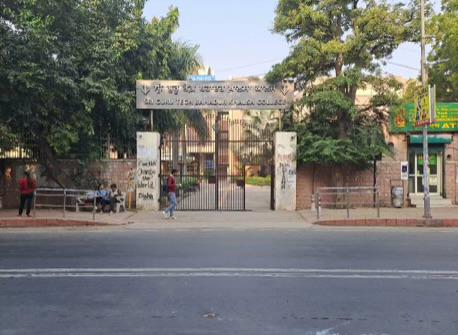
Explore Sri Guru Tegh Bahadur Khalsa College (SGTB Khalsa), Delhi University, a premier institution for Arts, Commerce, and Science. Discover courses, campus infrastructure, hostels, sports, student life, scholarships, placements, and alumni.

Established in 1951, Sri Guru Tegh Bahadur Khalsa College (SGTB Khalsa College), a prestigious Delhi University (DU) college, is known for academic excellence across Arts, Commerce, Science, and vocational programs. Located in North Campus, Delhi University, the college combines rigorous academics with a rich cultural and extracurricular environment, reflecting Sikh principles and fostering holistic development.

Accredited with an A+ grade by NAAC and recognized by the UGC, SGTB Khalsa College ranks among the top DU colleges for undergraduate and postgraduate studies. It offers a diverse range of programs across disciplines, nurturing students’ intellectual, cultural, and ethical growth within a vibrant Delhi University ecosystem.

Sri Guru Tegh Bahadur Khalsa College Infrastructure & Campus Facilities

Situated on Mall Road, North Campus, SGTB Khalsa College has one of the largest campuses in Delhi University, spanning over 15 acres with a 7-acre playground. The campus enjoys excellent connectivity and parking facilities for students and staff, including a designated student parking area. The college provides modern academic infrastructure including smart classrooms, laboratories, and a well-equipped library, creating a dynamic environment for learning and research. The campus also features hostels within walking distance of the academic wing, ensuring safety and accessibility. Reflecting the college’s Sikh heritage, the campus includes a Gurudwara Sahib hosting spiritual congregations, along with well-maintained gardens and green spaces, which serve as popular spots for relaxation and student interactions. Basketball and volleyball courts are vibrant hubs of sporting activity.

The SGTB Khalsa College Library houses more than 1,45,300 books, journals, magazines, and newspapers, with access to UGC-N-LIST and DULS electronic resources. Students gain automatic membership upon admission, and the library, spread across three floors, includes circulation counters, reference and textbook sections, periodicals, a teachers’ reading room, and a 200-seat reading room with LCD projectors for workshops and orientation programs. The library regularly organizes training initiatives such as orientation programs for new students, N-LIST demonstrations to train students in e-resources, library internships for library science students, and access to new arrival lists, question banks, and syllabus materials. Recent upgrades include air-conditioning and a functional library web page.

The General Hari Singh Nalwa Girls Hostel accommodates 210 undergraduate female students in 70 shared rooms. Rooms are furnished with wardrobes, study tables, chairs, cots with mattresses, dressing tables, and air conditioning. Admission prioritizes students from outside the National Capital Region, and the hostel is managed by a dedicated committee ensuring discipline, safety, and timely occupancy. The entire campus is Wi-Fi enabled, providing high-speed internet across classrooms, hostels, and common areas. Students and faculty have secure login credentials to access online resources, supporting seamless digital learning.

A Punjab & Sind Bank branch and an on-campus ATM offer essential banking services such as fee payments, lockers, and loan processing. The college canteen serves hygienic and affordable meals, complemented by a Nescafé kiosk for refreshments throughout the day. A dedicated Girls’ Common Room provides seating, study, and social spaces with first-aid facilities, while the gymnasium in the sports complex is equipped with modern training equipment and fitness facilities. First-aid kits and basic medical support are available at key campus locations including the library, hostel, and administration offices.

SGTB Khalsa College actively promotes sports and fitness, offering a variety of athletic programs including cricket, hockey, wrestling, gymnastics, basketball, and athletics. The college hosts major tournaments such as the Sahibzada Zorawar Singh & Sahibzada Fateh Singh T20 Cricket Tournament and the Baba Deep Singh Hockey & Basketball Tournament. The college has produced renowned athletes including Mohinder Amarnath in cricket, Ashok Dewan and Harinder Singh in hockey, Dalbir Singh in wrestling, Shymalal Ji in gymnastics, and Maninder Singh in cricket, reflecting the institution’s commitment to sporting excellence.

Courses Offered at SGTB Khalsa College, Delhi University

SGTB Khalsa College offers a wide array of programs across Arts, Commerce, Science, and Vocational Studies. Undergraduate programs include a B.A. Program and B.A. Hons. courses in Economics, English, Hindi, History, Political Science, and Punjabi. Commerce students can pursue B.Com. Hons., B.Com. Prog., and BBE, while Science students have options including B.Sc. Hons. in Botany, Chemistry, Computer Science, Electronics, Mathematics, Physics, and Zoology, as well as B.Sc. Prog. in Life Sciences and Physical Sciences. Postgraduate programs include M.A. degrees in Economics, English, Hindi, History, Political Science, and Punjabi, as well as M.Sc. courses in Botany, Chemistry, Electronics, Mathematics, Physics, and Zoology, along with M.Com. SGTB Khalsa College also offers two-year diploma programs in German, Spanish, and French, a PG Diploma in Forensic Sciences, and certificate courses in languages such as Chinese, Korean, Japanese, Russian, and Punjabi. Additional short-term certificate programs are available in Web Journalism, Sports Economics, and Marketing.

Scholarships & Financial Assistance at SGTB Khalsa College

SGTB Khalsa College provides merit-based scholarships and awards to support academic excellence. Prominent awards include the S. Gurdial Singh Virdi Memorial Award for the all-rounder of the college, the Gagandeep Singh Anand Memorial Award for university toppers, the Dr. G.N. Dixit Inspire Scholarship for academic excellence, the S. Jarnail Singh AO Meritorious Scholarship, and the S. Tarlochan Singh Sarna Memorial Award for outstanding performance in Plant Physiology and Metabolism. The college’s Student Welfare Scheme further supports students from economically weaker sections, single-parent households, or differently-abled backgrounds, offering financial aid, mental health support, and academic resources to ensure equitable opportunities for all.

Extracurricular Activities & Student Life at SGTB Khalsa College

SGTB Khalsa College encourages vibrant and dynamic student life with numerous societies and clubs catering to literary, cultural, performing arts, and social initiatives. The literary and poetry society Acrostic promotes creative writing, while Ankur focuses on theatre and dramatics. Chalchitra organizes filmmaking activities, and ETRAM nurtures dance and choreography. Photography enthusiasts can participate in Pinhole Photosoc, while Strokes supports fine arts, painting, and crafts. Music societies such as Swarang foster both classical and contemporary music talents, and Vastram explores sartorial arts. The campus also promotes social awareness through initiatives like the NSS and environmental clubs. Through these societies, students develop leadership, creativity, and collaborative skills while engaging in inter-college competitions, workshops, and community service activities.

Admissions at SGTB Khalsa College (Delhi University)

Undergraduate admissions at SGTB Khalsa College are based on CUET scores and are managed through the Common Seat Allocation System (CSAS-UG). Eligibility requires completion of Class XII or its equivalent from a recognized board. CUET scores in domain-specific and language subjects determine seat allocation. 

For postgraduate programs, admissions are through CUET-PG, conducted by the National Testing Agency, followed by CSAS-PG counseling and document verification. SGTB Khalsa College ensures transparency and merit-based selection while providing guidance and support to applicants.

Recognition & Rankings

  • NAAC Accreditation: A+ Grade
  • Recognized by the UGC
  • Known for excellence in Arts, Commerce, Science, and Vocational education
  • Nationally recognized for sports, research, and cultural contributions

Notable Alumni of SGTB Khalsa College

The alumni of SGTB Khalsa College have excelled in academics, business, arts, and public service. Notable graduates include Prof. Gurpreet Singh Tuteja, a mathematics scholar and joint dean of student welfare at DU; actor and screenwriter Saurabh Shukla, a National Award winner; S.S. Sarabjit Singh, managing director of Travelite India; S. Manjit Kohli, CEO of TATA Motors Dealership and Alumni Association President; and Ravinder Gargesh, professor of linguistics at Samarkand State University. These alumni reflect the college’s strong focus on leadership, excellence, and holistic development.

Internships & Placements at SGTB Khalsa College

The Placement Cell at SGTB Khalsa College actively connects students with leading companies and offers career counseling, mentorship, and skill-building workshops. In the 2023–24 placement season, over 103 companies participated, offering 175+ placements. The highest package reached ₹23.05 LPA, while the average package was ₹5.8 LPA and the median package ₹6.05 LPA. Internship stipends reached up to ₹80,000, with average stipends around ₹20,000, providing students with valuable industry exposure and career readiness. These placements reinforce SGTB Khalsa College’s reputation as a top choice among Delhi University colleges.

Image Credits: DU Beat Archives

Neeraja Unnikrishnan
[email protected]

Ramjas College (Delhi University) – Explore updated details on courses, fees, admissions, campus facilities, student life, placements, and scholarships.

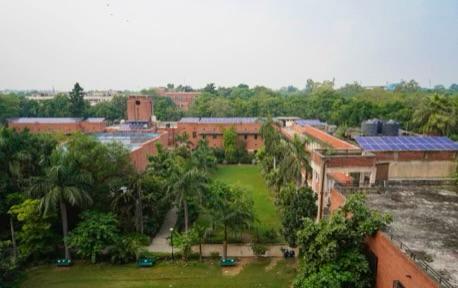
Ramjas College is one of the oldest constituent colleges of the University of Delhi, founded in 1917 by educationalist-philanthropist Rai Kedar Nath in memory of his father, Lala Ramjas Mal. The college officially came under the aegis of Delhi University after DU was established in 1922. Over time it shifted locations — initially in Daryaganj, then to Anand Parbat (Kala Pahad), and finally in 1950 it relocated to its present campus in University Enclave, North Campus, New Delhi. The current building was inaugurated by Dr. Rajendra Prasad, the first President of India, on 17 January 1951.

With an NIRF rank of 28 among all colleges in India, Ramjas College has a long legacy of providing a productive student environment, quality education and has produced prominent leaders and influential figures in various fields.

Ramjas College Infrastructure & Campus Facilities

The infrastructure and facilities at Ramjas College are well-developed to support both academics and student life. The campus is green, with over 76 species of trees, offering a pleasant environment. There are about 96 classrooms spread across two main buildings, most equipped with modern projectors. The college has departmental libraries (27 departmental libraries) and the central library, facilitating academic study and research. Other facilities include a fully air-conditioned auditorium, a conference hall, seminar rooms, an ECA room for extracurriculars, a gym accessible to students, medical room, girls’ common room, staff room etc. For sports, Ramjas offers fields and courts for basketball, football, volleyball, tennis, archery, athletics, table tennis etc. The college also has separate hostel facilities for girls and boys on campus. 

Courses Offered at Ramjas College, Delhi University

Ramjas College offers a broad array of departments across Arts, Sciences, Commerce, and languages. Undergraduate honours courses include BA (Hons) in subjects such as English, Economics, History, Political Science, Hindi, Sanskrit, Music, etc., BSc (Hons) in Physics, Chemistry, Mathematics, Botany, Zoology, Statistics, as well as BSc programmes, plus BCom (Hons) and BCom programmes. At the postgraduate level, it offers MA and MSc courses in various disciplines (English, Hindi, Sanskrit, Economics, History, Political Science, Mathematics, Statistics etc.). It also runs foreign and Indian language certificate or part-time courses via the School of Foreign & Indian Languages (SFIL). 

The UG honours courses at Ramjas have fees around ₹15,500 per annum (for BA honours). For hostel accommodation, a document for 2022-23 shows boys’ hostel annual charges (excluding mess) around ₹33,995 plus additional monthly charges.

Scholarships and Financial Assistance at Ramjas College:

Financial aid and scholarship schemes are available at Ramjas College. The college publishes notices listing scholarships such as book grants 

  • Dr VKR Rao Endowment
  • Ganga Sant Book Grant
  • Shri Khushi Ram Book Grant

It also provides fee-concession for economically weaker section students. Students from reserved categories or with merit may apply via college forms and external government scholarships.

Students can also apply for scholarships from National Scholarship Portal, for which applications are released at the beginning of the session.

Eligibility: Family income ≤ ₹4.5 lakh per annum, pursuing regular degree courses in recognised institutions, and not availing other scholarships. 

Amount: ₹10,000 per year for UG (first three years)

The scholarship amount is Rs.5400/- per month for general degree courses and Rs.7800/- per month for technical/medical/professional/paramedical courses. For availing scholarship under this scheme, the income of the parents of the student should not exceed Rs.4.5 lakh per annum.

Awarded by the Ministry of Minority Affairs for financial assistance to the poor and meritorious students belonging to minority communities in India to enable them to pursue professional and technical courses. Financial assistance is given to pursue graduate-level or postgraduate-level technical and professional courses from a recognised institution.

PMS Scholarships are awarded to students having domicile of J&K State and having passed 10+2 Exam or 10+3 Diploma Exam from J&K and whose family income does not exceed Rs. 8 Lakh per annum are eligible for this scheme for pursuing higher studies outside the State of J&K.

Extracurricular Activities & Student Life at Ramjas College

Student life at Ramjas is vibrant with many societies, student-led activities, and clubs. Some prominent societies include The Ramjas Debating Society (English and Hindi wings), the Fine Arts Society ‘Mélange’, literary societies like Wordcraft, dramatics groups like Shunya, magazine and publication platforms, and others. The college offers NCC and NSS units, gender sensitization / women development cells, eco-club etc., enabling students to engage in social causes and extracurricular development. Annual activities include cultural fests, seminars, workshops, inter-department events, sports competitions, and student publications. 

Admissions atRamajs College (Delhi University)

Undergraduate Admissions (UG)

Admission to Ramjas College, Delhi University is based on CUET scores and governed by the Common Seat Allocation System (CSAS-UG).

Eligibility requires completion of Class XII (or equivalent) from a recognized board. CUET scores in language, domain subjects, and general tests determine seat allocation.

Applicants should check the DU Admission Portal regularly for updates and ensure subject alignment between Class XII and CUET. There is no age bar for undergraduate programs, and a gap year does not disqualify applicants.

Postgraduate Admissions (PG)

Admissions to PG programs are through CUET-PG, conducted by the National Testing Agency (NTA), followed by CSAS-PG counseling on the Delhi University portal. Seats are allotted based on CUET-PG rank, eligibility, and course preferences. Admission is confirmed after document verification and online fee payment.

Recognition & Rankings:

In terms of achievements and recognition, Ramjas College regularly features among top colleges of Delhi University in rankings. 

  • According to NIRF 2025, it was ranked 28th among colleges in India.
  • The college is NAAC accredited (Grade A). 
  • Over its long history, Ramjas has hosted and been part of many landmark events, including being one of the first colleges to promote liberal arts, and during its centennial (in January 2017) celebrated its legacy of academic excellence and socio-political engagement.

Notable Alumni of Ramjas College

Notable alumni of Ramjas College reflect success across cinema, politics, literature and public service. Some key names include Manoj Bajpai, Prakash Jha, Manish Jha, Papon, Vikas Bahl, and others. Alumni also include figures in governance and law. The college has traditionally been an incubator for leaders in many fields. 

Internships and Placements at Ramjas College

In terms of placement and internships, Ramjas College’s placement cell reports that in  the session 2022-23 90+ offers were released, highest package around ₹21.5 LPA (DE Shaw) and 80+ companies visited campus.For 2024-25 according to one report: gross placement value around ₹8.4 crore, average CTC ₹7.4 LPA, highest package ~₹23.05 LPA, with 135+ recruiters participating. Leading recruiters include DE Shaw, Deloitte, KPMG, EY, PwC, Wipro, and more.

Ramjas College is one of the oldest constituent colleges of the University of Delhi, founded in 1917 by educationalist-philanthropist Rai Kedar Nath in memory of his father, Lala Ramjas Mal. The college officially came under the aegis of Delhi University after DU was established in 1922. Over time it shifted locations — initially in Daryaganj, then to Anand Parbat (Kala Pahad), and finally in 1950 it relocated to its present campus in University Enclave, North Campus, New Delhi. The current building was inaugurated by Dr. Rajendra Prasad, the first President of India, on 17 January 1951.

With an NIRF rank of 28 among all colleges in India, Ramjas College has a long legacy of providing a productive student environment, quality education and has produced prominent leaders and influential figures in various fields.

Ramjas College Infrastructure & Campus Facilities

The infrastructure and facilities at Ramjas College are well-developed to support both academics and student life. The campus is green, with over 76 species of trees, offering a pleasant environment. There are about 96 classrooms spread across two main buildings, most equipped with modern projectors. The college has departmental libraries (27 departmental libraries) and the central library, facilitating academic study and research. Other facilities include a fully air-conditioned auditorium, a conference hall, seminar rooms, an ECA room for extracurriculars, a gym accessible to students, medical room, girls’ common room, staff room etc. For sports, Ramjas offers fields and courts for basketball, football, volleyball, tennis, archery, athletics, table tennis etc. The college also has separate hostel facilities for girls and boys on campus. 

Courses Offered at Ramjas College, Delhi University

Ramjas College offers a broad array of departments across Arts, Sciences, Commerce, and languages. Undergraduate honours courses include BA (Hons) in subjects such as English, Economics, History, Political Science, Hindi, Sanskrit, Music, etc., BSc (Hons) in Physics, Chemistry, Mathematics, Botany, Zoology, Statistics, as well as BSc programmes, plus BCom (Hons) and BCom programmes. At the postgraduate level, it offers MA and MSc courses in various disciplines (English, Hindi, Sanskrit, Economics, History, Political Science, Mathematics, Statistics etc.). It also runs foreign and Indian language certificate or part-time courses via the School of Foreign & Indian Languages (SFIL). 

The UG honours courses at Ramjas have fees around ₹15,500 per annum (for BA honours). For hostel accommodation, a document for 2022-23 shows boys’ hostel annual charges (excluding mess) around ₹33,995 plus additional monthly charges.

Scholarships and Financial Assistance at Ramjas College:

Financial aid and scholarship schemes are available at Ramjas College. The college publishes notices listing scholarships such as book grants 

  • Dr VKR Rao Endowment
  • Ganga Sant Book Grant
  • Shri Khushi Ram Book Grant

It also provides fee-concession for economically weaker section students. Students from reserved categories or with merit may apply via college forms and external government scholarships.

Students can also apply for scholarships from National Scholarship Portal, for which applications are released at the beginning of the session.

Eligibility: Family income ≤ ₹4.5 lakh per annum, pursuing regular degree courses in recognised institutions, and not availing other scholarships. 

Amount: ₹10,000 per year for UG (first three years)

The scholarship amount is Rs.5400/- per month for general degree courses and Rs.7800/- per month for technical/medical/professional/paramedical courses. For availing scholarship under this scheme, the income of the parents of the student should not exceed Rs.4.5 lakh per annum.

Awarded by the Ministry of Minority Affairs for financial assistance to the poor and meritorious students belonging to minority communities in India to enable them to pursue professional and technical courses. Financial assistance is given to pursue graduate-level or postgraduate-level technical and professional courses from a recognised institution.

PMS Scholarships are awarded to students having domicile of J&K State and having passed 10+2 Exam or 10+3 Diploma Exam from J&K and whose family income does not exceed Rs. 8 Lakh per annum are eligible for this scheme for pursuing higher studies outside the State of J&K.

Extracurricular Activities & Student Life at Ramjas College

Student life at Ramjas is vibrant with many societies, student-led activities, and clubs. Some prominent societies include The Ramjas Debating Society (English and Hindi wings), the Fine Arts Society ‘Mélange’, literary societies like Wordcraft, dramatics groups like Shunya, magazine and publication platforms, and others. The college offers NCC and NSS units, gender sensitization / women development cells, eco-club etc., enabling students to engage in social causes and extracurricular development. Annual activities include cultural fests, seminars, workshops, inter-department events, sports competitions, and student publications. 

Admissions atRamajs College (Delhi University)

Undergraduate Admissions (UG)

Admission to Ramjas College, Delhi University is based on CUET scores and governed by the Common Seat Allocation System (CSAS-UG).

Eligibility requires completion of Class XII (or equivalent) from a recognized board. CUET scores in language, domain subjects, and general tests determine seat allocation.

Applicants should check the DU Admission Portal regularly for updates and ensure subject alignment between Class XII and CUET. There is no age bar for undergraduate programs, and a gap year does not disqualify applicants.

Postgraduate Admissions (PG)

Admissions to PG programs are through CUET-PG, conducted by the National Testing Agency (NTA), followed by CSAS-PG counseling on the Delhi University portal. Seats are allotted based on CUET-PG rank, eligibility, and course preferences. Admission is confirmed after document verification and online fee payment.

Recognition & Rankings:

In terms of achievements and recognition, Ramjas College regularly features among top colleges of Delhi University in rankings. 

  • According to NIRF 2025, it was ranked 28th among colleges in India.
  • The college is NAAC accredited (Grade A). 
  • Over its long history, Ramjas has hosted and been part of many landmark events, including being one of the first colleges to promote liberal arts, and during its centennial (in January 2017) celebrated its legacy of academic excellence and socio-political engagement.

Notable Alumni of Ramjas College

Notable alumni of Ramjas College reflect success across cinema, politics, literature and public service. Some key names include Manoj Bajpai, Prakash Jha, Manish Jha, Papon, Vikas Bahl, and others. Alumni also include figures in governance and law. The college has traditionally been an incubator for leaders in many fields. 

Internships and Placements at Ramjas College

In terms of placement and internships, Ramjas College’s placement cell reports that in  the session 2022-23 90+ offers were released, highest package around ₹21.5 LPA (DE Shaw) and 80+ companies visited campus.For 2024-25 according to one report: gross placement value around ₹8.4 crore, average CTC ₹7.4 LPA, highest package ~₹23.05 LPA, with 135+ recruiters participating. Leading recruiters include DE Shaw, Deloitte, KPMG, EY, PwC, Wipro, and more.

Image Credits: Ayush Raj for DU Beat

Mangalya Singh

[email protected]

Explore St. Stephen’s College, Delhi University, one of India’s top-ranked colleges for Arts and Sciences.  Explore updated courses, fees, admissions, campus facilities, student life, and placements.

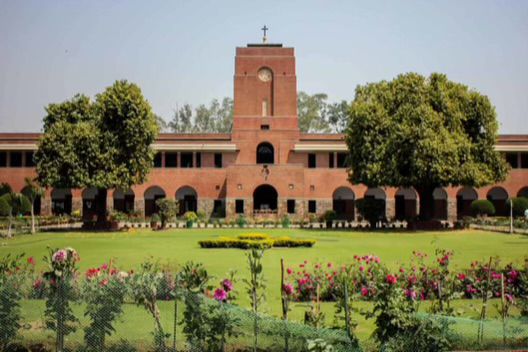
Founded on 1 February 1881, St. Stephen’s College Delhi University is one of India’s oldest and most prestigious DU Colleges. Predating the University of Delhi, St. Stephen’s was initially affiliated with Calcutta University, then Punjab University, before becoming one of the three original constituent colleges of Delhi University in 1922.

The college is guided by its motto “Ad Dei Gloriam” (Latin for “To the Glory of God”) and aims to nurture minds that are both academically curious and socially responsible. Ranked 5th in NIRF 2024 and accredited with an A+ grade by NAAC, St. Stephen’s College consistently ranks among the top DU colleges in India. Surveys by India Today and The Week recognize its blend of tradition, academic excellence, and community-driven education.

St. Stephen College Infrastructure & Campus Facilities

Located in the University Enclave, North Campus, St. Stephen’s College Delhi University features a historic red-brick campus designed by Walter Sykes George. The Indo-Saracenic architecture, arched corridors, and lush courtyards create a serene, intellectually stimulating environment. The college is easily accessible via Vishwavidyalaya Metro Station and other major Delhi routes.

St. Stephen’s College, Delhi University, boasts state-of-the-art academic infrastructure designed to enhance student learning and research. Its spacious, well-lit classrooms and lecture halls are ICT-enabled with projectors and advanced audio systems for interactive learning. Established in 1881, the St. Stephen’s College library houses over 1,00,000 volumes, including rare books and Persian manuscripts, with seamless access to e-resources via DULS, NLIST, and other academic databases. The college’s modern laboratories in Physics, Chemistry, and Biology support advanced undergraduate research, while the Computer and Internet Resource Centre offers high-speed internet and modern PCs for digital learning. They also have well-equipped seminar rooms host guest lectures, workshops, and departmental discussions, fostering vibrant academic engagement at one of Delhi University’s top colleges.

The St. Stephen’s Café and Dining Hall provide affordable, nutritious meals along with informal spaces for student interaction. Common rooms, including the Junior Common Room (JCR) and Ladies Common Room (LCR), serve as vibrant hubs for meetings, recreation, and dialogue. The on-campus bookstore and stationery shop stock textbooks, reference materials, and essential supplies for all courses. To support student health and wellness, the college provides medical and counselling services with an on-campus nurse, visiting doctor, and professional counselling support. Additionally, a State Bank of India ATM is available on campus, ensuring convenient banking access at one of Delhi University’s top colleges.

St. Stephen’s College has a rich tradition in sports with facilities for cricket, football, hockey, tennis, basketball, athletics, badminton, and an indoor gymnasium. The college organizes Mukherjee Memorial Debate and inter-college tournaments to encourage teamwork and fitness.

The 25-acre campus is adorned with well maintained lawns, heritage trees, and gardens. St. Stephen’s promotes sustainability and eco-conscious initiatives, encouraging students to participate in green drives.

Courses Offered at St. Stephen’s College, Delhi University

St. Stephen’s College, Delhi University, offers a wide range of undergraduate (UG) programs across Arts, Science, and Physical Sciences, focusing on academic excellence and holistic development.

Undergraduate Courses (UG)

The college offers B.A. (Hons) courses in Economics, English, History, Philosophy, Political Science, Sanskrit, and Sociology, along with B.A. Programme combinations such as English + History, Economics + Political Science, and Philosophy + Sanskrit. Science students can opt for B.Sc. (Hons) in Physics, Chemistry, and Mathematics, or B.Sc. in Physical Sciences with specializations in Electronics and Chemistry. The UG fee structure is divided into annual DU fees, paid via the Delhi University Admission Portal, and semester-wise college fees. Typical fees range from approximately ₹29,437 for B.A. courses to ₹30,688 for B.Sc. (Hons) Physics/Chemistry, with concessions available for differently-abled (₹1,150–₹1,350), staff wards (₹8,850–₹10,401), and SC/ST, EWS, or Martyr’s children (₹28,895–₹30,508)

Postgraduate Courses (PG)

For postgraduate (PG) programs, St. Stephen’s College emphasizes advanced study and research in Arts and Science. PG offerings include M.A. courses in English, History, Philosophy, Political Science, and Sanskrit, as well as M.Sc. courses in Physics, Chemistry, Mathematics, and Operational Research. PG fees follow the same pattern with annual DU fees and semester-wise college fees, typically around ₹29,111 for general category students. Concessions are similarly provided for differently-abled students (₹1,150–₹1,350), staff wards (₹8,850–₹10,401), and SC/ST, EWS, or Martyr’s children (₹28,895–₹30,508), making St. Stephen’s College one of Delhi University’s most sought-after institutions for both undergraduate and postgraduate education.

Extracurricular Activities & Student Life at St. Stephen’s College

The college promotes unity in diversity, with students from almost every Indian state, Union Territory, and countries like Japan, Europe, USA, and UK. College life includes regional festivals, music and theatre performances, inter-college competitions, sports events, and food festivals, reflecting a vibrant Delhi University experience.

St. Stephen’s College, Delhi University, is rich in traditions and ceremonies that foster community and celebrate its heritage. Weekly morning assemblies, held Monday to Thursday, are mandatory for first-year students and encourage discipline and engagement. Key events include Founder’s Day on 7th December, commemorating Rev. Samuel Scott Allnutt, the college’s first Principal, and Rudra Dinner on 12th February, a service-based dinner honoring Rev. C. F. Andrews’ birth anniversary. The Dismissal Service marks the end-of-year farewell for graduating students, while Foundation Day on 1st February celebrates the college founders. Additionally, the two-day Deenabandhu Andrews Samvaad revisits the values of Deenabandhu Andrews, and Alumni Reunion Day, held on the Sunday following Founder’s Day, strengthens lifelong connections among the St. Stephen’s College alumni community.

St. Stephen’s College, Delhi University, offers a vibrant array of student societies and clubs that cater to academic, cultural, literary, social, and recreational interests. Academic societies include Economics, Mathematics, Physics, Chemistry, History, English Literary Society, Hindi & Sanskrit Sahitya Sabha, and Bengali & Malayalam Literary Societies, while cultural and artistic societies feature Fine Arts, Music, Choreography, Cine Club, Photographic Society, and Team YearBook. Literary and language enthusiasts can join Bazam-E-Adab, Poetry Society, Shakespeare Society, and Punjabi & Japanese Literary Societies, whereas debating and discussion forums include the Debating Society, Informal Discussion Group, Philosophical Society, Civil Services Forum, Planning Forum, and Leadership Cell. Social and service-oriented groups such as the Social Service League, Gandhi Ambedkar Study Circle, Enabling Unit, Gender Study Cell, and Enactus promote community engagement, while special interest and recreational clubs like the Hiking Club, Quiz Club, Electronics Society, Finance & Investment Cell, Campus Placement Cell, and Junior Combination Room enrich campus life at one of Delhi University’s most dynamic colleges.

Admissions at St. Stephen’s College (DU)

Undergraduate Admissions

Admission requires CUET registration via NTA and registration on the DU UG CSAS portal. Minimum eligibility: Class XII pass.

Christian Minority Seats (50% reserved):

  • 25% CNI (Delhi Diocese)
  • 16.5% other Christian denominations
  • 8.5% Christian Scheduled Tribes

Supernumerary seats include PwBD (5%), Martyrs’ children (3%), Sports (5%), PMSSS/MEA nominees, and staff wards. Unreserved seats are CUET merit-based, ensuring a balanced and diverse student body.

Postgraduate Admissions

Admissions for PG courses are via CUET-PG through the Delhi University PG portal. Applicants also complete the College PG Application Form. Minority PG admissions follow High Court seat allocation guidelines.

Recognition & Rankings

St. Stephen’s College, Delhi University (DU), is one of India’s oldest and most prestigious institutions, known for its academic excellence, rich heritage, and vibrant intellectual community.

  • NAAC Accreditation: A++ Grade
  • NIRF 2025 Ranking: #5 in India (Colleges Category)
  • India Today 2025 Ranking: Among India’s top colleges for Arts and Science
  • Affiliation: University of Delhi (DU)
  • UGC Approval: Recognized by the University Grants Commission (UGC)

Notable Alumni of St. Stephen’s College

The alumni of St. Stephen’s College, Delhi University, have made their mark globally across diverse fields such as economics, politics, journalism, and literature. Distinguished Stephen’s graduates include Amartya Sen, Nobel Laureate in Economics; Ajay Banga, President of the World Bank and former CEO of Mastercard; Shashi Tharoor, Member of Parliament and author; and Barkha Dutt, renowned journalist and author. St. Stephen’s College continues to uphold its tradition of fostering generations of leaders, scholars, and changemakers who have contributed significantly to academia, governance, business, and public life.

Internships & Placements at St. Stephen’s College

St. Stephen’s College, Delhi University, features a robust Campus Placement Cell that connects students with top industry opportunities through placements, internships, fellowships, and mentorship programs. 

In the 2024–25 placement season, over 35 recruiters participated, offering more than 200 opportunities across sectors such as Consulting, Finance, IT, and Education. Leading companies including McKinsey, BCG, EY, Deloitte, KPMG, J.P. Morgan, and TCS recruited from the college, with the highest package reaching ₹24.5 LPA and the average package at ₹10.5 LPA. Internship stipends averaged ₹33,500 per month, with the highest going up to ₹1.4 lakh per month. The student body for placements comprised 55% Arts and 45% Science students, with a gender ratio of 55% female to 45% male, making it one of Delhi University’s best institutions for career advancement and industry exposure.

Image Credits: DU Beat Archives

Neeraja Unnikrsihnan

[email protected]

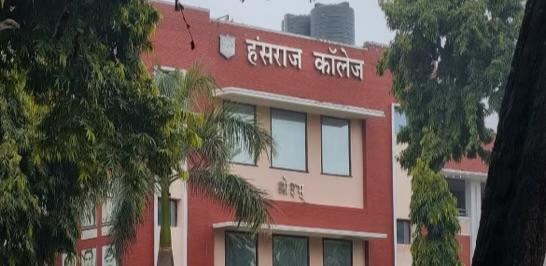
Hansraj College (Delhi University) – Explore updated details on courses, fees, admissions, campus facilities, student life, placements, and scholarships.

Hansraj College is one of the premier constituent colleges of the University of Delhi. It was established on 26 July 1948 by the D.A.V. College Managing Committee in memory of Mahatma Hansraj and Maharshi Dayanand Saraswati. Since then, Hansraj College has grown into a major institution in the DU North Campus, offering undergraduate and postgraduate studies in arts, sciences, and commerce to over 5,000 students. 

Hansraj College Infrastructure & Campus Facilities

The infrastructure and facilities at Hansraj College are robust and student-friendly. The college boasts a well-stocked Central Library along with department-level libraries for science subjects, and a Book Bank for needy students. For laboratory work, there are six computer labs and eighteen science labs for disciplines like Physics, Chemistry, Botany, Zoology, Electronics, etc. Amenities include a modern air-conditioned auditorium with advanced sound and light systems (seating about 400-500 people), multiple seminar rooms (with audio-visual projection), common rooms, yoga and meditation rooms, and an electronic shooting range. The college also provides hostel accommodation for both boys and girls, with supporting facilities such as a dining hall, kitchen, common room, 24-hour power backup, and solar geysers. Hansraj has a large sports field, courts for basketball, facilities for indoor sports, outdoor games, archery, shooting, swimming, and programmes like “Games For All” which ensures broad participation. 

Courses Offered at Hansraj College, Delhi University

Hansraj College houses multiple departments across Sciences, Arts, and Commerce. It offers undergraduate courses such as B.A. (Honours) English, Hindi, Sanskrit, Economics, History, Philosophy, and B.A. program. 

It also offers B.Sc. (Honours) in Anthropology, Botany, Zoology, Computer Science, Mathematics, Chemistry, Physics, Electronics and Geology and B. Sc. Program courses in Physical Science with Chemistry, Physical Science with Computer Science, and Life Sciences, alongwith B.Com (Honours) 

It also offers postgraduate courses such as M.A. in English, Hindi, History, Sanskrit, M. Sc. in Anthropology, Botany, Chemistry, Geology, Mathematics, Operational Research, Physics, and Zoology and M.Com.

In addition, Hansraj has several additional and certificate courses and offers strong research support and academic committees to ensure the curriculum stays contemporary and rigorous. 

The fee structure varies based on the course and category details. The first year fee for undergraduate students is fixed at Rs. 33,145 for all Science courses, Rs. 29,735 for all Arts courses, Rs. 31,435 for all Economics and Commerce courses, and Rs. 59,965 for Computer Science course. For PwD students the fee is Rs. 895

At the postgraduate level, the fee for M.A. is Rs.27,080, for M. Com. is Rs. 28,160, and for M. Sc. is Rs. 27,360 respectively. 

For PwD students the fee is Rs. 6770 for M.A. courses, Rs. 7,040 for M. Com, and Rs. 6,840 for M. Sc. courses.

Scholarships and Financial Assistance at Hansraj College

There are a number of financial assistance schemes offered by the college for students in need.

  • Financial aid is provided to the graduate and post graduate students of Hansraj College in the form of special academic prize that is based on student’s academic performance. 
  • The college also has the facility to give fee concession from 50% to 100% along with merit and need based scholarship. Scholarships are also provided by various government schemes and non-government agencies
  • The college also has the facility to give fee concession from 50% to 100%, based on annual income, family background, girl child (Shri Saya Pal Chadha Scholarship), Sumangla Devi Hem Raj Bhalla Trust etc.
  • HRC Merit-CUM-Need Scholarship: Scholarship of Rs. 2,000/- each provided to students on Merit-cum-Need basis and students are selected through Interview conducted by the Student Welfare Committee.
  • Sumangla Devi Hem Raj Bhalla Scholarship: The five scholarships of Rs. 8,000/- would be given to the students of the Science stream of the College on merit-cum-means basis, of the five scholarships, minimum of two scholarships must be awarded to female students.
  • Help The Blind Foundation Scholarship: Sponsorship amount of Rs. 10,000/- each is provided to Physically Handicapped (PH) students
  • Central Sector Scheme Of Scholarship For College And University Students – Awarded by the Ministry of Education to Class XII toppers from each State/Board. 

Eligibility: Family income ≤ ₹4.5 lakh per annum, pursuing regular degree courses in recognised institutions, and not availing other scholarships. 

Amount: ₹10,000 per year for UG (first three years)

The scholarship amount is Rs.5400/- per month for general degree courses and Rs.7800/- per month for technical/medical/professional/paramedical courses. For availing scholarship under this scheme, the income of the parents of the student should not exceed Rs.4.5 lakh per annum.

Awarded by the Ministry of Minority Affairs for financial assistance to the poor and meritorious students belonging to minority communities in India to enable them to pursue professional and technical courses. Financial assistance is given to pursue graduate-level or postgraduate-level technical and professional courses from a recognised institution.

The scheme offers 10,000 scholarships every year at Rs 0.80 lakh per year for the talented youth in the age group 17-22 years, for undertaking Bachelor and Masters level education in natural sciences.

PMS Scholarships are awarded to students having domicile of J&K State and having passed 10+2 Exam or 10+3 Diploma Exam from J&K and whose family income does not exceed Rs. 8 Lakh per annum are eligible for this scheme for pursuing higher studies outside the State of J&K.

Awarded to young women from economically disadvantaged backgrounds to support their pursuit of undergraduate or postgraduate degrees in science. 

Extracurricular Activities & Student Life at Hansraj College

Student life at Hansraj is vibrant thanks to its many societies and extracurricular activities. There are societies like the Hansraj Debating Society, Hansraj Dramatics Society which is one of the most esteemed Dramatics  Societies within the Delhi University Theatre Circuit, Commerce Society, English Literary Societies, Quiz Societies, Fine Arts, Civil Services Society, photography clubs, etc. Annual events, cultural fests, departmental competitions, inter-college sports tournaments, seminars and guest lectures are a regular part of college life. 

In order to foster inclusion and support among its diverse student body, the college also has a number of cells such as Equal Opportunity Cell, Gender Equality Cell, Minority Cell, Northeast Cell, SC/ST Cell, and Women Development Cell, among others.

Admissions at Hansraj College  (Delhi University)

Undergraduate Admissions (UG)

Admission to Hansraj College, Delhi University is based on CUET scores and governed by the Common Seat Allocation System (CSAS-UG).

Eligibility requires completion of Class XII (or equivalent) from a recognized board. CUET scores in language, domain subjects, and general tests determine seat allocation.

Applicants should check the DU Admission Portal regularly for updates and ensure subject alignment between Class XII and CUET. There is no age bar for undergraduate programs, and a gap year does not disqualify applicants.

Postgraduate Admissions (PG)

Admissions to PG programs are through CUET-PG, conducted by the National Testing Agency (NTA), followed by CSAS-PG counseling on the Delhi University portal. Seats are allotted based on CUET-PG rank, eligibility, and course preferences. Admission is confirmed after document verification and online fee payment.

Recognition & Rankings

In terms of achievements and recognition, Hansraj College holds quite a number of honors.

  • In 2025, NIRF (National Institutional Ranking Framework) ranked it 3rd among all colleges in India. 
  • It is accredited A++ by NAAC with a CGPA of 3.71, which is among the highest for DU colleges. 
  • The college often features near the top in national surveys for science, commerce, and arts streams. 
  • The college’s faculty has received recognition, including the Excellence Awards and have contributed to major research publications

Notable Alumni of Hansraj College

Notable alumni of Hansraj reflect its strength across diverse fields. Some prominent former students include Shah Rukh Khan, Anurag Kashyap, Naveen Jindal, Kiren Rijiju, Richard Rekhy, Gopal Subramaniam, among others. These alumni success stories highlight Hansraj’s ability to nurture talent in academics, arts, business and public service.

Hansraj College, stands out for its rich history, strong academic departments, modern and well-maintained infrastructure, diverse and active student societies, consistent achievements at national levels, and a stellar alumni network.

Internships & Placements at Hansraj College

On the placements and internships front, Hansraj College’s Placement Cell reports strong employer engagement and consistent results, particularly for students in commerce, economics and high-demand science or computing streams. In the placement drive conducted for 2024-25 the highest package recorded was ₹ 23 LPA, the average package stood around ₹ 9 LPA, and the median was about ₹ 8.4 LPA, with approximately 200 job offers for the class of 2025. 

Earlier figures show a highest package of ₹ 36.5 LPA for some batches. Top recruiters include global consulting and professional services firms such as Deloitte, EY, PwC, KPMG, Accenture, HCL, as well as major banks and tech firms. The college also engages students through an internship cell, which holds an annual internship fair, which provides exposure to coveted corporate opportunities, also essential marketable skills. The Internship Fair held in 2023 in virtual mode saw over 3000+ student registrations flooding in from various colleges and universities.

Image Credits: Manan for DU Beat

Mangalya Singh

[email protected]

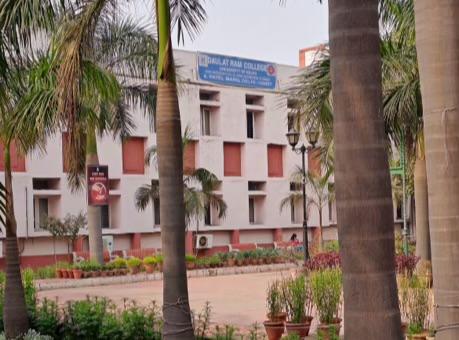
Daulat Ram College (Delhi University) – Explore updated details on courses, fees, admissions, campus facilities, student life, placements, and scholarships.

Daulat Ram College is a reputed women’s constituent college of the University of Delhi, founded in 1960 by educationist Shri Daulat Ram Gupta. Originally named Pramila College and situated at 22, Tilak Marg, the college started with about 350 students, 13 teaching staff, and 2 non-teaching staff. In 1964 the institution moved to its present premises on the North Campus of DU and was renamed Daulat Ram College. 

Holding an NIRF rank of 26 among all colleges in India, Daulat Ram College has been one of the most prominent colleges for Arts and Science education in India for decades.

Daulat Ram College Infrastructure & Campus Facilities

The college offers a wide range of facilities and infrastructure designed to support both academic and extra-curricular growth. It has eighteen science laboratories and six computer labs, a well-stocked central library, departmental libraries, book bank facilities, and internet / WiFi-enabled classrooms and lecture theatres with LCD/projector support. The campus also includes sports infrastructure (a large sports field, indoor badminton court, outdoor basketball court), and is the only DU college to have an electronic shooting range on campus. For student welfare and campus life, there are hostel facilities with a capacity of around 200 students, a multipurpose auditorium, seminar halls, an open-air amphitheatre, medical room, canteen, and other common areas. 

Courses Offered at Daulat Ram College

There are about 19 departments now, covering subjects such as History, Economics, Mathematics, Biology / Life Sciences (including Bio-Chemistry, Nutrition & Health Education), Psychology, Commerce, Languages, etc. The college also offers certificate, diploma, and advanced diploma in foreign language courses affiliated to the Department of Germanic and Romantic Languages and other skill enhancement programmes. 

Daulat Ram College offers B.A. (honours) in Hindi, English, Sanskrit, Economics, Political Science, Philosophy, History and Psychology offers Music, Physical Education, and Nutrition and Health Education as subjects in B.A. (program).

The college offers B.Com (honours) and program courses, along with a number of Science courses, namely B.Sc. (honours) in Botany, Physics, Zoology, Chemistry, Mathematics and Biochemistry alongwith B.Sc (prog) Life Sciences.

Daulat Ram College has also been organising In-House Skill Development Programs These programs will be organised by various departments to enhance skills in multiple domains, such as:

  1. i) Skills promoting Professional Competency (videography, academic writing, research skills, career/education counselling, developing innovation skills, digital support training)
  2. ii) Acquiring Technical Skills in a Digital Environment (computer literacy, communication skills, Programming languages, Software skills, Psychometry, Artificial Intelligence, nanotechnology), and

iii) Skills for Community Growth and Well-being (community development, personality development, social/life skills, lifestyle practices, Health Awareness Programs).

For UG Arts programmes such as B.A. (Hons) or B.A Programme the total fee is INR 47,670 for the full programme. For UG Science Honours (e.g., B.Sc Hons) the range is higher – around INR 1,02,750–1,10,250 in total.

Scholarships and Financial Assistance at Daulat Ram College

DRC provides several options for students in need of support. merit- and need-based scholarships such as the Ganga Laxmi Du Joshi Memorial Scholarship (for third-year English Hons with highest marks), Balmukund Tandon Memorial Scholarship

  • Vidyawa Kapur Scholarship (for visually challenged students), 
  • Pushpa Sharma Memorial Prize (for students in BSc(H) Chemistry), and 
  • Shri Sultan Chand Memorial Scholarship (for high-scoring B.Com students). 
  • The YS Scholarship for students from low‐income families (annual income below ~₹2.5 lakh), first‐generation learners, female‐headed households etc.
  • The college’s Fee Concession Committee provides concessions to needy students based on family income and other criteria.

Other central government scholarships are also in place:

Eligibility: Family income ≤ ₹4.5 lakh per annum, pursuing regular degree courses in recognised institutions, and not availing other scholarships. 

Amount: ₹10,000 per year for UG (first three years)

The scholarship amount is Rs.5400/- per month for general degree courses and Rs.7800/- per month for technical/medical/professional/paramedical courses. For availing scholarship under this scheme, the income of the parents of the student should not exceed Rs.4.5 lakh per annum.

Awarded by the Ministry of Minority Affairs for financial assistance to the poor and meritorious students belonging to minority communities in India to enable them to pursue professional and technical courses. Financial assistance is given to pursue graduate-level or postgraduate-level technical and professional courses from a recognised institution.

PMS Scholarships are awarded to students having domicile of J&K State and having passed 10+2 Exam or 10+3 Diploma Exam from J&K and whose family income does not exceed Rs. 8 Lakh per annum are eligible for this scheme for pursuing higher studies outside the State of J&K.

Extracurricular Activities & Student Life at Daulat Ram College

In terms of societies and student activities, DRC has a vibrant extra-curricular ecosystem. There are subject associations / departmental societies, clubs for drama, debate, music, dance, film & photography, NSS, NCC, Eco-Club, Women’s Development Centre, and others. Annual events, intra-college and inter-college competitions, guest lectures, seminars, workshops, cultural events, plays and exhibitions are regular features. The college’s Student Union organizes Manjari, the college cultural festival, which makes for a vibrant student life.

Admissions at Daulat Ram College (Delhi University)

Undergraduate Admissions (UG)

Admission to DRC, Delhi University is based on CUET scores and governed by the Common Seat Allocation System (CSAS-UG).

Eligibility requires completion of Class XII (or equivalent) from a recognized board. CUET scores in language, domain subjects, and general tests determine seat allocation.

Applicants should check the DU Admission Portal regularly for updates and ensure subject alignment between Class XII and CUET. There is no age bar for undergraduate programs, and a gap year does not disqualify applicants.

Postgraduate Admissions (PG)

Admissions to PG programs are through CUET-PG, conducted by the National Testing Agency (NTA), followed by CSAS-PG counseling on the Delhi University portal. Seats are allotted based on CUET-PG rank, eligibility, and course preferences. Admission is confirmed after document verification and online fee payment.

Recognition & Rankings:

DRC has achieved recognition in several domains. 

  • It is NAAC accredited with Grade A. 
  • It has been awarded “Star College” status by the Department of Biotechnology (DBT), Government of India, for excellence in science education and innovation. 
  • The college is ranked highly in national ranking frameworks, especially in Science, Commerce, and Arts streams
  • Featured in India Today and NIRF among top colleges. 

Notable Alumni of Daulat Ram College

Alumni of Daulat Ram College have left their mark on various domains. Some notable alumni of Daulat Ram College include prominent women leaders such as Aishe Ghosh (student activist), Anjana Om Kashyap (senior journalist, Aaj Tak) and Rekha Gupta (politician, former Delhi minister).

Internships and Placements at Daulat Ram College

For the 2023-24 session, the highest package reached about INR 21.5 LPA, average package of INR 6.5 LPA, with more than 40 companies participating. Internship statistics indicate 200+ students secured internships in a recent drive, with highest monthly stipend being INR 15,000. The top recruiters at DRC include names such as Accenture, Deloitte, KPMG, Wipro, EY, DE Shaw, Genpact, FIS, S&P Global, Teach for India and others.


The Placement Cell also facilitates internships under NEP in place of SEC paper to the students through MOUs between the college and the company/organisation. 


The Placement Cell organises Incrementum, Annual Internship and Career Fair. In the session 2024-2025 over 40 companies and organisations participated in the fair and provided recruitment & internship opportunities for various profiles to the students. The fair witnessed a huge footfall of over 1500 students from DRC as well as other colleges and universities. It also organises seminars, webinars, and workshops throughout the year on topics like CV Building, Placement Training, Financial Awareness, etc

Image Credits: Ayushmaan for DU Beat

Mangalya Singh

[email protected]

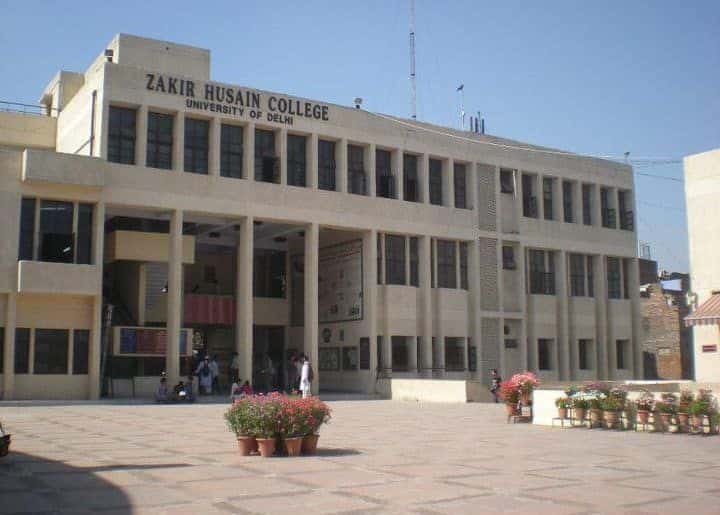
Explore Zakir Husain Delhi College (ZHDC), one of Delhi University’s oldest and most diverse colleges. Learn about its courses, fees, campus facilities, student societies, scholarships, and placement opportunities.

Established in 1792, Zakir Husain Delhi College, affiliated with Delhi University (DU), stands as the oldest existing college in Delhi and one of the most historically significant institutions in India. Originally founded as a Madrasa and later developed into a modern seat of learning, the college has a legacy that spans over two centuries. Located on Jawaharlal Nehru Marg, Ajmeri Gate, New Delhi, it has been a symbol of knowledge, inclusivity, and cultural diversity within the University of Delhi ecosystem.

Accredited by NAAC and recognized by the UGC, Zakir Husain Delhi College offers a wide range of undergraduate and postgraduate programs in Arts, Commerce, and Science, combining academic excellence with a strong emphasis on ethics, research, and social engagement.

Named after Dr. Zakir Husain, India’s third President and a distinguished educationist, the college continues to uphold his vision of progressive education rooted in Indian values. Its long-standing commitment to intellectual growth and nation-building makes it one of the most respected colleges under Delhi University.

Zakir Husain Delhi College Infrastructure & Campus Facilities

Located in the heart of Old Delhi, Zakir Husain Delhi College (DU) offers a well-equipped and modern campus that harmonizes heritage with innovation. The college building, constructed on Jawaharlal Nehru Marg near Ajmeri Gate, houses academic blocks, green lawns, and state-of-the-art facilities.

The campus includes smart classrooms equipped with projectors and ICT tools, multiple seminar halls for academic discussions, and a spacious air-conditioned auditorium used for lectures, cultural events, and inter-college festivals. The library, spread across three floors, holds an extensive collection of books, journals, and digital resources. It features a dedicated reference section, reading rooms, and access to e-resources through DULS and INFLIBNET, ensuring a rich academic environment for DU students.

Zakir Husain College’s infrastructure includes fully functional laboratories for subjects such as Physics, Chemistry, Zoology, Botany, Electronics, Geography, and Psychology. These labs are equipped with modern apparatus to promote hands-on learning and research.

For health and wellness, the college provides a medical room with a resident medical assistant and a visiting doctor. The gymnasium, open to both staff and students, promotes fitness and physical wellbeing. The campus cafeteria serves nutritious and affordable meals, while a State Bank of India extension counter and ATM within the campus ensure easy access to banking services.

In keeping with DU’s commitment to inclusivity, the campus is differently-abled friendly, with ramps, accessible classrooms, and washrooms. CCTV surveillance across the premises ensures student safety. The Chaupal, an open amphitheatre, and the students’ common room serve as vibrant spaces for interaction, discussions, and performances.

Courses Offered at Zakir Husain Delhi College (DU)

Zakir Husain Delhi College, University of Delhi, offers a wide range of undergraduate and postgraduate courses in Arts, Commerce, and Science. The college provides Honours and Programme degrees under the Choice Based Credit System (CBCS) and follows the multidisciplinary curriculum structure prescribed by the University of Delhi.

At the undergraduate level, the college offers B.A. (Hons.) in Arabic, Bengali, Economics, English, Hindi, History, Persian, Philosophy, Political Science, Psychology, Sanskrit, and Urdu, along with B.A. (Programme) and B.Com (Programme) courses. Students interested in Commerce can also pursue B.Com (Hons.), one of the most sought-after programs at the college.

For students inclined towards the Sciences, the college offers B.Sc. (Hons.) courses in Botany, Zoology, Chemistry, Electronics, and Mathematics, in addition to B.Sc. (Physical Sciences) and B.Sc. (Life Sciences). The college’s science departments are well-equipped with modern laboratories, instruments, and research facilities, ensuring that students gain both theoretical and practical exposure throughout their academic journey.

At the postgraduate level, Zakir Husain Delhi College offers M.A. programs in Arabic, English, Hindi, History, Philosophy, Political Science, Psychology, Sanskrit, Persian, and Urdu, as well as M.Com for commerce students. Science postgraduates can enroll in M.Sc. programs in Mathematics, Chemistry, Botany, and Zoology. The postgraduate programs are designed to foster advanced learning, research aptitude, and academic excellence in alignment with the University of Delhi’s standards.

The college’s course structure emphasizes interdisciplinary learning, critical thinking, and holistic education, preparing students to pursue higher studies, competitive examinations, and professional careers across various fields.

Scholarships & Financial Assistance at Zakir Husain Delhi College

Zakir Husain Delhi College provides several scholarships and fee concessions to support deserving and underprivileged students. Scholarships are both merit-based and need-based, ensuring that financial constraints do not hinder academic pursuit.

Recent scholarships include the PM Vidyalaxmi Scholarship, KARM Fellowship (2024–27 Batch), EdCIL Vidyanjali Foundation, and Sathyabama Institute Scholarships for Students with Disabilities. The college also extends Delhi University freeships and government scholarships for meritorious students from economically weaker backgrounds.

Through these initiatives, the college reaffirms its mission of promoting equality, accessibility, and inclusion in higher education.

Extracurricular Activities & Student Life

Beyond academics, Zakir Husain Delhi College is a hub of creativity, leadership, and cultural engagement. The college hosts numerous societies and student organizations, covering areas such as literature, performing arts, social work, environmental activism, and debating.

Societies like the Women’s Development Cell, Green Beans, Equal Opportunity Cell, Consumer Club, and Gandhi Study Circle promote awareness around gender equality, sustainability, and civic responsibility. Performing arts groups, dramatics clubs, and music societies keep the campus vibrant with performances, competitions, and annual cultural events.

The college’s annual festivals and departmental newsletters, including the celebrated college journal “Akademos” (ISSN 2231-0584), encourage academic writing and interdisciplinary scholarship. Through these platforms, students develop leadership, communication, and organizational skills that complement their academic learning.

Internships & Placements at Zakir Husain Delhi College

The Career Counseling and Placement Cell of Zakir Husain Delhi College plays a vital role in preparing students for their professional journeys. It conducts workshops, skill enhancement sessions, and corporate seminars to train students in resume writing, interviews, and career planning.

Recent seminars include “How to Ace the Personal Interview Round” (October 2023) by Mr. Jayanta Saha, “Future of Hiring” (January 2024) by Mr. Akhilesh Kumar (COO, DayZero), and “Understanding Start-up Business Models” (February 2024) by Mr. Arshdeep, Enterprise Head at Digiaccel Learning. Another popular session, “College to Corporate,” was conducted by Ms. Rachita in February 2024.

The college also hosted its flagship Annual Job and Internship Fair – VRITI’24 on 5–6 March 2024, featuring industry leaders, government officials, and recruiters such as Physics Wallah, Axis Bank, Tata AIA, Bajaj Capital, Intellipaat, TCS, Star Health, Hireyy, Lorien Finance, and Metvy among others. The fair connected hundreds of students with internships and full-time placements, reinforcing the college’s commitment to bridging the gap between academia and industry.

Zakir Husain Delhi College has also signed an MoU with Internshala for the 2023–24 academic session, providing structured online internship opportunities for students.

Recognition & Rankings

Zakir Husain Delhi College, as one of the oldest institutions under Delhi University, enjoys a reputation for academic rigor and inclusivity.

  • NAAC Accreditation: Accredited by the National Assessment and Accreditation Council (NAAC)
  • Recognized by: University Grants Commission (UGC)
  • Legacy: Oldest college in Delhi, established in 1792
    The college continues to be ranked among Delhi University’s top institutions for Arts, Commerce, and Science, maintaining a strong record in academics, research, and student outcomes.

Notable Alumni of Zakir Husain Delhi College

Over the years, Zakir Husain Delhi College has produced an impressive list of alumni who have contributed significantly to diverse fields such as education, media, literature, and public service.

Prominent alumni include Sir Syed Ahmed Khan, founder of Aligarh Muslim University; Deputy Nazir Ahmed, renowned Urdu essayist and ICS officer; Ravi Chaturvedi, India’s first Hindi cricket commentator and former faculty member; and Vikas Divyakirti, celebrated educator and co-founder of Drishti IAS.

These alumni reflect the college’s enduring legacy of intellectual excellence, public service, and leadership which are hallmarks that continue to define Zakir Husain Delhi College, Delhi University.

Image Credits: DU Beat Archives

Neeraja Unnikrishnan
[email protected]

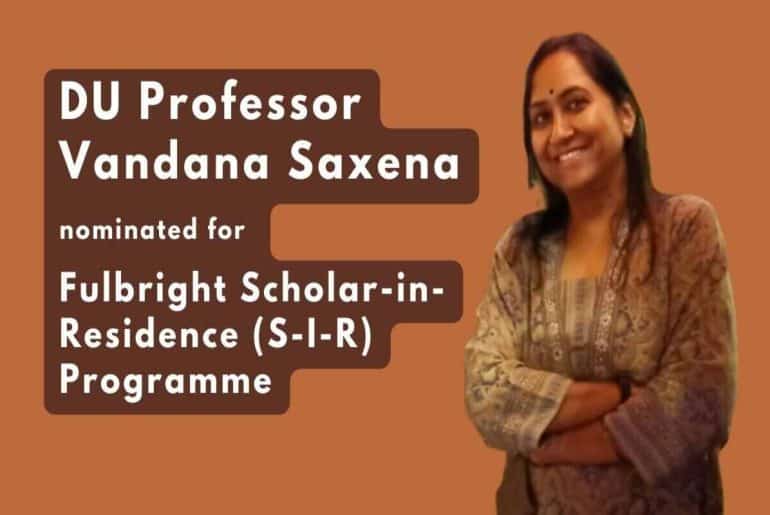
Professor Vandana Saxena is selected for the Fulbright SIR programme. In conversation with her, she tells us about her experience and her perspectives on the pedagogical system. Read ahead to find out more.


Professor Vandana Saxena from CIE, Department of Education, Delhi University (DU) has been accepted for the International Fulbright Scholar-in-Residence (SIR) Programme. Currently working as a Professor at CIE, Delhi University, she completed her post-graduation in Physics, masters in education, and doctorate in science education. She has taught for four years in a school as a science teacher before joining CIE in November 1997. In her academic persuasion to cultivate democratic educational environment, she has engaged with teaching, training, research, and consultations developing research-based and thought-provoking pedagogical designs.

The Fulbright Program is the United States government’s flagship program of international educational and cultural exchange. It is a unique initiative that is specifically driven by the goals of U.S. institutions of higher education to enhance internationalization efforts on their campuses. The S-I-R Program promotes cultural and intellectual diversity among the institution and the wider community. The institution benefits from the expertise provided, and the Scholar attains experience in the U.S. higher education arena.

In conversation with Professor Vandena Saxena, who is a reflective thinker and practitioner, told DU Beat about her attempt to create a harmonious ecology for herself and others around her. With family being her greatest strength, living in the moment, being humble, acknowledging the contribution of others, and always willing to explore a new horizon has kept her grounded in life. On asking about her nomination for the scholarship and her academic work, she enumerated various aspects of her research. Read ahead to know more about her thoughts.

  1. Tell us more about yourself. What is your vision for the future in regards to your academic persuasion?

Personally, I come from a humble background. My parents strongly believed that education has the potential to change our life. I am now engaged as a professor in a public university which is completing hundred years of excellence this year. I have lived every moment in this journey and deep inside I am full of conviction that equal opportunities to access, retention and progression as a systemic approach can create innumerable possibilities for each person. My prime contemplation is on Conceptualizing Research in Education, Driving Research Questions, Academic Writing and Ethics in Research, for which I am conducting workshops with researchers in various universities at Pan-India level. Through this part of my journey I look forward to creating opportunities of academic exchange across the two countries while taking the flavours of India’s rich cultural diversity to the university and community there.

  1. The Fulbright Scholar-In-Residence (SIR) Program is a prestigious program. How was your experience from deciding to apply to getting nominated?

So, I did not apply for this programme.The universities in the United States apply for this programme. The shortlisted application is shared with few countries across the world and the countries nominate candidates as per the requirement of the university. So, the Mississippi Valley State University’s application was shared with the Fulbright Delhi office, which nominated me for this programme. I had an online interaction with the senior officials of the university and finally my nomination was accepted for this programme.

The S-I-R program offers to support up to only three awards each year internationally. So, it’s a very humbling experience for me. I wish to especially mention my guru Prof. Krishna Maitra, for constantly believing in me and showering me with her blessings.

  1. Your research focuses on Diversity Pedagogy and Inclusion, Science Education, and Research in Education. Can you tell us more about it?

My professional journey is founded in reflections and contemplations derived from lived experiences of self and others. I was introduced to the idea of individual differences and the possibilities of questioning the system during my bachelor of education programme. My idea of the ‘whole group as also the whole school’ approach was sowed during that time. Just after completing this degree programme in 1993, I joined as a science teacher in a private school for four years. During this, I realized the responsibility of a teacher as a facilitator for improving the learning curve of each student irrespective of any variations. My doctoral research was thus, about pedagogical planning in science catering to the needs of each student and nurturing the learning experiences of all with a vision of them being adults contributing to a harmonious, peace-loving society in the future.

The university teaching brought forward many other challenges. I was to teach courses aimed at preparing teachers to teach physics from grade six to twelve. The syllabus for the course was almost fifty years old and posed significant challenges. The university system to modify the course was complicated. It took me almost six years to design the new syllabus for this course. Till then, I continued to discuss the themes of critical significance with the students, going beyond the given syllabus.

The journey was getting a parallel initiation into the world of education for children with disabilities. I got immense exposure in this field while visiting the institutions offering teacher preparation courses in this field. Soon, a more updated syllabus for this course was developed and approved through all the channels of the university. As part of teacher education I was also visiting schools to supervise the teaching of trainee students. What I realised there was that private schools had students who were economically well-off and public schools had students coming from socially and economically humble backgrounds. I was able to visualize the complex matrix of factors leading to success in the life of individual students. I had now started thinking about how education can provide the agency to students to optimize their potential. I also observed that teachers in any type of school were working relentlessly to support the educational experiences of the students. So, for me the prime question was that even with motivated teachers and enthusiastic students why the educational experiences were compromised.

  1. Can you tell us about the developments in your research?

I developed an approach to teaching with the title Diversity Pedagogy.  This is founded in the conjecture that the belief system of all the stakeholders in education (at any stage) holds the key to success. I have founded the guiding principle as ‘unconditional mutual respect’ for each other. I am constantly trying to imbibe the basic principles of togetherness and hand-holding in any situation. I have designed courses with the theme Inclusion, School & Pedagogy; Inclusion in Education: Context and Continuity for the students of two year M.Ed. programme. The pedagogy for these courses is based upon a grounded theory approach. The students while discussing their lived experiences attempts to theorise the major dimensions of understanding and appreciating diversity in any given context. Their critical engagement with these ideas facilitates the process of imbibing the art and science of reflective practices. The research conceptualized and completed by the students exemplifies this claim.

  1. Is there any piece of advice that you would like to give to your students?

I grew up in a different era altogether and am not aware of typical challenges in the life of youth these days. Yet, I wish to share with them that it is true that I am extremely fortunate to be surrounded by a group of people who love me and always pray for my well-being, but I have faced a lot of criticism and rejection in my life both on a personal and professional front. I did feel alone and infringed but such is life and such are people. I have bounced back with more resilience each time. So, keeping us grounded with an unshakeable belief in self is critically essential, constantly trying to be a better version of ourselves is the key and then gradually even those negative experiences and people stop bothering. With humility and unconditional love for each other we can make it a better place for each other. Let’s try once!

Read Also: Scholarships That Every Third-Year Should Apply for

Featured Image Credits: Jagran Josh 

Ankita Baidya

[email protected] 

The writer complains about the scholarship not being advertised in the papers.

The Rhodes Scholarship is one of the most coveted awards for international study. It opens the door to the University of Oxford for post -graduate courses ranging from Master’s programme or a research degree to a second undergraduate degree. Innumerable students from all over the globe aspire to win recognition and financial aid through this medium. Initiated in 1902, with the vision of Cecil Rhodes, it has been extended to Commonwealth countries including India.

The selection process for Rhodes begins in the month of august by which candidates are required to submit their applications. These applications must include an essay mentioning the aspirant’s strengths, weaknesses, goals, career aims etc. The application should include recommendations from six close acquaintances, three of whom the applicant ought to have studied under. One passport size photograph, age certificate, evidences of courses taken and other academic distinctions obtained are also required.

While nominating the committee regards the qualities and ethos that Cecil Rhodes held dear. A Rhodes scholar is expected to posses an exemplary academic record complimented by striking sport skills. Character, compassion, leadership ability, morals and ethics are indispensable tools of their armory. Short listed candidates are then called for a preliminary personal interview, after which the selected candidates face another interview in December which forms the final leg of the selection. The chosen candidates join the esteemed club consisting of dignitaries such as Bill Clinton and Bill Gates. The essence of Rhodes Scholarship is the promise of a life full of opportunities!