Tag

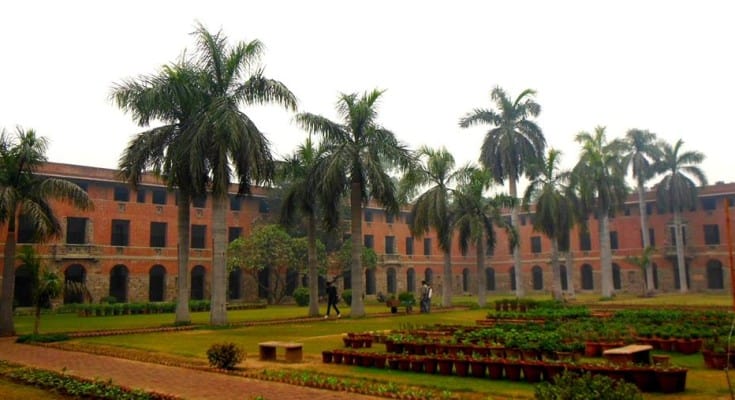
Miranda House

Browsing

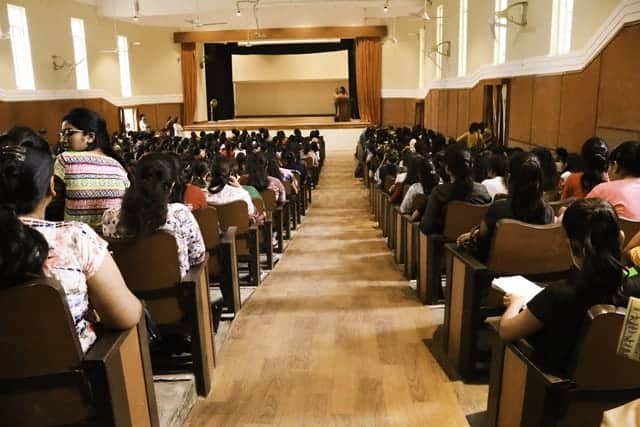
In a session today, AISA-CYSS and NSUI presented their election manifestoes in Miranda House. The Miranda House Student’s Union elections were also held.

Half an hour after noon today, the Miranda House auditorium was abuzz with students who had come to hear the candidates for various student’s unions making their election speeches. After the Miranda House Student’s Union elections (MHSU) candidates made their election speeches, representatives from AISA-CYSS and NSUI came forward for their campaigns.

Abhigyan, the AISA-CYSS Presidential candidate said in his campaign speech, “There is a narrative which has happened that university-level politics is very self-centred and is used as a stepping stone for advancing a person’s career, we are trying to change this narrative. Why shouldn’t there be a narrative where we can talk about politics? We are trying to build a Union which is not going to dictate the students.” Abhigyan raised several issues like financial autonomy, the use of muscle power and the masculinity that has crept up in politics. He also talked about how AISA had helped in building a girls’ hostel in Hindu College, fought for metro bus passes as well as campaigned against financial autonomy.

Abhigyan was then questioned extensively by the students who asked him on AISA’s stand on gender discrimination committees, why AISA was fielding a male Presidential candidate and so on.

After that, NSUI’s student candidate for the Vice-Presidential post, Leena tried to present her manifesto. However, some of the students of Miranda House opposed her before she could say anything, demanding that she leave the podium and that she was not “fit to be contesting elections.” Amid massive booing, Leena talked about the NSUI’s stance for women empowerment, to make University of Delhi (DU) an Institute of Eminence which would bring in public funds, to launch a thali for students worth 10 rupees, etc. Leena, who is a graduate of Miranda House, claimed that she used to “stand outside the gate of Miranda House regularly and campaign.” However, many students shouted that they hadn’t seen her outside the gate. She was also called out on her claim of not distributing any pamphlets in her name, what she would do on her part to change the politics of the University, and the fact that her name was changed from Leena to “A.A. Leena” in an alleged claim for getting the first ballot. Although Ms Leena tried to defend her position and that of her student union, the students booed her off the stage.

Ambica, a Miranda House student said, “The girl from NSUI didn’t have answers for anything. She just repeated a few things that she had been told to say. But it wasn’t surprising because once your party member has been accused of molestation and rape, there isn’t much that you could say.”

Muskan Dhar, the Vice-president of Women’s Development Cell of Miranda House, when asked if the booing was fair, said, “We heard Abhigyan and he was pretty correct in saying that the ICCs are not functional. As an ICC candidate, I know the kind of resistance we face in having meetings. The candidate from NSUI, however, did not have any proper manifesto. How Miranda reacted to it was two-fold. Some of it was justified since we know of the increasing violence around the campus, but I think we could have channelised our concerns in a better way.”

No official candidate of ABVP showed up and no official reasons were submitted for. Later in a notice released by the Staff Advisors of Miranda House, it was informed that the ABVP candidates would address the students of Miranda House tomorrow at from 12:45 to 1 p.m.

Feature Image Credits: Mahi for DU Beat

Sara Sohail

[email protected]

In a rather sorry state of affairs for the Students’ Union of Miranda House, University of Delhi (DU), no one is contesting for the posts of President and General Secretary while one student each filed their nomination papers for the posts of Vice President and Central Councillor.

The Miranda House Students’ Union will not have either a President or a General Secretary for the academic year 2018-19. The Union will only consist of the Vice President and Central Councillor, who are interestingly running for their respective posts unopposed. The reason? No one else wished to run for the Students’ Union.

At the outset, it might seem like there is a lack of initiative from the student community of the college. However, questions have been raised about the availability of information regarding the process of filing the nomination papers and other nuances of applying to the Students’ Union. Ayushi V., a third-year student told DU Beat, “How is it possible that no one is standing for the highest post in the Students’ Union? The truth is we were not informed about how to apply for the Students’ Union. The notice boards did not contain the timeline for filing the nomination papers and no message was circulated about the same.”

Priyanka Choudhary who filed her nomination for the post of the Central Councillor said in her manifesto reading, “Main Waade Nahi, Iraade Lekar Aayi Hoon.” (I’m not here to talk about promises. I’m here to talk about my intentions). However, when asked about the exact duties of a Central Councillor, her answer did not seem to satisfy the audience. Vanshika Mishra, a second-year student of the college told DU Beat, “This student is so ambiguous in her statements. It is just sad that we don’t have a choice but to accept them as our representatives.” Notably, Priyanka had stated in her speech, “A vote for me is a vote for you.” Ironically, it is dubious whether the students will find scope for a ‘vote’ here since Ms Choudhury is running unopposed.

Snimar, the only student who filed her nomination for the Vice President’s post, was asked whether the fact that she is running unopposed will affect her position or the influence that her position wields. While she did not answer the same in specific terms, she told DU Beat, “Since I am not sure about the level of competency of the student who is running for the post of Central Councillor, I will request the Principal to appoint volunteers who will work for the Union.”

When the DU Beat correspondent approached a senior member of the college administration, Mr Jagdish Prasad, and asked him how the college union will function with only two members, he hesitated to comment and simply stated, “We will find out a way.”

Asmita Kashikar, the former Vice President of the MHSU said, “I think it is really sad that no one is standing for the post of President this year. I believe it is mostly because of the attendance issues. But also, during our tenure, we removed the foundation of any form of corruption for the national student bodies in our college. That is why they couldn’t come up with any candidate that they could support.” She concluded on a positive note, “Let’s hope that these two candidates who are standing do justice to their posts.”

While this situation in one of the most reputed and politically active colleges of DU is displeasing, can it entirely be blamed on the student community? Allegations have been made regarding a serious lapse in the discourse of information about the Students’ Union applications. Can student politics in the college retain its democratic character when students are deprived of a real choice in choosing their representatives? Only time will tell.

Feature Image Credits: India Today

Vaibhavi Sharma Pathak

[email protected]

With yet another academic session coming to an end at the University of Delhi, it is time to let nostalgia get you over and look back at the year that has gone by, before all of us get busy with semester examination preparation and some of us eventually leave to charter their career paths. Going by the thought, DU Beat brings to you its exclusive series ‘Colleges’ Round Up (2017-18)’ where we present the highlighting incidents of numerous DU colleges that took place over 2017 and 2018.

From launching apps for the ease of the students and teachers together to getting ranked #1 by NIRF, here are the highlights of 2017-18 session of Miranda House in our exclusive College Round-Up Series.


Feature Image Credits: Miranda House

Radhika Boruah
[email protected]

Anukriti Mishra 
[email protected]

It is the season of examinations, and along with it, is also the season of uncertainty and apprehension for the students who frequent their colleges like a blue moon frequents the sky.

 According to the Varsity mandated rules, students of the University of Delhi (DU) need to maintain at least 67% attendance in order to sit for the end semester examinations. For those who don’t, pleading the professors to consider their Extra Curricular Activities (ECA) attendance, or visiting a shady doctor for a medical certificate are some of the extreme choices one has, since the college is technically bound to act under the rules of the University and detain those with less attendance.

Things look especially uncertain for the third year students in some colleges, like Miranda House, as they have been told that they won’t be able to sit for the examinations if they do not have the required attendance.

In South Campus, Sri Venkateswara College has not been given the admit cards till now. Prabal Khatri, President of Sri Venkateswara Students’ Union, told the DU Beat correspondent, “There are no issues for third year students. Earlier, the 67% attendance requirement used to apply to the final year students as well. But this year, our Union has been able to bring it down to 0%, providing huge respite for them.”

When asked about whether the college administration is lenient for the first and second year students as well, Khatri remarked, “For them, even if the required attendance is 67% according to the Varsity mandated rules, our union has brought the benchmark down to 35%. However, there are some students who never show up to class, neither do they have ECA’s, nor medical certificates to justify their low attendance. Those people are of course not given the admit cards.”

In Miranda House, a meeting to determine whether third year students with below 40% attendance will receive their admit cards is slated to be held. While in the past years, the administration would not withhold the admit cards for the final year students, this year, the college has constantly maintained, right from the beginning of the semester, that they would be more stringent with attendance requirements, even for final year students.

In a phone call conversation with the correspondent, Mahi, a final year student from Miranda House remarked, “The final year students have coaching and have to prepare for entrances. So the administration is usually more understanding with us. However, I do not know about the changes brought about this year.” Since none of the final year students have been given their admit cards till now, a cloud of uncertainty looms over their futures.

It is to be noted that, amidst the first and second year students who have already received their admit cards, there are students with attendance below 40%, who are still struggling to get their admit cards. A member of the college administration told DU Beat on condition of anonymity, “Even as the college is prepared to be flexible with the final year students, we have instructions to be uncompromising with the first and second year students.”

Nestling in the heart of North Campus, is Shri Ram College of Commerce (SRCC), boasting cut-offs that rise as high as 99.25%. SRCC is surprisingly not as strict as some of its neighbours in campus, when it comes to attendance issues.

The Corporate Communications Head of the Students’ Union, Shrimann Adhith, held that until last year, the 67% requirement of attendance in order to be eligible to sit for the exams was not followed. It is only from the current academic session that students require the aforementioned percentage of attendance to get their admit cards. Shrimann went on to say, “Even if they do not maintain the required attendance, the students would eventually be given the admit card. However, they would be made to sign an undertaking.”

Sonul, a sports student from Gargi College, does not seem stressed about getting her admit card. She says, “If any of the third year students does not have the required attendance, they will be made to sign an undertaking. At the most, their parents will be called. But they will eventually be allowed to sit for the exams.”

Contrastingly, in Keshav Mahavidyalaya, Himansh Pandey, current President of ‘Anhad’, the Music Society of the college, told  DU Beat, “even if you are a part of a cultural society, you do not get ECA attendance. After a lot of protest, the Principal promised us that they will bring down the bar of required attendance for students of cultural societies to 30%. However, for other students, 67% attendance requirement is strictly followed, without which they do not get their admit cards.” However, he also added, “The worst case scenario is that your parents are called. But the final year students are given the fated sheet of admittance even if they have to stand in lines from 9 to 5, and fight with the administration.”

For the students of Lady Shri Ram College, things appear uncertain as there has been no word from the administration. When the DU Beat correspondent asked Amita Yadav, the President of the college, whether the third year students with below 67% attendance would be allowed to sit for the exams or not, she said, “There has been no word from the side of the administration till now.”

One common trend witnessed in most of the colleges is the lack of communication from the side of the administration. With less than 10 days left for the exams, students are still uncertain about whether they would receive their admit cards or not.

With most colleges having already celebrated their farewell, is this lack of communication justified? As the final year students gear up to step into the outside world of jobs and higher studies, isn’t keeping them second-guessing about their examinations a sheer lack of transparency?

These are some of the questions we need to pose to the administration departments of the colleges.


Feature Image Credits: HansIndia

Vaibhavi Sharma Pathak

[email protected]

The Gender Equality Mela of Miranda House 2018 was celebrated with a great degree of success with on 4th and 5th of April.

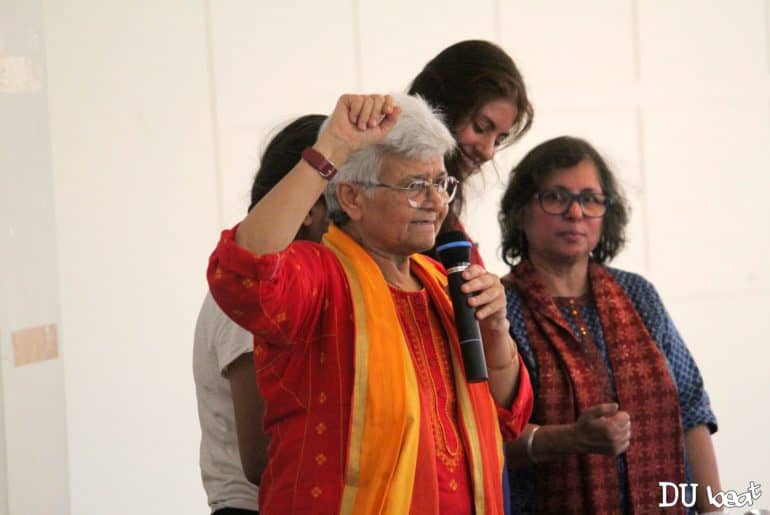
Day one started with an interactive session by renowned feminists and social workers Kamla Bhasin and Suneeta Dhar who discussed various meanings and strands of the larger women’s movement. On their insistence, the students engaged in a highly stimulating session on their everyday stories of resistance.  In the second session of the day, Bijaylakshmi Nanda, Associate Professor of the Department of Political Science at Miranda House, Divya Vaishnava, a social worker and founder of BUD Foundation, and Preeti Choudhury, author and lecturer, talked about various ways in which the culture of accountability can be remoulded in the context of sexual harassment and the issue of consent. It was followed by a round of Q&A with the audience that led to heated debates between the panelists and the students.

The speakers attending the third session were journalists Rakhee Bakshee and Richa Aniruddh who talked about the stigma surrounding female journalists and their work in the media in a session titled “What’s on Screen? Gender and Media”. Both of them highlighted the various biases they have had to confront during the years in their career ranging from adhering to a perfect body to ignoring sexist comments while pursuing a story. They concluded, after a vigorous Q&A session, that although there have been changes in the media now, women who are going to pursue this career still have a long journey to endure.

The day ended with a roundtable session between the representatives of Internal Complaints Committee from various colleges such as Kirori Mal College, Hindu College, St. Stephen’s, Ramjas, Shri Guru Tegh Bahadur Khalsa College, and Miranda House, talking about the institutionalised sexual violence in the University space. The session was moderated by Titiksha Vashisth, a Masters student from JNU and a Miranda House alumnus. The students discussed the structural problems regarding the functioning of the ICC such as an unhelpful administration while recognising that there is a need for the larger issue which is battling patriarchy and talking about sexual harassment.

The second day saw a series of interesting panel discussions again. The first event was an interactive session on the stories of acid attack survivors. Acid attack survivors Chandrahas Mishra and Ms. Geeta shared their stories of survival and dealing with the stigma that came with the horrific incidents that occurred with them. Mr. Mishra, a member of Acid Survivors Foundation India (ASFI) and an activist,  pointed out the difficulties that survivors face in getting treatment, overcoming their mental and physical trauma and seeking support from the government. Ms. Geeta also shared her story of courage and resilience and how ASFI helped her recover from her incident.

The second session was on ‘Women in Conflict Areas’. Rita Manchanda, a well-known journalist and research scholar, Mehroosh, a student of psychology of law at Jamia Milia Islamia and Samreen Mushtaq, a doctoral candidate at the Department of Political Science at Jamia Milia Islamia, were the speakers for the panel. In an intense, emotional session the speakers talked about the various shades of problems and identities that women grapple with in conflict-ridden areas with special reference to the Kashmir dispute.

The third session was on ‘Masculinity and Consent’ which was on various facets of the gender roles attributed to men and how consent plays a role in our everyday lives. The panel consisted of Suraj Pawar, social activist and program coordinator of Azad Foundation, Pavel Sagolsem, research scholar and program associate at Centre for Health and Social Justice and Dhruv Pandey, Assistant Professor at the Women’s Studies and Development Centre, University of Delhi.

The last panel discussion of the day was on the challenges faced by the LGBTQIA+ community, the speakers being Aroh Akunth, a Dalit and queer activist and member of the Queer Collective at Ambedkar University, Ritambbara Mehta, the co-founder of Nazariya and Rudrani Chhetri, a well-known transgender activist from Delhi. Kabir Trivedi, the founder, and president of the Miranda House Queer Collective moderated the session. The discussion veered towards the queer and Dalit politics in India especially the issues of identity, harassment, and marginalisation these communities face.

The two-day festival ended with a screening of Anurag Kashyap’s That Day after Everyday, an award-winning film on the problems faced by women every day in public spaces. The Gender Mela was deemed to be a success by all the members of the Miranda House Women’s Development Cell as well as the audience present.


Feature Image Credits: P.V. Purnima for DU Beat.

Sara Sohail
[email protected]

The Minister of Human Resource Development (HRD), Prakash Javadekar, announced the 2018 National Institute Ranking Framework (NIRF) rankings at an event in Vigyan Bhawan.

The Ministry Of Human Resource Development’s National Institutional Ranking Framework (NIRF) ranked Indian Institute of Science Bengaluru as the overall best institution in the country. At an event in the Vigyan Bhawan, the Minister of Human Resource Development (HRD), Prakash Javadekar announced the NIRF rankings wherein, Indian Institute of Management (IIM) Ahmedabad was declared the best management institution and Indian Institute of Technology (IIT) Madras bagged the position of best engineering college. In the University Rankings, IISC Bengaluru stood first, followed by Jawahar Lal Nehru University (JNU), and Banaras Hindu University (BHU). The premier healthcare institute All India Institute of Medical Sciences (AIIMS), Delhi, was ranked the number one institute under the medical college category. University of Delhi’s Miranda House, situated in North Campus, was announced as the best college, and National Law School of India University (NLSIU) Bengaluru, stood first in the law school category.  Other eminent colleges of Delhi University, like, Hindu College, Lady Shri Ram College for Women, and Shree Ram college of Commerce were also part of the top 10 colleges in India for the year 2018.

This year, NIRF added medical, dental, architecture and law categories in its rankings, apart from the other four categories of 2016, Universities, Engineering, Management and Pharmacy. A total of 4000 institutions had applied this year, in comparison to the 3000 that were considered last year. The rankings have acquired much significance as the performance of the institutions is linked the “Institutions of Eminence” scheme.

The top 5 colleges given are:

1. Miranda House, University of Delhi

miranda

Image Credits: Miranda House.


2. St. Stephen’s College, University of Delhi

St.-Stephens-735x400

Image Credits: St. Stephen’s College.


3. Bishop Heber College, Tiruchirappalli

TY04COLLEGE hindu

Image Credits: The Hindu.


4. Hindu College, University of Delhi

hindu-college1 hindu college

Image Credits: Hindu College.


5. Presidency College, Chennai

446237-presidencycollege dna india

Image Credits: DNA India.


Feature Image Credits: Miranda House.

Oorja Tapan

[email protected]

Tempest 2018 organised by Miranda House comes to an end, here are some highlights from the last day of the festival:

The third day of Tempest 2018 was full of excitement and enthusiasm around the campus since it was full of extremely entertaining events like panel discussions, the most anticipated western dance competition, and the much awaited star night, with the headlining act being Siddharth Mahadevan.

In the midst of the hustle bustle of events in the three-day Tempest, Miranda House Vatavaran, the Environment Society of Miranda House organised a unique but considerably salient event. It was a competition wherein participants had to depict environmentally-conscious ways of having fun. They were allowed to use music, choreography and enactment to put forth their renditions. The judges of the event were Dr. Amrita Tripathi Sheikh and Dr. Bani Roy, professors at Miranda House. A total of 10 teams participated, some of which presented self-composed poems on varied topics like eco-tourism and eco-friendly college fests.

The Entrepreneurship Cell of Miranda House invited three proficient panelists to share their experiences of living the “start-up life”. The panel included personalities like Tanya Kathpal, founder of ‘Eat My News’, who engaged the audience in a gripping discourse on how she began her start-up and the kind of obstacles she had to overcome in order to further the same. Among the panelists was Nikhil Chainani, founder and CEO of ‘Perspectico’, who talked about taking risks and dealing with rejection while being an entrepreneur. The third panelist was an alumni of the University of Delhi, Neha Gupta, who shared her experiences of working on projects from diverse fields and handling stress while starting off your own business.

The main highlight of day 3 at Tempest 2018 was the Western Group Dance Competition, Burlesque’18, organised by Tanz, the Western Dance Society of Miranda House. Judges Sarthak Chauhan and Tarun Sharma chose Crunk, the Western Dance Society of Sri Aurobindo College as the winner. Crunk performed on numbers like Buleya, Deapacito and Malhari. The second position was shared by Misbah of Sri Guru Gobind Singh College of Commerce and Zeal of Maitreyi College. Misbah and Zeal thoroughly entertained the audience by dancing on peppy numbers like Ishq Di Gali Vich No Entry, Finesse, Tan Tana Tan Tan Tara and Tum Tum. The teams were given cash prizes and accolades. Maharaja Agrasen Institute of Technology’s western dance society, Funk in Action, was much appreciated by the judges for their enthusiasm and innovative use of musical instruments like Dhol. Following this, another round called ‘Bipolar Round’ was held with the participating societies performing on songs on the spot. Electra of Motilal Nehru College emerged as the clear winner who danced on famous songs like Shape of You, Lahore and Shaguna. The Bipolar Round was conducted to evaluate and judge the spontaneity of the participants.

Tempest 2018 was concluded by the enchanting performance of Siddharth Mahadevan, a playback singer known for singing Bollywood numbers such as “Sarfira” and “Nachde Ne Sare”. The curtains of Tempest 2018 closed in an exquisite manner with songs which varied from aesthetic ones like “Mere Rashde Qamar” to new-age chart toppers like “Tukur-Tukur”. His versatility was on complete display as he could switch languages seamlessly since he crooned to Ed Sheeran’s “Shape Of You”. As he moved from “Channa Mereya” onto more light-hearted numbers, “Koi Kahe Kehta Rahe” this performance was an instant hit with the young crowd, and the perfect way to conclude the three-day festival.

Feature Image Credits: Ayush Chauhan

Kinjal Pandey

[email protected]

Prachi Mehra

[email protected]

Vaibhavi Pathak

[email protected]

Bhavya Banerjee

[email protected]


Tempest, the annual cultural fest of Miranda House kicked off today morning with the theme of this year’s fest being “The Future of Fun”. The theme was prominent across all the decorations spread across the college, and the enthusiasm of all cultural societies to organise successful events was applause-worthy. A myriad of events took place today – Indian Music group, solo classical performances, folk dance performances, and more.

The day began with Orpheus, the Western Music Society of Miranda House organising A Capella, the western music competition (group), wherein each team was given 10 minutes to put forth their rendition. Team ‘Echo’ from Jesus and Mary College bagged the first prize, while the second position was bagged jointly by ‘Dhwani’ of Shaheed Sukhdev College of Business Studies, and the Western Music Society of Lady Shri Ram College. Team ‘Euphony’ of Gargi College came a close third in the same. In their second event, ‘Euphony’s Solo’, Aronjoy Das from SBS triumphed over 12 other participants and bagged the first position, while Gatha Akashmani from Hansraj College and Jannis Joe from Jesus and Mary College bagged the second and third positions respectively.

In the Battle of Bands competition organised by Orpheus, seven teams from across universities competed to gain the top spot. Common Thread, a from Shaheed Bhagat Singh College performed their original composition titled, Rahein. Backbeat, a fusion band of Ramjas College thrilled the audience with peppy jugalbandi of tabla and guitar. Musicians Dan Thomas and Joshua Peter judged the competition.  Backbeat from Ramjas College emerged as the winners. Musoc from Kirori Mal College and Commonthread from Shaheed Bhagat Singh College came 2nd and 3rd respectively.

Jigyasa, the Quiz Society of Miranda House organised multiple quizzes as part of Tempest 2018. In the first quiz, which was themed around mythology, the cross-college team consisting of Bishal Kumar, a student of the Department of Buddhist Studies and Durgesh Rai, a student of Dyal Singh College bagged the first position. The second position was secured by a team comprising of Kuchi Sri Harshvardhan and Yatish. The third position was sealed for the rather vibrant team constituting Jignesh M. E. and Nayan Kumar.

In the Cinema Quiz, the team comprising of Tushar Anand and Amit Sinha secured the first position. Ankur Agraj and Priyam’s team came second by a close margin while the team consisting of Amlan Sarkar and Shatabdi Singh bagged the third position.

The Folk Dance Competition was organised by Mridang, the folk dance society of Miranda House. Nrityakriti from Maitreyi College achieved the first prize while Annhad from Daulat Ram College and Etram from Sri Guru Tegh Bahadur Khalsa College shared the second prize.

In Sangam, the Indian Music Competition organised by Geetanjali, the Indian Music Society of MH, the first rank went to Alaap of Sri Venkateswara College, whereas the 2nd position was jointly shared by Alankar of Hindu College and Alahyaa of Daulat Ram College.
Swaranjali, the Music Society of Hansraj College bagged the third place.

Tempest 2018 Day 1 drew curtains on a high note with an electrifying performance by the band Parashara, that enthralled the audience with songs like “Fitoor”, “Rock On”, and “Dil Se”.

Feature Image Credits: Akarsh Mathur

Vaibhavi Sharma Pathak
[email protected]
Niharika Dabral
[email protected]

Bhavya Banerjee
[email protected]

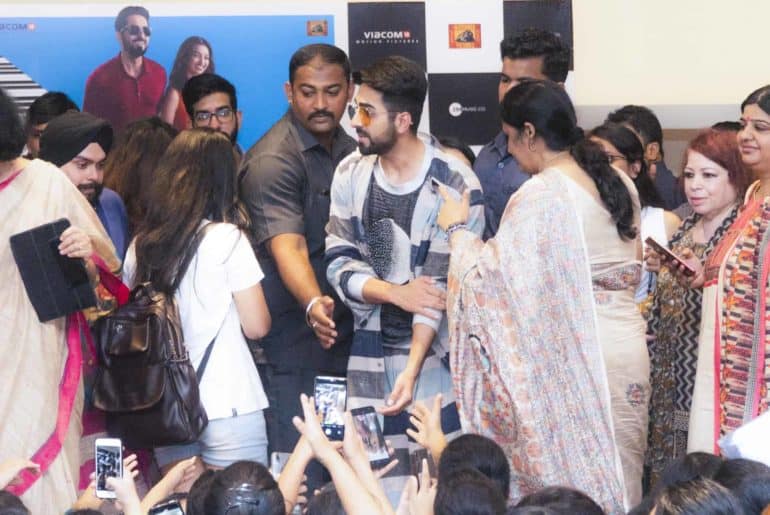
The Indian writer Anuja Chauhan visited the University of Delhi campus to endorse her new publication, Baaz, on 25th August, 2017. Her three-tier book tour encompassed stops at Gargi College, St. Stephen’s College, and Miranda House.

The day started off from Gargi College at 12:30 p.m. She was welcomed enthusiastically at one of Gargi’s lecture halls by the English Department teachers and students. Ms. Chauhan was introduced as the renowned author of Those Pricey Thakur Sister, The House that BJ Built, and The Zoya Factor, and the winner of various accolades. Followed by the introduction, the author read an excerpt from her new book with all the rhetorical expressions and dramatics including on the Hindi dialogues. The author walked down the memory lane and reminisced of her school days, the fun of an army childhood, her Miranda House memories, and giving advertising a try as a job because it helped her to write which is what she always wanted to do. She confessed that she chose Economics for ‘keeping her options open’ as was the trend those days and being job-oriented unlike the ‘career-oriented’ kids these days.

Ms. Chauhan emphasised that she didn’t release her book, whose story revolves around an Air Force guy, at this time when there is a wave a nationalism in the country, but it usually takes a year or two for her to complete a book. This was followed by an interactive question-answer round where she expressed her dislike for Jane Austen’s Pride and Prejudice for the message it proffers. She commented that ‘creative artists should only create and not give their political opinions’ in lieu of her contemporaries. At the end of the discussion, she let her fans buy their copies and signed each one’s copy. Everybody left happy from the book discussion and she for her next destination, St. Stephen’s College.

Ms. Chauhan has incorporated the Stephanian persona in most of her characters like Ishaan from Baaz and Dylan in Those Pricey Thakur Girls. She spoke to the crowd about this, saying that most of her family members, including her husband and daughter, went to St. Stephen’s and this provided her with a familiar attribute that could be assimilated into her novels. She spoke of Baaz and explained how she related to the protagonist Ishaan in the Air India Force due to her much similar army childhood background. She also justified why she decided to kill off Ishaan (yikes!), saying “A happy ending doesn’t necessarily mean a glorious one and even if you do think it is necessary for a glorious ending, I think Ishaan had his fair share of glory. And it is also necessary for a light reading to have an undertone of dark narratives, similarly how the brightest lights also bear the darkest shadows.”

Like Baaz, she also mentioned that most of her other works were partially autobiographical because they were a product of much of the things she had experienced in life. There was a question and answer round that followed where she answered the queries of all the zealous fans, with witty and chuckle-some responses. This was followed by a round of photographs with the fans and an interview for the English Literary Society Journal. Next, she headed to her alma mater, Miranda House.

Chauhan’s experience at Miranda House was memorable. She walked around campus and took pictures with the iconic red brick walls. She happened to pass by the classrooms she sat in, and remembered the time when she flunked her Microeconomics paper back in the first year. Before heading to the venue for the talk, she stopped by the canteen and sampled the good ol’ samosas which she remembers gorging on during her days as a student. Her talk with the students was an interactive session where she answered questions about her life in Miranda House, her memories of North Campus, her career as an advertiser to an author, and her story characters that have been picked up from her life. She then went on to talking about how authors should not be labelled, as she has often been labelled as a ‘chick lit’ author. She went on to say that as an author, if one is labelled then they are not able to expand their writing genre, that is why Baaz was a masculine addition to the stories she wrote about women in Those Pricey Thakur Girls series and The Zoya Factor. Anuja Chauhan also placed great emphasis on the importance of strong female protagonists in all her books, each of them, being people whom she has encountered in her own life. The session went on with laughs, smiles, and candid secrets about her life. Everyone was completely enamoured by Anuja Chauhan’s exuding charm and grace (along with the very quirky outfit!). The session ended with a lot of chatter, book signings, and pictures. As she walked towards the gate to return, she again walked by those corridors and those lawns, which signify innumerable memories she created in those ‘red brick walls’.

SONY DSC
SONY DSC


Feature Image Credits: P.V. Purnima for DU Beat


Trishala Dutta 

[email protected]

Prachi Mehra

[email protected]

Rashim Bagga

[email protected]

Joyee Bhattacharya

[email protected]

Having launched an app to ensure the convenience of blind students, Miranda House has now come up with three different apps to make college work easier for students and teachers alike. The college is ready to go live with the apps from the new academic session of 2017-2018.

The apps are called Event Hub, SmartProf, and InfraCare. Following are the details:

Event Hub:

> Students who head societies, unions, etc can book venues to organise and conduct events through this app.
> Similar interface lets one choose between the Seminar Hall, Auditorium, Heritage Hall, and Student Activity Centre.
> The app notifies one whether a venue is booked, or if an event taking place there is open or closed.
> Event posters have to be uploaded at the time of booking.
> The app also allows requisitioning of PA systems and other equipment.

Infra Care:
> Through this app, anyone can lodge a complaint about infrastructure issues in the college and the hostels.
> As proof, a photo legitimising the complaint has to be uploaded.
> Status of the complaint is shared with the complainant.

Smart Prof:
> Students and teachers can view attendance records, curriculum, and lecture locations.
> Teachers can take attendance on the app and the students can view it.
> Timetable and lecture timings can be set by the teachers.

The apps have been designed so as to cut down on red-tape and involve the students in the functioning of the college. In a statement to the Times of India, Dr. Pratibha Jolly, Principal of the college, maintained, “We are committed to building a technology-enhanced active learning environment, and realising innovatively the full potential of IT in education.”
With inputs from the Times of India

Feature Image Credits: DU Beat

Swareena Gurung
[email protected]