Tag

interview

Browsing

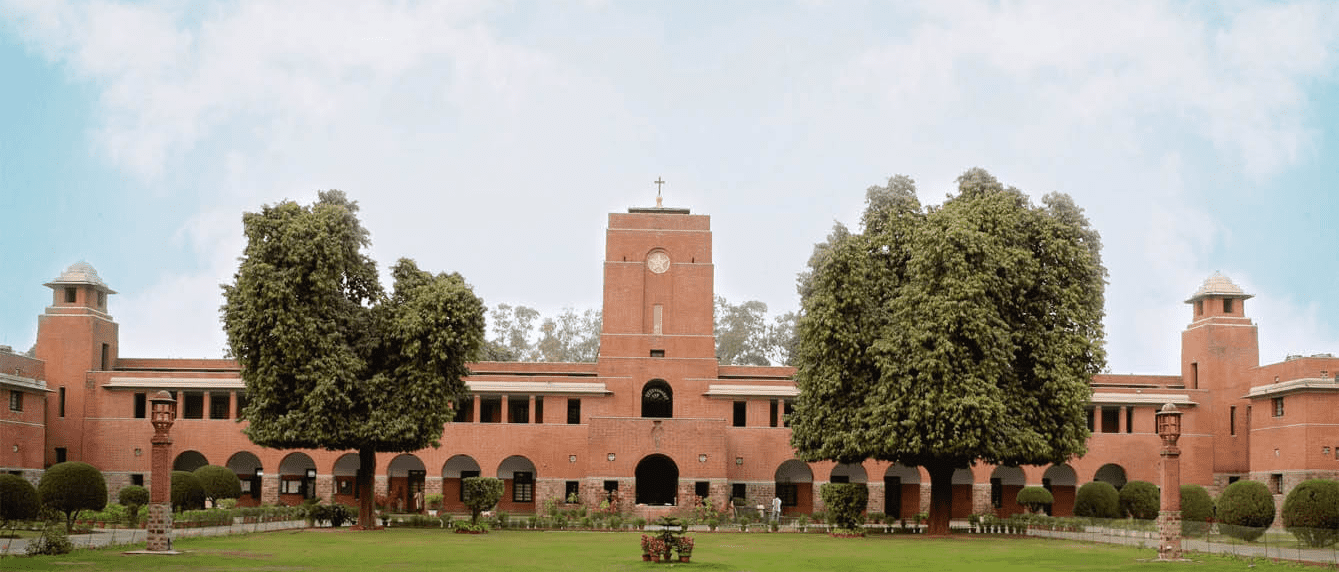
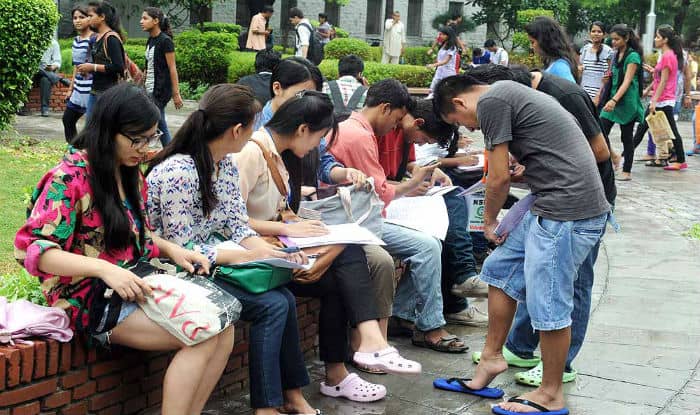
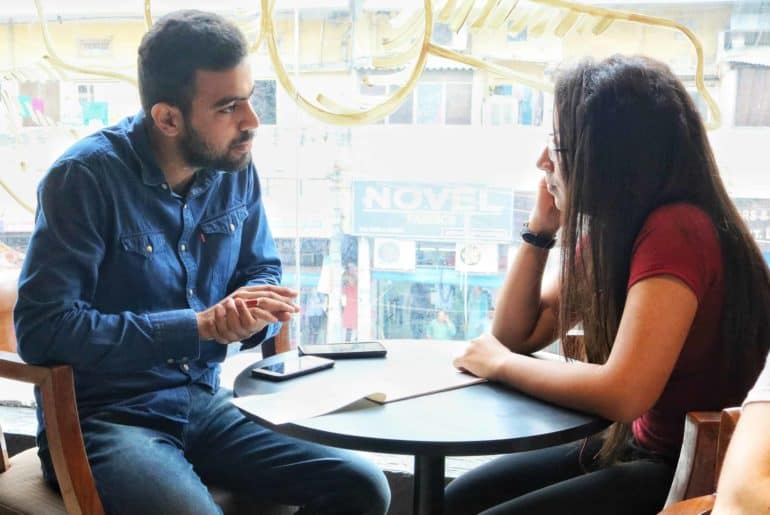
St. Stephen’s college is the only Delhi University college to conduct interviews as part of its admission process. If you received a call letter and your interview is scheduled for the coming days, this article can help you ace it.

A member of the admissions interview panel at St.Stephen’s said, “The interview process for each subjects differs from others. Each department has a different interview panel. For science subjects, teachers look for students with an aptitude for science and related fields. For subjects like history, you look for students who are interested in the subject, who has read up on it a little beyond what the textbooks prescribe and shows an ability to read about political developments and comment interestingly on the texts one has read.”

Reminiscing her interview, Trishala Dutta, a 3rd year English honours student from St. Stephen’s says, “They asked me questions regarding the books I have read that had been part of my syllabus, earlier in school. I was questioned on the discourse of the texts, and my opinions on it.” The following pointers contain all the information you need to know:

1. Carry all the necessary documents: Those students who have already submitted their original documents to save a seat in another DU college can submit the photocopies of their documents. They might have to sign an undertaking that they will submit the originals within one month of admission, however, that only happens once the candidate has been selected after the interview round.

2. Read up on your course: Most often, college interviews are a test of your knowledge. So it is important not just to read to be well-informed about the course you are applying to, but also to ascertain the specific part of that course you are more interested in. For instance, if you are applying for a B.A. History (Honours) it is important to know what period, what kind of history you are more interested in. That will show the admission officers you have done your homework.

3. Make eye contact: Do not be nervous. Take the interview as a conversation you might have with your relatives on topics that you might have with someone whom you have met for the first time. It is ideal to make eye contact with the interviewers as it exudes confidence and sincerity.

4. Think before you speak: Often in our haste to answer questions, we stumble in between our sentences, using pause fillers like “umm” and “err” that will only make our thoughts look incoherent. Gather your thoughts and then answer.

5. Be yourself: Admissions officers have done thousands of interviews and can see through students quicker than psychologists. So, don’t tell them you live for the love of science unless you have a backyard science project to show them. It is better to be honest and truthful as lying in an interview can cost you heavily.

6. Prepare for the general questions: Here is a list of general questions that the interviewers normally ask students:
Why did you choose this course?
Why did you choose this college?
What are your passions, your hobbies and your interests?
What are three interesting things about you that I wouldn’t know from your application?
How do you intend to use your college education to achieve your future goals?

DU Beat wishes you all the luck for your interviews!


Feature Image Credits: Hindustan Times

Sara Sohail
[email protected]

This spoken word poet from Gargi College went on to win the National Youth Poetry Slam in India in 2016 and also represented India in Chicago’s International Poetry Slam competition. Here are excerpts from our rendezvous with Diksha Bijlani:

Q. How did your National Youth Poetry Slam victory and subsequent presentation at Chicago’s International Slam CUPSI feel like? Has the power of your reach and the charisma of your personality dawned on you yet?

Diksha: My Gargi college team and I went to National Youth Poetry Slam (NYPS) content with being part of a space that, for the first time, was going to celebrate spoken word poetry. It felt like a gift, to be able to share stage with the top college teams from around the country, with a spoken word collective from Pakistan, with featured poets from India and beyond. So when the moment of winning came, it felt unreal. We had this huge-ass trophy to fly from Bangalore to Delhi, and every moment of explaining the airport staff or fellow passengers how exactly three tiny girls ended up with a huge golden trophy on this IndiGo flight, was blissful with the memory of it.

But if NYPS was a gift, CUPSI Chicago was a reward. Each moment of being appreciated there as the Indian team, each moment of sharing space with an entire diaspora of poets and listening to their stories, every moment of hearing “Oh, are you that Indian poet from Button Poetry?!”, felt rewarding. Weeks of practices that led to NYPS that led to Chicago led to us being in that moment, and I had nothing in my heart but gratitude. Our feature at the finals in Chicago even received a standing ovation! We were part of a brown poets meet over there, and we witnessed Haiku slams and Nerd slams. At the CUPSI finals, we also witnessed the entire community standing up against a white entitled something called Marc Smith who has been called the founder of slam poetry. His poem was deeply problematic, and all the finalist teams decided to withdraw from the competition that year as a revolt against the organisers for inviting him to perform. We made poet friends from around the globe, who are currently the most positive people in our life.

The power of this reach instills gratitude in me because it invokes the realisation that there are now more people I can help, or support with words. Each time someone at a slam tells me they find solace in my art, or that they started performing poetry because of me, it is a humbling realisation of my potential to empower- and that is what keeps me going on days I don’t feel the most poetic.

Q. How has your journey of founding Slip of Tongue been like till now, along with performing with your collective at various places? 

Diksha: We started Slip of Tongue with a vision to connect more people with this art form, and also to experiment with spoken word and music through collaborations. The journey has been very enterprising, we have done workshops and shows across Universities, and also continued to organise our own official events called ‘Slips’. Fourth Slip was held just recently, and it surpassed our expectations with more than 120 people showing up just to listen to poems, music, and us.

Q. You have often spoken about your high-functioning depression, when did you first realize it and how have you dealt with it? 

Diksha: I realised I had it last year, primarily when I noticed that my achievements and professional success did not make me happy. I was a productive, well-performing, and to some extent even overachieving individual, but most of it felt like a coping mechanism to ward off the emotional turbulence inside. And when the day was over and the show was done, I returned to bed at night with this persistent void inside of me. One of my ways of dealing with it was to write and perform my poem ‘High Functioning Depression’. Another way I have tried to deal with it is to practice gratitude constantly and towards the smallest of positive things I witness every day.

Q. How do you think the culture and scenario of spoken word differ in India and Chicago? Do you see slam poetry becoming a profession in India anytime soon?

Diksha: I think a major point of difference is representation. The spoken word community in the US has much more representation across communities and especially oppressed communities, but in India, this proportion of representation is something we are yet to attain. Although we have made great progress on some ends, and there are a lot of women at slams telling their stories. But this representation still needs to percolate more to queer poets, Dalits, Muslims, queer Dalits, people with disabilities, non-English spoken poets, and all other underrepresented communities.

It already is a profession, and there are many campaigns that are now employing spoken word poets for their execution. It is yet to be seen as a profession yet, which I think will happen over time with more and more organisers paying the artists they call to perform, and better-prized competitions coming around.

Q. If spoken word ever becomes a profession, would you take it up full-time?

Diksha: I have chosen the path of public service for myself, and while poetry is very poetically a kind of public service too, in the next few years the public policy is going to be my primary profession of interest. I will never stop doing spoken word though, and even for the next few years, it is going to be a second profession for me. In the late future, I might take up teaching spoken word full-time for a while, or organising international spoken word events in India.

Q. What do you think of the recent developments in Shamir Reuben’s case?

Diksha: The revelations about him have made us realise that sexual predators in safe spaces are the hardest to spot. This has made us take conscious efforts now to spot this behavior, call it out, and reinstate poetry slams are safe spaces. For the same reason, the Slip of Tongue event that happened right after was a fundraiser with an NGO called Sayfty that trains women against sexual abuse. The community as a whole has become cognizant of this, and we are trying to do better every single day since.


Feature Image Credits: Paul Finney for NYPS

Prachi Mehra
[email protected]

In August 2017, Prakriti Sharma along with her teammates Raghav Shadija, and Ankita Grewal were declared as the Asia-Pacific Regional winners of GOMC (Google Online Marketing Challenge) – a renowned and coveted competition on a worldwide scale. They were felicitated at the Google Offices, in an all-expenses-paid trip to Singapore. We had a quick chat with Prakriti, where she told us the nitty-gritties of competition and her learning experience out of it.

Q1. What are you doing currently?

I graduated from Maitreyi College with a B. Sc in Physical Sciences. I was offered a job through college placements but I resigned within two months. In the meantime, I did freelance projects for clients of different levels in varied domains. I was also offered jobs from CVent, OYO, and other startups, but they didn’t pan out because I felt that I should not rush into another job and be patient. Later, I was offered a job at Gartner for the role of a Marketing Analytics Specialist, which I readily took. Being a fresher, this is the best opportunity I can get.

Q2. How did you come to know about this competition? How did you go about it, whilst managing college?

I got to know about this competition through regular Google surfing. I decided that I wanted to take part in this as I was interested in marketing, despite being a student from the science background. The competition was about Google Adwords, and understandably, it was necessary for us to study extensively. Since I’m very active on LinkedIn, I contacted the previous global winners of the competition and sought advice on how to choose clients and what kind of a business the client should be engaged in. Soon, we developed a strategy according to the finalised client, but because of this, we had to miss internals and classes, something which I was habituated to by then. (laughs)

After submitting a pre-campaign report with the background of the company, we were supposed to run a 21-day campaign on a limited budget. Since the semester exams were coming close, we had to manage exams alongside the campaign. Following an amazing experience of 3 weeks, we had to compile all results in a post-campaign report. It involved mentioning our strategy, weekly reports, results, how much were we able to fulfill, and our learning component out of the competition.

Q3. What was your learning experience from this competition?

I worked with people whom I had never known, and this opportunity was the biggest I’ve ever gotten. Since the platform was Google Adwords, we could not have gotten hands-on experience on it otherwise. We had to work and collaborate with clients and stay within a budget constraint.

It was an amazing experience where I put theory into practical use as I could point out the many loopholes in AdWords by the end of this competition. At the end of the first week’s campaign, we couldn’t fulfill our targets. But, we searched and devised our own optimization tricks and tiny things we would not have noticed otherwise, to get the results to vary drastically. Like this, we discovered many tricks and we finally achieved the desired result by the end, which exceeded our estimations by a huge margin. I’m now able to implement this concept and make sure of the loopholes in my freelancing projects.

Additionally, I’ve learned Facebook PPC and LinkedIn advertising as well, and now I’m involved in company branding. I realised my love for marketing because I tried my hand in so many related activities in my first year in college. Even in my job interviews, I was mainly asked about my role in the competition and the interviewers judged my resourcefulness and interpersonal skills, the campaign problems and how I overcome them.

Q4. How did DU help you in this experience?

In DU, I definitely got a lot of exposure in varied activities. I participated in an umpteen number of competitions and grew personally through every opportunity. If you are active, some teachers do support you in the process. I got to represent my college in a Himalayan conclave in the 2nd year,  that was funded by DU. I also founded a society called Vaigyanik in college to bring all the projects of science students under one umbrella. Many teachers questioned and resisted, but there were many at the same time who helped me and supported me despite my absence in classes. This number of opportunities is certainly not available in other universities.

Q5. Do you have any piece of advice for freshers?

Google has scrapped this competition, but AdWords digital training and video courses and certifications are currently available on the GOMC website for free. Many such online marketing and case study competitions keep happening, for which you have to surf on your own, as such provisions are not provided by DU. I would advise students to go for as many startup events, corporate conferences, and case study competitions as possible. It helps immensely if a student is active on LinkedIn and is able to network and connect, as it helps in personal branding and profile building. Summer schools are also a good option, provided the budget is sufficiently available for that. Subscribing to newsletters and websites can assist one’s search for international events and competitions on a global scale. It only helps if students keep an eye out for as many opportunities as possible.

Q6. How was your experience at the Google Office, Singapore?

We were invited to stay at Singapore for a week’s time in January, where we were felicitated with google merchandise and official recognition as the regional winners of GOMC. After the presentation round of our campaign reports and journey as a team, we were acquainted with the Google office and given umpteen office tours. Sessions were held, and we interacted with Google employees who had been working with Google for the past few years. Soon after that, we began with the much-awaited Singapore tour. All in all, It was a brilliant experience to be a part of.


Feature Image Credits: Akarsh Mathur

[email protected]

Interview by Vijeata Balani

[email protected]


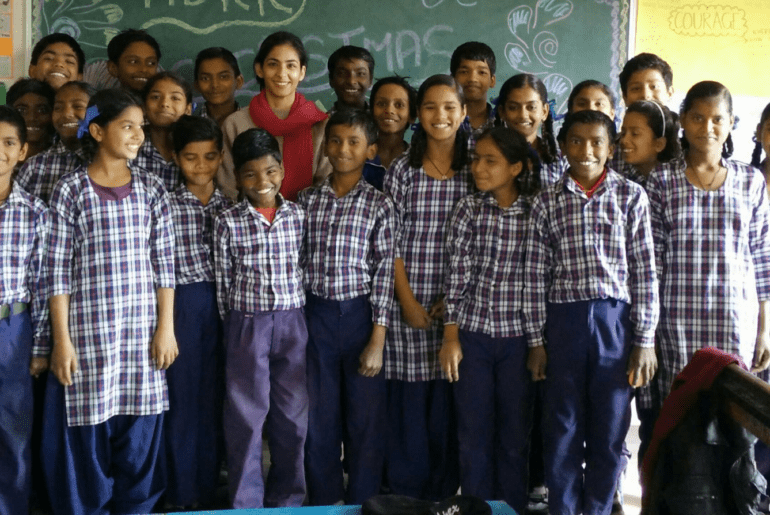
Born and brought up in Delhi, 24-year-old Mallika Arya took the fellowship of Teach For India (TFI) with the humble thoughts of bringing a change in the lives of underprivileged children. She did her schooling from Vasant Valley School and graduated in B.A. Psychology Honours from Lady Shri Ram College for Women. She worked with TFI for two years before taking a gap year to travel. She is currently pursuing her masters in sustainability from the University of Sydney.

In conversation with her, she answered these questions:

Q. What made you decide to join the fellowship?
A. I was a volunteer in a TFI classroom when I was in college and also a part of Project Leap (which later became I Foundation) and that’s when I decided that I wanted to do the fellowship once I graduated. I wanted my own class, my own students, and I wanted to create the change that I had seen in so many classrooms with TFI fellows. I worked with the mindset that I would lead the change and create magic for those kids. I came out of the fellowship with a totally different view – I only went in there as an enabler,and in the end I didn’t create the magic. The kids did it on their own, and the journey with them was life-changing not just for them but also for me.

Q. What challenges did you face and how did you overcome them?
A. The challenges I faced included not being accepted by some stakeholders. I was extremely lucky to have a co-fellow who had similar dreams. Both of us worked hard together to build relationships with the other teachers. We would make conscious efforts to sit with everyone else during break time and share our ideas, lesson plans, and assessment sheets. Another challenge for us had been to get the parents of the students to understand some of our unconventional teaching methods. There were regular community visits and we were often involved in calling the parents and going home for surprise visits or even just inviting the parents to come and sit in some of the classes.

Q. When did you start seeing changes (that you set for yourself) in your students? Could you recall any exact moments?
A. Looking back at the fellowship now, I think the kids taught me more than I taught them. They taught me to be patient and brought out a creative side to me which I didn’t know even existed! I hated math and science in school, maybe because of the way it was taught, but those were my favourite lessons with my kids. We would go outside and study under the trees. We started a little community garden to see how we could make compost with food waste and that really showed the kids that the solutions to a lot of problems can be found in the little things we do everyday. There were difficult days as well, but on those days it was the kids who pushed me through the rough times.

Q. What did you learn from the fellowship and the children? How did the fellowship help you in your next steps?
A. The fellowship was monumental in helping me decide what I want to do for the rest of my life. It was through our science lessons that we really started to dive deep into environmental issues around us today. I started doing extra research and we spent days following the COP21 news and hours learning about waste and pollution. My kids understood it all so well and wanted to do something about it so badly that it made me introspect my role towards saving the environment. I was immensely passionate about it, and here I am now doing my masters in sustainability in Sydney! It all goes back to my experiences in the classroom and if I hadn’t been a teacher to those 25 amazing little beings I don’t know where I would be today!

Inspired by Mallika’s story? Apply to be a fellow. Last date of application is 4th February 2018.


Feature Image Credits: TFI

As reported by a leading daily, an associate professor at the University of Delhi has filed a written complaint to the Vice-chancellor alleging discrepancies in the admission procedure for PhD candidates in the Urdu Department.

Khalid Alvi who is an associate professor at Zakir Hussain College(Morning), and a renowned Urdu poet and critic, has cited irregularities in the admission procedure with respect to disregard of a meritorious female student whose name was not included in the final list of candidates selected for Ph.D course in Urdu, under the Department of Urdu, Delhi University. Adding on, he also pointed out that his signature was removed from this final list. Regarding the same, he has sent an email and a follow-up letter to the Vice-Chancellor requesting urgent address and seeking permission to file a FIR on the matter.

Speaking to Indian express, he claimed that one of the faculty members taking interviews of shortlisted candidates pressurised the girl to apply for the M.Phil. course over a PhD Agreeing to the professor’s claim, the girl told Indian Express, “When I refused the professor’s offer of taking admission in M.Phil., he told me he would hit me with hard questions during the interview. I was asked questions as if I had applied for a faculty member’s position.”

When DU Beat approached Dr Ibne Kanwal, Alvi’s colleague and Head of Department Research Committee(DRC), he dismissed these claims and said, “It’s not necessary that every gold medallist can perform well in interviews. She performed poorly, and Dr Khalid Alvi himself arrived late. He also left early, and hence his signature was not present in the final list, whereas the rest of the committee have theirs.” The entrance exam for admission into the course was conducted on 5th July and interviews for shortlisted candidates held on 30th August. The final list of selected candidates for PhD in Urdu was released on the DU website on 5th September and the admission procedure for the same was on until 15th September.

Feature Image Credits: India.com

Vijeata Balani
[email protected]

Mythology is a subjective truth. Every culture imagines life in a certain way.”- Devdutt Pattanaik

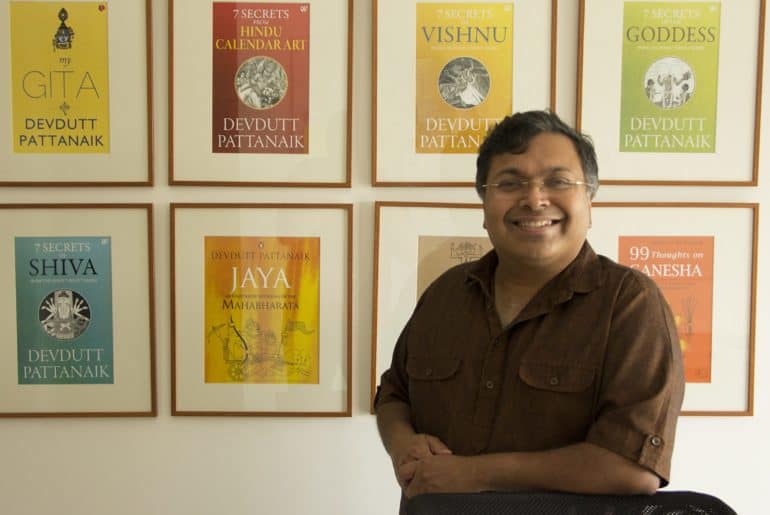
Mythology has always fascinated me. Indian art and culture has ever since been rich, but more and more people have  now started indulging into our myths. My quest to learn more of mythology led me to interview Devdutt Pattanaik, a medical doctor by education, a leadership consultant by profession and a mythologist by passion. He has authored books like My Gita, the Leadership Sutra, Myth=Mithya and many more. Here are the snippets from the interview:

  1. A doctor by education, but a mythologist by passion: so, when and how did this journey start?

It was just a hobby for weekends. But gradually my ideas  turned into strong views. This led to articles  eventually becoming lectures, and when it became financially viable in 2008, this became a full-time vocation. It was all organic. It was just hard work, maximum utilisation of opportunities, and a neat stroke of luck.

  1. It takes a lot of effort to travel to different places of India collecting myths and stories; so how does this entire process work?

Most myths are in fact available on the internet, and before that in libraries. Tonnes of people have already researched on them but they write only for academics, not for common people. Or, their knowledge is restricted to a narrow field of study. I broadened the base and made it accessible for common people.

  1. Have you considered visiting places in Southeast Asia like Cambodia, to find different versions of our Hindu myths? Angkor Wat has many stories, so does Sri Lanka. 

One had to do that in the 19th century, but not anymore. As I said, much information has already been gathered but is badly structured and presented,  hence, not many understand the patterns. For example, Hinduism is present in Southeast  Asia but you do not sense “bhakti”, or the essential power of devotional music, as the flow of ideas to the these regions was restricted before 1000 AD.

  1. Presenting our myths in their foreign versions world be interesting, so why haven’t we tried that?

We may not like these versions. The Hanuman of Southeast Asia is not celibate or devotional. He is a wild and funny rake. You don’t feel the underlying principles of the Upanishads, which means Agama or the Puranas are not amalgamated with Nigama or the Vedas, as they are in India. So they are very yet very different.

  1. In your book Shikhandi, you talk about the queer. How do you think the yesteryear’s myths can influence the present day Indian society?

In the past, people followed whatever was convenient . If you left India during those times  and crossed the sea, you lost your caste and religion. Which means the migrants couldn’t call themselves Hindus. But, we don’t follow these old codes, do we? Likewise, in past, women were considered inferior to men, incapable of achieving spiritual wisdom. We don’t believe that anymore. In the past, we believed there were three genders: male, female and queer. But this idea faded away in British times. And now is being seen as a Western import.


Feature Image credits: Devdutt.in

Radhika Boruah

[email protected]

In a country where the music industry focuses on making party songs with arbitrary lyrics, The Local Train is a refreshing change. The band started out in 2008, and has only gotten more and more successful since its inception, with a huge fan following that love the artists for their out of the ordinary music. We got a chance to chat with them before their gig at Farzi Café, CP about their upcoming album. Here are some excerpts:

Your song Khudi is a juxtaposition between reality and dreams, what is the message behind the song?

Paras: I think the purpose of the song is very clear in the video. Like if you daydream, and ultimately you fight for it, and then you get it. That’s what the video is about, and the song is on similar lines.

Raman: The song is about everybody who is fighting to get something, or fighting for following what they want to do. It is basically about finding your true calling, basically and Khudi as a concept means ‘self-actualisation’and that’s what it is. You figure out what you want to do and actually go ahead with it. We’re just really glad that people relate to the song.

Tell us about your upcoming album that is releasing in September. Have you guys decided on a name yet?

Paras: No, no. We haven’t locked down on one single name yet. I think we’ve written five songs and then we have 3-4 more songs to go. We’ll have a clearer idea where we’re headed in totality with this album, and then we’ll bounce off a few names again. We have a lot of ideas written down and a lot of thought are going to come in now, so we are not following one set theme.

Raman: We don’t have a general concept for anything, we just keep writing songs, like we keep playing them. I think we’ve rejected more songs then the songs that are already made it to the album which is something we’ve never done before. I think the general idea would be that we’re just writing songs because we are also going through a lot of stuff as a band, and not a lot of infra there in the country to supoort band music. There is Khudi, then there’s one that we just finished called Mere Yaar, then there is song about non-believers, there is a song about traditions that don’t make sense anymore in the modern world, there’s one about two-faced people, called Dil Nawaaz.

Your music videos frequently feature aspiring artists and unexplored talent like Ryan Matyr in Jiyen Kyun, Faizan Th in Yeh Zindagi Hai and Arjun Mathur in Khudi. Is there a reason behind this or is it unintentional?

Raman: Gareeb hi gareeb ko samajh sakta hai.

Paras: Just to clarify, Arjun Mathur is not an underground talent. He is out there and he has done more things than we have. Other than that, we have always felt that is it more important to hang out with like-minded people and it would be more fun to work with them.

Raman: And we’re very glad that whatever we’ve done, with Ryan, with Faizan, and now with Arjun, all the things have worked in their own space very nicely. Which makes us believe that we should keep doing it, like go and look for people who are doing good stuff and then ask them like ‘Hey man, you want to collaborate?’ because it is a collaboration, if you really look at it, between the band and the director and the producer and the talent that is in the video.

Ramit: We have always believed in working with people that we connect with and that we like, and they need to like us back. We need to have the same thought process, we need to be looking at the same things.

Paras: I mean, that being said, we’re not closed to working with stars. If tomorrow Deepika Padukone calls, I am not going to say no.

You guys released your first album in 2015, but you’ve been a part of this industry for a long time now. Do you feel like there is a lack of investment when it comes to indie music?

Ramit: Yes, definitely. It is a cottage industry still. It is in the metros but it is still a cottage industry!

Paras: That’s a very good analogy!

Raman: There is a lot of talent in this country, a lot of kick-ass bands in the country. But the problem is that people are more interested in Bollywood music because it gets them more money. If you’re an independent band, you really have to figure out on your own, because we work as a mini label only. We write our own music, we produce our own music, there’s no one putting money behind us. Because all the money that we go and make in our shows, we put that money on music and videos. And we run it like a label, like we release our singles, we plan our tours out, we plan our gigs out. And I think, that is the only option an independent band has.

Paras: A lot of people think that, ‘Oh! Your life must be so chill, you don’t have a day job’ but it is not a just a day job, it is a day and night job. It is a full-time job, because after you’ve made the music, what do you do? You have to take it out somehow, you have to tour the country, you have to go door to door.

Your song Aaoge Tum Kabhi was featured in the movie, Angry Indian Goddesses. Do you feel that as a band it is important to be featured in mainstream media?

Paras: I think it is important to find an audience, it doesn’t matter how you get to them, through a movie or through whatever. It is important to find your audience and the people who are going to like you for what you do. And we have always made exactly what we wanted to make.

Sahil: The song, exactly how it was released, that’s how it has gone on the movie as well.

Raman: And that’s why we respect the team of AIG, because they fought for our cause and a lot of things.

Do you feel mainstream music curbs creative freedom for aspiring musicians?

Raman: It couldn’t curb our freedom. If you’re true to yourself and you know that this is going to work and you’re honest, then it is going to work. Nobody is going to curb it.

Ramit: If somebody wants to use that as an excuse, then they are more than welcome.

Paras: I don’t think we should generalize it like that. It all depends on who you’re working with in the industry. Like, as long as we have our creative freedom, we don’t mind working with Bollywood. As long as they don’t was us to do a Holi song in March. They will curb your creativity if you let them, basically.

Delhi University is a house to budding talent and music societies and they contribute to DU’s vibrant culture. So what would be your message to these aspiring artists?

Paras: Brace yourselves, guys.

Raman: As a band, the four of us, we run our lives as a school of learning. If you’re always learning and if you’re true to yourself, you are going to get somewhere. Just try to gather as much as you can, the world has changed, the time has changed, the dynamics of the industry has changed and music also has changed. So you really have to be aware about what is good for you and what is not, like a small thing can be fruitful for a very short period of time. Like, for the four of us, our calling is to make our own music.

Paras: And creatively, please don’t try to sound like somebody else. Try and be as original as possible. Sound exactly like yourself, because no one else can sound like you and that’s very important. Our true calling is that we really like creating music. And that is the only thing that has worked in our favour. So please, focus on creating original content and no matter how good or bad that is, you can never out a price on it. It is yours.


Image Credits: Nischay Chabra


Anagha Rakta
[email protected]

Srivedant Kar

[email protected]


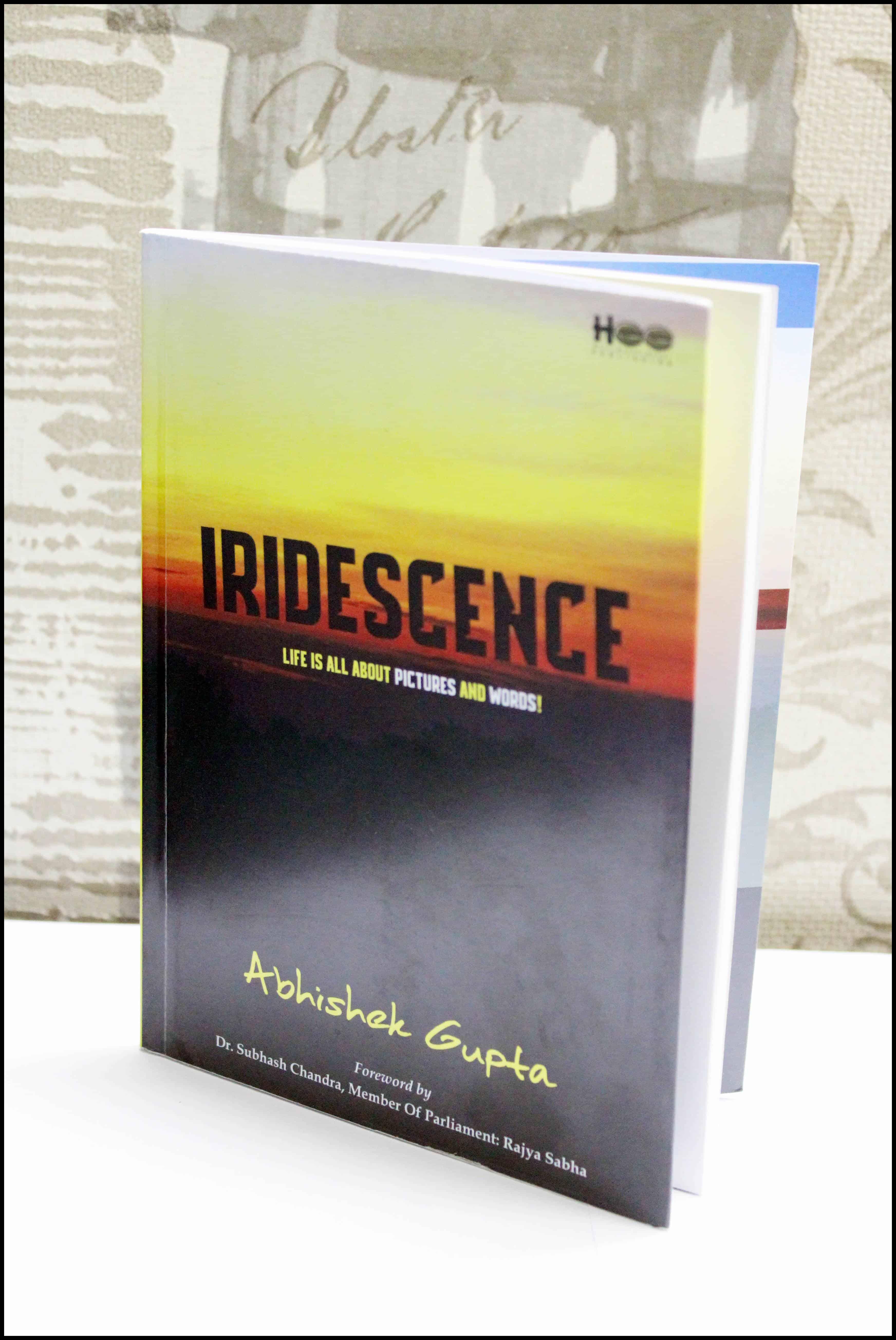
Writing is liberating, empowering and a life changing experience but not many get the opportunity to showcase the same to the world. Presently working at McKisney & Company, Abhishek Gupta is an Economics major from Kirori Mal College who stands as a young example of how to make one’s dreams come true via writing. Author of India’s first ever travel photo-poetry collection – ‘Iridescence’, we got an opportunity to have an enlightening conversation with him about his dreams, aspirations and his current calling. Excerpts:


Q1. Being an Economics Major from Kirori Mal College, how did the idea of penning down a book come up?

Abhishek: Every person has this childhood fantasy, mine was to grow up and write a book. So as soon as I found an idea which could make a difference to Indian Literature, the first thing I did was to write the book.


India's first travel photo poetry collection, ‘Iridescence’
India’s first travel photo poetry collection, ‘Iridescence’


Q2. The title of the book – ‘Iridescence’ literally means a lustrous or attractive quality that changes with the change in the angle of view. Metaphorically, why did you choose this title and no other?

Abhishek: Travel changes you.  It makes you look at things differently. In Iridescence, I have tried to voice and give vision to different junctures of my journey of self discovery and my discovery of the world. This book would mean different things to different people. It may make you reflect, introspect, awaken, love, invigorate and hope. It may make you look at the same poem differently as you read it at different points of your life. This is a book to tuck under your pillow on cold lonely nights and it is also a book to flip through on a fresh refreshing morning.

Your perspective will define what Iridescence ends up meaning to you. And thus, what better way to sum this photo-poetry book than to call it ‘Iridescence’?


Q3. How did the idea of juxtaposing photography and poetry in a single book come to your mind? 

Abhishek: I had been an avid writer since school. In my first year college I started doing photography. I was away to Africa for an internship around that time where sitting by the beach I was writing poetry. That’s when it struck me that it would be a great idea to combine photos and poetry in a book. It took me 3 years since then to materialise the book.


Q4. Most of your poems are an inspiration picked up directly from nature. Any story behind this you’d like to share with us? 

Abhishek:When I started with photography, I clicked nothing but flora, and then slowly started clicking landscapes. Nature inspires me the most, and I particularly write the most when I am travelling. I strongly believe that nature has the power to amaze you and has a lot of wisdom to impart to you about life.


Q5. What motivated you to travel and pen down your thoughts in the form of poetry? 

Abhishek:My primary motivation to travel was to get out of my comfort zone and to experience life and different ways of living beyond my confines. I wanted to breathe the air of new places and collect moments worth reliving. Photography was also one of the major reasons triggering all my travel.

Soon after, I discovered, Photo-poetry was the perfect medium to make a picture and moment eternal for myself and as well as for the readers. And then the camera didn’t stop clicking and the pen kept scribbling onto the pages of my travel journal.


Q6. Do you think poetry as a form of writing needs a new lease of life? What are your comments about the culture of poetry that we have in the country today?

Abhishek: I think we are at a very unique point in the history of literature where we are heading towards digitalisation and experimenting more than ever before. Poetry in India too needs innovation to enhance its market and appeal. It no longer needs to be about being free verse or sonnet or a haiku. It could be in different patterns, in various styles, lengths and on any particular theme.

I think the poetry scenario in India is reforming and broadening its horizons. There are slam poetry sessions every weekend, blogs and Instagram flooding with new budding Indian poets more than ever before and a wider acceptance of new forms of poetry. It is a privilege to witness such a rich growing poetry culture in our country.


Q7. Being a young author, you must have faced many unprecedented challenges and obstacles in the path of getting yourself published. Any anecdotes or important advice you wish to pass on to our young readers and aspiring authors?

Abhishek:Poetry is something that is very close to the writer, so I think the first obstacle is making peace with the fact that you are opening yourself to the entire world.  So don’t be afraid to opening yourself up to the world.

And then the second obstacle is apparently finding a publisher. So all I would say is that if you reach out to 50 publishers, only 5 would respond back and 1 will for sure accept your idea, and that is all that will make a difference.


Q8. In a collection of more than 30 poems, which poem is very close to you or has a special place among the plethora of experiences that helped you collate this book?

Abhishek:Each poem is very close to my heart, so it would be very unfair if I choose one. But if I have to choose, then it would be ‘Probably Exuberance’. Because that was the first photo-poetry I wrote, and that’s where Iridescence started.


Abhisheks book has been received very well and has also become a top-seller on Amazon in its genre. We wish Abhishek all the very best for all his future endeavours!  


Riya Chhibber

[email protected]

College is a great time to explore and discover one’s passions. The experiences, adventures, and occasional escapades enjoyed are perfect shapers and nurturers of one’s innate talent. While most are exposed to the opportunity of taking on something new, only a few actually have the dogged determination to pursue their interests and persist in only getting better along the way. Siddharth Singh and Prakhar Maheshwari from Wannabe Anonymous are perfect examples of how a passion identified and shared in college by two like-minded people can be transformed into a rewarding side-career:

Q: Let’s hear about you from you. Take us to the beginning.

Siddharth: Prakhar and I are from Delhi College of Arts and Commerce. We studied Economics, and met in our second year of college. We both had an interest in comedy. We used to follow and share videos of Kenny Sebastian and Vir Das. Inspired, we decided to actively venture into the niche comedy scene. Initially, we wanted to convey our comedy through the medium of nukkad natak, but then we decided on stand-up comedy instead.
Prakhar: Yes, because sense prevailed! (laughs) We figured that the latter form would be more apt, especially in the initial stage, because we weren’t very sure about our content. The reception and response to a stand-up gig is more encouraging as it helps you gauge the demands of the audience and learn what works and what doesn’t. We decided to combine our humour and thus, Wannabe Anonymous was born.

Q: You’ve put yourself in an extremely competitive field, which is only growing by the day. At any point in your journey till now did you find yourself questioning your instincts and giving up?

Siddharth:  After conceiving ‘Wannabe Anonymous’, we applied to perform at Rendezvous 2015. The video we sent to them got rejected. But we didn’t let that bog us down. We performed our first show at a café in Hauz Khas Village.
Prakhar: Towards the beginning of our show, the crowd was thin. But after a while, the café started filling up. That really encouraged us. We were really happy with the way we performed that day.
Siddharth: But then when we had to upload the video of our show online, we realised that we were capable of much better. We had second thoughts and didn’t want to put the video up.
Prakhar: However, we decided to learn from our experience. That video made us want to do better and strive to achieve the level of comedy that we knew we could create. We faced some lows. We do so even now. Instead of letting that pull us down, we like to let that motivate us to do better.
Q- Tell us about your most successful and special show?

Siddharth- I remember Indraprastha College for Women as a fantastic show. We had prepared a script for 25 minutes and the show went on for 45 minutes. It was the kind of show we live for.

Prakhar- It was all impromptu. The audience was very engaged and responsive, it was the kind of connect that we always aspire for.

Siddharth- I think it had to do with something that I like to call induction. It’s like when the first five minutes of the show go well, then automatically the chances of the whole show going great goes up. That’s why before starting we try to the get the audience riled up and get their attention.

Q- How do you do that? Are there any tricks?

Siddharth- I do this stupid thing – and Prakhar hates me for this – where I just ask the assemblage to show us how to clap, how to whistle etc. Basically we just make them look at us, ensure their attentiveness, and get them energised.  It works.

Prakhar- Once you have the audience hooked, your lamest jokes will work. I find this phenomenon worked with Kenny Sebastian often. Once during his gig, Kenny simply said that “I’m going to shave.” and the people went berserk. He just said “I’m going to shave”. It wasn’t a joke, but it was still funny. That’s the kind of charm we want to own.

Question- In recent times, we have seen that controversies and comedians have had many run ins. Kiku Sharda was booked under section 295 A of the Indian Penal Code (outraging religious feelings of any class by insulting its religion or religious belief) and recently the Tanmay Bhatt and Lata Mangeshkar fiasco happened. What are your views on this? Do you think comedians should be more responsible?

Prakhar- I think people should just have a sense of humour. In case of Tanmay Bhatt and Lata Mangeshkar controversy, I find people to be unnecessarily touchy. Why it was even made into a big deal? It’s beyond me.

Q- But, do think this applies to the sexist jokes too? Someone might say that “yes, it’s sexist. If you don’t like it then ignore me.”

Siddharth- We personally do not crack sexist jokes. We make Punjabi jokes, we make jokes on colleges about certain DU colleges, and chances are someone will always be offended at something. We know we can’t always prevent that from happening. However, we know where to draw the line. It’s about one’s own discretion.  About the ethical aspect of jokes, should they be offensive or not, I don’t know honestly. I haven’t formed an opinion on this.


Prakhar– Last year we performed at IIT Delhi. Some of our jokes were sexist in nature and they were being received very well by the crowd, which was was male dominated. There were two girls there and in the middle of the show they left. We don’t know if they left because they were offended or because they just wanted to leave for other reasons. Now when we think about IIT Delhi, it does make us uncomfortable. After that show we made a point not to crack such jokes, even if they are in demand.

Siddharth- Another time, during the show at Indraprastha College for Women, I made a joke on how women are bad drivers and the crowd started screaming “Offensive”, “Not funny” and “Sexist”. Thankfully, my senses prevailed quickly and I moulded it into something else.  Anyway, we are not proud of these jokes of ours. That is something we realise now.

Q- Judging from this instance that you talked about, what do you do when a joke falls flat?  No one laughs and it’s just gone.

Prakhar- See, the fact that it’s two of us to take the fall helps a-lot. Sometimes when we are fortunate, we improvise something on the spot and it works, sometimes we simply move ahead. Initially we used to explain our jokes expecting that the audience will laugh. We would assume that no one got it, instead of accepting that it was lame. This was a horrible thing to do. Now we know (chuckles)

Q- You guys have a regular job, so how sincerely are you guys thinking about stand-up comedy?

Siddharth- I know this lexicon is clichéd but I’ll use it anyway. We both belong to a typical middle class family, which means we have a fair share of duties and moral dilemma. Papa CJ is one of my favourite comedians and one thing he says is that financial independence is the best gift you can give to yourself and your parents. I agree with this 100%. I can’t allow myself to depend on my dad’s  money because I’m aware of the responsibility I have towards my family. Stand-up comes with certain risks and I can’t afford those risks right now. However, that doesn’t mean I’ll use this as an excuse for not working on Wannabe Anonymous.  I love Wannabe Anonymous.

Prakhar- A nine to five job that ensures that we get paid every month acts as a safety net that we need. It’s like what Biswapati Sarkar categorises as:  area of interest and area of knowledge.  Our jobs are our area of knowledge and Stand-up is our area of interest. Right now we are in our early 20s and we feel believe that we are able to balance job and passion very well.

Q- Recently you did your fist ticketed show which was a success. How do you see this transition from free shows to ticketed shows?

Prakhar- It was great! I can’t explain how awesome it felt to be on stage and to see that these many people have bothered to pay for us.

Siddharth- When I was preparing the script for the show my brother asked me, “How is it going?” and I casually replied, “It’s okay, let’s see.”  To that, my brother said, “Listen, please be serious because people have paid for this. You must do justice to their money.” Some extra responsibility is always there when it’s a paid performance.

Prakhar- Though it’s not like we are not sincere otherwise. We are very serious comedians. (winks)

Q- If you were given a chance to relive your college lives, then which college would you choose, except Delhi College of Arts and Commerce?

Siddharth- Shri Ram College of Commerce

Prakhar- St. Stephens College.

Siddharth- But then who will be your friend? Stephenians won’t befriend you, right?

Prakhar- But dude, if you stay in the same collage from the starting then one or two nice people will be kind enough to be my friends.

Q- Last question: where do you see yourselves 5 years from now?

Siddharth- Ideally, I see myself doing stand-up full time.

Prakhar- When you start from the bottom it only goes up. Five years from now, I think we’ll still be doing stand-up.

Feature Image by Alex Arthur for DU Beat

Interview by Kriti Sharma ([email protected]) and Niharika Dabral ([email protected])

After days of anticipation and a rigorous electoral campaign, ABVP’s Vice Presidential candidate Priyanka Chhawri emerged victorious. A graduate in Mathematics from Lakshmibai College , University of Delhi, and currently pursuing her M.A in Buddhist Studies from Dept. Of Buddhist Studies, DU, from discussing her journey into politics to her plans of bringing changes in the campuse, we got chatting with her about her new found role.

Excerpts:

DUB: What motivated you to pursue your candidature in the DUSU elections? How did your journey into student level politics begin?

Priyanka Chhawri: I am a student activist from the past five years and it all started when I appeared for CATE entrance and saw a group of students protesting at the arts faculty against the DU administration. The protest was led by ABVP.I was so influenced by the student leaders that it occurred to me that I must also be there one day! So when I got admission in LBC,  I joined ABVP and became an active member! I saw a great change in me in these five years. ABVP groomed me into a more confident and responsible person and with time I attained the leadership skills that were needed to contest in DUSU elections and now, here I am, as the DUSU Vice President.

DUB:  What are your some of the key areas that you are personally looking forward to focusing upon in your tenure?

PC: Personally , I would focus more on introducing societies for blind and physically handicapped students, constructing pathways for the same, giving North Campus a new look by putting the map of the campus near metro and recognised places, creating awareness session about the women safety app launched by ABVP – ‘I FEEL SAFE’, in every college, providing health cards,making medical rooms functional in every college and providing the facility of printed mark sheets be issued to students after every semester.

DUB:  The DUSU polls saw some lavish campaigning this time again. What is your take on the guidelines by Lyngdoh Committee and National Green Tribunal about the budget restrictions and green campaigning? Do you think they are realistic targets that can be met?

PC: I think it’s not feasible to contest DUSU election in just 5ooo Rupees. How unrealistic it is, that the same amount is allowed to both contest college elections and DUSU? From the last four years , the Lyngdoh Committee hasn’t been reviewed and it’s time that we look into this matter.So, as an officer bearer, I will certainly put forward this issue. As far as paper usage is concerned, it is reduced as compared to last two years but yes it needs to end and just be limited to wall of democracy and advertising sites.

DUB: Last year saw DUSU office bearers being involved in some controversy or the other and accountability and work transparency was also an issue. How do you seek to tackle that?

PC: ABVP led DUSU is very committed to work for the student welfare and we have started working the day we joined our office. We submitted a memorandum to the DSW concerning the issues of students and currently we are working to combat the recent mass failure of the LL.B students regarding which, we have given a letter to the VC. This DUSU panel is dedicated to work for the student community and we have started our work positively !

DUB: NSUI has alleged discrepancy in the voting process and after a hunger strike, they are now planning to move to the court. What is your take on this whole matter?

PC: DU is a democratic university and it’s NSUI’s democratic right to get their doubts clear but I think by doing this they are questioning the mandate of the students. I think they should accept the decision of the students and move on and raise students issues rather than sitting and challenging the choice of students.

DUB: Having gone through the entire process of filing nominations, becoming the final candidate to actually winning, is there anything that you wish to change (procedural or otherwise) in the way DUSU elections unfold?

PC: From filing the nomination to actually contesting DUSU was a great experience. The administration has been very cautious during the scrutiny. But, an incident that seemed like a failure to me was when a candidate who filled the nomination was not present during scrutiny. It should become mandatory for all the candidates to be present during that process.

DUB: DUSU elections have been known to provide the country with some of the finest ministers we have had at the helm of authority in the past. Do you see yourself there? Do you plan to continue in politics?

PC: As of now , I will be working for the students and continue as a student activist.

DUB: Any interesting anecdote you would like to share with us that happened during the election process?

PC: Yes. Once I was delivering a speech in Shaheed Bhagat Singh College. I was in such a hurry (because it was the last day to campaign and I had to cover many colleges) that I forgot the last part and garbled some words and ran away. The students found it so funny and they said, ‘Hum samajh gaye aapki bhaavna’.

DUB: In a line, how would you define your motto for this year as a DUSU office bearer?

PC: I want this DUSU panel to be a medium of exposure for the student community. I will work on involving more students in every activity that is organised by DUSU!

Interviewed by Riya Chhibber

[email protected]