Many digital media platforms rise and fall with the rapidly growing startup culture, but one in particular caught the attention of college students – The Indian Economist. It is a digital media platform available as a phone app and web portal to provide unique content. DU Beat got in conversation with Mr. Manan Vyas, the founder of The Indian Economist, and a Delhi University graduate:
DUB: Could you tell us a little about what separates The Indian Economist from other similar platforms?
Two primary aspects – we are a pure-play opinion & commentary publication. We do not publish news, and we rarely follow the news cycle. We specialise in articles that either introduce a new subject, or introduce a completely fresh perspective on an existing subject.
The second aspect is the sheer quality of our writers.
The quality of our writers is hard to match, arguably even for mainstream publications. With more than 200 writers from over 25 countries across 4 continents, The Indian Economist brings together global experts that can speak about issues that matter with credibility and authority.
We host individuals from global financial institutions, think tanks, authors, artists, activists, entrepreneurs, professors and more from the best companies, universities and institutions in the world.
DUB:What was the inspiration behind setting up TIE?
We wanted to provide access to a diverse pool of opinions and voices. We noticed that India’s English language print publications were publishing less than 300 articles a week in a country of a billion plus people with diverse tastes and interests. Moreover, Indian print publications rarely hosted foreign columnists, due to which a global perspective was missing.
We realised that Indian readers want to read more opinion and commentary, written by credible experts who know what they are talking about. We want to be the platform that could solve that problem.
Indian readers want to read more opinion and commentary, written by credible experts who know what they are talking about
DUB: Being a DU graduate, what influences from your college days went towards forming the startup?
DU has some of the smartest people in the country, and I am happy to have met and spoken to a few of them. Watching DU graduates do well is inspiring, and makes you feel proud to be a part of a cohort of driven, successful individuals. I met TIE’s co-founder, Abhisek Ghosh (St. Stephens, Eco Hons) at DU while at a competition in St. Stephens. ?We became friends, and eventually discussed the idea of TIE together. It took off from there.
DUB: What’d be your perspective on the directly involving students in curating content?
Students can do a great job with content. They are well read and intelligent and also form a readership group for magazines such as ours. If you pick the right kind of students (we pick the best, our selection ratio is less than 1%), we believe they can do a fantastic job with the content.
DUB: What advice would you give to college going students who would like to make a difference?
3 steps:
1. Figure out an area where they want to make an impact.? Ideally, pick an area that is under-served and does not have a lot of companies already fighting it out.
2. Scalable – whatever idea you pick, make sure it is scalable. If an idea involves you going door to door to speak to people, that is not scalable. If an idea restricts your area of impact in terms of distance or number of people it touches, it may not be scalable. Pick something that can scale.
3. Sustainable – this is linked to the scalable idea. If your idea requires massive investment in terms of time and money to succeed, it may never get off the ground. You will either (a) not be able to start (b) not be able to sustain. Pick an idea, just begin, get user feedback, adapt, and go back out there to get more users. Repeat.
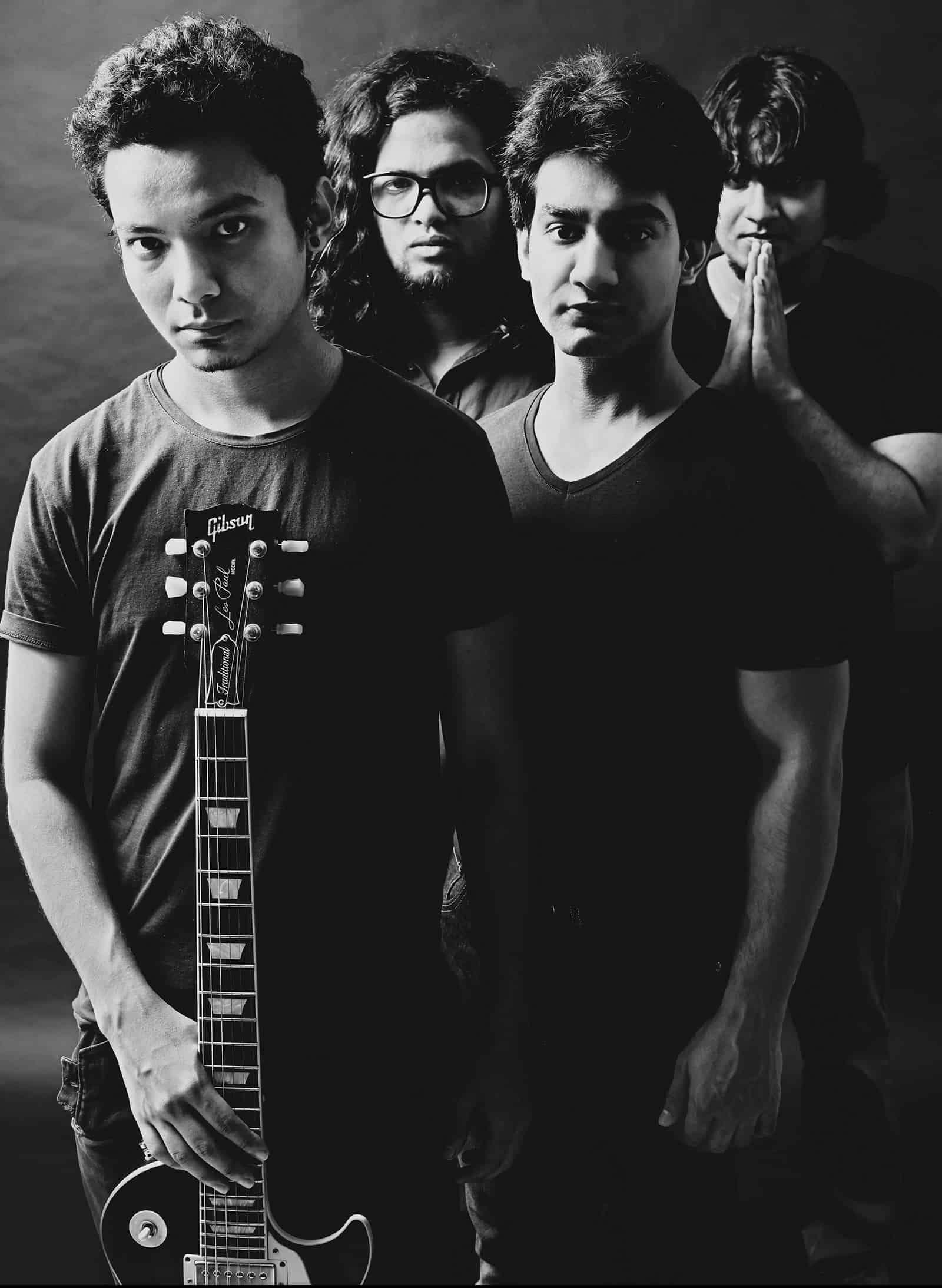
At the end of their multi-city tour, DU Beat got in touch with Paras Thakur (lead guitarist) and Sahil Sarin (drummer) of the rock band, The Local Train. They are known to have successfully mesmerised the students of Delhi University with performances in colleges like Lady Shri Ram College for Women and Jesus and Mary College this fest season. From being ranked as India’s #1 band in 2015 by Sennheiser to getting their song Aaoge Tum Kabhi featured in the Bollywood movie The Angry Indian Goddesses, they are touted as the new face of Hindi Rock music in India. We had a chat with them about music, Bollywood, fans experiences and their future plans:
Q. The band did a multi-city tour after the release of its first album. What was the tour life like?
Sahil: It is a lot of fun. Every musician loves to go on stage and play his/her own music and we got to do this abundantly.
Paras: Exactly! It is very hard for musicians to get a show these days, especially since there are like a zillion bands competing for the same ground. So, when your band gets a show, let alone a tour, you feel really lucky.
Sahil: But, it is also equally hectic. There was a time when we had three shows, one in Sonepat and two in Calcutta, in less than 24 hours. So, sleep becomes very hard to catch up on. The only way one can then afford to sleep is on the airplanes. I won’t lie; there have been times when the air-hostess had to wake us up.
Paras (laughs): Yes, they’d be like, “Get out, man!”
Q. There are a lot of artists and bands which even go on 6-month long tours. Is that something you guys are interested in?
Paras: Yes, why not? Bon Jovi did 200 shows in 365 days and to be able to do just that is the ultimate dream!
Sahil(laughs): In fact, we’re even planning to get a bus as soon as possible and just leave for tour again.
“We’re even planning to get a bus as soon as possible and just leave for tour again.”
Q. What are your views about Bollywood and the Indie-music scene?
Paras: Talking about Bollywood music scene as a whole, it definitely gives you an audience which is bigger than anything. But, at the end of the day, a good song is a good song, and bad one is bad irrespective of whether it is a Bollywood song or an indie song.
Sahil: But, indie is definitely a way of life. We don’t have a producer come and tell us that you must put a Munni or Sheila in the song to make it sell. We play music because we feel for it. It is not a manufactured product for us.
Q. What do you guys think about lending your music for Bollywood movies and licensing your songs?
Paras: If our songs do make it to Bollywood, we would not like to be one of those people who are hired as musicians only to be forced to make changes in their songs because of some woman’s special dance performance on it. We, as independent artists, get to make whatever we want to make, and make it so good that whoever wants our music would want it just the way it sounds.
Sahil: Exactly! In fact, even the song for Angry Indian Goddesses went exactly as it was released on the album. They were not like, ‘put a disco groove to it or change the beat of the song.’ That’s so much for an indie band. Licensing is honestly the way to go. A few changes here and there in the structure is acceptable but if somebody wants to change the vocalist or is asking you to change the song to a point where it loses its true essence, then licensing becomes tricky. It’s about the way you do it, which becomes important.
“We would not like to be one of those people who are hired as musicians only to be forced to make changes in their songs because of some woman’s special dance performance on it.”
Q. Your songs are thought-provoking and have such great lyrics. In an era where songs with absurd lyrics are trending and the music scene is shifting away from Hindi, what makes you stick to the language and lyrical quality? Do you want to re-vamp the Hindi music scene?
Sahil: It comes naturally to us. Singing in Hindi is not something we have to try. We all grew up speaking in Hindi. In fact, this question always becomes weird for us to answer.
Paras: In most interviews, people end up asking this question and for a second we go, like “are we in India?” So why not Hindi? (laughs). But honestly, at the end of the day it’s all about making good music. The lyrics, the language and the lingo are just the means to communicate with the audience. It doesn’t matter which language we use as long as we connect with the audience.
Sahil: We’ve been called the new face of Hindi Rock. We don’t plan to add English or Punjabi as a gimmick.
Q. Recently your songs were played on an International radio show called the Indian Raaga. So, do you have fans internationally as well, or do you think language becomes a barrier?
Sahil: We truly believe music transcends all boundaries. Our music is playing everywhere and we have fans from different corners of the world. Bandey’s video is playing in Brazil, Mexican channels are playing our videos and getting positive reviews, people from Seattle message us saying that they have been listening to our music, and several others are following our songs on YouTube.
Paras: Basically, language is just a means to communicate. But, I think music also pretty much does the same job.
“Bandey’s video is playing in Brazil, Mexican channels are playing our videos and getting positive reviews, people from Seattle message us saying that they have been listening to our music.”
Q. Just like your lyrics, the videos of your songs are equally beautiful with strong symbolism. What drives you to make such powerful and meaningful songs?
Paras: We just require things to have meaning. These days, art forms of music- visually or orally, are just over-flooded with aesthetics. Aesthetics are very important, but aesthetics with just pretty girls, huge cars or big explosions become meaningless. Till a certain point, it’s fine but when everything leads towards the same thing, it doesn’t make any sense. We like to attach a special meaning to it. Since our songs are so lyrically heavy, we tend to give them a form of visual aid and make sure that it’s meaningful.
Sahil: In fact, that’s exactly the kind of thing we want to add to our music, visually as well. This is where Anchit Thukral from ‘The Morpheus Productions’ comes in. He’s been with us from our very first video. He helps us execute what we see in our head and how we would like to put it in a certain song. He’s been our guy from the start!
Q. Which artists do you all listen to, internationally and otherwise?
Sahil: We all listen to different kinds of artists and have different tastes which make it all the more interesting for all of us to come together with our own particular influences and then, make some music. But, some of the artists we really like are Raghu Dixit, Indian Ocean and a band called Parvaaz from Bangalore. We also listen to Coldplay, U2 and the likes.
Q. How did you react to the people offering you exposure rather than money?
Sahil: We have turned down more gigs than we have performed, frankly, and this has always been a conscious decision of the band. A lot of people are willing to undersell themselves, but we’re not one of them.
Paras: I would suggest bands to work more on their art so that people are willing to appreciate and share their music on their own.
Q. After your performances in Delhi University, which college did you find the most receptive to your music?
Sahil: Every place has a different vibe. We really can’t choose any one.
Paras: At least, don’t make us choose on record. (laughs)
Q. There are a lot of bands that are formed during college days and the same is witnessed in Delhi University. So, do you think college becomes an important platform for upcoming talent?
Paras: College is THE most important part.
Sahil: Music Education in India is not taken seriously. Even for me, I think, back in school, music class was more of a fun class than an educational one. I started playing at the age of five but in the first 10 years of my life, I learned very little. The only time I actually learned was when I participated in college level competitions. So, I think this phase sets a foundation for all musicians. It makes them realise whether they want to/must pursue this for a living or not. So, yes, it does certainly become one of the most important phases of your life.
Q. Can you tell us about your most intense or funny moments on stage?
Paras: Starting from the funniest moments, there have just been too many – from Raman’s forgetfulness or singing the wrong lyrics, to my repeated attempts to look cool and then end up playing the wrong notes. I’ve fallen down more than once on the stage while trying to jump out of excitement and even sprained my ankle once.
Sahil: The most unfortunate moment would that be of Ramit falling off the stage. It was a pretty intense time for all of us as he instantly had a seizure and for a few seconds, we were just looking at him trying to figure out what to do. Apart from that, a lot of things have happened from equipments falling off the stage to several technical glitches. Things go wrong all the time because there are so many variables to take care of.
Q. Has the band experienced any creepy fan moments?
Sahil: Of course. We’ve all had them. One time, right after playing this gig, I got a phone call from a landline number. When answered, a woman said “I will rape you”. That has, by far, been the creepiest moment in our records. Like, what do you say to that?
Paras (laughs): That it’s illegal!
The crowds at The Local Train’s shows are crazy!
Q. Is there any movie for which you would have liked to give music?
Sahil: One movie that really hit me and it would’ve been nice to be a part of was ‘Black Friday’.
Paras: I think Gangs of Wasseypur and other such movies of Anurag Kashyap as well.
Q. What all sitcoms do you guys follow?
Sahil: Every Monday, it’s Game of Thrones. Apart from that, we follow plenty. We all have our phases with addiction to new shows, like Ramit is currently fond of ‘That 70s show’ and we love watching Utopia. And now we have Netflix to watch many more!
Paras: They have this auto-play feature, which is the worst; you play one video which goes on for 12 hours. It’s very slowly destroying our lives!
DU Beat recently got a chance to interact with television’s new dance sensation and a DU alumnus, Ryan Martyr, who is currently showcasing his dance moves on the dance reality show ‘So You Think You Can Dance’. A contemporary dancer by profession, he wants to build a tree house and organise a buffet for dogs if he wins the dance reality show. Excerpts:
DUB: As an alumnus of a popular DU College like Sri Venkateswara, is there any anecdote you’d like to share with us that you can recall from your days as a member of Verve, the Western Dance Society of Venky? What is your take on DU’s dance circuit in general?
Ryan Martyr (RM): I earlier wanted to become a footballer. But when I got into college, I “just for fun” auditioned for the western dance society. Surprisingly, everyone loved me and instantly started to believe that I had the potential to be a professional dancer. That’s how I began dancing. My take on DU’s dance circuit is that I feel it gives a budding artist multiple opportunities to showcase his/her potential. The competition and the whole vibe pushes you to grow exponentially. Its absolutely wonderful.
DUB: As a member of a dance society, you must have attended quite a lot of fests at DU. Which college was your favourite to perform at during fests and why?
RM: My favourite college to perform in was Venky itself. The reason being that performing in front of your own college and home crowd gives you a high like none other. The cheering before and after the performance makes you want to push for greatness and definitely brings out the best in you.
DUB: Looking at your immense experience at such a young age, who is that one person/personality that keeps you motivated or whom you admire the most and why?
RM: The one dancer who inspires me a lot is Travis wall from So You Think You Can Dance, America. He began as a dancer on the show, then moved on to being a choreographer, then to a judge on the same show and now he is an Emmy winning choreographer. And in fact, I received a shoutout from Travis wall in my first round on SYTYCD India which was definitely one of the happiest moments of my life till date.
Ryan performing with his dance partner on ‘So You Think You Can Dance’
DUB: How did the idea of entering a dance reality show crop up in your mind? What is the larger goal you wish to achieve by performing at a platform of such a mammoth nature?
RM: Honestly, I never wanted to enter any reality show. I just did because So You Think You Can Dance was the only reason I began dancing and as a young dancer, I always wanted to become a dancer of the same quality and so since the opportunity came knocking, I had to answer it. My larger purpose is to inspire people to follow their dreams and live life whole-heartedly. Hopefully, by dancing my heart out on this show I can achieve this.
DUB: Today the youth is driven by money, fame and the limelight that reality TV has in store. What is your take on the increasing commercial interest that has penetrated a creative industry like dance? Do you think this hampers true talent from coming to the forefront?
RM: I believe that before exposing yourself to fame & money, its very important to develop your art first. There is no point in selling stale art. Once your art is ready there is no harm in exposing it to the world. In fact by doing so, you can inspire millions.
“I believe that before exposing yourself to fame & money, its very important to develop your art first. There is no point in selling stale art.”
DUB: To choose dance as a career option definitely mustn’t have been a smooth sailing for you, given the larger societal scepticism surrounding it in India. What did it take you to convince your parents and family to let you choose your passion as your career?
RM: Choosing dance was easy. I just had to follow my calling. I knew it the day I felt it, that Dance was for me. Convincing my parents was easy because I was convinced and was showing positive results from day one. I was so dedicated to dance that my parents never felt the need to question my decision. But yes, I have gone through many ups and downs which has just made me stronger.
DUB: Apart from Contemporary, which other dance forms do you enjoy performing?
RM: I love doing hip hop and dancehall. Like honestly, at times I feel I am a better club dancer!
DUB: You have participated at the prestigious Britain’s Got Talent too. How was the experience there different from your experience performing on the Indian National Television?
RM: I got selected for Britain’s Got Talent too, yes, but I could not participate on the show because I was on a tourist visa. But yes, to showcase my raw soul in a country like England where every dancer is so perfect was quite special.
DUB: Would you like to share something about your ‘guru’? Any memories of any college faculty leaving an impact on you in any way?
RM: I honestly have no guru. I learn and get inspired from almost everyone I meet. I am learning every minute. Wherever I am, I find someone or the other to get inspired from.
DUB: You have become a very exemplary figure among the youngsters as is evident from your growing online support. Any message or mantra you would want to convey to the students who wish to pursue a career in dance?
RM: Keep it simple. Keep it true. Make sure everything you do is full of yourself. Live life like you would never ever live it again. And love yourself!
DUB: If you do win the show, what do you intend to do post your big victory? Any specific goals?
RM: If I do win the show, I want to build myself a tree house. And use some money to publish my book, and definitely make a few songs. Probably have a buffet for all street dogs! I just want everyone to believe that Dreams Do Come True. Just work for it. Live a life people would love to read about.
“I want to build myself a tree house. And use some money to publish my book, and definitely make a few songs. Probably have a buffet for all street dogs!”
DU Beat got a chance to chat with the newly crowned fbb Femina Miss India, Priyadarshini Chatterjee, who also happens to be a student of Delhi University. Priyadarshini shared with us her thoughts on her journey from being a three year old kid dressed as Miss World to the winner of fbb Femina Miss India, her future plans, and also her preparations for the upcoming semester exams!
DUB: First of all, congratulations on your win!
Priyadarshini Chatterjee: Thanks!
DUB: The first very obvious question is, how are you feeling right now? Has the feeling sunk in that you won such a major event?
PC: It’s been almost 25 days since the win. I had a lovely homecoming after it. By now, yes, it has definitely sunk in. The kind of response I’ve got is something I never imagined I would get. Initially when it happened, I really couldn’t believe it.
DUB: How confident were you about winning, when you were standing on the stage, given that you were competing against some of the most beautiful and capable women in the country?
PC: Before the finale show actually started, I was very, very nervous. In fact, I was panicking and I was calling my parents and friends and saying, “What do I do? I’m really nervous.” But I remember that the moment the show started, when the music came on and I had to go on stage, I forgot everything and I was just enjoying. What helped me was the fact that I started enjoying the moment so much that everything else just kind of flew out of my mind.
DUB: You are from Guwahati, you went on to win Miss India Delhi and now you are the Miss India. How would you say your journey has been? What made you want to enter the pageant and what kept you motivated?
PC: I come from Assam. It’s the kind of place where everybody knows everyone and I was there for quite some time. Then I came to Delhi, where the exposure was understandably much more. Once I started working in Delhi, I figured out that I have a lot to work on with myself. I was already interested in participating in Miss India but there was this fear of rejection that was stopping me. However, when the Delhi auditions happened, I just knew I had to go for it. The credit actually goes to my parents who kept me motivated. I gave the auditions and I won, and once you’re there, there’s no looking back. The pageant continued and I kept going. The journey- the flow of it- has been very smooth for me and I’ve learnt a lot.
DUB: Where did that first thought about entering the pageant come from? Did you follow the earlier pageants, or was it something you became interested in after starting modeling and entering the circuit?
PC: I never wanted to participate in any pageants other than Miss India because it’s the most reputed one. Moreover, it’s not just about beauty and looks but beyond that. I was scared too. There are so many beautiful and smart women in India. When I was three years old, my mom dressed me up as Miss World for a fancy dress competition. That was when I knew that a platform like this existed, and it fascinated me. I never used to watch pageants. I’ve not followed any of the previous Miss India pageants. It was something that I personally wanted to do and I went forward with it.
DUB: That’s an interesting point of contact! The 3 year old dressed as Miss World!
PC: *laughs* I know!
When I was three years old, my mom dressed me up as Miss World for a fancy dress competition. That was when I knew that a platform like this existed, and it fascinated me.
DUB: You’re now set to represent India at the Miss World pageant, which puts you in the same league as many other formidable women. Have the preparations for it already begun? What are your expectation from this even bigger platform?
PC: Yes, they have begun. In fact, I just got back from one of my sessions. We have many sessions – a make-up session, hair session, nutrition session, and others. The two-other rank holders have these sessions as well. It’s about bringing out the best in ourselves. The next thing that we’ll do will be at the global level. It requires a lot of hard work. Another important thing I have to do is to know about the culture of India. I’m working on that by reading books, familiarising myself with places by travelling. What I need to do is be aware of our culture and put my best foot forward at a platform where there’ll be many smart and beautiful women from around the world.
DUB: You’re currently a B.A (H) Sociology student in Hindu College. The previous two winners, Koyal Rana (DDUC) and Aditi Arya (SSCBS), were also Delhi University students. Do you think being from DU gives a person a certain edge?
PC: When I came to Delhi from Guwahati, Delhi University itself was a big exposure for me. Being from a small place and then coming to DU, where I met people from all over the country and made friends with them, gave me a confidence boost and opened me up to new possibilities. I wouldn’t call myself an introvert but I was used to my own little world and my own friends. When I came to DU, I started exploring. I auditioned for the Dramatics society of my college and I am, in fact, a part of Masque, the English Dramatics society of Hindu College. My audition for Masque was one of the instances where I walked out of my comfort zone to achieve something. I definitely think DU has given me confidence and exposure.
My audition for Masque (the English Dramatics Society of Hindu College) was one of the instances where I walked out of my comfort zone to achieve something. I definitely think DU has given me confidence and exposure.
DUB: Talking about DU reminds us of the upcoming semester exams. Will you be giving the exams too? How’s your preparation? (isn’t that the question on everyone’s minds?!)
PC: Yes, I am giving the exams. I’ll be returning to Delhi for it. I’m going to start studying tonight.
DUB: How do you plan to balance your studies and your duties as Miss India? Would you like to continue with your studies or do you want to pursue something else?
PC: I want to continue with my studies, that’s not something I want to lose out on. It’s something that gives me a base in life. After graduation, I’d love to pursue Anthropology of Travel and Tourism.
It definitely gets hard to balance the two but I don’t think it’s impossible.
DUB: Since you’re already involved in modeling, the next obvious question people would ask has to be- does Bollywood figure into your plans?
PC: *sighs* Oh yes, it’s definitely the most common question. Personally, I don’t see myself in Bollywood right now. I think the people who do that have different aspirations and different motives in life. However, if you ask me if I would like to work as an Assistant Director, I’d love to do that. Being onscreen is something I’m not aiming for yet. Of course, if the right opportunity comes my way and if I really like a certain role, I’d consider it but I’m more of a behind-the-screen person.
DUB: Switching over to slightly different questions, do you consider yourself a feminist? How would you define feminism?
PC: Concepts like Feminism are very subjective. I may have an opinion which may be different from yours. I don’t think I am in a position to define something like this. But to me, Feminism means putting women in the front too so that men and women can be equals. It’s not just about women having the upper hand but rather both the genders working as equals for the progress of society.
I wouldn’t call myself a feminist because right now it is going somewhere- who even knows where it’s going? I think the concept of Feminism is being misunderstood and people are being misled. In a situation like this, I wouldn’t really call myself a feminist.
Concepts like Feminism are very subjective, to me it means both genders working as equals for the progress of society- but the concept is being misunderstood today
DUB: How would you correlate the concept of Feminism to platforms like Miss India which, while amazing, also perpetuate certain ideologies?
People always assume that beauty pageants are all about how a person looks and how tall they are, but trust me, there were girls in the pageant who were taller and prettier than me. It’s not just about looks, it’s also about how smart you are and if you can go and make conversation with anyone at a moment’s notice. I think it’s a stereotype associated with beauty pageants and it’s something we need to get rid of. I don’t think it’s accurate at all.
DUB: Having been involved in Miss India now, do you think there’s anything about the Indian beauty pageant scene and the modeling scene that needs to change? Is there anything that irks you?
I don’t think so. With respect to the Indian beauty pageants scene, I think we’re doing well and going places, and we’ll do even better in the future. If I can get the Miss World crown, it’ll go even better. It’s definitely something I want to do for the industry as well.
DUB: How about as a participant? Do you think anything needs to change in the way the industry treats and welcomes participants and newcomers?
PC: I was more than welcomed. We were all staying away from our families and friends during the pageant. We made families there. The people I’m working with right now, who are a part of my team, I knew them during the pageant too. They are family to me. If people believe something else, I think that’s a misconception. Everyone’s been very sweet.
DUB: What do you aspire to achieve with the power that comes with being Miss India? Is there a cause that’s close to your heart that you want to work for?
PC: Yes, I have my project Shishu Kalyan. I don’t like talking about it as people may think it’s a clichéd thing to do, that I’m talking about social work because I am Miss India. I feel for the cause and so I’ve taken it up. Shishu Kalyan is about child labour. I want to put in my bit for the betterment of the children in slum areas. I educate not just the children but also their parents about the importance of educating their kids, even in the smallest of ways. If I can even teach them cultural activities like dancing, singing, and about culture, it can give them to incentive to stay away from things like substance abuse which is very common in those areas. I’m working on this and am planning to collaborate with an NGO soon to take this forward.
DUB: Last question! Was there anything you watched or read throughout the entire journey to keep you company and to motivate you?
PC: Yes, I did. I am a firm believer of the Law of Attraction. I’ve been reading the book ‘The Secret’ for two years. I’m not a person who reads a lot. I’d rather watch a movie than read a book, but this one book changed my life drastically. The law of attraction is about how you can attract positive things in your life. It works on the principle of Ask, Believe and Receive. You ask for what you want, you believe in it and you receive it. This is something I’ve followed and I think it has played in part in getting me where I am today.
DU Beat would like to wish Priyadarshini the very best for the Miss World pageant and her other future endeavours!
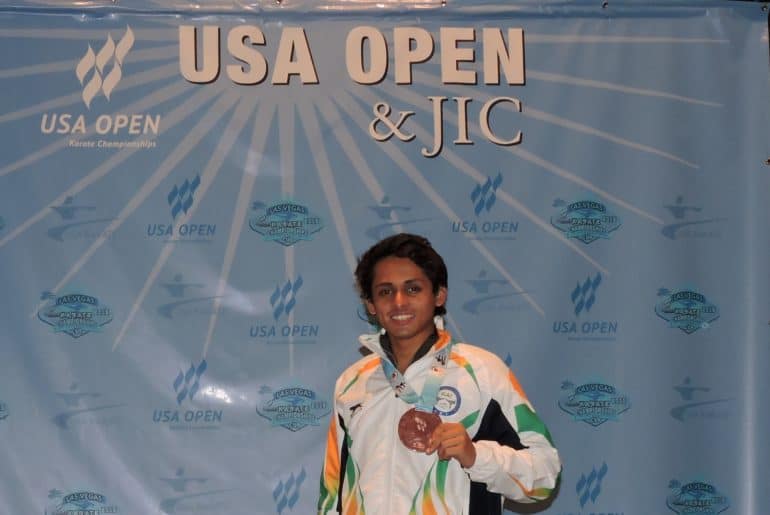
Having recently won a gold medal for Karate at the US Open World Championship 2016, Bhaskar Sen, a student of Sri Venkateswara College, is juggling engineering and his passion for Karate at the same time. He has made the nation proud, time and again, by bringing laurels to the country after participating in prestigious national and international events. Catch him in a conversation with DU Beat below :
1. Out of all the various forms of martial arts and the different choices of sports available to a person, what drove your interest towards Karate?
Owing to the dearth of children, in my neighbourhood, I was prevented from indulging in and playing the popular sports like cricket, football and badminton. My elder brother was a black belt holder and I too started tagging along with him to his Karate lessons in the evening. Soon, I caught up with the sport and it became my passion.
2. Can you give us an insight of your future plans?
I would like to continue practicing Karate irrespective of my plans for higher studies and gain more experience and insight into the world of this sport which may also soon become an Olympic Sport.
In the upcoming months I have plans to attend and represent India at a couple of International seminars and training camps which are to be held at Italy and United Kingdom.
Immediately following them, I may be called upon to participate in the World Premier Circuit Championships at Salzburg, Austria and Okinawa, Japan.
3. Being a college student, how do you strike a balance between your passion for karate and academics?
Unlike other countries, sportsmen in India, especially students, are not known to get sabbaticals from their workplace for their trainings and actual tournament participations unless one is pursuing the ever-popular sport of cricket.
The learning of the technical aspect is a regular round the year affair and is followed in between breaks in studies whenever possible. The regular physical exercises have to be stepped up or down depending upon the academic study load at that point of time in the year.
4. Based on your experiences, what do you think is the scope of Karate in India?
Though there are myriads of Karate clubs functioning in major cities of our country, Karate is yet not an overwhelmingly popular sport. This is because of a number of reasons like the coaching centres are being run by unqualified coaches and the centre is usually not affiliated to a national body, making them unauthorised; Karate is not popularised in universities; and even the mainstream media falls shy of covering the events and competitions associated with this sport. Thus, it would really be helpful if the government chimes in to offer its support and takes steps to popularise, monitor and subsidise the training facilities.
5. Do you have any role models whom you look up to?
My foremost inspiration came from my elder brother, who took me to the Karate Dojo for the first time. I have also seen my father’s unstinted support for me to pursue Karate and to build up extreme self- confidence.
In the professional sphere, I have always held my teacher, mentor and a Karate legend, Sensei Luca Valdesi from Italy as a role model who holds the unbeatable record of being World Champion for six years at a stretch. I also wonder at the accomplishments of Vu Duc Minh Dack, the living legend from France.
Our conversation with Rene Sharanya Verma, a student of History at St. Stephen’s College, slam poet and feminist rapper, and one of the five Indian recipients of the prestigious Rhodes scholarship, reveals her expectations and plans for the future.
Q. How does it feel to have secured one of the most prestigious scholarships offered to Indian students by a foreign university?
Rene: It’s quite surreal, really! I’m humbled and honoured to be joining a cohort of eighty-eight other inspiring and inspired individuals around the world who are working in profound ways to create a better future through the fields of advocacy, gender relations, policy formulation, ethics, and healthcare. More than anything, availing of the privilege to study at a premier institution like Oxford reaffirms my commitment to using my voice and work to contribute to larger cultural and political conversations across the world.
Q. What course have you chosen to study at Oxford and what is your particular interest in this subject? How does it compare with similar courses at other institutions?
Rene: I intend to pursue two Masters of Studies (MSt) programs in Women’s Studies and Film Aesthetics. Ultimately, I aim to work on feminist film theory, engaging with how filmic elements like playback music, colour, light shape and are shaped by the performance of gender. Additionally, I am interested in addressing notions of spectatorship in the context of Indian cinema. I also hope to create films, both fictive and ethnographic, which combine my love for spoken word art, narrative cinema, humor as a site for politics and advocacy.
Both programs offer an interesting blend of interdisciplinary engagement along with specificity of the course modules provided. They focus on research methodology and theory, have small batches of students, and the thrust is on original research through one-on-one mentoring and tutoring. More exciting however, is the provision of opportunities to work with the Oxford International Women’s Festival, the Women in the Humanities programme, and the International Gender Studies Centre. This provides a great chance for young scholars in the academy to engage with grassroots activism and the possibilities and challenges of transnational feminism.
Q. Most students are apprehensive about the daunting application process that is involved in applying to foreign universities. How was your experience?
Rene: I spent my second year hoping for the best and preparing for the worst. I can vouch for the fact that application processes seem much more daunting than they actually are, especially if one paces themselves and is cognizant of deadlines. The process of applying to Rhodes is quite straightforward, and in distinction to other scholarship applications, begins quite early. I was able to zero in on my course combinations towards the end of my second year in college, and worked on my application during my summer study, which was beneficial.
One of the great things about the Rhodes scholarship is the amount of support you receive from the Rhodes Trust in assisting and streamlining the application process to the University, with reference to English language requirements, connecting with scholars from previous years and same courses/colleges. All in all, my experience has been very rewarding and relatively stress-free, so I’m quite relieved!
Q. What would be your advice to students applying abroad regarding statements of purpose and letters of recommendation?
Rene: The personal statement for the scholarship is a thousand word essay designed to present a concise version of one’s goals, aspirations, and by extension, who one really is. It can seem challenging at first, but I would highly recommend that candidates begin by thinking about the differences between an academic statement of purpose, a personal statement and a resume. It might ease one into thinking about how to approach the personal statement in a sui generis way- there is no right or wrong personal statement. I think the best way to go ahead is to present cogently and simply the arguments, questions, ideas, experiences that best define you. For instance, my statement revolved around silence, interweaving personal anecdotes with my academic proclivities and aims.
For the letters of recommendation, it would be prudent to approach professors, mentors and teachers who have encouraged your work through supervision, tutoring, discussion and are well aware of your strengths and weaknesses. I think that extends to certificates vouching for good conduct and extra-curricular activities. It’s crucial to notify your references well in advance, keeping in mind their work schedules and other commitments. It is always helpful to provide referees with an idea of your proposed area of study, a resume and transcripts or other relevant documents.
Q. How was your experience at the interview? On a scale of 1 to 10, 10 being the highest, how nervous were you?
Rene: My interview experience was quite wonderful! I did experience jitters (which would ring in at a very strong 6) prior to the interview, but luckily, the committee organized a dinner with the interview panel a night prior to our final interviews. We got to interact with the panellists, distinguished scholars, professionals, and Rhodes scholars from previous years– who were kind, jocular and very accommodating. The setup also ensured that we got to interact with our peers, which was one of the most rewarding takeaways from the experience, as some of us formed great friendships.
The interview itself was refreshing and thought-provoking. It never seemed like an interrogation, and was an engagement where I was given a lot of space to articulate my beliefs and politics, research interests and achievements. The panel was not intimidating, au contraire, the panellists were very responsive to my answers and even shared a few jokes!
Q. What, according to you, was the most instrumental factor that led you to achieve the scholarship?
Rene: One thing that I’ve learnt is that there is no one type of Rhodes Scholar, and indeed, therein lies the beauty of the scholarship. I’d like to believe that one of the most instrumental factors that aided me was that I tried to be as honest about my beliefs as possible- to the interview panels, selection committee and most importantly to myself. I reckon my interests, both academic and extra-curricular, ranging from film-making, screenwriting, theater, spoken-word poetry demonstrated a singularity of purpose, and an unequivocal avowal to ideas I am passionate about.
Q. Do you have any apprehensions about moving so far away from home?
Rene: I have lived away from home prior to this, but never for so long. I’m going to miss the little things- hugging my family in vivo, eating in North Campus, walking in the Lodhi gardens. Living alone has also made me check my privilege and be grateful for things I took for granted—like household chores, food, and the presence of loved ones. Most importantly, I’m quite nervous about the weather, but I hope to bask in the ever-elusive sun as long as possible!
Q. What are you looking forward to at Oxford? Any expectations?
Rene: I’m looking forward to using two years of my life to expand my horizons, meet new people, travel on a budget, and create some meaningful work. I am excited to join a vast community of intellectuals, engage with a multitude of ideas, and forge lasting friendships. I’m delighted to be connecting with advocates for gender equality from across the world, fellow poets and writers and I hope to work with theatre, sketch comedy and film clubs while I’m there!
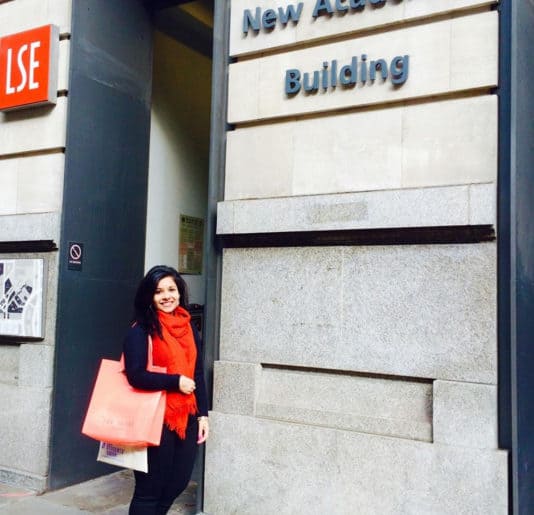
DU Beat got the opportunity to talk to Medhavi Mathur, Psychology graduate from Lady Shri Ram College, who is mastering in Organisational and Social Psychology at London School of Economics and Political Science. She gives us an insight into the life of a student at LSE and what it is like to live so far away from home.
Q. What apprehensions did you face when you decided to move away from home and to a different country?What should an Indian student keep in mind before deciding to undertake a course abroad?
It was in my fifth semester of under graduation that a friend of mine suggested that I should consider applying to the UK (primarily London) due to the diversity of course choices offered at the M.Sc level. I decided to give it a shot and applied to a number of universities across London after carefully considering their criteria for admission into several courses of study. Till then, I wasn’t even sure of stepping outside of India! This was going to be my first time outside of home, alone, and was initially very nervous about how the entire journey is going to be like.
After a month of applying, I started receiving offers from a number of universities. By that time I had decided, my choice to study in London would depend only on successful offers from two of the most prestigious universities – The London School of Economics and Kings College London. I finally chose LSE over KCL after carefully considering the pros and cons associated with the courses offered at the two colleges, the faculty, methods of teaching and because of LSE’s brand name and prestige. After all, it is the leading social science institution in the world.
I had visited UK in 2005 and loved my experience here in every way possible – be it about the magnificent surroundings, the most beautiful cruise on the Thames, the calm and peaceful environment, the diverse international cuisines available (yes, I love experimenting with different varieties of food) and how crazy one can go shopping here!
Definitely, all international students must consider their fit with respect to settling down into a global city with a diverse range of people and cultures and in a study environment which is in total contrast with how we have in India. It’s about getting accustomed to the rigour of academics, unlearning a little bit of how we’ve been trained to study and ultimately about being able to make the most that this vibrant and exciting city in the world has to offer!
I was always fascinated by life and culture outside of India and wished to study abroad. Who knew, this opportunity was in store for me!
Q. How is the education system in UK different from that in India (DU specifically)?
The education system in India is in stark contrast to how teaching takes place here in London. I had to leave behind my almost annoying habit of cramming the contents of various courses before every exam and rather learn about the practical application of the subject matter taught. The school assesses students on a continuous basis with respect to student presentations during seminars, class discussions, several short multiple choice exams and finally the summative assessment involving essay writing with respect to real world applications of the course content, examinations and finally the M.Sc dissertations.
Academic supervisors provide feedback on every report or essay you submit which further improves the quality of work submitted during the finals.
I feel that an education system which incorporates all the above listed elements in addition to teaching students how to carry out field work in the real world to learn about the practical value of what they are being taught will help students learn in a better and comprehensive manner.
The LSE campus provides superb academic and support facilities, such as the British Library of Political and Economic Science.
Q. How would you say your degree at LSE compares to similar degrees in other institutes in terms of syllabus/ subject content and future prospects?
Like any other student, I too dreamt of studying at a prestigious institution like London School of Economics and Political Science whereby I would have the opportunity of being mentored by one of the best faculty, interacting with a plethora of students from varied cultural backgrounds which would help in widening my horizons and give me a wider comprehension of the global community.
I opted for this course specifically as my prime interest lies in the social-organizational nexus and the academic stream provided by LSE is a synthesis of social and psychological processes with focus on interdisciplinary domains between organizations and communities. Since the mode of teaching involves lectures, seminars, independent study and a dissertation, it helps merge practical experience with deep academic analysis.
The course is impressive and optimally geared towards the fulfilment of my professional capabilities. As the course provides with the main theoretical and research modules used within work and organizational psychology, it has helped optimise my interest and nascent acumen.
I chose LSE for its continuous focus on excellence, inclusivity and achievement which makes it one of the best in the world alongside many others.
Q. One often hears about how international and diverse LSE is, is it true? If settling in and feeling at home is the easy part at LSE, what is the hardest?
About 150 nationalities are represented amongst LSE’s student body and the school has the highest percentage of international students (70%) out of all British universities – ranked second in the world for the highest proportion of international students.
In my program of study itself, there are people from about 30 different language speaking nationalities.
In the initial few weeks, it surely is hard as everybody takes their own time to get comfortable and mix with the others. However, as classes and seminars begin in full swing, the process whereby students participate in a range of discussions and give seminar presentations, makes the entire adjustment process easy. Study groups form over time and help in easing out the academic burden and tension as students discuss readings and their differing points of view.
The academic and non-academic staff is very helpful and willing to guide you in every difficult scenario you encounter.
LSE provides a range of support services on campus to ensure that the whole student experience is as rewarding and enjoyable as possible, and include academic guidance, advice and counselling, a faith centre, off campus support schemes and a medical centre.
Q. Being a college student living in one of the most popular destinations in the world, how do you manage your finances apart from college tuition? What do you find yourself spending the most on?
Many students worry about the cost of living in London, but to be honest it’s easy to live economically whilst still having a great time at university. This is because being a student brings with it a lot of financial advantages. As a student, I have access to discounts, cheap social activities, and the flexibility to do part-time work. An easy way to access lots of discounts at once was to get an NUS Extra card, which gets you 10-20% discounts on fashion, food (London is the place to be for all food lovers, like me), cinema tickets, travel and coach cards.
I tend to spend money mostly on travel and grocery. It’s a good idea to walk back from college one side and enjoy the breath-taking view simultaneously. When it comes to grocery, if you’re in a self-catered accommodation, it’s a good idea to team up with your neighbours in halls to do a group shop, and take turns to cook for everyone – bulk buying for a group is much cheaper (and less wasteful) than cooking for one. Once you’re into the habit of managing your money, it makes life a lot easier and less stressful!
Q. What is a typical day on campus like?
Every day on campus brings with it something new to learn. Be it about exploring a new building, or a café, learning about an unheard of phenomenon or simply being spell bound by the lectures delivered by the professors.
In addition to attending classes and seminar groups you are assigned to, students have a lot of readings to complete before their classes. As a result, the 4 floor LSE library is a home to students who have access to Mac and regular PCs (about a thousand of them, if not more) to complete their coursework and readings. The Library, which is a paradise for avid readers is equipped with additional high tech facilities and enables students and teachers to gain ample knowledge through the easy availability of a collection of outstanding national and international publications and journals. The school also provides superb academic and support facilities.
LSE also has one of the most prestigious public event programmes in the world. I was fortunate enough to have heard Amartya Sen speak about his latest publication in November last year. The school also offers several networking opportunities and has established a global network with a small number of high quality universities across the world. In my first week, I was confident to have made the right choice.
The LSE’s career service is extremely helpful as it provides comprehensive career guidance and employment services for students seeking information on graduate employment and further study. They run a wide range of career events on campus, one-to-one career discussion and CV checking appointments, and the website is full of information to help students research and achieve their career objectives.
With respect to sports facilities, there’s the LSE Students’ Union gym, an activity studio, a badminton court, a sports ground, a fancy Gymbox, tennis courts and a swimming pool.
Q. What has been your most profound memory at LSE so far?
There’s no one memory that I can enlist here. However, a department trip to Cumberland Lodge has been one of the most delightful experiences here with fellow students. The opportunity to explore the city of Windsor in addition to being served lavish English meals, engaging talks on a variety of phenomena and the dance bar was an exotic event in itself. Apart from that, a number of networking events and business dinners have helped provide insight into the real world of work culture and ethics. The prospect of discovering oneself while gaining an understanding of a different culture and people has further broadened my understanding of humanity. This has given me a chance to become an independent and free thinking individual.
The campus is always buzzing with activities and fairs, offers amazing in house eating cafes and has a bar of its own- LSE is responsible for providing a lavish environment to every student who is looking for a once in a lifetime experience.
Since LSE is located in the heart of London, there is never a dull moment. London offers more than nearly every other city when it comes to entertainment, culture and experiences. In addition, a plethora of shopping places and ambrosial cafes can never stop amazing you. If, you’re willing to tour around, London can never exhaust you. I was left awe struck by the view one gets to see at night from on top of the Jubilee Bridge. It’s a must visit on your stay in London.
DU Beat got an opportunity to talk to DU alumnus Prateek Ghosal, who is pursuing MSc. Finance and Economics from the reputed London School of Economics. An Economics graduate from Kirori Mal College, he talks about his experience and the rewards of studying abroad.
Q-1. What apprehensions did you face when you decided to move away from home and to a different country? In your opinion, what should an Indian student keep in mind before deciding to undertake a course abroad?
Personally, I did not have a lot of apprehensions about studying in the UK. I more or less knew what to expect and it hasn’t been much different.
What I would advise students deciding to undertake a course abroad is that they have to be very particular about their interests and take up a course and an institute that is in sync with their ambitions. Everyone has to make a big investment – the tuition fees can be abnormally high but I believe the return on the investment both in terms of monetary value/career prospects and in terms of personal development (maturity, independence) is certainly high. The courses can be particularly challenging as you’re competing against the best students from around the world but the learning curve is extremely steep. At the end of it, it is up to you how you utilize your time abroad because there is a world of opportunities to exploit but you have to be focused and brave enough to take them up!
Q-2. How is the education system in UK different from that in India (DU specifically)?
This is a highly debatable question – there are quite a few things that are different in the education systems. Something that I particularly found impressive about LSE’s system was that the exam questions always make you think. There is never a strict pattern you can learn and apply in your questions. In DU, I sort of knew what to expect and I could apply a set methodology. Examinations here always make you think and use your concepts in different ways to ensure that you’ve thoroughly understood the material – there are hardly any direct questions. In the end, you are forced to thoroughly learn the material and understand the core concepts. Students usually score less marks, but you get a merit with 60% so it’s all relative. Another thing that I think DU really misses is ‘practicality’ and ‘industry applications’. Most of my subjects have industry speakers coming in and explaining how they use the methods being taught to us in the real world. I’ve had bankers and economists explain how they use different models and then academicians explaining their research content and debating ideologies. It is always good to know how marketable the tools we learn are – whether in the corporate world or the world of academia.
Q-3. How would you say your degree at LSE compares to similar degrees in other institutes in terms of syllabus/ subject content and future prospects?
It was hard to decide initially. I had the opportunity to do my Masters in Economics at Delhi School of Economics which is especially renowned in the country but I was a bit more inclined towards finance specifically and there weren’t a lot of options in India. I think the opportunity of studying in the heart of London – one of the major financial hubs of the world and at LSE – a globally renowned institution was something that I could not let go of. My specific course is quite unique in the sense that it is jointly run by two of LSE’s strongest departments – Economics and Finance, giving me the best of the two worlds. The course content is in sync with my interests in being very quantitative and analytical. I have always loved challenges, but I think my entire class agrees that this particular course has been the hardest thing we’ve ever done. With regard to alternative universities, there aren’t a lot of institutions that offer an MSc Finance and Economics program and LSE’s particular program is especially reputed even for students wishing to do a PHD in Finance/Economics – a big share of the class go on to complete their PHD’s from top Ivy League colleges. Job prospects in the UK can be hard for international students because of UK’s strict work visa regulations but some do manage to get jobs. Otherwise, statistics show that the highest number of Investment Bankers in Europe are from the LSE so there are clearly opportunities to exploit.
Q-4. One often hears about how international and diverse LSE is. Is it true? If settling in and feeling at home is the easy part at LSE, what is the hardest?
Yes, it is indeed true that LSE is very diverse and multi-cultural. In fact, I find London the same – a typical bus journey from my accommodation to LSE involves listening to people speak in at least 4-5 different languages everyday! Personally for me, the hardest part has been getting used to the rigorous work culture – not only in terms of academic work but also applying for jobs and at the same time maintaining your livelihood (DU was so much more ‘chill’). On top of that, coming back home after a hard day’s work and not having some delicious home-cooked food to cheer you up is something that I really missed initially. But with time, I think you get used to the work ethic and develop your own independent lifestyle, which is very enriching in it self.
Q-5. What is a typical day at campus like?
Personally for me, the LSE experience revolves around the ‘Work hard, Play hard’ culture which is exactly what I’ve always wanted. A typical day involves alternating between classes and the library, but once you’re done with the work (once in a while), there is a world of recreational activities that you can enjoy. LSE probably has a specific society to satiate everyone’s specific interests. From ‘wine-tasting’ to ‘Bollywood nights’ – you can explore infinite different things to do. I’ve personally joined the music society and enjoy a weekly jam session with a band that I’ve formed here. Regarding sports, there are different teams for every specific sport which are further divided into categories to match your playing level, so that you can always enjoy a game irrespective of your skill-set. Apart from that, there are a number of pubs and restaurants around campus making it quite lively. At the end of the day, you’re in the heart of London so everything is literally a bus/tube ride away.
Q-6. Being a college student living in one of the most popular destinations in the world, how do you manage your finances apart from college tuition? What do you find yourself spending the most on?
To be very frank, London is an expensive city and coming from India, the exchange rate really hits us hard. Having said that, there are numerous ways to economize your expenses. London is extremely ‘student-friendly’ and almost every place, from barbers to restaurants, offer student-discounts making it relatively nominal. I also follow a weekly budget to ensure that I don’t go over a given threshold. Moreover, if you know the right places to shop, you’ll limit your expenses without compromising on your lifestyle.
Q-7. What has been your most profound memory at LSE so far?
Well, that’s difficult to answer. I think what I’ve really enjoyed is attending speaker sessions at LSE. This included industrialists and practitioners, from Nobel Laureates such as Amartya Sen & Robert Shiller to world-renowned hedge-fund managers and bankers. These sessions have opened up my mind to so many different things in life and changed my perspectives on others – something that I’ll always remember. On the fun side, my most profound memory has to be our department trip to Brighton where my team won the treasure hunt challenge spanning 20+ groups. After 6-7 hours of intensive challenges and events across the city of Brighton, we were delighted to know that we had been crowned winners!
In an event where speakers were talking about the meaning of ‘passion’, it was Kaustubh Khade who had me sync a beat with his. I was so glad to have heard his speech. He talked about dolphins and dangers which were a part of the splendour of his passion.
Khade has been Kayaking for five years and has many accomplishments to his name including having represented India in two Asian Championships; finishing 5th at the Asian Sea Kayaking Championship for solo kayaking and winning two silver and one bronze medal at the Asian Dragon Boat Championship. In March 2015, he achieved an exceptional feat by Kayaking (Paddle Hard) from Mumbai to Goa to raise money for Magic Bus, a non-profit organisation for underprivileged children and youth.
I couldn’t let go of the moment to fuel up my passion with an account of his journey.
Here is what I asked, and what he said:
Question – 1.) When did you happen to come across kayaking?
It was in 2010 when I went to Goa with my friends. We took a motorboat because we wanted to see Dolphins but, then we realised that the motorboat was scaring away the Dolphins. So, we decided to take a double Kayak. It was then that I had it in me, I started liking it. Although, I never saw the dolphins, but my friends did.
Question – 2.) Kayaking doesn’t seem to a layman anymore than just a source of recreation. But, how was it that you started pursuing it as a sport?
During the same trip to Goa, I happened to see a boat shore with Kayaks in Panjim. So, I went there and decided to buy one for myself. I wanted it to be delivered to Bombay. However, everyone was taken aback and they asked me, “Do you even know how to kayak?”
And so, they suggested a centre in Bombay for me to first learn kayaking.
Now that I come to think of it, I think that I was lucky enough to make an acquaintance so quickly. I started it off as an experiment but it blew up into a whole new array of passion.
Question – 3.) When you pursue your passion, you need to convince a lot of those who are close to you, especially your family. Your passion for Kayaking was both risky and dangerous. It is a very rare kind of passion. How did your family respond to that?
I have been lucky to have parents who have been very supportive. They are really pro sports. In fact, when I was studying in IIT, they used to ask me to give some time to sports. As far as Kayaking is concerned, in order to convince them I had to fake it a bit. Initially, I did not to tell them how risky it was. In fact, it is only when they saw the videos of my expeditions, that it had them exclaim, “Oh! It looks like it’s dangerous!”
But then, they have been with me through this and have been really supportive.
Question – 4.) Indians are very passionate about cricket. Do you think you faced some problems because of the uniqueness and rarity of the sport you were pursuing? How well did the government support you?
Most of the sports which are not cricket need attention at the grass-root level. Yes, to some extent bureaucracy and corruption eats up the sport. And indeed, we need some recognition for Kayaking. People are not aware of it. However, trends have changed too. Comparatively now, more people are showing interest in Kayaking.
Question – 5.) Pursuing mainstream jobs will lead you to mainstream success professionally. Passion is not considered to be feasible unless it makes you meet certain ends. In this context, is it important for your passion to fund you?
It is quiet tough to answer that. I try to keep my passion fuelled up and I think that’s something important. And also, it comes down to a certain mind set. You really need to weigh what is more important to you. For me a 9 to 5 stable job wasn’t as important as kayaking.
Question – 6.) Even after being an IIT-grad, nothing could keep you from following your passion. What is your message to some of those students who have their minds elsewhere? Those of us who are probably reading a book which they never wanted to read and would rather have their lives doing something they love?
The students should realise that it is okay to be different. It is very important at the academic level that you realise your talents and interests. Because, it is at this level that some students are staled-off. Hence, we need to discover a lot. In college particularly, exploring is imperative.
Akash Jindal, a student of DCAC is a mountaineer, and an entrepreneur, working passionately for Viral Hepatitis awareness. In a recent conversation with DU Beat, he talks about the mountains he has climbed, his non-profitable work and the next big thing in his life- climbing Mt. Everest.
Q. Let’s start by talking about the mountains that you have surmounted, your brainchild Mission Outdoors and recent work related to Viral Hepatitis awareness.
I have been climbing since I was 16. It’s been more than six years now, and I’ve come a long way. It all started with a training camp called Basic Mountaineering Camp in Himalayas. Ever since, I have climbed many peaks between 17,000ft and 21,000ft of varied conditions, technical pitches and altitude. Most of the climbs in India have been in Ladakh and Himachal Pradesh and outside, I have climbed some of the highest mountains in Europe, Australia and Iran for which I hold some records.
After graduating from DCAC, I joined a friend who I had met a few years ago to start Mission Outdoors. Our company is a bit different from other adventure travel outfits as our products range from backpacking in Australia to skydiving in Russia to climbing Kilimanjaro. As of today we have had operations in Russia, Nepal, Australia and Tanzania and its growing ever since.
I’ve been campaigning passionately for Viral Hepatitis patients as I was tested positive recently, but it was all a hoax. I do it because initial few Hepatitis tests can be misleading and I wish to make the society aware about it.
Q. Do you have an inherent passion for mountaineering? Or was it a certain someone or an incident that inspired you to climb mountains at a young age?
Honestly, I wasn’t athletic naturally and I trained myself with grit and determination. I was an average kid in sports back in school. It was only in class 11, I started browsing the internet about adventure sports and I stumbled upon Kayaking, but unfortunately the seats were already booked. Then I was suggested by the same school if I would be keen on doing a basic mountaineering course offered by them. It was a blessing in disguise. The course was not even close to what I had presumed it to be, it was a hardcore climbing camp of 26 days training on rock, snow and ice which culminated with climbing a 17,000ft peak and a written test. Clearly, I picked up this sport as fish to water and there has been no looking back. What followed was an advanced course in mountaineering and expeditions.
Deo Tibba
Q. Out of all the mountains that you have climbed, which one would be your absolute favourite? Are there any particular reasons for it?
It’s really hard to filter out one as there are so many unique experiences. But to pick the most beautiful and equally hard climb, it would a 20,000ft mountain in Himachal Pradesh, Deo Tibba. We did this expedition in 2013 and it was particularly very hard as there had been a cloud burst and tragedy in Badrinath. It was a special climb because despite facing setbacks, even before the start of the climb, we were tagged as crazy and stupid people trying to kill ourselves. We came back victorious and satisfied that with calculated risks, some goals are worthwhile. Apart from this, the trek to the base of Deo Tibba is a visual treat, it’s through meadows, beautiful valleys and equally serene rivers where one can find sheep, wild horses, and if lucky, even encounter a bear.
Q. The world recently saw the release of Everest and how debilitating it can be. And yet, there you are, ready to take this challenge. So how are you preparing for climbing the Everest?
I always had Everest in mind, After my basic mountaineering course, I knew I had to try this sometime in my life but I was patient to not hurry it up. Everest is different from other climbs, it’s really really high. One needs to be in his prime shape not just physically but also mentally. Many people think that climbing requires lots of physical endurance and skills, there’s no doubt about that. But one thing which most people miss is the mental endurance. I have personally witnessed many times when my body had given up, but it was my mind that pulled me up and still pushing me higher.
Everest is possibly the greatest test of human potential and I want to take this challenge, it’s going to be fun and thrilling. Regardless of the end result, I believe we should push ourselves to the extreme to see how far we can go. We should just be true to our dreams.
Q. Set aside mountaineering for a while, what kind of places other than mountains, do you like to travel to? Which are some places that would take the first few spots in your wishlist?
My two recent climbs have been to Russia and Iran in August and September, respectively. Not only did I climb the highest mountain and volcano of these two countries, but I also travelled as far and wide as I could. Iran was such a dream vacation, I was hosted by acquaintances who treated me like a family. I went for skydiving, bicycling, and beach and got to understand their culture, food and history. What we hear on TV is just 10% of the real thing. We need to go and see it for ourselves to understand how wrong we are about some places. During my travels, I like to experience things like a local, not like staying in a hotel and get into the “hop- on hop-off” city experience.
Q. Why are you campaigning vehemently for Viral Hepatitis patients? Is there a particular incident behind it?
A few months back, I was in the process of obtaining visa to Iran. The prerequisite was to get a few medical tests done amongst which were Hepatitis B & C. I was (wrongly) tested positive. Needless to say, I was devastated. During that hour long drive back home from the lab, I kept wondering how my life would change, for worse, and in just a couple months time. The more I read and researched about it, the scarier it became. Apparently this virus can stay dormant inside a host body for 20 years, and just one day, out of nowhere, decides to pop out and infect you.
I pulled a few strings; spoke to a doctor friend who recommended a couple of confirmatory tests. I chose another lab this time around. Though I’d been anxious, it still came as a surprise to me that I tested negative I went for another series of tests, and I tested negative again!
I posted about this on Facebook to let people know, and what followed was a call from a friend whose uncle was also tested positive and was never suggested for any confirmatory tests. Clearly, there was very little awareness in the society. It was then that I spoke with one the organisations which works in the healthcare sector. Having received their support, I was all geared to do my bit to create as much awareness as I could.
Q. Delhi University has its share of students interested in adventure sports, mountaineering to be precise. Any word of advice you’d like to tell them?
We are privileged to be studying in DU and staying in Delhi. There are so many weekend trips to the mountains that can be done solo or without any prior experience. We are lucky to be situated so close to the Himalayas, an overnight bus journey will take you to the footsteps of the Himalayas.
Back in my college years, I worked with the university officials to build a climbing wall at University stadium, its taking time, but I am pretty sure someday it will come up.
Finally, if someone wants to venture into this, then it can only happen when you have the courage to take that first step. We need to believe in what we are and what we love doing. 20s is the age of exploring yourself, we shouldn’t focus on settling. Settling is saturation and we are too young for that. I just hope that everyone gives at least one try to their dream without fear of failure or doubt and see how easy it was to follow what drives us.