Tag

Hindu College

Browsing

As a semblance of normalcy begins to return to functioning around us, Delhi University performance-based societies choose to go offline with their workings – a decision that risks alienating outstation students who are still hesitant to return to campus. Read on to find more. 

Delhi University sees a diverse crowd in all terms. The play of privilege has come to the forefront in the era of the digital divide. We witnessed students committing suicide, leaving education, and going to all ends to just afford a phone or laptop for studies. In this phase, where do the cultural societies of Delhi University stand?

In the online scenario, all the performing societies were forced to operate in the online space, as a result of which we saw many online productions, audio plays, and virtual open mics. But the transition phase in DU societies has begun even before the colleges are officially reopened. A few months back a lot of performing societies started functioning offline, some with or without permission from the college authorities.

These mainly comprise drama societies, music and dance societies which need offline spaces to carry on with their operations smoothly. But since DU is not a university of Delhi students only, the question that ‘Do DU societies belong only to Delhi people?’ seems pretty valid in a scenario where outstation students are being repeatedly sidelined by the indiscriminate move to go offline with functioning.

Just a few days back Mood Indigo, the fest of IIT Bombay, organized the prelims for its street theatre competition, where some of the prominent societies performed with their productions like Ibitida, Hindu College, Hansraj Dram Soc, Kahkasha JMC, Lakshya, Kamla Nehru College, Anubhuti, Sri Venkateswara College, and many others. DU Beat talked to Simran from Hansraj Dram Soc to understand their take on conducting offline practices and workshops in collaboration with other societies.

We first years came into the society to perform and sadly it was not happening. Offline practices were essential for us to learn how DCTC worked as we will soon become seniors and the onus of training others will be on us.”

An outstation member of Kshitij, the street play society of Gargi College which organised an offline workshop in collaboration with Hansraj Dram Soc, on grounds of anonymity, shared their views with DU Beat,

If we talk about outstation students, someone who has never seen their college, for them, online meets are everything, that screen becomes more than just a screen. Offline meets are not fair to them, and they cannot be expected to travel long distances to attend, it is just not fair. They are missing out on experiences and lessons because of the circumstances. In the end, it comes down to whose perspective you choose to see – that of the helpless first year or the third year who will choose the offline mode due to the sheer rigour and space it allows one to work in.” 

The culture of performing societies is surely a source of pride for the University of Delhi but another thing that the nukkad nataks propagate is the call for equality. In such a situation, when being in Delhi means being able to experience the societies, aren’t these societies becoming elite spaces? Various outstation students, who can afford to be in the city for internships or societies have moved here already, so who is actually being left behind? For these answers, we talked to Jai Mahajan from Shunya, Ramjas who shared his society experience.

Being in an online space has affected theatre but we are trying our best to level the playfield. Shunya is trying to come up with a fusion of both online and offline work. Surely people in the offline mode are learning and adapting quickly, but it’s up to seniors how they balance the collaboration.” – Jai, a member of Shunya, Ramjas

In the month of November, Shunya conducted its first series of month-long offline workshops. Students across departments and years from the college attended the workshops, which were conducted by incumbent and erstwhile members of the society on a wide range of topics relating to theatre. But the attendees also included a large number of outstation students who flew down to the city specifically to attend these workshops. Although safety precautions were adequately taken for the same, the decision to conduct these workshops in the offline mode, which many society members too could not attend, still remains under question.

As the auditions of performing societies were conducted in the online mode in the time of the digital divide, it already pushed out students from backward sections of societies. Several talented students could not audition due to unstable internet, and some had to travel elsewhere just for the sake of giving their auditions. And after that exclusion, the dispersion of outstation and Delhi students brings forth the question of representation. Performances talking about the evils of caste and class while propagating on those same foundations are making a farce of the art form.

We can’t lose out on practice just because the colleges are online now. To get on the stage and win awards and experience that feeling of dancing in front of people cheering for you hoping that you win. To learn things online is really difficult, offline practice is of the utmost necessity if you want to bring the best out of your crew. There is no formal permission as such but socs have never totally depended on college to practice even when it was offline.” – A member of a dance society

DU performing societies have been known for their rigorous working, but the entire working process changed owing to the prevailing conditions. Talking about how his society operates, Tushar, a member of The Dramatics Society of Dyal Singh Evening College, Junoon said,

Most of the members of our society are from Delhi, offline meets are recorded, and activities are discussed in the online meets. The same activities are done in the online mode with some tweaks to make them feasible.”

Meanwhile, Jai from Shunya, Ramjas shared how audio plays helped them bridge the gap to some extent.

Some of our members are from Kashmir and places where there is low connectivity; for them, we practiced and explored auditory drama on phone calls.”

Shruti, the President of Lakshya, KNC, shared her society experience of working in the online mode. For better functioning, they divided the team into two where outstation members worked on the stage production, working with characters, while the Delhi students worked on street play.

At least some of the students would learn and know something; this year we are focusing more on learning and teaching.”

There are also various societies that chose not to function in the offline space. Siddhi from LSR Dramsoc shared her take on the issue,

Even though the offline experience was beautiful, we chose not to practice in offline mode since we have people from other cities as well in our society. We need to adapt to the times, and to pass on the culture, we talk about our past experiences and activities, so our juniors know about the working. DCTC as a group needs to think and engage in dialogue to come to a better and more feasible conclusion.”

While sharing her experience of being an outstation student, a member of a drama society said in a conversation with DU Beat,

It doesn’t feel like a team anymore; the production doesn’t feel ours. If offline working brings back the culture of theatre it also breaks the team apart in two. It’s a sort of slow coercion over outstation students to leave since we don’t play any active part. We feel like outsiders instead of outstation students, where we realize being in Delhi is a privilege that we can’t afford.” 

Despite the brouhaha surrounding the debate around offline and online functioning, there are societies that have accepted the online mode and have gone ahead with annua productions; for example, the Shakespeare Society of St. Stephens College performed their annual production for the year Chateau Manor House on Zoom a few weeks back. The reluctance of many societies to adapt to the same mode is, on one hand preserving the physical essence of these performance societies. At the same time, it risks non-functioning and becomes largely emblematic of the larger hegemony present in these societies to refuse to adapt to changing times and tweak and challenge procedural functionings that have been set in stone for years now.

Image Credits: Sabha, the dramatics society of St. Stephens College 

Read Also: The Rise of OTT: Destruction of The Theatre Culture?
Remembering Safdar Hashmi: Inquilab and Theatre

Kashish Shivani ([email protected]

Anwesh Banerjee ([email protected]

Hindu College Boys’ Hostel ended its strike on Wednesday, 26th February 2020 after the administration agreed to their demands. Three students were on a hunger strike since Monday. 

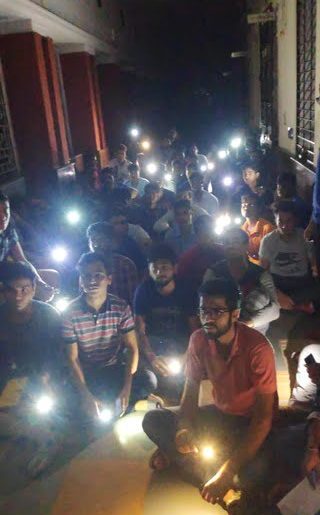
The residents of Hindu College Boys’ Hostel had posed the list of long-standing demands to the Principal on Monday, 24th February 2020 and on her failure to address them, they began an indefinite strike at 1:30 pm in front of the college administration. Around 50-60 students were protesting against three major issues:

  1. Merit criterion that was increased for the readmission of second and third years including PWD students
  2. Resolving of Wi-Fi problems. 
  3. Reinstallation of hostel boundaries that were broken for the construction of a food joint PAM (Pizza and More) within the hostel premises. 

The present criterion for admissions and retention of seats in the hostel is 6.5 CGPA for Arts and 7.0 for Science and Commerce courses and considered averse to the students participating in extracurricular activities or preparing for entrance exams. The residents demanded revision in the re-admission criteria, decreasing it to the previous 6 CGPA for Arts/Humanities courses and 6.5 CGPA for Science and Commerce courses and scrapping it altogether for Persons With Disabilities (PwD) students. In the official application to the Principal, the President of the Hostel Union writes that in case a student fails to maintain the criteria then his contribution in ECA and Sports should be considered. 

IMG-20200226-WA0061

Image Caption: Students write to the Principal for redressal of their demands. 

Regarding the Wi-Fi issue a resident of the hostel quotes, “Wi-Fi concerns the accessibility of study material to the students since DU servers provide access to academic websites and even general connectivity considering the poor signals around the campus.” In fact, a payment of Rs 3,500 was taken at the beginning of the academic year for replacing the existing Wi-Fi system but no action was taken. 

Pizza and More (PAM) is a shop in the college that was being shifted in one of the hostel lawns since a new building was being built over there. According to the students, the construction of the cafe in the hostel lawns is an attack on their democratic spaces where they can sit, talk, organize events or play cricket. A resident anonymously told us, “The decision of PAM being constructed in our hostel lawns indicates the increasing privatization in our college. Moreover, it would create inconvenience for the residents especially the ones residing in rooms facing these lawns since their privacy would be in threat and also the cooking would cause a lot of smoke”. Some parts of the construction were started without the consent of the hostel union after which it was destroyed by the students the very next day.  

The students ended their strike on Wednesday, 26th February 2020 after two of their three demands were accepted. They have been assured by the authorities that they will look into the Wi-Fi problems and construction of PAM. The residents reported, “The Principal told us that the readmission criteria are decided by the warden and hostel committee. Since we could get her to accept what was in her hands, we stopped protesting in front of the Principal’s office. The warden also has assured us that the hostel committee will try to relax the criteria especially for PWD students.”

DU Beat reached out to the Union members and residents on hunger strike for their statement, but is yet to receive an official response from their end. This report will be updated as and when the parties comment.

Feature Image Credits: DU Beat Archives

Aishwaryaa Kunwar

[email protected] 


After the controversy following the “V-Day Puja”, Women and Gender cells from across the University have risen to support the struggle of students at Hindu College against the sexist tradition, by observing a protest at the College on 17th February 2020.

 On 17th February 2020, Hindu College observed a demonstration against the College’s annual ‘V-Day Puja’ , annually celebrated on the Valentine’s Day, and the unsuccessful executional ban over this year’s annual puja. Despite previous negotiations amongst the Student body and the Administration, deciding an unanimous ban over the event for this year, it was still observed by the Boys’ Hostel Union on 14th February 2020.

Students claim that ABVP’s  men were allegedly involved amongst the mob that ignored the administration’s denial of permission and continued to observe the tradition.  A demonstration was therefore observed against the incident at 1 pm outside the college. However, ABVP has denied all claims of involvement, and have called the rumours of their involvement as criminal defamation.

Ankitaa Biswas, President, ABVP Hindu College told DU Beat, “ABVP-Hindu College was not involved in any act of hooliganism that happened on 14 February,2020 during the V-tree function within the college premises. Neither ABVP, nor any ABVP activist partook in the impugned act of campus commotion. All allegations pertinent to ABVP’s involvement in a bevy of mischievous acts ranging from provocative poster-making to incendiary sloganeering are unsubstantiated and appear contrived to sully the organization’s good name and reputation. Such unfounded assertions constitute criminal defamation.”

She further added, “According to several eyewitnesses, the sequence of events on that fateful day stands in stark contrast to the ridiculous claims being made by ABVP’s ideological adversaries. Saboteurs belonging to SFI, AISA and Pinjratod trespassed into the Hindu College, misbehaved with the students, and made extensive efforts to vitiate the atmosphere of peace and harmony on the campus.”

The Administration of Hindu College has been in question regarding the ‘V-Day Puja’ for years, with people claiming the tradition to be discriminatory, patriarchal, Brahmanical, and a blatant display of toxic masculinity and sidebars for female dignity. After the condemnation of the tradition gaining momentum, the students were denied permission by the Administration to observe the Puja. Yet the puja was still observed on 14thFebruary, with no retaliation from the administration and allegations of ABVP hooligans’ involvement in the mob that disregarded the official orders.

“The misogynistic acts besides V-Tree and violence on women and protestors on Valentine’s Day inside the College premises. We condemn such misogynistic and violent acts, stand in solidarity with the victims and demand immediate disciplinary actions against the harassers and who violated the decision which was declared the Principal in the Students-Admin meeting. The incident that happened at Gargi College shook us all and compelled us to think are University Spaces really safe for women? Are University Spaces really inclusive? This sorts of mobs that often enter College and University spaces to wreak havoc that we also noticed in JNU. All of us have to fight against the mob constitutionally and peacefully,” All India Queer Association (AIQA) stated.

Various Women and Gender Cells from across the University have risen up to provide support and stand in solidarity with the women students of Hindu College, namely the Women Development Cell of Miranda House, Lady Sri Ram College, Sri Venkateswara College, as well as Gender Forum of Ramjas College, The Gender Studies Cell of St. Stephen’s College, IP Student’s Collective, and the Delhi School of Journalism.

Feature Image Credits: DU Beat Archives

Shreya Juyal

[email protected]


This Valentine’s Day, let’s take out a page from University’s history. The chapter is regarding Hindu College’s (in)famous Virgin Tree (V-tree).

For those who are untouched with the lore of the V-tree, it’s is a tree present near the Hindu College library which  has been the site of a hostel ceremony observed every Valentine’s Day. A pundit from the hostel is appointed to do a puja around the tree which has condoms hanging from it and the poster of a Bollywood diva as Damdami Mai (any female celebrity in trend, hypersexualised for this purpose).

With the women’s hostel set up in recent years, a Love-Guru is also chosen to be worshipped by the women students. Yes, this is surely problematic but over the years, many saw this as just a casual joke in their ‘sex-driven college days’. The critics of the practice found their voices lost in oblivion. But since the past few years (especially last year), there was a whole clamour of voices echoing all across Hindu College.

Last year, the Women’s Development Cell of the College tried to reach an agreement with the Boys’ Hostel, who seemed to be pretty adamant on their stance of preserving the ‘College tradition’. But later on, the situation seemed to be manipulated, twisted, and turned a lot by the students and media alike, as the organisation Pinjratod too got involved, crossing the College’s gates on the eve of 14th February. This seemed to have hurt the ego of a majority of boys from the hostel, and they decided to conduct the V-Day puja with more pomp and fervour now. A few critics and Pinjratod members tried to raise slogans around the tree but to no avail.

Delving on last year’s incidents anymore would deserve a report of its own, and you can brush up your history with the Virgin Tree in DU Beat’s website itself. Now coming back to the present day, the situation seems to be quite perplexing. Ground reports suggest that a conscious voice among the students who stand against the V-tree ceremony has increased. At the same time, the ‘tradition preservers’ are still adamant.

On the 7th of February, talks tried to take place at the College’s New Academic Block but the adamant ones didn’t even agree to sit down at the discussion. Most of them stood tall and shushed the critics, justifying that they just want this puja to happen for the sake of the College’s culture and are not misogynistic, unlike the ceremony which they so vehemently support.

The main points of critique around this V-day ceremony are that it adds to the narrow view of looking at a ‘desirable’ male or female. So, a person is desirable, only if he/she looks like a Hrithik Roshan or a Disha Patani? In their defence, the hostel feels that this ceremony should be taken as a fun activity and they tried to accommodate other sexualities too (through a tokenistic rainbow-coloured heart featured in a poster hanging from the tree last year). The very fact that a pundit is appointed and a Hindu-style puja takes place, bothers some. Hindu College has ‘Hindu’ in its name but is a secular space, with no benefits given to any one religion.

What will happen now on the 14th, that, only time will tell but there’s still some hope brewing among Hinduites. A source from the Girls’ Hostel told us that they are planning to run a campaign wherein, the critics can try and
simplify the entire matter and actually explain to people what is the V-tree and why they are opposing it. There
are also hushed-down talks happening for a possible alternative ceremony around the tree that would not offend any religion, caste, or gender.

An all-night protest on the event (not by Pinjratod) is also likely on the eve of Valentine’s. Whatever be the case, it’s evident that on Valentine’s Day, love might be in the air but with revolution…

Shaurya Singh Thapa
[email protected] 

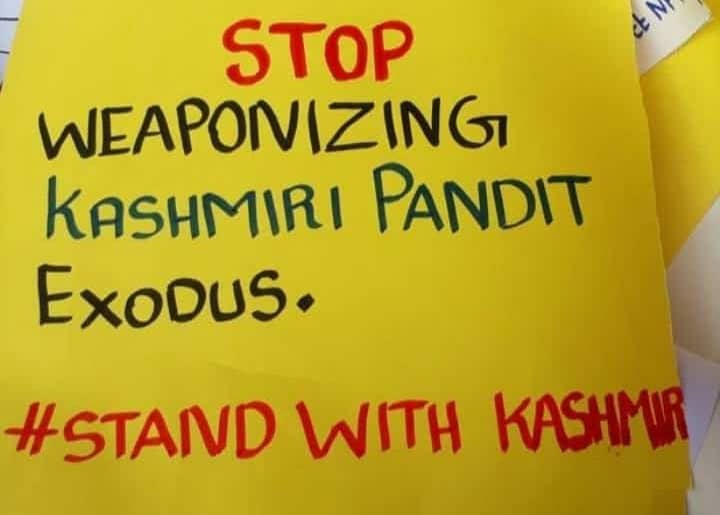
19th January has been a dark day in Indian history, marking the exodus of Kashmiri Pandits in 1990 after increasing attacks by Islamist insurgents. This day has hence been remembered by the country as a mark of respect to the community but has also been extremely politicised, mostly by the far-Right in various ways.

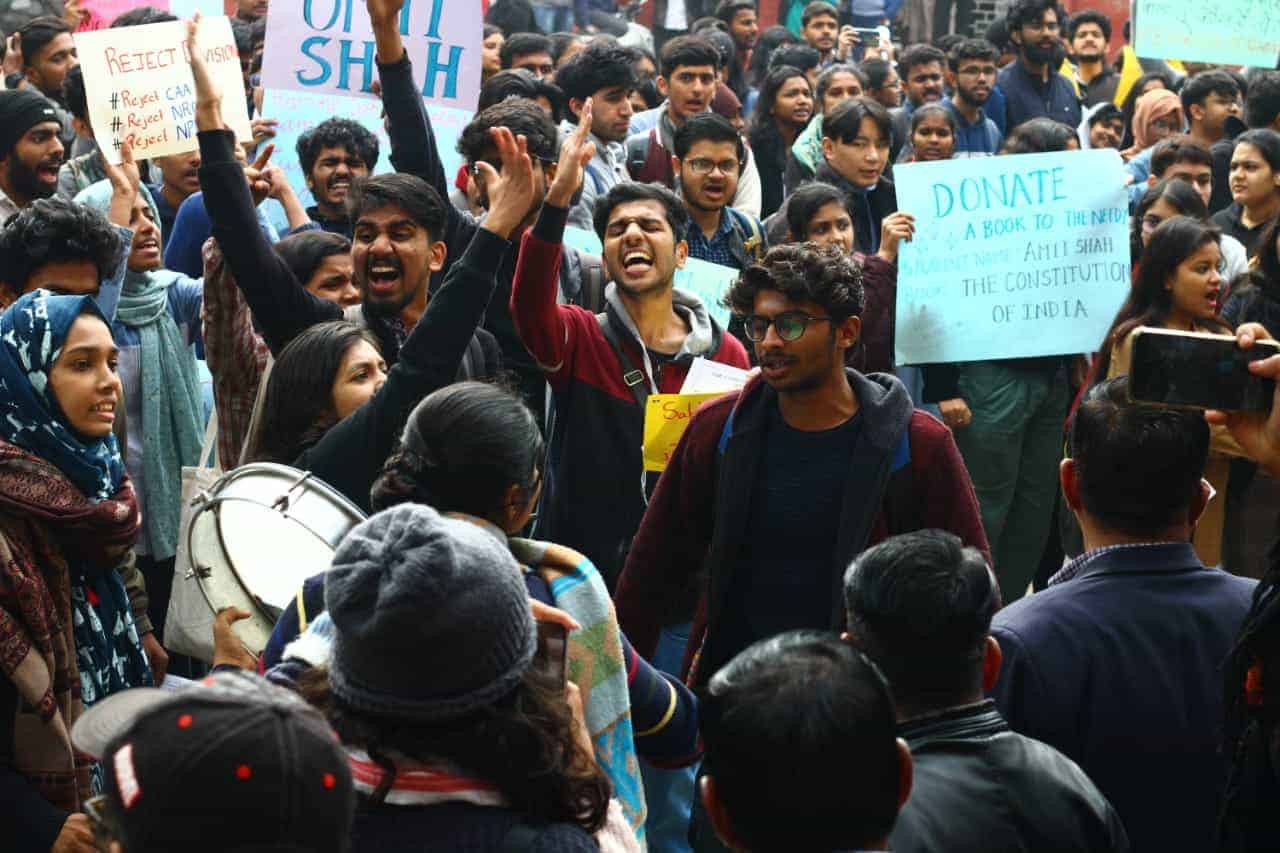
One example of this can be what went down this Monday at Hindu College. Like many other parts of the country, the protests against the ruling government’s controversial Citizenship Amendment Act are in full swing especially among the student community in Delhi.

Similarly, groups of students had planned to hold their march in solidarity to these protests, and a reading of the Preamble. By last Saturday, word began to be circulated so that other students of Hindu College would also know about the march that would start from the College’s New Academic Block (also called the Science Block) and cover the rest of the college too.

Coincidentally, by Sunday (19th January), a poster was being circulated regarding a gathering in memory of the tragic mass displacement of Kashmiri pandits at the Science Block on the same day, just half an hour before the march.

These two gatherings clearly felt to be organised by different sets of students. Controversy arose with a recent video featuring Deepika Sharma, a student from the college. She was at the talk on the Kashmiri pundits’ exodus at the Science block. According to what she said in social media, she was heckled by the participants of the other march.

The video of this has been misinterpreted and shared by various platforms like OpIndia, Swarajya, and The Logical Indian and some celebrities like director Vivek Agnihotri. Such sources allege that ‘leftist goons heckled and shouted at her’. In the video, you can hear ‘Islamophobia’ being shouted in the background by protestors. But here’s the truth behind it from ground reports at Hindu itself.

First of all, calling the protestors ‘leftist goons’ is a very basic stereotype and a false claim. For the truth is that not a single Left-aligned poster or flag (with allegiance to any Leftist student body like AISA and SFI) was raised. The students in the march and Preamble-reading had gathered as students of the college, and not representing a particular political front.

Second, the slogans regarding the current government being Islamophobic were not meant to bring down the talk on Kashmiri pandits at all. These slogans were raised, solely for the students’ own dissent. These were students. Not goons.

IMG-20200120-WA0183

Some of the protestors do feel that they could have silenced the volume of their slogans a little as they passed through the side of the Science Block where the other talk was happening. But before this issue gets further politicised, what needs to be understood is that this protest was anti-CAA and by no means, anti-Kashmiri Pandits or anti-Hindu as other sources or Deepika Sharma might misinterpret it.

In fact, as you can see in the image featured above, the posters used by the protestors also tried to evoke empathy for the pandits. This protest didn’t seem to have been pro/anti towards any religion or community.

So, one needs to go through the contexts of both these gatherings again before jumping to conclusions. A close analysis will tell you that the claim of ‘one girl battling the heckling of Leftist goons’ is an exaggerated misinterpretation of an unintentional clash of events.


Image Credits: Himanshu Singh and Abhiram


Shaurya Singh Thapa

[email protected]

Hostel dwellers of Hindu College protested in front of the Principal’s office against the new stricter criteria of attendance and GPA to be maintained to retain hostel accommodation in the second and third year by residents.

Recently, the newly-elected Students’ Union of Hindu College, led the protest against the hostel administration, as allegedly the college administration was threatening them by making calls to their families, and disciplinary action in terms of electricity cuts was imposed on the students.

The Union claims this was a protest to demand their rights. It was also said that these stricter rules were just to discourage the students to avail hostel facilities. The students also believe that the increase in fees of hostel facilities is just to pave way for privatisation of hostel in the coming years.

Delhi University (DU) Hostel for outstation students, who cannot afford the expensive PG life that Delhi has to offer, works as a suitable alternative. However, one must question the relevance of this protest.

Two years ago, the College Hostel administration had decided that only those who get above 6.0 CGPA in the Arts stream and 6.5 in the Science stream and who have above 67 per cent attendance will be able to retain their hostel accommodation.

Last year the it had been increased from 6 to 6.5 for the Arts stream and from 6.5 to 7.0 for science stream and the attendance criteria had also been increased to 75 per cent.

Many students were affected by this criterion, as it was stricter and student weren’t made aware of this earlier. However, no immediate protest took place.

There are few arguments that show this protest as a political move than a liberal one.

A Hindu College student who lives in the boys’ hostel, under conditions of anonymity told DU Beat, “The protest is not for the rights of the students. As the students of this year were well aware of the new rules as mentioned in our undertaking. The GPA and attendance criteria were mentioned.”

The Statement of undertaking is a legal binding document that is made signed by each hostel dweller. It is done so to make the students accountable for the conditions they have agreed on to avail hostel facilities.

As all the students had signed the undertaking in their complete senses, without any use of force, their right to protest against the rules is invalid legally.

Other than this, what is more astounding is the fact that when these rules were first implemented a year back, no protest or resistance took place, neither by the hostel dwellers nor the student union. The sudden need for protest raises questions of the intention of the protest.

Whether the protest was necessary or not, one must not forget that the hostel facility is the only way many outstation students can afford to study in DU.

For the update on the protest that took place, another student in anonymity told DU Beat, “There was only one protest by the newly elected Students’ Union and the other inmates. It was just really a one-evening-thing, and was resolved (called off) when they finally discussed the issue with the Principal.”


Feature Image Credits:  Yaksh Handa for DU beat


Chhavi Bahmba 

[email protected]


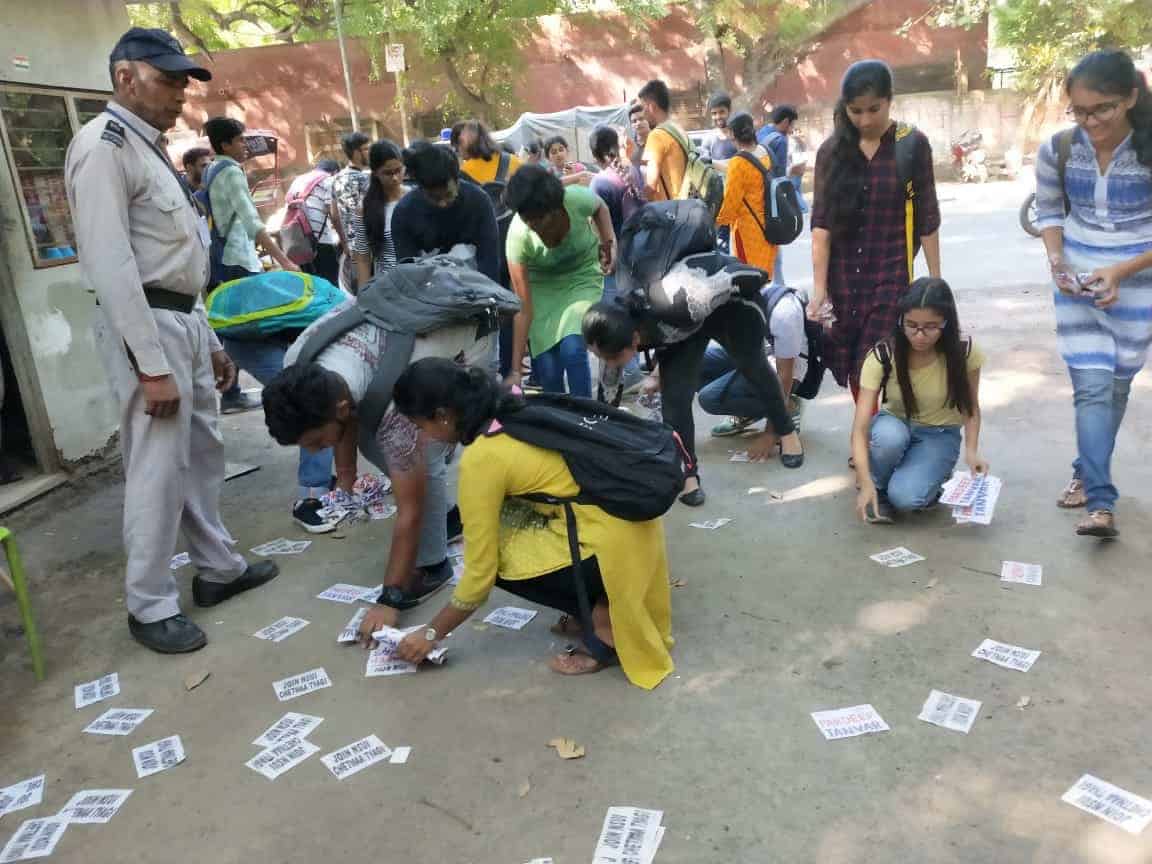
Every year around this time, Delhi University Students’ Union (DUSU) election approaches and so the campus also starts to get littered with posters and pamphlets. Posters can be seen on walls all over the campus and pamphlets scattered throughout the roads.

IMG-20190902-WA0022

But it is a matter of fact that very few are aware of National Green Tribunal’s order directing the University to ensure that no paper is used for campaigning on campuses and also it is prohibited to use printed materials for purpose canvassing according to Code of Conduct of DUSU elections.

IMG-20190909-WA0083

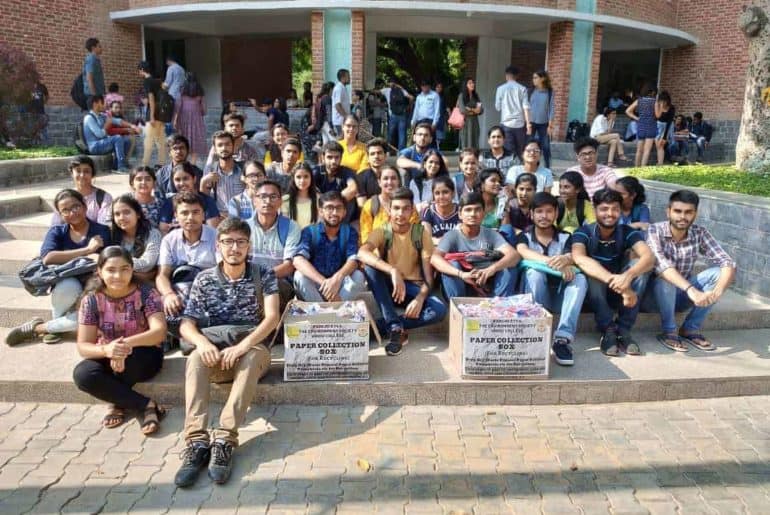
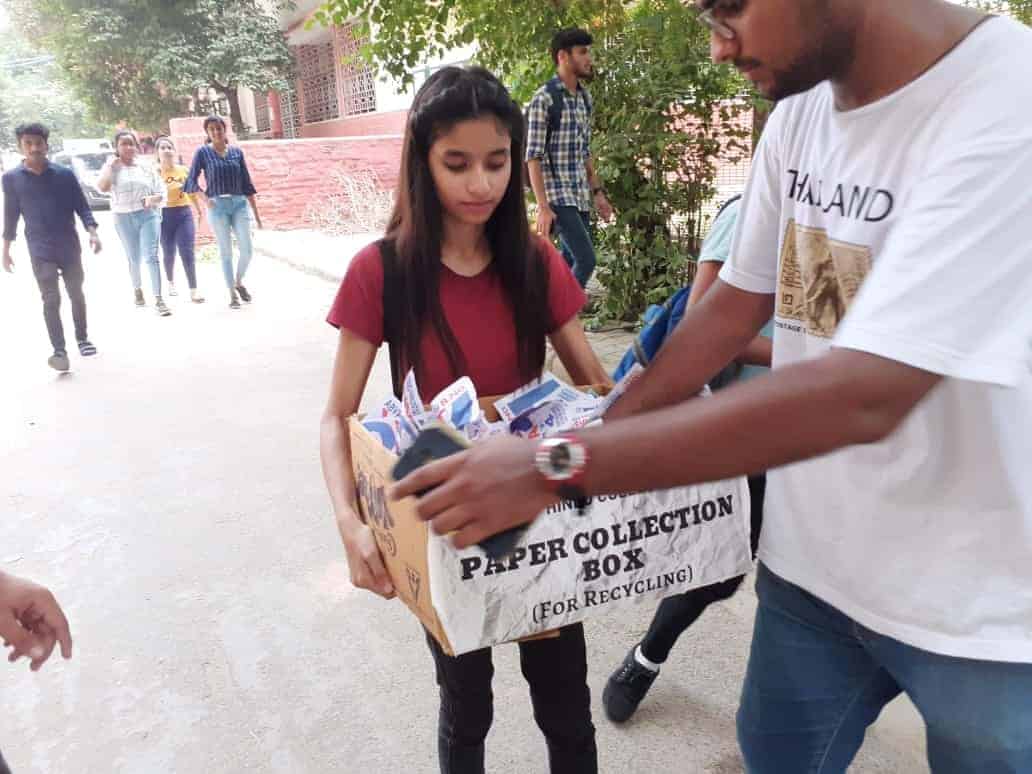
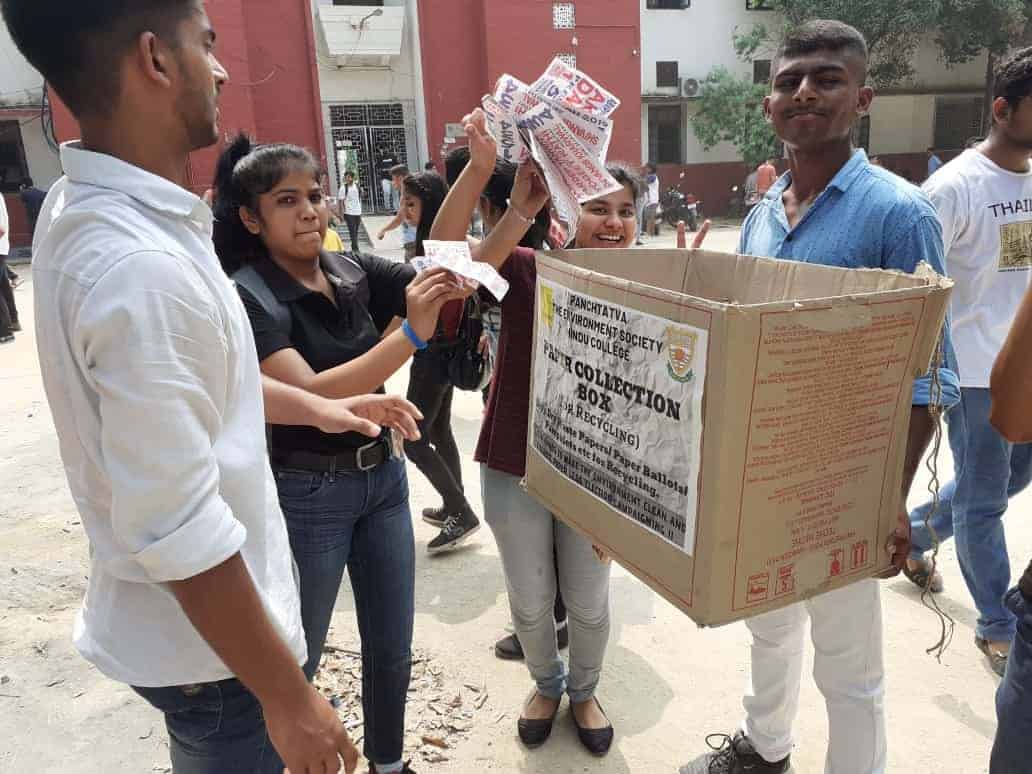
So realizing it’s responsibility, Panchtatva – The environment society of Hindu College under the guidance of its convener Dr. Anuradha Sharma, took out a Paper collection drive with 50 members of Panchtatva throughout the campus. The objective of such a drive was to collect the littered paper pamphlets and posters so that they could be sent for recycling later and also to promote clean environment around the campus inspired by the Prime Minister’s visionary Swacch Bharat Abhiyan.

IMG-20190909-WA0092

Dr. Anuradha Sharma, the convener of Panchtatva society, Hindu college said that it is the responsibility of each student to realize their duty towards the university and ensure to speak up and join hands together to prevent such wrongful practices in the University.

Atal Bihari Vajpayee once said, “There are only two Prime Ministers in India- one who sits in Parliament and another who sits in Hindu College.”  The College Parliament is a student body that enriches the higher education experience for Hindu College students by exposing them to new frontiers and paradigms of education, discussion, and debate. Officially known as the Parliament of the Republic of Hindu College, it is a historic student body that aims at active student participation in running the College.

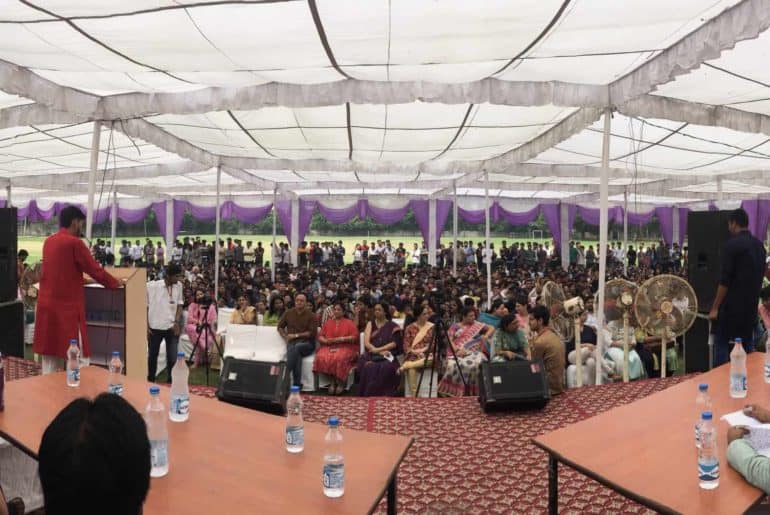
On 9th September, continuing the 83 years old legacy, the Symposium Society of Hindu College conducted the Annual Prime Ministerial debate, as a part of the ongoing campaigning for the college elections. The four candidates, namely Aman Malik, Ashish Kumar, Benna Fathima K. and Sanya Khurana,  fighting for the apex position in the college’s Parliament (the only one of its kind in the whole of the University) were given a platform to present their ideas, visions, and agendas in front of the whole college. Each candidate was given ten minutes to speak, which was followed by a Question Answer session – where one question for each candidate was entertained from the audience, and the candidates were allowed to ask one question to any other candidate. Apart from the students (known as the members of the Parliament of Hindu College), the President, the Speaker, and the Marshal of the House were also present. Moreover, this is the first time in the history of Hindu College that one can see two female Prime Ministerial Candidates standing up for the post. Also, the Hindu Progressive Front led by Benna Fathima is the new key player among all four panels.  The crowd was rapt in attention and charged with energy, the heat of the summer not deterring their support and voice for their panels. It was a highly successful event and the students left the venue with a much clearer picture of all the four candidates.

Shankar Tripathi, the President of The Symposium Society said, “We had special infrastructural bindings this year, since we didn’t have a fixed place to conduct the debate. The administration pitched in and we could conduct the debate out in the open, and I’m glad, even with all the heat and no seating arrangement for the students, there wasn’t any ruckus created. It’s safe to say that this was one of the most smoothly operated events even with all of the crowd going crazy for their candidates, and one of the biggest debates in terms of scale – all thanks to the society members and the crowd. I wish all the candidates the very best for the voting day”

Aman Malik, a Candidate for the post of Prime Minister, stated, – “My speech wasn’t a monologue, it was dialogue because the audience (my fellow students) were high spirited and exceedingly appreciative and motivated me to be where I was.”

Srijan Rai, a second-year student from B.A. (Honours) Political Science shared, “The intensity of the competition has certainly declined. Last year there was intense competition between all the five candidates, however this year the intensity of the competition was less. This is mainly due to the de politicisation brought in by several administrative measures. Secondly, this year owing to the rise in personality politics a single candidate emerged as the better one while last year even after the PM debate the people had difficulty in choosing the better candidate. Each year the PM debate evolves as the politics in Hindu evolves and the PM debate of this year was definitely one of a kind.”

Hindu is known for the platform it offers to the students to witness Indian Politics firsthand. The anticipation of ‘Who will win?’, ‘Who will lose?’, and ‘What this transpires into?’ will only settle on 12th September, the day all the students get to vote for their favoured candidates.

Feature Image Credits: Swareena for Vivre (Photography Society, Hindu College)

Bhagyashree Chatterjee

[email protected]


With some serious facts staring at us in the face, how are our educational structures evolving to cater to the deteriorating mental health?

In a study conducted by World Health Organisation (WHO) late last year, we were made aware of some devastating facts. India is one of the most depressed countries in the world, over five crore people suffer from mental health disorders and we recorded one of the highest numbers of work-place stress cases. From the 21st century, problems faced by teenagers have changed from excess alcohol consumption and teenage pregnancy to bullying, stress, depression, and body image and self-esteem issues. Distorted ideas of productivity, social media platforms, social stigma attached to mental health have all contributed to this, but our textbooks give the idea that these problems simply do not exist. The content in books in school, colleges and Universities remains largely outdated.

Societies can prove to be a good medium in college to initiate change. They can go beyond being performing and competitive, to providing guidance and support to students who need it. The biggest risk attached to mental health issues is that they are not visible, and so, regularly meeting people, developing friendships, finding a confidante can help in reducing stress.

Nithya, the President of Friends’ Corner of Hindu College, explained the impact of the society and peer counselling, “One can be an effective, empathetic listener, and a great shoulder to cry on among their own peers. We strive to make the college more empathetic, by making them realise every person is fighting their own battles, and if you are struggling, you are not alone. Conversations and sharing can really help in making individuals realise how similar their thoughts, anxieties and worries are.”

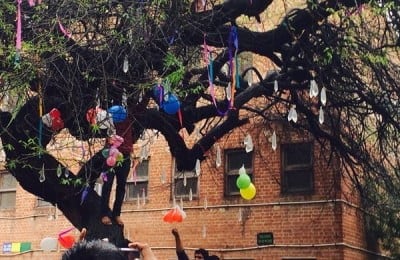
The Friends’ Corner also has a Good Vibes tree in the campus for freshers, who expressed on different coloured sheets representative of different emotions, how they felt on their first day,  which was then put up on the tree. Beyond having discussions, group sessions, and a flagship event: ‘Mental Health Summit’, they also have a page called “Humans of Hindu” for people to share their life stories.

A cell or society working towards mental health can prove to be very beneficial for the whole college. It can begin with a small step of approaching your administration. Discussions and talks can take place on individual problems, mental health issues and the society, stigmas, therapy and support groups. In order to create a safe space, confidentiality becomes a key factor, so certain measures can be taken to ensure that members can have a medium to vent in privacy as well. The society needs to be run by dedicated and proactive students to prevent it from become an inactive society.

In no way does this cell or society take the place of a counsellor or therapist. The dire need for college counsellors still remains and needs to be stressed on. Most colleges either lack a counsellor or have a temporary one, often close to no student approach this largely unavailable counsellor, and the whole process goes in vain. But this (society) can become a facilitator in that journey of betterment. Furthermore, creating these spaces can also set a chain reaction in other colleges. With around 90 colleges in DU, the reach can be tremendous. One can also reach out to other colleges, like Hindu College, to know more about a mental health and counselling cell.

Recently what gained traction was the introduction of a six-month certificate course on Happiness in Ramanujan College. It is a free of cost course, for which forty-five students have already been enrolled. It will judge students based on their attendance, project and course work. This step sets precedence for other institutes to also follow its lead.

Chief Minister Arvind Kejriwal introduced Happiness Curriculum till class eighth in all government schools. This pioneering step will tackle mental health problems from a young age, yet for now it stands the test of time.

While the reason behind mental health deterioration are many, it has been romanticised by shows and memes, further aggravated by our economy and job pressures, and absence of acceptance. When the recent budget came out, I anticipated whether our country would also take a step like New Zealand. In a revolutionary step, Prime Minister Jacinda Arden’s Well Being budget prioritised poverty and mental health. What cannot be ignored is that this issue creeps in through some crevices. Different steps are being taken, but more comprehensive and structural changes need to be brought by all bodies, including our University.

Feature Image Credits: The Central Digest

Shivani Dadhwal

[email protected]

The University of Delhi has released the fifth cut-off list today on the official website.

The admission under the DU 4th cut-off list ended ended on June 17th. The DU 5th cut-off list will be all about filling the seats in the reserved category in most colleges.

So far, the University has filled 67,419 seats out of the total 62,000. After the release of DU 5th cut-off, the admissions will take place from July 20, which will also be the first day for those who have already completed the admission process.

The candidates should note that this year, the university will notify just five cut-off lists.

Check this space for the latest updates on the fifth cut-off.

Click here to check the fifth cut-off list P.G.D.A.V. (E) College.

Click here to check the fifth cut-off list for Gargi College.

Click here to check the fifth cut-off list for Satyawati College.

Click here to check the fifth cut-off list for Shyam Lal College.

Click below to check the comprehensive fifth cut-off lists:

Arts & Commerce

Science

B.A. Programme