Tag

Delhi University

Browsing

Padma Shri historian Dr. Meenakshi Jain, former professor at Gargi College, nominated to Rajya Sabha by President Droupadi Murmu, for a six-year term starting July 21, 2025.


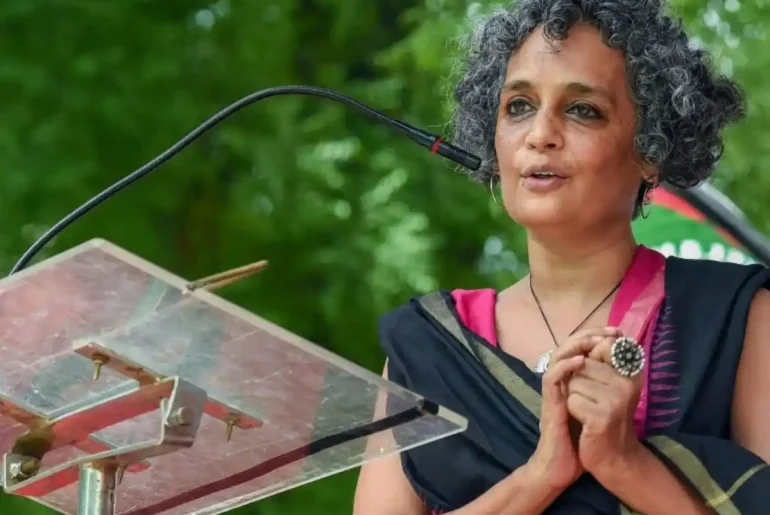
Dr. Meenakshi Jain, Former Professor of Gargi College, University of Delhi, is among the four individuals nominated to the Rajya Sabha by President Droupadi Murmu on 12th of July. She was serving as an associate professor at the Department of History, Gargi College

Her writings as a historian include, among many others, Ram and Ayodhya, The Battle of Rama, Medieval India, Sati-Evangelicals, Baptist Missionaries, the Changing Colonial Discourse, her most recent book, Vishvanath Rises and Rises in 2024, and the NCERT history textbook. Her work highlights alternating perspectives regarding medieval history, Indian culture and historiography coming from British times. She was conferred with the Padma Shri in 2020, the fourth highest civilian award in the field of literature and education.

“At a time when the nation is reclaiming its cultural confidence at the global stage, her presence in Parliament will ensure that policy debates are more informed’’, said Himanshu Kumar, a third year student at Hindu College recalling when she came to his annual department event. 

In response to a question about her future role in public life beyond the university as a Member of the Rajya Sabha, she stated,

I have not yet even joined so I think it inappropriate to comment on anything this soon.”

The other individuals nominated are public prosecutor Ujjwal Nikam, Indian politician C. Sadanandan Master, and former Foreign Secretary Harsh Vardhan Shringla. She will assume office from 21st of July, 2025 along with other members. Her tenure will  continue till July, 2031. From teaching college students to now serving the public, she has made a significant mark on history. 

Read Also: Delhi High Court Condemns Delhi University Over Treatment of Ad-Hoc Faculty; Orders Regularisation for 2 Professors

Featured Image Source: News18


Arya Chaudhary
[email protected]

In a recent order, the Delhi High Court bashed Delhi University’s appointment of ad-hoc faculty to substitute regular employment of professors, while ordering regularisation for 2 ad-hoc professors. 

In the past decade, the number of ad-hoc faculty appointments by Delhi University has skyrocketed, and along with that their treatment of such faculty has deteriorated significantly. On 11th July, the Delhi High Court in response to an appeal by two of Delhi University’s ad-hoc faculty, severely questioned the University for “consciously using ad-hoc appointments as a substitute for regular employment”. 

The ad-hoc professors from the Department of Germanic and Romance Studies, namely Namita Khare and Mehak Talwar, petitioned in 2022 against the University’s revised guidelines for the recruitment and shortlisting of Asst. Professors that covertly excluded long-serving ad-hoc teachers, despite them qualifying the eligibility norms under the UGC guidelines. 

Questioning Delhi University’s failure to recruit regular faculty while extending the petitioner’s tenure, the High Court bench of judges, Justice C.H, Shankar and Ajay Digpaul stated

The petitioners were not engaged for a finite project or stop-gap arrangement, but entrusted with core instructional and administrative responsibilities within a permanent academic framework.”

On a typical basis, Delhi University hires ad-hoc professors on quarterly contracts which are renewed with “breaks” to avoid legal obligations. However, under this system, many teachers have taught full-time for over decades without consideration for a permanent position, despite having performed the same duties as a regular employed faculty. Commenting on the same, the bench further observed

The petitioners’ continued exclusion from the zone of regularisation, despite fulfilling all eligibility conditions and having rendered long and meritorious service, is violative of Articles 14 and 16 and cannot be sustained.”

As of 2022, Delhi University has over 4200 ad-hoc appointments that makes up for 40% of its total faculty strength and in the past 2 years over 2000 ad-hoc teachers have been allegedly displaced. In an interview with the Indian Express, an ad-hoc professor at Ramjas stated that he had seen no progress in career, increments or medical benefits under DU’s system of ad-hoc appointments. Regularisation for such appointments, is thus, the need of the hour to ensure equitable treatment and fair service. 

A press release by the Democratic Teachers’ Front (DTF), Delhi University welcomed the regularisation order – 

The High Court order for regularization should be used to bring much awaited relief to serving adhoc teachers and those displaced.”

Rajib Ray, the President of DTF, recommended the regularisation of the remaining ad-hoc faculty as well as previously displaced teachers whose entire service should be counted towards all stages of promotion and retirement benefits. 

The High Court’s judgment, reflects the Supreme Court’s 2024 Jaggo Judgment, which recognised the need for regularisation measures for ad-hoc appointees who have performed indispensable services for a prolonged and uninterrupted period. 

DUTA Executive Member, Prof. Rudrashish Chakraborty further stated, 

The DU administration is guilty of exploiting the adhoc teachers during the best years of their life and then throwing them out through selection committees. This humane judgement will force the University administration to ensure the regularisation of the ad-hoc teachers in the rest of the colleges wherever interviews will be held and also to absorb those teachers who were displaced.” 

Given the current state of ad-hoc teachers at Delhi University with lack of increments, promotions or medical benefits, the HC judgement is expected to bring relief and hope for the improvement of working conditions and their shortlisting for permanent positions. Recently, the DU Vice Chancellor, Yogesh Singh has agreed to send an official representative to the University Grants Commission (UGC) as the ad-hoc faculty demands recognition of past service and provision of promotion and retirement benefits. 

Read also: DU sends UGC rep as teachers demand recognition of past service

Image Source: DNA India

Aaratrika Ghosh

[email protected]

New details have emerged about the case of the missing 19 year old student from Delhi University; investigation remains ongoing following the discovery of the student’s body.

Almost a week after a 19-year-old student, Sneha Debnath from Atma Ram Sanatan Dharma College, University of Delhi went missing, her body has been recovered following a 72-hour search by the Delhi Police under the Geeta Colony flyover in the Yamuna river on Sunday.

Debnath, originally from Sabroom in Tripura, had moved away from her family to Delhi in order to pursue higher education. She had resided in Paryavaran Complex, South Delhi, as of late and the discovery of a suicide note by her family in her college hostel points towards an alleged suicide attempt by the student. 

Sneha’s family and hostel authorities discovered a handwritten note in her room on July 13th, which seemed to indicate suicidal intent. The note, which is now under the jurisdiction of the Delhi Police for further investigation, read-

I just feel like a failure and burden, and it was getting unbearable to live like this. There is no foul play. It was my decision.” 

Eyewitness testimonies remained hazy, and Debnath’s body was eventually discovered under the Geeta Colony flyover in the Yamuna river and identified by the authorities.

The case had emerged on July 7, when Sneha had told her mother that she was going to meet a friend (Pitunia) at Sarai Rohilla Railway Station at 6:45 am to bid her goodbye for a train. Her family attempted to contact her two hours later, at 8:45 a.m., but all in vain, as her phone appeared to be switched off.

Pitunia admitted to not having met with Sneha earlier in the morning, and that Sneha had instead taken a cab to Signature Bridge, a known suicide spot where no CCTV cameras are functional – an issue that was brought up by her father in the past week, given that it hindered the search for his daughter.


“It is unacceptable that no CCTV cameras are working in a high-risk area like Signature Bridge. My sister was missing, and we have no leads because the only concrete form of evidence, video footage, is not available… We demand accountability from the Delhi Police and government, and immediate steps to fix this negligent failure.”
– Debnath’s family 


The cab driver in question confirmed dropping her near the bridge, and the National Disaster Response Force (NDRF) joined forces with the Delhi Police to conduct an extensive search across a 7-kilometre radius from Noida to Nigam Bodh Ghat. 

Sneha’s family, including her ailing father, a retired Army Subedar Major undergoing dialysis, had earlier expressed anguish over the delayed FIR, filed more than 48 hours after she was reported missing. He had taken to making emotional appeals on social media through posts that were popularised largely by students of Delhi University, eventually drawing the attention of Tripura Chief Minister Manik Saha, who instructed state police to coordinate with Delhi authorities and assist in the search. The Tripura CMO had earlier posted online:

I express my grief over her death, and my sympathy is with the bereaved family. I ask the authority of Tripura Bhavan, New Delhi, to render all possible help to the family.”

Image Credits: ANI

Aastha Singh

[email protected]

Despite the Academic Council’s approval of the policy of research and supervision in regards to NEP-UGCF’s fourth year policy in DU colleges, many concerns have been raised in regards to its implementation.

As of July 5, 2025; the policy of research supervision for the fourth year of NEP-UGCF has been approved by the Academic Council amidst dissent by several elected members. According to Rudrashish Chakraborty, who is Associate Professor at the Department of English in Kirori Mal College, as well as an executive of DUTA (Delhi University Teachers’ Association) from 2023 to 2025, the poor devising of the policy is owed to multiple reasons; the first of which include the lack of infrastructure in the form of space and laboratories in colleges to conduct quality research at the undergraduate level to research supervision not being accounted for as workload for teachers, excessively burdening teachers who are already inundated with work.

Aside from these issues, the division of workload has also been a contentious topic, with the policy deciding on a stipulation of a minimum of ten students to be allotted to a teacher for research supervision. This ratio is not only too high and would therefore jeopardize the quality of research, but also make coordination difficult as it is not possible for any teacher to do justice to the research work of so many students after engaging in their own workload.

In addition to this, no funds have been allocated for research work in the fourth year of UGCF, which leaves colleges to fend for themselves. Colleges in the Delhi University circuit are being advised to mobilise funds through the Students’ Fund, which may prove to be insufficient in the long run.In terms of research, the students are to study four courses alongside writing a dissertation, which not only takes the focus away from the conduction of research, but will also lead to a reduction of quality leading to research becoming a compulsion instead of being an original, worthwhile contribution to Indian academic spaces.

One of the guidelines for research supervision expects students pursuing the fourth year to publish in a scopus-indexed journal as research outcome. Given that even teachers would find it difficult to pursue such interests within the stipulated time while balancing full-fledged studying, this unrealistic clause will discourage students from pursuing the fourth year.

Anumeha Mishra, a member of the Academic Council, has stated,


The university must refrain from applying a one-size-fits-all size model in approving projects eligible for research funding under IoE. Discipline-specific parameters must be evolved.”

In 2019, Delhi University’s colleges saw a 25% increase in student intake due to the EWS expansion. An additional surge in admissions by 20% occurred following the implementation of the Common University Entrance Test (CUET) from 2022 onwards. This move, having been undertaken along with the fourth year, comes in light of accusations of mismanagement and lack of infrastructural accommodation for the rising number of student intake every year. The absence of laboratories, reading rooms, and teacher workspaces severely undermine the programme’s feasibility. The implementation, thus, appears rushed and in the absence of structural and financial support, risks diluting the quality of education and pushing the system toward collapse. 

Dr. Monami Sinha, also a member of the academic council, points out how undergraduate students currently studying seven courses per semester, including SEC and VAC, dilute the study of core subjects and awarding of credits per subject.

Read Also: Delhi University Faces Backlash for Linguistic Misrepresentation in CSAS UG Admission Form.

Image Credits: Hindustan Times

Aastha Singh

[email protected]

Delhi University’s PG syllabus cuts on religion, caste, LGBTQ+ issues, and Pakistan spark faculty backlash, raising concerns over academic freedom and ideological interference.

On 25 June 2025, the Standing Committee of the University of Delhi (DU) proposed several contentious changes to the postgraduate syllabi of Geography, Sociology, and Political Science. The revisions include the removal or significant reworking of content related to religion, caste, LGBTQ+ issues, and the study of Pakistan. The changes have triggered widespread criticism from faculty members, with further discussion scheduled in the upcoming meeting on 1 July.

In the Department of Geography, three major papers were affected. In the elective paper Territorial Bases of Politics in India, the committee objected to Unit 3, titled “Internal Conflicts and Problems of Nation Building,” which addressed religious conflicts. A key reading, The Production of Hindu Muslim Violence in Contemporary India, was removed. In Social Geography, Unit 4 on “Distribution of SC Population” was eliminated. According to committee members, this decision was made to de-emphasise caste-related material. Additionally, Vulnerability and Disaster, another elective, was completely removed from the syllabus.

The Sociology syllabus also saw significant intervention. In Introduction to Sociological Theory, the committee questioned the absence of Indian thinkers and suggested their inclusion. Objections were raised regarding the inclusion of the reading Weston, K. (1997). Families We Choose: Lesbians, Gays, Kinship, as same-sex marriage is not legally recognised in India. In Sociology of Religion, Unit IV on Religious Authority and Organizations was flagged for using academic terms such as “church,” “sect,” and “cult.” Members questioned why terms like “rishi-muni” were excluded. Despite faculty clarification that these were standard sociological terms, the committee still recommended revision.

Urban Sociology also faced changes. The committee argued that Unit 2 focused excessively on violence. Key readings addressing religion and caste were removed, including The Muharram Procession of Mumbai, Animating Caste: Visceral Geographies of Pigs, Caste and Violent Nationalisms in Chennai City, and Deceptive Majority: Dalits, Hinduism, and Underground Religion.

Some faculty members have raised concerns about the committee’s role in mandating syllabus revisions.

The Standing Committee’s direction to the Departments of Geography and Sociology to change their syllabi defies academic rationale and is an act of overreach. While the Standing Committee can share inputs and feedback with the departments, it cannot direct the departments to remove papers and readings without giving academic justification.”

said Rudrashish Chakraborty, Associate Professor at Kirori Mal College and elected member of the DUTA Executive (2023–25).

The Political Science syllabus came under the most scrutiny. Faculty members were directed to ensure the content remained “India-centric” and avoided material that “glorifies Pakistan.” This instruction aligns with Vice Chancellor Yogesh Singh’s earlier stance amid recent geopolitical tensions.

Dr. Monami Sinha opposed the changes, stating,

“It is imperative to study Pakistan in detail because, pedagogically, we need to train our students and foster scholarship on Pakistan, as it remains one of India’s constant foreign policy challenges.”

Four electives relating to China, Pakistan, and Islam in international relations were removed. These included Pakistan and the World, China’s Role in the Contemporary World, Islam and International Relations, and Pakistan: State and Society. In Religious Nationalism and Political Violence, the topic “Sangha politics, civil warfare and the peace process” was removed, along with the reading by Blom Hansen on Hindu nationalism and violence.

Read Also: DU Student Murdered by her Classmate; Body Burnt at Delhi’s Sanjay Van.

Image Credit: Times of India

Yashika Jain 

[email protected]

Delhi University’s Sri Guru Gobind Singh College of Commerce reported a massive fire in the college library on Thursday morning, destroying over 3000 books and leading to the cancellation of the morning semester exams. 

In Northwest Delhi’s Pitampura, a massive fire was reported at Sri Guru Gobind Singh College of Commerce, University of Delhi in the morning hours of Thursday, May 15th, 2025. According to the Delhi Fire Service (DFS) chief Atul Garg, the fire broke out around 8:55 in the morning and 11 fire tenders were rushed to the college who managed to bring the situation under control by 9:40 A.M. In response to the ongoing cooling operations, a senior fire official added, 

Several window panes shattered due to the high flames, and the fire spread rapidly due to strong winds. Our teams responded swiftly and managed to douse the flames.”

Originating in the college library, the fire impacted the building’s first, second and third floors, extensively damaging the infrastructure and academic material. Reports state that though there were no casualties, over 3000 books have been destroyed along with the library’s online system being damaged. Although investigations are currently underway to determine the exact cause, a senior college official informed the Press Trust of India

A short circuit in the library’s server triggered the fire, extensively damaging hundreds of books in the section that housed old books. The library is still filled with smoke, and a detailed assessment of the losses will be possible only once visibility improves.”

Sri Guru Gobind Singh College’s Principal expanding on the extent of damage added

Only the top floor of the library was caught in the fire. The books on that floor were damaged due to the blaze, but we kept old editions of books and those in less circulation on the top floor. The newer editions of books were on the ground and second floors. There was no damage to our archival section as it is not on the top floor.”

Although there is widespread damage, the library’s facility system is reportedly functional with the manual issuing of books to students amid the ongoing end-semester examinations of Delhi University. Around 400 undergraduate students were scheduled to take the examination during the morning session which was cancelled in lieu of the fire breakout. However, since the library was housed in a separate building, the examinations scheduled to take place from 2:30 to 5:30 P.M. were conducted after the handover by the fire department. In conversation with the Indian Express, Principal Jatinder Bir Singh further stated, 

Since lights were to be cut off for the fire department to extinguish the fire, we postponed the exams scheduled in the morning. Afternoon examinations went on as usual. The controller of examination is yet to notify a fresh date for the exams”. 

Recently, Delhi University’s Kalindi College reported a ceiling fall falling on the head of a faculty member causing serious injury. In light of such incidents outrage has sparked amongst students who raised concerns of student-faculty safety and welfare over the deteriorating condition of the infrastructure of DU colleges. In a statement released by the National Students’ Union of India (NSUI) on 15th May, they questioned the negligence and demanded immediate safety audits in all colleges throughout Delhi University. 


Read also: Thefts and an Unaccountable Administration Raise Concerns at Kirori Mal College

Image Credits: The Telegraph

Aaratrika Ghosh

[email protected]

University of Delhi’s Sri Venkateswara College witnessed a massive footfall following the culmination of its Annual Fest, NEXUS, in March.

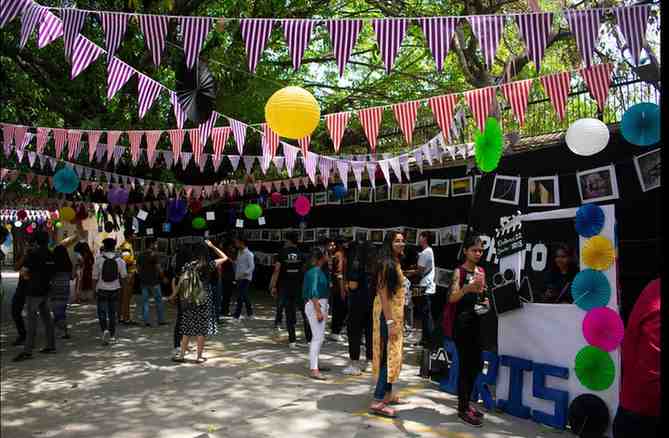
Sri Venkateswara College, under the aegis of the University of Delhi, celebrated its Annual Fest, NEXUS, on the 3rd, 4th, and 5th of March this year. Upon entering the college gates, one witnesses what appears to be the college’s way of presenting an ode to Delhi—a Jashn-E-Dilli, if you will. Every corner has been decorated with banners naming popular sites of everyday pilgrimage, from the Faqir Chand and Sons bookstore to Sarojini Nagar.

An inauguration ceremony preceded the performance of the Dramatics Society of the college as they took to the front lawns on Day 1 from 9.30 A.M. onwards to celebrate Madari’25, an annual street play event, abuzz with the energy of the performers. Crescendo, the Western Music Society of Sri Venkateswara College, presented the Battle of Bands from 1 to 5 P.M. as a tribute to Delhi, the heart of the country’s music revolution. In the midst of it all, Alaap, the Indian Music Society of the college, presented Raageshwari, a polyphony of melodies, at the Indian Classical Choir Competition. While Nrityangana, the Indian Dance Society, took to the dance floor in solo and group dance competitions.

As you enter the building, leaving behind the cacophony of singing voices and the chants of the dramatists, you are met with Mehfil-e-Tamasha, an improv battle taking place in Room 57. If there is one thing that has stood out by now, it was the dedication with which all artists performed, the veneration they heaped onto artistry, eventuating in a showdown for the history books.

Kurukshetra, the crew-based dance competition, preceded the performance of the night by The Frequency Project, who gave music a Sufi spin in their own rendition of popular classics.

Day 2 was marked by Effulgence, Sri Venkateswara’s Photography Society’s annual display, Kodachrome, taking place in tandem with Opera D’Arte 3.0, Leonci Art Society’s annual display. A student from Lady Shri Ram College for Women, who planned on staying for the Mr. Professor’s DJ nights after participating in H#, the Western Acapella Competition, stated:

It’s been an interesting run so far. The wins were well-deserved. I’m staying here till 6 for the DJ.

As is the case with every DU-affiliated college, the sole event that marked Day 3 was the performance of the much-awaited artist. This time, Javed Ali of Guzarish fame took to the stage. Post Dilli Ke Darshan, the concert gave people in the audience a lifetime of memories and then some more.

Featured Image Credits: Arush for DU Beat

Aastha Singh

[email protected] 

The final day of Nexus 2025 at Sri Venkateswara College saw unexpected crowd surges, security lapses, and logistical issues, raising concerns about event management and attendee safety.

Sri Venkateshwara College (SVC) hosted its annual fest, Nexus, from March 3 to March 5, 2025, bringing together students from across Delhi for three days of music, cultural events, competitions, and live performances. However, the third day in particular witnessed an overwhelming surge in attendees due to the much-anticipated concert by renowned singer Javed Ali with an estimate of over 6000 people inside the venue. The massive turnout quickly spiraled out of control, with people even jumping over the college fences in an attempt to enter the premises, leading to injuries, security violations, and more chaotic scenes at the venue.

Even though the official instructions stated that the college gates would be closed by 2 PM, they were shut as early as 1:45 PM, leading to a massive crowd gathering right outside the campus gate. Many students, including members of the organizing committee, repeatedly requested the guards to reopen the gates, but their pleas were ignored due to the already overwhelming number of people inside the college premises. The situation quickly turned disorderly as students found themselves trapped as those outside struggled to get in, while several inside were unable to leave due to the tightly packed crowd blocking the exit as the same gates were being used for both the entry and the exit. Moreover, the crowd outside the gates was so dense that students caught in the middle or near the front had no clear path to vacate the place either.

In conversation with DU Beat, a Delhi University student, Kalyani said,


The crowd was so packed outside the gate that even though we wanted to leave, we were trapped there for 3 hours outside the campus until the gates were reopened. Even though the police were trying to get people to leave, it was incredibly difficult since there was no way out of the crowd, making the entire situation a lot more suffocating.

Another student, who wished to remain anonymous, shared that beyond the suffocating conditions, the crowd was also unsafe with many female students facing groping and harassment. She said, “We noticed that no one was following the queue, and everyone had gathered at the gate, so we decided to join the crowd. However, the situation turned unpleasant as I faced a lot of groping and misconduct, which was horrible, but apart from that, once we were inside, it was fine.”

While many students blamed management, the organizers had a different perspective. Talking to DU Beat, Nandini Das, the Vice President of the SVC student union, stated,

Well, we had over 6000 students inside the campus area, and the same number of students were waiting outside the campus. As a union member, it was very tough for me as well as my fellow members to manage because we had a management team of at least 50-100 who were looking after a crowd of 6000 plus. But hopefully the police and CRPF had helped us a lot, and also the injured people were provided medical service immediately. And I think you can’t blame anyone for mismanagement because I do believe that you should have some civic and moral sense of how to behave in a public place. Out of 6000, if 1000 people are trying to violate the protocol, then I think it’s the individual who’s the problem.

However, students from SVC did have complaints regarding the management of the fest. Vanshika, another student of SVC, said, “It was very chaotic. The roads outside were blocked for over 4 hours, with even Venkateshwara students being stuck outside campus for hours. It should’ve definitely been managed better by either not allowing students from other colleges or by not making them stay outside for so long.”

Beyond the numerous issues faced by those stuck outside and the minor altercations that broke out on campus, there were also allegations of misbehavior by the management towards the media team. Aashvee, a videographer present at the event, revealed,

Despite having barricade passes for the star night as per the official Memorandum of Understanding (MOU), our team was subjected to harassment, humiliation, and outright negligence at the hands of the event’s so-called management. Random individuals, including non-students, effortlessly jumped over them and entered restricted areas unchecked. Meanwhile, our media team, stationed in the designated media section as required for coverage, was singled out and aggressively confronted by two members of the event staff.”

Overall, the last day of Nexus 2025 highlighted the difficulties of managing large-scale college events. Overcrowding, security lapses, and logistical challenges created a chaotic environment, leaving both attendees and organisers frustrated and raising concerns about safety. While efforts were made to control the situation, the incidents call attention to the importance of better planning and stricter crowd management in future fests.

Read Also:  Security: The Overrated Inconvenience During Fests at Women’s Colleges

Featured Image Credits: Ayushmaan for DU Beat

Ashita Kedia 

[email protected]  

The University Grants Commission has requested a dismissal of all incentives to MPhil and PhD holding faculty members last month to prevent objections during audits. Potential salary cuts may be in the works.

Several faculty members of the Lakshmibai College of Delhi University possessive of MPhil and PhD degrees had to see pay cuts in their salaries in February following a government directive.

The directive enforced a mandate which had been in place for eight years to roll back increments provided to faculty members on the basis of the seniority of their degree (particularly MPhil and PhD holders). The implementation of the order came as a complete shock to the teaching faculty at Lakshmibai College, who then arranged a meeting with Principal Pratush Vatsala in February itself to further discuss matters.

The matter could be traced back to 2010, when the University Grants Commission had declared five salary increments for PhD holders, three for faculty members on study leaves for a PhD as well as MPhil holders and one for acquiring an MPhil in service.

Then, in 2017, The Ministry of Human Resource Development (HRD) advocated a discontinuation of these benefits, citing benefits in relation to relaxation of required experience for promotion of faculty members from the position of assistant professor to associate professor.

The decision had yet to see implementation following Delhi University’s silence on the matter. The University Grants Commission, however, has advocated for a disruption of incentives to avoid audit objections in the near future. So far, Lakshmibai College and Shyam Lal Evening College have implemented the order. In a conversation with The Telegraph, a Delhi University Teachers’ Association (DUTA) Member had stated,

The UGC’s 2018 regulations continue the incentives. It has helped in attracting candidates with research qualifications to join institutions. Withdrawal of the incentives will adversely affect teacher quality in institutions.

The Delhi University Teachers’ Association has declared a strike for all incumbent members on 7th March (Friday), from 10.00 A.M. to 05:00 P.M. with an order of suspension of all classes until then.

Read Also: Delhi University VC Sparks Debate by Dropping Baburnama and Manusmriti from UG History Syllabus

Featured Image Credits: DU Beat Media Library

Aastha Singh
[email protected]

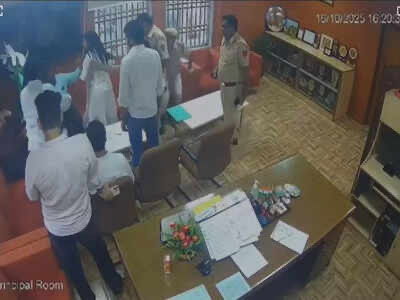
On Friday, protests took place in the arts faculty led by the Student Federation of India (SFI) and another one staged by the students in Shaheed Bhagat Singh College responding to an alleged case of assault on a Dalit student by the college principal.

On the 18th of September 2024, protests were staged outside the office of Shaheed Bhagat Singh’s principal, Prof. Arun Kumar Attree. These protests, led by a Dalit student, were in response to an alleged incident of blatant casteism and assault on him by the principal. The Dalit student, Sumit, claims that Attree assaulted and hurled casteist slurs at him amidst an attempt for a forced confession for an incident that allegedly took place in September.

On 24 October 2024, several obscene videos were sent to students and teachers alike in the Hindi Department’s WhatsApp group. They were sent through the phone of one of Sumit’s classmates. On suspicion of hacking and frustration of negligence to these issues, the matter was brought to the principal through a letter sent in by Sumit and his classmates.

Recalling the incident at an AISA-led student-teacher convention on Tuesday, he alleges that such incidents were not news and had taken place numerous times before but were swept under the rug.

They took my phone and went through everything they could despite assuring us of our privacy prior. They even went through my chats with my sister and a whole lot of other things that I probably am not aware of.

Following the letter, an investigative committee was formed to look into the matter. They allegedly seized the phones of the suspect and, in Sumit’s case, went through his private photos and even through chats with his family. This was an obvious and absurd breach of one’s right to privacy as laid down in Article 21 of the Indian Constitution.

We’d get you arrested, taint your character certificate, and make sure your career goes nowhere from here on if you do not confess to having dispersed the videos. If you get away with all that, we still wouldn’t let you in without charging a hefty sum.

These were allegedly the things said to Sumit once he was called to the principal’s office, where, despite the committee admitting to having found nothing against him, Attree pressured and threatened Sumit to confess. He, alongside other professors, tried locking him in to physically assault him further. There were casteist slurs thrown at him and told how he “looked” like someone who would do such a heinous act. Sumit, as he alleges, was made to sit through all of this for 5 hours.

You could tell he is the culprit just by looking at his face.

This was allegedly remarked on by Mahesh Kumar Choudhary, a professor in the Hindi department at Shaheed Bhagat Singh College. Sumit, after the incident, was treated like a convict in college classrooms, and as he put it, it’s almost always people from the SC/ST communities who are singled out and discriminated against.

Disappointed and upset, Sumit and his friends went to file an FIR at Malviya Nagar police station on charges of breach of privacy. This is where the trial of disappointing events, allegedly takes pace. The police, after having heard his complaint, dismissed it initially.

You are no Ambani that your privacy would matter.

The Delhi Police, on several occasions, have dismissed such complaints or handled them poorly. Why should one’s economic or social standing be a determiner of a right to a dignified life? Dr. Rakesh Kumar, a professor at the college and also present at the student-teacher convention, alleges that FIRs aren’t registered against the principal owing to his familial ties to the higher-ranking officials in the Police Force.

Attree has denied any wrongdoing with a statement to Indo-Asian News Service (IANS) saying, “The student has been manipulated by a teacher, who is currently undergoing an inquiry related to false certifications. The student himself faced an inquiry after there were allegations that he had previously hacked people’s phones and sent obscene messages”.

Curiously, it is not the first time Attree has found himself in hot waters, as he infamously detained 1500 students last year on grounds of mandatory attendance criteria. Under his tenure, he has introduced what many view as “anti-democratic” measures into the campus space. He has barred students from hanging out in groups of 4 or more and has installed CCTV cameras everywhere, including the staff rooms, which is seen as an authoritative move in an attempt to curb any sort of opposition he may feel.

Nandita Narain, former President of the Delhi University Teacher’s Association (DUTA), condemned the incident and expressed her support by saying,

Such incidents of blatant authoritarianism are increasingly more common, as seen by recent incidents in Laxmibai College and Shaheed Bhagat Singh College. I hope strict action is taken against Attree for this crime against humanity. I also hope for greater representation of the SC/ST community in positions of power at the university level shortly as a means to combat this issue.

Read also: Students demanding concessional metro passes led by SFI-Delhi detained by Delhi Police

Featured Images credits: @sbscduofficial on X

Yash Raj

[email protected]