Tag

admissions

Browsing

For this academic session, the University of Delhi has decided to bring in a number of changes in its admission procedure.

The University of Delhi has introduced a number of changes in various aspects of the admission procedure, which begun on 30 May for various undergraduate courses, for the academic session 2019-20.

Seats and separate cut-offs for EWS

Following the Central government’s decision to reserve 10 percent seats in educational institutions and government jobs for the Economically Weaker Sections (EWS) across caste and religious backgrounds, which came earlier this year, the varsity has decided to reserve 10 percent seats for the EWS category, taking the total tally to 62,000 seats.

The EWS category will also have a separate cut-off list, The Indian Express reported.

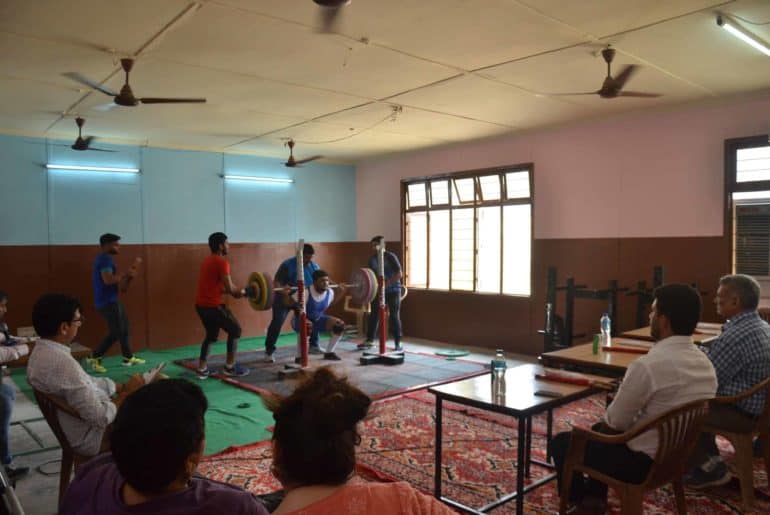
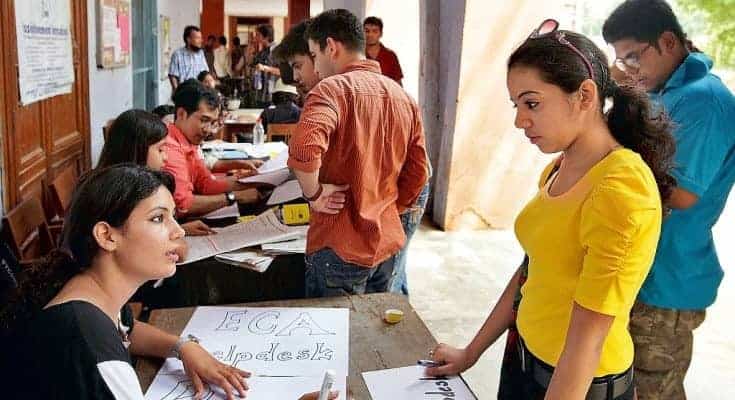
12 sports removed from sports quota list, added to ECA

PTI reported that twelve sporting activities have been removed from the sports quota list. These include yoga, archery (Indian round), ball badminton, baseball (women), softball (men), korfball (men), 4×100 m relay race, cross-country running, cycling, fencing, powerlifting and best physique.

On the other hand, “27 sports under the sports quota that are part of Olympics, World Championship, Commonwealth Games, Asian Games, Asian Championship and Paralympics have been included.”

Yoga has been added to Extra Curricular Activities (ECA) list instead.

Expansion in list of academic subjects

DU Beat had previously reported about the University’s decision to include all 22 Modern Indian Languages (MIL) – as mentioned in the Eighth Schedule of the Indian Constitution – in it’s list of ‘academic subjects’. Along with Hindi, these include Assamese, Bengali, Bodo, Dogri, Gujarati, Kannada, Kashmiri, Konkani, Maithili, Malayalam, Manipuri, Marathi, Nepali, Odia, Punjabi, Sanskrit, Santhali, Sindhi, Tamil, Telugu and Urdu.

Moreover, some subjects offered by state boards, which were previously considered ‘vocational subjects’ have now been added to the academic list, Hindustan Times reported. Among these subjects are Biochemistry from the Jammu and Kashmir board, Civics from the Uttar Pradesh board and Statistics from the Maharashtra board. The list previously contained only subjects taught in class 12 in schools affiliated to the Central Board of Secondary Education (CBSE).

Earlier, the inclusion of such subjects and some of these languages in the ‘best of four’ score would have resulted in a 2.5 percent deduction from the aggregate score of an applicant. Now, that provision has been removed.

Apart from this, in its ‘Bulletin of Information’, the University has mentioned that if the title of a subject studied by a student does not match with what has been specified in the varsity’s list of subjects, the applicant is required to provide a “content equivalence certificate from the Principal/Head of the Institution last attended, certifying that the paper’s content is equivalent to NCERT Class XII syllabus for that paper. This equivalence certificate must be accompanied by a copy of the syllabus of the paper attested by the Principal/Head of the Institution.” However, the University’s “decision on the matter will be final and binding”, it read.

Scholarships for students whose parents are deceased or unemployed

A press release made by the University on 29 May read, “The University of Delhi is considering to provide full scholarships to the students whose both parents are deceased/unemployed and half fee waiver to those students whose earning member is deceased in order to cover their college/University fee.”

Higher cancellation fee

The varsity has decided to increase the fee for cancelling a secured admission from ?500 to ?1,000 to “ensure students weigh their options and seek admissions” and “to discourage multiple cancellations”, The Indian Express reported. Only one cancellation per cut-off would be allowed.

Software changes

An online calculator would be available for students to fill their marks, which is being claimed to be mobile-friendly and workable on a 2G network as well.

At an additional price of ?100, students would be able to edit their forms after filling them during the registration process.

The University dashboard will also show the number of seats available and the number of seats taken for a course to which a student is applying so that students “do not end up applying to a college where seats have already been filled”, a report by PTI read.

The University has also tied up with the CBSE to access its database of results from 2014 to 2019, The Indian Express reported.
Image credits – Aakarsh Gupta for DU Beat

Prateek Pankaj
[email protected]

The University of Delhi (DU) has begun the online registrations for admission to various undergraduate (UG) courses. Here is a guide to help aspiring students. 

DU offers various UG courses in different colleges. The admission procedure for these colleges is common, except for St. Stephen’s College and Jesus and Mary College, which have a separate admission procedure. The admission portal for 2019 opened on 30th May. Following are the steps that are to be followed for the admission process:


Note: Applicants must apply only through the common application form for admission to the undergraduate programmes (both entrance and merit-based).


  • Registration

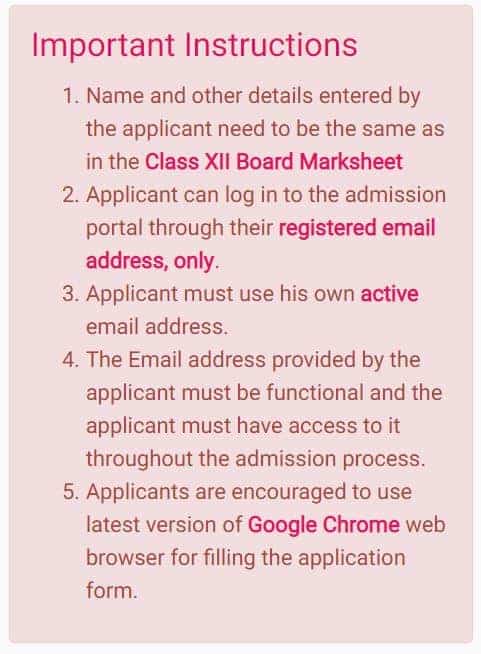
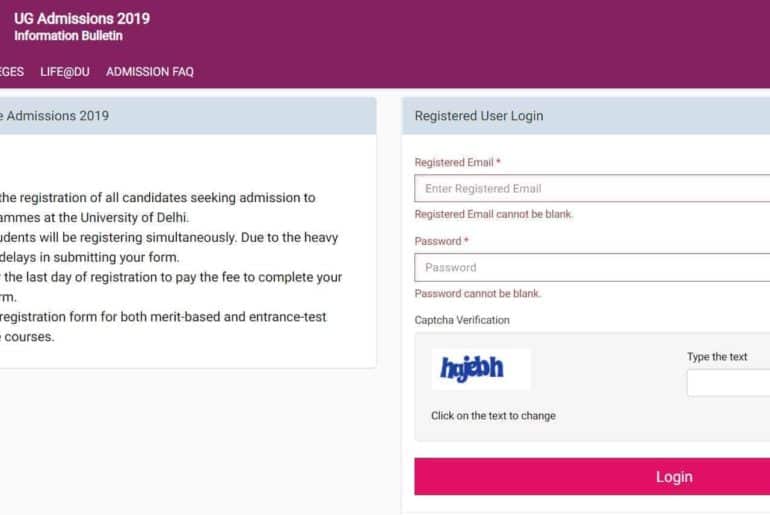
The students have to go the Admission Portal at https://du.ac.in and click on the link for ‘New Registration’. The students will then be asked to enter their Central Board of School Education (CBSE) – or any other board – roll number, email ID, and phone numbers which will be saved for further procedure and forms. This information cannot be changed further.

Pic 1 Admission Process

Image Credits: University of Delhi

  • Filling the form

The registration form is to be filled by students with extreme care and involves information regarding 9 different subparts.

InkedPic 2 Admission process_LI

Image Credits: University of Delhi

  • Personal – Personal information includes place of living, studying, etc. Family information and quota details are also to be filled.
  • Academic – The roll number and marks obtained in various subjects for respective boards are to be filled. Those who have not yet received their examination marks can just fill the board exam details and roll number.
  • Merit-Based – The applicant has to choose his/her favoured courses out of the plethora of merit-based courses offered by the University like B. Com, B.Sc. and B.A courses.
  • Entrance Based – DU offers the following courses in which admission is rewarded through entrance examination to be conducted by the National Testing Agency. The students will have to pay extra fees for each entrance-based test they apply for.
  1. A. (Honours) Business Economics [BA(H)BE]
  2. Bachelor of Management Studies [BMS]
  3. Bachelor of Business Administration (Financial Investment Analysis) [BBA(FIA)]
  4. Tech. (Information Technology and Mathematical Innovations) [BTech(IT&MI)]- CIC
  5. A. (Hons.) Humanities and Social Sciences [BA(H)HSS]- CIC
  6. Bachelor of Elementary Education [B.El.Ed]
  7. Bachelor of Science in Physical Education, Health Education & Sports [BSc(PE, HE&S)]
  8. A. (Honours) Multimedia and Mass Communication [BA(H)MMC]
  9. Five Year Integrated Programme in Journalism [5YIPJ]
  10. Bachelor of Arts (Honours) in Percussion Music (Tabla/Pakhawaj)
  11. Bachelor of Arts (Honours) in Karnatak Music- Vocal/Instrumental (Veena/ Violin)
  12. Bachelor of Arts (Honours) in Hindustani MusicVocal/Instrumental (Sitar/Sarod/Guitar/Violin/Santoor)
  • Sports – Applicants seeking admission through Sports Quota can apply through a maximum of three sports. An additional fee of INR 100 is charged for admission through Sports Quota. The students can either seek admission through Super Category: Admission without Sports Trial which involves National representation in specified World Events or via Admission on the Basis of Sports Trial which involves 40 marks for certificates and 60 marks for trial performance.
  • ECA – Applicants seeking admission through Extra Curricular Activity (ECA) Quota have to upload only one best achievement certificate in their chosen category. Each student may register only through three ECA Categories. An additional fee of INR 100 is charged for registration through this category.
  • Uploads – This section is specifically for uploading several admissions related, academic and identity documents which include the following.
  1. Passport size photograph of the applicant (10-50 kb in size for upload in jpg/jpeg/png format).
  2. Scanned signature of the applicant (10-50 kb in size for upload in jpg/jpeg/png format).
  3. Self -Attested Class X certificate/marksheet containing Date of Birth (100-500 kb in size for upload in jpg/jpeg/png format).
  4. Self -Attested Class XII Mark Sheet, if results have been announced. (In case the Marksheet has not been issued by the Board, a self-attested copy of the Marksheet downloaded from the respective Board’s website should be uploaded). (100-500 kb in size for upload in jpg/jpeg/png format).
  5. SC/ST/PwD/CW/KM Certificate (in the name of the Applicant) issued by the competent authority (100-500 kb in size for upload in jpg/jpeg/png format).
  6. OBC (Non-Creamy Layer) Certificate (in the name of the applicant) issued on or after March 31, 2019. The OBC caste must be included in Central list issued by the Government of India. http://ncbc.nic.in. (100-500 kb for upload in jpg/jpeg/png format).
  7. EWS Certificate issued by Sub District Magistrate, certifying the applicant can claim reservation under this category, dated March 31, 2019, or later. (100-500 kb in size for upload in jpg/jpeg/png format)
  8. Self-attested copies of Sports and/or ECA certificates. (100-500 kb in size per document for upload in jpg/jpeg/png format), if applying under these categories.
  • Preview – The applicants can see a final preview of their application herein and confirm all the filled details.
  • Payment – In this last section, the students can initiate the final payment post which their registration will be complete. The payment is as follows.


  1. Registration fee for merit-based courses for UR/OBC –  INR 250
  2. Registration fee for SC/ST/PwD/EWS INR – 100
  3. Additional registration fee for ECA/Sports INR – 100
  4. Additional registration fee for each entrance-based course for UR/OBC INR – 750
  5. Additional registration fee for each entrance-based course for SC/ST/PwD/EWS INR – 300

All the aspiring students are requested to check the Undergraduate Bulletin of Information available on the University website which provides in-depth knowledge about the admission process. The varsity is also conducting open sessions for the benefit of the students. The next sessions will take place on 3rd and 8th June at Conference Centre, Arts Faculty, North Campus.

Feature Image Credits: University of Delhi


Sakshi Arora

[email protected]

The University of Delhi made some changes with the calculation of best of four percentage for both B.Com (Hons.) and B.A. (Hons.) Economics which has severly impacted the students.

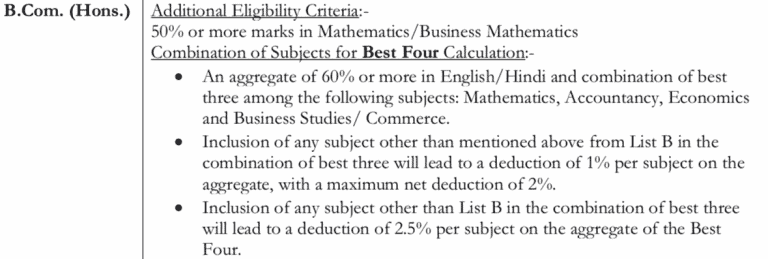
University of Delhi (DU) in a monumental move has announced that Class 12 marks in Mathematics will now be mandatory in the best of four (BoF) for students aiming to study B.A. (Hons.) Economics from the academic year 2019-2020. Students aspiring to pursue B. Com (Hons.) will also require 50% marks in Maths to stand eligible for the course.


Admissions 2019- Maths Mandatory in Best of Four for Economics Hounours (1)   Admissions 2019- Maths Mandatory in Best of Four for Economics Hounours 2


Earlier, the prerequisite for these two sought-after courses was to pass in Mathematics but this move has created another hurdle for students.

Devyani Arora, a B. Com (Hons. ) student commented, “The 50 percent marks requirement in Mathematics is essentially an important caveat for admission to B. Com (Hons.) simply because a lot of students would take mathematics as their additional subject and get the passing requirement, just for the sake of securing an admission in DU in the honours course. However, the mathematics taught in Class 11th and 12th is extremely important in Business and is a core subject in the course too, but there are barely students in class who actually know the subject.”

While this announcement has its positives, what is being criticised is the timing of this news. With the admission process now in its first step, for several the aspirations of studying at the prestigious University will reach an uncertain step. Several ex-students are also protesting against this move.

Vidhi Arora, a B.A. (Hons.)  Economics student of Kamala Nehru College commented, “DU admissions are not as wholistic as it should be considering it solely focuses on marks. But this is a good move because if you are studying Economics, you need a good grasp of maths otherwise you will face difficulties in many concepts. This will affect percentages, obviously, but from a more long-term view, it is best.”

In a situation like this it is important for students applying to not panic and plan their next course of action. One should maximise options for later by keeping an open mind in selecting courses in the undergraduate application. If there is a significant drop in the best of four, the previous percentage can open doors to many other courses and colleges. Those holding onto their course should, with full composure, wait for the successive cut-off lists to be released. These two courses being a popular choice will be available in several colleges so keep an eye open and mind for all colleges in both the campuses. Furthermore, aspiring students should remember that lakhs of other students will also face this same obstacle, and which could reflect in the cut-offs as they are released.

Image Credits: DU Bulletin Board

Shivani Dadhwal

[email protected]

The portal will reopen from 16th to 25th June to enable foreign students to register for admissions. This has been agreed to be as the second phase of admissions due to the large number of applications. 

The University of Delhi (DU) has decided to reopen its admission portal for international students in respect to the large number of applications received this year for various courses offered in undergraduate, postgraduate, M.Phil, PhD, and diploma courses. The varsity usually opens its portal for international students at a much earlier date as compared to for Indian nationals – that is at the beginning of the year itself. The admissions that began on 22nd February had successfully ended much earlier with respect to applications. It seems that this year, the number of applications has been much higher.

The number of foreign students in DU has risen steadily over the last few years. The students mostly belong to countries from the subcontinent like Nepal, Afghanistan, Maldives, Sri Lanka, Vietnam etc. Besides these, there has also been a growth in the number of students enrolled in the University from European and other Asian countries like Japan. The quality of education and the low living cost are some of the reasons for this surge. The University also has taken great care to attract more students with international hostels and special transport services. With more than 3000 applications from international students in the year 2018, the varsity has proven to be an attractive educational opportunity.

The time period for the opening of the portal is from 16th to 25th June. All courses, apart from MBA, have been opened and are receiving applications. The first phase of shortlisting and selection is yet to be completed. After this, the second phase would be considered.

The international students have a quota under which they get selected. These students are chosen on the basis of merit under the concerned department they have applied for or the consideration of the faculty based on the number of seats available.

DU has been able to gain worldwide recognition for its ability to attract foreign students. Colleges like St. Stephens had three students from Japan last year and three students from the USA this year, with more students going to be enrolled in this academic year. Interestingly the college also offers Indian students the opportunity to study in Japan for a year as well. Other colleges of the varsity, too, have a number of foreign students enrolled.


Feature Image Credits: Foreign Students’ Registry


Stephen Mathew

[email protected]


The University of Delhi has decided to increase the total number of seats in order to implement the 10% Economically Weaker Sections (quota). The increase in seats will be implemented in two phases- 10% in 2019 and 15% in 2020.


After approval of the provision of reservations for economically weaker section students (EWS) in Central Education Institution, the Delhi University decided to increase the total seats by 25% in two phases- 10% in 2019 and 15% in 2020. The provision for reservations for economically weaker sections has been provided for in the 103rd Constitutional Amendment Act, which provides for the advancement of the “economically weaker sections” of the society.

 
Earlier, 15% of seats were reserved for SCs, 7.5% for STs, 27% for OBCs, 5% for PWD, 5% for CW category, 5% for Foreign Nationals and 5% for Sports/ECA people.
The increase in seats is to be implemented in order to ensure that the students of the general category are not at a disadvantage because of the increase in total percentage of reserved seats. The seats for MPhil and PhD section of Mathematics, Science, Commerce and Social Science will increase with the enforcement of 10% quota. The seats are likely to be increased by 148 for the reserved categories.

 
Professor Hansraj Suman, Chairman of Delhi University SC/ST/ OBC said, “Currently 660 seats are sanctioned under MPhil programme, in which 467 aspirants were admitted while 237 seats remained vacant in the previous academic session. In allotted 467 seats, seats allotted for the general candidate- 246, OBC-116, SC-69, ST-36, and PWD – 16 got admission in the previous year. With the enforcement of EWS, seats secured to the general candidates are 338, OBC 182 and SC 101, ST 51, EWS 68 seats.

For the same, the PhD has 800 seats in total in which 500 seats are sanctioned for general candidates, OBC 156, SC 110, ST 34, and PwD 15, whereas with the enforcement of EWS quota, 400 seats are for general candidates, OBC 216, SC 120, ST 60, EWS 80,” as quoted in Millenium Post.

Professor Suman added that the Dean has also informed him that due to the increase of 10 percent EWS seats, a teacher can also appoint researcher as their subordinate research director under the UGC rules. And as per the rules, 8 PhDs and 3 MPhil students can do their research work with a professor, while with associate professor 6 PhDs and 2 MPhil students can do their research work and with an assistant professor, 4 Ph.D. and 1 MPhil.

 
Abha Dev Habib, a DUTA member told DU Beat, “The last time when there was an increase in number of seats because of a resolution for 27% reservation for OBC students, the University was provided with funds to improve the infrastructure of colleges and to recruit more teachers but the process is still incomplete as formal letters were not issued and the required number of posts were not released. Now, for 10% EWS quota, 25% of total seats are to be increased but no provision for improvement in infrastructure has been provided. This will lead to overcrowded classrooms and in order to impart quality education it is necessary to maintain the required student-teacher ratio.”
She further added, “Around 60-70 percent of the students will be from the reserved categories which make it necessary to give more focus on improving the quality of education and equipping the labs with proper equipment in order to make the degree meaningful for them.”
However, many other changes have also been suggested by the admission committee in order to make the admission procedure simpler and more efficient, which includes developing a mechanism to avoid duplication of registration data. The University has decided to share filled up dummy forms release tutorial videos on its official website to guide students on how to fill the forms. The committee has also decided to finish the admission procedure before the session commences. However, there have been constant delays in releasing of admission forms and it is now confirmed by the Dean of Students Welfare, DU that the forms will be out in the beginning of June.
On the issue of delay in commencement of the admission procedure, Abha Dev Habib said that the delay is because of the new changes that are being made in the process. She went on to add that the introduction of new changes every year is very unsettling and the University should try to get done with the process soon as usually, the admissions go on till September which makes it difficult for the students to put up with the semester system.


On Monday, the Akhil Bharatiya Vidya Parishad (ABVP) submitted a letter to the varsity administration in order to inquire about the delay in the beginning of the admission process. They also urged them to initiate the process quickly and remarked that the delay is worrisome for the students.

Featured Image Credits- The Indian Express
Priya Chauhan
[email protected].

The Central Board of School Education (CBSE) has decided to begin its procedure of re-evaluating the class XII board examination marks of students from 24th May. On the other hand, the University of Delhi (DU) is expected to begin its admission procedure soon, thereby creating misalignment in the two schedules. 

Media house NDTV reported yesterday that the CBSE had written a letter to Professor Tarun Kumar Das, Registrar, DU, to align its undergraduate admission procedure according to the CBSE’s own re-evaluation schedule in order to avoid hassles for the applicants.

This year, the CBSE had announced the class XII results on 2nd May, which is much earlier than it usually does. In fact, just 28 days after the exams got over. This was following a Delhi High Court order. According to the report, the results came around three weeks ahead of the usual schedule, and even prior to the Indian Certificate for Secondary Education (ICSE) exam results.

NDTV quoted a board official as saying, “The Delhi High Court had asked all the boards to finish the result process before the undergraduate admissions begin so there is no hassle about pending results and students being stuck.”

It also quoted a statement of the Board, “CBSE will be completing its re-evaluation process also at the earliest. Now, the University of Delhi has to fix the last date of submission of application in such a manner that the work of re-evaluation is over prior to the last date of the admission process.”

The directive of the High Court, acting on which the CBSE had declared its results earlier this time, came after a student was denied admission to Lady Shri Ram College for Women (LSR) last year because of delayed re-evaluation by the board, despite scoring the requisite marks to get admission through the first cut-off list, Indian Express had reported. “The student, who had originally secured 95.25%, qualified for admission in the college’s BA (Honours) History programme after her score was increased to 96.5% post-re-evaluation. However, her re-evaluation was completed by the CBSE, two weeks after admission to the course was closed”, the report said.

A clash between the dates of DU undergraduate applications and CBSE re-evaluation schedule could affect students who wish to apply to the university with their re-evaluated marks.


Feature Image credits- Telegraph India


Prateek Pankaj
[email protected]


To stay relevant in the 21st century – the University of Delhi (DU) needs to let go of its laissez-faire attitude. Read our Editor’s take on why DU is trapped in its own history.

Making it into DU was a dream for so many of us. We battled the unpredictable and exhausting board examinations, obsessed over  cut-off lists, and withstood the impossibly frustrating admission process to finally make it here. Once here, all the effort seemed worth it. To study with the brightest people in our generation, participate in DU’s competitive society culture, absorb its active protest culture, and learn under its brilliant faculty, made it a one of a kind experience. This, coupled with a relatively relaxed attendance policy and reasonable fee, was enough to make this place a dream come true.

However, three years in the University and my rose-coloured glasses have finally worn off. What I saw as the culture of protest is actually teachers and students demanding basic resources and rights. What was seen as thriving society culture is the students’ way to keep themselves occupied and challenged since the varsity offers few opportunities to do so. The affordability of DU is constantly at threat, with newly established schools like Delhi School of Journalism charging a hefty fee and offering sub par education in return. With the Higher Education Funding Agency and the current government’s obsession with privatisation, DU’s accessibility is historically most vulnerable right now.

However, this is not all. The bigger problems with DU are related to its academic rigour. The truth is, towards the end of our three years, there is very little that the institution has taught us.

This facade of DU’s reputation has limited influence; recruiters and major corporations are distinctly aware of how little a DU degree teaches you, which is perhaps why they avoid us like the plague. Navigating the process of landing your first job on your own is chaotic and most people seek the security of campus placements. However, in DU, the word ‘placement’ is reserved for commerce students from the five top – ranked colleges in the varsity. It’s not as if commerce students or those in top colleges are necessarily more skilled than the rest of us but selective elitism goes a long way. The rest, pursuing other “non-employable” degrees in the remaining colleges, cannot aspire to be recruited in any capacity.

Don’t get me wrong, I am grateful to DU for the exposure and experiences but they were by and large the product of the hard work of the students who made societies their life and gave them their competitive edge. Apart from its reputation, there is very little that DU offers us. My resentment stems from the fact that I, like my peers, am horribly under-prepared for the real world. It is responsible to revive the curriculum to make it competitive with other universities, and it is their responsibility to realise that their job does not end by offering students mere theoretical knowledge.

Sports facilities in DU are underwhelming and most sports’ quota students find their own way of training themselves independently. Certainly, there is a funding crisis that the varsity is experiencing and the threat of a bigger impending crisis looms above the surface, but even existing funds aren’t appropriately utilised. For example, in 2017, the varsity returned 108 crores to the University Grants Commission (UGC) because it could not find an avenue to spend it. Three crore rupees allocated by the UGC remained under-utilised and had to be returned as well.

As I reflect upon my three years in DU, I am grateful for the creative minds I got the opportunity to interact with. However, nostalgia has not clouded my judgment and I know that there was so much more that DU could have offered and so much more that I deserved. The only people who graduate from DU and make it in life should not be B.Com. students, IAS officers, rich kids whose resources get them into an Ivy – league college for Master’s or those studying in Hindu, Lady Shri Ram, Stephen’s, and Hansraj. The rest of us also deserve access to an education that teaches us the required skills, has a curriculum abreast with top international universities, and offers us the opportunity that allows us to get employed if we wish to be. Like an egocentric, ageing actor who cannot get over their glory days, DU is iconic but stuck in the past. It needs to catch up with the times and enter the 21st century. After all, reputations alone can only last so long.  

Kinjal Pandey
[email protected]

St. Stephen’s College will soon begin the admission process, reportedly from 6th May. Unlike other colleges in the University of Delhi (DU), it has a long process for selection along with high cut offs.

The admission process in the University of Delhi (DU) for the cycle of 2019-2020 will begin with St. Stephen’s College releasing its prospectus, admission application, and residence forms on 6th May.

The college has a different admission procedure from other DU colleges. After clearing the cut-offs, students write an exam and then have an interview for their selection. In this, class 12 marks carry a weightage of 85%, the aptitude test carries 5% and the interview carries 10%. The college has 410 seats and offers 10 courses, including English, Computer Science, Urdu, and Persian, among others. It also has 40% seats reserved for Christians.

In the 2019 college rankings by the National Institute of Ranking Framework (NRIF), St. Stephen’s stood as the fourth best college on the list and third best college in Delhi. Given its prestigious name, the competition to get into one of the best colleges is also equally high, where the cut offs last year soared to a 98.5% for Economics and 98% for English for General category aspirants.

The college also releases separate cut-off lists for courses in Humanities, Commerce, and Science. As seen in last year’s cut offs, Commerce students have a relatively higher cut-off, sometimes by a margin of 2.5%.

In order to apply to DU, the students need to first register in the university admissions portal to generate a form number and ID, which they then use to apply to the different colleges. For the application to be valid, students also need to pay the admission fee. Jesus and Mary College also follows the same procedure for admissions.

Feature Image Credits: Adithya Khanna for DU Beat

Shivani Dadhwal

[email protected]

The University of Delhi is aiming to include more transgender students during the University admission process, but given the archaic thoughts in Indian society, will this lead to positive consequences or their further isolation?

In 2015, the University of Delhi (DU) introduced the option of a ‘third gender’ to its admission forms. But for the next three years no admission was taken under this category. To improve this, in 2018, DU further established a Transgender Resource Center  to reach out to more transgender students but the authorities met the same fate.

The authorities have now decided to reach out to encourage more admissions of transgender students. The process will involve reaching out to neighbourhoods, organising camps and sessions, spreading information about the admission process, and requirements regarding the same. Student volunteers and NGOs working for the welfare of the community will be actively involved in the process. The centre would also engage in dialogues with female professors and students to remove the restrictions related to the admission of transgenders in all women colleges.The University authorities have also collaborated with National AIDS Control Organisation, Delhi and Haryana state AIDS control societies for the same.

A number of harassment cases have also been noticed in the past. A student’s petition led to the Article 354(A) under the Indian Penal Code which allowed transgender individuals to complain against harassment. Another transgender student on speaking to a national daily spoke how they were called a chakka on the day of admissions itself. The problem also extends to lack of washrooms and other provisions for these students.

Transgender students have appealed to the court to allow them to change their name and gender in forms. However, this can be allowed only if they change it on their school certificates. The High Court ordered the officials from Central Board of Secondary Education to meet the University authorities and take a decision on the same. This is also because 80% of the applicants are from CBSE. For now, these students are only applying to the School of Open Learning.

Devyani Arora of Kamala Nehru College provided a positive view on the same. She said, “For any sort of inclusivity, there would be certain barriers, but the idea of starting something like this becomes extremely important. The inclusion of transgenders is not just needed, but also a great step for their upliftment.”

For the community to gain acceptance, it needs access to education which can further lead to their emancipation.

Feature Image Credits: The Indian Express

(With inputs from The Times of India)

Shivani Dadhwal

[email protected]

The varsity offers over 500 programs at undergraduate and higher levels making it an appealing choice for foreign nationals for applying.

The application process for foreign nationals seeking admissions in Delhi University (DU) began on Friday, 22nd February. Applications are open for undergraduate, post-graduate, M.Phil, Ph.D, certificate, diploma, and advanced diploma courses.

All applications will be accepted through the official website for foreign students – http://fsr.du.ac.in/. At first look, the window looks almost exactly like the one which is made available for Indian students, however, the application fee is INR 1500, which is 10 times the normal remuneration.

The website details a comprehensive, four-step procedure that the prospective students are supposed to follow in order to apply. After having filled the online application form, they are to attach documents in accordance with the guidelines of the Foreign Students’ Registry (FSR). Hard-copies attested by the Embassy have to then be sent to the FSR by post.

Following is the scrutiny of the application, after which the applicant is informed via email. If selected, further documents, like the visa have to be arranged for. On reaching Delhi, the students check with the FSR, and that is the end of the procedure. “The process was very straightforward, and, from what I’ve heard, much less cumbersome than what DU students go through to get in,” is the opinion of Sam Halpert, a History Honors student at St. Stephens, who is an American resident.

The University also provides an International Students’ House for male students, located at Mall Road, for those who wish to stay there.

Times of India reports that that last year, DU received over 3000 applications. Most of these are from the sub-continent. Afifa, a first-year B.Com Honors student of Shaheed Bhagat Singh College hails from Afghanistan and says that an Indian education was, arguably, the best thing that happened to her, and something that would set her course for getting a better life.

Besides countries like Nepal, Afghanistan, Myanmar and the likes, DU also has students coming in from the US or UK. When asked why he chose to come to India when so many Indian students are trying to study in the US, Halpert listed several reasons. “I have been exposed to a much more monolithic depiction of India and wanted a deeper window into what factors shape Indian politics and the Indian economy. I am also betting on India playing a more important role in geopolitics in the coming years. While many Americans are turning their focus to China, I see India as a country that also deserves a closer look. Having a deeper understanding of India will be crucial to remaining a global power,” he said.

The difference in tuition fee is another appealing component to him. “Although I think I pay more than a national student, that is still less than what I pay in the US, especially coupled with the lower cost of living in Delhi.”

In any DU college the cut-offs are the basis on which admission is sought. But in case of foreign students, it is a centralised allotment on behalf of all the colleges of the University. “There is no cut-off. Instead the dean asks us to choose among some college according to our percentage. We can surely persuade them to give us  better options,” says Vikalp Kashyap, a first-year B.Com Honors student.

Foreign students studying in DU is not just advantageous to them, but to the Indian student community as well, because it provides a wholesome, more global outlook.

Feature Image Credits: fsr.du.ac.in

Maumil Mehraj

[email protected]