Author

DU Beat

Browsing

CVS faculty has opposed DU’s proposal to discontinue six BA Vocational Studies programmes, calling it illegal and against NEP goals, despite the university citing low student demand under CUET-based admissions.

Faculty members at the College of Vocational Studies (CVS), Delhi University, have formally opposed the proposal to discontinue six undergraduate BA (Vocational Studies) programmes and replace them with generic interdisciplinary BA combinations for the 2026-27 academic session.

Currently, CVS offers seven BA (Vocational Studies) programmes across a total sanctioned intake of 1,255 students. Out of those, only Tourism Management is proposed to be retained under the restructuring plan, while the remaining six programmes: Modern Office Management, Human Resource Management, Marketing Management and Retail Business, Materials Management, Small and Medium Enterprises, and Insurance Management are proposed to be discontinued. Of these, Modern Office Management, carrying 111 sanctioned seats, was already actioned through a governing body resolution dated February 7, with its seats redistributed into an additional B.Com (Honours) section and expanded seats in BA (Honours) English, History, and Economics.

The remaining five programmes were placed before the Department of Commerce meeting on June 26, where faculty discussed their proposed replacement with interdisciplinary BA combinations including Commerce with Economics, Commerce with Computer Science, Hindi with Commerce, Economics with Mathematics, and History with Political Science. The department unanimously resolved to oppose the move and decided to submit representations to the Vice-Chancellor, the Dean of Academics, and the Dean of Admissions, requesting that existing BA (Vocational Studies) programmes be continued.

The broader restructuring stems from a university-wide committee exercise launched after persistent seat vacancies emerged following the centralisation of admissions through CUET in 2022. The committee recommended that colleges reassess low-demand discipline combinations and merge less popular subjects with more sought-after ones. At DU, Commerce-linked programmes and BA (Honours) streams in English, Economics, History, Political Science, and Psychology consistently record the highest preference entries during CSAS choice-filling.

In a representation submitted to Vice-Chancellor Yogesh Singh on June 29, the faculty described the proposed discontinuation as “completely illegal”, arguing the changes had not received approvals from the university’s statutory authorities. They recorded that existing vocational programmes are “in consonance with the spirit and objectives of NEP”, being interdisciplinary and skill-oriented, and warned the restructuring could eliminate approximately 8 to 10 faculty positions.

The faculty’s position is reinforced by the DU Executive Council’s own April resolution, which explicitly stated: “No new programme will be added and similarly, no existing programme will be discontinued.”

DU Director of Admissions Haneet Gandhi told The Indian Express that the changes were driven by student demand, and that replacement combinations carry existing curricula already taught across other DU colleges, with faculty qualifications matched accordingly.


Mayank Scripts
[email protected]

Read Also: DU Opens Registration Portal for One-Year Postgraduate Programmes 2026-27

Image credits: LinkedIn – CVS
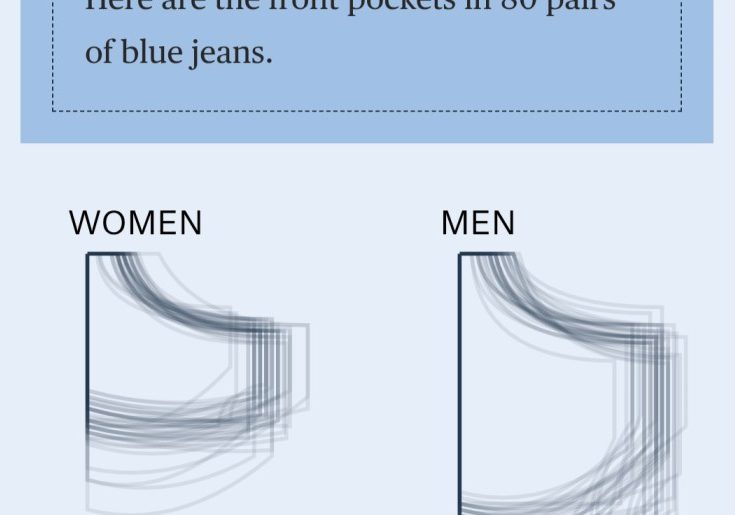
For “The Business Model Hiding in Your Jeans”: Women’s jeans pockets are 48% shorter than men’s, and it’s not a fashion afterthought. Here’s the economic logic that turned a design flaw into a billion-dollar industry.

A question to all the women reading this: Can most or even any of your pairs of jeans, trousers, or lowers fit a phone, keys, and your wallet in them?
Probably not…Because more often than not, men can fit a phone, wallet, keys, and probably even a small novel into their pockets, while women are stuck with pockets that feel less like pockets and more like decoration. And if you’ve ever wondered why, well, this is less of a coincidence and more of a deliberate design choice. 

Back in 2018, data journalism outlet The Pudding measured the pockets of 80 pairs of 32-inch men’s and women’s blue jeans across 20 major brands. And here’s what they found: Women’s front pockets were, on average, 48% shorter and 6.5% narrower than men’s. Only 40% of women’s front pockets could fit a smartphone. And just 10% could fit a woman’s own hand.

But why is this so, and since when?

In medieval times, both men and women had “pockets” tied around the waist and hidden beneath their clothing. But in the 17th century, men’s jackets and pants were adorned with pockets sewn directly into the garment. Women, meanwhile, were still stuck with tie-on pouches strapped under their petticoats.

Toward the end of the 18th century, women’s fashion changed: waistlines crept up, silhouettes slimmed, and pockets shrunk, sometimes becoming nonexistent.  Famed fashion designer Christian Dior further cemented the patriarchy of pockets in 1954, allegedly saying, “Men have pockets to keep things in; women, for decoration.” 

As a consequence, the purse was born. Reticules, as they were called, were minuscule bags that women carried in their hands rather than on their hips. As the century ticked on, they became more elaborately decorated, and hence became a status symbol. And this was “the beginning of the end”

The beginning of the handbag industry, the end of choice….I mean pockets.

This consequence soon became a thriving cause, strong enough to keep the design as it is and the pockets well non-functional and petite. Just think about it. If our jeans can’t hold our phone, wallet, or keys, we need somewhere else to put them. And that creates space for an entirely different market to thrive… handbags. 

Just to give you a sense of scale, the global handbag market was valued at roughly $86 billion in 2025. And this is not something that emerged in anonymity; a large chunk of it grew around the economics of manufactured need. There’s a well-known business strategy around this model called the razor-and-blades model: sell the base product cheap, then make your real money on a complementary product the customer has to keep buying. For example, Gillette sells cheap razors and expensive blades.

Pockets and handbags run on the same logic, with one twist. Nobody needs to lower the price of the jeans; they just need it to fail at a basic job. Which doesn’t lower the demand for jeans; people still need the jeans, right? What it does do, though, is generate demand for something else entirely, a bag to carry what the pocket won’t. 

The more useful economic explanation is that once a design constraint creates a dependent market, there is no market incentive for the original manufacturer to fix it. A denim brand has no financial reason to give you a pocket that fits your phone; doing so doesn’t sell more jeans. The cost of the small pocket is anyway externalised; it’s paid by you, in the form of a bag you now have to carry.

So in an illogically-logical manner, this creates a pink tax of sorts. The well-known pattern where women pay more than men for near identical products. A US government study of 800 gender-specific products found personal care items priced 13% higher for women, accessories 7% higher, and clothing 8% higher, according to the World Economic Forum.

Economists have a formal name for this: third-degree price discrimination, where a seller charges different prices to different groups for essentially the same good, sorted by an attribute like gender rather than by production cost.                                                                                                                        

In this case, though, it is a little different; nobody per se is charging more for a woman’s pair of jeans; they’re just subtly removing a utility that should come with it, forcing women to spend twice, just to solve a problem that fabric simply solves for men. Towards the end, leading to men paying less than women for the same utility.

Now, you could argue that women simply “prefer” handbags. And sure, maybe we do now. But it’s funny how preference and necessity have a way of blending into each other when necessity is manufactured first. 

Arshia Sharma
[email protected] 

Read also: Beyond the Binary of Pink and Blue

Image credits: The Pudding

Delhi University has released detailed guidelines for admissions under the Extracurricular Activities (ECA) quota, outlining general instructions and category-specific ECA trial requirements.

On Friday, July 3, Delhi University released a notification regarding admissions under the Extracurricular Activities quota. The notification said that the trials for ECA admissions are most likely to begin on July 15, 2026.

All official schedules and category-wise trial centres will be posted on the UoD Admissions website. No individual communications will be sent to applicants; therefore, they must keep checking the website regularly.

Applicants must report to their allotted centres with the original copies of their uploaded ECA certificates and their CUET scorecard. Unless otherwise specified, accompanists are not permitted during ECA trials. They are required to bring all necessary instruments, costumes, props, and stationery, as borrowing or sharing will not be permitted. Assessment will be based solely on proficiency, with no prescribed syllabus, and the Assessment Committee’s decision will be final. Recording trials or using unauthorised electronic devices, including AI tools, may result in the cancellation of candidature. Rescheduling will only be permitted in exceptional circumstances and with the approval of the ECA Committee.

The category-specific trial guidelines are as follows:

  1. Creative writing: Participants will write on a topic announced at the venue and will have up to two hours to complete the task. Writing sheets will be provided. 
  2. Dance: Candidates must prepare a 3-5 minute routine of their choice. Props, costumes, and makeup are permitted, while music must be carried on a pen drive. Performances will be assessed on technique, rhythm, expression, stage presentation, and overall artistic merit.
  3. Debate: Speakers will receive the motion on the spot and may argue either for or against it within four minutes. Reading from notes is not permitted.
  4. Digital media: Topic and expected output announced on the stage on the spot. Duration will be announced at the venue. Applicants must bring all their own equipment and one electronic copy of previous work. Memory cards must be fully formatted. 
  5. Fine arts: Topic announced on the spot. Duration announced by the committee. Only drawing sheets will be provided. Painting can be done in oil, water, poster, or pastel colours. 
  6. Music Vocal: Applicants must prepare a piece of 3-5 minutes. Indian vocal can be in any language, but Western vocal must be in English. A maximum of one accompanist is allowed, but they may not sing along. Purely instrumental electronic backing apps are allowed, but karaoke with vocals is prohibited.
  7. Musical instruments (Indian): Applicants must prepare a performance of 3-5 minutes, using notified instruments or approved regional equivalents. Applicants must bring their own instruments and tune them before the slot; no extra time will be provided. Criteria for this category are swar, taal, raag selection, composition, technique, and overall presentation. A maximum of one accompanist shall be permitted. 
  8. Musical instruments (Western): Candidates must perform for 3-5 minutes using a notified instrument. They must bring and tune their own instrument before the trial. One accompanist or instrumental backing track is permitted. Evaluation will be based on rhythm, technique, musicality, composition, and presentation.
  9. Theatre: Applicants are required to prepare a 4-minute mono-act on a chosen theme. The committee may assign an on-the-spot performance to the applicant.  Applicants must bring their own makeup, costumes, props, and background music. Only one accompanist is allowed, only for non-acting specialisations (like scriptwriting).
  10. Quiz: The quiz will assess current affairs and general factual knowledge. The assessment may include one or more written rounds, all of which will count towards the final score. Answers must be written in blue ink only in the provided booklet (pencil or other colours will not be evaluated).
  11. Divinity: Candidates must prepare a presentation of 3-5 minutes of Bhajan, kirtan, Shabad, Sikhi Guruvani Declamation, or instrumental, not exceeding 4 minutes. An additional on-the-spot piece may be requested. A maximum of one accompanist is allowed, vocalist if the applicant plays an instrument, or vice versa.
  12. Yoga: Applicants must present at least 4 asanas from a recognised school within a maximum of 4 minutes. The committee may request additional demonstrations. Applicants must bring their own Yoga mat and accessories (blocks, straps). No props or music is permitted.

The University has reiterated that rescheduling will only be allowed in exceptional cases, such as the unavailability of travel tickets for outstation students, and only with the approval of the ECA Committee. No trial will be rescheduled after the designated dates for a particular category have concluded, including on medical grounds.


Vanshika U Singh

[email protected] 


Read Also: DU Opens Registration Portal for One-Year Postgraduate Programmes 2026-27

Image credits: Delhi University Admissions Website

The University of Delhi has begun registrations for its One-Year Postgraduate (PG) Programmes for the 2026-27 academic session. The programmes have been introduced for graduates of the Four-Year Undergraduate Programme (FYUP) under UGCF 2022.

The University of Delhi has opened its admission portal for One-Year Postgraduate (PG) Programmes for 2026-27, according to the Bulletin of Information (BoI) released on July 4, 2026. Registrations for the same are being accepted exclusively through pgportal.uod.ac.in.

The one-year format has been designed for students who have completed their Four-Year Undergraduate Programme under the UGCF 2022 framework itself based on the National Education Policy (NEP 2020).This will be the first batch of students taking the faster postgraduate route. Graduates from the School of Open Learning (SOL) and the Non-Collegiate Women Education Board (NCWEB) can also apply under the same eligibility criteria.

The university is offering 34 post-graduate programmes spread across nine faculties, including Arts, Social Sciences, Science, Mathematics, Interdisciplinary and Applied Sciences, Commerce, and Music and Fine Arts.

Limited seats are available for the one-year PG Programme ranging from 6 to 45 seats depending on the course/department. Popular courses such as MA in English/Hindi/History, MSc in Maths and Physics have a large number of seats. The MA( Urdu) course has the highest number of seats, with 50 seats in total of which 19 are unreserved.

Admissions are strictly merit-based and will be based on the CGPA scores from all eight semesters. Candidates from General, OBC-NCL and EWS must have the equivalent of 50% overall to be eligible, while SC, ST, and PwBD candidates can apply with a minimum of 45%. Eligibility criteria are further segregated into two types of programmes; the first being Honours with Research and the second being Major-based and might have slightly different minimum cutoffs.

The admission process will include three phases:  registration, programme selection after result declaration, and seat allocation. A one-time, non-refundable application fee of ₹250 for General/OBC-NCL/EWS candidates and ₹100 for SC/ST/PwBD candidates must be paid by candidates.

Reservations of 22.5% for SC/ST, 27% for OBC-NCL, and 10% for EWS candidates are provided. Supernumerary quotas such as PwBD, single girl child, orphan, and university ward categories will carry for the same.

The second phase of registrations will open after the declaration of results of the 8th semester. Additionally, the official portal of the one-year PG Programme includes a section of ‘Important Dates’. Candidates are advised to keep an eye on the same for important deadlines.

Aridaman Singh

[email protected] 

Read Also: The Case Behind the FIR Against Two DU Professors

Image Source: admission.uod.ac.in

A recent RTI inquiry led to the termination of DU professor Ankita Kilsan’s appointment following the issuance of a show-cause notice. Subsequent investigations allegedly revealed that she had been deceived by two DU professors, who provided her with fabricated copies of research articles purportedly published in fraudulent journals.

Securing a teaching position at DU is considered one of the most competitive achievements in Indian academia. For Ankita Kilsan, a Jawaharlal Nehru University (JNU) alumna, what she believed to be the culmination of years of academic research allegedly turned into an elaborate case of forgery and publication fraud.

Kilsan, a resident of Shalimar Bagh, has alleged that she was deceived by three individuals, including two University of Delhi assistant professors, into believing they would help strengthen her academic profile and secure her a faculty position. According to her complaint, she paid ₹1 lakh in cash for the publication of her research articles in what were represented as reputed academic journals. She later discovered that the publications had allegedly been fabricated, resulting in her termination of appointment as an Assistant Professor in the Department of Political Science at Bharati College in August 2024.

According to court records, Kilsan first came into contact with Sanjeev Kumar in May 2021. He allegedly introduced himself as a medical officer at AIIMS and offered to help her obtain a teaching position at DU. Through him, she was introduced to Pramod Kumar and Luke Khanna, DU assistant professors at Dyal Singh College and Bharati College, respectively.

Kilsan has alleged that the three repeatedly told her that publication in reputed academic journals was essential for securing a teaching position. Relying on their advice, she handed over her original research manuscripts and allegedly paid ₹1 lakh towards publication charges and travel expenses by May 2022.

By the end of 2022, she was allegedly provided copies of research articles, thesis reports and publication certificates purportedly issued by journals including Shodh Padha, Shodh Samhita and Madhya Bharati. According to the complaint, these documents were used as part of her academic credentials during the recruitment process, following which she was appointed as an Assistant Professor at Bharati College.

The matter came to light in August 2024 when Bharati College informed Kilsan that an RTI inquiry had raised questions about the authenticity of the publications. Following the inquiry, her appointment was terminated.

Kilsan told The Indian Express,

“I trusted them fully. Thought they were a fraternity. I found out in July 2024 that my articles are fake. I kept questioning them, and they kept fooling me… My mental health deteriorated so much”

She said the termination not only affected her professional reputation but also disrupted her doctoral studies.  She said,

“Since 2024, I have been suffering. I completed my PhD under such stressful circumstances. The work I could have done in six months took over one year.”

According to her complaint, Luke Khanna later demanded ₹25 lakh to “settle” the issue and help her retain her position. She further alleged that when confronted, Sanjeev Kumar claimed the documents were merely “clone copies” that had been printed. To independently verify the publications, Kilsan and her family travelled to Madhya Pradesh and Maharashtra, where they allegedly found that the journals and publication records were not genuine.

In November 2024, Kilsan filed a complaint at Shalimar Bagh Police Station. After examining the complaint, the Rohini Court directed the police to register an FIR and submit a compliance report along with a detailed status report within 30 days.

In its order, the court observed that the complaint disclosed a prima facie case of cheating and noted that forensic examination of the disputed journals, certificates and related documents would be necessary to establish their authenticity. Judicial Magistrate First Class Gaurav Katariya observed that the alleged documents required scientific examination by the Forensic Science Laboratory (FSL) to determine their origin, genuineness and whether they had been fabricated or cloned.

As reported by Millennium Post, the court further observed that several aspects of the case – including forensic examination of the publication certificates, verification with the concerned universities and publishers, and analysis of electronic evidence such as WhatsApp conversations, call records and a laptop allegedly used during the application process – could not be effectively undertaken by a private complainant and required a police investigation.

The court also noted that the allegations, if substantiated during the investigation, indicated the possible preparation and use of forged documents and publication certificates. However, the allegations remain under investigation, and no findings of guilt have been made.

Kilsan is currently being represented by advocates Pardeep Khatri and Pranjal Bhaskar. She has expressed hope that the investigation will establish the authenticity of her claims and help restore her appointment as an Assistant Professor at DU.

Rajarshi Ghosh 

[email protected]

Read Also – Delhi University Releases Academic Calendar for 2026–27

Image Credits – Collegedunia.com

DU releases the UG Seat Matrix 2026-27 for CSAS admissions, detailing category-wise seat splits across 91 colleges.

The University of Delhi has released the Undergraduate Seat Matrix for the Academic Session 2026-27 on the official admissions portal on July 3, 2026. The document lays out the sanctioned seat intake for admissions under the Common Seat Allocation System (CSAS) 2026.

According to the University, the seat matrix spans 86 departments and 16 faculties across 91 colleges.

The document explicitly asks aspirants to cross-reference the seat matrix with the Bulletin of Information (BoI) to check specific domain-specific subject mappings required in CUET, and that the University may also consider doing extra allocations in the initial rounds of allocations to begin the academic session with optimal strength.

For every single programme at every college, the matrix lists seats across the following categories, in compliance with the official reservation norms:

  • UR – Unreserved
  • OBC-NCL – Other Backward Classes (Non-Creamy Layer)
  • SC – Scheduled Caste
  • ST – Scheduled Tribe
  • EWS – Economically Weaker Sections
  • Sikh Minority (SM)
  • Christian Minority (CM)

On top of these, colleges also declare additional seats beyond the sanctioned intake for three categories: PwBD (Persons with Benchmark Disabilities), CW (Children/Widows of Defence Personnel), and KM (Kashmiri Migrants).

Another notable detail in this year’s matrix is how minority-status colleges allocate seats. Colleges with Christian Minority status: Jesus & Mary College and St. Stephen’s College, largely replace the OBC-NCL, EWS (and in the case of JMC and Mata Sundri, also SC/ST) columns with seats reserved for the Christian Minority category, alongside UR seats. 

Similarly, colleges affiliated with the Sikh Minority: Sri Guru Gobind Singh College of Commerce, Mata Sundri College for Women, Sri Guru Nanak Dev Khalsa College, and Sri Guru Tegh Bahadur Khalsa College show zero seats in the OBC-NCL, SC, ST, and EWS columns for every programme, with those seats instead accommodated into the Sikh Minority category.

We can also note some of the recent, more niche programs offered by DU, such as:

  • The Cluster Innovation Centre offers both a B.A. (Hons.) Humanities and Social Sciences and a B.Tech. in Information Technology and Mathematical Innovations (IT & MI), each with 20 UR seats.
  • College of Art offers just 1 UR seat (and 1 seat each across OBC-NCL, SC, ST and EWS) for its Bachelor of Fine Arts programme, the smallest single-programme allocation in the entire matrix.
  • Ramanujan College continues to offer vocational B.Voc. programmes in Banking, Financial Services and Insurance, and Software Development, alongside its regular honours courses. 

The full seat matrix, spanning all 91 colleges and every sanctioned programme, is available on the official DU admissions website—admission.uod.ac.in—for students to consult as they finalise their CSAS 2026 preferences.

Read also: Delhi University Releases Academic Calendar for 2026–27

Arshia Sharma

[email protected]

Ahead of DU UG Admissions 2026, colleges including LSR and Hansraj have launched pre-admission initiatives to help aspirants understand courses, campus life, and the admissions process.

As undergraduate admissions for the 2026-27 academic session approach, several Delhi University colleges, including Lady Shri Ram College for Women (LSR) and Hansraj College, have begun organising pre-admission outreach programmes to support prospective applicants ahead of admissions.

LSR has announced an online pre-admission counselling session scheduled for July 8, 2026, to be held via Zoom. The session is open to prospective applicants and aims to address queries regarding admissions, academic programmes, and student life. Interested candidates can register through the Google Form available on the college website to receive the Zoom link before the session.

Hansraj College has also launched its ‘Campus Connect’ programme ahead of admissions. Unlike LSR’s virtual session, the initiative invites aspirants to visit the campus, interact with the Principal and faculty members, participate in a live question-and-answer session, and take a guided tour of the campus. Separate sessions have been scheduled for July 6 for Arts and Commerce applicants and July 7 for Science applicants. The college publicised the initiative through its official X account, sharing programme details and registration information with prospective applicants. According to the college, the initiative aims to provide prospective students with first-hand exposure to academics, campus facilities, and student life before they submit their applications. 

These initiatives come as thousands of students participate in Delhi University’s Common Seat Allocation System (CSAS-UG) for undergraduate admissions. With preference filling currently underway, colleges appear to be placing greater emphasis on engaging directly with prospective students and helping them make informed choices about their applications. 

The emergence of such programmes reflects a broader effort by colleges to improve accessibility, enhance transparency, and give applicants a clearer understanding of academic opportunities and campus life as the admission process progresses. 


Read Also: Delhi University Releases Academic Calendar for 2026–27

Image Source: Hansraj College Official X Account and Lady Shri Ram College for Women Official Website


Aarushi Chaubey

[email protected]

The University of Delhi has notified the academic calendar for the 2026–27 session, outlining key dates for classes, examinations, and vacations for all undergraduate and postgraduate programmes.

The University of Delhi released the academic calendar for the 2026–27 session on 2nd July 2026, via an official notification issued by the Registrar. The calendar, applicable to all undergraduate and postgraduate programmes, specifies dates for both odd and even semesters across the academic year. The calendar comes amidst 82,900 registrations for undergraduate admissions in Phase 1 of CSAS.

According to the notification, classes for odd semesters, I, III, V, and VII, are scheduled to commence on Tuesday, 28th July 2026. This marks a slightly earlier start to the odd semester compared to the 2025–26 academic session, in which classes commenced on 1st August 2025. 

An autumn vacation has been designated from 18th to 25th October 2026, with classes resuming on 26th October 2026. Dispersal of classes is scheduled from 20th November 2026, also marking the commencement of preparation leave and practical examinations. Theory examinations for the odd semester are scheduled to begin on 4th December 2026. 

For even semesters, II, IV, VI, and VIII, classes are scheduled to begin on 1st January 2027, after a winter vacation lasting from 25th to 31st December 2026. 

A mid-semester vacation has been scheduled from 21st to 28th March 2027, with classes resuming on 29th March 2027. Dispersal of classes and commencement of preparation leave and practical examinations are scheduled for 30th April 2027, with theory examinations commencing on 13th May 2027. The academic year is set to conclude with a summer vacation running from 3rd June to 20th July 2027.

The notification additionally states that the summer vacation, which is currently in effect under the 2025-26 academic calendar, originally notified to end on 20th July 2026, may be extended to 27th July 2026, in order to accommodate the commencement of the new academic session.

The calendar has been issued for necessary compliance by all concerned. Copies of the notification have been sent to the Dean of Students’ Welfare, the Controller of Examinations, and college heads and principals, among others. 

Image Source: University of Delhi

Read Also: DU UG Admissions 2026: More than 82,900 students register for 73 courses in the first phase of CSAS. 

Rishika Jain

[email protected] 

Dr B.R. Ambedkar University Delhi (AUD) has commenced undergraduate admissions for the 2026–27 academic session, offering 1,194 seats across 23 undergraduate programmes through CUET-UG 2026. The University has also introduced new undergraduate and postgraduate programmes in line with the National Education Policy (NEP) 2020, expanding its academic offerings.

Dr B.R. Ambedkar University Delhi (AUD) commenced undergraduate admissions for the 2026–27 academic session on July 2, alongside a significant expansion of its academic offerings. The University is offering admissions to 23 undergraduate programmes across the social sciences and humanities, with a total intake of 1,194 seats.

Admissions will be based on CUET-UG 2026 scores for both three-year and four-year undergraduate programmes offered under the National Education Policy (NEP) 2020. Applicants must register through the University’s CUET (UG) admission portal and carefully review the programme-wise eligibility criteria, reservation policy, fee structure, and admission schedule before submitting their applications.

The University has advised candidates to regularly check its official website for the latest updates and complete the application process well before the deadline to avoid last-minute technical issues.

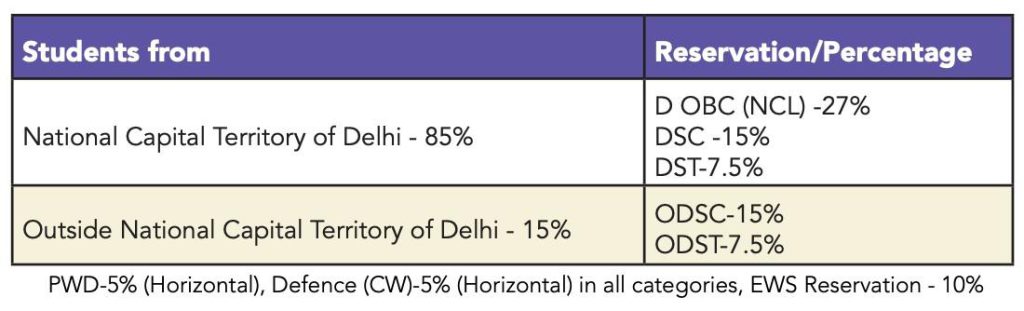
According to the admission brochure, 85% of the seats are reserved for candidates from the National Capital Territory (NCT) of Delhi, while the remaining 15% are open to applicants from outside the NCT.

Reservation and seat distribution of the university as mentioned in AUD’s admission brochure for 2026-27
Source: https://aud.delhi.gov.in/sites/default/files/inline-files/admission_brochure_2026-27.pdf

The 2026–27 academic session will also see the introduction of several new undergraduate and postgraduate programmes as part of the University’s implementation of the National Education Policy (NEP) 2020. New offerings include a BA in Museology, Culture and Heritage Management, BA in Visual Arts, and MA in Creative Writing, among others. The University has also restructured its BSc in Mathematics programme to include a minor in Data Science and Artificial Intelligence. In addition, one-year postgraduate programmes in multiple disciplines will be introduced under the Postgraduate Curriculum Framework (PGCF).

Established in 2008 by the Government of the National Capital Territory of Delhi, Dr B.R. Ambedkar University Delhi (AUD) is a public university focused on teaching and research in the humanities and social sciences. The University has been awarded an ‘A’ grade by the National Assessment and Accreditation Council (NAAC).

Read Also: Over 41,473 register for DU UG admissions on the first day of CSAS Phase 1

Image Caption: The AUD logo with a bodhi tree motif.

Image Credits: aud.delhi.gov.in

Sheetal Mishra

[email protected]

CAG audit finds over ₹40,000 crore meant for higher education in India has either lapsed, gone untransferred, or remained unaccounted for in terms of documentation.

DU Beat analysed the financial audit reports of the Comptroller and Auditor General (CAG) of India for the years 2022–23, 2023–24, and 2024–25. The CAG findings highlight the scale of financial irregularities within the Department of Higher Education – a department that directly affects millions of college students across the country.

The Comptroller and Auditor General of India is the supreme constitutional authority responsible for auditing all receipts and expenditures of the Government of India and state governments. This article examines three financial audit reports, each presenting the key findings of a different audit. Together, these findings highlight how funds allocated for higher education were either left unutilised, remained untransferred, or were inadequately documented.

CAG AUDIT 1 (2022-23, Report no. 4 of 2025)

Rule 62(2) of the General Financial Rules (GFR), 2017 mandates that if any department or ministry realises it will not be able to utilise its allocated funds, it must surrender them immediately rather than wait until the end of the financial year. Accordingly, a deadline of 21 March 2023 was set for all departments to surrender their savings. However, out of the total savings of ₹3,41,264.33 crore across all departments, ₹31,701.89 crore was not surrendered to the government.

A department-wise analysis shows that the Department of Higher Education not only failed to utilise its entire budget but also did not surrender ₹1,535.91 crore of unspent funds. In comparison, the Department of School Education and Literacy, listed immediately above it in Row 13, had a significantly larger amount of unspent funds – ₹14,659.28 crore – but surrendered almost the entire amount in accordance with the rules.

CAG AUDIT 2 (2023-24, Report no. 16 of 2025)

Every Indian taxpayer pays a Health and Education Cess – a dedicated tax levied over and above the base tax – at the rate of 4% to support the government’s initiatives in healthcare and education. Of this 4%, 1% is earmarked for health and credited to the Pradhan Mantri Swasthya Suraksha Nidhi (PMSSN), 2% is allocated to primary education through the Prarambhik Shiksha Kosh (PSK), and the remaining 1% is meant for secondary and higher education and is to be credited to the Madhyamik and Uchchatar Shiksha Kosh (MUSK).

However, between 2018–19 and 2021–22, no funds were transferred to MUSK. During these four financial years, the government collected ₹10,327.50 crore, ₹9,810.25 crore, ₹8,973.75 crore, and ₹13,187.50 crore, respectively, for the fund, yet transferred nothing to it.

In 2022–23, the government collected ₹15,453.50 crore but transferred only ₹14,250 crore.

In 2023–24, ₹17,789.75 crore was collected, while ₹37,833.33 crore was transferred, indicating a substantial catch-up from previous years. However, even after this transfer, of the total ₹75,542.25 crore collected for MUSK between 2018–19 and 2023–24, only ₹52,083.33 crore was credited to the fund, leaving a cumulative shortfall of ₹23,458.92 crore.

The CAG audit also found that the Department of Higher Education’s failure to surrender unspent funds was not an isolated instance. After failing to surrender excess savings in 2022–23, the department repeated the lapse in 2023–24, retaining ₹688.18 crore – more than half of its total savings for the year – instead of surrendering the amount as required.

Total short-transferred education cess: ₹23,458.92 crore
Total non-surrendered savings: ₹688.18 crore

Total amount: ₹24,147.10 crore

CAG AUDIT 3 (2024-25, Report no. 6 of 2026)

This clause states that whenever the government provides a one-time grant to an institution, the sanction order must require the recipient to submit a Utilisation Certificate (UC) confirming that the funds were used for their intended purpose. This is not optional – it is mandatory, as it is the primary mechanism for verifying how public funds have been spent. If a grantee fails to submit the certificate, the ministry has the authority to withhold future grants until compliance is ensured.

For the period from 2007–08 to 2023–24, a total of 3,530 utilisation certificates, amounting to ₹14,359.76 crore, remained outstanding. Of these, 2,934 certificates, worth ₹14,218.20 crore, pertain to just the last three financial years. In other words, ₹14,218 crore of the total ₹14,359 crore in pending utilisation certificates accumulated during the most recent three-year period.

While pending utilisation certificates do not, by themselves, indicate that funds have been misappropriated, they do point to significant delays in financial reporting and compliance, highlighting gaps in oversight and accountability.

₹40,042.77 crore. That is the total amount that was either not transferred to its designated fund, not surrendered in accordance with financial rules, or remained unsupported by pending utilisation certificates across the three CAG audit cycles examined. While these findings do not necessarily indicate that the money was misappropriated, they point to significant lapses in financial management and oversight within the Department of Higher Education.

The scale of these irregularities raises broader questions about the department’s administrative efficiency, particularly in the wake of controversies such as the NEET paper leak and the CBSE OSM fiasco. It also prompts a larger question: how effectively is India’s higher education system being governed, and who, beyond the CAG’s audit reports, is ensuring accountability for the finances of one of the country’s most important departments?

Read Also – Beyond the Binary of Pink and Blue

Image Credits – The Probe staff

Name – Kaustubh Dwivedi
Mail – [email protected]