Author

DU Beat

Browsing

DU grants Aditi Mahavidyalaya and Bhagini Nivedita College a one-time exception to admit undergraduates via Class 12 marks after CUET counselling left hundreds of seats vacant, amid AADTA’s uniform-policy demand. 

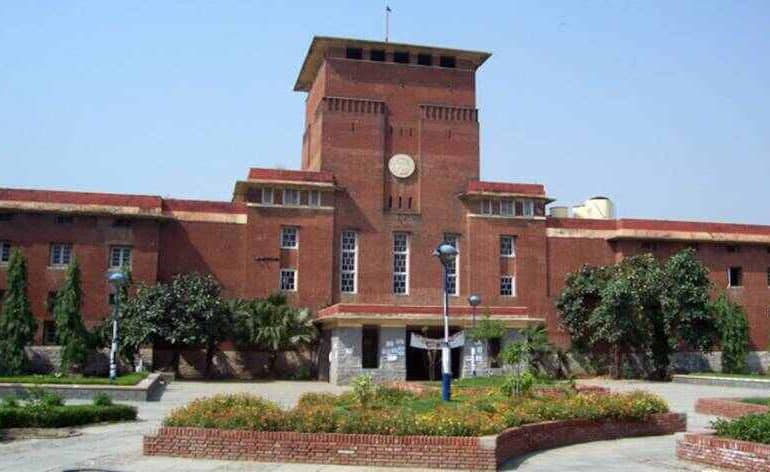
The University of Delhi has granted two colleges, Aditi Mahavidyalaya and Bhagini Nivedita College, a one-time exception to admit undergraduate students the “traditional” way — through Class 12 marks and offline applications — after CUET-based counselling left hundreds of their seats empty.

DU Registrar Vikas Gupta told The Tribune that both colleges can now admit students through a mix of CUET scores and merit-based selection for the 2026-27 session.

Both colleges approached the university after repeated CSAS counselling rounds failed to generate adequate enrolments, and proposed considering Class 12 marks alongside CUET performance to fill remaining seats.

In a notice, Aditi Mahavidyalaya invited applications for undergraduate programmes for 2026-27, stating that admissions would be “subject to the availability of seats and approval of the University of Delhi.” Bhagini Nivedita College Principal Dr. Ruby Mishra, issued a similar notice inviting applications “in the physical mode.”

Both colleges are located off DU’s main campuses — Aditi Mahavidyalaya in Bawana and Bhagini Nivedita College in Najafgarh. University data from the previous admission cycle’s mop-up round showed both institutions among the worst affected by vacancies: Bhagini Nivedita had roughly 700 of 985 seats unfilled, and Aditi Mahavidyalaya had approximately 600 of 1,000 seats vacant, per DU’s official admissions portal figures reported by ThePrint.

Principals at both colleges have previously attributed the vacancies to low awareness of CUET among students from nearby government schools and rural areas, which they said had historically formed the bulk of their intake.

The Aam Aadmi Party’s teachers’ body, the Academics for Action and Development Teachers’ Association (AADTA), has separately demanded reinstatement of college-conducted merit-based admissions, citing over 9,500 vacant undergraduate seats across DU in the last cycle, concentrated in off-campus colleges and language and science courses, according to Careers360.

DU has not announced whether the exception granted to Aditi Mahavidyalaya and Bhagini Nivedita College will be extended to other colleges facing similar vacancies or whether it will apply beyond the current admission cycle.

Read Also: DU Classes Begin as Sports Quota Aspirants Continue Waiting for the Allocation List

Image Source: The Times of India

Mayank Scripts
[email protected]
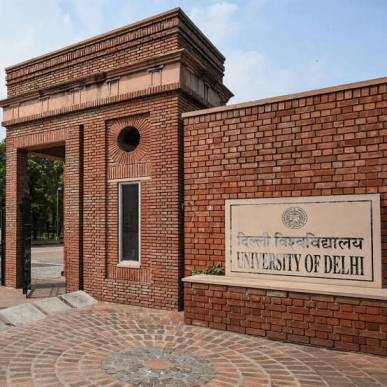
 

Delhi University has released NCWEB second cut-off list for BA (Programme) and BCom admissions. The deadline to apply for the same is 6th August. 

The Non-Collegiate Women’s Education Board (NCWEB) of the University of Delhi has released its second cut-off list for academic session 2026-27 for admission into courses like  BA (Programme) and BCom. The second admission list and admission schedule are now available on the official website of the University, du.ac.in. The second cut-off for BCom and BA (Programme) courses has been released separately  across NCWEB teaching centres. The BCom cut-off includes category-wise marks for General, OBC, SC, ST, EWS and PwD candidates at 26 teaching centres. However, a few centres have marked admissions as “closed” for certain categories which indicates that admissions under those categories are no longer available.

Multiple subject combinations have been announced under the second cut off for BA (Programme). These combinations include: History-Political Science, Economics-Political Science, Economics-Sanskrit, History-Sanskrit, Political Science-Sanskrit, Economics/Office Management and Secretarial Practice, History/Office Management and Secretarial Practice, Office Management and Secretarial Practice-Political Science, Economics–Punjabi, History-Punjabi, Political Science-Punjabi, and Economics-Mathematics.

Online admissions are set to begin on August 4 at 10 am. The admissions continue till 16th August 11:59 PM. Admissions will be conducted at the respective NCWEB teaching centres. The affiliated colleges are to complete approving admissions against the second cut-off list by August 7. Candidates receiving approval must complete the fee payment by August 8.

Read Also: Combined Classes and Confusion for students of Delhi University’s 1-Year and 2-Year PG Programmes Amidst Admission Lag

Image Credit: JustDial

Chandrani

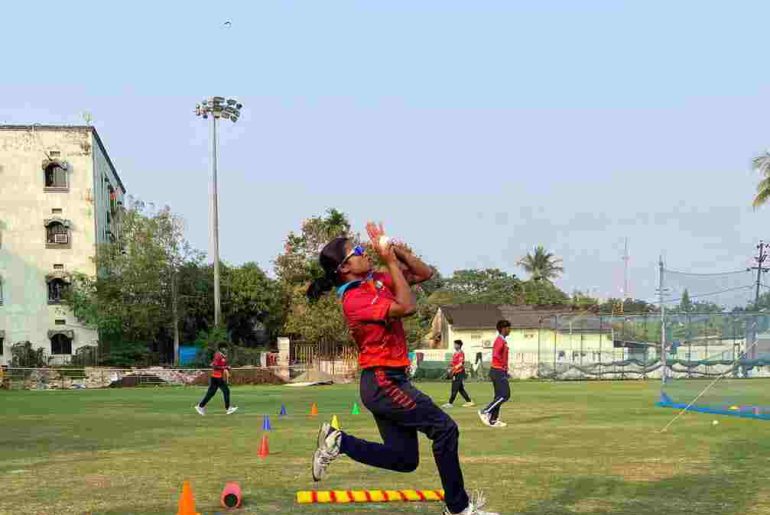
As first-year classes begin across DU, sports quota aspirants are still waiting on their allocation list — a delay that students and college administrators say has become a recurring feature of the admission process.


First-year classes have begun across Delhi University’s colleges, but the Sports Supernumerary Quota allocation list, which informs which student-athletes get admitted and to where, is yet to be released. For the hundreds of aspirants who cleared their trials over the past week, the admission process remains incomplete even as their prospective classmates settle into lecture halls.

This year, DU’s sports trials were held from July 29 to August 3 across colleges and sports venues, covering over 25 disciplines including athletics, basketball, football, and swimming. The university has maintained that sports and ECA quota seat allocations will only begin after the third round of the Common Seat Allocation System (CSAS-UG) admissions, pushing admissions under these quotas well behind the general merit timeline.

In conversation with DU Beat, an administrative staff member at Jesus and Mary College, who wished to remain anonymous, acknowledged the disconnect but placed the responsibility squarely on the university’s centralised process. She said,

We understand that classes have started. But the admission process is handled entirely by the University portal. The students will miss classes, and they may have to individually ask their professors to adjust their attendance according to their late joining date.”

This isn’t the first time sports quota admissions have trailed behind the academic calendar. Last year, regular first-year classes for the 2025-26 session commenced on August 1, even as sports and ECA quota seats were officially allocated only after the third CSAS round, which was well into August. Taken together, the recurrence suggests this is less a one-off hiccup and more a structural feature of how DU sequences its admission rounds — one that consistently leaves sports quota candidates joining after their peers, year after year.

For aspirants, the wait compounds an already demanding admission season. Speaking to DU Beat, Shreyoshi Patil, a state-level basketball player awaiting her sports quota allocation said that the delay adds to a semester already disrupted by her sporting commitments. She said,

Now not only do I have to worry about the classes that I’ll miss due to tournaments and practices, but these first few days as well, when I expected to get familiar with the college environment and professors.”

For now, students like Patil are left tracking the admission portal for updates, while colleges point back to the university-run process as the source of the delay. Until the allocation list is released, sports quota aspirants remain caught between the admission process still underway and a semester that has already begun.


Read Also: Delhi University CSAS UG Second Allotment List Today: Over 43,000 Students Eye Seat Upgrades 

Image Source: Jesus and Mary College Website


Aamna Rehman 

[email protected] 

Delhi University’s 1-year PG programme under the National Education Policy (NEP) framework has sparked confusion among students, departments, and faculty.

The official calendar of the University of Delhi marked the commencement of classes from July 28, but registration for the 1-year PG programme was extended up to July 31, leading to admissions lagging behind the official academic schedule.

The mismatch between the official schedule and the late admissions has left several departments scrambling to begin teaching.

To curb this mismatch and begin classes soon, the university has advised departments to offer combined classes for both incoming one-year master’s students and third-semester students of the existing two-year PG programmes, as the curricula for both have significant similarities, according to Registrar Vikas Gupta.

This suggestion faced strong criticism from faculty bodies including the Democratic Teachers’ Front, which called this implementation “frivolous” and questioned in their statement if Delhi University had become “a WhatsApp University run in ‘Emergency Mode’ without thinking through the ramifications of such knee-jerk actions?”

Three key concerns raised by the faculty members

Firstly, the increased workload. Colleges have been asked to introduce new courses and submit capacities without being allocated any new faculty positions or guest teacher provisions, leading to an increased workload among the existing faculty. In fact, the DTF stated that at least one college principal informed faculty that any teaching under the new one-year PG programme would be “over and above the existing load on teachers.”

The question of infrastructural shortcomings was also raised. Due to a lack of extra physical classrooms, it has become difficult to accommodate additional cohorts without prior infrastructure expansion.

Many faculty members also pointed out that the results for several fourth-year undergraduate courses are yet to be declared, complicating the one-year PG program admissions.

As departments and faculty members prepare for the upcoming intake, they request the university to release undergraduate results, establish proper teaching guidelines and provide logistical support to the colleges.

Read Also: Delhi University Increases One-Year PG Intake, Opens Correction Window for Admissions

Vanshika U Singh

[email protected]


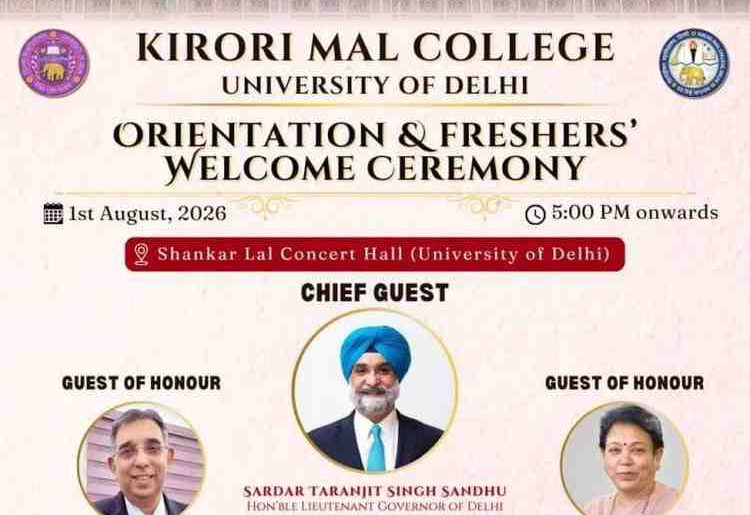
Delhi Lieutenant Governor Taranjit Singh Sandhu addressed Kirori Mal College’s orientation programme, encouraging Delhi University freshers to believe in India’s institutions, opportunities and their own capabilities.

Delhi Lieutenant Governor Taranjit Singh Sandhu urged Delhi University freshers to place their faith in the country’s institutions as well as themselves while addressing the orientation programme at Kirori Mal College on Monday.

Calling himself “a product of Delhi University”, Sandhu reflected on completing both his graduation and post-graduation in Delhi. “Whatever I have been able to contribute in service of the nation overseas was built on the foundation laid at Delhi University,” he said, urging students to have confidence in India’s institutions, opportunities and in their own capabilities.

The address focused largely on how universities play a huge role in shaping citizens rather than simply producing graduates. He described Kirori Mal College as one of Delhi University’s longstanding institutions and further said its legacy rests not only on academic achievements but also on the generations of leaders, scientists, entrepreneurs, civil servants and artists that it has helped nurture over the decades. According to him, institutions earn distinction through the people they shape as much as the infrastructure they possess.

During the programme, the Lieutenant Governor inaugurated the Kirori Mal College Incubation Centre, saying that universities play an important role in encouraging research, innovation and entrepreneurship as India works towards its vision of Viksit Bharat 2047.

He went on to congratulate students and faculty mentors involved in publishing research papers under the Four-Year Undergraduate Programme (FYUP), which he described as a sign of a healthy academic culture.

In the end, the programme brought together newly admitted students as they begin their journey at Delhi University, with Sandhu’s address centring on confidence, opportunity and the role of higher education in preparing students for the future.

Read Also: Indian Army Opens Digital Media and Strategic Communications Internship for Journalism Students, Stipend Up To Rs. 75,000

Image Source: Kirori Mal College

Ahana Dey

[email protected]

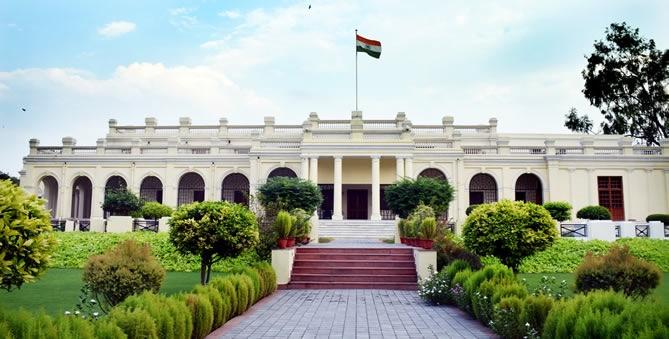
Delhi University Executive Council has approved the compulsory retirement of a Political Science professor following an ICC inquiry into a sexual harassment case, reaffirming the university’s zero-tolerance policy.

A faculty member from the Delhi University’s Department of Political Science has been compulsorily retired after the university’s Executive Council accepted the recommendations of the Internal Complaints Committee (ICC) in a sexual harassment case.

The decision was taken during the Executive Council meeting held on July 30, following the submission of the ICC’s inquiry report. According to Delhi University officials, the complaint, which is over a year old, alleged that a student had been subjected to sexual harassment. The report was examined by the EC before disciplinary action was approved.

A university official confirmed that the ICC had recommended compulsory retirement as the appropriate penalty. The official added that the inquiry had been completed in accordance with the University’s procedures and that the recommendation was accepted by the Executive Council.

Reiterating the institution’s stance on campus safety, the official said,

The university has a zero-tolerance policy towards sexual harassment and will continue to implement measures aimed at ensuring a safe and secure environment for students and staff.

The official also noted that Internal Complaints Committees function under the University Grants Commission (UGC) Regulations and the Sexual Harassment of Women at Workplace (Prevention, Prohibition and Redressal) Act, 2015, which empowers them to enquire into complaints of sexual harassment and recommend action to the competent authority.

The university has not disclosed the identity of either the faculty member or the complainant. This is in keeping with the confidentiality provisions governing sexual harassment proceedings.

This case is one among the few instances in which a Delhi University faculty member has faced compulsory retirement following an ICC inquiry. In an earlier case, Bharati College faculty member Amit Kumar was compulsorily retired after the ICC found allegations of sexual misconduct against him to be credible.

As of publication, Delhi University had not issued a separate public press release regarding the Executive Council’s decision. 

Read Also: Student Bodies Demand Withdrawal of St. Stephen’s Shorts Restriction

Image Credit: University of Delhi

Aarushi Chaubey

[email protected]


Delhi University raises one-year PG seats up to 126 across departments like History and Economics, easing FYUP student demand, though faculty cite infrastructure and classroom shortages. 


On Friday, the University of Delhi announced an increase in seats for its newly launched one-year postgraduate (PG) programmes, according to Hindustan Times.

Seats in M.A. English, History, Philosophy, Political Science, M.Sc. Mathematics and M.Com have been increased from 45 to 126 each, an increase of 81 seats. M.A. Economics seats have been increased from 40 to 126. Psychology seats rose from 34 to 63, Chemistry from 45 to 63, and M.Sc Statistics from 29 to 54, the report said.

Hindustan Times had earlier reported that DU constituted a committee on July 17 to examine increasing seats in the one-year PG programmes, after receiving requests from several departments.

A student who has applied to the M.A. History one-year programme, speaking on condition of anonymity, said the increase from 45 to 126 seats came as a relief, and suggested the number could have been closer to 200 given the number of colleges under DU, according to Hindustan Times.

A DU professor, also speaking on condition of anonymity, said the decision was taken under pressure and flagged a shortage of labs in science courses and classroom space in the arts faculty as a result of the higher intake. The professor said seat numbers could have been estimated based on the actual proportion of FYUP students opting for the one-year PG programme, since not all students choose that pathway, Hindustan Times reported.

Until the 2025-26 academic session, DU offered only two-year postgraduate programmes. The one-year PG programme was introduced from the 2026-27 academic session, with the admission process for the first batch beginning earlier this month.

Separately, DU has opened a correction window for one-year PG admissions, allowing candidates who have completed both Phase I and Phase II of registration to edit personal and academic details in their applications until 11:59 pm on August 1, 2026, according to Education Times. Only such candidates are eligible to use the window.

Alongside the correction facility, the university also released a revised seat matrix providing updated category-wise seat availability across courses. Among the most sought-after programmes, M.A. English, M.A. Political Science, M.Com, M.Sc Computer Science and M.Sc Mathematics each have 49 seats under the unreserved category, in addition to seats reserved for OBC (NCL), SC, ST, EWS and PwBD candidates as per DU’s reservation policy, Education Times reported.


Read Also: DU Approves Pay Protection, Adopts Major Academic Resolutions

Image Credits: Careers 360


Mayank Scripts
[email protected]
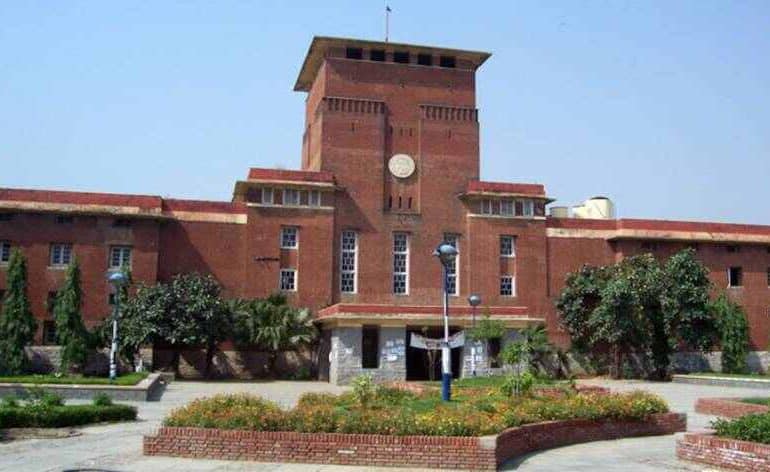
 

Miranda House is set to expand its residential capacity with a 120-bed hostel reserved for students from economically weaker sections and persons with disabilities, to be funded through CSR support.

Miranda House is planning a 120-bed hostel exclusively for students from economically weaker sections and persons with disabilities, a move that would take the college’s total residential capacity from around 370 seats to nearly 490.

The proposed hostel will come up at the rear of the existing hostel complex within the college campus. It will be funded through Corporate Social Responsibility support, and construction is expected to take around two years once the college receives the necessary approvals from the Municipal Corporation of Delhi and other competent authorities. An artist’s impression of the project is expected to be ready within the next two weeks, after which design and planning work will move forward.

Principal Bijayalaxmi Nanda said the new hostel is aimed at improving access to higher education for students who often face financial and accessibility challenges. She said it would provide significant relief to girls coming to Delhi from other states for their studies. The hostel will have study rooms, internet connectivity, a dining hall, common areas, and secure residential facilities.

The expansion addresses a gap that has persisted for years. DU admits over 71,600 undergraduate students every year across its colleges, while the university and individual colleges together have only a fraction of that number in hostel seats. At Miranda House, hostel applications significantly outnumber available seats each year, pushing many students, particularly those from outside Delhi, towards rented accommodation at considerably higher costs.

Reserving the new hostel specifically for EWS and PwD students reflects a recognition that these two groups face the sharpest difficulty in securing affordable on-campus housing. For a lot of students, the cost of private accommodation in North Campus frequently runs higher than their total annual college fees.

Read Also: St Stephen’s Formalises Century-Old Shorts Restriction Under New Principal

Image Source: Miranda house official

Abhishek Goverdhan
[email protected]

Many academic reforms, including pay protection and semester exchange programmes were approved at the latest executive council meeting under the leadership of the VC.


Since the implementation of NEP, Delhi University has been constantly working for the betterment and development of the academic structures, regulations and administrative policies to promote holistic welfare and development. Under the leadership of Vice Chancellor Prof. Yogesh Singh, the university has set out various policies for the fulfilment of the institution’s broader vision.

 Amid the ongoing agitation over the conditions of the contractual working staff, Vice Chancellor Prof. Yogesh Singh on Thursday said there was no proposal under consideration to remove non-teaching employees working on a contractual basis at the university. He made the clarification during discussions on this issue at the meeting of the Delhi University Executive Council (EC), putting to rest the concerns over the future of such staff.

In another significant decision, the EC approved the recommendations of a committee on pay protection for teachers who held temporary positions through due procedures before securing permanent appointments in universities or colleges. The provision will cover faculty members who were appointed through prescribed recruitment procedures, including open recruitment through advertisements and duly constituted selection committees. It will apply to eligible appointments made on or after April 1, 2022. 

A new framework for the security and protection of the contractual staff working in coordination with the university officials has also been introduced, under which the employees will be eligible for insurance coverage of Rs 20 lakh through a master policy.

Under the leadership of the vice-chancellor and the rigorous considerations and reforms made within the NEP, Prof. Singh said that DU aims to be among the world’s top 200 universities within the next five years. He highlighted the university’s performance in the QS World University Rankings 2027, where DU secured the 322nd position globally, compared with the 521-530 band in 2022. Prof Singh said the university’s rise by 199 positions in four years was a significant achievement and credited its teachers, students, officers and employees for the progress.

For better academic and globalised educational exposure, the EC council has also approved a proposal to introduce a ‘Semester Away Programme’ in collaboration with foreign higher education institutions under the Undergraduate Curriculum Framework (UGCF) 2022. 

Additionally, the School of Open Learning (SOL) has also received approval to introduce one-year postgraduate programmes in five subjects, with the programmes also cleared by the University Grants Commission (UGC). The programmes will have a total of 1,500 seats — 200 in M.A. Hindi, 150 in M.A. History, 500 in M.A. Political Science, 75 in M.A. Sanskrit and 575 in M.Com. The introduction of these postgraduate programmes at the School of Open Learning marks a significant step forward in enhancing educational opportunities for students. 

With these decisions, the university aims to strengthen its academic and administrative framework while extending greater support to its teaching and contractual staff.


Read Also: St Stephen’s Formalises Century-Old Shorts Restriction Under New Principal 

Image Source: DU Beat


Rajarshi Ghosh

[email protected]


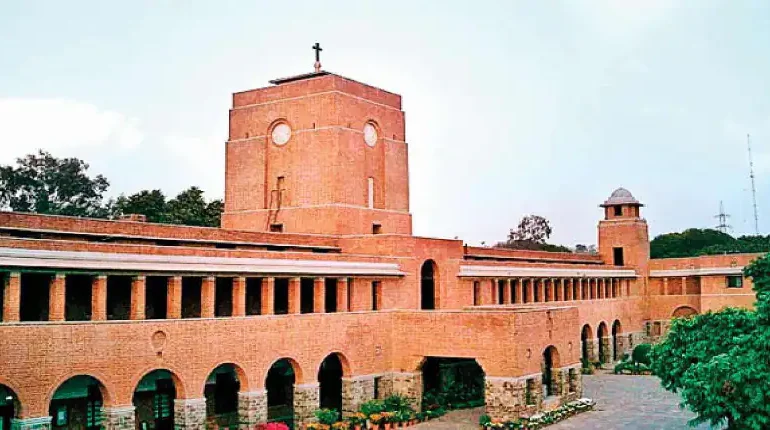
St Stephen’s College reissues a dormant 1881-era shorts restriction under new principal Susan Elias, sparking student protests, condemnation from NSUI and KYS, and no enforcement action so far. 

Delhi University’s St Stephen’s College has restricted students from wearing shorts in classrooms, tutorials, laboratories, the chapel, the assembly hall, the library and the dining hall, under a notice dated July 26 and signed by Principal Susan Elias. Titled “Campus Regulations & Guidelines,” the circular directs “all Junior Members” to comply and separately reiterates a smoke-free campus policy and a requirement to carry ID cards, including for dining hall entry.

The new academic session began two days later, on July 28. Several first-year students arrived at the morning assembly, and elsewhere on campus, wearing shorts in defiance of the notice, according to The Tribune, which reported that the notice had prompted a formal complaint from student organisations. 

NSUI national president Vinod Jakhar said the Constitution protects a citizen’s right to decide their own clothing, calling the circular an intrusion on personal liberty. The Krantikari Yuva Sangathan separately termed the directive “moral policing” and demanded its withdrawal.

Several students and at least one faculty member told reporters the shorts restriction was not new—it had long been observed informally, particularly around the dining hall and the principal’s office, but had never before been issued as a formal, written rule.

A student at the college, speaking on condition of anonymity, said the prohibition predates the current administration, tracing to the college’s founding in 1881, and was listed in the residence handbook issued to hostellers on joining—but was not enforced, except intermittently at the dining hall. Elias, who took charge in June, did not introduce a new rule, the student said, but reissued an existing one. The student said the college has previously suspended or debarred hundreds of students over attendance shortfalls and that no disciplinary action has followed the July 28 protest, despite the principal reportedly being present on campus that day.

DU Beat reported that the notice, issued July 26, took effect with the start of the new academic session on July 28 and also restates existing rules on cleanliness and compulsory identity cards.

Read Also: Student Bodies Demand Withdrawal of St. Stephen’s Shorts Restriction

Img Source: Scroll.in

Mayank Scripts
[email protected]