Author

DU Beat

Browsing

The University Grants Commission (UGC) has granted approval to the University of Delhi (DU) to start five online courses, that would be made public from January 2020. 

On 1st October 2019, the University of Delhi got the green light to conduct five online undergraduate courses by the UGC from January 2020 by the School of Open Learning (SoL). The courses provided by DU will be made made available for five subjects: B.A. Programme, B.A. (Hons.) English, B.A. (Hons.) Political Science, B.Com, and B. Com (Hons.). 

 An official from UGC spoke to NDTV  and said that SOL will upload the learning materials on its website by November this year and start enrolling students in the program from January 2020. The courses will be made available for students in India as well as those abroad, and are being introduced to attract global students to study at the University of Delhi. 

The letter of intent (LoI) was issued by the UGC to the university on 16th September 2019, as reported by DNA India

“These courses actually belong to the School of Open Learning (SOL) but by January they will become online courses and will be available all around the world,” a senior official was quoted by a news daily. 

“One of the officials of the Delhi University said that the proposal of online courses was put forward by 22 universities but UGC gave permission to only four universities out of which the Delhi University is one,” the report said.

Dr CS Dubey, Director of the Campus of SOL, said that the online courses will be available not just in India, but students from any country can take admission in the courses. Earlier, Dubey had also said that the DU is planning to conduct 30 per cent of its exams online in a phased manner.

Students too appreciated this. Sabaa, a second year B.A. (Hons.) English said, “I think it is a great opportunity being offered by the University. Not only is it good for integrating DU in the global educational structure, every year the cut-offs become impossible to achieve. This way, those who didn’t clear the cut-offs or are outstation students without the means to move to Delhi for studying, can also enrol in the University. “

Students can look for further details at du.ac.in, the university’s official website. 

Feature Image Credits: DU Beat Archives.

Shreya Juyal

[email protected]


DU Beat spoke to Avinash Chanchal, Programme Specialist of Greenpeace India, about the global climate crisis and the student movement that has emerged to fight against it.

Juhi: All over the world, red flags are being raised about climate change and its consequences. How bad do you think is the situation in India?

Avinash: There is a climate crisis in India, especially with respect to air and water. In 80% of India, where air pollution calculating mechanisms are available, the air has been found to be below the standard health rates. Rivers in India are also much polluted and many small ones are even drying up. Erratic weather changes and heatwaves in India have gotten worse and studies show that we only have eleven years before it gets too late.

Juhi: Do you think the Government is adequately dealing with the climate crisis?

Avinash: The situation is not black and white. Recently, the Government has started to invest in renewable energy, and they are taking certain steps to combat climate change, but they need to do a lot more. The state Governments also need to realise the importance of this crisis and take actions against it. The Government also needs to prioritise climate preservation over big corporations.

Juhi: Do you think the general population of India is aware of climate change and the steps that need to be taken to combat it?

Avinash: Recently, more and more people have started to raise their voices, asking the Government to take action against climate change. In India, we have always had the indigenous people fighting to protect their “jal, jungal aur zameen” (water, forest, and land) but now, even the people in the cities have started to realise the need for preservation of the environment.

Juhi: What do you think about the recent emergence of the global student-led movement against climate change?

Avinash: The best part about this movement is that it is a citizen’s movement. The next generation is going to be the one to face the hard consequences of climate change, and have decided to take action against it. Greta Thunberg has managed to inspire students all over the world. Greenpeace stands in solidarity with the strikes being organised in September by students world over. They deserve a lot of credit.

Juhi: Many people in India work in industries that are harmful to the environment. And unlike big corporations such as McDonald’s, and Starbucks, the average Indian shopkeeper cannot afford to use paper bags and straws, instead of plastic. How realistic do you think, the goal to combat climate change is?

Avinash: We have always said that the move towards renewable energy needs to be phased out, creating new jobs in that sector. Also, investment these days in fossil fuel and coal mines is bad for our economy. As far as plastic is concerned, until 25 years back, before globalisation brought in big corporations and their plastic, Indians had managed to survive by using goods made out of bamboo sticks and banana leaves. Paper is not the only alternative to plastic. So, our climate preservation goals are very much possible.

Juhi: What has Greenpeace India recently been working on?

Avinash: We have many campaigns going on right now against air pollution and for renewable energy usage. We don’t want big corporations to get their hold on renewable energy; instead, we want to empower people with it. A while back, we also started a sustainable agricultural model in Bihar, which was 100% ecological. It has turned out to be a great success. Overall, we are able to do what we do, because of our volunteers and supporters, who come from all age groups. We need people to realise that the climate crisis is an immediate one and that dealing with it cannot be postponed.


Feature Image Credits: LiveMint

Juhi Bhargava

[email protected]

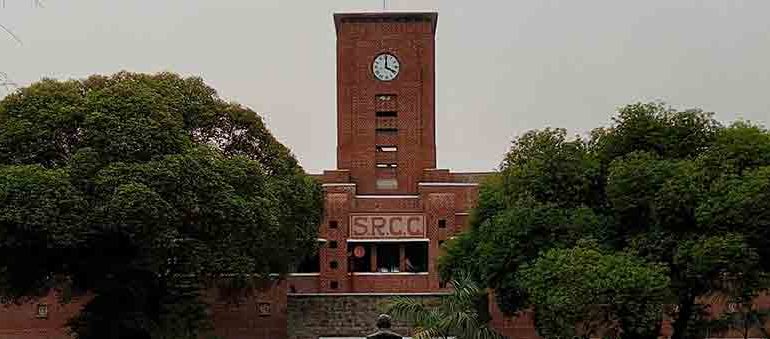
On 12th September, while the University of Delhi (DU) was getting ready to elect their new Students’ Union, the Shri Ram Memorial Girls’ Hostel was trespassed into by a stranger who went on to steal money and debit cards from the rooms.

The incident came into light when a first-year student realised that her debit card had gone missing. Subsequently, she received messages informing her that an amount of INR 50,000 had already been withdrawn from her account. In addition to this, a cash amount of INR 2000 was missing from her room and her roommate also lost an amount of INR 1000. A resident from another room also reported her debit card to be missing.

When the residents realised the gravity of the theft, the warden was approached on the 12th itself for permission to access the CCTV footage. However, neither the warden nor the assistant warden approached the students until two days after the theft on 14th September.

The footage showed a stranger entering the hostel at 1:40 p.m. which falls within the lunch hour for the residents. The stranger is said to have confidently walked past the guard stationed at the gate and into the hostel. They then checked every room on the ground floor of the hostel and finally, on finding an empty room, went in and stole students’ belongings. A few students noticed the stranger in the hallway but didn’t find cause to worry as they did not seem lost. They assumed it was a relative of the warden or someone who was let in with permission due to their confidence.

A student also remembers walking into the washroom to find the stranger there. They behaved very casually and mentioned that they would be out in a minute. The stranger then walked upstairs to the first floor and followed the same process of entering all the rooms, possibly looking for something else to steal. Finally, only when the stranger was leaving the hostel did the guard notice them. When questioned by the guard, the stranger quickly ran out of the gate. The guard did not follow the stranger despite the incriminating run and did not make any effort to alert the students or the warden’s office of what he had seen.

Although the stranger was dressed as a woman, the students were subsequently informed that the stranger had previously allegedly entered the college three times. A worker in the college canteen mentioned that he had noticed a similar-looking man.

On viewing the footage, a third-year student claims to have seen the stranger enter the college premises with a campaigning group for the Delhi University Students’ Union elections.

IMG-20190914-WA0029

Reaction of the authorities:

The guard on duty, when confronted regarding the incident, apologised and mentioned that he was asleep when the stranger entered the hostel. It is also important to mention that the two male guards appointed as security in the hostel do not belong to a formal security service.

When the local guardian of the aggrieved student approached the warden’s office, he was informed that the college would file a First Information Report (FIR) on Monday, four days after the theft. The Principal also assured the students’ parents that required actions would be taken. The only step taken to reassure the students regarding their safety was a meeting where the warden reminded the students to be responsible for their belongings. She also requested the third-year students to pacify the juniors and try to contain their fear related to the incident. “This was an accident. It’s a simple matter, no need to worry,” she added.

The incident has not been reported to a higher authority and no immediate changes have been pursued to make the hostel safer for the female students.

Impending fear among the students

The ease with which a complete stranger could enter their private space has shocked all of the residents of the hostel. There is a growing concern that the security currently present is not effective enough. “It is very shocking to acknowledge the fact that a college hostel with two security filters witnessed such an incident. The hostel is supposed to be one of the safest and most secure places in the campus and most of us are afraid to roam around freely in this building now,” a senior student said. The students are additionally very disheartened with the reaction of the hostel authorities, “Safety for the girls here is just limited to locking us within the hostel at 8:30 p.m. Rest anything else is considered to be an “accident” or an “issue being created unnecessarily.” If this is the condition of the hyped premium hostel of an equally hyped institute then I dread the future of women safety.”

The students have since been organising meetings within themselves so they can suggest constructive measures for their safety to the administration. However, they doubt whether the administration will take this matter seriously.

The SRCC Girls Hostel has been plagued with problems and arbitrary decision making since the beginning of the year. To accommodate the increase of student intake due to the Economically Weaker Section quota, the college turned their hostel dining hall into two classrooms without providing them with another alternative. The girls temporarily make use of one of the rooms for meals but due to lack of space, it gets extremely crowded and some of them do not get a seat during the meals.  The administration has not specified when they intend to make an eating space available for the residents.

This absolute ignorance on the part of the administration is grossly unjustified. The girls hostel of SRCC is deeply problematic, housing half the number of students as compared to the boys hostel. I’m addition to this, students lack proper dining facilities. As if this weren’t enough, they now have to worry about their safety living inside the campus. The purpose of such a hostel then comes to question as it fails to provide all of the necessary services.


Feature Image Credits: Shri Ram College of Commerce


Pragati Thapa

[email protected]


This year’s voter turnout for the Delhi University Students’ Union (DUSU) polls saw a considerable dip. The voting process in a few centres and colleges saw hiccups pertaining to a clash between the students and the Electric Voting Machines (EVMs).

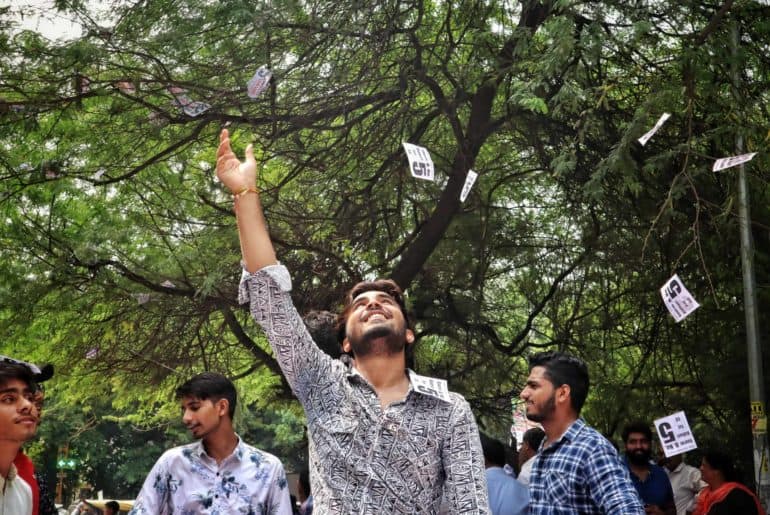
The past month in the University of Delhi (DU) campuses and colleges saw a flurry of activities characterised by loud sloganeering, flashy SUVs and a lot of campaigning for the recently concluded DUSU polls.

The voting percentage in this year’s polls saw a considerable dip of four percentage points, this year. The overall voter turnout was recorded at 39.9%. The 43 morning colleges and departments which had conducted polling for independent posts as well, registered a voting percentage just below 40%, at 39.89%, which is over three percentage points less than last year’s 43.8%.

This year’s percentage turnout dipped below 2012’s 42.5% and came close to 2016’s lowest percentage of 36.9%.

Polling at nine centres, where voting went on till 7:30 p.m., as well as in the 43 colleges where voting concluded at 1:00 p.m., saw a footfall of close to 52,000 voters in all. Over 1.3 lakh students were eligible to vote in this year’s polls. This excludes the number of eligible voters in colleges of the varsity that are not associated with the DUSU such as Lady Shri Ram College, St. Stephen’s College, Daulat Ram College, etc.

Colleges also voted for their particular college union posts and even as the counting was underway, the Akhil Bharatiya Vidyarthi Parishad (ABVP) stated that it had won at least one post out of all, in each of the 35 colleges. “We have swept the entire panel in Bhaskaracharya College, Ramanujan College, Rajdhani College, and Shri Ram College of Commerce. We are finding out the numbers by and by,” claimed the ABVP’s media in-charge Ashutosh Singh, in conversation with the Indian Express. Meanwhile, the National Students’ Union of India (NSUI) claimed that it was leading the Union and was in the majority in 22 colleges. The ABVP has emerged victorious in the polls this year, yet again, with three of the main panel posts (those of President, Vice-President, and Joint Secretary) being bagged by them. Only one seat of the panel, that of the Secretary has gone to the candidate from the NSUI.

The day’s voting also saw a couple of hiccups along the way. The NSUI complained about police presence after their Joint Secretary candidate Abhishek Chaprana was detained by police from Dyal Singh College. He was later released after being questioned briefly, The NSUI also complained about EVM malfunctioning at Aryabhatta College. “…in Aryabhatta College, the EVM is malfunctioning against NSUI. When the ballot is pressed for NSUI candidate, the EVM does not light up to indicate the registration of vote… We say no to elections being hijacked by thugs and frauds,” said NSUI’s national in-charge Ruchi Gupta.

The University’s election office denied it to be a case of EVM malfunction, but replaced the machine nonetheless.

Feature Image Credits: Namrata Randhawa for DU Beat

Bhavya Pandey

[email protected]


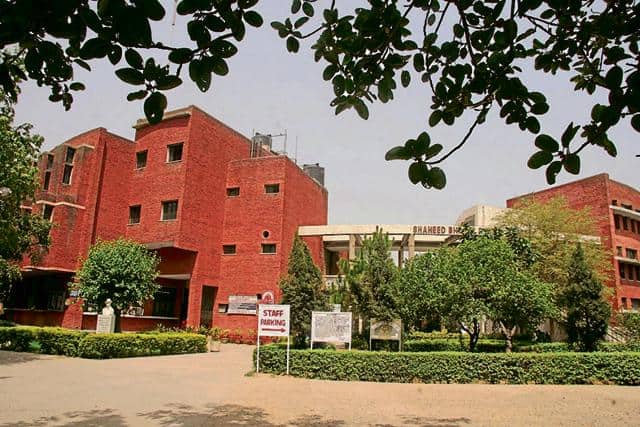
Student politics at the prestigious University of Delhi (DU) college Shaheed Bhagat Singh College (Morning) took a bizarre turn when the annual elections to the Students’ Union were marred by unprecedented violence that ended with a student sustaining an injury in his head.

The fiercely contested elections of 12th September witnessed a violent ruckus when the victim, Jatin Sahu’s head was bashed by a Presidential candidate, Vikas Nagar. At around 12:30 p.m., Nagar, along with his team, entered the canteen to campaign for the elections. Sahu, who supports Sandesh Kumar (another Presidential candidate) started campaigning for him, due to which the Nagar team got intolerant and resorted to violence. A video shot at the scene of incident wherein Sahu is blaming Nagar for the attack has been making rounds.

Interestingly, after only six hours of the incident, Jatin Sahu can be seen taking his statement back, and saying, “It is all sorted now.”

It is a shame that such incidents are becoming more and more common with every passing year. In 2017, the campus witnessed violent uprisings in Ramjas College. After Jawaharlal Nehru University, and Hyderabad Central University, DU’s Shaheed Bhagat Singh College (M) has become the new battleground for violent politics.

Ramesh* (*name changed) a third-year student of B.A. (Hons.) Political Science states, “How can someone just change their statement in six short hours after getting their head bashed? Clearly, he was pressured to do so.”

Sandesh Kumar quotes, “It is a shame to have witnessed such an incident. Clearly, the opposition played petty politics that led to such a violent act. I refuse to believe the statement released hours after the incident. If I win the elections, I will address this incident with serious gravity.”

Both, Jatin Sahu and Vikas Nagar were unavailable to give a quote.

“The college is guided by the values of ethics, integrity, national integration,” the College maintains. Yet, sadly, the administration has not taken a single step against the person responsible. It is high time to address such incidents with the seriousness they deserve as college is the ground that lies the first brick to change the politics of the country and clearly India needs leaders that can save the country from the turmoil it is facing.


Feature Image Credits: Hindustan Times

Bhagyahree Chatterjee

[email protected]


Social media is a modern-world tool available in the hands of today’s youth, and they find solace in the sea of information found in it.

To connect or to disconnect from social media has been an intensely debated topic, especially among today’s parents and the youth. While a majority of the parents think that using social media is a waste of time and a major distraction, most youth believe that it is a useful tool since it provides a virtual medium for people to get connected with each other, engage in discussions, share information, etc. As a socially active youngster, I am of the opinion that one of the best advantages of social media is that it connects people at the click of a button, with the right source required by them at that particular point of time. This click makes life very easy and comfortable, especially for the teenagers who enter into a new phase of their lives, i.e. university life. These confused teens find solace in the sea of information found on social media.

To learn and unlearn by one’s own experience is a thing of the past, as with the improved network of social media, experiences of successes, as well as experiences of failures are available for guidance. To select a course or a college away from home takes tremendous courage, and that courage comes from the information and knowledge-base provided by social media. “Before taking admission in any college, I went through videos a million times. I saw all the fest coverages and everything. It helped me a lot in knowing what will come my way,” says Bhumi, a first-year student, pursuing B.A. (Honours) Philosophy at Daulat Ram College.

Apart from empowering the students with knowledge, social media also plays an important role in connecting people; more so in making an outstation student feel at home. With the virtual connect, social media enables them to speak and stay in touch with their loved ones back home, and at the same time helps them in making new friends. “Social media helped me to connect with my friends, and most importantly to bridge the distance between me and my family. Also, as a byproduct of its well-connected nature, it helped me to settle in a city with a sense of ease in the sense that I wasn’t only able to establish, but also maintain new contacts in the city,” opines Aditya Nath, an outstation first-year student from Jharkhand, pursuing B.A. Programme at St. Stephen’s College.

Getting the right type of accommodation is a very crucial thing for outstation students who do not manage to get into hostels, and with the advent of social media, students are easily able to find paying guest accomodations(PG) and flats to live in, with the ratings and experiences of seniors recorded on various networking sites. In the words of Avilokita, an outstation first-year student from Chattisgarh, pursuing B.A. Programme at St. Stephen’s College, “Social media, especially Facebook really helped me a lot to find a good PG with a good environment to live in, because being new to the city, it is very difficult to find a safe and secure place where a student can easily adjust.” Social media has also played an important role in increasing the availability of opportunities for students, since all information regarding clubs, orientations, fests, competitions, etc. are circulated on applications like Instagram and WhatsApp. At the same time, it is a saviour for students who take part in sports or extracurricular activities, since they can catch up on all that is taught in the classes they miss by getting notes and questions from their friends through networking apps.

Thus, to conclude in the words of the famous Greek physician Hippocrates, “Everything in excess is opposed to nature.” Truly, nothing in excess is good. Therefore, it is important that each one of us manages the time spent on social media efficiently and usefully, so as to harness the maximum benefits from this gainful resource.

Feature Image Credits: DU Beat Archives

Abhinandan Krishn Kaul

[email protected]

With the growing demand for work experience among candidates in the process of finding jobs, students find themselves getting lured towards unpaid internships. Read on for an analysis of the system of unpaid internships and its relevance.

The transition from school to college is a significant one. While school was marked with scoring well to get admitted to the desired course and university, college makes one job-ready. College prepares an individual for the work-culture which awaits them after it. With the jobs being scanty, and candidates in abundance, there is a rapidly increasing race among students to enhance their skills and curriculum vitae (CV) to stand out among the rest of their peers. With ever-increasing competition, students with prior work experience are preferred over the rest of the lot. Thus, students freshly out of college find themselves in a fix. Internships, in scenarios like these, come to their rescue. Several small and big companies hire students as interns on a weekly or monthly basis where they are asked to work either from home or directly in the office.

The past few years have seen students actively seeking internships in their field of study to gain firsthand industry experience, and well, add that extra line in their CVs. Internships come with the promise of certificates, and the much revered letters of recommendation (LOR). Apart from strengthening one’s CV, they also help students in building connections in the industry. While several companies hire paid interns, a host of other companies offer nothing more than a certificate and “experience”. Despite that, unpaid internships see a huge number of applications with students desperately yearning to get in. When you are working as a full-time employee, the company needs you as much as you need it. But the paradigm shifts in the case of interns. Interns find themselves needing the company a lot more than it needs them. Interns can be easily replaced by anyone from among hundreds of others seeking that position, who are willing to work for free. Thus, the demand for a stipend, however meager, in exchange for the value the intern is adding to the company, is always silenced. “Psychology students often pay for an internship at a hospital,” apprised Shivani Dadhwal from Kamala Nehru College, representing the sorry state of students seeking experience through internships.

Are these unpaid internships worth it? The answer cannot be in a binary of yes or no. Internships do not matter as much as where you intern does. Before diving into this world of internships — which is darker than it appears to be —students need to carefully assess the value of the work, and the certificate that they will get after its completion. There is no dearth of dubious companies which treat interns in exploitative ways, offering nothing in return, except for a certificate, which more often than not, holds no value if the company in question is not renowned. On the contrary, companies having a stronghold in the field of your interest can allow you an opportunity to connect with some of the renowned names in the industry, all the while making your CV shine. Working with a reputed firm, even if it is unpaid might prove beneficial while you are seeking jobs, but the quality of the work matters too. Several interns complain about having clerical jobs like photocopying, making coffee, among others. Such experiences, however mighty the workplace may be, will end up adding no value to your targeted skillset.

At the same time, unpaid internships at startups with excellent work-culture, where you are trained within proximity of learned seniors, might end up opening doors of success for you with the amount of experience you can get working there. Lucrative offers of internships need to be carefully scrutinised before students decide to invest their talent, time, and energy into working for a company. It is important to realize that your talent, however raw, holds value in the market. Consequently, it should be invested in with much thought and research. Platforms like Glassdoor and Linkedin might help students in learning from the experiences of other interns, and making a smart choice. Demand for the proper value of their work and strict labor laws for interns should be made to save young students from exploitation in the name of unpaid internships.

Feature Image Credits: Medium

Shreya Agrawal

[email protected]

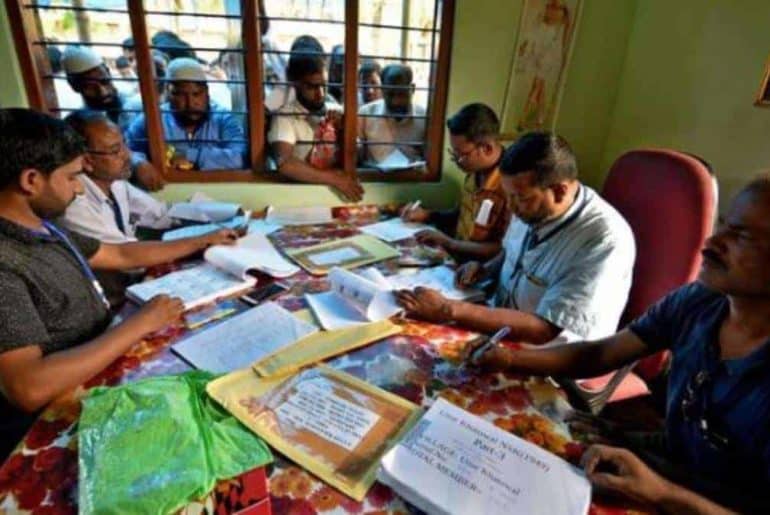
The National Register of Citizens (NRC) in Assam has been released, bringing about landmark changes in the citizenship picture in the state. Some Assamese students at the University of Delhi (DU) tell their tales.

About four years after the exercise first began, the NRC list was finally completed and released on 31 August. Monitored by the Supreme Court, the NRC was a massive headcount exercise that sought to differentiate legitimate Indian citizens from “illegal” or “undocumented” immigrants who migrated from other countries – especially Bangladesh – into the state of Assam.

Out of the nearly 3.3 crore people who had applied for inclusion in the NRC, around 19 lakhs have been excluded from the final list. Contrary to speculation, the people who have been excluded would not be considered foreigners or deported; they have a 120-day window to appeal to the quasi-judicial Foreigners Tribunal to have their claims considered. If unsatisfied with the decision of these tribunals, those excluded also have the option of appealing to the higher courts.

A student of DU, who hails from Assam, said, on conditions of anonymity, that the whole NRC exercise had been undertaken to reap “political benefits”. He highlighted how the NRC was received in Assam: “We saw it in a mixed-light; it was good in the sense that the demography of Assam had changed because of illegal immigration, but we also had doubts…When the Assam Accord was signed in 1985, the deadline [for determining Indian citizenship] was set at 1971. So, there was a 14-year gap between the deadline and the signing of the Accord. If the NRC was implemented during that time, then maybe things would have been different; now, nearly 35 years have passed since 198/. If an illegal immigrant did actually come [to India] in 1972, after the cut-off date of 1971, then they would have had children and grandchildren by now. So, there would be two generations of people who would have been born in India, but now would get disenfranchised as Indian citizens, so it would create a humanitarian problem.”

The student also said that the Bangladeshi Government would never accept the illegal immigrants back to their country as they had always been “unaccepting of the fact that illegal immigration has taken place from their land.” The whole exercising had the potential of deepening the divides in the state, he said.

Even though our source claimed that he and his family had all the requisite documents for proving their citizenship as they were all born and brought up in Assam – while their forefathers had come to the state around the time of partition – he said that they still had to face troubles. “Our citizenship status was declared as descendants of foreigners when there is nothing of that sort because we have all the requisite documents from 1954-55. “My grandfathers migrated long back, did their job here, resided here, they had their names on the voter list,” he told us. A serious hindrance was lack of access to information: “Nobody was able to answer our questions as to why our status was like that. Just because we didn’t have access to high ranking officials. So, you don’t have any access to information, no checks and balance mechanism about why your status was like that,” we were told.

Even government officials involved in the exercise admit to the practical hardships. Another Assamese student, a family member of whom is an official involved in the process, recalled a conversation when the latter told her about the practical difficulties being faced by the people: poor and illiterate people suffered the most, while the recent floods had also made matters worse.

The first student continues his story: “Even though the idea of NRC is good, throwing people out is not a pragmatic option. Just telling someone that even though you and your father were born and brought up in India, you are not an Indian citizen because your grandfather or great-grandfather was an illegal immigrant is not something which, in a democratic country like India, we are accustomed to or would want to do.” Neither was throwing people out a pragmatic option, nor was keeping them in “concentration camps” right for a democratic country to do, he said. “It would not be any different from China keeping Uighur Muslims in camps.”

So what could be done? “Maybe designate them as D-voters [Doubtful Voters] and not give them some residential, property or voting rights that normal Indian citizens get,” our source said. But, as would seem evident, he was quick to point out problems with this too. “This cannot help change the demography of Assam because if people can’t be thrown out then whoever resides today at this point of time will always be there. So it doesn’t address the main concern of the Assamese people about their demography being changed. The ultimate purpose of this exercise goes in vain, according to me.”

The NRC was not the only recent citizenship-related controversy that rocked the north-eastern states. The Citizenship Amendment Bill of 2016, or CAB, was a piece of legislation which also created a widespread row in the North-Eastern states – and it was not limited to just Assam. The Bill aimed to provide citizenship to people belonging to minority faiths in Afghanistan, Bangladesh, and Pakistan – Hindus, Christians, Sikhs, Paris, Buddhists, and Jains – who were forced to flee their home countries owing to religious persecution. It also reduced the time period of continuous stay in India needed to become an Indian citizen by the process of naturalisation from a period of 11 to six years. The Bill saw massive protests in the north-eastern states. Some of the ruling BJP’s own allies from that part of the country broke away from their political alliances. The Bill was passed in the Lok Sabha but lapsed in the Rajya Sabha.

Our source tells us that Assam was divided in their support for the CAB. The Brahmaputra Valley, with a predominantly Assamese population, opposed the Bill, while people in the Barak Valley – largely Bengalis – supported it. Manas Pratim Sharma, a student of Hindu College, also pointed out this dichotomy in an article he wrote for the North-East magazine of the college. The first student continues by saying that he has had to explain to a lot of people his reasons for supporting the CAB. “The CAB does not say that new people would be brought in from Bangladesh, Pakistan, etc. into India. It talks about whoever has come on or before 31st December 2014; it talks about those who are already here and they will be provided Indian citizenship by process of naturalisation over a period of six years. I don’t think the people residing in north-east or any part of India can be kicked out or be held in concentration camps. Then the CAB makes sense as it addresses people from religious minorities in neighbouring countries who have fled because of political and religious persecution,” he said.

However, taking cognisance of the huge protests that erupted over the CAB, the student also said, “If there is a huge uproar in the NE, then I’d actually be okay – I’d want it, in fact – if people who have migrated on or before 2014 and have not yet settled down in the north-eastern states be shifted to some other parts of the country and be rehabilitated there. This would not be the first time this would happen; it has happened in 1947, 1971, 1984 and other times also. I think there is scope for the government [to do this] so that the north-eastern states don’t have to bear the brunt of migration that the Indian state faces and that it’s evenly distributed, because that is also a primary concern of the north-eastern people…One part of the country should not disproportionately take the burden [of immigration]. If that condition is met with, I’m fine with the CAB in light of the NRC.”

A noted disappointment over the disproportionate share of migrant intake as experienced by the north-eastern states was also seen in Mr Sharma’s article, where he says the following in light of the CAB: “There is a perception that the passage of the CAB will open the floodgates for a fresh wave of influx of Bangladeshi Hindus to India, and Northeast will have to bear the brunt of the next wave of influx again.”

The students we spoke to were secure. Their names were there in the final list, even though some had not appeared in the earlier drafts, despite the names of their families being mentioned. As things stand, 19 lakh people have been excluded. As many media reports showed, there were numerous discrepancies in the earlier drafts: not everyone from the same family was included; relatives of government officials and servicemen were excluded and so on. It is likely that most of the excluded people would appeal to the Foreigners’ Tribunals. Illegal immigration is a real problem for any country; even more so in states of the north-east with a sensitive indigenous cultural demography. It can be hoped that the State would carry out the subsequent phases of the exercise with precision while keeping humanitarian concerns in mind.


Feature Image credits – India Today

Prateek Pankaj
[email protected]

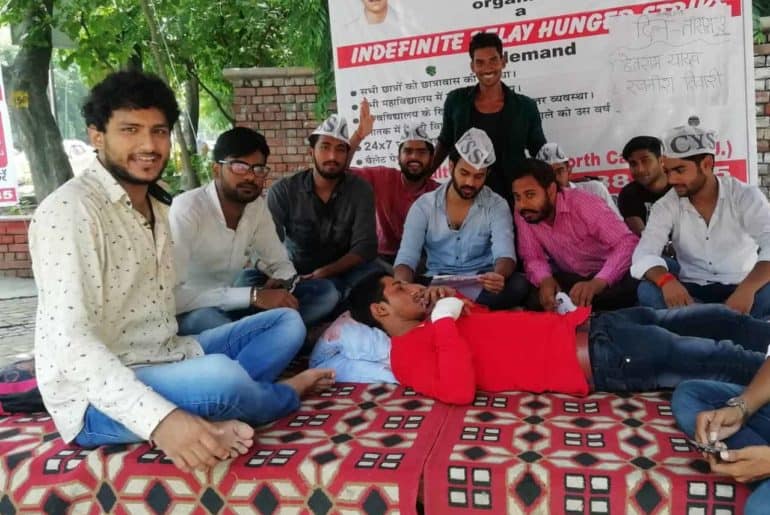
The student body of Aam Aadmi Party, Chatra Yuva Sangharsh Samithi ( CYSS) has been on an indefinite hunger strike.


The hunger strike that started on the 27th of this month, outside the Arts Faculty has been continuing for the last 48 hours. It is being organised with respect to demanding the fulfilment of various needs put up by the Student wing.

The demands being

1. Hostels for all students

2.Equal fees for all colleges in the university

3.Re-examination for students in the same year if failed.

4.A 24-hour library facility

5.Elections through ballot paper.

DU Beat was able to speak to Mr Chandramani Dev who is the state committee Vice President of CYSS. He had this to say, ” The re-examination of students who are not able to clear their examinations used to happen the same year earlier. This system was later changed. It puts a lot of pressure on the students. Thus it’s important that this system is brought back so that the students do not have to waste a year”.

He also started the reasons for demanding ballot based vote ” Last year I had contested to be the joint secretary of DUSU, I was winning till the sixth round after which there was a five-hour-long electricity cut. When the results were announced I had lost. The voting machines were tampered with and that clearly cancels out the spirit of DU elections. Thus we have been demanding to bring back ballot system.”

Politicians like Mr Harsh Bansal also came to Arts Faculty to meet the students.

CYSS had decided to not participate in the elections for DUSU this year stating that they will only participate if the ballot term is brought back.


Stephen Mathew

[email protected]

Maitreyi College recently organised an event in collaboration with Central Government’s Department of Biotechnology


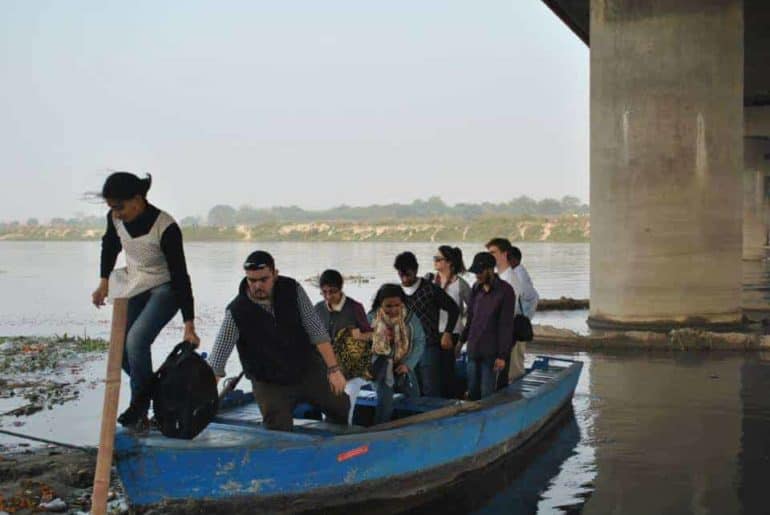
In the first of a series of events, Delhi University’s (DU) South Campus institution, Maitreyi College organized an interactive session for school students to gain knowledge on environment issues, increasing pollution in the river Yamuna and the practice of waste segregation.


The college hosted students from around eighty schools in the city to visit its campus in Chanakyapuri, New Delhi and interact with the University students and faculty. The event – a conference as well as an interaction, was organized in collaboration with the Department of Biotechnology of the Central Government on Friday, August 29th, 2019.


The school students were given an opportunity to express their understanding of the issues of climate change and river pollution, through the means of skits, short films and a poster-making competition.

This move is in line with the recent developments of environmental concern around the world. They not only include the local issue of the flooding of the river Yamuna and its poor state of cleanliness, but also occurrences such as that of the Amazon Rainforest’s wildfire, unabated rise in the level of microplastics in our water bodies, and the rapidly emerging concern of e-waste in the current global environment.


Chairman of the Governing Body of Maitreyi College, Shri Balaganpathy Devarkonda, said in a conversation with The Times of India, “…such events are important to bridge the gap between elementary and higher education and encourage students to indulge in discussion.”


The interaction of the students saw the mention of the Jal Shakti Ministry that has been recently introduced by the government to address the crisis of water management in the country. Students also discoursed regarding the potential way forward for the resolution of the crisis and pledged to take positive steps towards water conservation and cultivating a clean and green environment for all.


Featured Image Caption: Students at Qudsia Ghat, Yamuna riverfront

Featured Image Credits: DU Beat Archives


Bhavya Pandey

[email protected]