
Author

DU Beat

Browsing

Nationalism. The word reminds me of everything the nation stands for – the struggle that each martyr in the form of nationalists, protestors, and activists, has gone through for this country to get where we are today. It reminds me of artists like Faiz who sing of protest in their poetry: “bol ki lab azad hai tere” and activists like Hany Babu who continue to sing their songs of freedom. The flag then becomes a symbol of, not only the martyrdom, but the resistance against tyranny to uphold the country’s right ideals – a sovereign socialist secular democratic republic.

The revival of regressive forces has threatened the existence of Dalits, tribals, and minorities. With scant respect for democratic institutions and the Constitution, they seek to impose a crude exhibitionist form of nationalism. Patriotism is every citizen’s call of the soul. It’s not imposed, it’s a natural instinct.

– Kamala Shankar, 52

Nationalism or rashtravaad implies one’s loyalty towards their country or the sheer feeling of their devotion for the state surpassing any individual or collective interests. Patriotism refers to the love of one’s country, their unique identification and sense of attachment to the citizens sharing the same sentiment. 

The pertinent question, then remains – when did nationalism start to imply love for the state or one’s government contrary to the love for one’s country? The dichotomies. The left-wing and the right-wing. Wokeness and ignorance. Facts and trolls. Duty and privilege. Where does it all end? 

Conservatism or roodhivaad refers to upholding and promoting the tenets of traditional institutions and value-based systems, assuming that change is a gradual process and stability must remain intact. Chauvinism refers to the belief in the dominance of one’s own group or people; it can also be closely linked with xenophobia or inducing fear of the ‘other’ among the masses. 

What then becomes imperative to understand is that one should refrain from gradually substituting the former with the latter. Nationalism, in its definition, is not vague but the blurring of boundaries takes root from xenophobia and hate speech. Declaring someone as an ‘anti-national’ has become as convenient as saying that nationalism in itself, both as an ideology and as a sentiment, remains exclusive. The mainstream nationalism is associated with a certain section of the society– the savarna upper-middle class male. If this holds true, then it all comes down to the point where you should ask yourself if you’re privileged enough to be a nationalist. As long as it doesn’t affect you, it becomes rather convenient believing or having faith in the mainstream media and WhatsApp University. But what does one do when it starts affecting their lives, their culture, their beliefs, and most importantly, their livelihoods? 

If you are secular, you are anti-national. If you are secular, you are speaking the language of Pakistan. If you are secular, your patriotism is in question.

– P Chidambaram, Senior Congress leader

Dissent is equated with being anti-national and anti-Hindu. What the bigots fail to understand is that the ‘anti-national’s’ fight and struggle is not that of sovereignty but an attempt to hold on to their livelihoods. Thomas Jefferson said “When injustice becomes law, resistance becomes duty.” But to utter dismay, protestors in this country are labelled as “ignorant Khalistanis” or “jihadis” or even “terrorists”, causing public inconvenience while a tyrant or the oppressor continues to be the hero. Rabindranath Tagore in his letter to A.M. Bose in 1908 wrote that “patriotism cannot be our final spiritual shelter. I will not buy glass for the price of diamonds and I will never allow patriotism to triumph over humanity as long as I live”. 

There is nothing wrong with having faith in the state’s rules and policies until the devotion transforms into obedience, thus ushering bhakti into politics. As one of the warnings posed by Ambedkar in his last speech to the constituent assembly, “Bhakti in religion may be a road to the salvation of the soul. But in politics, Bhakti or hero-worship is a sure road to degradation and to eventual dictatorship.” From a libertarian perspective, as long as the nation’s policies are meant to empower its people, and not the ones drafting it, we are in safe hands. But the moment it starts hurting socio-political, cultural, and religious sentiments of a particular community, it’s headed towards fascism or an oppressionist rule. 

Bhakti in religion may be a road to the salvation of the soul. But in politics, Bhakti or hero-worship is a sure road to degradation and to eventual dictatorship.

– Ambedkar

Spreading hate speech and inducing fear in the minds of such dissenters, then, just becomes a desperate attempt to silence anyone and everyone who comes in the way of upholding the intricacies of this supposed normalcy. 

@fayedsouza’s post from the events of 26 January, 2021

Within the bounds of law, liberal democracies ensure that citizens enjoy the right to express themselves in every conceivable manner, including the right to protest, and express dissent against prevailing laws. The blanket labelling of dissent as anti national or antidemocratic strikes at the heart of our commitment of the protection of constitutional values and promotion of a deliberative democracy.

– Justice Chandrachud, during a talk at the Gujarat High Court auditorium in Ahmedabad.

The nation has gradually managed to blur the notions of secularism and democracy in an attempt to homogenise the nation into a single identity to ultimately become a majoritarian rule. It’s time to block the dogma and let in the notions of liberalism or respect for each other’s opinions by indulging in constructive debates and criticism of the state’s rules and policies, thus inculcating the right kind of patriotism in promotion of inclusivity and sovereignty that present-day India should inherit. 

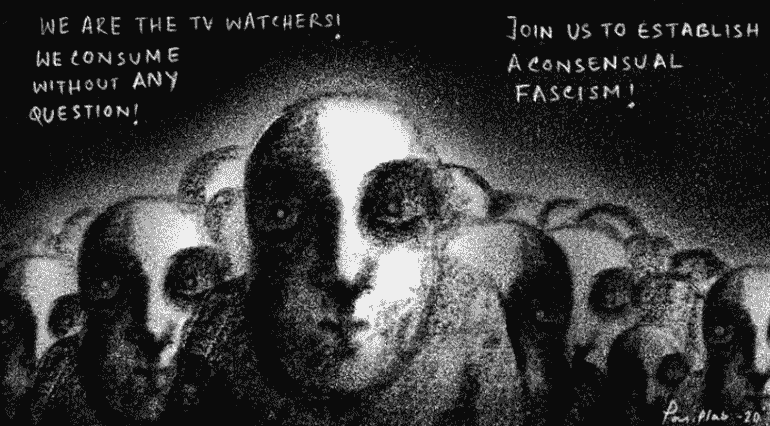
Featured Image Credits: Pariplab Chakraborty (@pariplab_chakraborty)

Annanya Chaturvedi
[email protected]
Ten years down the line, looking back to these days, what will we remember? Countless memes on the internet foreshadow that 2020 would be a landmark year in future history textbooks and that we are living through historical events. Maybe, we are. But who is to say what actually makes history? 

I am not denying that the countless memorable events in the past year are historical. Instead, I am attempting to focus on how this history is being narrativized. Who are the people appearing in it? What are those names and dates that will come in History Tests to write short notes on?

Most of us will have different answers. What makes those answers different is our personal attribution to those specific events, dates, people, and our own individual experiences. Many of us are staunch followers of the social distancing protocol, some are vacationing, some face severe symptoms of the CoronaVirus, some don’t even feel that they have it, while millions are losing their lives. Some are still pondering new ways to work or study from home; many lost their jobs, while a majority were walking back to their hometowns just to not starve.

Our experiences of the previous year are layered with social, economic, psychological, cultural, and religious angles. And it’s highly unlikely that all our very different, individual, and emotional experiences would be remembered. Maybe a few memoirs make it through, a few exceptional pieces of writings, fictional or otherwise create a stir to emphasize the individuality of history. But, what always makes the cut is the collective history.

The epiphany of the fact that we all would end up being just numbers of statistical data used to research the long-lasting biological or economic effects of the pandemic makes one realize that even the history we study is marred with overshadowing of the collective over personal. It makes me wonder who were the countless and nameless ‘Yous’ and ‘Mes’ during the era of Independence, or how the lives of people were affected by the welcoming of the Indian Constitution in 1951. Everything – history and the process of its narrativization – is political. Our past, its idealization, the nostalgia of a greater or a more democratic, more traditional, more ‘Indian’ India, might as well be a shadow of an era full of countless people with their sufferings forgotten.

On 26th January, the Indian population watches the parade, celebrates, and takes pride in the legacy of our Democracy and its Constitution. Maybe, this year after living through these countless ‘Historical Events’ we can understand that taking history on its prima facie is honestly a lie. History is refined. It is filtered and cleaned, which when looked upon with a magnifying glass reveals all its gaps and flaws. And let’s face it, only a handful of us try to make attempts to look at this history more closely and fill these gaps. The rest just sip a cup of chai, read obnoxious WhatsApp historical facts aloud like it is the Holy Bible, and take pride in chest-thumping nationalistic pledges, not realizing that, just like we are erasing a part of that past, we are simultaneously being erased in the future’s past.

Read also: An Epicureanist Appraisal of the Year Past- What I Learnt From 2020: Ignorance Can Be Bliss

Feature Image Credits: Fine Art America

Sakshi Arora 

[email protected]

Delhi University released an official circular which makes it compulsory for colleges to hold online cultural fests.

On 16th January 2021, University of Delhi (DU) released an official circular on its website which stated that it was mandatory for all colleges to hold cultural fests online. The decision has come as a relief to a lot of students who were drowning in sadness because of COVID-19 that severely hampered the conduct of fests.

January-February every year marks the fest season in DU. All the colleges get illuminated with zeal, excitement and thrill. One usually encounters crowds everywhere with students moving from one college to another to attend consecutive fests. However, the pandemic seems to have entirely changed the fest landscape of DU. DU Beat spoke to a few students across DU via virtual means, to capture their reaction towards the latest DU decision.

“I feel that it’s absolutely a valid and welcoming decision. Although I completely stand by the fact that offline fests with food and artists whom you can see closely from stage can’t replace a virtual fest. I still applaud the fact that DU has tried to do something in the arena of entertainment for its students.”

Anonymous, student, Delhi University

The detailed notice of DU has outlined a couple of guidelines and general points that the students will have to follow while attending the online fests. One such outstanding instruction was that students would not be allowed to call their friends and gather in one place to watch the performance of artists. This has been supposedly done to avoid direct physical contacts. Similarly, the DU administration stated that the consumption of alcoholic beverages like whiskey, beer, etc. would be strictly prohibited.

To keep a check on the same, DU has made it mandatory for everyone to keep their cameras open. Students can only keep snacks or soft drinks with them while watching. As far as performances are concerned, DU hasn’t provided any clarity on the same. But reports suggest that all the regular artists like Guru Randhawa, Jass Manak, Zubin Nautiyal etc. would not be invited this time.

” As a 3rd-year student, I do welcome the decision of DU but I am still disappointed because this was our last fest season and I thought I would attend it with my friends. Moreover, the guidelines by DU are also quite strict and I am apprehensive as to how will I enjoy it if I can’t get together with my friends.”

Anonymous, student Delhi University

DU is currently working on fixing the logistical issues with regards to conducting the fest smoothly because apps like Zoom and Google Meet only have a fixed capacity to accommodate students. As per reports, the university has conveyed it to individual colleges to conduct the fests by combining 2-3 departments to accommodate all students.

Thus, only small scale artists would be invited this time, which in turn has proven to be a welcome change. This time however one would miss the Khan Chacha food stalls that one encountered in offline DU fests, or the antique item stalls that would be flooded by students. It’s absolutely thrilling to imagine the idea of an online fest and it would be more welcoming to see how successful DU becomes in making it a smooth sail.

Stay tuned with DU Beat for latest news about DU!

Disclaimer: Disclaimer: Bazinga is our weekly column of almost believable fake news. It is only to be appreciated and not accepted.

Read also: https://dubeat.com/2020/12/bazinga-du-to-reopen-colleges-for-next-semester/

Featured Image Credits: DU Beat Archives

Navneet Kaur

[email protected]

Joking about our personal trauma has always been a preferred coping mechanism, but one that comes at a hefty cost. Read further to see how comedy becomes a cruelty.

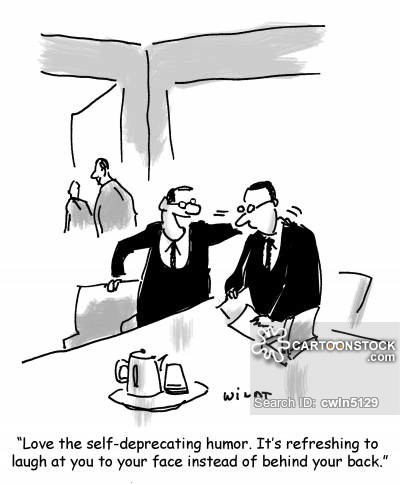
People have always used dark humour to mitigate their suffering. On one hand, it’s a commendable effort. Jokes can potentially be a tool for opening up dialogue around difficult topics in a non-confrontational way. If you make a self-deprecating joke at the family dinner, nobody has to take it too seriously. People just let out a chuckle, pass the salt and move on. In that way, jokes can help people regain their agencies by allowing them to share pain without causing instant alarm to those around them. Jokes – at the cost of your pain – can actually be a breathing space, a port in a storm, a place of safekeeping. Who isn’t guilty of this?

self deprecating comedy
credits: Medium

I have used jokes to talk about uncomfortable topics. Problems with sexuality, eating disorders, death of a close friend, domestic toxicity, sexual assault – all of this hurt has been turned into comic matter at some point. When I present such weighty information as a throwaway joke, what it does is ease the tension for my audience and, in turn, myself. It defuses the glare of human suffering – one that can seem too straightforward to be bearable – and makes it so.

 “…if you slit your wrists while winking – does that make it a joke?” Hera Lindsay Bird asks in one of her poems. The question is this: How long can human pain be sold off as comic matter before it gets unavoidably cheapened, diminished, impossible to talk about without the suggestion of self-ridicule and inhuman nonchalance? How long before comedy becomes cruelty? In our time, it is an admittedly common tendency to stage mockeries of our pain. Or more simply, to humorize it. It seems to be a generational quirk, pooled by most Gen-Zs and late Millennials that generally unnerves anyone who is not classified in this core demographic.

self deprecating comedy
credits: MEME

But here’s the thing: when you continually joke about personal issues, it can eventually become difficult to give them a serious treatment. After a point, this can translate into interpersonal relationships where you don’t know how to console someone because you never did it for yourself. Always joking about stuff can make you anaesthetised to it, disallowing any possibility for sincere expression. This can attack one’s humanness – the very ability to connect through which one can subsequently manage their personal suffering.

David Foster Wallace, the American writer, talked about this exact lack of human sincerity in the postmodern era, where irony had overridden sincere expression. This has been effectively rendered in the 1975 – the British indie-pop band – song, Sincerity is Scary, where Matty Healy sings: And irony’s okay/I suppose culture is to blame, you try and mask your pain/In the most postmodern way’.  Of course, joking about your pain is a good thing, as discussed earlier, if channelled in moderation. But it rarely is. If you’re self-harming next to your friend and both of you laugh it off as a messed up quirk, is that funny? If your friend hasn’t had a full meal in six days, is her admittedly witty pun about anorexia still rib-tickling stuff?

matty Healy
Credits: Pinterest

Deriving cues from the dominant culture, people have, over time, adapted their own coping mechanisms, and have ways of dealing with their personal trauma. (This calls for a cultural/ideological shift more than individual reform.) We need to respect people’s boundaries and let them share their pain however they want, if at all. But at the same time, we need to let people know that there is a conceivable scenario where sensitive information may be disclosed without being reduced to comic substance. In an archived essay titled, ‘Traumatic Comedy and Comic Trauma’ on the website Rookie (read here), Bethany Rose Lamont talks about Hannah Gadsby’s Netflix special, Nanette, in the following words:

This work is a conscious contradiction of the comic, as Gadsby begins with typically self-deprecating jokes, follows them with a deconstruction of the art and entertainment worlds’ histories of abuse and oppression, then retells those same jokes as stories of trauma, then disavows comedy as a way to relieve audiences of the tension that accompanies hearing about someone else’s trauma, abuse, and oppression. She wants to stop rewriting her own history as a joke. She hopes the audience will feel her pain, not laugh at it. She concludes by arguing that “laughter is not our medicine. Stories hold our cure.

Maybe we can all benefit from being thoughtful storytellers of our pain, and not the ad-libbed comics we think we are. One must learn to treat their pain with openness, gradation, and subjectivity it very much deserves. I think, in the end, comedy does not necessarily make pain more comfortable – only somewhat laughable. But the gags choke out on their running time; the pangs, yet, go on.  After a point, you have to ask yourself – who’s laughing? So, I think the attempt should not be directed at humorizing our suffering, but rather humanizing it, and therein lies our recovery. But haha…. I’m jk… unless?

Read also: 

Featured Image Credits: Giphy

Sushrut Yadav

[email protected]

This article attempts to explain the various mechanisms through which we develop or form an attitude that influences our behaviour.

In school, I never did well in Accounts. I always scored low and would constantly look for excuses to skip class. My teacher, on entering the class, would shut all doors and windows, throw punishments around like confetti, and bang the duster on the table very loudly. I didn’t like them. By the principle of association, I developed a dislike for the subject because I disliked the teacher. Thus, I associated the negative qualities of the teacher with the subject they taught.

Similarly, I’m sure you can think about one subject you always liked, just because you liked the teacher. The positive association will lead to a positive attitude and a negative association will lead to a negative attitude.

What are attitudes? Psychologists define attitude as a state of mind, a set of features, or thoughts about a subject that has an evaluative feature. They are lasting evaluations of various aspects of the social world that are stored in memory. This can include evaluations of people, issues, objects, or events. Such evaluations are often positive or negative, but they can also be uncertain.

This also plays out quite unmistakeably during election season in our country. Our attitudes are developed first, by associating cues and heuristics to a prominent figure and second, by associating the prominent figure to the party itself.

Here’s a hypothetical marketing strategy- link mass-appealing qualities (like honesty, ‘nationalism’, etc) to a particular person via media and advertising campaigns and make them the face of your party. Then, contest all elections on their name, such that the voters feel like they’re voting for that particular person, rather than the other candidates of the party.

At the same time, find a way to label and present your opponents as ‘corrupt’ or ‘anti-national’ and you’ve got a victory at your hands; because while it is tempting to think of attitudes as rigid, fully considered evaluations, that may not always be the case.

Factors affecting attitude formation.
Image credits: Verywell Mind

If an individual is praised or rewarded for exhibiting a particular attitude, chances are high that they may further develop it. Perhaps this why our religious inclinations are often the same as our parents’ because questioning certain practices are often viewed as stupidity or rebellion and not given much attention.

Reward or punishment increase or decrease the further development of an attitude. Consider this case- If a person involved in an open firing in a civil protest were to be given a party ticket, this would serve as a reward or positive reinforcement. This would encourage them to further develop and exhibit their hostile attitude. However, if they were to be fired and brought to justice, this would serve as a punishment and discourage them from further developing and exhibiting this attitude.

Sometimes, attitudes are developed by observing others being rewarded or punished for expressing thoughts or showing behaviour or a particular kind towards the subject. Per my previous example, rewarding the said person would encourage hostile attitudes in us, while punishing them would discourage it.

Over time, social norms may become a part of our social thinking patterns, in the form of attitude. A classic example here is that offering money, sweets, fruits, and flowers in a place of worship is normative behaviour in certain religions. When we see that such behaviour is socially accepted and approved, we may ultimately develop a positive attitude towards it and practice it ourselves. We can also develop a positive attitude towards those who practice such behaviour.

For example, we have been taught that feeding the hungry is an appreciable virtue. Thus, we often find our leaders tweeting and Instagramming their ‘lunch with the poor’ photos. Now, change the narrative here to: give a man a fish, and you’ll feed him for a day. Teach a man to fish, and you’ve fed him for a lifetime; you will find the same leaders criticizing their opposition for doing what had previously done. Here, the issue isn’t about who is right and who is wrong. What you need to look at here is how narratives based on a target audience are formulated to influence their attitude formation.

Many attitudes are learned in a social context individually, i.e., without the necessary physical presence of the others. Huge amounts of information provided through various mediums lead to the formation of both positive and negative attitudes. Remember the fake news phenomenon and how it has blurred the lines between propaganda and information?

From discrediting political leaders to misreporting historical facts to promoting biases, the fake news creators have done it all. If your best friend tells you that her neighbour is a mean person, you are most likely to believe this information without fact-checking. Thus, you will develop a negative attitude towards the neighbour. Now, imagine this situation magnified to a worldwide scale. How often do we care enough to fact check before forming opinions and attitudes?

But why do we develop certain attitudes? According to Firebrand Marketing- “Researchers have suggested that attitudes form for four primary reasons:

Utilitarian-

We tend to form positive attitudes towards things that lead to perceived gains and negative attitudes to things we perceive as a loss. “I like sushi because it’s healthy; I don’t like soda since it’s fattening and rots my teeth.”

Knowledge –

Attitudes help us make sense of the world around us by giving us a framework to evaluate it. So, in our store example above, when faced with lots of shops to choose from, we orient towards the one we had a good experience before.

Value-Expressive –

We form attitudes that reflect our values or which reflect those of our social set. “Sporty tech adopters like me wear Apple Watches, therefore I like Apple Watches.” Of note here is that we may actually have no personal experience of Apple Watches or even really like them, but because they reflect the attitudes of our peer group, we adopt the same view.

Ego-Defensive –

We adopt an attitude to save ourselves from anything which threatens our ego or sense of self-worth. “Sporty Apple-Watch-wearing tech adopters like me don’t eat at Taco Bell or shop in K-Mart.” It just doesn’t fit our self-image so we form an attitude against those brands even though we may have no experience of them.”

Once formed, these attitudes influence our behaviour. They can also make it easy to predict our behaviour. Marketers have used these principles to positively influence our attitudes towards their products and services. If we understand how and why our attitudes develop, we can avoid this influence and the subsequent trap it might lead us to.

Read also: https://dubeat.com/2016/04/difference-in-attitudes-towards-exams-during-various-semesters/

Featured Image Credits: Creative Bloq

Featured Image Caption: Huge amounts of information provided through various mediums lead to the formation of both positive and negative attitudes.

Kashvi Raj Singh

[email protected]

A note on how pictures became a form of emotional sustenance during the lockdown. 

As someone who avoided mirrors like the plague, I always hated the camera too. Or more accurately, I didn’t like being the subject of its attention. Being captured, memorialized at an unsuspecting angle, mid-action, mid-ordinariness, I hated that. My mouth chewing into a saucy burrito. My curved spine, ugly as a teeming cross-section. Who would want that? Susan Sontag once said that to photograph someone was to violate them, by seeing them as they never see themselves. She termed it a “subliminal murder”, which is admittedly overspent, but you understand the emotion.

Today, the world runs on the idiomatic wisdom of ‘pics or it didn’t happen’. In such an arrangement, I lead more of a non-existence as someone who rarely appears in pictures. I’m the unoccupied space in family pictures, yearbook panoramas, and friends’ selfies. Instead, I live on anecdotal submissions – memories and testaments. I would be lying if I said I did not assume a nip of moral superiority for not relying on the lens. Living in the moment, as it goes. But then sometimes, the moment is gone. You see the world stopping like never before. A global pandemic induces a complete lockdown. Whoosh. Life takes an indefinite halt.

The worst thing about sudden disasters is the successive loss of imagination. A sad person – more often than not – is sad because they cannot imagine an alternate reality, a happier one. Say, a person grieving the death of a lifelong spouse cannot picture a life where they may possibly survive without the missing person. Sometimes, a cue is needed. Two months into the lockdown, I was bent out of shape. Isolation, mitigated by laptop screens and long-distance calls, had taken its toll on me. Then three months passed, four, five, six. Life felt like it had little meaning, and I couldn’t remember if it had any to begin with. It felt like being entombed in a nightmare. A Groundhog Day nightmare. I remembered laughing with my friends on a sunshiny day out on the college campus or the weird joy of riding the Metro; but it was mostly spectral and – after half a year of staying at home – quite unbelievable. A sort of disassociation took over.

friends chilling
(My friends, hanging out)

Until one day I was bored and decided to filter through my camera roll. Pictures are evidence. Proofs. Testimonials. Archives. And so, I found pictures – relatively commonplace – of my friend sitting in the Ramjas lawns, having his last-ditch try at an overdue assignment, or another close-up of two conjoined masala chais next to the flared end of a Parliament. I felt instantly perked up. There were, as I was happy to find out, many more such ordinary pictures. Accidental shots taken on the Metro; pictures of silhouettes on the concrete walkway; my friends sitting in a spring garden; and more…

Most of these photographs channeled a positive feeling, a friendly hope. They were like curio relics. Museum displays. A thousand hopes, multiplying into the brain. In lockdown, photographs became that very cue (illustrated earlier) for so many people in total isolation. A photograph, however simple, was the reminder of what it once was, and hopefully, what it will eventually return to. It became a source of emotional sustenance, as it had been historically for people alienated during wartime. As 2021 starts, I am beginning to like the camera, and thinking of taking more pictures, just to save them for a rainy day.

pictures
“This is a small hut which I cross everyday on my way to the metro station. Last night I saw they had decorated it for Diwali and I thought it was absolutely beautiful. When I told the dwellers about it and asked if I could click a picture, one of them started blushing and both were beyond happy and just as proud of themselves. It made my day.” – Aditi Gutgutia, Second Year, LSR 

You should also read: 

Featured Image Credits: Tumblr

Sushrut Yadav

[email protected]

Junk jewelry is the newest casual-ethnic discovery, and is creating a furor on the streets of Delhi. In its latest addition of Auburn Umbrella, DU Beat brings to you the charm of accessorizing your kurtis with (not so) ordinary metal trinkets.

The newest fashion craze to dawn upon the Delhiite nooks and crannies famous for street-side fashion, might well be a game changer for the Boho-casual ensemble that college students have been experimenting with these past five years or so. That’s right: junk jewelry has finally caught on with the fashion savvy youngsters and is busting charts like never before.

The rich microcosm of fashion blends encompassed by these pocket-friendly trinkets, has exploded into a million colours on the relatively muter hues of North campus fashion. The colors of ethnic wear have deepened to richer shades of Maroon and Blue in order to match the grounded affluence of metal jewelry.

“The charm of junk jewelry for me is how popular fashion has never been more affordable! I can pair it with anything during more bold experimentations, and ethnic is anyway the go to look when I want to flaunt my latest finds.”

Sonia Rawat, 2nd year history student at Hindu College

While adornments of faux gold and oxidized silver have long ruled the roost, the trend of junk jewelry, or lightweight, funky jewelry, seems all set to displace their flattering elegance with an earthy panache.

Come summers, the by-lanes of the city, from Sarojini to Janpath, will be brimming over with fashion connoisseurs hunting for that perfect piece of accessory that can glow up their print skirts from a ‘no’ to a classy ‘boho’. The real reasons behind the popularity of junk trinkets is that they have brought jewellery to the informal realm, and that they blend with greater ease into everyday looks there by enhancing them.

1. JANPATH: THE SHOPPER’S SHOW STOPPER

As any Delhiite is bound to gush: the Delhi shopping experience is incomplete without a walk down the aisles of Janpath. While the market is generally renowned for affordable and chic clothes amongst university students, it has long been a hub of junk jewelry, even during the out-seasons of the trend in question.

From oversized rings and exultantly designed earrings, to one-of-a-kind choker designs, Janpath is a mountain of all the junk jewellery that your inner fashionista can possibly desire for. The prices, of course, are vastly negotiable so we suggest carrying along a friend trained in the art of bargaining. A more recent edition to the junk jewellery collection here is faux nose-pins. Go before the peak season to avail the best offers and grab the best pieces off the shelves.

“I shop a lot at Janpath. Most cancelled lectures find my clique strolling down its lanes. Though, of course, bargaining is something we sorely lack, and I would recommend being armed with this skill before visiting Janapth, and, less often, Sarojini.”

Hiba Nasrin, Hindu College

2. KAMLA AND  KALEIDOSCOPIC COUTURE 

While Kamla is more of a complex than Janpath, and lacks the appeal of street-side fashion that the latter possesses, its occasional vendor with cartloads of metal jewellery at every third corner redeems it enough to warrant a mention here. Standing right beside the North Campus, its ease of accessibility is unmatched. While the prices are less negotiable than Janpath, the variety is way more intensive. An added advantage is Kamla being a clothes-oriented mart: you can here buy yourself the perfect print skirt  and match it withjunk accessories at the very next corner.


3. JUNKS AND PRINTS

So you have bought for yourself the perfect junk necklace and danglers to match the piece. Why not pair it up with a printed kurti from your neighbourhood Sabhyata? Junks and prints serve as perfect complements to each other. Stand out with a bright kurti, white palazzos, and your Janpath conquest. Commonly, the metallic colour of junks is most highlighted by bright yellow kurtis.

4. SARI NOT SORRY

The perfect poise of a sartorial blouse becomes ten times more glamorous  when juxtaposed with junk jewellery. A low cut blouse with boho necklaces is the go to fashion for the season. Adopted by influencers, the plain white sari with print flowers and junk jewellery, are a perfect couplet of the fashion verse this year.

Undoubtedly, two factors have been at play in this surge: the affordability and the rise of Instagram influencers. When fashionistas like Komal Pandey promote ordinary metal jewellery as an amphibious trend that can fit in with any outfit, the impact is obviously immense. The idea of such affordable ‘high-fashion’ knows no limit of appeal to college goers whose finances are barely put together. The junk jewellery trend therefore is one major success of the E-fashion and influencer era!

Also Read: https://dubeat.com/2020/03/everyday-college-fashion-minimalist-and-affordable/

Feature Image: Delhi Planet

Samya Verma

[email protected]

Girls accounted for nearly 292 out of the 528 students who took admissions under the sports quota at Delhi University but chose to drop their seats due to the lack of hostel accommodation in Delhi. The matter draws our attention to many impediments to women’s higher education.

Near the close of the University’s official admissions season in late December, the administration officials discovered that 528 of the total number of students selected for sports-based admissions had failed to deposit fees and confirm their registrations. Many informed the University that their decision was born out of uncertainty with regard to hostel accommodations. Since 292 of such applicants were girls, the larger issue of women’s higher education being fraught with obstacles is brought to light.

“We found that of the 528 applicants who did not pay the fees, 292 were girls. These are applicants, who despite the approvals given by the principals and college admission committees, after the allocation of courses and institutions, didn’t confirm their admissions by paying the fees. So, these seats are now vacant and need to be filled.”  – Pankaj Sinha, Chairperson of DU Sports Council

It comes as no surprise that a dearth of hostels at the University is clamping down upon the merit of so many girl students. The thought of off-campus accommodation in a city like Delhi invoked fear and is expensive as well. When added to the social pressure of ‘saving’ the money that could be ‘wasted’ on a girl child’s education, one can see the complete scope of the problem raised by these dropped admissions.

“When we spoke to some of these students and their parents, we were told that they weren’t keen (on admissions) after they found accommodation in Delhi a major concern since there weren’t hostel facilities available for them.” – Pankaj Sinha, Chairperson of DU Sports Council

As Mr. Pankaj Sinha correctly observed- vacancies of such a nature would attract negative publicity for the University, and “greater scrutiny by the government agencies, the public, and the media.” As such, the Chairman has urged the University to release the third list and fill the remaining seats immediately. The third list won’t be open to those who had applied in the previous two lists but failed to make good on confirmation of their admission. It came out on 4th January 2021.

“We will issue a new list with a fresh set of students. Currently, I am asking colleges to send me their seat matrix to see how many vacancies there are. We will allot seats in colleges to students as per their preference.” – Pankaj Sinha, Chairperson of DU Sports Council

What becomes exigent is a revamp of hostel facilities by the University. Allocation of funds to building more hostels, as well as improvement of existing infrastructure, will go a long way towards the golden futures of female aspirants. Special education drives aimed at educating the aspirant’s parents on the necessity of higher education for the girl child will also have a role to play. These measures, however, seem much lower on the University’s list of concerns for now.

The Sports Council, meanwhile emphasized how the entire process was made successful with ‘zero-contact’ and ‘without any human intervention’,  in the wake of a global pandemic. The procedure was relegated to the sphere of software specially designed for admissions. No interference, except occasional scrutiny of the machinery, on part of the administration, marked the duration of college and course allotment in a year that proved to be a major obstacle course for the University.

Feature image credit : Parveen Negi

Samya Verma

([email protected])

We take a look at Bob Dylan’s impact on anti-fascist movements in the world and at home and his impact on counterculture

Robert Allen Zimmerman, aka Bob Dylan has been a figure in counterculture for more than 50 years. With a career in music starting from 1961 and continuing to this day, his songs challenged the establishment and its oppression still remain relevant now. One could call him a nobel laureate, a folk music icon, or a symbol of protest against oppression worldwide, but for the man himself, he doesn’t fit into any of these definitions.

As he once said “ I define nothing. Not beauty, not patriotism. I take each thing as it is, without prior rules about what it should be.”

It wouldn’t be fair to call Bob Dylan a musician who just writes protest songs or just writes love songs, his music spanning 50 years contains everything from protest music, to songs about love, loss, belonging, hope, and so much more. The man was incredibly hard to report on with the way he reacted to journalists and paparazzi, but his ideologies can be somewhat gauged from his songs against racism, war, and exploitative governments. Like most folk musicians of his time, he took great inspiration from and admired Woody Guthrie, a folk singer who was a leading name in the mid 20th century for his songs against fascism and oppression.

Bob Dylan’s songs such as “blowing in the wind” and “the times they are a-changing” have been protest songs since their release in the 60s, sung by the american youth to protest against the Vietnam War. The matter and lyrics behind this song remain relevant to this day, even more so in India where a current fight against a fascist regime is engulfing the country. In some protests led by Dastak DU or other collectives, Bob Dylan’s music could be heard sung by the voices of our youth against the tyrannical oppressors.

Midhun, the convenor of Dastak DU speaks about why the collective’s first song was “the times they are a-changing” and the importance of reviving the progressive artists movement.

“Our writers and artists were heavily influenced by the people’s art movement and the marxist aesthetics, which ultimately gave us the Progressive Writers Movement, Parallel Cinema, Bombay Progressive Artists Group, IPTA etc etc. But that movement has died and it’s rotting smell is all over in the corners of art and literature in India. As Dastak believes, decline in the progressive thinking and it’s reflections through art and literature is the main reason behind the smoothly done Hindu fascist uprising in India. What Dastak, as a progressive student artist’s forum really wish with our efforts is to revive the died out Indian progressive artist’s movement, from Sajjad to Faiz, from Premchand to Safdar Hashmi. Undoubtedly Dylan was the best way to start it and that’s why we picked Dylan’s song as our first song to be sung in Arts Faculty.”

Midhun, the convenor of Dastak DU

His music, even in lockdown, still questions the privilege and ignorance in the larger Indian public and a government without sympathy to the working class. As the lyrics in “blowing in the wind” say

“Yes, ‘n’ how many ears must one man have

Before he can hear people cry?

Yes, ‘n’ how many deaths will it take ’till he knows

That too many people have died?”

Prabhanu Kumar Das
[email protected]

This piece talks about how the colours of the rainbow flag reflect upon crucial junctures in the life of a LGBTQ+ person. 

Life is a strange phenomenon, an uncharted journey with several twists and turns. This journey is different for each but each journey is incredible and worthwhile. Since childhood, we are told to embark on this journey according to some standard ‘guidelines’. These guidelines do help us grow and make our lives easier. But often they become so overbearing that they cage our essential being and we are forced to fight for who we are.

LGBTQ+ community has been fighting for their recognition, rights and acceptance since many decades now. From the 1969 Stonewall Uprising to over 100 countries of the world decriminalizing homosexuality, the LGBT social movement has grown stupendously. The LGBT social movements began as a response to years of persecution at the hands of the church, state and medical authorities. The condemnation of homosexuality or deviance from established gender roles/dress was communicated through public trials, exile, and medical warnings. These paths of persecution not only entrenched homophobia for centuries—but also, in a way alerted the populace to the existence of ‘difference’. By the 20th century, the movement started taking shape and since then it has never looked back. From pride parades and organized activism to representation in positions of power, the movement has grown and has developed its own community, literature, signs and symbols, etc.

One of the most interesting symbols of the LGBTQ+ movement is the rainbow flag. Proudly waved at pride parades and displayed to show solidarity to the movement, each colour of the rainbow flag has a meaning. But if you look closely into the lives of LGBTQ+ folks, the flag symbolizes various stages from their lives as well. Here’s decoding their journey through the colours of the rainbow –

Lilac and blue of fathoming Identity 

This phase is not fun at all. Clouds of confusion, anxiety, denial and emotional distress gather around as one tries to come to terms with one’s ‘lilac of spirit’. A spirit or identity that does not behave as heterosexual, but still tries to force into its place in the closet. So, many seek out information online or through reading or friends and slowly, manifest their true selves. But self – discovery is not enough as what must follow is identity acceptance. By being one with the self, a serene wind blows away those distressing clouds and one gets enjoy the clear blue sky of what their true identity is.

Harvansh, a student, shares his experiences of this stage in the following words, “Right from when I was very little, I always felt different from the boys of my age group. At that age I couldn’t say what the “different” thing in me was. I always ignored it and focused on my studies and music.

I was popular in my school for my music and other cultural activities, so everybody knew me. Though it felt good being known and praised by others, it also brought a lot of bad encounters. Some of my seniors would taunt me for my hand gestures, the way I walked and stuff. It bothered me a little but I never cared. All I could think, to make a sense out it, was that I was a good boy and they were the bullies. After high school, I joined a coaching centre to prepare for the college entrance exams. There were few guys whom I found very attractive; at this point of time I was still unaware of my sexuality. I thought that I was impressed by their personalities or their dressing sense, so I ignored it again. I joined an engineering college and it was far away from my home. As I got some alone time, I wasn’t afraid of being seen or heard by anyone. So after many years of thinking and ignoring; I started googling, youtubing and it took me a while to find out I’m not alone. This has happened to many others and this is normal – this is my sexuality. I had finally understood that ‘different’ thing in me.

And then I realized why it took me so long to figure this out – the fear, the homophobic experiences, the “how a boy should act” attitude of the society had led me to suppress my sexual attraction towards boys. It wasn’t easy at all to accept my sexuality; I had to go through months of sadness, silence, fear, anxiety, anger and what not. But finally I got comfortable with it, happily. I met a lot of people talked to them about their experiences and coming out. I started coming out to my friends, and they accepted me with all the love. I came out to my sisters, and now we are much closer. But the most difficult one was when I came out to myself; when I said the words ‘ I am GAY AF’.”

Natural Green of disclosing to others

After accepting and integrating identity, there comes the innate desire or even need of disclosing or sharing it with close friends and family. Coming out is a life – long process and not easy. Whether one has come to terms with their sexual orientation or gender identity, or are still thinking about it, it can be difficult to deal with on your own. There comes a point where one needs to talk about it with someone, to get support or simply get it off one’s chest. Coming out is the most natural stage as the person is able to share with others who they are and what is important to them, rather than having to hide or lie about their identity. Confronting the assumption that everyone is “straight” and also the discrimination, homophobic and transphobic attitudes along the way, allows the person to develop as an individual, allows for greater empowerment, and makes it easier for an individual to develop a positive self-image. Every LGBTQ+ person has their own, unique story of coming out(s), some are good and others are bad. Yet, each story has the natural virtues of courage, self – love and honesty ingrained in it.

Fighting discrimination with the power of yellow and orange

The heterosexual standards have been so deeply imprinted on our minds that anything else seems disturbingly unnatural. Even though there is evidence of homosexual activity and same-sex love, whether accepted or persecuted, in every documented culture, the dualism of modernity which teaches to see everything as yes or no, right or left, man or woman; gets the better of us. As a result, LGBTQ+ people across the world have to go through pervasive discrimination that negatively impacts all aspects of their lives. Due to a range of factors such as discrimination, isolation and homophobia, they are forced to make from subtle to profound changes to their everyday lives in order to minimize the risk of experiencing discrimination, often hiding their authentic selves. Being pushed back to the closet leads to members of the LGBTQ+ community being more likely to experience a range of mental health problems such as depression, suicidal thoughts, self-harm and alcohol and substance misuse.

The gentle yellow rays of the sun shine equally on everyone, without prejudice and without hate. Likewise, one should never let the slurs, the stares, the injustices to prevail over our right to live full, equal, and authentic lives and let the calming orange glow heal the scars and give more power.

Vibrant red of community building and activism

Discrimination and scorn can pull anyone down. But when you know there are others out there who go through the same things and that there is a community of people who are more than welcoming to your identity, there ignites a new kind of life force that is comforting and empowering. In the space that the community creates, one also engages in education and dialogue and from there, emerges in the individual the impetus to engage oneself in activism and fight for the fact that sexual orientation and gender identity are very important components of who I am as a person, but they are not all of what defines me and it certainly does not justify any kind of discrimination towards me. Resolving to take up ‘red as life force’, one joins the activism for equal rights, respect and recognition.

Talking about LGBTQ+ community and the future of activism, Pankaj, a law student, says, “’Queerness’ isn’t some acquired trait that is almost always influenced by the social environment around us. But, by not implementing ‘queer education’ in school curriculum, our system is essentially depriving everybody the ability to understand themselves and the social differences and injustices in our society and thereby, increasing the probabilities of young, impressionable LGBTQIA+ youth to engage in unsafe practices which includes misguided activism on social media platforms and mental disorientation. As a part of the community, I personally feel that there is an incumbent need to educate ourselves in the fluidity of gender. Also, I think I would be too shallow to not hold my own community accountable for the problematic things that are preached and practiced. For instance, social media dating apps like ‘Grindr’ and ‘Blued’ normalizing ‘hook-up culture’ to the extent that a whole new lot of younger LGBTQIA+ youth is asked to label their body types and preferences pertaining to their physical appearance, which further spreads body dysmorphia and just plain and unscathed hatred towards one’s own image of self. Ever since the Sept 2018 judgement, there is a lot of misinformation being spread within the community about gay rights for marriage. This is because of the sheer ignorance and neglect to educate ourselves by actually taking out the time to read the judgement and the commentary to fully comprehend the extent of the ratio decidendi of the matter. And this brings me back to my earlier appeal to have programmes in schools and colleges to meet the needs of this unfortunate gap from the “law of the land” written, pronounced, published and promulgated, to its conveyance to the general public especially, LGBTQIA+ community.”

The above stages are not linear, and don’t always unravel in the same order. We can temporarily skip stages or land in the same one twice or even discover very different meanings of the same colours. The most important thing to bear in mind is that everyone’s journey is unique and valid and never be afraid to show and celebrate your true colours.

Image Credits: DU Beat Archives

Ipshika Ghosh
[email protected]