Author

DU Beat

Browsing

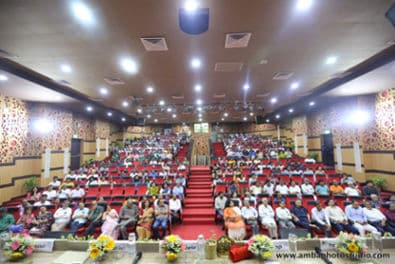
The recent collapse of the auditorium roof at Deen Dayal Upadhyaya College, Dwarka, on August 29, 2023, has raised several burning questions pertaining to the ignorance of college administrations and poor infrastructure management at DU colleges.

On Tuesday, the newly-built auditorium at Deen Dayal Upadhyaya College in Dwarka witnessed a chunk of its ceiling collapsing, barely a few months after a similar infrastructure catastrophe occurred at Kamala Nehru College. However, sources have reported that no injuries were sustained since nobody was present in the auditorium at the time of the accident.

A part of the roof, the false-ceiling of the auditorium—all bricks and plaster—collapsed. The auditorium was closed after that, causing our annual orientation programme for freshers, Deekshaarambh which was to be conducted between 31st August and 2nd September to be postponed until further notice. The accident occurred exactly a day after an event related to the G-20 was conducted in the auditorium.

– Student at Deen Dayal Upadhyaya College

The mishap has raised several eyebrows because of the award-winning infrastructure that the college houses. The college, which was shifted to a new campus in Dwarka in 2016 because of worsening infrastructure at its old campus in Karampura, has received the Vishwakarma Award 2017 for its state-of-the-art building. All the classrooms, lecture theatres, library, computer centre, cafeteria, and most of the laboratories are fully air-conditioned. The campus has rainwater harvesting, solar power generation, and a sewage treatment plant with a water recycling facility.

Despite such top-notch facilities, most students point out that the major reason behind the roof accident could be ‘poor maintenance’ by the college administration over the years since the college shifted to the new campus in Dwarka in 2016. Asking about the condition of the general infrastructure of the college, students mention that it is common for lifts to malfunction, the stairs are in bad condition, and the new campus has fallen into rust with time.

The auditorium has been closed by the college administration, with no updates on when it will be reopened as of now. Related to the ignorance of the administration, another student mentioned,

The general infrastructure of the college was good initially, but its buildings are snapping and need maintenance. But the administration is not taking swift action.

Infrastructure woes have troubled DU colleges for years. But frequent, life-threatening mishaps need to be treated seriously. Voices should be raised against poor infrastructure, low college funds, and the malfunctioning of the administration department. It is, after all, a question of students’ and faculty’s safety. Why are college funds not diverted to maintain college infrastructure? Why does the administration hardly ever step up during such deadly accidents? Are infrastructure mishaps going to plague DU forever? Where does this end?

Read Also: The Sky is Falling – State of Infrastructure at Kamala Nehru College

Featured Image Credits: Deen Dayal Upadhyaya College Website

Priyanka Mukherjee
[email protected]

Now that trends influence everyone’s style, let’s finally separate the hype from the real deal.

I’m playing fashion police today- waving goodbye to trends that are potentially tired while giving some overdue love to the seriously underrated ones. Let’s set things straight once and for all.

Overrated fashion trends-

  1. Birkenstocks- These iconic sandals have been the epitome of comfortable footwear for a very long time. However, their chunky design makes it hard to integrate them with most outfits. So, while they’re definitely made out of quality material, the prices aren’t justified for a sandal used for casual wear.
  2. Sheer clothing- This provides the opportunity to play around with layers and textures which could be so fun! But, the comfort and practicality of sheer clothing is questionable. They can prove to be itchy and the synthetic materials are not very environmentally friendly either.
  3. Mini sunglasses- These are a departure from traditional eyewear by far. Indeed, they are more about making a statement than functionality but it’s impossible to see properly in them, let alone walk. Big yay for the look and all the fun colours they come in, but utility garners negative marks.
  4. Statement sneakers- The debate about their place on this list would be an intense one. While I agree with (and even partake in) sneakerhead culture, some designs are clearly more about flashiness and prestige than quality and comfort. While a good pair can transform a look for the better, a flashy one could push it slightly into the tacky category.

Underrated fashion trends-

  1. Dad shoes- ‘Dad’ shoes are those that are not necessarily considered very stylish but provide unparalleled comfort. They are the most ideal choice for extended periods of walking and their resurgence in recent times is a testament to a shift in fashion priorities, where comfort is taking precedence. It’s great to have an awesome sneaker collection but also get yourself some of these. Dads have always known best.
  2. Neutral tones- They deserve more recognition instead of being considered boring. Neutral colours exude understated elegance and should be staples in our wardrobes. They are easy to style and serve as the perfect backdrop for statement accessories.
  3. Timeless prints- Their appeal lies in being a reliable option for both formal and casual outfits. They have stood the test of time and their charm goes beyond that of passing fads such as animal prints. Most of them are eternally relevant but I’m still not so sure about polka dots, though.
  4. Fanny packs- The outdated designs have been revamped in recent times and are incredibly convenient. While I am a fan of tote bags, having to fish for my keys for 5 minutes is not fun. Fanny packs are thus a great accessory for on-the-go lifestyles.

Fashion has always existed as a means to express yourself. None of it could ever be the ‘wrong’ way to do it. Obviously, it’s important to wear what you like and are comfortable in. While certain trends may not resonate with everyone, they still contribute to the fashion landscape. If you like Birkenstocks and are rocking them, good for you! But do yourself a favour and buy some Dad shoes today.

Read also: Threads vs Twitter- Let the Billionaire Cold War Commence

Featured image credits: Pinterest

Arshiya Pathania

[email protected]

After a long wait of four years, ‘Made in Heaven’ released its second season this August. It is just as visually stunning and inspiring as the first.

In 2019, we were introduced to the lives of Tara (Sobhita Dhulipala) and Karan (Arjun Mathur) who work as wedding planners for grandiose families in Delhi, all the while struggling with personal issues. Beneath the surface of extravagant celebrations, the show explores various prejudices and challenges faced by the families involved.

Season 2, released in August 2023, picks up a few months after where season 1 ended, with Tara now finalizing her divorce proceedings and Karan trying to mend his relationship with his mother. Each episode delves into a unique scenario, using it as a backdrop to address a distinct issue. This season deals with problems ranging from the caste system and domestic violence to self-love and tender parent-child dynamics.

The two additions to the cast, in the form of Meher (the new Production head) and Bulbul (the new auditor), add significantly to the storyline. Meher battles with acceptance as a transgender woman while Bulbul grapples with navigating a situation where her son is accused of molestation.

(The next paragraph contains spoilers)

The biggest power of this season is how, multiple times, it stuns the audience by making the not-so-obvious decisions. This is done when you see a bride going ahead with marrying her abusive fiancé, when Jauhari turns out to be the good guy instead of the bad, or when the protagonists Tara and Karan make questionable, morally grey decisions.

One prevalent critique this season is the lack of depth while addressing some of the issues. A thorough examination of the complexities of the social issues tackled is prevented because the show immediately moves on from one subplot to another. The space for fruitful discussion seems saturated because of this. In certain instances, this season appears to offer quick lessons for each problem. This has resulted in a preachy undertone.

Despite this, season 2 remains a visual treat. The performances, production design and costumes are nothing short of grand. The beautiful aesthetics and the fast pacing keep you immersed. ‘Made in Heaven’ thus does an excellent job at both awing and inspiring you.

Read also: Dilution of Discrimination

Featured image credits: India Today

Arshiya Pathania

[email protected]

Protests about anomalies in DU’s PG admissions have recently raised concerns about the transparency of the admissions process. While many PG applicants came forward questioning the rejection of their admission applications without an adequate reason, the DU administration refuted such claims, stating that the rejection was due to failure to meet “program-specific eligibility criteria.”

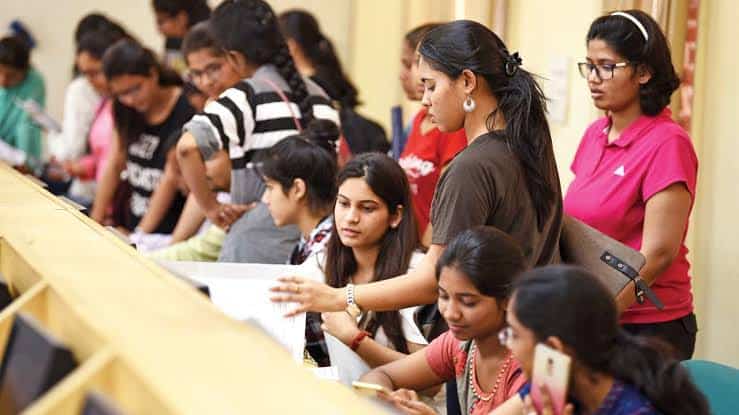
The University of Delhi started its first round of seat allocation for postgraduate admissions on August 17th. Shortly after that, students began to dispute the allocation process and claim that their forms were rejected for no reason at all. This provoked widespread uproar, with student organisations such as SFI and AISA holding protests. While the disclosure of a merit list and re-consideration of rejected applications were among the primary demands, other PG aspirants want the process halted and replaced with a fresh, transparent admissions process.

The fair solution is to cancel the first round and hold it again after considering all eligible students.”

A Twitter user tweeted

Some of the major allegations against the university admission process are as follows:

Within the same category, candidates with lower marks are assigned a college, while those with higher marks are not.

One of the major concerns about the admissions process was the lack of transparency in seat allocation. DU did not officially release a merit list this year. With reports of students with low scores within the same category being assigned a college while those with better marks were not, there was a great deal of uncertainty among students.

The SFI Delhi State Committee released a statement condemning the arbitrariness of Delhi University’s M.A. admission process.

Delhi University did not release a provisional rank list or cut-off list, thereby undermining the transparency of the admission process. The criteria on which the selection of candidates depends remain unspecified.”

-SFI Delhi Instagram Post

Many applicants who were offered seats in the first round were denied admission. Students argue that no rational explanation was provided.

Many students allege that they were offered a spot in the first round of admissions but that their applications were rejected. Applicants argue that neither the college nor the admissions office provided them with a legitimate reason.

I had applied for admission in PG at DU through CUET PG 2023 and was allocated Motilal Nehru College. But the college authority abruptly rejected my allocation, citing the reason ‘invalid documents’ without even specifying the name of the document. However, the documents I uploaded are correct and valid. This is just sheer misuse of authority, and candidates like us who work so hard to get admission to such prestigious colleges feel cheated and dejected. This is happening to so many candidates, not just me.”

                                                                  -Anish tweeted                

Some students alleged that their forms were rejected because they were flagged as “wrong category (C1 and C2)* selection” even if the category they chose was correct.

(C1 = Those students who graduated from another recognised institution as well as those enrolled in the programme degree at DU

(C2 = students who completed their degree with honours in the subject for which they are applying.)

The uncertainty over categorization was one of the most serious and evident flaws in the admissions process. Many students were refused admission due to category selection errors. Students contend that they picked the correct category. The mistake was made by the university.

My form clearly shows my category, but still, my form got rejected, stating “wrong eligibility criteria..

–  A PG applicant

Significant variance in the difficulty level of CUET PG papers and question repetition

Some disciplines’ CUET PG exams were held in two stages separated by approximately 2-3 weeks. Students who took the first phase say that the phase 2 paper was way too easy. Not only that, but several of the questions in the Phase 2 paper were repeated or restructured.

For example, CUET PG Paper for M.A. English

  1. Question ID: 92090624040 – French_____ (structuralism) was inaugurated in the 1950s by cultural anthropologist Claude Levi-Strauss.

Directly linked to Question ID: 6863409182 from Phase 1: Who among the following is not a post-structuralist critic (Levi-Strauss)?

  1. Question ID: 92090624021 – Gorboduc, the first English tragedy, has been written in ___ (blank verse)

Repeated in: Question ID: 9209064063 – Which of the following plays was written in blank verse? (Gorboduc).

  1. Question ID: 92090624033: Savitri, an epic in blank verse, was written by ___ (Sri Aurobindo).

Repeated from Question ID: 6863409149 from Phase 1: Savitri, a literary epic in English, was written by ____ (Sri Aurobindo).

We expected normalisation to happen, but NTA didn’t do that for us.”

-A PG aspirant who appeared for the M.A. English Entrance

Many student organisations protested against this level of dispensary in the admissions process. The Student’s Federation of India (SFI) organised a demonstration outside the Arts Faculty and handed in a memorandum calling for the admission of all competent applicants who had been wrongfully denied admission as well as for greater transparency in the admissions process. A video explaining the problems with the admissions process was also issued by SFI Delhi on their Instagram page.

The All India Students Association (AISA) also organised a protest at the admission block, calling for the prompt release of all admission lists as well as compensation for all discrepancies. Students who had been waiting for three days at the admission block to have their problems resolved joined the protest.

AISA activists reached the admission block and saw that more than 50 students were lined up in anticipation of their admission. AISA activists raised slogans against the lack of transparency and demanded that the admission in charge come out and answer all queries. The administration was adamant about not listening to the students. The admission in charge did not even bother to come out. However, the persistence of the protesters resulted in a partial victory, and the C1, C2, and CGPA change issues were solved.”

-Anjali, AISA DU Secretary

Finally, on the 21st, the university issued a notice addressing these issues, but students contend that the notice was only a formality and did not address their problems.

Those candidates who had chosen Category-1 in their applications and have been rejected due to non-fulfilment of “Programme Specific Eligibility” criteria in Category 2 will be considered in Category-1 in subsequent lists as per their merit.

Those candidates who failed to convert their CGPA score into percentage (%) despite several announcements made by the university in this regard may be able to do the CGPA to percentage conversion in the mid-entry window. Such candidates will be considered mid-entrants.”

–  Notice released by the Admission Branch

Many students said they were refused entry to the admission block on the north campus. Students also alleged that the admissions branch wasn’t responding to their calls or emails.

Rejecting applications in the first round without any reason and then considering them in subsequent rounds with leftover seats is unfair.”

–  Shivam, A PG Applicant

The degree of transparency of the CUET admission procedure for both UG and PG programmes has always been an important area of concern. However, such blatant carelessness and mistakes in the admission procedure cast doubt on the credibility of admission through this method and risk the future of the students. The University of Delhi is one of the biggest and most prestigious central universities in India. Such large-scale dispensaries in the admission process only serve to highlight the state of the education system in our country. To answer these questions and provide transparency in the admissions process, the university should release a merit list. Along with this, the institution should set up an experienced grievance committee that addresses student complaints respectfully and assists them with the admission process.


Image Credits: DU Updates

Read Also: “You Are Not Special”: Delhi HC Questions DU over Decision to Use CLAT Scores for 5-Year Law Course Admissions


Dhruv Bhati

[email protected]


One never realizes how much they love their hometown until they leave it. Mindlessly scrolling through reels on Instagram, I stumbled upon a heartwarming interview excerpt of Greta Gerwig, a well-established Hollywood director known for movies like Barbie, Little Women, and Lady Bird. She endearingly talks about how we never realize how much life has changed unless we revisit our hometown, after being away from it.

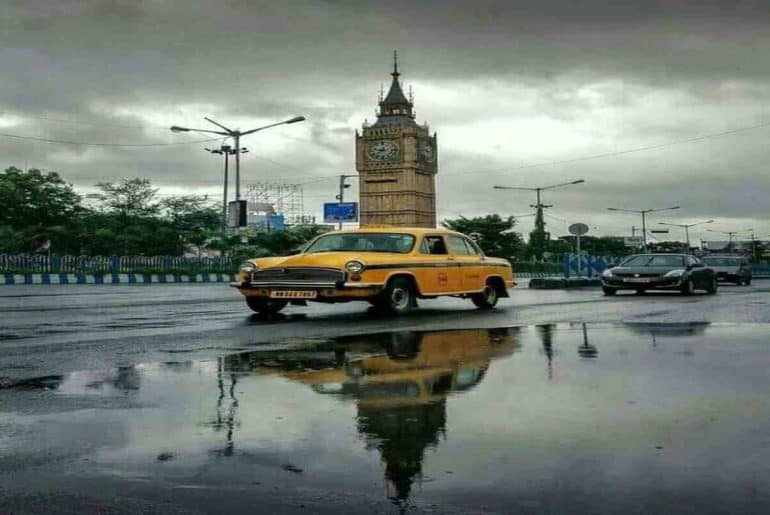
I have always loved my city, Kolkata, during August. The murky humidity of May-July slowly transitions into cloudy afternoons followed by evening showers and there is an underlying excitement amidst the hustling streets and alleys as the arrival of August amplifies the countdown to Durga Puja in early October.

As my airline slowly made the descent into my hometown, passing through puffy clouds, revealing the Ganges, the Howrah bridge perched atop it, and the huddled buildings, a warm wave of familiarity washed over me as a fellow co-passenger, a toddler whispered in excitement to his mother, “Ma, bari eshe geche!” (Mom, we’re home!).

Going back home, the ritual has always remained the same: the happy mingling crowd at the Departure tunnel, the old lanes, roadside graffiti, the smell of mum’s favourite sandalwood incense, fresh laundry, clinking chai-cups, dog fur on the sofa, Kishore Kumar ke gaane in the afternoon, mum’s special mutton biriyani recipe, ‘luchi-aloo dum’ for breakfast and the warmth of family. Simplicity. Familiarity. Comfort. Home.

Then come the people: old school friends, childhood friends, those 15-year long bonds, the chit-chats over coffee, first crushes, your favourite teacher, your neighbour who’d seen you walk for the first time, your grandmother and her prized-sewing kit, the sweaters she’d honed for you out of love, your dad’s collection of music records, the twinkle of your dog’s eyes. The love that endured. The love that stayed. The warmth of old love. Home.

But beyond the slow loving caress of familiarity, was something inherently heartbreaking. Tragic but beautiful. It was change. Change you wouldn’t notice as soon as you step down from your 2-hour-long flight from Delhi to Kolkata. But slow brimming change so vast yet so miniscule that it breaks your heart while mending it simultaneously. It’s in your childhood best-friend’s stories of college, their vast-tangle of newfound friends, sky-scrappers standing tall in place of your favourite movie theatre, the now-empty flat of your closest cousin who’d moved abroad, or in the glistening newly sprout grey hair of your dog. It’s an eerie feeling. It is true that life goes on and never waits for anybody but it’s also strange, feeling like a mere observer to the life that had been your whole world, in the place that you’ve always called home.

This feeling stems from something much deeper than just feeling like you’re missing out. Instead of resenting life for passing through your hometown when you aren’t even there, you embrace this change, or at least try to. Over time, you realize how much you’ve changed as well- that you no more unhealthily binge-read Harry Potter but read more Murakami in its place, that you enjoy The 1975 over Linkin Park now and that you’d always loved ‘Chole Bhature’ over ‘Luchi-Aloo Dum’ despite your friends teasing you as a fake Bengali (yes, deep sad sigh). At one beautiful point, one warm Wednesday afternoon, you realize that you are growing along with your childhood city, discovering yourself every day and suddenly, you’re at peace.

On a rather unconventional note, I believe that it’s also important for one to eventually move out of your childhood hometown. Moving away from the familiarity, from the care of your parents, taking responsibilities, doing laundry by yourself, buying groceries alone, riding buses, managing your finances gives you a sense of clarity that the comfort of home can’t. Moving out of this comfort zone, lends you a sense of independence, some perspective that you never thought you had before. You suddenly feel confident enough to make future choices and plan, and finally liberation embraces you- that you are (almost) a grown-up and have (sort of) stepped into the real world!

Basking in this glorious independence is fun, and so is remembering that the same bonds you’re breaking free from moulded and shaped you to someday be capable of leaving it all behind. Your old friends, your family, the Sunday-night movies, the bicycle races with childhood friends- all of these fragments have come together to make you whole. And as you look upon the old city, with tears in your eyes, comprehension slowly dawns that you’d never realized how much home has shaped you, how much you love it and are going to miss it. And while your childhood best friend now has new friends to confide in, your movie theatre has turned into someone’s loving home and your dog is growing old, the love doesn’t disappear, it re-emerges every time you come back home, it’s always there and will be. And that’s the beauty of it all.

Through the rush of college, the fast-paced life of Delhi, the crowd of metros, the overburdening assignments and the hustle of college societies, the early-morning showers of Delhi remind me of the slow, lazy August days of Kolkata as my mother gently simmers the early-morning cha, humming to the stapled songs of Kishore Kumar playing in the background of her beloved kitchen, and rain lovingly embraces my home, far-far away yet so close.

Sometimes, love from a distance can be beautiful too.

Read Also: The Home Conundrum, and the Battle of Graduating

Featured Image Credits: Google Images

Priyanka Mukherjee

[email protected]


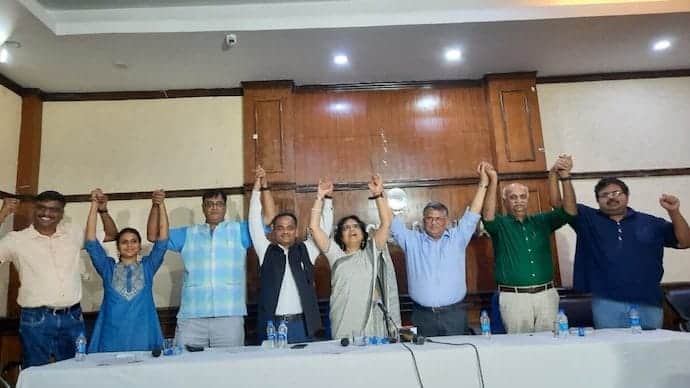
The alliance formed by the teachers’ associations aims at “reclaiming the DUTA from the cronies of the ruling dispensation and defend public higher education.”

10 Delhi University teachers’ organisations and 4 independent teachers have come together to form the Democratic United Teachers’ Alliance (D.U.T.A) to contest the Delhi University Teachers’ Association (DUTA) 2023 polls. Ahead of the elections, which will witness over 10,000 academics of the University casting their votes to elect the leadership, the alliance has announced Dr. Aditya Narayan Misra as the joint candidate for the post of DUTA president. The teachers’ organisations have joined forces to challenge the BJP-RSS affiliated National Democratic Teachers Front (NDTF) in the upcoming DUTA elections scheduled for September 27. The DUTA elections are expected to witness a tough contest between the D.U.T.A and the NDTF, which emerged victorious in 2021 after a 24-year hiatus. AK Bhagi was elected as the DUTA President, defeating his nearest contender, Abha Dev Habib by a margin of 1382 votes.

The Democratic United Teachers Alliance, formed with the aim of “defending public education by reclaiming DUTA”,  is a coalition of multiple groups including Congress’s Indian National Teachers’ Congress (INTEC), AAP’s Academic for Action and Development Teachers Association (AADTA), the Left-leaning Democratic Teachers’ Front (DTF), and various independent teachers’ associations such as the Common Teachers’ Front (CTF), Delhi Teachers’ Initiative (DTI), Independent Teachers’ Front for Social Justice (ITF-SJ), and Samajwadi Shikshank Manch (SSM) and the Voice of DU Adhocs.

There is an immediate and serious need to reclaim the DUTA as a teachers’ collective that works in defence of public-funded education and rights of teachers and students in the forthcoming DUTA elections,” – the joint statement by D.U.T.A read.

At a press conference on August 25, held at the Press Club of India, Prof. Nandita Narain, former DUTA President said that the current NDTF leadership had turned the union office into a “department of the administration which slaughtered thousands of good teachers in the ongoing recruitment drive.” While the teachers’ movement in the country looked for guidance and inspiration from DUTA to reclaim the rights of the teachers, the alliance alleged that the DUTA leadership failed thousands of ad-hoc teachers in their quest for permanent jobs after decades of service.

We are here together to safeguard the dignity and security of all teachers. We are here to defend full public funding and build public opinion against the privatisation and other sinister designs of NEP, 2020. We are committed to absorption of all existing ad hoc and temporary teachers and reinstatement of those who have been displaced during the last two years, while protecting the services of those who have already secured permanent appointment.” – read a statement by the teachers’ alliance.

 The Academic Council of Delhi University, in its meeting held on 11.8.2023, reported a letter from the UGC granting approval to DU as a Category 1 – University under the Graded Autonomy Regulation. By permitting the University to function on a self-financing basis, the D.U.T.A alleges that the regulation would pave the way for commercialisation and deprive the University of necessary Government grants for teaching-learning and infrastructure.

Salaries, promotion, and pension will all have to be taken care of through self-financing. No expectations of funds can be kept from either the University Grants Commission or the Government. Will teachers be displaced? Are we handing over the entire University in private hands? Will the character of the University remain what it is?”- commented Prof Narain in the press conference on Friday.

 Prof. Narain, Convener of the Democratic United Teachers’ Alliance, stated that the policy-driven decline in the academic quality of public universities is best demonstrated by the new version of the four-year undergraduate programme (FYUP), which carries a plethora of anti-academic moves to undermine the integrity of various disciplines.

 The DUTA leadership has refrained from raising their voices about the degradation of academic quality due to the National Education Policy (NEP), 2020. A number of academically vacuous courses have been introduced in the name of most Value Added Courses and Skill Enhancement Courses, which add neither to values nor skills, and leave students too exhausted to focus on the core academic disciplines. On the other hand, internal assessment has been increased from 25 to 45%, with a new component of continuous assessment. This, given the massive reduction in teaching-tutorial-practical time, is an academic fraud. None of these changes were brought after consultation with teachers.” – mentioned the statement released on August 25.

 The statement by D.U.T.A highlights the concern that self-financing by institutions will be undertaken by loans, which will be repaid through increasing student fees for “commercially viable courses” and discarding “uneconomic” ones.

Massive fee hikes will follow, exacerbating the exclusionary tendencies that have been already initiated by the CUET process. Even if the constitutionally mandated provision of reservation is retained (though it finds no mention in the NEP document), students belonging to deprived sections will be excluded through the back door of high fees.” – added the statement.

 Claiming this as “the death of higher education, DUTA joint candidate Dr. Aditya Narayan Misra, of the AAP-affiliated Academic for Action and Development Delhi Teachers’ Association (AADTA), urged teachers to join hands and fight for the withdrawal of the National Education Policy,2020.

Despite our dissent, the fees for certain courses under the Law Faculty were approved at nearly Rs.12.5 lakhs, the same courses which were being taught at a fee of Rs 5000-7000. How is this “greater autonomy?”. This should not simply be a reporting item that is brought and told to us. The students’ future depends on it, and the teachers’ future depends on it- why are such decisions being imposed without due discussion? The DUTA has failed us. It is being used as an extension to privatise and commercialise higher education.” – remarked Misra, a three-time president of DUTA.

 Clause 19.2 on Graded Autonomy in the NEP 2020, which envisages that all public colleges and universities will become “independent, self-governing institutions” for the governance of which “a Board of Governors (BoG) shall be established consisting of a group of highly qualified, competent and dedicated individuals”, has also been opposed by the alliance. They fear that the BoGs will govern institutions without external interference and make decisions concerning the “incentive structure” unilaterally without reference to UGC regulations.

The Board of Governors will have the complete autonomy to establish new courses and curriculum and hire and fire as per will, with recruitment of contractual teachers and foreign faculty being given more importance. Post independence, we established institutions like the D-School, the IITs, the IIMs, and the English, Commerce and Sociology Departments – but we were always self-sufficient in devisiong and teaching our own curriculum. Why do we need foreign faculty now? They will display the foreign teachers for 4 months and use it as a tactic to raise fees. We are witnessing the biggest privatisation deal of India.” – said Misra, who has been teaching Political Science at DU since 1986.

Democratic Teachers’ Front (DTF) Secretary, Abha Dev Habib, remarked that the reluctance of the DU administration to form the governing bodies of colleges administered by the Delhi Government will formalise the dependence of public higher educational institutions on private corporates.

 DU authorities have packed the Academic Council (AC) subcommittee for academic affairs with NDTF members whose only role is to subvert statutory powers of Committees of Courses (CoCs), Departments and Faculties, and impose unacademic changes in syllabi in keeping with their agenda of saffronisation. The DTF teachers of DU have decided that public higher education cannot be redeemed if the current leadership is successful in its aim of converting the teachers’ collective into a patronage dispensing tool to further NEP through undemocratic demobilisation.” – remarked Habib.

Alleging that NDTF-led DUTA remained silent during the mass displacement of ad hoc teachers in the University, the alliance asserted that the teachers’ union’s claims that displaced teachers are being absorbed elsewhere are not supported by transparent data.

What is most reprehensible is that instead of taking up the cause of all teachers, the leadership has been selective and discriminate. It is the first time in the history of DUTA that a large number of teachers are afraid of displeasing their own elected representatives,” the statement added.

 The alliance claimed that the outgoing (present) DUTA committee has been hand-in- glove in furthering anti-academic and anti-teacher moves. It has also undermined the functioning of wider trade unions of teachers such as FEDCUTA that are fighting against privatisation and for the restoration of the old pension scheme.

 The D.U.T.A. is committed to ensuring absorption of all existing ad hoc and temporary teachers, reinstatement of those displaced in open positions, and protection of services of all permanent teachers, with counting of past services at all levels of promotion and restoration of the Old Pension Scheme, and also for the protection of service conditions of Librarians and teachers of Physical Education. It will launch an effective struggle to strengthen public-funded education by demanding a rollback of NEP2020, Graded Autonomy and all such attempts to privatise our public universities.” – the statement by D.U.T.A concluded.

Prof. Abha Dev Habib said that this unprecedented unity of different groups comes in the light of the “gravest challenges confronting the teachers, students and non-teaching employees of DU”.

There has been mass displacement of serving temporary and ad hoc teachers with the active connivance of the NDTF leadership and especially in institutions helmed by those who are part of the ruling dispensation. The institutional murder of Samarveer was possibly the abysmal low to which the state of affairs in DU have descended.”, Habib, a Professor of Physics at Miranda House, commented.

 The statement by the alliance claimed that 80% of serving ad hoc teachers have been displaced in the interviews held recently, most of them in colleges headed by the Principals close to the ruling dispensation.

 I have been part of Delhi University all my life. I have been an ad-hoc teacher and was thrown out so I understand how it feels. I can connect to the pain of the people who have been ousted. Regularisation of ad-hoc teachers would be one of our main agendas.” – mentioned Misra, a professor at Dyal Singh College.

 On Friday, Delhi Finance Minister Atishi expressed displeasure over the non-release of Rs.100 crore to Delhi Government’s 12 fully-funded DU colleges after a representation was submitted by Dr.Aditya Narain Misra and DU Executive Council (EC) members Seema Das and Rajpal Singh appraising her of the delay.

 On 28th June 2023, I approved the release of Rs 100 crore as the second quarterly grant was announced. But this fund has not reached colleges yet despite one and a half months having lapsed. The faculty and the ministerial staff of these colleges cannot suffer due to administrative technicalities and the finance department should have a facilitatory approach over these financial issues. Hence, the funds should be released without any further delay.”- Atishi said in an official statement.


 D.U.T.A Press Conference held on August 25 – D.U.T.A. Press Conference, Save Public Funded Education

 Featured Image Credits: India Today

 Read also: After a Three-Year Hiatus, Delhi University Students’ Union Elections Are Back – DU Beat – Delhi University’s Independent Student Newspaper


Manvi Goel

[email protected]

The most recent season of Made in Heaven, a show about two wedding planners, Tara and Karan, who work under the name Made in Heaven, provided plenty of points to ponder. Each episode of the show focuses on a couple and the unique problems they or their family face during their wedding preparations. Tara and Karan, together with their team, deal with these hurdles while going about their everyday lives and dealing with their personal issues.

(This piece may contain Spoilers)

Made in Heaven depicts the sparkly fairy tale world of weddings while also demonstrating the irony of its title ‘Made in Heaven’, because most of these marriages aren’t as beautiful and perfect as they appear on the surface. As well as bringing the harsh reality that our lives, too, aren’t flawless as they appear on the exterior. Perhaps, this is what I like the most about this show.

The show’s setting, Delhi, also plays a significant role in bringing the truth of the city to light through realistic characters. I was impressed by how accurately the city is portrayed, the representation of its multiple sides conveyed through various characters, their hidden biases and desires. It also shows the city’s difficult nature and how people cope with these challenges. One could easily observe the struggles that people face in such a diverse city. There are those that conceal their real intentions and build relationships for their own gain, while others are caught between what is morally correct and what they desire, and the rest of them want to move on from their past and lead regular lives. The series focuses on the process of organising a dream wedding for the couple while also balancing several societal standards. It reveals what lies beneath such lavish weddings. The most unsettling part is that the societal themes the series focuses on are very much relevant in today’s environment and are not merely imaginary.

The show mirrors society and conveys how the entire process of a wedding ceremony brings these hidden concerns back to the surface. On one hand, while one gains education, power, and money in public, when it comes to their private affairs, the desire to be perfect and thus adhere to conventional values creeps in. It demonstrates how people can be aware of right and wrong yet still make decisions that are unfair to them. It’s worth noticing how characters throughout the show will occasionally submit to the adverse circumstances in order to save their family’s pride or to protect themselves from any further judgement.

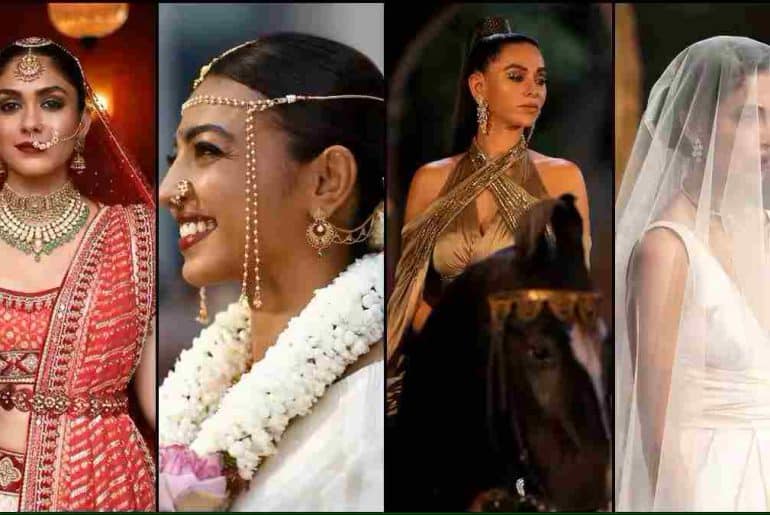
As in the instance of a bride in one of the episodes played by Mrunal Thakur, who is a successful model in the industry but is abused by her partner. Even when the wedding planners and her own family find this and urge her to reconsider her decision. She is once again manipulated by her partner and thus maintains the popular belief people carry – love and care will change our partner’s actions, forgetting that respect is the foundation of a relationship and nothing else is capable of transforming someone who doesn’t want to make changes in the first place.

In another episode, it is shown how discussions over skin tone persist even among wealthy,  elite families. When the bride takes a beauty treatment to appear ‘fair’ for her wedding owing to pressure from her own mother and in-laws, it demonstrates how modernity and education can still fail to change old narratives. Acceptance of the reality that looking fair has no connection to being beautiful is still missing. And it makes one wonder if one should wait for society to modify their beauty standards and accept everyone equally, or whether one should begin the process of acceptance with themselves. Are parents correct when they try to  change their child to protect their reputation, or instead they should shield their child from unjustified treatment? These are someof the questions to think about.

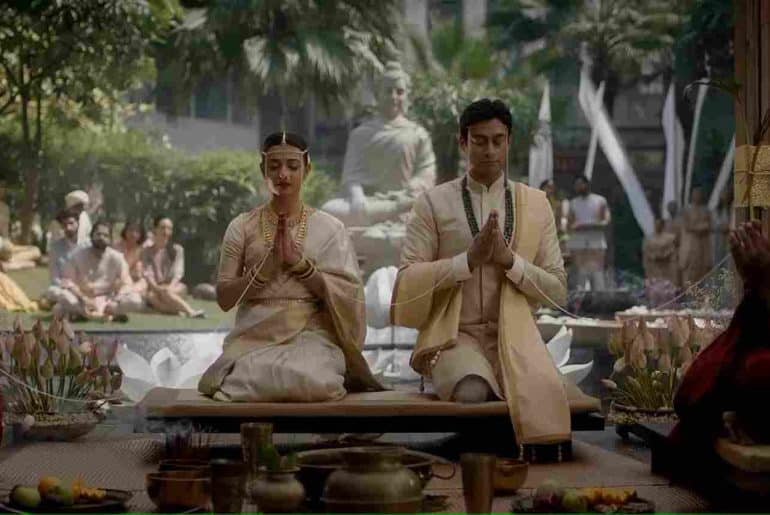
The episode featuring Radhika Apte as the lead, Pallavi, and directed by Neeraj Ghaywan is most powerful and artistically structured. Her performance and the episode’s theme received considerable recognition on social media. Pallavi is a successful lawyer who acknowledges her Dalit identity and advocates for the elimination of caste biases. Even though she is highly accomplished and brave, when it comes to her marriage, it is interestingly highlighted in the episode that her personal accomplishments are the reason for this respect and acceptance. This is in contrast to the reluctance of her in-laws to openly embrace her Dalit identity. Pallavi’s firm stance—even to the point of confronting her fiancé and her own brother—shows that acceptance is not only necessary to gain equal respect but it also emphasises the difficulties and sufferings that the community faces as a result of long-standing caste-based discriminations.

The dialogue delivery was impeccable, every emotion was highly moving and it all ends in a beautiful Buddhist wedding, representing Dalit plight and a path to acceptance and equality. This episode was notable because mainstream films and television shows have rarely addressed such topics with such delicate balance, and the concept of a Buddhist wedding is novel.

This is my top choice episode because it subtly invites viewers to ponder how issues such as caste play an important role in a person’s journey, subjecting them to different treatment, and how when a person rises above their circumstances, they don’t necessarily detach themselves from the situations that shaped them. They want it all to be remembered and accepted just like any other aspect of  themselves.

Even though caste is still a dividing line in today’s world, many people continue to be reluctant to disclose their last name or caste for fear of social discrimination; as a result, accepting oneself becomes the first step towards equality. Pallavi’s identity as a Dalit, her choice to keep her original surname, and the fact that she opted for a Buddhist wedding are all examples of how her character serves as a reminder to society that, despite her material success, her caste plays a significant role in her story as well as the experience of her ancestors who suffered, so it cannot be ignored or disregarded. Her caste does not bring her humiliation; rather, it brings her pride.

The portrayal of the LGBTQ community and their relationships was another distinctive feature of the show. The protagonist Karan plays a gay character,  It’s interesting to see that Karan doesn’t submit to his family’s demands to marry a girl; on several occasions, he asserts his identity and wishes, reflecting a sense of confidence and acceptance in himself. Even though the decision could damage his relationship with his mother, he takes the risk. Another character, Meher, who has undergone gender-affirmation, is also shown to be struggling to find love and acceptance.

While I agree that the second season was too overwhelming and attempted to address a variety of societal problems without delving too deeply into any of them, it appears that the second season, despite its pressing subjects, couldn’t stir up the emotions that the first season did. Despite the representation, this season did not adequately explore the aspects of intimacy between the characters. Things seemed superficial and they lack a deeper, more solid connection, leaving viewers with a sense that their favourite character’s story is incomplete.

Tara and Karan are not the characters who make the ideal decision. They make mistakes and argue, the consequences of which can be seen in both their professional and personal lives. Tara herself is in a challenging spot while building a life of wealth, luxury, and power, she still struggles to find the happiness she desires. Throughout both seasons, viewers will see how her decisions and past mistakes affect everyone around her. By the end of the second season, despite the fact that I enjoyed Tara’s character in the first, I was unable to identify to her choices since there has been a lack of  personal development in her character and no acknowledgment of her previous mistakes. Even while Tara and Karan stay close, their ability to communicate with each other and solve problems is never fully explored in the season. Instead, the two main leads continue to plan separate weddings without any proper conversation to fix the issues between them . When it comes to displaying how things are truly planned and implemented in these weddings, there was a lack of detail.  So even though I appreciate the extent to which ideas were covered throughout the season, I was disappointed in how story of central characters was handled.

However, there are new characters in this season that have impressed me, such as Mona Singh and Vijay Raaz as the Jauharis, who are the most wholesome and relatable. The side plot in which they deal with their young son and his friends in a matter of molesting a girl is presented honestly and organically by everyone involved. The culmination of it, which involves the disclosure of a personal secret about Mona Singh’s character, addresses the problem appropriately.

The season finale was warm and wonderful, concluding with the usual poetic commentary by Kabir, the in-house videographer. It goes on with the theme that everyone is flawed and that before we can continue looking for our soul mates, we must first accept ourselves. Perhaps this is what I like about the show: the relationships we form can be just as imperfect as we are. They require effort and change, and nothing, neither our worries, hurt, or pleasure, is permeant. The taste of Heaven isn’t necessarily discovered in large celebrations like marriage, but in fleeting moments of joy and freedom, in moments of embracing and loving yourself despite your flaws.

Read Also: https://dubeat.com/2022/03/02/big-fat-indian-weddings-are-we-thinking-rationally/

Featured Image Credits : Free Press Journal

Priya Agrawal


From secret crushes to juicy revelations, confession pages provide a platform to express your unfiltered thoughts through anonymous means. However, amidst the lighthearted confessions, the disguise of anonymity that attracts such confessions becomes breeding grounds for cyberbullying. How can we navigate this complex landscape of anonymity and accountability?

Who am I? That’s a secret I’ll never tell. XOXO, Gossip Girl.

There is a notorious appeal as to why Gossip Girl lasted for six seasons. The scandalous lives of Manhattan’s elite were perhaps only relatable to us because they were told from the perspective of an anonymous outsider. Anonymity has given us a sense of security to share our most vulnerable, sometimes vicious, thoughts. The aura of anonymity has amplified through the rise of social media, as people can assume any mysterious identity and speak their minds without facing any repercussions. Confession pages are often a representation of the secrets that travel under the disguise of anonymity.

Confession pages start as a personal way to connect with people in a community. There is a sense of relief that accompanies us when we can share our most personal thoughts anonymously, however embarrassing they may seem. The confessions submitted to these pages inflict a thread of rumours and perpetuate gossip that we all enjoy consuming. These act as platforms for information dissemination in an entirely underground fashion.

Sometimes, the anonymous person will make a lighthearted confession to a crush and take on the role of a “secret admirer”.

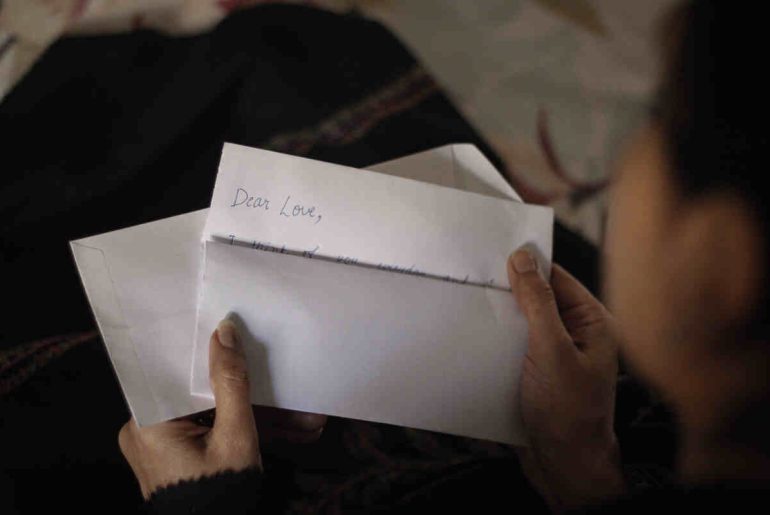
…from section f, you are really good by beauty and more by your caring and helping nature. Thanks a lot for all you have done for me. I couldn’t gather the words to say it but I like you.

…I don’t know when I saw him I was just struck, struck with his charisma, the way he flips his hair, I don’t know if I am just romanticising him because of some character but I was just admiring him from a distance. He seemed busy, had a lot of friends, and was constantly talking to someone on call. Is he dating someone?

-@srcc_confession on Instagram

Although embarrassing at times, the anonymity of our confessions makes us more brave in expressing our vulnerabilities. It may seem silly at times; however, this is exactly the type of social currency that allows confession pages to operate successfully. On the other side, receiving such anonymous confessions may be flattering because you feel noticed and admired. However, they may also cross boundaries and reach territories of discomfort. The confessions are published on social media platforms, often popular amongst student communities, and such heightened attention may cause anxiety as we may feel constantly watched. The anonymity of such confessions further causes frustration, as there is no way of truly determining the person behind them.

On the flip side of the coin, such confession pages also provide a platform for people to perpetuate harmful and toxic comments that are hurtful to those on the receiving end.

…she thinks she is very smart and beautiful but actually she isn’t so good! Earlier I used to think she is nice but now I am sure that isn’t too good and she uses people for her use and leaves them when not req. She needs to bring her attitude down.”

-@ramjas_confession_ on Instagram


The problem with confession pages lies entirely here. People send anonymous confessions to secretly express their frustrations and anger towards a situation or people. Such mean-spirited comments are very offensive and perpetuate cyberbullying through these platforms. The tricky situation with confession pages is specifically the anonymity shield of both the creator of the page and the anonymous confessor. Such a hidden identity often makes it difficult to hold them accountable for their actions. This anonymity hinders their ability to effectively address their grievances and take appropriate actions, as they might not know who is making the confessions. Especially in confessions that are directly targeted through the use of names and positions, it can lead to feelings of embarrassment and powerlessness as the situation is beyond their control.

In high school, we had an anonymous confessions page and it was pretty popular because there was a considerable amount of gossip that was posted. But over time, the confessions just became really mean and offensive and some of them were just blatantly homophobic or misogynistic. I remember a friend telling me that she gets anxious whenever there’s a notification from Instagram because she’s scared that she’ll be tagged in the posts or comments or something about her was revealed. Eventually, the page died down because no one was interested anymore but looking back on it, I genuinely feel like some strict action should have been taken by the school authorities because it was basically cyberbullying.

-A pass-out high school student from New York City stated while describing her experience.

There are also serious consequences for running such platforms. In some situations, the confessors take authority over a secret or rumour and further spread it, often inflicting serious harm on others. The lines are very easily blurred as there is absolutely no transparency over the situation to hold anyone accountable. The power dynamics also come into play through the disguise of anonymity. The audience, confessors, and creators of such pages have a role to play in the presence of these platforms.

We, as an audience, engage with such content because we crave the gossip and rumours that are published through these platforms. There is a satisfying factor that accompanies us when we have an insight into what really happens in other people’s lives, however scandalous it may seem. Although we may have an understanding of when boundaries are crossed, the audience is also helpless to an extent because they have no way of holding someone accountable unless they report the page or publicly denounce it.

The accountability factor of the creator is important too. The creators of these platforms have a responsibility to ensure a safe and secure space is maintained where no one feels targeted. However, sometimes their authority over the page is also out of control. The comments, reposting, and sharing all culminate in actions beyond the capacity of the creator. When we remove the identity of the confessors, we also remove the guilt associated with passing our judgements. Therefore, accountability from all three sides diminishes, and no one faces any serious consequences.

While engaging with these platforms can offer an outlet for expression, it’s crucial to remain sceptical of the intentions behind such pages. Not everything presented is the absolute truth and extends beyond the narratives presented in such online discourses. Although we may view such pages as a retreat void where the consequences aren’t always deliberated, we must always remain introspective about our motivations and try our best to culminate in a positive environment.

Featured Image Credits: Keshavi for DU Beat

Read Also: Social Media Doing More Harm Than Good: A Student’s Take

Sri Sidhvi Dindi
[email protected]

Every day, we come across a wide range of content on social media. From news updates to political opinions to personal blogs, content creation acts as a source of income for many. In many cases, this has unfortunately facilitated the development of media that capitalises on polarising social issues and caters to the “majority,” even at the cost of being offensive or discriminatory towards particular groups. Read ahead to find out what fuels social media’s “economy of hate” and the alarming impacts this has on our society.

The use of social media is on the rise in the contemporary digital era. Following the boom in usage, it has now acquired the function of a community space for news updates, political ideas, and the development of online communities of individuals with shared interests. Being a social media celebrity comes with the added benefit of monetization. This content plays a major role in our daily discussions and the formation of personal opinions. With the added advantage of anonymity, this freedom of speech or expression of thoughts can go unchecked and develop a dark side too.

Cyberbullying or cyberharassment is becoming increasingly common among teenagers and adolescents, as well as in nations with fragile democratic structures and diverse social and religious groups. According to the Pew Research Centre, in 2022, at least half of the young people in the United States had experienced bullying at some point in their lives. India has one of the highest rates of cyberbullying. As per a study by McAfee, 85% of children in India have experienced cyberbullying or have perpetrated it themselves. This rate is nearly twice as high as the global average.

Content creators have a significant role in the perpetuation of cyberbullying. Targeting an individual or community for a few likes in order to grow an account is all too common on Instagram and X (previously Twitter). Some people post discriminatory content as a “joke,” while others post it as a social or political viewpoint. In India, social media is one of the most powerful tools used by politicians to propagate political messaging, which often includes ideological propoganda and hatred towards certain communities. Not only this, but social media has been employed to mould public opinion and cover up the true situation in areas such as Kashmir after the abrogation of Article 370, the current conversion of Uttrakhand into “devbhoomi”, ethnic violence in Manipur, and ethnic cleansing of Muslims in various parts of the country in the name of illegal encroachment. There are various social media accounts on X (formerly Twitter) dedicated entirely to spreading such malicious content.

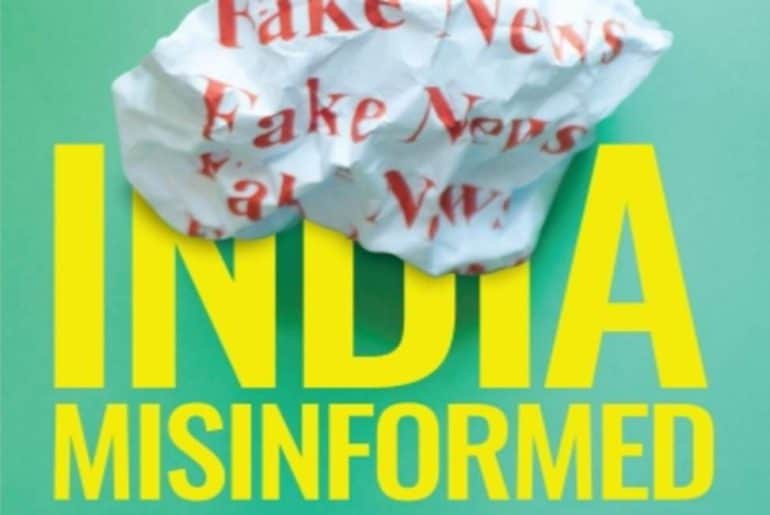
Along with using social media for political purposes, another major issue is the use of social media to propagate disinformation about particular subjects such as reservation, gender discrimination, and the queer community. Multiple individuals on X (previously Twitter) grew their accounts by posting abusive and false information about these issues. Engaging in such posts (even if you disagree with the viewpoint being tweeted) helps such tweets develop reach, making it easier for the user to reach wider audiences who may be uneducated on such issues and gullible to misinformation.

The Centre for Countering Digital Hate strives to halt the dissemination of hate speech and false information online. It is a nonprofit organisation that works to defend internet civil liberties and human rights. The Centre for Countering Digital Hate was recently sued by Elon Musk. According to a report in the Washington Post, X filed a complaint in the U.S. Federal Court for the Northern District of California, alleging that CCDH engaged in a number of unlawful acts in an effort to inappropriately access protected X Corp. data. Here are a few citations from CCDH reports:

Anti-LGBT Hate Content

TW// Queerphobia

According to a report by the Centre for Countering Digital Hate, over 1.7 million tweets and retweets since the start of 2022 mention the LGBTQ+ community via a keyword such as “LGBT”, “gay”, “homosexual” or “trans” alongside slurs including “groomer”, “predator” and “paedophile”. The hateful ‘grooming’ narrative online is driven by a small number of influential accounts with large followings. Now new estimates from the Centre show that just five of these accounts are set to generate up to $6.4 million per year in ad revenues for Twitter.

Anti-Muslim Hate Content

TW// Islamophobia

A study by TRT World revealed that 86% of anti-Muslim content originates in the United States, the United Kingdom, and India. According to the research, such hostile content and disinformation led to violent attacks on Muslims and mosques.

According to a report by CCDH, social media companies, including Facebook, Instagram, TikTok, Twitter, and YouTube, failed to act on 89% of posts containing anti-Muslim hatred and Islamophobic content reported to them. CCDH researchers, using platforms’ own reporting tools, reported 530 posts that contain disturbing, bigoted, and dehumanising content that targets Muslim people through racist caricatures, conspiracies, and false claims. These posts were viewed at least 25 million times. Many of the abusive contents were easily identifiable, yet there was still inaction. Instagram, TikTok, and Twitter allow users to use hashtags such as #deathtoislam, #islamiscancer and #raghead. Content spread using the hashtags received at least 1.3 million impressions.

Misogyny and Sexism on Social Media

TW// Misogyny, Sexual Harrasement, and Mentions of Rape

CCDH exposed the most influential and largest incel forum (incel, standing for ‘involunatry celibate,’ a self-assigned social media term for mostly cis-gendered heterosexual men who consider themselves “denied” of sex by women and actively spread misogynistic, sexist, hostile content directed towards women and even men who they consider more sexually accomplished than themselves). This new in-depth study by the CCDH’s Quant Lab shows a 59% increase in mentions of mass attacks, widespread approval of sexual violence against women, with 9 in 10 posters supportive, and support for paedophilia, with the rules explicitly changing in March 2022 to permit the sexualization of ‘pubescent minors’. The ‘Incel Forum’ receives an average of 2.6 million monthly visits and has 17,000 members. Discourse is driven by 406 ‘power users, who produce 74.6% of all posts on the forum, some spending upwards of 10 hours a day on the forum. In some cases, boys as young as 15 are being led down a rabbit hole of hatred and extremism. An analysis of almost 1.2 million posts made over an 18-month period found:

  • A 59% increase in the use of terms and codewords relating to acts of mass violence.
  • Mention of rape every 29 minutes. 9 in 10 (89%) of posters in relevant discussions were supportive of sexual violence against women. The forum’s rules changed to permit the sexualization of “pubescent minors”. 
  • Analysis of discussions of paedophilia on the forum shows that 53% of posters are supportive of sexual violence against children.
  • One in five posts on the forum features misogynistic, racist, antisemitic, or anti-LGBTQ+ language.
  • Mainstream social media platforms like YouTube and Google are enabling pathways to the ‘Incelosphere’.

Casteist Content

From misogyny to queerphobia to caste and race, social issues across the world are being capitalized on under this “economy of hate.” Take, for instance, the Twitter account by the name of “Anuradha Tiwari,” which often posts defamatory and hateful content on reservations. Her whole X and LinkedIn profiles are packed with anti-reservation content. This kind of content fosters young people’s development of hateful opinions and prejudice. A report by The Centre for Internet & Society titled “Online Caste-Hate Speech: Pervasive Discrimination and Humiliation on Social Media” talks about the anti-reservation and casteist content across various social media platforms. Furthermore, it discusses how casteism on campuses is greatly impacted by such online hatred.

In conclusion, the economics of hate create a shadow that undermines our social fabric in the complex network of digital places. Creators are often motivated by financial gain to take advantage of conflicts and controversy by posting systematically discriminatory content online. This exploitation breeds bias, misinformation, and harassment, in addition to eroding empathy. A cycle of hatred is fueled by the pernicious attraction of money because attention-grabbing stories draw attention and increase the wealth of those who spread them. A holistic strategy that includes stronger content regulation, media literacy instruction, and ethical digital citizenship is necessary to combat this destructive influence. We may strive to create a digital environment that is based on respect, understanding, and true connection by eliminating the financial motivations for hatred.

Featured Image Credits: Article-14

Read Also: Decoding Deceptive Deepfake

Dhruv Bhati
[email protected]

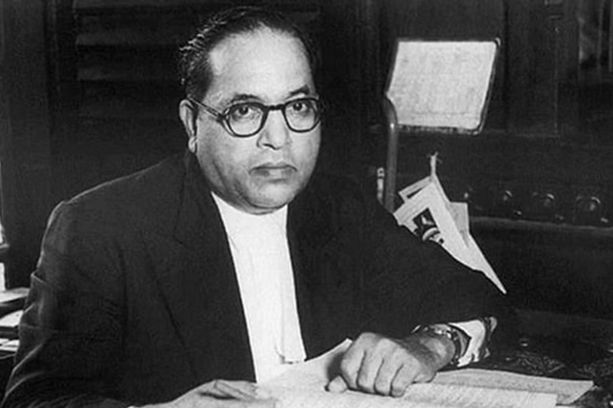
The Economics Faculty of Delhi University welcomed a new elective on Ambedkar while replacing the old elective paper, ‘Economics of Discrimination’, going against the decisions taken by the Academic Council of the institution on August 11 and introducing a series of changes to elective papers in the syllabus.

‘Economic Thought of Dr. B.R. Ambedkar’, an elective paper welcomed by the Economics Department of Delhi University to be taught to undergraduate students this year has caused the axing of another elective subject, ‘Economics of Discrimination’, resulting in several faculty members expressing concerns.

The new paper includes Dr Ambedkar’s views and understanding of various aspects of economic systems; theories of economic development; labor welfare; economic policy making; and other issues in the Indian economy during the colonial period. It replaced a new ‘Economics of Discrimination’ paper, which was decided in the Academic Council meeting on August 11 while introducing a series of changes to elective papers in the syllabus.

The syllabi of this paper signifies that the subject talks about Dr. Ambedkar’s pioneering thought in the field of economics, relevance in the contemporary world and its implication for ‘social justice’, ‘equality’ and ‘inclusive development’.

An associate professor of Economics at Kamala Nehru College and an elected Academic Council Member, Monami Basu, mentioned to The Indian Express that the paper on Dr. Ambedkar was welcomed by the entire faculty as it talks about him as an ‘economic policy-maker’ during the post-colonial period, his thoughts on ‘colonial economy’ and how caste and labor are interconnected.  However, she adds that the paper on discrimination was dropped without consultation with Academic Council members, departments or committees of courses.

Another professor who has been teaching economics at DU for over two decades has professed to the Indian Express on conditions of anonymity that the focus on ‘caste discrimination’ has been diluted in the new Ambedkar paper and it is only 10% of the paper now. According to other faculty members, the now-dropped paper was the only one that focused on the concept of discrimination in the UG economics syllabus. It had themes such as gender and unequal burden of work; inequalities in access to land; and intersection of discrimination though race, caste, class and disability.

The first suggestion to drop three elective papers, including ‘Economics of Discrimination’, was made in an Academic Council meeting on May 26 and opposed by faculty members of several colleges. Vice Chancellor, Yogesh Singh had then consulted a six-member panel to revisit the syllabi.

Read Also: Text Removal and Renaming in DU’s History Syllabus: Brahmanization Term and Paper on Inequality Dropped

Featured Image Credits: Google Images

Priyanka Mukherjee

[email protected]