

We live in a perpetual, inescapable cycle of consumption and curation. Everything comes with a price tag, and even the most universal, intimate and inherently humane experiences are shaped by social status.
It is often said that death is the great “equaliser”; life binds us to ego, material wealth and social status, while death is what releases us from these external constraints. But how can death be regarded as an equaliser, when these hierarchies and differences follow us even to places where they are expected to dissolve?
We enter the world with nothing in our empty, curled fists, yet the circumstances which we are born into determine the world we will have access to. The privileges and deprivations that surround us often dictate the trajectory of our lives. Our inherited class hierarchies deeply intersect with our consumption patterns. Class profoundly sculpts the way humans express themselves, whether in joy or sorrow. Some are accustomed to elaborate celebrations of life’s milestones and ceremonies of remembrance, which mirror a family’s capacity to celebrate and grieve, while others can only afford to reverently observe from the sidelines. However, even those living in destitution are not immune to pride and vanity, often spending out of their means to maintain a pretence of dignity and social identity. This isn’t always a sign of extravagance; sometimes it is an attempt to resist the stigmas attached to poverty.
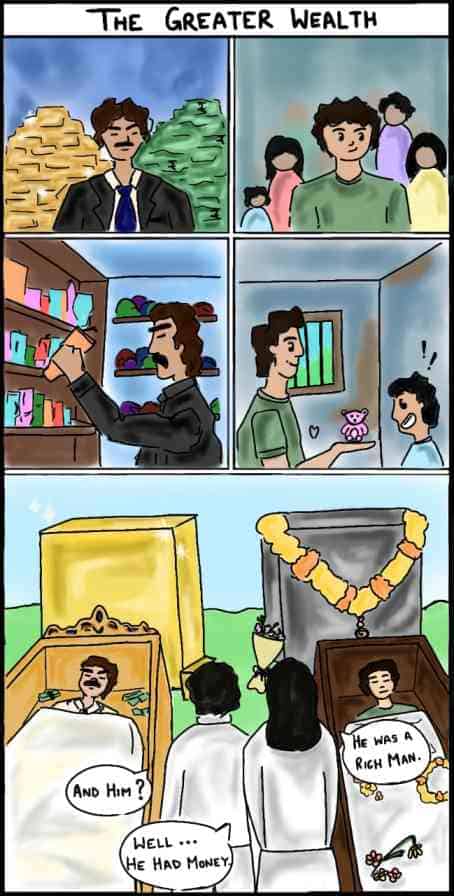
Design: Pritha for DU Beat
The deepest injury of class is not deprivation alone; it is the void that it leaves in place of comfort. A void that painfully and constantly expands and teaches you to feel humiliated by it. With the increasing commodification of human experiences, consumption begins to act as our counterfeit “purpose”. Would we desire the things we do if nobody else could see us possessing them? Perhaps the value of what we own lies not in our possession of it, but in the recognition and social status that accompany it. What’s particularly fascinating is that the social division that marks our consumption behaviour does not come to an end with death; even our final rites are not free from the clutches of the market.
While death may signify liberation from the material world, it is not exempt from elaborate ceremonies and conspicuous celebrations of life that establish one’s social standing. However, commodification and social stratification in death are neither new nor benign phenomena. The ancient practice of burying the deceased with “grave goods”—objects ranging from food rations, ornaments, and household utensils to precious stones and jewellery, intended to accompany them into the afterlife—spans centuries. It evolved from simple useful tool provisions to displays of wealth and religious devotion.
Our time on earth is measured by our capacity to flaunt, and our legacy, by what we “leave behind”. With the emergence of VIP cremations and “luxury” deathcare, even death does not remain untouched by privilege and economic divide. The supposedly universal experience of death is stratified by class; grief, too, has a price.
A person’s socio-economic class casts a shadow on the way they feel, perform and endure grief. Even the way people are mourned and remembered is a privilege unequally distributed. Cremation ceremonies demand priests, food, ritual offerings and community feasts: for some families, they are occasions to display wealth, but for others, the cost is too enormous to bear. For families living in poverty, these stringent social and religious expectations around last rites can take form into a second loss. While mortality may be universal, its promise of equality remains an illusion. The dignity afforded to the dead, the space to be bereaved and even the way a life is remembered remain divided into the same hierarchies that governed life.
Image Source: Simon Webster
Read Also: The Perfect Party is a Product
Ananya Chaturvedi




Comments are closed.