
Tag

Transport

Browsing

Delhi University’s iconic U-Special buses are set to return, but students question their need in the Metro era and call for better last-mile solutions.

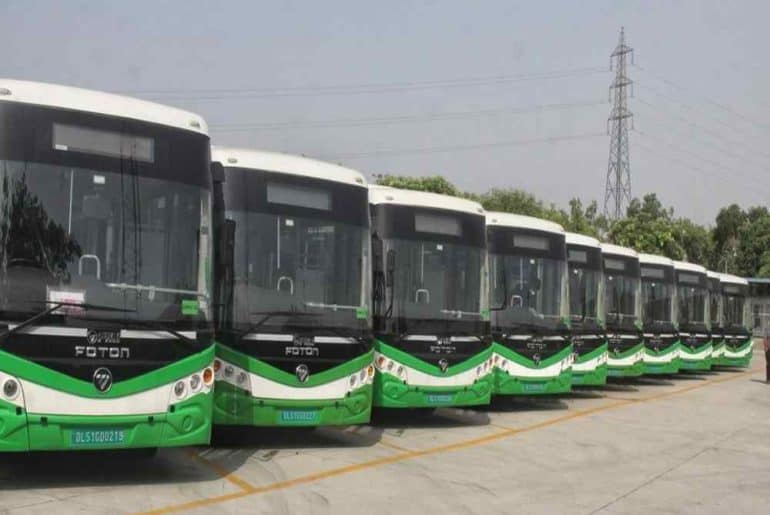
Delhi University’s U-Special buses, once a daily lifeline for students criss-crossing the city, are set to return after years off the roads. Announced by Chief Minister Rekha Gupta on August 5 during the inauguration of the new academic block of the Delhi University (DU) Social Centre School at Maurice Nagar, the revival is being presented as a “gift to students” — complete with air-conditioning, music, and upgraded interiors.

Launched in 1971, the U-Special service carried generations of DU students from far-flung neighbourhoods directly to North and South Campus. Before the Metro connected most of Delhi, they were cheap, direct, and often doubled as part of the campus culture as much as canteens or fests.

But with the Metro now covering nearly every DU-bound route, many students say the buses may no longer be the best solution. Kaashvi Khubyani, a second-year Journalism student at Delhi College of Arts and Commerce says:

The Metro already provides me with everything needed as it’s air-conditioned and quick, especially with Delhi’s unpredictable traffic. Unless these buses can match or beat the Metro’s speed and convenience, I’m not really keen to swap my daily commute for them.”

Others believe the focus should be on solving the ‘last-mile’ problem — the often long and tiring walk from Metro stations to classrooms. Urmika Srivastava, a first-year student at Jesus and Mary College, pointed out that:

A mini shuttle from Jesus and Mary College to the nearest bus stop or Metro would make daily travel much easier for students, especially given the embassy area location and long walks to South Campus after exhausting hours of classes.”

While some welcome the nostalgia and identity the buses carry, others see them as a costly throwback in a city where transport priorities have shifted. Student groups have also argued that funds would be better spent on frequent electric shuttles or safer pedestrian routes rather than adding on to the already deteriorating traffic conditions of Delhi roads. 

So far, the government has not confirmed the new U-Special routes or when they will start running. Until then, the debate continues — whether DU should look back to its most iconic bus service, or forward to transport that matches the city’s current needs.

Also Read-  CM Rekha Gupta Inaugurates New Academic Block of Delhi University’s Social Centre School

Picture Credits- Daily Pioneer

Juhi Bansal
[email protected]

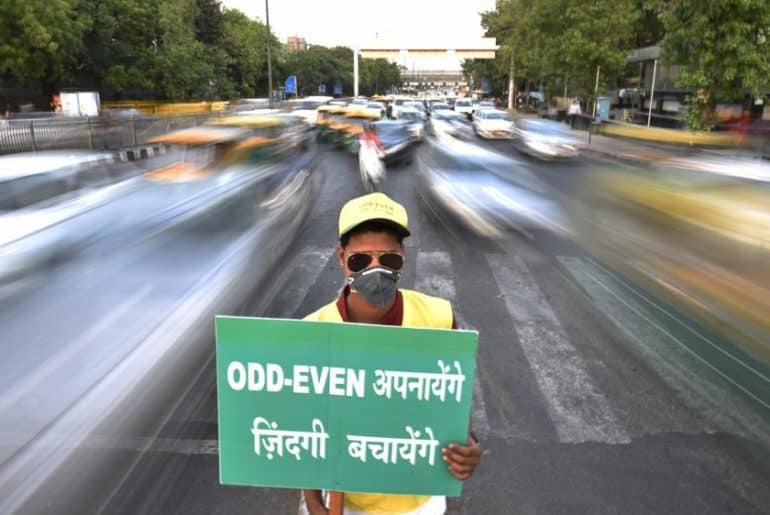
The Delhi Government, on Saturday, has sanctioned to desist the ‘odd-even’ car rationing scheme in light of the NGT poser regarding the rationale behind the decision. The policy was earlier announced for November 13 to 17 with the intent of depurating the smog-filled air in the city. A crisis situation emerged when the levels of particulate matter (PM) 2.5 and PM 10 entered the severe category. The government declared that schools must be shut down and the people were suggested to wear N95 masks as protection against toxic Delhi smog.

While stubble burning in neighbouring states and fire-crackers have been traced as the primary contributor to the dangerous levels of air pollution in the city, yet they are not the only contributor to the distress of Delhiites. Despite several warnings of worsening air quality before winter, the municipalities turned a blind eye to pollution caused by open burning of waste, and improper disposal of construction and demolition waste. This year, the East Delhi Municipal Corporation (EDMC) and the South Delhi Municipal Corporation (SDMC) did not issue a single fine for open burning of waste. The North Delhi Municipal Corporation, meanwhile, fined only 10 people.

The National Green Tribunal (NGT) pulled up the Delhi government for failing to act for the entire year until the air quality deteriorated to the extreme levels. “You tell us what is the purpose of implementing Odd-Even again? It seems you just want to reduce vehicles from roads” the court said noting the long list of exceptions. The Central Pollution Control Board has told the Green Court that two-wheelers cause more pollution compared to four-wheelers. Questioning the end result of banning cars when millions of two-wheelers are left unregulated. The court said, “If you are removing 500 cars from roads and allowing 1,000 two-wheelers, what purpose will it serve?” The court further remarked that the exemption from the Odd-Even scheme will be granted only to the CNG vehicle and emergency services such as ambulance and fire service while, earlier, this exemption pertained to women, two-wheelers and VVIPs.
Responsively, the Delhi Transport Minister Kailash Gahlot stated that ‘the Delhi Government could not compromise on the safety of women.’ He also accepted the fact that Delhi Government did not have enough public transport alternatives to accommodate over 60 lakh two-wheeler riders.’ Though the scheme has been called off, for now, the government may appeal for a review in the Green Court on Monday, to allow the car rationing policy with the previously practised exemptions.

Recently, the Delhi government’s had also decided to allow free travel for commuters in all DTC and cluster buses between November 13 and November 17, when the odd-even scheme was proposed to be implemented. This was done in order to encourage the use of public transport. It is unclear, now, whether such a decision will be implemented even after the suspension of the odd-even policy.

Experts, however, said there was a need for a long-term plan to reduce emissions. The Environment Pollution (Prevention & Control) Authority (EPCA) has issued a ‘Comprehensive Action Plan for Air Pollution Control in Delhi & NCR’ that enlists a combination of short, medium and long-term action for each source of pollution and indicates agencies responsible for implementation. A member of the EPCA and the director-general of the Centre for Science and Environment, Sunita Narain, said if the long-term measures already identified and suggested by the EPCA are not implemented, “air quality cannot improve”.

Image Credits: Hindustan Times

Varoon Tuteja

[email protected]