Tag

sports

Browsing

COVID-19 pandemic forces cancellation of sporting events across the world, leaving umpteen ongoing and scheduled tournaments in the lurch.

ICC World Cup 2011 highlights. Vivo Indian Premiere League (IPL) Final 2016 highlights. French Open 2017 highlights. English Premier League 2014-15 highlights. As I shift to and sift through the sports channels on the idiot box looking for some respite from the gloomy COVID-19 coverage, the pandemic still doesn’t fail to make its presence felt. With the postponement of all ongoing sports events, sports broadcasters have nothing to broadcast “live”, and have instead been forced to delve deep into their archives, repeatedly broadcasting recordings and highlights of past tournaments and matches on their channels.

Disseminating rapidly across countries and continents at breakneck speed, and causing thousands of deaths, the 2019 coronavirus pandemic, also known as COVID-19, has brought the globe to a standstill. To limit further damage, there has been a worldwide call for social distancing measures. With sporting events attracting thousands of spectators, and also involving repeated physical contact between participants, their postponement was imminent and necessary.

This coronavirus-induced sports ban claimed its most high-profile “casualty” when the International Olympic Committee announced the postponement of the much-awaited 2020 Tokyo Olympics until 2021. The magnitude of this decision can be gauged by the fact that the Olympics have never once been postponed in history since its modern inception in 1896, though the Games were cancelled in 1916, 1940 and 1944 owing to World War I and II. The postponement shall undoubtedly lead to multifarious organisational, logistical and financial hurdles for the organisers while also complicating the situation for athletes who’d been training hard for months for their events. Though before the decision, in an online poll conducted by The Athletics Association labour group, involving over 4000 track and field athletes, 78 percent voted in favour of postponement of the Games.

Football has been badly affected, with all national leagues like the English Premier League and Bundesliga, regional tournaments like the UEFA Champions League and AFC Champions League, and international tournaments like the Euro 2020 and Copa America 2020 being postponed. Until a few weeks ago, matches were still being held, albeit in empty stadiums, but as the disease began to spread swiftly, total postponement turned unavoidable. “I miss live football so much that now I have started watching simulation games on FIFA 20”, laments Akshat Jha, a football fan and a law student, referring to the FIFA 20 video game.

Apart from the agony faced by fans, the football ban has been a cause of great financial concern for clubs and players, since a large chunk of the clubs’ revenue is earned through stadium tickets and television broadcasts of their matches. Several clubs have announced pay cuts. Even rich clubs like Barcelona and Juventus have been forced to announce reductions in salary for their players and staff. FIFA reportedly plans to create an emergency fund for clubs facing a monetary crisis.

The Association of Tennis Professionals (ATP), the global governing body for tennis has suspended the men’s and women’s tennis calendars until June 7, thus leading to the cancelling or postponing of several ATP and WTA tournaments. The historic French Open scheduled to be held in May has been postponed to September while the Grand Slam which comes after it, the Wimbledon, also faces an extremely high probability of being cancelled.

While cricket didn’t have any major international tournaments in the next few months, many bilateral series scheduled to be held in the next two months had to be postponed. The last two remaining ODI matches of the series between India and South Africa, which were earlier planned to be held behind closed doors were ultimately postponed indefinitely. The 2020 edition of the Indian Premier League (IPL) which was scheduled to start in March was postponed until April 15, with a high chance of it being postponed further, or even cancelled.

Motor racing events have also been affected, with all Formula 1, IndyCar, NASCAR and MotoGP races being postponed. The Formula 1 calendar was scheduled to start with the Australian Grand Prix, but the race had to be cancelled only a few days before its commencement after a member of the Mclaren racing team tested positive for the disease. Subsequently, 5 Grand Prix races have been postponed while the Monaco Grand Prix was cancelled. The Formula 1 calendar is scheduled to commence in July while MotoGP has set the date as early as May 3.

Four of the biggest sporting leagues in the United States of America, involving four different sports, the National Football League (NFL), Major League Baseball (MLB), National Basketball Association (NBA) and the National Hockey League (NHL), all having a global fan base, have been suspended. The NBA suspended its matches from March 12 after two Utah Jazz players, Donovan Mitchell and Rudy Gobert tested positive for the disease. Celebrity NBA player Kevin Durant also tested positive for the disease. “Everyone is careful, take care of yourself and quarantine, we are going to get through this.”, Durant said in a public statement. The NBA was criticised for having waited too long to suspend their calendar, which has resulted in it having the most number of coronavirus positive players out of the four leagues.

Other major events which faced the brunt of the pandemic and had to be postponed include the Thomas and Uber Cup finals for badminton, the World Snooker Championships, the iconic London and Boston marathons, the World Table Tennis Championships, the Arctic Winter Games and the ISSF Shooting World Cup amongst others. Such a widespread curtailment of global sports has never occurred in the last few decades since World War II.

“The ramifications of cancelling or postponing play are wide-ranging, from mundane considerations about the competition to potentially serious financial consequences for athletes, teams, leagues and organizations, and the tens of thousands of people who work at sporting events,” wrote New York Times.

With the pandemic still going strong in many parts of the world, it is not yet possible to specifically ascertain the day that sporting events shall commence. Even if the pandemic is put under control, it might take several months before sporting events are given the green signal. Nevertheless, the world has come together to combat the disease, especially doctors and nurses, and the show shall certainly commence someday.

Featured Image Credits: Al Jazeera


Araba Kongbam

[email protected]


Decoding the immense football following in India for Clubs which are hundreds of kilometres away and why we ardently support these Clubs.

Football, has been given the name of a global sport, but why is that so? Why do we sitting on the other side of the world follow European teams so fervently, staying awake till 2 A.M to watch a game of football, buying jerseys of teams that we have never seen live? The most basic reasoning behind it is that football itself is an extremely simple sport that just requires a ball and some people.

Talking about how friendships and bonds are made over the sport, Samaksh, a second-year student from Delhi College of Arts and Commerce said, “Rather than attending classes we take out a day or two in a week and then go play football and just hang out after and all of my friends come together and play. It can get very competitive and angry on the field but once the game ends, we are friends again.”

When asked about supporting European Clubs, he said that it came down to the quality, as you could see the best players take the field.” Once you see one player or club and start supporting them, you slowly get invested in it, it’s like being part of a global family where no one judges you and you are united by this one club you love.”

Does this mean that Indian football does not have the same drama as European Clubs? According to Babil, a third-year student at Jadavpur University, this is not the case. He said,  “When one comes from Kolkata, the idea that Indian football isn’t as compelling is immediately dispelled when you see the fierce rivalry between Mohun Bagan and East Bengal FC. While supporting European Clubs is a trend, we should not forget to support our teams, especially in Bengal which has a prevalent football culture.”

While there is nothing wrong with loving a foreign club and being fervent supporters as the quality and accessibility are much better. We should not forget to support Football in our domestic level through the ISL and the I league as it is only with the support that we can hope to bring up Indian footballing standards and talent to those that we watch and adore in the west.


Featured Image Credits: New Indian Express


Prabhanu Kumar Das

[email protected]


With the Indian cricket team having dominated the sport for the last few decades, cricket enjoys a huge audience in the country. But obsession with one entity often leads to the negligence of other entities.

“Why is Connaught Place so empty today? It’s Sunday.” “India are playing Pakistan today. Everyone’s at home.” – overheard while strolling in the Inner Circle last year during the Cricket World Cup.

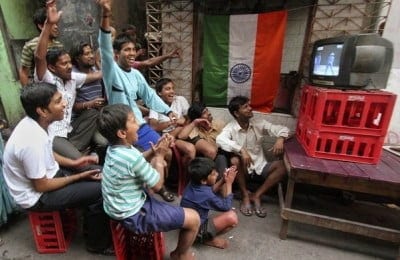
Players being worshipped as gods, thousands turning up to watch matches, millions across the country watching on television, crackers being burst after wins, effigies and posters being burnt after losses, cricket has surpassed the definition of a mere “game” or a “sport” in the country, cutting across caste and creed and rising to become a significant part of Indian culture. “Everyone wants a piece of them, to touch them, shake their hands, be seen with them, and introduce their kids to them”, is how ex-national team coach John Wright describes the Indian public’s adoration for its cricketers in his book Indian Summers.

With the sport wielding a great deal of power in the country, cricket has become a magnet for money. An enormous amount of money is exchanged between players and brands in the form of sponsorships and endorsements. Companies are ready to part with millions in order to sponsor tournaments and bilateral series’. Vivo bought the title sponsorship of the glamorous Indian Premier League for a whopping 2200 crore rupees. The powerful governing body of Indian cricket, the Board Of Control Of Cricket In India (BCCI) alone is worth in excess of 13000 crore rupees, a huge chunk of it coming from match broadcasting rights.

Pockets filled with money, the BCCI has left no stone unturned in setting up a thriving Indian cricket system, with the organisational structure going down to the grassroots. Thus there is no dearth of talent, and the country’s junior teams produce talented match winners every year. Cricket’s dominance in India has led to the dominance of India in cricket. Both are inter-related and sometimes, gains in the latter also lead to gains in the former.

Though it would be wrong to opine that other sports have a negligible presence across the nation – the country has produced numerous other successful sportspersons in a diverse range of sporting fields in its history – no other sport comes close in terms of the viewership and financial support that cricket enjoys in India. Football is popular in the country, but the majority of viewers tune in to watch European football and not Indian football. Most domestic league matches are played in near-empty stadiums and the national team languishes at 108th in the world rankings.

India’s dismal showings at the Olympics, with a tally of only 2 medals at the 2016 Rio Games, despite being the second most populated country in the world, is a proof of the considerable disparity between cricket and other sports in the country. Hockey, the national game, a sport in which the country tasted a significant amount of success in the last century, has dwindled greatly in popularity, with the national team not having won an Olympic medal since 1980. Sports like tennis, badminton, wrestling, shooting, chess, boxing are popular in many parts of the country but do not enjoy the mass pan-India viewership of cricket. “I have observed that a newspaper usually devotes two whole pages to cricket coverage while other sports are given half a page at the most”, said Urnavo Chakrabarty, a University Of Delhi student and a state level athlete.

Infrastructure significantly affects the progress of a sport. A sport which doesn’t enjoy mass viewership often lacks financial resources, which leads to limited infrastructure and equipment. Raw talent or potential is not enough to compete at the international level and good infrastructure, equipment and coaches are necessary to harvest this potential. As with cricket, the popularity of a sport in a country and the country’s performance in that particular sport are inter-related. The more popular a sport, the more the amount of revenue generated. Money is needed to bolster the cash strapped sports organizations in the country. And going vice versa, continued successes in a sport will assuredly boost its popularity.

There have been numerous initiatives to promote other sports in the country with the conception of franchise leagues, similar to the IPL model, and though many did not pan out successfully, some like the Pro Kabaddi League and the Indian Super League have garnered considerable – if not mass –  popularity and are a step in the right direction.

The obsession of the country’s public with cricket is not to be seen in a negative light, but this obsession should not act as a detriment to other sports. Other sports are equally interesting if advertised properly and if cricket can enjoy mass support and success, so can any other sport.

It would be a refreshing change to enquire about the emptiness of Connaught Place on a Sunday, and be told that it’s because the Indian hockey team is playing an Olympic final.

Featured Image Credits – ESPN CricInfo

Araba Kongbam

[email protected]

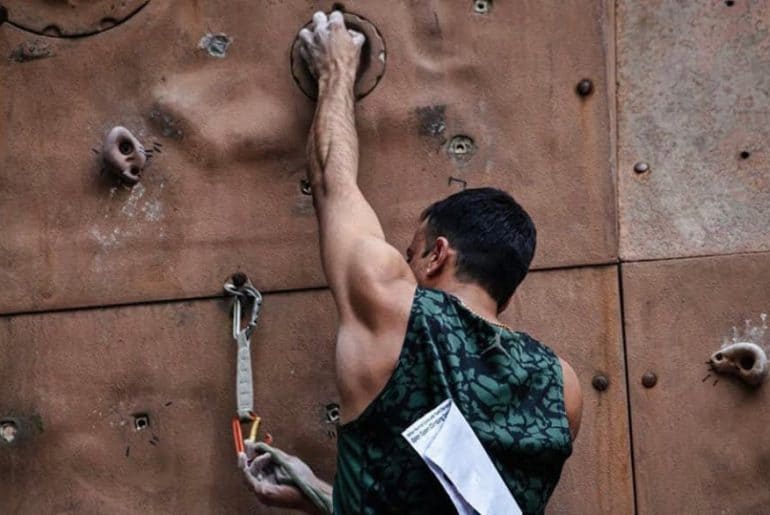
The Hiking Club, St. Stephen’s College organised its 15th National Climbing Competition, from 31st January to 2nd February 2020. The event was a ravishing success with participation in varied categories like lead and speed climbing, between various age groups.

The Adventure Club of St. Stephen’s College, called The Hiking Club, organised its 15th National Climbing Competition. The event commenced on 31stJanuary and went on to 2ndFebruary 2020.  The event was incentivised with prizes worth Rs. 60,000, making the gymnasium of the college echo with loud cheers and hoots.

The National Climbing Competition is an annual event, which awards the player who can climb the set distance in the shortest time. This year’s edition of the Annual Competition was adjudged by Mr Rohit Solanki and Mr Chandan Kumar.

Participants from all over Delhi put on their competitive shoes while eyeing the prizes up for grabs. All participants were full of enthusiasm and eagerly waited for their turns. The results of the competitions were announced on 1stFebruary and 2ndFebruary, and they are:

In the ‘Under 16 Boys Speed’ category, Sachin Saroj bagged the first position, Manujee in the second position and Kabir won the third position.

In the ‘Under 16 Girls Speed’ category, Arshpreet Kaur emerged as the winner, and Simran Kaur and Nandini Dhir came second and third respectively.

For the ‘Open Women Speed’ category, Shivpreet Pannu got the first place, Shivani Charak and Siya Negi, emerging at the second and third place, repectively.

For the ‘Open Men Speed’, Inder Singh was declared the winner, and Bhuvnesh won the second place, while Sarvan bagged the third place.

For the ‘Under 16 Boys Lead’ category, Sachin Saroj again bagged the first place. Manujee and Vansh Bhardwaj bagged the second and third position respectively.

For the ‘Under 16 Girls Lead’ Category, Arshpreet Kaur won the first place, and Nandini Dhir came second, followed by Simran Kaur at the third place.

In the ‘Open Men Lead’ category, Sachin Saroj emerged as the winner, followed by Abhishek Mehta in the second position and Inder Singh in the third place. In the ‘Open Women Lead’ category, Shivpreet Pannu bagged the first place, followed by Shivani Charak and Siya Negi at the second and third positions.


Feature image credits- Gyanarjun Saroj for DU Beat

Suhani Malhotra

[email protected]


What are the different connotations that sports hold for us? Have its horizons expanded to accepting women, and how successful is it now?

29th August is celebrated as the National Sports Day, dedicated to the sportspersons and their hard work. It is a day to commemorate their contributions towards playing for our country and winning laurels. But, in reality, it is a day to celebrate popular sportsmen like Virat Kohli, with huge cults around them and few popular sports like cricket, which have a massive viewer-base. With a few days still left to this important day, why not realign our horizons and shift our focus?

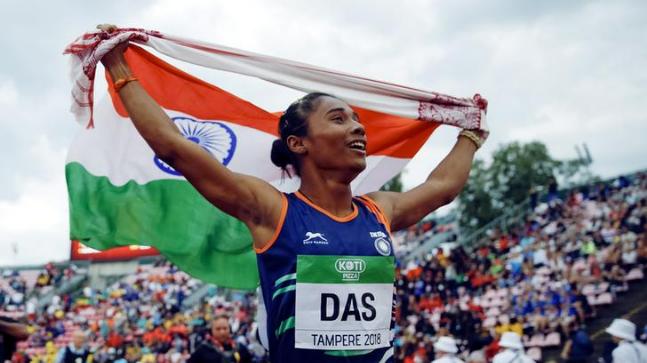
PV Sindhu, Dutee Chand, Mithali Raj, Deepika Kumari, Tanlai Narzary, the Phogat sisters – over the past few years, Indian sportswomen have created a name and distinct space for themselves. However, the recognition from people still seems to be a far-fetched dream. But movies like Dangal and Mary Kom haved helped in garnering traction to and some attention towards their struggles. With these films, not only did they gain more recognition, but it also tackled the ideas of social stigma attached to women in sports.

Recently, there was a celebratory parade for the four-time Women’s World Cup Champions in the United States of America. This event is significant given that, not just in our country, but all over the world, women’s sporting events are disregarded. The idea behind this attitude often stems from the belief that their performance is not at par with those of the sportspersons in men’s sporting events. The only focus, if given at all, is upon their clothes and their outburst. 

Tennis, which is one of the only sporting places where women are seen as equals, also tends to gain attention only when Serena Williams displays her anger. What this normal emotion of rage is linked to is the idea of how women are ‘too emotional’. Women are represented in the light of being too sensitive in magazines and news pieces. What we do not realise is that this discrimination in terms of behaviour, pay, and popularity only pushes women to the background. 

The problems extend further to the lack of funding and even basic training conditions. Stories of sportspersons having to sell their medals to earn money, because they are not provided with anything, have become commonplace. Many talented sportswomen are not trained in the first place, due to the many obstacles that lie ahead.

Female products-oriented companies will now sponsor their events, in the big leagues, more companies now want to be front-of-shirt sponsors. India’s Dutee Chand opened up about her sexuality as a queer person recently, and fought the backlash she received from her village, in order to make a more inclusive environment for others like her. Megan Rapinoe has also come out with her partner, Sue Bird. These mark historic steps for our country and the way sportswomen demand respect. 

In a country like India, ideas of equality cannot be implemented immediately because of how our society thinks. But movies become an important access point to normalise this. The film, Chak De India, recently completed twelve years since its release. Despite being a decade old, its plot and issues remain relevant. It deals with women not being allowed to play sports, women’s teams being deprioritised, being considered at an inferior status from the men’s team, among other issues.

What has opened up today is a dialogue. Newspapers talking about the starkly different salaries for Kohli and Mithali Raj, advertisements campaigns trying to spread awareness – there are some of the things contributing to it. This dialogue may have just begun, but it could soon lead to equality among sportspersons of all genders. Maybe soon, people will stick to their televisions for a Women’s Cricket World Cup tournament, as they did for the one played by men.

Feature Image Credits: India Today

Shivani Dadhwal

[email protected]

In light of the upcoming launch of the Fit India Movement by Prime Minister Narendra Modi, the University Grants Commission (UGC) has asked students and faculty to walk 10,000 steps daily.

Prime Minister Narendra Modi, in his Sunday Mann ki Baat, announced the launch of the Fit India Movement on the occasion of National Sports Day, on 29th August 2019. The launch is scheduled for the entire day, at the Indira Gandhi Stadium Complex, where students from all across the country, as well as fitness enthusiasts, will be taking part.

Bringing this movement to the institutions of higher education in our country, the UGC has instructed colleges to prepare and implement fitness plans for their students and faculty members and motivate them to walk 10,000 steps daily. The UGC has also encouraged them to incorporate physical exercise, sports, and fitness activities in their daily routines. The commission has directed the institutions to screen a live feed of the launch event and ensure that faculty and students attend.

The authorities of higher education institutions have been asked to upload their fitness plans on their websites as well as notice-boards within a month. The official notice also said, “Universities and affiliated colleges can make well-meaning efforts for the health and well-being of their students, teachers, staff, and officials to achieve physical fitness, mental strength, and emotional equanimity.”

Abhinandan Kaul, a first-year B.A Programme student of St. Stephen’s College said, “It’s a brilliant step to inspire students who are the future of our nation to adapt to a fit and healthy life and this will surely ensure that India becomes a healthy country full of positivity!” His classmate, Jaideep – a squash player – agreed, “This is a nice initiative. Maybe all the colleges could have a period of 30 minutes, every day before the college classes start, in which students can do some physical activity, even as basic as walking. This would help them to get ready for the day and freshen up. Exercise hasn’t always been a big part of our “campus culture,” but we can gain from it in many ways including more energy, deeper and more satisfying sleep, and increased fitness.”

Although the Fit India movement has already been met with a positive response from students, what remains to be seen is how well it can be taken forward in our institutions.

Feature Image Credits: Akarsh Mathur for DU Beat

Bhavya Pandey

[email protected]


The admission process of University of Delhi for the academic session of 2019 has begun. With this, candidates applying for sports quota have the coveted seats up for  grabs. The process is tedious and long, and requires the candidates to go through the requisite trials in their preferred discipline.

Here we will breakdown the whole process into concise steps:

REGISTRATION

The process begins with candidates registering themselves by filling up the online application forms available on the DU University of Delhi (DU)  Undergraduate (UG) portal. They can apply for a maximum number of three games/sport(s). The candidates have to submit an additional fee of Rs. 100 to apply in the sports category. 

The admission is based on two categories 

       1. Direct admission without Sports Trial

The candidate should have represented India in — Olympic Games (IOC), World championship or World Cup by International Sports Federation (ISF), Commonwealth Games by Commonwealth Games Federation (CGF), Asian Games by Olympic Council of Asia (OCA), Asian Championships (ISF), South Asian Games (SAG) by South Asia Olympic Council (SAOC) and/or Paralympic Games by International Paralympic Committee (IPC) to be eligible for this category. They should be recognized and funded by the Ministry of Youth Affairs and Sports (MYAS).  

  1. Admission On the Basis Of Sports Trial

The admission process under this category requires candidates to go through two stages:

  1. Merit/Participation Sports certificate for 40 marks

The candidates can upload their self-attested copies of three merit sports certificate. However, only the highest value certificate will be considered for the marking. The certificate should fall between the timeline of 01st May 2016 to 30th April 2019 to be considered. The minimum marks required to be eligible for the sports trial is 04.

       2. Sports Trial for 60 marks

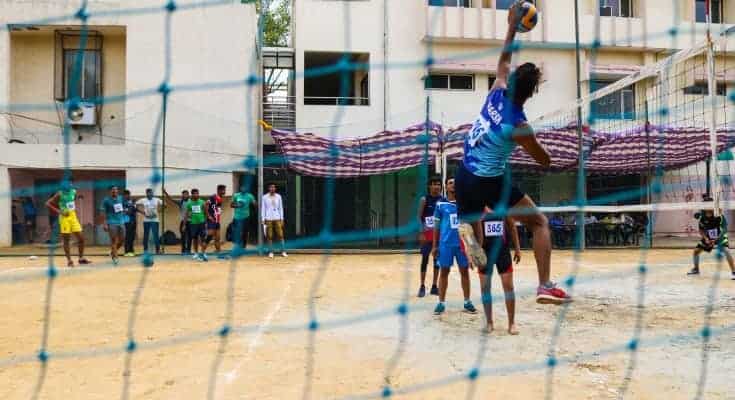
The three broad categories of sports in which participants can apply are: team games, dual and combat sports, and individual sports.  The team games include Baseball, Basketball, Cricket, Football, Handball, Hockey, Kabaddi, Kho-Kho, Netball, Softball, and Volleyball. The dual and combat sports include badminton, boxing, Judo, squash, table-tennis, Taekwondo, Tennis and wrestling. The individual sports include Archery, Athletics, Chess, Diving, Gymnastics, shooting, swimming and weight-lifting.


The sports trials will be held in the last week of June. The venue and the timings will be uploaded on the DU website.

The participant can only appear in one event/position/weight category and they should secure a minimum of 30 marks in the sports trials to be eligible for consideration in sports merit list, which will be further forwarded to the colleges.

RESULTS
The list of finally selected applicants will be displayed on the college website for three days. The marks of the sports certificates and sports trials will be displayed on the dashboard of the applicants as well. It is also mandatory for the candidates to submit an undertaking on Non-judicial Stamp paper of INR 100/- stating that he/she will play for the college and University during the course of three years.

Points to be noted:

  • Admission of candidate is solely based on the availability of seats in a course in the college.
  • An applicant’s name appearing in the sports merit list doesn’t guarantee admission in a college.
  • Any grievances pertaining to the marks shall be addressed by the UG Sports Grievance Committee.
  • Any injury/casualty suffered by the applicant during trial will be their sole responsibility.  

Feature Image Credits: Akarsh Mathur for DU Beat


Antriksha Pathania
[email protected]


In an endeavour to simplify the process of admissions, the University of Delhi (DU) is organising several open day sessions where officials will be available to answer and address various doubts and concerns that students may have.

The DU admission process for the academic year 2019-2020 has finally begun, following various date speculations and unprecedented excitement from young people all across the country. The online applications for all undergraduate courses began on 30th May and the other online applications too will be available shortly.

Every year, the Dean’s Student Welfare Office hosts open day sessions before the admission process ends, in order to address questions and concerns from prospective students and parents. The application process and the documents required for various categories and courses are different, and hence many questions are bound to arise. These sessions are structured like press conferences where the University officials will be available to answer any question or doubt that the students may harbour regarding the application process.

DU is one of the most reputed and sought after universities of the country. A large part of that can be credited to the diversity of students it invites to its campuses each year. Students can apply via sports quota, ECA quota, foreign quota, etc. These open day sessions are especially useful for students from the the aforementioned different categories who have a significantly variable admission process as it helps them understand the requirements better.

Here are all the details you need to know about the Open Day sessions being held for the admission process in 2019-

DATE AND VENUE :

  1. Conference Centre, North Campus Gate Number 4 –

May 31st, June 3rd & June 8th

  1. Kamala Nehru College, Zakir Hussain College, Rajdhani College, Ramlal Anand College and Maharaja Agrasen College –

June 4th, 6th, 7th & 10th

TIMINGS:

These sessions will last from 10:00 AM to 1:30 PM on all the above mentioned dates.

SUPPLEMENTARY INFORMATION:

Additionally, a help desk will also be set up outside the conference centre in room number 5 from 10:00 AM to 5:00 PM everyday during the admission process to assist students and parents if any concern arises.

The different colleges under DU will also set up separate counselling sessions and help desks to address the concerns of applicants and explain their admission processes further.

Pragati Thapa

[email protected]

Feature Image Credits: DU Beat

To stay relevant in the 21st century – the University of Delhi (DU) needs to let go of its laissez-faire attitude. Read our Editor’s take on why DU is trapped in its own history.

Making it into DU was a dream for so many of us. We battled the unpredictable and exhausting board examinations, obsessed over  cut-off lists, and withstood the impossibly frustrating admission process to finally make it here. Once here, all the effort seemed worth it. To study with the brightest people in our generation, participate in DU’s competitive society culture, absorb its active protest culture, and learn under its brilliant faculty, made it a one of a kind experience. This, coupled with a relatively relaxed attendance policy and reasonable fee, was enough to make this place a dream come true.

However, three years in the University and my rose-coloured glasses have finally worn off. What I saw as the culture of protest is actually teachers and students demanding basic resources and rights. What was seen as thriving society culture is the students’ way to keep themselves occupied and challenged since the varsity offers few opportunities to do so. The affordability of DU is constantly at threat, with newly established schools like Delhi School of Journalism charging a hefty fee and offering sub par education in return. With the Higher Education Funding Agency and the current government’s obsession with privatisation, DU’s accessibility is historically most vulnerable right now.

However, this is not all. The bigger problems with DU are related to its academic rigour. The truth is, towards the end of our three years, there is very little that the institution has taught us.

This facade of DU’s reputation has limited influence; recruiters and major corporations are distinctly aware of how little a DU degree teaches you, which is perhaps why they avoid us like the plague. Navigating the process of landing your first job on your own is chaotic and most people seek the security of campus placements. However, in DU, the word ‘placement’ is reserved for commerce students from the five top – ranked colleges in the varsity. It’s not as if commerce students or those in top colleges are necessarily more skilled than the rest of us but selective elitism goes a long way. The rest, pursuing other “non-employable” degrees in the remaining colleges, cannot aspire to be recruited in any capacity.

Don’t get me wrong, I am grateful to DU for the exposure and experiences but they were by and large the product of the hard work of the students who made societies their life and gave them their competitive edge. Apart from its reputation, there is very little that DU offers us. My resentment stems from the fact that I, like my peers, am horribly under-prepared for the real world. It is responsible to revive the curriculum to make it competitive with other universities, and it is their responsibility to realise that their job does not end by offering students mere theoretical knowledge.

Sports facilities in DU are underwhelming and most sports’ quota students find their own way of training themselves independently. Certainly, there is a funding crisis that the varsity is experiencing and the threat of a bigger impending crisis looms above the surface, but even existing funds aren’t appropriately utilised. For example, in 2017, the varsity returned 108 crores to the University Grants Commission (UGC) because it could not find an avenue to spend it. Three crore rupees allocated by the UGC remained under-utilised and had to be returned as well.

As I reflect upon my three years in DU, I am grateful for the creative minds I got the opportunity to interact with. However, nostalgia has not clouded my judgment and I know that there was so much more that DU could have offered and so much more that I deserved. The only people who graduate from DU and make it in life should not be B.Com. students, IAS officers, rich kids whose resources get them into an Ivy – league college for Master’s or those studying in Hindu, Lady Shri Ram, Stephen’s, and Hansraj. The rest of us also deserve access to an education that teaches us the required skills, has a curriculum abreast with top international universities, and offers us the opportunity that allows us to get employed if we wish to be. Like an egocentric, ageing actor who cannot get over their glory days, DU is iconic but stuck in the past. It needs to catch up with the times and enter the 21st century. After all, reputations alone can only last so long.  

Kinjal Pandey
[email protected]

Every sport event is more than just a contest for the testing of physical fitness. Each player represents his or her own dedicated effort and expectations in the act of living their favourite sport. Stories of the following sports teams and societies go on to show just how passion drives human endeavor.


Image Credits:Surbhit Rastogi for DU Beat.
Image Credits: Surbhit Rastogi for DU Beat.

Winning their first match in an official tournament, the Girls’ Basketball Team of Hindu College defeated a presumptuous patriarchy. Being the first team of its kind in more than two decades, a team with minimum amenities, these self-trained ‘underdogs’ thrive on passionate interest and intoxicating energy for their game.

Image Credits: Surbhit Rastogi for DU Beat.

Championing the second most expensive sport, the Ramjas Archery Team has registered itself as a leading team in the varsity. The girls’ team has won gold for four consecutive years. Playing at the national and inter-college level, the team is expecting even brighter prospects in the upcoming Nationals; for which, two women archers of the team have already qualified.


Image Credits: Aakarsh Gupta for DU Beat.

Defined for its individuality, the game of Shooting tests every player’s talent to add up to the team’s overall performance. Four members of the team have been selected for the World University Trials. With the vision of representing India in Olympics, every shooter plays importantly for a sense of gratification and satisfaction. Hansraj College is known for its excellent produce of opportunities for these young shooters.


Image Credits: Aakarsh Gupta for DU Beat.

With the background score of players indulging in a game of Cricket, Sri Guru Tegh Bahadur Khalsa College’s cricket team’s coach recounted countless achievements of the team. The team won Lala Raghubir Singh Tournament this season. Looking forward to a better and more rewarding season ahead, the team exudes dedication.


The housing of agile talent in University’s North Campus is only a fraction of the vast multitude of achievers and to-be olympians in the varsity. DU Beat wishes all of them luck.

Feature Image Credits: Surbhit Rastogi for DU Beat.


Kartik Chauhan

[email protected]

Mahi Panchal

[email protected]

Surbhit Rastogi

[email protected]

Aakarsh Gupta

[email protected]