
Tag

Slider

Browsing

Unpacking the conflict, its roots, and the current humanitarian crisis in Gaza.

In the heart of the Middle East, a long-standing conflict continues to shape the lives of millions. The Israel-Palestine issue, with its roots dating back over a century, drew global attention again after the last few weeks’ events. The abundance of misinformation available online can be daunting, making it all the more important to form informed opinions and be responsible global citizens, which is necessary in such turbulent times. 

For a very brief background, The 1917 Balfour Declaration promised a Jewish homeland in Palestine to aid persecuted European Jews, sparking tensions with residing Palestinian Arabs. After the 1948 Arab-Israeli war, Israel emerged, leading to the displacement of 700,000 Palestinians, and this day was marked as Nakba (a catastrophe) by the Palestinians. In 1967, Israel occupied Gaza, the West Bank, and East Jerusalem, areas that had held Palestinians for generations, and established Jewish settlements. UN calls for withdrawal were refused. The Palestinian people saw this as an illegal occupation, and one major group resorting to violence to fight it (for a lack of Palestine’s military) grew in prominence in the 1980s. This organisation was called Hamas, and it took control of Gaza in 2006 after an election win. Israel and Hamas have fought many wars, but tensions have never subsided. 

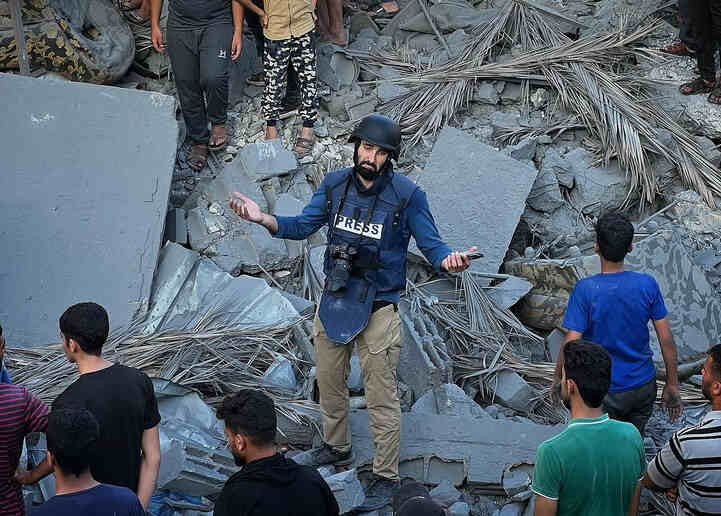
A sudden escalation of the issue began on October 7, when Hamas launched an attack on Israel, claiming over 1400 lives, mostly civilian, and taking 230 hostages. In retaliation, the Israeli Prime Minister declared war and stated that Hamas would “pay an unprecedented price”. On November 6, The Palestinian Health Ministry said that Israel’s airstrikes have killed more than 10,000 people in Gaza, including over 4000 children. A report was also published detailing the names and ID numbers of every person killed, a day after US President Joe Biden questioned the death toll. 

The world is divided over the topic of Israel’s right to defend itself. It is important to recognize and grieve the effects of Hamas’s actions, and it is also necessary to note that Hamas does not represent the Palestinian cause. The increasing Israeli occupation of Palestine has never been justified, and neither was ever legally sanctioned by the United Nations. From its position of power, Israel has been controlling food, water, electricity, and the free movement of the people in Gaza since 2007 and is currently causing harm to life by having disrupted all of that since the events of October 7. In addition to that, with the enormous backing and financial aid that it receives from the USA, an undeniable power imbalance exists between the two regions that Israel has exploited for decades and is continuing to. Targeted bombings and air strikes in schools, hospitals, and residential buildings have made it clear that the continuous and purposeful killing of civilians is taking place. In discussions all over the world, this is being called a “textbook case of genocide”. 

On October 13, Israel had ordered over 1 million Gazans to evacuate to the southern part of the territory as targeted attacks on Hamas lay ahead. The UN stated that suddenly evacuating about half the population would have devastating humanitarian consequences.

Protecting civilians does not mean ordering one million to evacuate to the south, where there is no shelter, no water, no medicine, no fuel, and then continue to bomb the south itself.

UN Secretary-General, Antonio Guterres.

Moreover, due to how Israel has handled refugee needs in the past, many Palestinians feared they would not be able to return and would be gradually displaced to Egypt’s Sinai, which is near Gaza’s south. The United Nations Human Rights Watch has said that Israel’s siege of Gaza and its evacuation order could lead to the forcible transfer of civilians and be in breach of international law. This is a recurring theme in Israel’s occupation of Palestine, as the refusal to withdraw from Gaza, the West Bank, and East Jerusalem, as well as the setting up of establishments in those territories, have been condemned and labelled flagrant violations of international law.   

To add to the alarming death tolls, there is an extreme shortage of electricity and medicine, and almost half of the hospitals in Gaza are no longer functioning and others are getting bombed. The UNRWA stated that it had to significantly reduce its humanitarian operations because fuel had run-out and the delivery of more had been restricted by Israel in fear of its misuse by Hamas. The UNWFP has said that ‘insane bureaucracy’ has slowed down the flow of aid, as only about 12 lorries carrying food and water are crossing into Gaza per day. This number was 500 before the war began. Moreover, telecommunication has been destroyed by the bombing, making it harder for aid to reach the right places in time. The current humanitarian situation in Gaza, therefore, remains dire.

There is no doubt that discussions and opinions should leave room for nuance; however, it should not be difficult to stand for humanitarian rights when needed most. The US, Israel’s major ally, having provided billions in military and economic aid, along with the EU, has condemned the actions of Hamas. Russia and China have not done the same and have stated neutrality. Hezbollah, a Lebanese militant group, is a supporter of Hamas and has been exchanging fire with Israeli forces.

The United Nations General Assembly has passed a resolution calling for an immediate humanitarian truce between Israel and Hamas and demanding aid access to Gaza. 120 countries voted in favour, 14 voted against (including Israel and the USA) and 45 others abstained. We are yet to see what this step will do for the suffering people of Palestine, but in any case, history will remember. 

Read also: Stop Genocide in Palestine- Sfi Protests at Embassy of Israel 

Featured image source: World Peace Tracts 

Arshiya Pathania

[email protected] 

In a recurring move by the University, a whopping twelve-fold fee hike for the English PhD programme this time has left both students and teachers enraged and aghast.

The University of Delhi’s English Department recently announced the increased fees for their PhD programme. The fee has escalated from Rs. 1,932 last year to Rs. 23,968 currently, causing shocked reactions from several groups of teachers and students.

There have been stern critics against the university’s move, with teacher and student organisations blaming the new National Education Policy as a tool to ‘privatise’ and ‘commercialise’ education.

Earlier implementation of NEP led to a 400% fee hike in Allahabad University and 100% in BHU, and the same has now happened in Delhi University.

Anjali, DU Secretary of the All India Students’ Association (AISA)

The Democratic Teachers’ Front formally protested against the fee hike via a letter addressed to Vice Chancellor Yogesh Singh.

Comparisons of such fee hikes are also being done with Jawaharlal Nehru University (JNU) after the institution borrowed from the Higher Education Financing Agency (HEFA).

This has led the DU wing of the All India Students’ Association to call for investigations into the role of HEFA behind student fee hikes.

The role of HEFA has to be examined, in which government grants for universities are being replaced by loans, which also have the component of interest. Delhi University has already procured loans worth Rs. 1800 crore, which will be extracted along with interest from student’s pockets. This is a strategic attempt by both the government and the administration to push out the marginalized sections (dalits, adivasis, women, and gender minorities) out of education.

Anjali on AISA’s stance on HEFA.

The Students’ Federation of India (SFI) also criticised the fee hike, stating that it would hinder ‘access to quality education.’ They also declared that this fee hike is a ‘blatant attack on publicly funded institutions’ and ‘exacerbates financial stress on students and their families.’ Lastly, they also claim that the administration did not allow the PhD students enough time to submit their fees and were asked to pay the amount through a ‘one-day deadline’.

Akhil Bharatiya Vidyarthi Parishad also opposed the increase in fees and highlighted the ‘lack of representation’ in central universities.

Despite such protests and opposition, the University administration is yet to make a formal public comment regarding such massive developments.

Read More: DU Sees Rise in Applications After Introduction of 5-Year Law Courses

Featured Image Credits: Frontlist

Priyanka Mukherjee

[email protected]

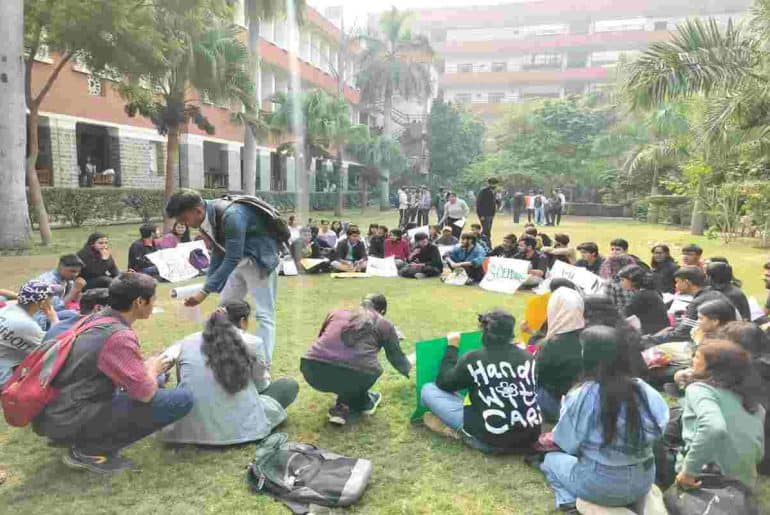
Students and activists took part in the demonstration to support the victims of the horrific war crimes committed in Gaza, which included the loss of lives of thousands of innocent children. 

On October 23, 2023, a protest organized by the Students’ Federation of India in Delhi took place at the Embassy of Israel in New Delhi. This protest was an expression of solidarity with Palestine and a strong plea to stop the ongoing violence committed by Israeli forces in Gaza. Around 2 p.m. on October 23rd, a large gathering of supporters, including social activists and students from various universities and student organizations across Delhi, assembled near the Khan Market Metro station. Together, they initiated a united march towards the Embassy of Israel.

Upon reaching their destination, the protesters were met with a substantial police force that prevented them from advancing further. The authorities detained the demonstrators, leading to a temporary halt to their protest. An hour later, a second group of students, holding placards in support of Palestine and chanting slogans, initiated another march towards the embassy. They, too, were soon detained by the police forces.

The backdrop to this protest is the ongoing conflict in Gaza, where Israeli airstrikes have resulted in the tragic loss of over 5,000 lives over two weeks. The history of the Israel-Palestine conflict is marked by turbulence and violence. As the attacks persist, people worldwide stand united in their call for an end to the loss of innocent lives and the provision of essential services to the people of Gaza through humanitarian aid.

Our conversations with the protestors helped us get a clear view of their motivations and perspectives on the issue. A student from Jawaharlal Nehru University (JNU) who joined the protest explained that their objective was to oppose all forms of violence in Gaza and urge the governments to support the Palestinian cause. He emphasized that the march towards the Embassy was a means to convey their message to the media, the general public, and ultimately the government.

What is happening in one part of the world cannot leave us unaffected or detached. It is not right to assume that India and its citizens will remain untouched by the consequences of this conflict.

– One of the supporters present at the march.

The supporters stressed their point by saying,

Humari sankhya kam ho sakti hai, par humari awaaz buland hai

(Our numbers may be small, but our voices are powerful.)

Many protesters were also against police actions and the detention of their fellow participants. They requested the administration to respect their right to peaceful protest. Social activists present at the event underlined the historical importance of mass protests in India’s struggle for independence. They argued that the administration should not restrict their freedom to express their views.

The demonstrators also stressed that the world must not remain silent in the face of such a grave humanitarian crisis. They highlighted the need to stand in support of the oppressed and the innocent in Gaza, as one day India might require the international community’s support in times of crisis, just as the civilians of Gaza do now. The protestors’ believed in the importance of global solidarity and the responsibility of nations to support one another in the face of injustice and conflict.

Read Also – https://dubeat.com/2019/12/01/why-are-israelis-moving-into-a-conflict-zone/

Image Credits – Anshika Sharma for DU Beat

By DU Beat

The cultural context in India undeniably aggravates women’s mental health concerns, emphasizing the need for gender-specific mental healthcare.

There’s no doubt about the fact that the world has witnessed significant advancements in healthcare and societal norms over the past century. However, hushed conversations around mental health persist, especially when it comes to women. It was not very long ago that women in the Western world were put through procedures as invasive and barbaric as lobotomies under the guise of mental health treatment. While methods have definitely evolved, the stigma surrounding women’s mental health and the lack of adequate care are problems that still very much endure.

It is widely accepted in medicine that gender is a key determinant of mental health, as there are differences in the needs and experiences of people of different genders. Biological differences (in addition to social factors) keep women more vulnerable than men to mental health disorders. Estrogen and progesterone make women more susceptible to developing fear and anxiety as they regulate mood and cognition. Reproductive health and pregnancy-related mental illnesses also contribute to the disproportion. However, in India specifically, another reason for the need for gender-specific care is realized when we look at the intensity of how social factors determine women’s mental health in India.

The patriarchy is not unique to our country, but the ways in which it is upheld today are strikingly more severe than most. The preference for the male child and subsequent lower educational status of women, stricter standards for behaviour, early marriage, and the subservient role in the marriage household are all common parts of the lifestyle of an average Indian woman. These factors, coupled with the alarming rates of domestic violence, contribute to the occurrence and treatment of mental health disorders among Indian women.

As of October 2021, the majority of those facing mental health issues in India were women, but the obstacles associated with seeking assistance deterred them from doing so. Women in Indian society are expected to be the sole caretakers of not just the children in the family but also the adults. Even in ‘modern’ households where they might not exactly be expected to do so, women tend to assume responsibility for the same because such are the effects of deeply ingrained patriarchy. When women barely give up on such ‘duties’ while physically sick, it’s easy to understand why a study mentioned that they are apprehensive to seek mental health care in fear of being rendered useless and becoming a burden to their families. In fact, that is exactly how society perceives women with serious mental health struggles, as a study showed that such women are twice as likely to experience physical and sexual abuse as the general female population in India.

It is thus very evident that gender-specific mental health care is an imperative in India, and although we’ve seen notable progress in the past decade, it unfortunately remains accessible primarily to a privileged demographic within the metropolitan cities. The path towards extending this care to all of India will require elevating societal awareness, encouraging open dialogue, and advocating for reforms in healthcare policy. It is a long road, but one that needs to commence because women’s mental health is not some marginal concern but an integral component of society’s well-being.

Read also: Who Protects Our ‘Safe’ Spaces?

Featured image credits: ABP Live

Arshiya Pathania

[email protected]

The following piece seeks to present yet another easily dismissive view (read rant) of a Muslim in India. All names, people and incidents mentioned are NOT fictitious. Resemblance to any past event of dictatorship and fascism is NOT AT ALL coincidental. Any attempt to debase the piece as “anti-national” comes from a shrouded majoritarian privilege.

Few days back while I was flipping through the memories laden pages of my eleventh standard Political Science NCERT textbook revelling on the old nostalgia, I chanced upon Faiz Ahmed Faiz lines in one of the cartoons.

Hum to thahre ajnabi kitni mulakato ke baad

Khoon ke dhabbe dhulenge kitni barsaaton ke baad

(We remain strangers even after so many meetings

Blood stains remain even after so many rains.)

Indeed, the ongoing insurgency of our once dear democracy in the hands of the incumbent government gave new meanings to these lines. It is a known fact that the constant othering of the Muslims and other minorities has been normalised and conveniently subsumed in the state apparatus in the recent years. This manufacturing of hatred by the ruling party is certainly not a new phenomenon, but the extent to which it is practiced is certainly something that cannot be easily dismissed. The dehumanisation and humiliation experienced by certain sections of the people, especially religious minorities, cannot be easily language-d.

An imam stabbed and shot to death in a mosque that was burnt to the ground. A young doctor, walking home, set upon by an armed mob who thrashed and molested her. A teacher asked a kid to slap his classmate. An MP ridiculing another MP “terrorist” and hurling dehumanising slurs in the Indian Parliament. The incidents which took place in India over the last few months (and are increasingly a common sight), are seemingly unconnected, yet the victims were united by a common factor: they are all Muslims.

“In the early days of my college, in a class of 80+ students, my friend who was sitting beside me and I were made to stand up, our identities assumed because we were wearing hijab and asked by one of our senior professor, in a very condescending tone, if we ever faced discrimination in India,”

-a second year student of Delhi University.

A socially identifiable Muslim that fits in the perfect imagination of a stereotypical archetype is often seen at odds with the usual surroundings–worthy of suspicion, stares and second looks. In times of blatant and unapologetic Hindutva outfit of the government, practicing religion in public has become an increasingly dangerous exercise. A burkha donned lady is more carefully and suspiciously frisked at the metro station so does a cap wearing long bearded Muslim is exoticised and immediately seen as out of the place. Last month, when the violence against Muslims broke down in several parts of the country, I remember my father telling me that he has removed the hanging from his car’s rear-view mirror that had the verses of Qur’an written on it, as a step towards “precaution”. Muslim families are increasingly moving towards, what they consider, “religious neutral” names like Alia, Amir, Ayesha etc. to avoid being outrightly identified as Muslims. People avoid putting nameplates on their front doors for the fear of becoming targets of Hindutva outfits in the next communal violence. In such a political environment of Right-wing extremism, the public practice of religion for the minorities is becoming difficult day by day.

Another second year student who wishes to remain anonymous expressed her grief,

“I see way too many people than I’d like, defending violence against Muslims by turning the table and just blaming the Muslims for committing the violence themselves. Most of the times it’s my acquaintances or even friends; it makes me wonder how they actually perceive me.”

Being an ordinary Muslim in India involves waking up to at least one Islamophobic news and then for the rest of the day dissimulating your own identity for the fear of being identified. After a point our identities are just subsumed in the mere everydayness of these stories of discrimination and violence. The identity of a Muslim is battered against the social realities of the present systemic state oppression and is mutilated every single day–the vilified hypersexual outlook of Muslims that feed into the insecurity of the hyper-masculine Hindutva narrative of the nationalist discourse. The ritualistic nature of endless and unresponsive humiliation has led to conscious effort to not socially “appear as Muslims”; running away from our own identities. Will an ‘Indian Muslim’ continue to be an oxymoron? How long will our words of endearment—ammi, abbu, bhaijan, aapa will be misappropriated to give perverse connotations? How long our citizenship questioned, our identities thwarted, our cultures denigrated and our existence diminished? Maybe in the end of the day, what remains is the tiredness and a helpless resignation when we are questioned and made to question ourselves—who are we?

Read Also: Islamophobia in Delhi University’s Student Community: A myth or Reality?

Image credit: The Indian Express 

Samra Iqbal

[email protected]

Against the background of an ongoing onslaught on the University’s gender-minority colleges, we seek to explore what it means to exist in DU’s so-called ‘safe spaces’ and why any threat to their sanctity must be dealt with the gravity of an ‘invasion’.

Introducing yourself as the student of a women’s college is an act that elicits a wide range of responses. From blatant objectification of yourself and your peers as ‘dream girlfriend material’ to feigned concerns about how the institutional absence of men is hindering your ‘holistic’ development, it is evident that gender-minority spaces are no safe haven from patriarchy. If anything, patriarchy operates in covert ways within and outside the walls of these institutions.

Beyond sexist stereotyping and disparaging remarks, it manifests as the very real and physical threat of gender-based violence, of which these students often become primary targets. As our campus witnesses a rise in public displays of male entitlement and territorial chauvinism, it is imperative that we learn to contextualise these incidents and understand that no violation of a safe space happens in isolation.

Before delving into the subject of gender-minority spaces and what threatens them, it is crucial to understand what these spaces symbolise for their students in the first place. The very need for exclusive spaces for women and gender minorities points to a history of sexual violence that has endangered these groups for simply existing in public. Delhi itself hosts the track record of being one of the most unsafe metropolitan cities for women in the country, with the National Crime Records Bureau (NCRB) recording 14,277 registered cases of crimes against women in the Union Territory in 2021 alone. The fear of violence is thus statistically backed up and deeply embedded in the collective psyche of gender-minority groups, who are forced to live much of their lives on ‘survival mode’.

In the midst of an overwhelming threat to life and autonomy, gender-minority spaces emerge as a cocoon of safety for historically marginalised groups. Hence, Priya Agrawal, a student of the Indraprastha College for Women (IPCW), Delhi University’s (DU) oldest women’s college established in 1924, comments,

There is a reason why our parents and relatives feel very comfortable with the fact that their daughter is in an all-girls’ college. They feel that she’ll be safe there.

In fact, this dichotomy between unsafe public spaces and the safe space of gender-minority colleges is epitomised by the daily experience of commuting to the latter. Any student of these institutions is all too familiar with the sense of relief that rushes over you as soon as you step inside your college gates and are no longer bound to check the length of your skirt or feel the gaze of a man staring down your chest. As Sobhana, a student of Miranda House, relates,

The journey from my house in Vijayanagar to the Miranda House campus, which is no longer than 3 minutes by rickshaw or 10 if you walk, gives me more trauma and catcalls than the entire day I spend on campus.

It is apparent why, despite the conflictual nature of the inner workings of these colleges, they hold sanctity as a form of ‘private space in public’ universities (to borrow author Shelly Tara’s idiom, who used it originally in the context of women-only coaches on the Delhi Metro).

All of this is not to paint gender-minority colleges as infallible institutions above any and all forms of discrimination. Caste, class, religion, queerness, and other social cleavages dictate the inner anatomy of these institutions, and indeed, the very notion of a ‘safe space’ comes to be contested in the face of social hierarchies and exclusionary cliques. Any sense of safety is accorded on the basis of privilege and it is crucial that we keep this intersectional standpoint at the back of our minds while examining the remainder of this issue.

So, it is not the case that DU’s gender-minority colleges represent some sort of progressive, feminist utopia, but more so that they unite students under the banner of shared experience and solidarity against patriarchal injustice. Payal Krishnan, an LSR alumna from the batch of 1996, says,

Even in a women’s institution, you would routinely face instances of internalised misogyny and homophobia, and it takes time and dedicated efforts to shatter. Just stepping inside a women’s institution doesn’t automatically make you a certain way. But luckily, we always had people come out in support of individuals and communities which were discriminated against, and that unwavering support and dedication towards creating a safe space is what mattered.

Despite the numerous problems that permeate such institutions, she speaks of a “culture of cooperation, respect, and holistic growth” and concludes, “There is power in the collective.” This power—this collective front put up against the omnipresent violence of gender norms—is what poses an existential threat to patriarchy. While it is not within the scope of this article to delve into the rich history of these colleges, it is true that dominant society has always felt a sense of unease in the presence of such highly-educated and liberated women. Whether it be the 1990s matrimonial ads declaring ‘Girls from JNU, LSR or Miranda House need not apply’ or the aforementioned judgemental remarks, the autonomy of gender-minority spaces has always existed as an open challenge to the hetero-patriarchal foundations of our society.

Perhaps it is this challenge, this daring not to conform, that has resulted in the repeated targeting of these spaces and attempts to infringe upon their boundaries. Case in point is that of the recent DUSU election campaigning rallies that have barged into women-only campuses, but also of much earlier incidents, such as the 2020 Gargi College fest, the 2022 Miranda House Diwali mela, and the 2023 IPCW fest. It is evident that these are not isolated incidents but rather a pattern of invasions that legitimises male entitlement to spaces clearly not meant for them. Even relatively normalised behaviours, such as men deliberately hanging around outside women’s college gates, are not to be dismissed either, since they form the root of this very patriarchal problem of ‘space and who occupies it’.

The cases of women’s college fests being invaded by men are some of the most publicized events within this scenario. These incidents, which become grounds for rampant sexual harassment in the form of catcalling, groping, and unwanted advances, and actively put the students’ safety at risk, have been meticulously covered by national media houses as well. What is often left out of the conversation, however, is the aftermath of such events. Sharing her traumatic experience during the IPCW fest invasion and how that permanently changed her perception of the college environment, one student relates,

The purity of the place was gone for me. I did not go to college for 1-2 weeks straight because there were many protests, but also because I didn’t feel like it. Many of my friends didn’t go either. Even months after, as soon as we’d enter, we’d get flashbacks from that night.

It should be made clear then that men climbing walls and trying to barge into gender-minority spaces are not a case of them doing just that. These are incidents that reinstate the fear of violence and re-establish the norm of male proprietorship over women and gender minorities. They serve as a painful reminder to the latter that no space that they construct with love and care for themselves is truly theirs forever. It is forever dangling under the threat of patriarchal violence and could be overcome, at any moment, by the ever-destructive male ego. As the above-quoted IPCW student went on to share,

Even after all this went down, people still don’t realise that this was not about a college having a concert, where people simply climbed the walls and chaos and stampede happened. No, it’s not about that. It’s about men trying to enter the space of women, trying to harass us in our own spaces, and telling us, ‘We can come here too; what will you do about it? Your administration is not going to help you out either.

Indeed, it is only within this context that one can begin to understand the visceral reaction of gender-minority students against their spaces being invaded. Recently, when the political rallies for the DUSU 2023 elections barged into Aditi Mahavidyalya and Miranda House, students of both colleges were quick to label these as ‘invasions’ and expressed dissent against them. Unfortunately, they were dismissed under the claim that such hooliganism is just ‘part and parcel’ of the DUSU election fever. Such statements, that ring too close to the common adage of ‘boys will be boys’, fundamentally fail to understand the sanctity that safe spaces hold for gender minorities and the reason why they might get so protective about them.

It is no far-fetched remark to also suggest that the way elections season has panned out over the past month in DU has been nothing but a display of power under patriarchy. Yes, money and muscle power reign supreme in this University’s (and by large, the country’s) electoral politics, but must we be so quick to accept that as the norm, as students and conscious voters? Must we allow our gender-minority spaces to be violated for the sake of more noise and pamphlet-litter? Of course, one also wonders why it is always the same political outfits, like ABVP and NSUI, that choose to engage in this chauvinist brand of student politics. Perhaps, someone will tell us to quietly accept that just as boys will be boys, ABVP and NSUI too will be ABVP and NSUI.

Ultimately, what matters, however, is the safety of our spaces. One of the most disheartening outcomes is always the immediate reaction of administrative authorities, who seem quicker to police the gender-minority students than take action against the perpetrators. Whether it be barbed wire being put up on college walls or student protestors being detained before the men who invaded IPCW, the question of who will protect our safe spaces remains unanswered.

Read also: The Invasion of IPCW – A Student’s Account

Featured Image Credits: Anshika for DU Beat

Sanika Singh
[email protected]

In a recent incident, students at Hindu College spotted a dead lizard in the food ordered from the college canteen, causing several to question the quality and standards of hygiene within the canteen space.

In a bizarre turn of events in the past few days, a group of students at Hindu College spotted a dead lizard in a plate of fried rice ordered from the college canteen by a lab assistant. The incident occurred on September 26, Tuesday, and students report that a similar incident occurred nearly six months ago when a dead cockroach was found in the fried rice again.

A few students from second-year BSc. Hons Physics were present at the scene when the dead creature was spotted in the lab assistant’s food. In conversation with the Hindustan Times, one of these students shared that:

“This is not an isolated incident since barely months ago I found a cockroach in my food bought from the old canteen. We were told this carelessness will not repeat, and now this…. That’s why I’ve decided to speak up now.”

While memes have been making rounds related to “Lizard got entry into Hindu College, yet students can’t”, several students are taking up this matter seriously to the college committee. Students say that last year a verbal complaint was filed by the student body to the college committee regarding the degrading hygiene standards of the college canteen, and there is a probability of filing a written complaint this time demanding a proper explanation about the incident.

Abhay Pratap Singh, a final-year student of BA Programme at Hindu College and the student-in-charge of the canteen until last year, mentions to Hindustan Times that:

 “This is the first incident of its kind in the college that has been reported to me. Due to the long weekend and the DUTA elections, we were unable to meet the students in college. But we will be meeting with the canteen committee soon to raise the issue about hygiene… The new canteen committee is yet to be formed, and at my end, we have been keeping a check on the food quality and hygiene standards and raised concerns whenever required in the past.”

The Vice-Principal of the college, Reena Jain, assures that the college administration has taken serious note of it and taken immediate action. The food contractor of the college canteen was summoned immediately, and in the distribution chain of eatables, the person accountable has been allegedly removed. Speaking to the Hindustan Times, she concludes by saying that:

“It will not be out of place to mention that our canteen has been very recently revamped, and we take all measures to keep it at the highest standards of hygiene and sanitation.”

Read Also: DU’s Trend of Collapsing Ceilings Follows St. Stephen’s

Featured Image Credits: Keshavi Sethi For DU Beat

Priyanka Mukherjee

[email protected]

From the recurrence of several ‘misogynistic incidents’ perpetrated by society members, negligence of supervision, to ‘targeted bullying’, we uncover the dark side of Sri Venkateshwara College’s Film-making Society, ‘Effulgence Films’.

Sri Venkateshwara College’s film-making society, ‘Effulgence Films’, is one of the reputed societies within the Delhi University circuit, with several productions across the year. However, beyond the disguise of ‘galaxies of creativity’ lies the truth about the ‘toxic and horrible’ working space that society provides, as several sources allege.

Flashing back to January of the present year, a student from Sri Venkateshwara College, in conversation with DU Beat, claims that a ‘highly problematic incident’ took place within the society circle, which was reported to the Internal Complaints Committee with the signatures of several students within the society. Following this, several members of the society who were ‘traumatised’ by the event left the society. The Internal Complaints Committee of the college, after conducting a six month-long sequence of hearings, removed the perpetrators from the society in June- two of them, who were also a part of the core within the FilmSoc.

Moreover, the other societies within the college had also released a Statement of Condemnation following the ‘horrible incident’. Some parts of it read as follows:

As of today, 11 members of Effulgence, The Filmmaking society of SVC have taken the decision to leave the society post after a series of events over the course of the past few months.

There has been a culture of toxicity pervasive in Filmsoc centred around misogyny. Female directors and writers were constantly spoken over and have had projects taken over by arrogant men whose memberships weren’t removed even after being given repeated warnings as they were considered “cherished assets”. The general nature with which women who spoke up were treated, how female members of the core were called “token women” and mocked behind their backs, called trash “to be cleaned out,” and how instances of objectification were treated as dismissible, is utterly appalling.

However, despite being legally removed from the society by the college ICC, the perpetrators continued to be a part of official FilmSoc events like the recent Indian Film Project (IFP), openly participating in film shootings and so on.

“The convenor of the society was also present throughout the ICC hearings. However, no action was taken against the perpetrators re-entering society-circles despite being banned by the ICC.”

A student at SVC.

Despite legal procedures kicking in and several call-outs, the society space still remains a home ground of toxicity, with rampant groupism, the core isolating other core members, targeted bullying, and the list goes on.

 “The new core has also been formed out of the friends of the previous perpetrators, who are extremely close with each other and sideline the work and opinions of other members. The society has two Presidents and one of them was removed by the core for speaking out against their sexist behaviour. It is a horrible space to work for women, and if anybody raises their voice, they condemn it with “Zyada woke mat bano!” (Don’t be too woke).”

Sources within SVC.

Students also claim that the Filmmaking society has been a trap for this cycle of toxicity for several years, but recent events show that ‘they can do anything and everything and get away with it’. Members are not given due credit for their ideas if they are not too close with the core, and the January incident is often shoved under the carpet with “Ek hi incident tha, forget about it!” (It was just one incident,;forget about it!).

“But that one incident left so many within and without the society traumatised.”

alleges a student at SVC.

Pin-pointing at this culture of toxicity, the statement of condemnation further elaborates that:

“The focus of the society has also severely detracted from filmmaking, with the creatives constantly undermined and put second to those with logistics prowess. Apart from this, the dirty politics of keeping friends of friends in power as well as recruiting and raising many inactive members within the society just for the “vibes” were unjust and demotivating.”

Hitherto, coming to the “vibes”, the society has also been proving to be an unfair space for the freshers and new-recruits who are unaware of the ongoing-climate of the FilmSoc.

“Considering how freshers are new to the college climate, all societies in the college must strive to create a safe atmosphere for them, as freshers are unaware of the power dynamics existing within societies and are desperate to do anything in order to join the society. However, in an ice-breaking event of the FilmSoc, freshers were asked to go down on their knees and propose to seniors and dance with them, which could be uncomfortable for any newbie in college.”

– a student at SVC.

Moreover, students also pin-point several ‘triggering instances’ taking place during the recruitment process of the FilmSoc as well:

“The core members were drunk during the recruitment process and were openly consuming alcohol. Also, the interview questions were nowhere related to FilmSoc, and they were like, “Are you into drugs?”, “Do you drink?” or “Do you have a flat where we can party?”. What sort of climate is this society going to provide to the new-comers?”

The Internal Complaints Committee of the college claims that no incidents were reported after the procedures of the January incident. However, students claim that they were too ‘traumatised and triggered’ to have the courage to talk about such incidents in fear of ‘targeted bullying’.

The Statement of Condemnation concludes by saying that:

“We have time and again tried our best to endure everything and work professionally with these people. However, we were disrespected amongst their circles and within the larger society. So, at the very least, we seek to make this public now, as it is only fair that in the future, people will be aware of the culture that permeates this society and cognizant of the environment they are interacting with.”

While societies form an integral part of the ‘DU culture’ and a beneficial part of the self-development and growth during college years, unhealthy spaces can leave a lasting impression on many. It is imperative to raise your voice against unjust practices and foster safe spaces within campus.

Read Also: North-Eastern Student of Hindu College Faces Racially-Motivated Attack

Featured Image Credits: Arush Gautam for DU Beat

Priyanka Mukherjee

[email protected]

TW// Misogyny, casteist slurs

You may have heard the line “Hamare ghar mai toh ye ladka-ladki ke beech bhedbhav or caste wagera ka kuch nahi hota,” in discussions based on gender and caste-based discrimination. Slowly, we all start labelling ourselves and our homes as “progressive”. So, let’s decode “our progressive homes.”

One of my favourite parts about Delhi University (DU) is the availability of safe (debatable) spaces for discussions or events based on the subject of gender and caste. Dialogues over gendered or caste-based division of employment, as well as discrimination in public settings, are held often. If you attend such gatherings, you may have heard comments like, “hamare ghar mai toh papa bhi help karte hai”, “Mere ghar mai toh caste wagera ki baat hi nahi hoti thi”, and so on. Soon, a large portion of the audience begins to agree with these views and begin to label their homes or families as forward thinking. But are our homes truly progressive?

One thing that I started to notice recently in these discussions is this distorted line of equality. 

“Mere ghar mai essa nahi hota, mummy khana banati, and papa hi sabzi wagera kaat dete.” Patriarchy is so deeply ingrained in our society, particularly in our homes, that even a slight shift in the notion of, “Aadmi kamaega and aurte ghar ka kaam karegi” (Men will earn and women will do household chores) makes us progressive and blocks us from challenging the ever persistent patriarchal roles in our homes. Does the gender-based division of labour vanish if men partake in household chores? Is this what we mean by an equal work division, at home? Will the men in one’s household perform all of those, “acts of help” in front of relatives or guests? One of the most important things to realise is that we are too quick to label ourselves as open-minded. Help is not the same as work. A working woman is expected to undertake household chores, but if men help even a little, it’s as though the foundations of patriarchy have shattered. Why are domestic tasks the responsibility of women if the house belongs to both?

To quickly understand gendered division of labour and how help is not the same as equal work division, here is a part of an extract from a document by the ILO International Training Centre, Module on Gender, Poverty and Employment– “The way work is divided between men and women according to their gender roles is usually referred to as the ‘gender division of labour’. This does not necessarily concern only paid employment, but more generally the work, tasks and responsibilities that are assigned to women and men in their daily lives, and which may, on their turn, also determine certain patterns in the labour market.”

A person, when asked about the division of labour in his house, told me that they have a maid in his house since both of his parents work. As a result, no such patriarchal standards exist. It’s amusing how people perceive gender issues as a separate entity while completely ignoring the caste and class aspect that intersect with the former. This gendered division of labour, in which women are often underpaid, is fueled by patriarchy. 

“3000 milte hai 1 ghar se. 2 ghar mai kaam karti hu 5-5 ghante”

A maid who works in the houses of Malka Ganj.

Liberation from patriarchy for the upper class involves exploitation of the lower class. 6,000 for a 30-day interval, 10 hours of work per day. Would you choose a job where your salary for a 10-hour shift is the same? The sad reality is that most of the so-called “safe and progressive spaces” in DU are dominated by upper-class and upper-caste individuals who typically describe themselves as centrist or apolitical. They fail to look outside of their own narrow bubble, which limits their knowledge on these issues. 

Another part from the extract from the ILO document reads- “In the context of gender, horizontal segregation refers to the extent to which men and women are located in different occupational sectors. Women are usually highly concentrated in the sectors that require lesser skills (e.g. agriculture), that promise little chance for career advancements (e.g. services) and that are related to care-giving (e.g.: nursing), which often coincide also with low wages. On the other hand, vertical segregation refers to the extent to which men and women occupy different hierarchical positions within the same occupational sector. Within the same sector, women tend to occupy the lower ranks of the hierarchical ladder (and consequently the lower salary ranges).”

While “help” is categorised as “progressive” in the case of patriarchy, “not talking about caste” is termed “progressive” in the case of casteism. You may have heard claims from critics of reservations that they were unaware of caste prior to their entrance exams. They think that casteism is a thing of the past while turning a blind eye to the way it prevails in everyday life. They fail to notice how their parents have domestic staff sit on the floor while they sit up and how they are made to  use different utensils to eat or drink tea. Beyond households too, the use of casteist slurs like chappri, bhangi, etc normalises them. Taking pride in one’s caste is also a way of propagating casteism in everyday life.

The majority of us, the so-called liberal progressive people who take part in these conversations, come from privileged backgrounds. The majority of our discussion on gender issues within the four walls of class comes from a second or third-person perspective. One wasn’t aware of caste since one didn’t have to regularly experience such discrimination as privilege always acted as a line of defence. In college, we slowly attempt to comprehend these problems, while remaining well within the boundaries of our privilege. We fail to cross those boundaries and understand these issues. 

We must not be blinded by our privilege and attempt to empathise with the lived experiences of other individuals, and consider how caste, class, and gender all interact with one another in various ways. The only way to truly understand these issues is to recognise intersectionality. Along with this, claiming to be “apolitical” or “centrist” will not be of any help, as politics is deeply rooted in society. 

Thus, the next time you describe yourself or your homes as “progressive”, stop and consider if this is actually the case or if structured patriarchy and casteism have masked the true meaning of the word.

Featured image credits: Hindustan Times

Read Also: Conditioned By Patriarchy 

Dhruv Bhati

[email protected]


While DU grants permanent positions to faculty members, numerous ad-hoc professors face dismal. A recent case of the same at Satyawati College (E) has caused commotion.

After a significant break, the University of Delhi is currently engaged in the process of granting permanent faculty positions at various colleges. As many professors transition from their temporary (ad-hoc) roles to permanent positions, this current recruitment drive has also resulted in the removal of existing faculty members to accommodate newly selected ones.

A notable case of the same was recently seen at Satyawati College (Evening), where mass displacement of teachers from the Department of Hindi occurred. Reportedly, out of the existing faculty of 11, only 5 were retained, despite there being 16 posts for which interviews took place. The displaced teachers had been working at the college for no less than a decade, with one having served for 23 years. This development has caused a major uproar among the many teachers’ associations of the university.

This concern was voiced in a letter addressed to the Vice-Chancellor of the university, signed by 15 eminent figures from said associations. It was expressed that these long-serving professors from the department were rejected despite having excellent academic credentials and high API scores. This cohort included teachers from ST, OBC, visually challenged categories, and other marginalized backgrounds. Attached were the credentials of the selected and rejected candidates, and a stark difference was indeed observable.

“The entire sequence of events, presided over by an OSD appointed by you in violation of the Act, Statutes, and Ordinances of Delhi University, have made a mockery of the recruitment process and a travesty of justice.” -Excerpt from the letter addressed to Professor Yogesh Singh, Vice-Chancellor

Accountability and transparency are being demanded from the OSD. In recent months, there have been similar instances at various colleges, and this large-scale dismal of ad-hoc professors is currently a major concern for the teacher associations. In view of the same, a candlelight vigil was conducted by the Democratic United Teachers Alliance on Thursday, September 21, near the Vivekananda Statue at the arts faculty.

Read also: Teachers’ Forum Condemns DU over Displacement of Ad Hoc Faculty

Featured image source: NewsClick

Arshiya Pathania

[email protected]