
Tag

Slider

Browsing

Delhi University’s new DUSU poll guidelines mandate a ₹1 lakh bond to curb defacement, sparking backlash over affordability and fairness from various student organisations.

Delhi University on 8th August issued a new set of guidelines that direct DUSU (Delhi University Student’s Union) poll candidates to endow a bond of Rs. 1 lakh at the time of filing nominations for any defacement or poll code violation. This comes amidst the advent of DUSU elections for the new session, which is expected in September. 

This amount will be liable for forfeiture if the candidate or their supporters are found violating defacement norms,” the advisory issued by DU Registrar Vikas Gupta stated.

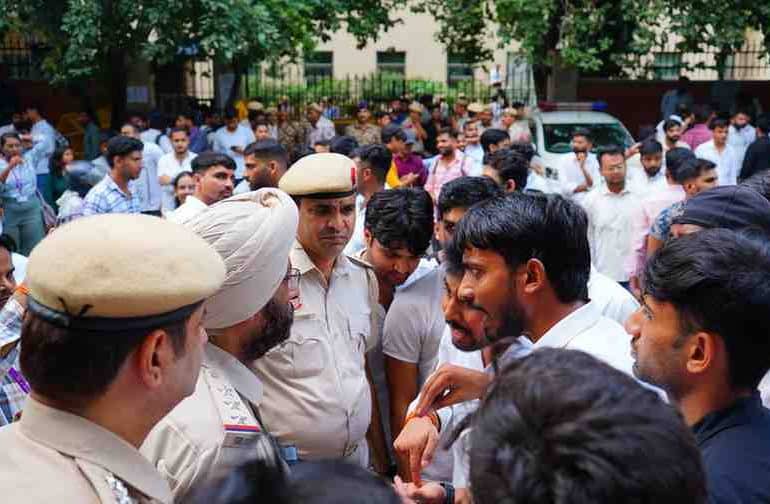
This move was met with significant backlash from various student organisations on grounds of being uneconomic for the common folk, especially candidates from relatively underprivileged backgrounds, and being “exclusionist” in nature. 

Someone from a lower-income background may not be able to afford the Rs 1 lakh bond required for nomination, which could prevent them from participating despite their willingness,” Ronak Khatri, the incumbent president of DUSU, told PTI.

 He urged the university authorities to hold candidates individually accountable in case of any violation by lodging direct fines instead of mandating them for all candidates in general. 

We welcome the guidelines, but we oppose the provision that requires students to submit a ₹1 lakh bond. It is not convenient for students to pay such a huge amount. We will soon release our own guideline in response to this,” said ABVP National Secretary Sarthak Sharma.

All India Student’s Union (AISA) President Nitish Kumar supported the motive of curbing electoral malpractices; however, he raised questions about the monetary constraints that the guideline imposed. 

We welcome rules that aim to ensure transparency and reduce malpractice. However, merely depositing a bond of one lakh rupees cannot prevent the misuse of money power. In campuses like JNU, elections are conducted without the use of money,” he said. “The volume of money power used in DUSU can only be curbed by placing stakeholders in a more informed position,” he further added.

 He highlighted that during the Joint Proctor’s meeting, he proposed to democratise the election process through presidential debates, but he was met with no response from the authorities. 

The directive included a range of guidelines with adherence to court orders and the Lyngdoh Committee, such as an anti-defacement affidavit at the time of admission and barring the use of loudspeakers, rallies, and roadshows outside designated “walls of democracy”. Violations may attract a fine of Rs 25,000, suspension, rustication, or even disqualification.

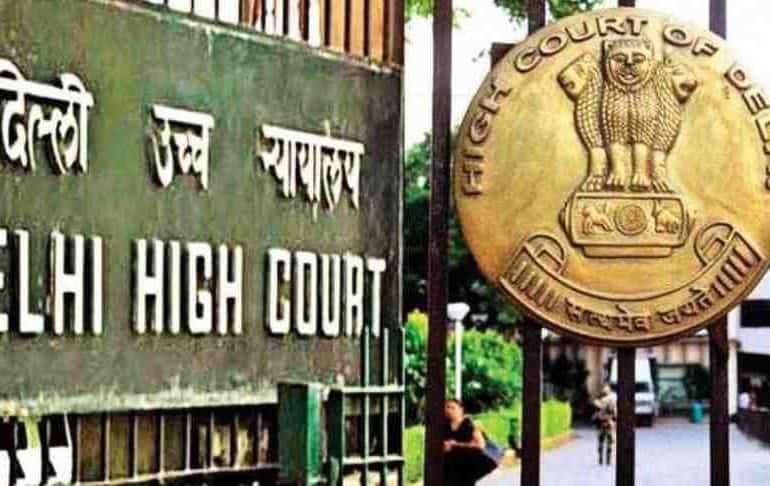
The results of DUSU elections 2024 were delayed by two months due to outrage over rampant vandalism committed during election campaigning by various student outfits and Delhi High Court intervention directing student organisations to restore defaced property.


Read-DUSU 2024: An Election in Waiting

Image Credits – Nabeera for DU Beat

Divyanshi Dusad

[email protected]

If you missed earlier rounds of DU admissions, the mid-entry window gives you another shot. Apply by August 10, update your preferences, and grab a seat in Round-III.


The University of Delhi (DU) is set to flag off the registration process for mid-entry undergraduate admissions on August 8th, 2025. According to the press release, the link to the application will be open by 5 PM, along with the display of vacant seats.


Through this provision, candidates who either failed to apply for CSAS UG 2025 Phase I and/or could not complete Phase II, and are desirous of participating in the admission process, can now participate. They can do so by paying a mid-entry fee of Rs. 1000, which is non-refundable.


Only candidates who were rejected in Round I or Round II due to incorrect subject mapping, unmet program-specific eligibility, or invalid documents can use the mid-entry option to correct their subject mapping and update their preferences. Candidates who have not been allotted any seat till Round II are also eligible to edit their preferences during this period.


The mid-entry window will remain open from 5:00 PM on Friday, August 8, 2025, to 4:59 PM on Sunday, August 10, 2025.


All candidates seeking consideration in Round III must carefully review the vacant seat matrix and submit their preferences within the above timeframe. Ensure that preferences are saved and submitted by 5:00 PM on Sunday, August 10, 2025, as only those will be considered for further seat allocation.


The third round allocations will be based on the data of candidates available as of 5:00 PM on Sunday, August 10, 2025, and the minimum allocation marks and ranks for this round will be entirely independent of those in the earlier rounds.


The third CSAS allocation, Round I of performance-based programs, and ward quota results will be published on August 13, 2025, while Round I results for CW, ECA, and sports categories will be announced on August 15, 2025.


Candidates can accept their allocated seats between August 13 and August 17, 2025, while colleges can verify and approve the online applications from August 13 to August 18, 2025. The last date for candidates to make the online fee payment is August 19, 2025.


The University has announced that this year’s undergraduate admission process will conclude by August 19, 2025. Candidates are advised to regularly monitor the official admissions portal for updates. Meanwhile, classes for the new academic session have already commenced, welcoming both first‑year students and those entering the fourth year of the Four-Year Undergraduate Programme (FYUP).


Read Also: DU Gates Open with Spirited Momentum – Over 70,000 Souls and as many Smiles


Image Credits: Devesh for DU Beat


Neeraja Unnikrishnan

[email protected]

At DU’s North Campus, student political parties ABVP and NSUI launch welcome campaigns for incoming freshers. Amidst flags, enthusiasm, congestion, and concerns over ethical campaigning, another year of student politics begins. 

At around 10:30 on Monday morning, the roads of Delhi University’s North Campus were flooded with saffron and white flags as the Akhil Bhartiya Vidyarthi Parishad (ABVP) and National Students’ Union of India (NSUI) parties welcomed freshers to a brand-new academic year. An ABVP procession made its way through the streets as NSUI representatives attempted to attract a new following amongst the fresh faces that had emerged across campuses.

The signature saffron flag associated with the ABVP party was spotted outside several north campus colleges, including Shri Ram College of Commerce (SRCC), Daulat Ram College, and Miranda House, bearing slogans welcoming the incoming first-year students to Delhi University. The flags were accompanied by helpdesks to guide students through the process of joining the party as a volunteer. Representatives handed out brochures and flyers to passersby, as well as ABVP-branded bookmarks to interested students in addition to addressing any queries they had. A procession of ABVP members waved their flags through the Patel Chest and surrounding areas. ABVP members such as Aryan Maan, Bhoomika and Prabal Pratap Singh have been posting pictures and reels on Instagram over the last few days for the purpose of welcoming the new batch. 

NSUI was not far behind in their efforts to celebrate the arrival of new students on campus. Guidance desks were organised outside various colleges, and blue and white banners waved in and around the Faculty of Law campus. Tokens such as pens and booklets highlighting NSUI’s agenda were distributed to students who expressed interest in joining the party. When asked about the intentions behind putting up such kiosks, NSUI party representatives operating the Miranda House helpdesk conveyed that they enjoyed helping students and spreading cheer about the good work that they believe their party does. Their duties as helpdesk representatives ranged from signing up new members to the party, helping them through the registration process, and adding them to the respective communication channels thereafter. 

A student who asked to remain anonymous expressed frustration at the sudden congestion and traffic that took over the streets of North Campus in the morning, especially at a time when most students and faculty had to reach their respective colleges for classes and meetings, blaming it on both parties’ incessant campaigning.
A spectator to the ABVP procession praised Delhi University’s active and engaging political ambience, calling it impressive and an ode to the inclusive democracy that India stands for. “A true enjoyment of life,” they said. However, they pointed out the excessive wastage of paper and resources that goes into such campaigning, ultimately littering the campus and ruining its aesthetic. They also highlighted the importance of ethical campaigning, and condemned involuntary interceptions and forced registrations, which sometimes become the case. As long as all practices remain fair, they call such demonstrations a celebration of student rights. 

All in all, it is evident that both parties are gearing up for another round of relentless student activism and campaigning. As for the widespread malpractices and defacement of property observed during last year’s Delhi University Students’ Union (DUSU) elections, Delhi University Vice-Chancellor Yogesh Singh clarified that more limitations will be enforced during the next DUSU elections.”Nobody should deface walls. What happened during elections in the past: huge amounts of money and muscle power, is not expected. We don’t want to repeat these things, and next time, we will see a change,” the Vice-Chancellor told PTI. 

In addition to this, Delhi University’s official website released an advisory to prevent defacement of institutional property on 31st July. It mentions that practices condradictory to this advisory can lead to suspension, expulsion, or even debarrment from contesting elections.

Read also: Rise in Threats Amid DUSU Elections – AISA Activist Abducted and Attacked

Image credits: Manya Marwah

Manya Marwah

[email protected]

On August 5, Delhi CM Rekha Gupta inaugurated a new academic block at DU’s Social Centre School, urging stronger ties between DU colleges and government schools. U-Special buses return; Delhi’s new education fee regulation bill was also highlighted.

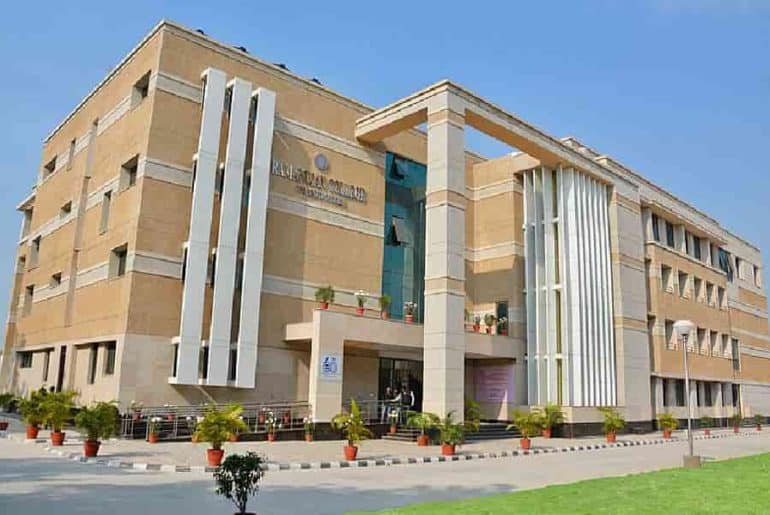
On 5th August, the Chief Minister of Delhi, Rekha Gupta, inaugurated the new academic block of the Delhi University (DU) Social Centre School in Maurice Nagar. The new building consists of four stories and consists of 21 classrooms and laboratories. The construction of the building was said to be completed in 21 months with a budget of र27 crores. DU’s Vice Chancellor Yogesh Singh said it was constructed on a 16,754 sq. m plot and has a total built-up area of over 3,700 sq. m.

Speaking at the inauguration ceremony, which was held at DU’s Vice Regal Lodge, she stated that despite progress achieved in education, more leaps are yet to be achieved. She proposed that each college of DU should be linked to at least 2-3 government schools for better mentorship and motivation for the students in the schools. “Government schools should become the priority, and private schools should be the second, and if children still have to struggle for admissions from primary to post-graduation, then the system needs to improve,” she said. 

She further notified the return of U-Special buses especially catered to DU students, which was a popular transport option back in the day.

Delhi Education Minister Ashish Sood, speaking as the Guest of Honour at the ceremony, stated that the new academic block represented future citizens of a “Viksit Bharat,” not just bricks and stones. He explained the Delhi School Education (Transparency in Fixation and Regulation of Fees) Bill, which was tabled in the Legislative Assembly on the same day. The bill grants parents a say in deciding fee hikes of schools, as they are equal stakeholders in the education system.

For the 18 lakh children who study in government schools of Delhi, we will work to provide smart classrooms, AI-enabled labs, etc. in every government school under the leadership of Chief Minister Rekha Gupta ji. He said that nothing happens by changing one school; we will bring change in every school.”

He encouraged the colleges to join the “Kude se Azadi” (Freedom From Waste) Cleanliness Campaign by identifying one spot near their campuses to transform and urged them to aim for a world record on August 31 for the largest cleanup drive.

DU South Campus Director Prof. Rajni Abbi and Registrar Dr. Vikas Gupta were also amongst the attendees of the ceremony.


Read Also – DU’s Bharati College Sets New Benchmark with AI-driven Digital Marketing Course

Image Credits – The Indian Express

Divyanshi Dusad 

[email protected]

SFI staged a protest at the Arts Faculty, DU on 6th August 2025, demanding action against ABVP for its alleged role in multiple campus sexual violence cases across India.

SFI (Student Federation of India) members led by Sohan Yadav, President of SFI Central Delhi area, demonstrated a protest at the Faculty of Arts, University of Delhi on 6th August 2025. The demonstration was held in solidarity with a student from Fakir Mohan Autonomous College in Balasore, Odisha, whose tragic death in July has sparked national outrage and renewed scrutiny of the alleged misconduct and impunity associated with members of the BJP-affiliated student group, ABVP.

The 20-year-old student died after self-immolating on campus in July 2025. The victim had reportedly faced sexual harassment from a faculty member and had filed multiple complaints, which were allegedly ignored by the college administration. The case took a shocking turn when the Odisha Crime Branch arrested Subhra Sambit Nayak, the state joint secretary of ABVP, and Jyoti Prakash Biswal, a student and initial “witness” who had recorded the incident instead of intervening. Both were charged with abetment to suicide and criminal conspiracy. The arrests drew intense backlash and further highlighted the alleged impunity enjoyed by ABVP leaders across educational institutions.

Coming on the heels of the IIT-BHU rape case, this incident has fueled growing public concern over the ABVP’s repeated involvement in campus violence and sexual abuse allegations. The accused—Kunal Pandey, Saksham Patel, and Anand (alias Abhishek Chauhan)—were later identified as members of the BJP’s Varanasi IT cell, with Pandey and Patel holding convenor positions. The delayed arrests and eventual bail granted to two of them in July 2024 sparked nationwide outrage. Protests by students and civil society groups demanded institutional reforms and the implementation of gender-sensitisation mechanisms. Allegations also surfaced that ABVP even attempted to disrupt campus protests

Further, recently the Rajasthan police booked three ABVP members, who were accused of canvassing for a student leader seeking a ticket from the ABVP for students’ union elections in the university.

Sohan Kumar Yadav addressed the crowd and importantly, pointed out 

Why was there such a wilful negligence by the Chief Minister’s Office who had received all the complaints? This shows very clearly the involvement of the state government. 

Sohan Yadav further claimed in the protest that ABVP’s alleged involvement in multiple rape cases in University campuses across the country is a recurring trend, and the body must claim responsibility for the same. 

SFI Student members demanded strict action against the alleged involvement of ABVP in these rape cases and termed it a ‘rapist organisation’ which shields people who outrage the modesty of women, especially on educational campuses. 

Read also:  Minor Girl Rescued After Gang Rape Near Moolchand, Alleged Police Inaction

Featured image credits-  SFI Instagram page 

Madhav Choudhary 

[email protected]

Bharati College (Delhi University), in collaboration with RK Films & Media Academy (RKFMA), is inviting application for admissions for its revamped short-term course in Digital and Social Media Marketing with GenAI (Generative Artificial Intelligence). This program is designed to equip learners with practical skills in digital strategy, social media growth, content creation using AI tools, campaign planning, influencer marketing, and analytics — all in line with the rapidly evolving digital ecosystem.

The course is jointly certified by the Bharati College & RKFMA and is ideal for freshers, graduates, job seekers, entrepreneurs, and professionals aiming to upskill in digital domains. Separate batches are available for offline (on-campus) and online (live virtual) weekend classes, providing flexibility and accessibility to learners from across the country.

The program places a strong focus on hands-on training and industry-relevant modules integrating GenAI tools and platforms, making students job-ready and future-proof in the AI-driven marketing space.

We aim to empower young minds and professionals with not only traditional digital marketing knowledge but also with emerging AI-based techniques that are transforming the global marketing landscape,” said Deepak Bansal (Director, RKFMA).


Who can apply?

Admissions are open to all girls and boys candidates with minimum class 10th pass. Those already pursuing graduation or post-graduation from other institutions may also apply.


How to Apply?

Interested candidates can submit their application forms and pay the course fee online using Bharati College’s official website links below.


For more information and inquiries, prospective students can reach out to the college via the following contact numbers: +91-9310047775 or +91-9312237583.


Sources:


https://www.bharaticollege.du.ac.in/academics/course/certificate

https://www.bharaticollege.du.ac.in/academics/course/digital-marketing/certificate-course-delhi-university

https://www.bharaticollege.du.ac.in/academics/course/digital-marketing/delhi-university-admission

https://www.bharaticollege.du.ac.in/academics/course/digital-marketing/generative-ai

Featured Image Credits: Pinterest

DU Beat

A swarm of wide-eyed youth – breaking into “ethnic-chic” from their everyday, boring school uniforms – filled up the streets on the very first August morning of 2025. 

As chaos made its way to the corridors of Delhi University Colleges, a sense of new beginnings was once again reignited in the minds of experience-laden seniors. Most colleges welcomed freshers with fourth-year undergraduates for their first day. All classes remained suspended except for Kirori Mal College, whose orientation was held on Wednesday. The decorated campuses came alive with the chatter of students wanting to have the full college-life experience, from making new friends to joining new societies and following their DU dreams. 

“I could not sleep last night. I kept thinking about the friends I am going to make, the societies I am going to join, the food I am going to explore,” Rashmi Taneja told HT as she stepped into the college for the first time – in a light pink chikankari salwar suit and heavy jhumkas. 

Many colleges followed a different scheme – breaking up the orientation programmes into slots or days to accommodate the huge cohort of students joining in. Like CVS will be holding its full-body orientation on Monday, following the departmental orientations held on Friday.  On the other hand, Hansraj College held a havan ceremony to mark the start of a new academic year. Several early morning sports activities, performances by the college music society and an anti-ragging rally led by the NCC and anti-ragging committee were arranged by the college.

The vibrant helpdesks and over-enthusiastic club leaders made the whole experience feel even more fulfilling. “I was honestly terrified of ragging,” admitted Diksha to the Newsdrum. “But the moment I stepped in, all that fear vanished. Everyone has been so kind. Seniors are like older siblings – funny and helpful,” she commented. 

Shri Ram College of Commerce, the most sought-after DU college, held its orientation ceremony on Thursday. Principal Professor Smriti Kaur told PTI that preparations are in order, as this entire year will be celebrated as the ‘centenary year’. Meanwhile, students from ABVP, AISA, and SFI set up colorful stalls outside colleges, distributing pamphlets, bookmarks, and bags to woo freshers. Some welcomed newcomers with tilak and flowers. 

As reported by Times of India, for Prachi, the first day at DU was not just stepping into college – but stepping into her power. “Disability does not define me,” she said with quiet strength, standing outside Miranda House, where she secured admission under the PwD category. It was her dream college, and she got in. Born with a short limb, Prachi never let her condition set the limits of her ambition. “Some people see it as a barrier, but I have always chosen to see it as just one part of my story,” she said. 

That said, the day concluded with solemn satisfaction. As the red brick walls felt the new set of gaze set upon them, the coveted halls were filled with pride. “All programmes ran smoothly” said Vice Chancellor Yogesh Singh. 

Read Also: DU Announces Schedule for Third Round of CSAS UG

Image Credits: Hindu College

Shreya Bhushan 

[email protected]

The third round of undergraduate admissions under the Common Seat Allocation System (CSAS) begins today, 2 August, from 5 pm onwards. It will provide for upgradation, applications for mid-entry, and special category admissions.

In a notification released earlier today, the University of Delhi announced that the third phase of undergraduate admissions would begin today. Candidates who have been admitted in the earlier rounds of CSAS can apply for an upgrade and reorder their college-course preferences from today, 2nd August 5 pm onwards until 4:59 pm tomorrow, 3rd August. The result for the same is scheduled to be released on August 5, and the last date to pay the respective fees for the colleges is August 7.

The University has also notified the window for mid-entry applications. Candidates who want to participate in CSAS (UG) and could not complete either of the earlier rounds are eligible to apply for mid-entry after paying a non-refundable fee of Rs. 1000. The mid-entry window is scheduled to open on August 8, 5 pm and will remain open until 4:59 pm, August 10. The vacant seats will also be displayed on August 8.

Furthermore, candidates who got rejected in the previous rounds due to errors in subject mapping, non-fulfilment of program eligibility or invalid documents will be provided the option to correct their subject-mapping and edit their preferences. Candidates who have not received any allocations in previous rounds can avail the option as well.

The allocations for the third round of CSAS are scheduled to be declared on August 13, along with allocations for the first round of performance-based programs (Music, BFA, Physical Education, Health Education & Sports) and Ward Quota. This will be followed by allocations for CW, ECA and Sports, scheduled for August 15. While candidates accept their allocations from August 13 to August 17, colleges have been allotted until August 18 to verify the applications. The third round is scheduled to wrap up by August 19, which is the last day for fee payment.

Mangalya Singh

[email protected]

Read Also: CUET and the Gender Equation: Why Fewer Women are Entering Delhi University

Featured Image Credits: Siva for DU Beat

Delhi University’s push for a fourth year under FYUP has left chaos in its wake with missing infrastructure, mounting workload, and no exit in sight. Has the university confused rhetoric with reform in its rollout?

With a notification dated July 31, 2025, Delhi University formally enforced the fourth year of the Four-Year Undergraduate Programme starting August 1. What should have been a thoughtful academic transition has arrived as a poorly managed surprise, marred by missing infrastructure, insufficient faculty, and an undefined syllabus. For over a year, Vice Chancellor Yogesh Singh has endorsed FYUP as a transformative, student-centric reform aligned with the National Education Policy (NEP) 2020. But students and teachers alike reveal a rushed, unclear rollout, exposing the lack of structure and support that has left students in the crossfire.

According to the notification, the Executive Council met on July 12, 2025, to deliberate on the implementation of the fourth year, recommending that colleges operate from 8 AM to 8 PM to optimise resource usage. While students may choose from a basket of courses, actual availability depends on faculty norms. Faculty deployment will follow existing rules, with guest faculty hired if needed. Though extra staff workload is acknowledged, no clear compensation is outlined. The Council stressed that only experienced, regular faculty should teach the fourth year. Citing UGC Clause 15, the notification reiterates that full-time teachers must work 40 hours a week over 30 weeks annually, including five hours daily on campus and two hours for mentoring, with 16 teaching hours weekly for Assistant Professors and 14 for senior ranks.

Dr. Mithuraaj Dhusiya, an elected member of the Executive Council, highlights the serious concerns raised by DU’s latest notification:

“Directing colleges to adopt 8 AM to 8 PM daily classes is extremely dangerous from the safety perspective of students and teachers. Further, it just shows that DU is not prepared for the 4th year on both counts: infrastructure and manpower. It also insults newly appointed teachers by implying that only senior teachers can teach the 4th year. Teaching is based on areas of specialisation, not age.”

The last-minute advisory, released a day before the Fourth Year began, raises concerns about the university’s planning process. Abha Dev Habib, Secretary of the Democratic Teachers’ Front and Associate Professor at Miranda House, points to glaring gaps and questions the impossible timelines handed to colleges: 

“Does the University know that teaching distribution and timetables have to be made during vacation itself if classes have to start from day one? New courses have been introduced at the undergraduate level without any workshops or preparatory training for teachers. While some colleges may be able to manage depending on their faculty’s specialisations, the University has made no systematic effort to ensure a smooth rollout.”

Beyond academics, the policy has drawn sharp criticism from faculty for its regressive undertones. Rudrashish Chakraborty, Associate Professor at Kirori Mal College and DUTA Executive member, cautions about serious institutional risks:

“The 8 AM–8 PM schedule now has official sanction, pushing a draconian, anti-teacher, and anti-student timetable, especially in colleges lacking basic space. There is also no clarity on how this will affect evening colleges; will they function from 8 PM to 8 AM, or will they be dismantled entirely? The advisory also formalises the exclusion of research supervision from regular workload, paving the way for the overburdening Draft Regulation 2025. The requirement of two hours daily for mentoring 15 students per teacher attempts to quantify meaningful engagement and defeats its purpose. Reserving 4th-year teaching for senior faculty creates a divisive hierarchy. And with many Delhi government-funded colleges still awaiting appointments, ad hoc teachers are now cut out entirely. This not only adds insult to injury but also makes the actual conduct of the fourth year logistically difficult.”

In the end, the most pressing concern remains the lack of choice. With Delhi University’s August 1 deadline behind us, the Four-Year Undergraduate Programme has effectively become a one-way tunnel. Students who may have legitimate academic, financial, or personal reasons to opt out are now left with no transparent pathway to do so. This move erodes student autonomy but also betrays the very spirit of flexibility and choice that the National Education Policy claimed to uphold. What was promised as reform has curdled into rigidity, trapping students in a system that denies their agency. It begs the question, can a system that suppresses dissent and eliminates choice truly claim to educate, let alone empower?

Featured Image Credits: Siva For DU Beat

Neeraja Unnikrishnan
[email protected]

Read Also: Delhi University Relaxes Criteria for Minor Subject Selection Under UGCF

A protest organised by AISA student body took place today, on 31st July, 2025, at Ramjas College’s front gate, as the college shuts down all admissions for both of its hostels with the start of the 2025-26 academic session. 

On 30th July 2025, Ramjas College issued a notice informing students that the hostel would not be accepting admissions for the academic year 2025-2026. The notice mentions the building being under a structural stability test as the main reason for the hostel shutdown. As a response, a student protest organized by All India Students’ Association (AISA) took place today, i.e., on 31st July, 2025, at Ramjas College’s front gate from 2 pm onwards, resisting this shutdown and demanding hostel rights for all students. The students called out the action for adding to the increasing inaccessibility of affordable accommodation in DU, a move that furthers the exclusion of marginalised students.

The hostels accommodated 210 people every year and had a specific number of seats available for the reserved category students (SC/ST, physically challenged, sports persons, foreign students, etc.) to occupy.

With PG and flat rates in North Campus skyrocketing, Anjali, a Delhi University student and representative of the All India Students’ Association (AISA), says:

This model is pushing students toward unaffordable private accommodations and chipping away at the public character of DU. With lakhs of students arriving from across India, hostels are not a luxury; they are a right. We will fight tooth and nail to defend that right for all.”

She also explains how this isn’t just an isolated event but a visible pattern for exclusion:

What’s happening at Ramjas is not new; it’s part of a disturbing pattern across Delhi University. Hindu College Boys’ Hostel has remained shut since the lockdown. KMC dismantled seat allocations for PG students. And now Ramjas has shut down both hostels just as freshers arrive.”

Hindu College’s Boys Hostel is being demolished and rebuilt with the promise to accommodate more students since 2023. LSR College hostel has also remained closed for “maintenance reasons” since March of 2023.

Anjali further talks about how, despite having space for building affordable hostels for students, the university land is being used for private constructions:

This is a strategic move to exclude students from marginalised backgrounds. AISA has long fought for student accommodation. Back in 2016, we launched the “Room of My Own” campaign and submitted a list of vacant DU-owned land that could be used to construct hostels. Yet in 2019, a 39-story private building was being made on university land in front of Vishwavidyalaya metro.”

While the hostels are aged and rundown, it is the responsibility of the university, according to the UGC guidelines, to ensure that students from all sections of society studying here have affordable and safe living situations. The decision to close down the hostel directly contradicts this mandate. 

With multiple college hostels currently non-operational, concerns over affordable and inclusive student housing remain unaddressed.

Read also: Legal proceedings initiated against Ramjas College Professor accused of Sexual Assault; POCSO Act invoked

Image Credits: AISA 


Gaurika Bahl

[email protected]