
Tag

reading

Browsing

Why are we so quick to dismiss “performative” learning? An exploration of intellectual aesthetics, social media, and the democratization of knowledge. 

To be “disgustingly educated” online today is less about what you’ve understood than about what you’ve successfully signalled. What started as a compulsion to learn has, somewhere along the line, been quietly replaced by a compulsion to look like you’re learning. You have probably seen more copies of The Bell Jar and more quotes by Franz Kafka and Susan Sontag on Instagram than you ever will elsewhere. I’m not above falling victim to the algorithm’s insistent recommendations myself. At some point, the aesthetic overtook the actual appetite for the thing.

Yet it seems unkind, even a little myopic, to mock someone for trying to claw their way out of the hole we are all collectively stuck in – the same brainrot, the same forty-second attention span, the same three-hour scroll that ends nowhere. If the education system has failed us as thoroughly as it has, then what exactly is the harm in a trend that fills even a fraction of that gap? There are plenty of cases where performative gestures lead to real engagement. People begin by posting reading lists or reviews to keep up appearances, only to find themselves drawn into the conversations that follow and gradually craving a deeper understanding. Sometimes the performance is simply the nudge that turns display into curiosity.

There’s a moral purism that likes to insist learning should exist in pursuit of some untouched, capital-T Truth – that the moment money or aesthetics enter the room, the whole enterprise is corrupted. I find this a little precious, mostly because it isn’t how the actual production of knowledge works, and never has been. A university professor isn’t teaching solely out of love for Kant; they are also, notably, drawing a salary. The YouTube essayist breaking down existentialism in fifteen minutes wants your watch-time as much as your enlightenment. Passion and payment have always sat in the same room together – the difference now is that the room has better lighting and a ring light.

Underneath the eye-rolling is something less charming than taste. Access threatens hierarchy. That hierarchy limits, quietly and very deliberately, who gets to be legible as intelligent, and there is a particular kind of person who benefits from that limitation staying intact.

The internet flattened the gatekeeping without flattening the desire for distinction. If everyone can buy the same Penguin Classics edition or watch the same lecture online, distinction simply migrates elsewhere – to annotations, aesthetics, carefully curated reading lists, and performance. The gate never really disappeared; it just moved.

Pierre Bourdieu saw this coming from several decades away. In Distinction, his study of how cultural preference maps almost exactly onto class position, he wrote that “taste classifies, and it classifies the classifier.” Which is to say: what you read, and how visibly you’re seen reading it, has never really been about the book. It’s a badge. It tells everyone else where you stand. The discomfort around “performative” intellectualism, I’d argue, isn’t discomfort at the performance at all; it’s discomfort that the badge is now available to people who weren’t supposed to have access to the shop.

One explanation, I think, is that someone already accepted as an intellectual can casually mention Simone de Beauvoir and be taken at face value, while @lifeofpuja, sitting down on Instagram to talk through the same book, still strikes some people as surprising. People still struggle to reconcile the idea that intelligence – or the performance of it – might exist somewhere outside the postcode it was assigned.

Whether any of this actually democratizes knowledge, or just redraws who’s allowed to perform it, is a fair question, and I don’t think the honest answer is a clean one. More people are almost certainly reading Fanon because creators like @lifeofpuja exist than would have otherwise. But the culture increasingly rewards reading that is public, photogenic, and consistently visible, as though it only counts once it’s been documented. Access undoubtedly widened, but a new kind of audition got added on top of it.

Perhaps the only way to resist that pressure is to become comfortable with being unfinished in public. Share questions instead of conclusions. Admit confusion. Let conversations matter more than performances. The point isn’t to disappear from the internet, but to stop treating every interaction as an audition.

And yet. There is undoubtedly an elitism baked into all of this too, one that’s harder to defend, because nothing escapes commodification, least of all the appearance of being knowledgeable. There are Instagram businesses that will coffee stain, dog-ear, and annotate a book for a fee, engineering exactly the right amount of visible love. Etsy sellers do the same: margin notes, underlining, and a highlighter’s careful, deliberate mess are sold as a finished aesthetic object rather than the residue of someone’s actual thinking. It’s the second-hand bookshop, gutted and resold to you as content.

People rush to fulfil the visual component because it’s faster than the real thing. Actually engaging with a text is slow, the learning curve is humiliating, and it demands a persistence that doesn’t photograph well.

Performance isn’t always vanity. Sometimes it’s accountability. Sometimes it’s aspiration. Sometimes people perform the version of themselves they’re trying to become. The internet has always blurred the line between identity and ambition; reading publicly is often less about claiming expertise than rehearsing it.

If there’s any way out of this particular loop, it’s almost insultingly unglamorous. Buy the second-hand book that got dog-eared by accident, not by design. Mark it up badly, honestly, and for no one. For what it’s worth, the times I’ve learned the most have rarely looked impressive: getting lost in a book so dense I filled the margins with question marks, pages bent at the bottom of my bag, whole paragraphs underlined out of confusion rather than confidence. Keep reading past the point where it stops being cute and starts being boring and a little confusing, because that’s usually where the actual thinking begins. Let your annotations reflect your actual thoughts, even if they aren’t particularly eloquent, instead of leaving them there as decoration. None of this might fill your phone storage with aesthetic pictures, which is more or less the point. The goal isn’t to reject aesthetics. It’s to make sure they remain evidence of learning rather than a substitute for it. Resistance to a market built entirely on visibility tends to look like doing the thing when the camera isn’t out.

Something tells me 2015 StudyTube didn’t lead anywhere by accident. It goes from colour-coded notes to dark academia to thought daughter, each stage borrowing the last one’s costume while insisting it’s finally, this time, about the substance. With every iteration, intelligence became a little more aesthetic and a little less private. Maybe, for some people, the curriculum gets built and actually read. Maybe the annotations happen before the coffee stain does. I’m not entirely willing to write the whole trend off as vanity, if only because the alternative – a generation genuinely giving up on curiosity altogether – feels considerably worse to me than one mildly insufferable enough to caption their reading list.

For what it’s worth, I don’t think the line sits between the person who reads at home and the person who reads at a café with good lighting, which is kind of where most of the mockery assumes it does. It sits between chasing an aesthetic and public validation that replaces the reading and the aesthetic that simply survives it. A mood board is not a crime. A “personal curriculum” is actually a great thing. The trouble starts only when the styling becomes the entire transaction – like sitting with an AI chatbot to generate your opinions and summaries because working through the text feels like too much to ask.

Learning has always been social, and it has always been performative to some degree. The question isn’t whether we’re performing it; it’s whether there’s still something real beneath the performance.

Aamna Rehman 

[email protected] 

Image Source: Patrick Tomasso – Unsplash.com 

Read Also: The Ghosts of Indian Small Towns: What Changes, What Stays 
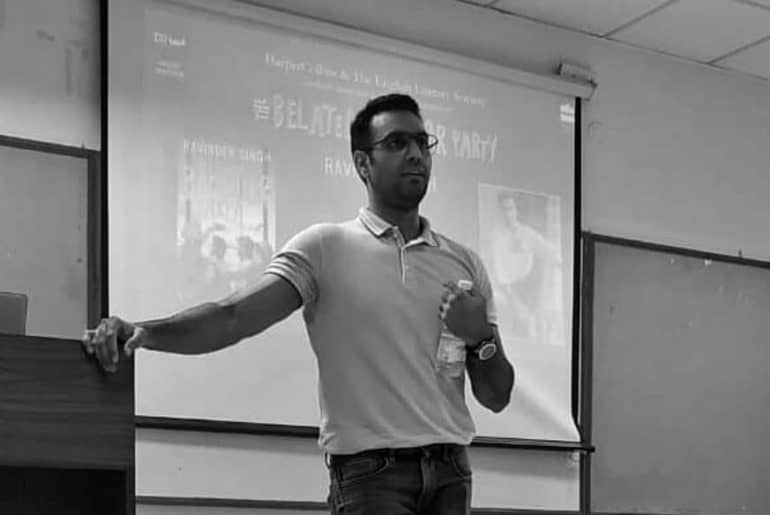
On Monday, 29th August 2019, a book discussion with the bestselling writer Ravinder Singh was organised by the English Literary Society of Miranda House.

The English Literary Society of Miranda House celebrated the presence of Ravinder Singh, the bestselling romance writer for their first event of the session 2019-20. The writer talked about his latest book: “The Belated Bachelor Party”, in a book discussion which was attended by a great number of students of Miranda House.

The author, most famous for his book I Too Had a Love Story, began the event by introducing himself and his works. He then went on to narrate the real-life incidents that took place, and which inspired him to write The Belated Bachelor Party. From friends that made little sense, to a Europe trip that went wrong in more ways than one, he kept the audience engaged with his little anecdotes. He revealed that the story is about him and his three other friends who went on a Europe trip for their Bachelor’s Party long after their marriage. By saying this, he also justified the title of the book.

“Since I’ve been writing romance for such a long time, I wanted to challenge myself. So, I decided to write a book that makes people laugh, after writing ones that made them cry,” said the author, explaining why he decided to write this book in the genre of humour.

He went on to talk about friendship and advised the audience to hold on to the friends that they have in life, and also said that the only kinds of relationships that we choose in life are: a lover and friends. He said, “Romance is a subset of the larger set called friendship.”

He further added that the book is about friendship and the special bond you have with people you have chosen yourself to let into your life. 

After he finished talking about the books, he took in questions from the audience as well. The audience, eager to participate, asked insightful questions such as- how he dealt with the ups and downs of being a primarily semi-autobiographical writer, and how he integrated social issues in his writing.

On being questioned about the agenda of addressing social issues through his books, he clarified that his book, Your Dreams Are Mine Now, addresses the issue of youth politics and in his another book, Will You Still Love Me talks about road safety.

He further addressed a major issue about the lack of readers in the Indian society. He mentioned that currently there are only a handful of authors in India who work as full-time writers and make a good living out of writing. The problem behind this was, he explained, that the people of our country do not read. Reading is a great task for us and book stores are getting shut. People are going from bad to worse. He made a comparison between India and UK and said that in the UK, people read 10 times more than us.

According to him, “Reading a book is like watching a story getting unfolded in front of your eyes. You live a thousand lives when you read a thousand books.”

The writer further addressed the problems in the publishing market and told the students to focus on their creativity and try the options of self-publishing. He advised the students to try to build up an online audience and then try to approach big publishing houses.  

The event was a complete success buzzing with humour, candor, and a lot of life tips.

 Feature Image Credits: The Literary Society, Miranda House via Instagram

Priya Chauhan

[email protected]

Satviki Sanjay

[email protected]


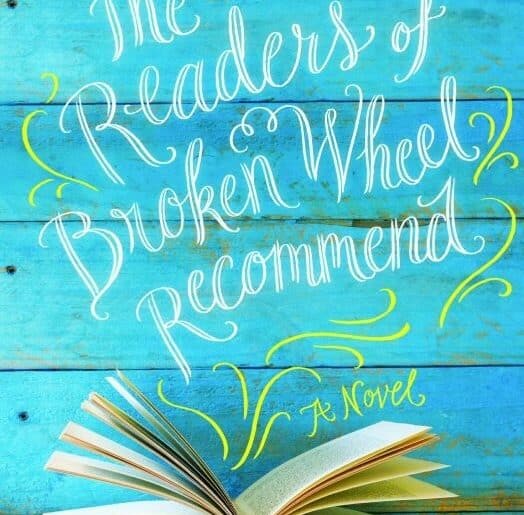
Well, The Readers of the Broken Wheel Recommend by Katarina Bivald is precisely the kind of book described above. An ode to books and readers, the book plays its part well. Broken wheel is a strange town, granted, and Sara has set new definitions of friendship with her pen pal. Beautiful gestures come together with Sara opening a bookstore in the memory of her friend. It is surreal, almost otherworldly as the plot reeks of raw innocence. The story progresses in the most charming way, and is indeed commendable for a debut. Although I could’ve read through it again and again, at times, the prose was verbose enough for me to flip through or skim through pages. Nevertheless, the book rekindles the magic that bookstores hold, and one cannot help but wonder if we can ever go back to the times of paperbacks and hardcovers, before e-readers took over. The entire plot has a sense of old-world charm to it with its roots in the bond between pen pals. But then again, I wouldn’t mind that, if the story is about reading and books. Every reader, whether casual or ardent, should read it at least once. Image Credits: www.amazon.com Kritika Narula [email protected]]]>

Reading is back in fashion, and there is no better time to read more books than just before exams. Yes, with a handful of days to go for exams, no matter what you tell others, you secretly know where you stand and how you are going to perform this time around. It is time now to let yourself breathe.

1. Chicken Soup for the Indian College Student’s soul

The Chicken Soup for the Soul series gets us. And this one is custom-made for college students. With stories that motivate you to enjoy while you study, this does seem like a good read at the moment. Not to mention, reading more than 100 tales of college days will definitely make you cheerful about college life, exams included.

2. Freedom by Jonathan Franzen

“You may be poor, but the one thing nobody can take away from you is the freedom to fuck up your life whatever way you want to.” We’re sure these words strike a chord. This story follows some of the classic dilemmas of student life. It will be good to know you’re not alone.

3. Falling into Place

The story is based in high school, how the protagonist never understood Mass, acceleration, momentum, force– in physics, and even as her Mercedes hurtles toward the tree, she doesn’t understand it now. The question the book poses is deep: Is life more than cause and effect?

4. What I know for sure by Oprah

A collection of Oprah Winfrey’s column by the same name, this book contains some really heart-warming anecdotes. If you’re not prepared for exams, this will make them trivial, because there’s much more to life than a three-hour long test!

Kritika Narula
[email protected]

As students aiming to make a mark in the world, we are always trying to read more- Books. Newspapers. Journals. Because, well, “There are worse crimes than burning books. One of them is not reading them.” But we never seem to get enough time for reading. For most of us, there isn’t much incentive to divert our social media time to reading, many others are perennially in the guilt of not being able to read more than what they do now.
Lectures, internships, extra-curricular activities, society work take most of our time. Amidst all this, there is hardly any time left to read. Or so it may seem.

Here are a few ways that’ll help you sneak in extra reading time from the hectic schedule of college life.

1. Use your commute time

Majority of us use the publish transport aka Delhi metro to commute to our colleges, and the commute time is more often than not, at least half an hour. This time can be effectively put to use by reading. All you need to do is carry a book or the days newspapers before you leave from your home. Reading would be far more productive and fruitful than the elusive hunt for a seat in the metro.

2. Try audiobooks

The bad news is that even in metro, reading a book might seem like a struggle at times when you don’t have enough space even to stand on two feet. Good news is that there has been technological progress and guidebooks are your savior. An added advantage is on days when you are too tired to hold a Boolean or flip through the pages. If the book is good, this might make the commute less of an ordeal.

3. Join a reading challenge. Join a Book club

Joining a book club will help you keep a track of your reading progress. The virtual world is yet again at your rescue, what with sites like Goodreads helping you set a challenge for yourself. Decide the number of books you want to read in a year and get going. When it’ll rub in your face how you are ahead of your target or falling behind it, let your guilt do the work.

4. Read before going to bed.

If we ask you about the one thing you do before bedtime, the answer for most would be browsing/chatting/posting through smartphones. Unless you are reading an e-book, we suggest you turn it off at least an hour before sleeping. (We’d prefer a couple of hours, but an hour seems more doable, right?) Now when you realize that you have plenty of time to do something other than burning the battery of your tab/smartphone and strangling your WiFi network, go and grab a book. Reading just before sleeping, is also known to be therapeutic and a good tranquilizer.

5. Carry some reading material everywhere.

Mark these words. Have at least some reading with you at all times. When in college, we don’t realize but we waste a lot of time. These interstices can be filled by reading. In between two lectures, or if a professor dismisses the class early, you can conveniently read snippets from the reading material that you are carrying.

Who said reading can only be done on the bean bag with a cup of coffee? Nothing beats that, but we don’t need no couch when the mystery book keeps us hooked!

Image Credits- goodreader.com

Kritika Narula

[email protected]

Summer vacations, in this relative world are a good time to get ahead of that person in class, fellow debater in the debating society or you. The learning done behind the curtains and entertainment through books that goes alongside watching Game of Thrones in vacations is, after all the one that makes the actual difference. Here is a list of ideal reads that not only celebrates the private space that we share with books but is sure to add flavour to the season:

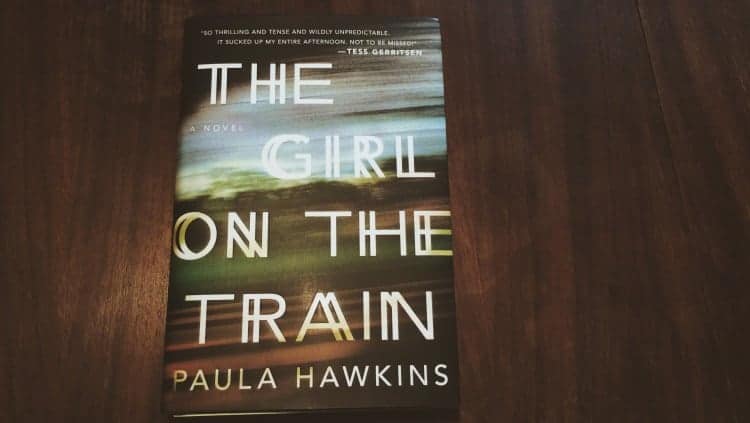
1. ‘The Girl on that Train’ by Paula Hawkins

Image Credits- espngrantland.files.wordpress.com

Filled with shocking twists, this book is already being deemed as one of the best psychological thrillers of 2015. Narrated by three characters, metaphorically related to each other, the book revolves around the search for Megan, one of the main characters, who suddenly disappears. Other characters, in quest for finding the truth behind her disappearance, constantly lie to each other, which ultimately makes the truth harder to find.

2. ‘The Boys in the Boat’ by Daniel James Brown

Image Credits- blogcritics.org

This book is about how a University of Washington 8-oared crew which represented the United States in the 1936 Olympics Berlin won the gold medal. The book largely focuses on the lives of the crew members, whose low middle class origins in the times of the Great Depression prevent them from entering the university. The book also has the backdrop of Nazism growing in Germany and also reveals the politics that were behind organising the Olympics.

3. ‘The Martian’ by Andy Weir

Image Credits- cne2.com

A science fiction novel, The Martian revolves around an American astronaut who is stranded on Mars and must find ways to survive after his spacecraft had to exit from Mars’ atmosphere due to a dust storm. His hope in life makes him survive all the odds when finally the NASA realises that he is still alive.

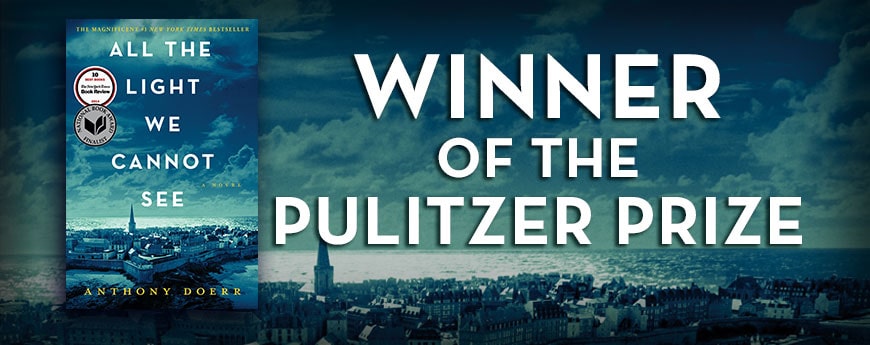
4. ‘All the Light We Cannot See’ by Anthony Doerr


Image Credits- anniephotosonline.com

Winner of the 2015 Pulitzer Prize for Fiction, the plot is set in the World War 2 Germany occupied France where the paths of a blind French woman and an orphaned German soldier cross. The book juggles with time as the story oscillates in the progressive movement of the plot.

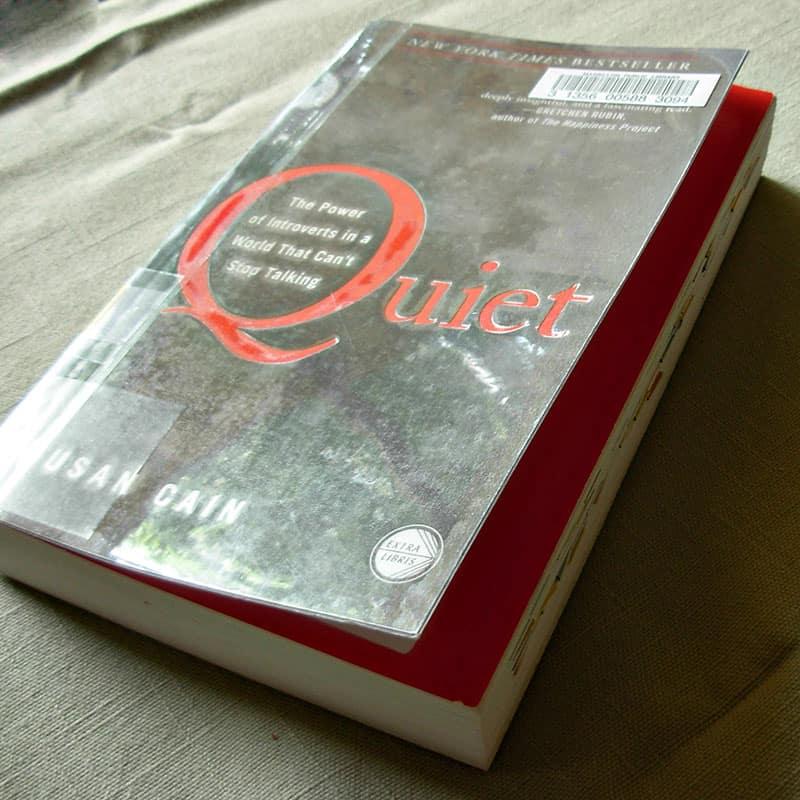
5. ‘Quiet: The Power of Introverts in a World That Can’t Stop Talking ’ by Susan Cain

Image Credits- simplerpastimes.file.wordpress.com

Susan in her book shows how devaluing introverts in the current pandemonium of venerating the extroverts destroys a part of the society. The book has examples of introverts who have made a mark in the world and is sure to change your opinion of the people who love staying ‘quiet’.

Featured Image Credits- asamandlouise.com

Sidharth Yadav

[email protected]


Reading has always been an intrinsic part of being me. Over the years I have read a great number of books. At the tender age of ten I accidentally found myself reading Harry Potter and the Philosopher’s Stone. The other three quickly followed and I was secretly delighted that I was not yet eleven, harbouring dreams of a Hogwarts letter. Well, I didn’t kill myself.

The epitome of fantasy, in my opinion, is the Lord of the Rings. The Narnia series and Dragonheart were other impressive books. I was mesmerized by fantastical creatures like elves, dwarves, dragons, vampires….

Some years ago, I chanced upon Eragon and eagerly picked it up. I would be lying if I said that I did not enjoy the book; it almost got me a fail in my French second term. The idea of a Dragon Rider, a human and a dragon sharing such an intimate bond was fascinating. The book had it’s inconsistencies but I was too young; or maybe on second though, Paolini was. Eldest released in 2005 and burned a hole in my pocket, not that I was complaining, not yet. The book was quite appalling, to put it cleanly. The characters lacked depth, the author lacked good writing skills, there were glaring inconsistencies and being a Tolkien loyalist, the originality and imagination were conspicuous only by their absence. I could write several volumes about the lack of character development but it should suffice to say that Saphira’s character reminded me more of a plain old, nagging aunt rather than a fire- breathing, glorious dragon. Brisingr, the third installment of the Inheritance Cycle had little redeeming value. Every little discrepancy was answered by a sneaky, “It’s magic.” I mean really, it’s not like the readers are daft. Concepts such as that of elvish magiceldunari left a lot to be desired. I am in no hurry to read the final book.

Last year, I eagerly awaited Twilight, touted to be an electrifying teenage vampire romance. I read the book and went on to read the entire Twilight Saga, as it is so unnecessarily called. I say unnecessary because I feel that Twilight did not deserve a sequel. There was no story to take forward. Seldom have I come across a book with such a forced continuation. Girl gets gorgeous boy, they are in love, end of story. Stephanie Meyer is at best a mediocre writer. I criticized Paolini before but one must acknowledge that atleast he tried. Meyer is annoyingly unapologetic about her below par story telling. For me, Twilight was the best book in the series. Relatively that is. The ones which followed abandoned all pretense of plot and logic. I’d like to see Meyer elucidate on the conception of a baby vampire. She has herself said that when a person turns into a vampire, he or she is frozen in that state. A vampire does not grow, their hair, nails do not grow. Vampires can not have children because their biological clocks are busted. Yet, Bella and Edward give us Renesme, a living, breathing half- vampire child. Maybe Edward Cullen besides being a gorgeous Adonis can also continue to produce sperm when the rest of the ‘damned’ suffer from vampire faults.

What irks me is not that it is a ridiculous book, correction: saga; it is the fact that it has achieved cult status, the kind that eludes many great books. It is heart- wrenching to see teenage girls swooning over Edward God Cullen, unmindful of the ridiculous lack of realism. Bella Swan is a shy, clumsy girl, who is a complete pushover because she cannot resist the gorgeous face. There are only so many times you can say the word “glorious” to describe a man. We get it, he’s beautiful; now get on with the story, please. Honestly, if Meyer dwelt on the superficiality and physical aspect of Edward Cullen a little less, the book would have much more depth. A great example-

His angel’s face was only a few inches from mine. I might have — should have — flinched away from his unexpected closeness, but I was unable to move. His golden eyes mesmerized me. “What are you afraid of, then?” he whispered intently. But I couldn’t answer. As I had just that once before, I smelled his cool breath in my face. Sweet, delicious, the scent made my mouth water. It was unlike anything else. Instinctively, unthinkingly, I leaned closer, inhaling.

I realize that he is fictional character and it is a fantasy novel, but that precisely is the thorn in my flesh. Harry Potter is a character from a fantasy novel. He exemplifies suffering, courage and bravery. The Twilight saga is unjustly compared to the Harry Potter books. The fault is that while the Harry Potter series embody love, triumph over evil and brilliant writing; Twilight dumps on us a mixture of infatuation and stupidity which gives young girls absurd expectations, and the flat, insipid writing style only adds insult to injury.

It kills me that such trash enjoys such immense popularity. It is wrong on so many accounts. I sincerely wish that readers realize the garbage that they are being fed and read something worthwhile. Literature isn’t extinct yet.