Tag

North Campus

Browsing

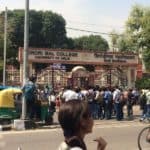
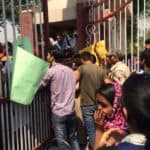
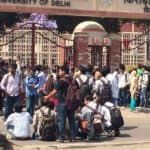
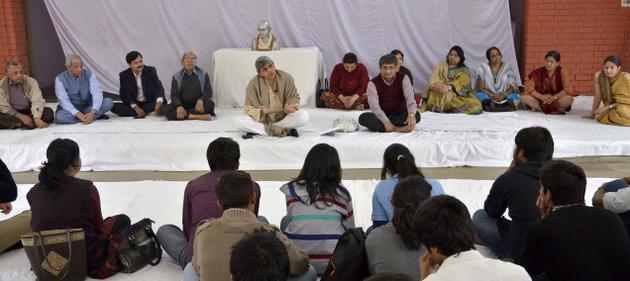
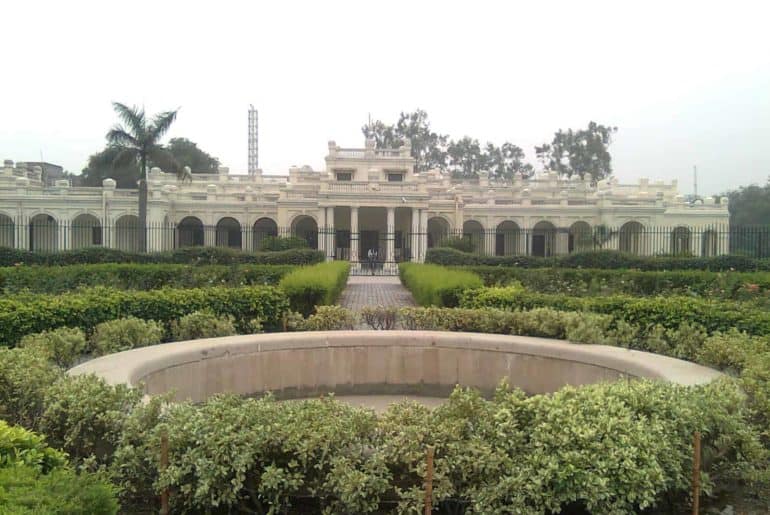
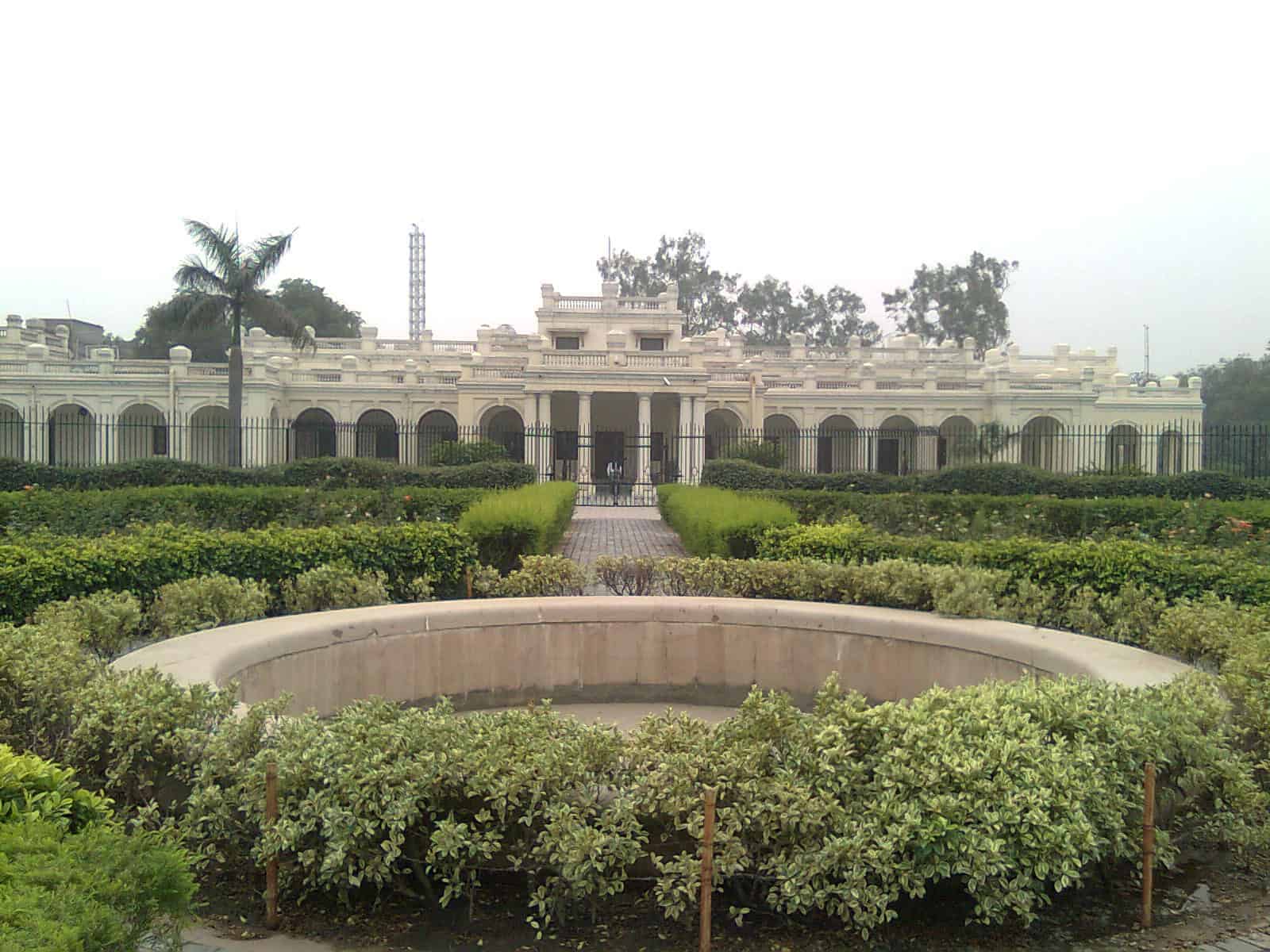
Many students and teachers marked their presence outside Gandhi Bhavan in the North Campus on Thursday to put forward their complaints and grievances. Delhi University Vice Chancellor, Dinesh Singh, organised a public meeting in the midst of protests by students and teachers against rejection of 32 applications for special chance and evaluation system.

Grievances of students and teachers were heard by the VC and Singh also promised to resolve attendance-related issues of a batch of students from Dyal Singh College who, after being allowed to write three semester exams, were suddenly detained from writing the fourth due to lack of attendance. He also heard another student who was detained from writing her law exam for lack of attendance due to pregnancy

Later DUSU brought the protest to the door of Gandhi Bhawan. “Vice-Chancellor haihai,” said a group of students holding black flags. After about half-an-hour of negotiations between the students and the Proctor, the Students Union’s office-bearers were allowed inside. Delhi University Students Union (DUSU) President Arun Hooda argued why they were not informed about the durbar and why they needed to fight to get inside and participate in durbar.

The Union also questioned the decision of denial of special chance to students which allows them to take exams they earlier could not during the time of their graduation due to any emergency, in reply to which Mr. Sigh said that special chance placed a tremendous amount of pressure on the exam branch. He also added that  such a provision could be allowed again if the students could give him in writing that they will have no objections to the results of those currently studying in DU being delayed because of special chance. Singh’s team explained that the provision was withdrawn to give “relief to exam branch”. To accommodate re-testing of students who took admission years ago the university has to dig up years-old syllabus, set question papers and then find people to evaluate them accordingly.

Anger burst out after Academic Council’s standing committee rejected all 25 cases of “special chances” which the Delhi High Court earlier this week had recommended to the panel to be “reconsidered”. The Vice Chancellor later assured that the 25 cases were rejected in their present form as the documents were insufficient and will be reconsidered later.

VC called this meeting a bit of success and said that “this is not a one-off public discussion, but will be happening every Thursday whenever I am in the city.” He further added that everybody was welcome and no prior appointment was needed.

However Saikat Ghosh, a DUTA member said, “Having a cup of tea with us will not make everything alright, we will soften our stand only if he is genuinely interested in sensitively addressing our concerns”.

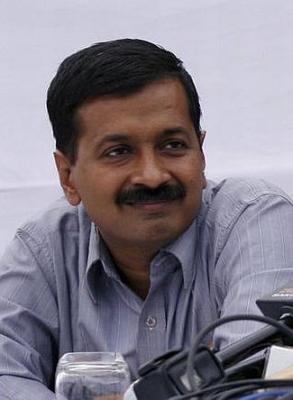
Image source: The Hindu

Sakshi Gupta
[email protected]

Delhi University Teachers Association (DUTA) along with the support of some students, decided to screen ‘The Great Dictator’, a Charlie Chaplin movie, on 9th November. This movie was being aired outside the Vice Chancellor’s office as a satire on Delhi University and it was to be followed by a debate on the current situation. However, within the first five minutes the power supply was cut off on the VC’s order. When the protestors tried finding an alternate source of power, this was also disrupted immediately as the power supply for the entire block outside the VC’s office and DUTA’s protest area was disconnected.

The actions of the VC led to nearly 25 students and the DUTA sleeping outside the VC Dinesh Singh’s office to show their anger and resentment for not being allowed to watch the Charlie Chaplin movie. Angry slogans were chanted outside his house, yet he didn’t appear to address the party gathered outside. Around 12:30 pm the next day, students and teachers held a meeting where they demanded a public apology from the VC.

In response to the protest, the registrar of Delhi University released a statement on Saturday, 10th of November, stating that the University regretted the complete disregard of the students and teachers who directly tapped power from exposed high-tension wires for screening their movie when the power supply was cut off initially. The statement also mentioned the fact that legal action will be taken against the offenders if such action continues. However, none of these threats seem to deter the determined DUTA and its student supporters as they promise to continue protesting until their issues are addressed.  

If you happen to roam around North Campus, there are two things you won’t miss seeing: one, a fast-food corner and two, students. They are everywhere, be it Kamla Nagar, Roop Nagar or Aadarsh Nagar. This is not news since North Campus is all about DU colleges. With these students, comes the question of their accommodation as more than 70% of them are outstation residents. It is here that these ‘fancy’ PGs play their role, and how! The students are provided with a fully air conditioned room, a gym, “all kinds of beauty treatment facilities”, Maggi and cold drinks a phone call away, 24 hours power back up, Wi-Fi, personal bathrooms, any time cab facility and so on! The rates of such PGs range from Rs 14000 to 20000 per month.

“In our times a student’s life was considered to be one filled with hardships, where a good result was the fruit of multiple sacrifices that the student made by leaving the comfort of his home and by surviving the brutalities of the world outside. And look at the scenario now!” comments a DU teacher. The students, away from home, live in much luxury now, and their parents think nothing of the 20 or so grand they lavish on their kid each month. The worst part is that the quality of all these PGs tops the scale during the first few months, but it’s downhill after that. Reportedly, the Wi-Fi stops working, the food quality deteriorates and the AC does not work half of the time. “We don’t have an alternative to leave the PG and move elsewhere since that would result in us forfeiting the security the landlords take in the beginning (which is rent of two months)” says Ridhima, a paying guest.

Most of the PGs are not even registered, meaning that they are not legally permitted to carry on a commercial business. The tactics that they use to exploit the comfort-seeking students is deplorable. Just half a decade back the maximum a hostel or a PG charged was Rs 7000.

However, a respite from these fraud PGs is DU hostel. The newly opened Undergraduate hostel and the Rajiv Gandhi hostel for girls are not only cheap but far better than these PGs.  They are clean, spacious and the food is hygienic and delicious. And all this in around Rs 24000 per year! The admission to the hostel is however on merit basis since they provide accommodation only to 800 girls.


Aishwarya Chaurasia
[email protected]

Image credits: Sapna Mathur

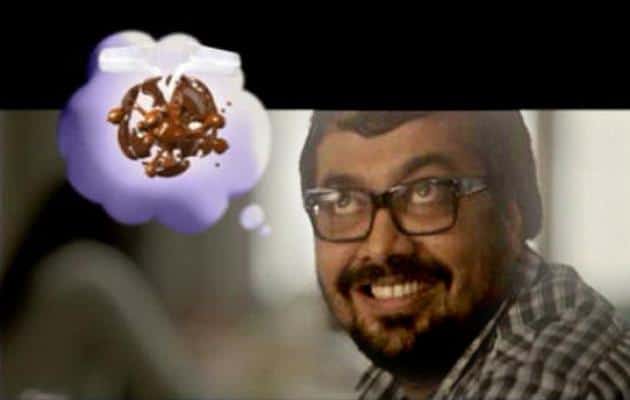
Everyone knows there’s no dearth of drama and ‘filminess’ in Delhi University. Especially when it comes to the students! This was probably what brought director Anurag Kashyap to North Campus on Wednesday in the lookout for a fresh face for his upcoming movie ‘Just DU it’. In search of a lead actor and actress, he held on-the-spot auditions at St Stephens, Hindu College, Hansraj and Kirori Mal College. ‘I just wanted to observe them in their natural environment and see them unscripted and unrehearsed. I was amazed by their talent ‘, said the acclaimed director. SRCC was, however left out of the list, for unknown reasons. When asked, his assistant refused to comment on the same. The students, who did get to audition, are now anxiously awaiting news of call backs.

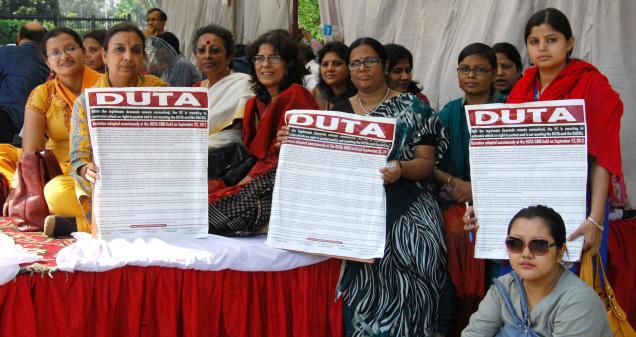
After making umpteen appeals to the VC, the Delhi University Teachers’ Association (DUTA) has decided to up the ante. The association has been sitting on an indefinite relay hunger strike from 10th of October against the way decisions were being made in the varsity.

Twenty-three teachers from Ramjas College, Daulat Ram College, Delhi College of Arts and Commerce and Deen Dyal Upadhyay College and eminent DUTA executive members – DUTA secretary S. D. Siddiqui, former DUTA president Aditya Narayan Misra and Academic Council members A.K. Bhagi and M.R. Chikkara were the prime participants on first day of the strike.

“Teachers are increasingly being thrown out of decision making and the VC has shown utter disregard to the teachers’ democratic body,” said DUTA Executive member Abha Dev Habib.

DUTA is against Vice Chancellor for his contemptuous ignore of the teacher’s association and destroying the entire academic fabric by announcing new courses and academic programmes through media and running the University as his personal fiefdom.

“VC has browbeaten the entire university fraternity to accept his fanciful decisions. The drastic changes in examination and evaluation of answer-scripts, yet again announced to the media without any discussion in the Academic Council, may justifiably seem insane to the public at large but they also serve to aptly illustrate his egoism and the utterly deluded and directionless nature of his reforms,’ said one of the DUTA members.

In spite of the strike classes were not called off and teacher’s taught by taking leave for some time to take their classes.  Last time VC ordered principals of colleges to deduct salaries of those teachers who participated in the strike on 28 August.

DUTA is also planning a candle-light vigil on Friday night to further their cause. The candle-light vigil is for the 4,000 teachers who have been condemned to continue teaching in ad-hoc capacity despite being eligible.

Sakshi Gupta
[email protected]

Image source: The Hindu 

Hindu College’s annual MUN conference took place from September 13 to September 15 at the Conference Centre, North Campus. This MUN conference is one of the most coveted in the DU circuit. The Secretary General of the conference was Bharat Seth. In the opening ceremony, he welcomed all the delegates, executive board members and international press members to the conference and promised a fruitful debate. The chief guest was veteran politician Mr. Somnath Chatterjee. The conference was a culmination of 5 committees namely- General Assembly (third committee), United Nations Global Compact, Futuristic Security Council, War Cabinet of India (1962) and United Nations Monetary and Financial Conference(1994). [caption id="attachment_8305" align="alignright" width="266" caption="Somnath Chatterjee, Speaker of the Lok Sabha from 2004 to 2009, was the Chief Guest at the event."][/caption] “The executive board members were really good and highly experienced , which took the level of debate to a new high. Everyone in the committee was very well researched and this was a fact well acknowledged by the executive board too.” said Tanya Kak, a participating delegate. The MUN was organized by Caucus, the Group Discussion and Model United Nations society of Hindu College, that aims to promote formal panel discussions in order to increase awareness amongst the youth on important socio-political issues.]]>

Ritu Rana from ABVP who stood for the post of President giving an interview accusing NSUI of foul play soon after the results were out

“ABVP calls Delhi University to be closed on Monday, 17th September because of unfair means in calculation of votes in DUSU elections”. This is the message that was widely circulated on Sunday nights, causing wide absenteeism in colleges on Monday.

In what is being regarded as a highly imprudent move, the ABVP is busy garnering attention and public support because they feel that the DUSU elections vote counting process was rigged.

‘I think they are being too egoistic, they should just accept that they have lost and move on”, says Professor Prachi, of the English Department, Hansraj College.

As commonly known by now, ABVP lost the elections as NSUI sweeped the polls to victory. Subsequently, the former accused DU of using unfair means to calculate votes but strangely did not file an application requesting a re-counting of votes. “It’s stupid, if they so strongly believe that the elections were rigged, they should have filed an application immediately, rather than engaging in hooliganism”, says Vaishali, a student of Hansraj college.

This move by the ABVP was also not very successful as classes went on as usual in most colleges, where no reports of ABVP stalling classes was reported. However, the ABVP activists were able to make their presence felt in colleges like KMC and Ramjas, where the activists stormed into classrooms and demanded that the students leave the classrooms, thereby disrupting normal college routine.

“They just entered into our classes even when our professors protested. They did not let the class continue.”, says Nupur, a student of Ramjas college.

While no new move has been introduced on part of ABVP, speculations are that they will not raise this issue further, because of lack of evidence and also since they don’t want to spoil their party image.

Congress’ student wing NSUI (National Students’ Union of India) made a clean sweep at the DUSU polls on Saturday 15th September by winning all three top posts of President, Vice-President and Secretary. After the results were announced, the losing side (ABVP activists) started pelting stones at the ABVP office, broke through the tight security and barricades. Subsequently, Delhi Police had to lathi charge the gathered ABVP activists while they shouted anti-Congress slogans and demanded the recounting of votes. ABVP suspects something fishy behind the counting of votes.

ABVP isn’t satisfied behind the counting process as they alleged rigging in the elections and staged protest at the DUSU Office breaking the windows and destroying the DUSU Office property. “Everything was done with calculated planning and even the DUSU officials made sure that NSUI wins. Congress MPs Depender and Bhupender Singh Hooda were seen at 6 am on campus. We were even given a deaf ear and thrown out of the DUSU Office when we demanded recounting” said Rohit Chahal, regional leader, ABVP.

Some students who were injured were taken to Hindu Rao hospital while some students who were critically injured were taken to AIIMS Trauma Centre. “It’s not about winning or losing the polls. It’s about the way Delhi Police reacted when our students demanded recounting of votes. I hope DUSU officials look into the matter and do the needful.” said a disappointed Vijay Goyal, BJP Leader.

The ABVP has also called for a bandh across the University to protest against these alleged malpractices during  counting of votes.


Picture credits: Sawdha Singh and Aishwarya Chaurasia

18th August, 2012 an association of three publishing companies namely, Oxford University Press, Cambridge University Press and Taylor and Francis sued Rameshwari and other such photocopy shops for selling the Xeroxed version of foreign authors’ books or “readings” without payment of Royalty. Following this incident, the readings at North Campus were banned which led to massive protests from students all across Delhi University. The students and these shops maintained that readings are sold to reduce the financial burden of the students. Where a student can get the “readings” at Rs 200 to 300 a foreign authors’ book costs around Rs 1000 to 2000, and most of the times a student needs just a chapter from the entire book.

Thus the students’ protest is partially justified. But if we examine the true scenario, we’ll find that the publishers did nothing wrong or “immoral” by banning the readings. Authors write books to communicate their idea or knowledge and in return expect a Royalty income. Similarly publishers, publish, distribute and sell books for making a profit. When the content of these books is photocopied beyond a “fair” limit, Copyright law is broken. The point is “photocopying” is not illegal, but in order to do so the sellers must get the permission or “licence” from the “Indian Copyright Collection Society” or the “Indian Reprographic Rights Organization” (IRRO) .The IRRO has set tariff (or rates) for licenses for different Institutions and Organizations for the purpose of copying. Normal rate of photocopying is Rs 12000 per institution per annum. This tariff has the approval of the Registrar of Copyright and is the Lowest in the World.

However “Readings” are not “normal photocopying”. They consist of the entire course in a semester and are generally content taken from several books which may be published by various Publishers. Where such “Course Packs” are made available, the Publishers books stop selling. Even the libraries stop buying multiple copies of the textbooks. Therefore the sale of the books is reduced affecting the income expectations of the Author and the expected return on investment for the Publishers. While a course pack may cost 300 to 400 Rupees, the value of the textbooks that the student would otherwise have to buy would be as much as Rs. 2000 to 3000. So it is a huge saving for the student at the cost of the Authors and Publishers.

Hence there is a “Course Pack” rate for Delhi University which is 50 paisa per page. That is the lowest rate for course packs in the world. If the readings are sold legally the cost of a course pack may go up a bit but still it will be lesser than having to buy 6-7 textbooks. A Rs. 200 course pack can become Rs. 300. If the University feels that this copyright fee is too much for the student, then they can subsidize by paying the IRRO directly.

In countries like UK and USA every time a library photocopies these books a little amount of the total cost is set aside for Copyright Collection Centre in the USA and the CLA (Copyright Licensing Agency) in U.K. Publishers and Authors have a right to protect their Copyright. All they are asking the Academic and Student community to do is to pay a small license fee to make photocopies. “There will always be some people who’ll want everything free but that is not sustainable. Surely the Academic and Student community does not expect a subsidy from Authors and Publishers? Without proper IRRO licensing that is what illegal photocopying amounts to” says Cambridge University Press. The “readings” are still banned in the North Campus and those shops selling the readings are doing it illegally. Their claim that they have got the licence from the publishers is absolutely false.

Aishwarya Chaurasia
[email protected]

Read the initial report here, https://dubeat.com/2012/08/readings-banned-in-north-campus/

Wayne Dyer once said, ‘When you change the way you look at things, the things you look at change’. This was the fundamental idea behind the organisation of the Deen Dayal Upadhyaya College Model United Nations 2012(DDUCMUN 2012). Held on the 1st and 2nd of September, 2012 at the Conference Centre in North Campus, this event saw participation from more than 300 students from 200 schools and colleges in 25 cities. The MUN committees included the General Assembly, the Security Council, the Human Rights Council and the Organisation of Petroleum Exporting Countries which had their respective agendas as reforms in UN peace keeping missions, impact of climate change on Statehood, security and migration, upholding human rights in prisons and response to new sources of energy while maintaining petroleum energy viability. The first day kicked off with one round of committee session after registrations followed by the inauguration ceremony. It started off with the lighting of the lamp by the Principal of DDUC, Dr. S K Garg, the Chief Guest for the event Dr. Sanjay Chopra, Joint Secretary at the Ministry of Agriculture, the Guest of Honour, Shri Tom Vadakkan, Secretary of the All India Congress Committee and the Convener of the MUN Club, Dr. Nisha Rana. The proceedings of the ceremony included addresses by Dr. Nisha Rana and the Secretary General Srishti Kapoor who declared the conference open. In the Chief Guest’s speech, Dr Sanjay Chopra spoke about his personal experiences at UN conferences with a pinch of humour while the Shri Tom Vadakkan spoke about the impact of policies formulated by one country on the rest of the world. After a short refreshments break, the delegates were back at their committees to discuss the thought provoking agendas, through a structure that mirrored the rules followed at actual UN meets. Under the observation of the Executive Board which comprised experienced MUNers, delegates made their points backed up by thorough research and debated with representatives from other countries by raising points of inquiry and information. The committee sessions and moderated caucuses continued for the rest of the day with a lunch break in between. The second day saw participants looking at effective solutions to address the issues in front of them. This was done through unmoderated caucuses, writing papers, drafting of resolutions and then suggesting amendments, followed by voting by the countries, interspersed with breaks in between. The evening of 2nd September saw the delegates and organising committee gather at the Main Hall for the closing ceremony of the event. To get things started, the band Autumn Home got the audience singing along as they covered popular songs like Yellow by Coldplay. After that the President, Vice President and Rapporteur of each committee announced the Best Delegate, High Commendation and Special Mention awards. “Last year DDUCMUN was a brilliant event, and they have been able to maintain the high standard once again, which is very tough to do. It is my privilege to have been associated with the DDUCMUN Club since its inception”, said Shirin Rai Gupta, a student of LSR and President of the Human Rights Council. The audience cheered for the winners enthusiastically and some even received standing ovations by fellow committee members. The evening came to a close with the Deputy Secretary General, Meenal Narula’s speech and vote of thanks. DDUCMUN 2012 saw a huge participation of first timers. As Delegate of Netherlands in the General assembly, Akashita Sareen said, ‘DDUCMUN was the first MUN that I attended, and I was surprised at how productive the conference turned out to be. It was well organised which made the experience, for a first timer like me, extremely palpable and fun’. Her thoughts were shared by Vrinda Uppal, Delegate of Slovakia. ‘I thoroughly enjoyed interacting with fellow delegates and engaging in fruitful debating. Looking forward to the next edition!’, she said.]]>